
Molybdenum is an essential trace mineral. In the body, it sits at the center of a cofactor (a helper molecule) called molybdopterin, which four enzymes need to work. These enzymes break down sulfur-containing amino acids and purines, says the NIH (the US National Institutes of Health). Three of them also help process drugs and toxins, it adds.
Adults absorb 40% to 100% of the molybdenum in food, and the kidneys are the main regulators of how much the body keeps.
Here is what most people do not know: dietary molybdenum deficiency has been reported only once. In 1981 a patient was fed through a vein with a solution that contained no molybdenum. The patient developed a rapid heartbeat, headache, night blindness and coma, and the problems resolved when molybdenum was given.
No healthy person eating a normal diet has been reported to be deficient. The NIH says no known group is likely to get too little.
Do not confuse it with molybdenum cofactor deficiency. This is a rare inherited disease in which the body cannot make the cofactor at all, whatever a person eats. In 2021 the FDA approved a drug for one type of it.
And how much molybdenum a food holds depends on the soil and water it grew in. That is why published food values differ so much.
Health benefits of molybdenum
The top findings from 14 studies, strongest evidence first
What the stars mean
- Strong. Several randomized trials, pooled in a meta-analysis, point the same way, or regulators (FDA or EFSA) have approved the claim.
- Moderate. Good randomized trials support it, but there are fewer of them, or their results vary.
- Limited. Small, short or single trials, or mixed results. Promising, but it needs confirmation.
Population and lab studies get no stars: they show a link or a mechanism, not proof.
How we rate evidence →- ★★★EU allows one claim, on amino acid metabolismFood that is a source of molybdenum may say it contributes to normal sulphur amino acid metabolism. The claim describes a function; it does not say that extra molybdenum helps.
- ★★Vitamin C plus molybdenum: deaths not clearly changedIn 29,584 adults in China with low nutrient intakes, a vitamin C plus molybdenum supplement (one of four tested) did not clearly change total deaths. Molybdenum was only given together with vitamin C, so it cannot be judged alone.
- ★Men absorbed it well, with no deficiency seenIn four men, 88% to 93% was absorbed at intakes of 22 to 1,490 µg a day, with no adverse effects over 24 days. On 22 µg a day for 102 days, none showed signs of deficiency.
- ★Deficiency reported once, when none was suppliedA man with Crohn’s disease fed through a vein with a solution lacking molybdenum became very ill. Adding molybdate reversed it. This was a single case.
- ★Soy molybdenum absorbed less well than kaleIn two small studies using labeled food, less molybdenum was absorbed from soy than from kale or an added source. Kale and the added source were absorbed equally.
All 11 studies, strongest evidence first
The EU allows one molybdenum claim, about normal sulphur amino acid metabolism
Regulation (EU) No 432/2012 lists the claim “Molybdenum contributes to normal sulphur amino acid metabolism”. It applies to food that is at least a source of molybdenum. As a rule, that means 15% of the 50 µg (micrograms) Nutrient Reference Value per 100 g. That is 7.5 µg, under Regulation (EU) No 1169/2011. In 2010 EFSA found a cause and effect relationship for this function. But it said the evidence does not show that too little molybdenum impairs sulphur amino acid metabolism in the general EU population. It did not accept a second proposed claim, protection of DNA, proteins and lipids from oxidative damage, because no relevant data were submitted. The claim describes a function; it does not say that extra molybdenum helps.
Vitamin C plus molybdenum did not clearly change total deaths
Linxian County in China has some of the world’s highest rates of esophageal and stomach cancer, and a persistently low intake of several micronutrients. From 1986 to 1991, 29,584 adults aged 40 to 69 were randomly assigned, in a factorial design, to one of four daily combinations. These were retinol and zinc; riboflavin and niacin; vitamin C and molybdenum; or beta carotene, vitamin E and selenium. Doses were one to two times the US Recommended Daily Allowances. Only the beta carotene, vitamin E and selenium combination lowered total deaths (0.91 times the risk). Molybdenum came only with vitamin C, so the trial cannot say what molybdenum alone does. And the people studied had low nutrient intakes, so the result may not carry over to well-fed adults.
On 22 µg a day, four men showed no signs of deficiency
This controlled feeding study used stable isotope tracers (safe labeled forms of the mineral). The men ate a low-molybdenum diet (22 µg a day) for 102 days. Then they ate the same diet with extra molybdenum (467 µg a day) for 18 days. Over the 102 days they could not always reach balance, but balance improved over time, and molybdenum was very efficiently absorbed at both intakes. From this, the authors estimated the minimum requirement of healthy young men at about 25 µg a day, possibly less. Four young men cannot speak for every age group or for people who are ill.
On 22 to 1,490 µg a day, absorption was 88% to 93%
Four men each ate five amounts of molybdenum, from 22 to 1490 µg a day, for 24 days at a time. Stable isotopes served as tracers. Absorption was 88% to 93% at every intake, and no adverse effects were seen in the 24 days on each amount. The amount lost in urine rose as intake rose. The authors concluded that adult men can safely take in 22 to 1,500 µg a day for 24 days or longer. The body holds on to molybdenum at low intakes and clears the excess in urine, they add. Four men and 24 days is too little to speak for long-term use or for other groups.
The only reported diet-caused case was reversed by adding molybdate
EFSA’s 2013 opinion and the NIH both describe this 1981 case report. A man with Crohn’s disease and short bowel syndrome was fed through a vein with a solution that contained no molybdenum. He developed a fast heart rate, fast breathing, severe headache, night blindness and later coma. Lowering the sulfur load of the solution did not help. Treatment with ammonium molybdate brought clear improvement and reversed the abnormal blood and urine tests. It is a single case: it shows that deficiency is possible when no molybdenum is supplied at all, not how often it happens.
In cofactor deficiency type A, treatment lowered the risk of early death
This is a genetic disease, not a diet problem: the body cannot make the molybdenum cofactor, so the enzymes fail whatever the person eats. In open-label studies (everyone knew who was treated), 14 patients received fosdenopterin, a synthetic form of cyclic pyranopterin monophosphate (cPMP), or a recombinant version. They were compared with 37 untreated patients from a natural history group. Treated patients had a clearly lower risk of premature death (Cox hazard ratio 5.1, treated against untreated), and urine markers returned to near normal. At 12 months, 43% could sit unassisted, and starting within 14 days of birth seemed to work better. The comparison was not randomized, and several authors have ties to the company that makes the drug.
Some of 16 premature babies lost more molybdenum than they took in
Researchers collected all feeds, urine and stool from low-birth-weight infants (born at a mean of 29.8 weeks of pregnancy). They did this before intravenous feeding, during it, during partial intravenous feeding and after a week of full oral feeds. Molybdenum balance rose over time, from -0.60 µg a day before intravenous feeding to 2.0 µg a day on full oral feeds. Some stayed in negative balance even when intake exceeded recommendations. The authors speculated that 1 µg per kg a day by vein would be enough for these infants. By mouth, they put it at 4 to 6 µg per kg a day. The study measured balance, not health, and it notes that deficiency has not been reported in infants.
Ten years on, vitamin C plus molybdenum went with fewer stroke deaths
This follow-up of the Linxian trial above (29,584 adults) covered deaths until 2001, with 9,727 deaths in all. The abstract says vitamin C and molybdenum supplementation was associated with decreased stroke mortality, but gives no size for it. In the same analysis, vitamin A and zinc went with higher total and stroke deaths. The main benefit was again for beta carotene, vitamin E and selenium. Molybdenum was only given together with vitamin C, and one result among several comparisons is a lead for research, not proof.
In 3 studies, more molybdenum went with less high blood uric acid
This systematic review pooled 20 studies with 63,283 people. It covered 19 cross-sectional studies (snapshots in time) and one cohort study on metals and hyperuricemia (high blood uric acid). Molybdenum exposure was linked to lower risk (0.804 times the odds, 3 studies), while arsenic, calcium, cadmium and lead went with higher risk. Cross-sectional studies cannot show that molybdenum lowered uric acid, and only three of them measured molybdenum. At very high intakes the opposite has been reported (see the safety section).
In 15,370 US adults, more urine molybdenum went with less gout
This analysis of NHANES (US national health survey) data from 1999 to 2016 compared urine molybdenum, corrected for creatinine, with uric acid and kidney outcomes. It adjusted for age, sex, ethnicity, diabetes, high blood pressure, body mass index and kidney function. Higher molybdenum went with lower serum uric acid and lower odds of hyperuricemia (0.73 times the odds) and gout (0.71 times the odds). It also went with lower C-reactive protein, a marker of inflammation. In a separate experiment, the authors treated kidney cells with hydrogen peroxide and found that molybdenum raised an antioxidant enzyme. A single urine sample cannot show whether molybdenum protects, or whether people with different diets and kidneys simply excrete different amounts.
In northern Iran, esophageal cancer patients had less molybdenum in their nails
Researchers measured molybdenum and zinc in nails from four small groups. There were 20 controls in Tehran, a low-risk area, and 20 patients with esophageal cancer in Sari, a moderate-risk region. There were also 20 relatives of patients and 40 local controls. Nail molybdenum was 0.740 ppm (parts per million) in Tehran controls, lower in Sari controls (0.472 ppm) and lower still in patients (0.283 ppm). Patients and their relatives (0.456 ppm) did not clearly differ in molybdenum, only in zinc. The groups were small, and a nail level cannot show whether low molybdenum came before the cancer or after it.
Foods high in molybdenum
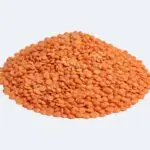
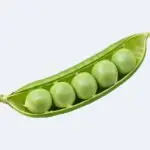
Legumes are the richest sources of molybdenum, says the NIH, followed by whole grains, nuts and beef liver. In our USDA ranking, lentils lead: one cup (198 g) holds 376 µg. That is 836% of the Daily Value, the 45 µg figure US food labels use. Chickpeas come second with 189 µg per cup.
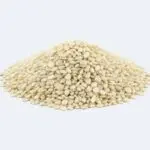
Bell peppers are left out: the few measurements of them vary too much to rank. Next come black beans, pumpkin seeds and spelt. Per 100 g, lentils (190 µg) are followed by pumpkin seeds (158 µg), then sesame seeds and chickpeas. The ranking below has the full list.
The NIH table shows more everyday foods: boiled black-eyed peas hold 288 µg in half a cup. Boiled lima beans have 104 µg in half a cup, and pan-fried beef liver 104 µg in 3 oz. Low-fat yogurt has 26 µg per cup and 2% milk 22 µg per cup. A baked potato has 16 µg, whole wheat bread 12 µg per slice and a large soft-boiled egg 9 µg.
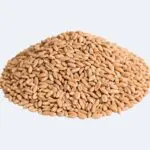
In total diet studies in Western countries, cereals and cereal products, including bread, supply about a third to a half of adult intake. The amount in a plant food depends on the soil and irrigation water where it grew, so any table is a guide. The NIH says food databases hold limited molybdenum data. Soy is an example of a food where less of the molybdenum is absorbed.
Per serving. Bars show the share of the Daily Value (45 µg a day). The line marks 100%.
Per 100 g. Bars show the share of the Daily Value (45 µg a day). The line marks 100%.
Per serving. Bars show the share of the EU Reference Intake (50 µg a day). The line marks 100%.
Per 100 g. Bars show the share of the EU Reference Intake (50 µg a day). The line marks 100%.
Per 100 kcal: the same calories of each food, for a fair comparison. Bars compare each food with the top food.
- 1.
- 2.
- 3.
- 4.
- 5.
- 6.
- 7.
- 8.
- 9.
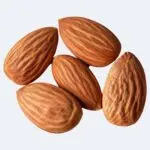
- 10.
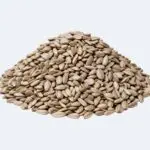


- 1.
- 2.
- 3.
- 4.
- 5.
- 6.
- 7.
- 8.
- 9.
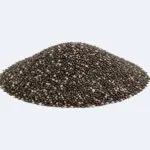
- 10.

- 1.
- 2.
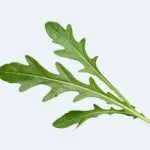
- 3.
- 4.

- 5.

- 6.
- 7.
- 8.
- 9.
- 10.


Sources
- FoodData Central. US Department of Agriculture, Agricultural Research Service. Values as shown in the ranking above.
- Molybdenum: fact sheet for health professionals. National Institutes of Health, Office of Dietary Supplements. Updated March 30, 2021.
- EFSA Panel on Dietetic Products, Nutrition and Allergies (NDA). Scientific opinion on Dietary Reference Values for molybdenum. EFSA J. 2013.
- Turnlund JR, Weaver CM, Kim SK, et al. Molybdenum absorption and utilization in humans from soy and kale intrinsically labeled with stable isotopes of molybdenum. Am J Clin Nutr. 1999.
How molybdenum works
The biochemistry below is well established. But it comes from reviews, official reports and a few small physiology studies rather than from trials of extra molybdenum. Four ideas cover most of it.
Molybdenum is the working core of a cofactor that four enzymes need. The body builds that cofactor itself, and a rare gene defect can stop it. The gut absorbs most of the molybdenum in food, and the kidneys set the level. And the copper link seen in cattle is not clearly seen in people.
Then comes what has been seen in people.
It is the working core of four enzymes
Molybdenum does nothing on its own. It is bound to a pterin (a ring-shaped organic molecule) to form the molybdenum cofactor. That cofactor is the active part of every molybdenum enzyme in nature except bacterial nitrogenase. People have four of them.
Sulfite oxidase, found in mitochondria, turns sulfite into sulfate. That is the final step in breaking down the sulfur amino acids cysteine and methionine. Xanthine oxidase turns hypoxanthine into xanthine and xanthine into uric acid. Aldehyde oxidase is abundant in the liver and works in the first phase of drug metabolism.
The fourth, mARC, reduces N-hydroxylated compounds, and its role in the body is still unclear, according to a 2018 review. The NIH adds that xanthine oxidase, aldehyde oxidase and mARC also handle toxins.
The four human enzymes that need the molybdenum cofactor. Not to scale.
The body builds its own cofactor, and a rare gene defect can stop it
The body does not eat the cofactor; it makes it. A 2013 review describes a process of four steps that involves six proteins and also needs iron, ATP (the cell’s energy carrier) and copper. It says a defect in making the cofactor has lethal consequences.
When the defect is genetic, the condition is called molybdenum cofactor deficiency, and all four enzymes fail. Newborns have feeding difficulties and seizures soon after birth, with brain damage and usually death at an early age, EFSA says. Urine shows high sulfite, thiosulfate and S-sulfocysteine, with low uric acid. This has nothing to do with how much molybdenum a person eats.
A replacement for the first cofactor intermediate, cyclic pyranopterin monophosphate, was first reported in one infant in 2010. The FDA approved the drug fosdenopterin in 2021 for type A.
Food molybdenum is mostly absorbed, and the kidneys set the level
Dissolved molybdate is almost completely absorbed by the gut, EFSA reports. The process is passive, does not become saturated and is not regulated at the gut. Absorption from food depends on the food.
In stable-isotope studies, molybdenum that was part of kale was absorbed about as well as molybdenum added to the meal. Molybdenum from soy was absorbed less well. In a study of three volunteers, black tea cut the absorbed share of molybdenum about tenfold, but that is a very small sample.
Share of the molybdenum in a meal that was absorbed, drawn to scale. “Added to the meal” means molybdenum put into the meal as a separate label. The first study used about 100 µg per meal and the second about 310 µg.
Control happens in the kidney. In four men eating 22 to 1,490 µg a day, absorption stayed at 88% to 93%, while the amount lost in urine rose with intake. So molybdenum is held on to when little is eaten and cleared when a lot is eaten. In a study of 12 men, blood plasma levels reflected low and high intakes within 14 days.
Plasma molybdenum at five daily intakes in four men, drawn to scale. Intake rose about 68-fold across the five diets while the plasma level rose about 10-fold (our arithmetic from the published values).
The copper link seen in cattle is not clearly seen in people
In sheep and cattle, too much molybdenum causes copper deficiency. In the sulfide-rich rumen (the first stomach of cattle and sheep), molybdenum forms thiomolybdate, which binds copper and keeps it from being absorbed, EFSA explains.
EFSA says clinical copper deficiency in people is largely limited to rare genetic defects. In four men eating sorghum diets with 166 or 540 µg of molybdenum a day, copper absorption was not affected. A 1999 toxicology review still notes that people with too little copper, or a copper metabolism disorder, could be more at risk of molybdenum toxicity.
How high molybdenum causes copper deficiency in ruminants, as EFSA describes it. It has not been shown to happen in people.
What has been seen in people
The human findings are about need and balance, not about benefits. Small, careful feeding studies found no signs of deficiency in men eating 22 µg a day for 102 days. They found no adverse effects up to 1,490 µg a day for 24 days. One patient fed without molybdenum became ill and recovered when it was added.
A large trial that gave molybdenum with vitamin C found no effect on total deaths. Observational studies link molybdenum to lower uric acid but cannot show cause. All of these are among the study cards above and below.
Sources
- Novotny JA, Peterson CA. Molybdenum. Adv Nutr. 2018.
- Molybdenum: fact sheet for health professionals. National Institutes of Health, Office of Dietary Supplements. Updated March 30, 2021.
- Mendel RR. The molybdenum cofactor. J Biol Chem. 2013.
- EFSA Panel on Dietetic Products, Nutrition and Allergies (NDA). Scientific opinion on Dietary Reference Values for molybdenum. EFSA J. 2013.
- Veldman A, Santamaria-Araujo JA, Sollazzo S, et al. Successful treatment of molybdenum cofactor deficiency type A with cPMP. Pediatrics. 2010.
- Kang C. Fosdenopterin: first approval. Drugs. 2021.
- Turnlund JR, Keyes WR. Plasma molybdenum reflects dietary molybdenum intake. J Nutr Biochem. 2004.
- Turnlund JR, Keyes WR, Peiffer GL. Molybdenum absorption, excretion, and retention studied with stable isotopes in young men at five intakes of dietary molybdenum. Am J Clin Nutr. 1995.
- Vyskocil A, Viau C. Assessment of molybdenum toxicity in humans. J Appl Toxicol. 1999.
How much molybdenum do you need?
Adults need 45 µg of molybdenum a day, according to the US recommended dietary allowance (RDA, the amount that covers nearly all healthy people). Pregnant or breastfeeding adults need 50 µg. EFSA’s adequate intake (an amount assumed to be enough) for EU adults is 65 µg.
For children, the US allowance rises with age. It is 17 µg at ages 1 to 3 and 22 µg at 4 to 8. It is 34 µg at 9 to 13 and 43 µg at 14 to 18.
EFSA gives 15 µg at ages 1 to 3, 20 µg at 4 to 6 and 30 µg at 7 to 10. It gives 45 µg at ages 11 to 14 and 65 µg from age 15.
For pregnancy and breastfeeding, the US allowance is 50 µg, at ages 14 to 18 and from age 19 up. EFSA keeps its adult value of 65 µg for pregnant and breastfeeding women. It found too little data on their intakes to set a different one. For older adults, the US allowance stays at 45 µg, and EFSA’s adult value covers them too.
Most people eat more than these amounts. The FDA’s 1984 Total Diet Study estimated average intakes from food of 109 µg in men and 76 µg in women. Mean intakes in European countries range from 58 to 157 µg a day.
The numbers rest on little data. The US requirement comes from two controlled balance studies in a total of eight young men.
EFSA decided the evidence was too thin to set a requirement. It chose its value from the low end of the intakes people actually eat. The finding that men stayed in balance on 22 µg a day supported that choice.
Molybdenum: recommended intake per day
US: Adequate Intake / Recommended Dietary Allowance (NASEM). EU: Adequate Intake (EFSA).
| Age and sex | US (RDA) | EU (AI) |
|---|---|---|
| Men, 31–50 years | 45 µg | 65 µg |
| Women, 31–50 years | 45 µg | 65 µg |
All ages, pregnancy and breastfeeding
| Age and sex | US (AI/RDA) | EU (AI) |
|---|---|---|
| Infants 0–6 months | 2 µg | None set |
| Infants 7–11 months | None set | 10 µg |
| Infants 7–12 months | 3 µg | None set |
| Children 1–3 years | 17 µg | 15 µg |
| Children 4–6 years | None set | 20 µg |
| Children 4–8 years | 22 µg | None set |
| Children 7–10 years | None set | 30 µg |
| Females 9–13 years | 34 µg | None set |
| Males 9–13 years | 34 µg | None set |
| Children 11–14 years | None set | 45 µg |
| Females 14–18 years | 43 µg | None set |
| Males 14–18 years | 43 µg | None set |
| Children 15–17 years | None set | 65 µg |
| Adults 18+ years | None set | 65 µg |
| Females 19–30 years | 45 µg | None set |
| Males 19–30 years | 45 µg | None set |
| Females 31–50 years | 45 µg | None set |
| Males 31–50 years | 45 µg | None set |
| Females 51–70 years | 45 µg | None set |
| Males 51–70 years | 45 µg | None set |
| Females >70 years | 45 µg | None set |
| Males >70 years | 45 µg | None set |
| Pregnancy 14–18 years | 50 µg | None set |
| Pregnancy | None set | 65 µg |
| Pregnancy 19–30 years | 50 µg | None set |
| Pregnancy 31–50 years | 50 µg | None set |
| Lactation 14–18 years | 50 µg | None set |
| Lactation | None set | 65 µg |
| Lactation 19–30 years | 50 µg | None set |
| Lactation 31–50 years | 50 µg | None set |
EU and US age bands differ; "None set" means that body sets no value for the group. Label reference: FDA Daily Value 45 µg, EU Reference Intake 50 µg.EU and US age bands differ; "None set" means that body sets no value for the group. Label reference: EU Reference Intake 50 µg, FDA Daily Value 45 µg.
Molybdenum deficiency: signs and who is at risk
Deficiency from diet has not been reported in healthy people, and the NIH says no known group is likely to get too little. The one published case, in 1981, was a 24-year-old man with Crohn’s disease and short bowel syndrome. He was fed by vein without molybdenum for 12 months, EFSA reports.
He developed a fast heart rate and breathing, severe headache, nausea and vomiting, night blindness and blind spots. Then came swelling, lethargy, disorientation and coma, with high blood methionine and low uric acid. Treatment with ammonium molybdate reversed the abnormal tests within 30 days.
A separate problem is the inherited molybdenum cofactor deficiency, described above. It is not a nutrition problem, and diet or supplements do not treat it. A 2024 consensus guideline covers diagnosis and care.
Premature infants fed by vein are the group researchers have studied for possible risk, because they are born with small stores and grow fast. A balance study in 16 of them noted that deficiency has not been reported in infants, though some stayed in negative balance.
There is no routine test. EFSA found no useful marker of molybdenum status, and the NIH says status is not assessed in clinics. In a controlled study of 12 men, plasma molybdenum followed low and high intakes within 14 days. That may make it a useful indicator of intake, but it does not diagnose deficiency.
Talk to a doctor about unexplained symptoms rather than trying a supplement.
Sources
- Molybdenum: fact sheet for health professionals. National Institutes of Health, Office of Dietary Supplements. Updated March 30, 2021.
- EFSA Panel on Dietetic Products, Nutrition and Allergies (NDA). Scientific opinion on Dietary Reference Values for molybdenum. EFSA J. 2013.
- Turnlund JR, Keyes WR. Plasma molybdenum reflects dietary molybdenum intake. J Nutr Biochem. 2004.
- Friel JK, MacDonald AC, Mercer CN, et al. Molybdenum requirements in low-birth-weight infants receiving parenteral and enteral nutrition. JPEN J Parenter Enteral Nutr. 1999.
- Schwahn BC, van Spronsen F, Misko A, et al. Consensus guidelines for the diagnosis and management of isolated sulfite oxidase deficiency and molybdenum cofactor deficiencies. J Inherit Metab Dis. 2024.
- Kang C. Fosdenopterin: first approval. Drugs. 2021.
Forms of molybdenum: absorption and effects
In food, water and most supplements, molybdenum is present as molybdate, an ion that dissolves easily in water. Supplements and fortified foods use salts of it. The NIH lists molybdenum chloride, sodium molybdate, molybdenum glycinate and molybdenum amino acid chelate as the forms in US supplements. They come in amounts of about 50 to 500 µg.
In the EU, ammonium molybdate and sodium molybdate may be added to foods and food supplements, and potassium molybdate to supplements only, according to EFSA.
The honest bottom line: no study has compared how well the different forms are absorbed, the NIH says. So we found no trial behind a claim that glycinate or a chelate works better than sodium molybdate. What is known is about molybdenum in general.
Dissolved molybdate is almost fully absorbed, and molybdenum that is part of soy is absorbed less well. Ammonium molybdate supplied the extra molybdenum in the 18-day repletion study in four men, and it treated the one reported deficiency case. The Linxian trial abstracts do not name the molybdenum form.
| Form | Share of the mineral by weight | What studies show | Source |
|---|---|---|---|
| Molybdate in food and water | Not stated | Adults absorb 40% to 100% of dietary molybdenum (NIH). In meals with about 100 µg, 86.1% was absorbed from kale and 56.7% from soy, and in meals with about 310 µg, 58.3% from soy, against 87.5% and 92.8% for molybdenum added to the meals (EFSA, summarizing Turnlund 1999). Dissolved in water it was almost fully absorbed up to 1 mg in three volunteers, and black tea cut the absorbed share about tenfold. | 1, 2, 3, 4 |
| Sodium molybdate | Not stated | The NIH lists it as a supplement form, and the EU allows it in foods and food supplements. No study has compared its bioavailability with other forms (NIH). | 1, 2 |
| Ammonium molybdate | Not stated | The EU allows it in foods and food supplements. It was the compound used to raise intake to 467 µg a day in the repletion study in four men, and to treat the one reported case of deficiency (EFSA). No study compared it with other forms. | 2, 6 |
| Potassium molybdate | Not stated | Allowed in EU food supplements only (EFSA). We found no study of its absorption. | 2 |
| Molybdenum chloride, glycinate and amino acid chelate | Not stated | Listed by the NIH among US supplement forms. The NIH says no study has compared the relative bioavailability of these forms, and we found no human trial of any of them. | 1 |
| Molybdenum added to special infant formulas | Not stated | In infants with phenylketonuria, a fortified special formula gave more than 18 times the molybdenum retention of breast-fed infants at 4 weeks, and the authors concluded the practice should be revised. | 5 |
Here are the 3 human studies on absorption and fortification, strongest evidence first. We found no trial that compared health outcomes of different molybdenum supplement forms, and none on molybdenum glycinate.
All 3 studies, strongest evidence first
Black tea cut molybdenum absorption about tenfold in three volunteers
A double-tracer method followed absorption from the gut on 15 occasions. Molybdenum dissolved in water was almost completely taken up at doses up to 1 mg, with only a slight decrease at higher doses. Molybdenum in cress grown with an isotope label was absorbed less well than the same metal added to the cress or dissolved in water. Even less was absorbed from a labeled mixed meal, and three volunteers is a very small sample.
Soy molybdenum was absorbed less well than kale or added molybdenum
The researchers grew soy and kale with stable molybdenum isotopes, so they could follow the molybdenum that is part of the food. One study, in women, used meals with about 100 µg from soy, kale and an added source. Another one, in men, used meals with about 300 µg from soy and an added source. Absorption from kale equaled absorption from the added source, and absorption from soy was lower in both studies. Once absorbed, excretion as a share of the dose did not differ between the three.
PKU infants on fortified formula retained over 18 times more molybdenum
Special phenylalanine-restricted formulas for infants with phenylketonuria (PKU, an inherited inability to break down phenylalanine) were supplemented with molybdenum. In balance studies at 4 weeks of age, the 4 infants with PKU retained more than 18 times as much molybdenum as 17 breast-fed infants. Their median plasma level was 2.9 µg per liter against 0.04 µg per liter, and the groups did not differ at 12 months. The authors concluded that the fortification practice should be revised. The abstract reports no health effect of the high levels, and only 4 infants with PKU took part.
Sources
- Molybdenum: fact sheet for health professionals. National Institutes of Health, Office of Dietary Supplements. Updated March 30, 2021.
- EFSA Panel on Dietetic Products, Nutrition and Allergies (NDA). Scientific opinion on Dietary Reference Values for molybdenum. EFSA J. 2013.
- Werner E, Giussani A, Heinrichs U, Roth P, Greim H. Biokinetic studies in humans with stable isotopes as tracers. Part 2: Uptake of molybdenum from aqueous solutions and labelled foodstuffs. Isotopes Environ Health Stud. 1998.
- Turnlund JR, Weaver CM, Kim SK, et al. Molybdenum absorption and utilization in humans from soy and kale intrinsically labeled with stable isotopes of molybdenum. Am J Clin Nutr. 1999.
- Sievers E, Arpe T, Schleyerbach U, Schaub J. Molybdenum supplementation in phenylketonuria diets: adequate in early infancy?. J Pediatr Gastroenterol Nutr. 2000.
- Abumrad NN, Schneider AJ, Steel D, Rogers LS. Amino acid intolerance during prolonged total parenteral nutrition reversed by molybdate therapy. Am J Clin Nutr. 1981.
Is molybdenum safe? Supplements, dose and interactions
Molybdenum from food is not a concern for healthy people. The NIH says a diet high in molybdenum usually poses no risk, because it is rapidly excreted in urine.
The US tolerable upper intake level (UL, the likely-safe daily maximum) is 2,000 µg (2 mg) a day for adults. It is 1,700 µg for ages 14 to 18 and 1,100 µg for 9 to 13. It is 600 µg for ages 4 to 8 and 300 µg for 1 to 3. It was set from effects on reproduction and fetal development in rats and mice, because no human studies of harm were available.
No UL exists for infants, whose only sources should be breast milk, formula and food. EFSA’s 2013 opinion did not set a new limit. It reports the earlier limit of the Scientific Committee on Food: 0.6 mg (600 µg) a day for adults, including pregnant and breastfeeding women. For children from age one it is 0.1 to 0.5 mg a day, based on the same animal findings.
- Very high intakes. In an area of Armenia, the soil is very high in molybdenum. There, intakes of 10 to 15 mg a day went with achy joints, gout-like symptoms and high blood uric acid (NIH). A 1999 toxicology review says the human studies were too poorly designed to show what caused these effects. Acute toxicity is rare and occurs with industrial mining and metalworking exposure (NIH). In a controlled study, four men ate up to 1,490 µg a day for 24 days with no adverse effects.
- Copper. High molybdenum causes copper deficiency in sheep and cattle. But EFSA reports that in four men on sorghum diets, copper absorption was unaffected by 166 or 540 µg of molybdenum. People with too little copper in the diet or a disorder of copper metabolism may be more at risk from molybdenum (1999 toxicology review). A different compound, ammonium tetrathiomolybdate, has been tested as a chelating agent (a drug that binds metals) for Wilson’s disease (1999 toxicology review).
- Medicines. The NIH says molybdenum has no known clinically relevant interactions with medications.
- Supplement amounts and who should ask first. Supplements contain about 50 to 500 µg (NIH). That is below the US UL but, at the top, close to the 600 µg figure EFSA reports. Ask a doctor before giving molybdenum to children, because their limits are lower. Also ask before using it if you have a copper problem or are fed through a vein. Infants should get molybdenum only from milk, formula and food.
How to get the right amount of molybdenum
- Eat legumes. One cup of lentils holds 376 µg in our ranking, and half a cup of boiled black-eyed peas 288 µg (NIH). Whole grains, nuts and dairy add more.
- Count on a mixed diet. Average US intakes of 76 to 109 µg and European means of 58 to 157 µg are already above the 45 µg allowance. Milk and cheese are the main sources for teens and children (NIH).
- Skip single-nutrient pills unless a doctor advises them. The NIH says molybdenum is not a standard treatment for any disease, and EFSA found no studies of health benefits from molybdenum supplements.
Sources
- Molybdenum: fact sheet for health professionals. National Institutes of Health, Office of Dietary Supplements. Updated March 30, 2021.
- EFSA Panel on Dietetic Products, Nutrition and Allergies (NDA). Scientific opinion on Dietary Reference Values for molybdenum. EFSA J. 2013.
- Vyskocil A, Viau C. Assessment of molybdenum toxicity in humans. J Appl Toxicol. 1999.
- Barceloux DG. Molybdenum. J Toxicol Clin Toxicol. 1999.
- Turnlund JR, Keyes WR, Peiffer GL. Molybdenum absorption, excretion, and retention studied with stable isotopes in young men at five intakes of dietary molybdenum. Am J Clin Nutr. 1995.
- FoodData Central. US Department of Agriculture, Agricultural Research Service. Values as shown in the ranking above.
History of molybdenum
The Swedish chemist Karl Scheele discovered molybdenum in 1778. It was first mistaken for lead and was named after molybdos, the Greek word for lead-like. In the 1930s, it was recognized that cattle eating forage high in molybdenum developed a debilitating condition that resembles copper deficiency. In the 1950s, the discovery of the first molybdenum enzymes showed that it is essential.
The human story is more recent. The one dietary deficiency case was published in 1981. In 2010 doctors reported the first infant with molybdenum cofactor deficiency type A treated with a replacement for the missing cofactor intermediate. In 2021 the FDA approved fosdenopterin to reduce the risk of death in children and adults with that type.
Sources
- Novotny JA, Peterson CA. Molybdenum. Adv Nutr. 2018.
- Abumrad NN, Schneider AJ, Steel D, Rogers LS. Amino acid intolerance during prolonged total parenteral nutrition reversed by molybdate therapy. Am J Clin Nutr. 1981.
- Veldman A, Santamaria-Araujo JA, Sollazzo S, et al. Successful treatment of molybdenum cofactor deficiency type A with cPMP. Pediatrics. 2010.
- Kang C. Fosdenopterin: first approval. Drugs. 2021.
Frequently asked questions about molybdenum
How much molybdenum do you need per day?
Adults need 45 µg a day in the US (RDA), and 50 µg in pregnancy and breastfeeding. EFSA’s adequate intake for EU adults is 65 µg, also for pregnant and breastfeeding women. Most people eat more: the FDA’s 1984 Total Diet Study estimated 109 µg a day in men and 76 µg in women. Mean intakes in European countries range from 58 to 157 µg.
Can you take too much molybdenum?
From food, it is unlikely, because the kidneys clear the excess. The US upper limit is 2,000 µg a day for adults, and EFSA reports a 600 µg limit from the Scientific Committee on Food. In a high-molybdenum region of Armenia, 10 to 15 mg a day went with gout-like symptoms and high uric acid. Supplements contain about 50 to 500 µg, below the US limit, but there is little reason to take them without advice.
Does molybdenum help with sulfite sensitivity?
We found no trial that tested it. Sulfite oxidase, the enzyme that turns sulfite into sulfate, needs molybdenum, but the NIH says molybdenum is not a standard treatment for any disease. EFSA says the evidence does not show that low intake impairs sulphur amino acid metabolism in the general EU population. Complete loss of the enzyme’s cofactor is a rare inherited disease and a different problem.
Which foods are highest in molybdenum?
Legumes lead. In our USDA ranking one cup of lentils has 376 µg and one cup of chickpeas 189 µg. Per 100 g, pumpkin seeds (158 µg) and sesame seeds (141 µg) are next. The NIH also names whole grains, nuts and beef liver. Amounts depend on the soil, so numbers differ between sources.
Does molybdenum affect copper?
In sheep and cattle, yes: too much molybdenum causes copper deficiency. In people, the evidence is limited: copper absorption was unaffected in four men eating 166 or 540 µg of molybdenum a day, EFSA reports. It adds that copper deficiency in people is largely confined to rare genetic defects. A 1999 review still warns that people with low copper intake could be more at risk from high molybdenum. Learn more on the copper page.
Does molybdenum lower uric acid or gout risk?
Observational studies link it to lower uric acid, but no trial has tested it. A review pooling 3 studies found 0.804 times the odds of hyperuricemia with higher molybdenum exposure. A US survey of 15,370 adults found lower odds of gout (0.71). Those studies cannot show cause, and at 10 to 15 mg a day in Armenia the opposite was seen. Xanthine oxidase, a molybdenum enzyme, makes uric acid: the one deficiency case had low uric acid, and the Armenian region had high uric acid.
Is molybdenum glycinate better than other forms?
No study has shown that. The NIH lists molybdenum chloride, sodium molybdate, glycinate and amino acid chelates as supplement forms and says none of them has been compared for bioavailability. Dissolved molybdate is almost fully absorbed anyway.
Is molybdenum deficiency the same as molybdenum cofactor deficiency?
No. Molybdenum deficiency from diet has been reported once, in a patient fed intravenously without molybdenum in 1981. Molybdenum cofactor deficiency is an inherited disease in which the body cannot make the cofactor, so eating more molybdenum does not help. The FDA approved fosdenopterin for type A in 2021.