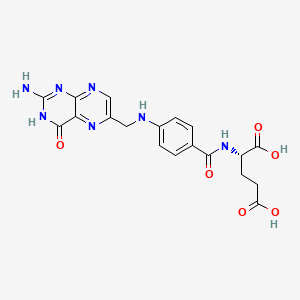
Folate, also called vitamin B9, is a water-soluble B vitamin. Every cell uses it to move single carbon atoms from one molecule to another, says the NIH (the US National Institutes of Health). Those carbons end up in the building blocks of DNA, and in the methyl groups the body uses to recycle homocysteine.
Fast-dividing tissues feel a shortage first. That is why the main sign of deficiency is megaloblastic anemia, with unusually large red blood cells. Folic acid, chemically pteroylglutamic acid, is the synthetic form added to supplements and fortified grain.
Folate and folic acid are not the same thing. Natural food folates are unstable in light, oxygen and heat, while folic acid is the most chemically stable form. EFSA (the EU’s food safety agency) notes it is not a natural component of the diet.
Because the two are absorbed differently, labels use dietary folate equivalents (DFE), and 1 mcg (microgram) of folic acid counts as 1.7 mcg DFE. The name comes from the Latin folium, a leaf: folic acid was first isolated from spinach in 1941.
Timing is the part most readers do not know. The neural tube, which becomes the brain and spinal cord, closes 21 to 28 days after conception. That is often before a woman knows she is pregnant, and about half of US pregnancies are unplanned, according to the NIH.
So health agencies advise folic acid for everyone who could become pregnant, and the US and Canada added it to enriched grain in 1998. Outside pregnancy, deficiency is uncommon in the US. The evidence for extra folic acid against heart disease, cancer and dementia is mixed, as the studies below show.
Health benefits of folate
The top findings from 35 studies, strongest evidence first
What the stars mean
- Strong. Several randomized trials, pooled in a meta-analysis, point the same way, or regulators (FDA or EFSA) have approved the claim.
- Moderate. Good randomized trials support it, but there are fewer of them, or their results vary.
- Limited. Small, short or single trials, or mixed results. Promising, but it needs confirmation.
Population and lab studies get no stars: they show a link or a mechanism, not proof.
How we rate evidence →- ★★★Folic acid supplements cut neural tube defectsIn five trials, folic acid supplements cut the risk of neural tube defects, a type of birth defect, to 0.31 times. The US Preventive Services Task Force recommends 400 to 800 mcg a day for anyone who is planning to become pregnant or could.
- ★★★Lower homocysteine, a blood markerIn a pooled analysis of 25 trials, 0.4 mg of folic acid a day lowered homocysteine by 20%, and 0.8 mg by 23%. Homocysteine is a blood marker, not a health outcome.
- ★★★No clear effect on vascular events or deathsIn 8 trials in 37,485 people at high heart and blood vessel risk, folic acid (several with B6 and B12) cut homocysteine 25% on average. Major vascular events were 1.01 times as common, with no clear difference.
- ★★★No clear effect on cancerIn 13 trials with 49,621 people, folic acid pills gave 1.06 times the cancer rate of placebo over about 5 years. No specific cancer site was affected.
- ★★Fewer strokes, mostly where grain is unfortifiedAcross 21 trials, folic acid cut stroke risk by 10%, more where grain was unfortified (0.83 times the risk, against 1.04 where it was fortified). In Chinese adults with high blood pressure, adding 0.8 mg of folic acid to a blood pressure drug cut first strokes by 21%.
All 27 studies, strongest evidence first
Eight EU health claims for folate, including normal blood formation
The claims are listed in Commission Regulation (EU) No 432/2012, based on EFSA opinions from 2009 and 2010. They include normal blood formation, normal homocysteine metabolism and the normal function of the immune system. The other five cover maternal tissue growth in pregnancy, amino acid synthesis, psychological function, less tiredness and fatigue, and a role in cell division. A food may carry them only if it is at least a source of folate. That term is defined in the Annex to Regulation (EC) No 1924/2006.
An EU claim: supplemental folic acid raises a mother’s folate status
Commission Regulation (EU) No 1135/2014 granted it after EFSA’s panel concluded in 2013 that a cause and effect relationship had been established. The full claim adds that low maternal folate status is a risk factor for neural tube defects. It may be used only for food supplements that provide at least 400 mcg of folic acid per daily portion. Consumers must be told that the target group is women of child-bearing age. They must also be told the benefit comes from 400 mcg a day, from at least one month before to three months after conception.
Folic acid cut neural tube defects by more than two thirds
This Cochrane review pooled five trials in 7,391 women. Folic acid alone or with other vitamins and minerals, against no folic acid, gave 0.31 times the risk in 6,708 births, rated high-quality evidence. It also cut recurrence in women with an earlier affected pregnancy (0.34 times the risk; four studies, 1846 births). The effect did not depend on the dose at 400 mcg a day or higher. There was no clear effect on cleft lip or palate, heart defects, miscarriage or other birth defects. Only one of the five trials was at low risk of bias.
US task force: substantial benefit against neural tube defects, high certainty
The US Preventive Services Task Force reaffirmed this in 2023, after a new evidence update. It recommends a daily supplement with 0.4 to 0.8 mg (400 to 800 mcg) of folic acid. That applies to everyone who is planning to become pregnant or could become pregnant. This is a grade A recommendation, the strongest grade. The statement estimates that about 3,000 US pregnancies a year are affected by a neural tube defect.
0.4 mg of folic acid lowered homocysteine 20%; 0.8 mg, 23%
This meta-analysis (a study that pools trials) of 25 trials used individual data on 2,596 people. Results were standardized to a starting homocysteine of 12 µmol/L and folate of 12 nmol/L (both units for blood levels). Daily doses of 0.2, 0.4, 0.8, 2.0 and 5.0 mg then lowered homocysteine by 13%, 20%, 23%, 23% and 25%. Vitamin B12 (0.4 mg a day) added a 7% further drop, and vitamin B6 added nothing. The authors say 0.2 and 0.4 mg reach 60% and 90% of the maximum effect. Homocysteine is a blood marker, not a health outcome, as the cards below show.
Folic acid did not clearly change vascular events or deaths
This analysis pooled 8 trials in 37,485 people at high cardiovascular (heart and blood vessel) risk. Folic acid lowered homocysteine by an average of 25%. Over a median of 5 years, major vascular events were 1.01 times as common as without it, and stroke 0.96 times. Cancer was 1.05 times as common and death from any cause 1.02 times. None of these was a clear difference. The title says the trials tested B vitamins, and several gave folic acid with vitamins B6 and B12.
Over about 5 years, folic acid did not clearly change cancer
This analysis pooled individual data from 13 trials with 49,621 people that compared folic acid with placebo (a dummy pill) for at least a year. Ten were in cardiovascular disease and three in people with colorectal adenoma, a gut polyp that can turn into cancer. During a weighted average of 5.2 years, there were 1904 cancers with folic acid and 1809 with placebo (1.06 times the rate). No specific site was affected. Blood folic acid quadrupled. The authors note that the doses were an order of magnitude higher than those from flour fortification. The analysis was funded by the British Heart Foundation, the Medical Research Council, Cancer Research UK and the Food Standards Agency.
After an affected pregnancy, folic acid cut repeat risk by 72%
This randomized, double-blind factorial trial ran at 33 centers in seven countries. It included 1,817 women at high risk, who had already had a pregnancy with a neural tube defect. They got folic acid, a mix of seven other vitamins (A, D, B1, B2, B6, C and nicotinamide), both, or neither. Of the 1,195 with a completed pregnancy, 27 had an affected fetus or infant. There were 6 in the folic acid groups and 21 in the other two (0.28 times the risk). The other vitamins did not protect (0.80 times the risk). No harm from folic acid was seen, though the trial could not rule out rare or slight effects.
Hungarian trial: no neural tube defects on vitamins, 6 on trace elements
This randomized trial in women planning a first pregnancy had 4,753 confirmed pregnancies. The vitamin tablet held 12 vitamins including 0.8 mg of folic acid, 4 minerals and 3 trace elements. So the result cannot be credited to folic acid alone. The control tablet held copper, manganese, zinc and a very low dose of vitamin C. Congenital malformations (birth defects) were clearly less common with the vitamins, 13.3 against 22.9 per 1000. Cleft lip with or without cleft palate was not reduced.
Adding folic acid to enalapril cut first strokes by 21%
This double-blind randomized trial included 20,702 Chinese adults with high blood pressure. They took enalapril (a blood pressure drug) with or without 0.8 mg of folic acid, for a median of 4.5 years. First stroke occurred in 2.7% of the folic acid group and 3.4% of the enalapril-only group (0.79 times the risk). Ischemic stroke (caused by a clot) fell too, 2.2% against 2.8%. Hemorrhagic stroke (bleeding), heart attack and deaths did not differ. The NIH describes the study regions as ones without folic acid fortification. The authors say the findings fit a benefit in people with low baseline folate.
Folic acid cut stroke risk by 10%, more where grain was unfortified
This meta-analysis pooled 21 trials with 115,559 people. The risk of stroke was 0.90 times that without folic acid. It was 0.83 in areas without fortified or with partially fortified grain, and 1.04 in areas with fortification, a gap unlikely to be chance. In unfortified areas the effect was largest in people with no history of stroke or heart attack (0.77). Several of the authors were also investigators of the Chinese CSPPT trial above.
B vitamins did not change heart attacks or deaths; stroke fell slightly
This Cochrane review pooled 15 trials with 71,422 people. They took vitamins B6, B9 (folate) or B12, alone or together, to lower homocysteine. Stroke occurred in 4.3% of the treated and 5.1% of the comparison groups (0.90 times the risk, 10 trials). For heart attack and death from any cause the risk ratios were close to 1, rated high-quality evidence. The authors add that more trials are unlikely to change that picture. Separately, they estimate that about 143 people would need enalapril plus folic acid for 5.4 years to prevent one stroke. That estimate comes from a single large trial of enalapril plus folic acid against enalapril alone, and the authors call the effect uncertain.
B vitamins together did not cut heart attacks; strokes 25% fewer
The HOPE-2 trial included 5,522 people with vascular disease or diabetes. They took a placebo or a mix of 2.5 mg of folic acid, 50 mg of B6 and 1 mg of B12. This lasted an average of five years. Heart attacks and cardiovascular deaths were not cut. The main outcome hit 18.8% with treatment and 19.8% with placebo (0.95 times the risk), not a clear difference. Strokes were fewer (0.75 times the risk), and more treated patients were hospitalized for unstable angina (1.24 times). The result belongs to the combination, not folic acid alone.
High-dose B vitamins did no better at preventing another stroke
This trial included 3,680 adults after a stroke. The high-dose capsule held 2.5 mg of folic acid, 25 mg of vitamin B6 and 0.4 mg of vitamin B12. The low-dose capsule held 20 µg of folic acid, 200 µg of B6 and 6 µg of B12. Homocysteine fell 2 µmol/L more with the high dose. Ischemic stroke within 2 years was 9.2% against 8.8%, no clear difference (risk ratio 1.0). The chance of any stroke, heart event or death was 18.0% against 18.6%.
1 mg of folic acid did not cut new adenomas
This double-blind, placebo-controlled trial included 1,021 people with a past colorectal adenoma, who took folic acid or placebo daily. At the first follow-up colonoscopy, 44.1% on folic acid and 42.4% on placebo had at least one adenoma (1.04 times the risk). At the second, advanced lesions were found in 11.6% against 6.9% (1.67 times the risk, a borderline result). Folic acid also went with a higher risk of three or more adenomas and of cancers outside the colon. The authors call for more research on a possible increase.
Folic acid improved memory and processing speed in a 3-year trial
FACIT was a double-blind, placebo-controlled trial in the Netherlands. It included 818 adults aged 50 to 70 with raised homocysteine and normal vitamin B12. They took 800 mcg of folic acid a day or placebo. Folic acid raised serum folate by 576% and lowered homocysteine by 26%. The 3-year change in memory differed by 0.132 Z-score points (a standard unit), and in information processing speed by 0.087. Sensorimotor speed was borderline (0.064). Other trials in older adults, such as those the NIH summarizes, mostly found no cognitive benefit.
Folic acid added to antidepressants did not improve any measure
The FolATED trial was double-blind and placebo-controlled. It included 475 adults with depression who were not folate or B12 deficient. For 12 weeks, 5 mg of folic acid was added to their antidepressant. Folic acid gained a mean of 2.9 quality-adjusted life days, but the range was wide and included a loss. It lowered the SF-12 mental health score by 3.0%. The authors found no evidence of clinical or cost-effectiveness.
4 mg of folic acid did not prevent pre-eclampsia in high-risk women
The FACT trial was double-blind, at 70 centers in five countries. It included 2,301 women at high risk of pre-eclampsia, a dangerous rise in blood pressure in pregnancy. From between 8 and 16 weeks of pregnancy until delivery, they took four 1.0 mg tablets or placebo daily. Pre-eclampsia hit 14.8% on folic acid against 13.5% on placebo (1.10 times the risk). There were no differences in other adverse maternal or newborn outcomes.
In pregnancy, folic acid cut megaloblastic anemia to 0.21 times the risk
This Cochrane review covered 31 trials in 17,771 pregnant women. The anemia result came from four studies with 3,839 participants. The review found no conclusive benefit on pregnancy outcomes. Preterm birth (1.01 times the risk) and stillbirth or newborn death (1.33 times) did not differ. Anemia before delivery and hemoglobin were not clearly improved.
Folic or folinic acid cut methotrexate’s gut side effects by 26%
This review pooled six trials in 624 people with rheumatoid arthritis who took methotrexate. Low-dose folic or folinic acid, pooled together, lowered the risk of nausea, vomiting or abdominal pain (0.74 times the risk). It also lowered raised liver enzymes (0.23 times) and stopping methotrexate for any reason (0.39 times). Mouth sores showed a trend that could be chance. Folate did not weaken methotrexate’s effect on arthritis. The authors rated the evidence moderate for most outcomes and low for blood-count side effects.
Norway: folic acid plus B12 went with more cancer and deaths
This combined analysis of two double-blind trials covered 6,837 patients with ischemic heart disease (narrowed heart arteries). They took 0.8 mg of folic acid plus 0.4 mg of vitamin B12, with or without 40 mg of B6, or placebo. Treatment lasted a median of 39 months, and follow-up went on for another 38 months. Cancer occurred in 10.0% on folic acid plus B12 and 8.4% without (1.21 times the risk, so 21% more), mainly lung cancer. Deaths from any cause were 18% more common. Norway does not fortify foods with folic acid. This was an extended follow-up analysis, and the 13-trial meta-analysis above found no clear overall effect on cancer.
A B-vitamin mix slowed brain shrinkage in mild cognitive impairment
The VITACOG trial included 271 people over 70 with mild cognitive impairment (memory or thinking problems short of dementia). They took 0.8 mg of folic acid, 0.5 mg of vitamin B12 and 20 mg of vitamin B6, or placebo, for 24 months. Brain volume was measured on MRI in the 168 who finished that part. The brain shrank 0.76% a year on the vitamins against 1.08% on placebo. In people with homocysteine above 13 µmol/L, atrophy (shrinkage) was 53% lower. The result belongs to the mix, not folic acid alone. One author is a named inventor on patents for folic acid in Alzheimer’s disease. Two authors have received speaking fees from the company that donated the tablets.
Chinese folic acid users had up to 85% fewer neural tube defects
This public health campaign ran from 1993 to 1995 in a high-rate northern region and a low-rate southern region. Women took a 400 mcg folic acid pill before and early in pregnancy, or did not. Among 130,142 women who took folic acid at any time and 117,689 who did not, 102 and 173 had affected pregnancies. In the north, the rate fell from 4.8 to 1.0 per 1,000 pregnancies. The biggest drop, 85%, was in women who took the pill more than 80% of the time. In the south the rate fell from 1.0 to 0.6 per 1,000 (41%). Women chose whether to take the pill, so this is not a randomized trial.
Canada’s folic acid fortification: neural tube defects fell by 46%
This study covered live births, stillbirths and terminated pregnancies in seven provinces from 1993 to 2002, about 1.9 million births with 2,446 cases. It compared rates before and after Canada required folic acid in cereal products. Prevalence went from 1.58 to 0.86 per 1,000 births. The fall was greatest where rates had been highest, and larger for spina bifida (53%) than for anencephaly (38%) and encephalocele (31%). It compares time periods, so other changes could contribute.
Folic acid around conception went with about half the autism rate
This Norwegian study followed 85,176 children. Some mothers used folic acid from 4 weeks before to 8 weeks after the start of pregnancy. Their children had a lower rate of autistic disorder: 0.10% against 0.21%, an adjusted odds ratio of 0.61. No link was found with Asperger syndrome or other pervasive developmental disorder, where the study had limited power, and fish oil showed no link. The authors say causality cannot be established.
Very high maternal folate went with 2.5 times the autism risk
This Boston study followed 1,257 mother-child pairs. A mother’s plasma folate of 60.3 nmol/L or more at birth carried 2.5 times the risk of the middle 80% of mothers. Very high B12 carried the same 2.5 times. Multivitamin use showed a U shape: moderate use went with the lowest risk, and low or high use with more. The authors call it hypothesis-generating (a lead for more study) and say it does not question the need for adequate folic acid.
Low B12, high folate: linked to more anemia and cognitive impairment
These survey data came from 1,459 US seniors (NHANES 1999 to 2002, a national health survey). In those with low B12, serum folate above 59 nmol/L went with 3.1 times the odds of anemia. The odds of cognitive impairment were 2.6 times. With normal B12, high folate went with lower odds of cognitive impairment (0.4 times). Cross-sectional data, a snapshot in time, cannot show cause.
Foods high in folate
Beans and lentils lead our USDA ranking per serving. Cranberry beans give 366 mcg per cup (177 g), lentils 358 mcg per cup (198 g) and mung beans 321 mcg per cup (202 g). The Daily Value (the FDA label value) is 400 mcg DFE. Pinto beans, chickpeas and adzuki beans follow; the ranking below gives their amounts.
Per 100 g, peanuts (240 mcg), sunflower seeds (227 mcg), cranberry beans (207 mcg) and spinach (194 mcg) lead, followed by quinoa and lentils. Per 100 kcal, leafy vegetables and herbs win: spinach has 843 mcg, endive 835 mcg and bok choy 508 mcg, then come parsley and arugula.
The NIH table adds braised beef liver at 215 mcg DFE in 3 oz and boiled spinach at 131 mcg per ½ cup. Boiled black-eyed peas give 105 mcg per ½ cup, boiled asparagus 89 mcg for 4 spears and frozen boiled Brussels sprouts 78 mcg per ½ cup.
Grain foods matter because of fortification. Since January 1998 the US has required 140 mcg of folic acid per 100 g in enriched grain products. Canada has required 150 mcg per 100 g since November 1998. The NIH says this raised mean US folic acid intake by about 190 mcg a day.
The NIH counts ½ cup of enriched white rice at 90 mcg DFE and ½ cup of enriched spaghetti at 74 mcg. A slice of white bread gives 50 mcg.
Cooking and storage change what reaches the plate. In a UK study, boiling kept only 49% of the folate in spinach and 44% in broccoli. Steaming caused no clear loss, even after 4.5 minutes for spinach and 15 minutes for broccoli. Grilled beef and boiled whole potatoes showed no clear change.
EFSA adds that natural folates are unstable in light, oxygen and heat. Food folate is also absorbed less completely than folic acid. But a 4-week trial in 72 adults put the difference at about 20%, less than the DFE system assumes.
Per serving. The Daily Value (400 µg DFE a day) is set in a different measure, so bars compare each food with the top food.
Per 100 g. The Daily Value (400 µg DFE a day) is set in a different measure, so bars compare each food with the top food.
Per serving. Bars show the share of the EU Reference Intake (200 µg a day). The line marks 100%.
Per 100 g. Bars show the share of the EU Reference Intake (200 µg a day). The line marks 100%.
Per 100 kcal: the same calories of each food, for a fair comparison. Bars compare each food with the top food.
- 1.

- 2.

- 3.

- 4.

- 5.

- 6.

- 7.

- 8.

- 9.

- 10.



- 1.

- 2.

- 3.
- 4.

- 5.

- 6.
- 7.
- 8.
- 9.
- 10.



- 1.
- 2.

- 3.

- 4.
- 5.

- 6.

- 7.

- 8.

- 9.

- 10.



Sources
- FoodData Central. US Department of Agriculture, Agricultural Research Service. Values as shown in the ranking above.
- Folate: fact sheet for health professionals. National Institutes of Health, Office of Dietary Supplements. Updated November 30, 2022.
- EFSA Panel on Dietetic Products, Nutrition and Allergies (NDA). Scientific opinion on Dietary Reference Values for folate. EFSA J. 2014.
- McKillop DJ, Pentieva K, Daly D, et al. The effect of different cooking methods on folate retention in various foods that are amongst the major contributors to folate intake in the UK diet. Br J Nutr. 2002.
- Winkels RM, Brouwer IA, Siebelink E, et al. Bioavailability of food folates is 80% of that of folic acid. Am J Clin Nutr. 2007.
How folate works
Most of the biochemistry below is well established, but the details come from reviews, cell work and tissue samples more than from trials. Five ideas cover it. Folate carries single carbons, fast-dividing cells need it first, and a transporter lets it into the body. Folic acid must be converted before use, and a common gene variant changes how well one enzyme works.
A sixth point is bookkeeping: food folate and folic acid are counted differently. Here is each one, and what has been seen in people.
It carries single carbons
Inside cells, folate works as tetrahydrofolate (THF), according to EFSA. THF picks up one-carbon units and hands them to enzymes that need them. Two jobs matter most. THF supplies carbons for the nucleotides in DNA and RNA.
And 5-methyl-THF passes a methyl group to homocysteine to make methionine, in a reaction that also needs vitamin B12 as methylcobalamin. Methionine then becomes SAM, which donates methyl groups to more than 100 enzymes. When folate runs short, homocysteine rises.
Two main jobs of folate in the cell, simplified. Not to scale.
Cells that divide fast need it first
One folate-dependent step turns dUMP into dTMP, a DNA building block needed for cell division, the NIH says. When folate is short, uracil is built into DNA in place of thymine. In a laboratory study, folate deficiency put about 4 million uracil bases into the DNA of each human cell and caused chromosome breaks. Giving folate reversed both.
Tissues that turn over quickly, such as bone marrow, show the problem first, as unusually large red blood cells, according to EFSA.
A transporter lets it in
Food folates are first cut down to the single-unit form. They are then taken up in the upper small intestine by a pH-dependent transport system. At very high doses some also crosses by passive diffusion, as EFSA describes.
In 2006 researchers identified the human transporter, PCFT. They showed that a loss-of-function mutation in its gene causes hereditary folate malabsorption in one family. Colon bacteria make folate too, though how much of it the body uses is unclear, the NIH says.
The body must convert folic acid first
Folic acid has no vitamin activity until an enzyme, dihydrofolate reductase (DHFR), reduces it. Human liver does this slowly. In six liver samples, activity per gram averaged under 2% of rat liver, and it varied almost five-fold between samples. When DHFR is overwhelmed, unmetabolized folic acid shows up in the blood.
Whether it does any harm is not known, according to the NIH. A 2026 systematic review says the evidence does not establish that it independently causes harm.
Drawn to scale, in percent of rat liver. Human samples came from organ donors or surgery and were tested at physiological pH. This is a tissue study, not a trial.
A common gene variant changes how much you may need
The MTHFR enzyme makes 5-methyl-THF. People with two copies of the 677C>T variant (the TT type) have a less active enzyme. About 25% of Hispanic, 10% of white and Asian and 1% of African American people in the US are TT, the NIH says. EFSA puts it at 12% in northern and up to 24% in southern Europe.
EFSA built an allowance for the TT type into its adult reference intake. The enzyme needs riboflavin (vitamin B2) as a cofactor. In a 12-week trial, 1.6 mg of riboflavin a day lowered homocysteine by 22% on average, but only in adults with the TT type.
Even so, the American College of Medical Genetics says routine MTHFR testing has minimal clinical utility. The CDC (the US public health agency) advises 400 mcg of folic acid, not methylfolate, for people who could become pregnant, even with the variant.
Food folate and folic acid are counted differently
The DFE system treats folic acid taken with food as about 1.7 times as potent as food folate. It rests on an estimated 85% absorption for folic acid with food and about 50% for food folate, according to the NIH. EFSA kept the system for lack of better data but notes that its figures have not been confirmed in studies. One 4-week trial in 72 adults put food folate from fruit, vegetables and liver at about 80% of folic acid.
Drawn to scale, in percent of folic acid. The first two bars are rules built into the DFE. The other two come from one 4-week study of 72 adults, with 95% confidence intervals (CI) in brackets; its folic acid capsules were taken just before a meal. EFSA notes that the DFE figures have not been confirmed in studies.
What has been seen in people
The clearest result is about pregnancy. In a Cochrane review of five trials, folic acid cut neural tube defects by more than two thirds. The NIH says the mechanism has not been fully established, though. Folic acid at 0.4 mg a day also lowers homocysteine by 20%.
But lowering homocysteine did not mean fewer heart attacks, cancers or deaths in a meta-analysis of 8 trials. The stroke result depends on the setting: a 10% drop across 21 trials, with the clearest effect where grain is not fortified.
The biochemistry of deficiency is direct, too: in pregnancy, folic acid lowered the risk ratio for megaloblastic anemia to 0.21. All of these are among the study cards above.
Sources
- EFSA Panel on Dietetic Products, Nutrition and Allergies (NDA). Scientific opinion on Dietary Reference Values for folate. EFSA J. 2014.
- Folate: fact sheet for health professionals. National Institutes of Health, Office of Dietary Supplements. Updated November 30, 2022.
- Blount BC, Mack MM, Wehr CM, et al. Folate deficiency causes uracil misincorporation into human DNA and chromosome breakage: implications for cancer and neuronal damage. Proc Natl Acad Sci U S A. 1997.
- Qiu A, Jansen M, Sakaris A, et al. Identification of an intestinal folate transporter and the molecular basis for hereditary folate malabsorption. Cell. 2006.
- Bailey SW, Ayling JE. The extremely slow and variable activity of dihydrofolate reductase in human liver and its implications for high folic acid intake. Proc Natl Acad Sci U S A. 2009.
- McNulty H, Dowey le RC, Strain JJ, et al. Riboflavin lowers homocysteine in individuals homozygous for the MTHFR 677C->T polymorphism. Circulation. 2006.
- Hickey SE, Curry CJ, Toriello HV. ACMG Practice Guideline: lack of evidence for MTHFR polymorphism testing. Genet Med. 2013.
- Winkels RM, Brouwer IA, Siebelink E, et al. Bioavailability of food folates is 80% of that of folic acid. Am J Clin Nutr. 2007.
- Frye RE, Rossignol DA. Unmetabolized Folic Acid: Biology, Epidemiology, and Clinical Consequences: A Systematic Review. Nutrients. 2026.
How much folate do you need?
Adults need 400 mcg of dietary folate equivalents (DFE) a day, according to the US recommended dietary allowance (RDA). EFSA’s population reference intake in the EU is 330 mcg DFE for adults. One mcg DFE equals 1 mcg of food folate. It also equals 0.6 mcg of folic acid with food, from fortified food or a supplement, or 0.5 mcg taken on an empty stomach.
Pregnancy raises the US allowance to 600 mcg DFE a day. EFSA sets an adequate intake of 600 mcg DFE, noting that the evidence is weaker than for non-pregnant adults. Breastfeeding is 500 mcg DFE in both systems; EFSA adds 130 mcg DFE a day to cover folate lost in milk. For older adults the US allowance stays at 400 mcg DFE from age 19 on, and EFSA’s adult value covers all adults.
Women and teenage girls who could become pregnant are advised to get 400 mcg of folic acid a day from supplements, fortified foods or both. That comes on top of the folate in food. The US Preventive Services Task Force recommends 400 to 800 mcg of folic acid a day. It advises starting at least one month before conception and continuing through the first 2 to 3 months of pregnancy.
People with alcohol use disorder, celiac disease, inflammatory bowel disease or other malabsorption are at higher risk of low folate. EFSA says the MTHFR TT type raises the requirement.
Vitamin B9: recommended intake per day
US: Adequate Intake / Recommended Dietary Allowance (NASEM). EU: Adequate Intake / Population Reference Intake (EFSA).
| Age and sex | US (RDA) | EU (PRI) |
|---|---|---|
| Men, 31–50 years | 400 µg DFE | 330 µg DFE |
| Women, 31–50 years | 400 µg DFE | 330 µg DFE |
All ages, pregnancy and breastfeeding
| Age and sex | US (AI/RDA) | EU (AI/PRI) |
|---|---|---|
| Infants 0–6 months | 65 µg DFE | None set |
| Infants 7–11 months | None set | 80 µg DFE |
| Infants 7–12 months | 80 µg DFE | None set |
| Children 1–3 years | 150 µg DFE | 120 µg DFE |
| Children 4–6 years | None set | 140 µg DFE |
| Children 4–8 years | 200 µg DFE | None set |
| Children 7–10 years | None set | 200 µg DFE |
| Females 9–13 years | 300 µg DFE | None set |
| Males 9–13 years | 300 µg DFE | None set |
| Children 11–14 years | None set | 270 µg DFE |
| Females 14–18 years | 400 µg DFE | None set |
| Males 14–18 years | 400 µg DFE | None set |
| Children 15–17 years | None set | 330 µg DFE |
| Adults 18+ years | None set | 330 µg DFE |
| Females 19–30 years | 400 µg DFE | None set |
| Males 19–30 years | 400 µg DFE | None set |
| Females 31–50 years | 400 µg DFE | None set |
| Males 31–50 years | 400 µg DFE | None set |
| Females 51–70 years | 400 µg DFE | None set |
| Males 51–70 years | 400 µg DFE | None set |
| Females >70 years | 400 µg DFE | None set |
| Males >70 years | 400 µg DFE | None set |
| Pregnancy 14–18 years | 600 µg DFE | None set |
| Pregnancy | None set | 600 µg DFE |
| Pregnancy 19–30 years | 600 µg DFE | None set |
| Pregnancy 31–50 years | 600 µg DFE | None set |
| Lactation 14–18 years | 500 µg DFE | None set |
| Lactation | None set | 500 µg DFE |
| Lactation 19–30 years | 500 µg DFE | None set |
| Lactation 31–50 years | 500 µg DFE | None set |
EU and US age bands differ; "None set" means that body sets no value for the group. Label reference: FDA Daily Value 400 µg DFE, EU Reference Intake 200 µg.EU and US age bands differ; "None set" means that body sets no value for the group. Label reference: EU Reference Intake 200 µg, FDA Daily Value 400 µg DFE.
Folate deficiency: signs and who is at risk
Megaloblastic anemia is the main sign, and it can also come from vitamin B12 deficiency. Its symptoms include weakness, fatigue, difficulty concentrating, irritability, headache, heart palpitations and shortness of breath, according to the NIH. Deficiency can also cause a sore tongue and shallow mouth ulcers, changes in skin, hair or nail color, gut symptoms and a high homocysteine level. EFSA notes that irritability and forgetfulness are less frequent and usually mild.
In pregnancy, low folate raises the risk of neural tube defects. The NIH says it has also been associated with low birth weight and preterm delivery. Frank deficiency is rare in the US, where less than 0.5% of children aged 1 to 18 have a deficient red blood cell folate. It usually comes together with other deficiencies.
The NIH lists the groups most at risk. Among them are people with alcohol use disorder. In Portugal, where food is not fortified, over 60% of people with chronic alcoholism had low folate status.
Women of childbearing age are another group. In US data, 19% of girls aged 14 to 18 and 17% of women aged 19 to 30 fell short of the average requirement. That was even counting supplements.
People who absorb less are also at risk. They include those with celiac disease, atrophic gastritis and inflammatory bowel disease, where 20% to 60% of patients are deficient. Methotrexate, antiepileptic drugs and sulfasalazine can also lower folate or its absorption.
A serum folate above 3 ng/mL indicates adequacy, according to the NIH. A red blood cell folate above 140 ng/mL indicates adequate status over the longer term. Serum folate reflects recent intake, so red blood cell folate is the better long-term measure.
EFSA uses different adequacy cut-offs: 10 nmol/L in serum and 340 nmol/L in red blood cells. It based them on where homocysteine levels off.
Homocysteine rises when folate is short, but kidney problems and B12 deficiency raise it too, so it is not specific. Large amounts of folic acid can correct the anemia of B12 deficiency without fixing the nerve damage. So a low folate result and a B12 result are best read together by a doctor.
Sources
- Folate: fact sheet for health professionals. National Institutes of Health, Office of Dietary Supplements. Updated November 30, 2022.
- EFSA Panel on Dietetic Products, Nutrition and Allergies (NDA). Scientific opinion on Dietary Reference Values for folate. EFSA J. 2014.
- Institute of Medicine, Food and Nutrition Board. Dietary Reference Intakes for thiamin, riboflavin, niacin, vitamin B6, folate, vitamin B12, pantothenic acid, biotin, and choline. National Academy Press. 1998.
- US Preventive Services Task Force, Barry MJ, Nicholson WK, et al. Folic acid supplementation to prevent neural tube defects: US Preventive Services Task Force reaffirmation recommendation statement. JAMA. 2023.
Forms of folate: absorption and effects
Folate supplements differ in what the molecule is, how it is counted and how the body handles it. Folic acid is the synthetic, fully oxidized form in most supplements and in fortified grain. 5-methyltetrahydrofolate (5-MTHF, also sold as L-methylfolate or methylfolate) is the main folate in blood, and the form the body makes from folic acid.
Folinic acid is another reduced form, studied mainly as a medicine. Food folate is a mix of polyglutamates that the gut trims before absorbing them.
The honest bottom line: nearly all comparisons measure blood folate, not health. Folic acid is the only form tested in the large trials that prevented neural tube defects, according to a 2026 review. The EU claim covers folic acid too.
In one 24-week trial, 5-MTHF raised red blood cell folate more than folic acid. In EFSA’s review of longer trials, it raised it about the same. It also produced less unmetabolized folic acid. We found no trial that compared the forms head to head for neural tube defects, stroke or any other health outcome.
So the popular idea that methylfolate works better, especially for people with MTHFR variants, rests on blood measurements. The NIH says 5-MTHF might be more beneficial for some people with the variant, while the CDC still advises folic acid.
Mixtures matter too. The first-occurrence neural tube trial used a multivitamin with 0.8 mg of folic acid. The heart and brain trials used folic acid with vitamins B6 and B12, so their results belong to the combinations.
The outcome trials above used folic acid for neural tube defects, stroke, cancer, depression (5 mg) and pre-eclampsia (4 mg). The methotrexate review used folic or folinic acid, and the depression add-on trial used L-methylfolate (15 mg).
| Form | Activity or conversion | What studies show | Source |
|---|---|---|---|
| Folic acid | 1 mcg DFE = 0.6 mcg with food or 0.5 mcg on an empty stomach, so 1 mcg counts as 1.7 mcg DFE on a label | About 85% is absorbed with food and nearly 100% without, according to the NIH. It is the only form tested in the large neural tube defect trials and the form named in the EU claim. A dose of 0.4 mg a day lowered homocysteine by 20%. Human liver converts it slowly, and in a US survey 38% of adults aged 60 and older had unmetabolized folic acid in their blood. The US and EU upper levels cover this form. | 1, 2, 6, 10, 12, 13, 14, 15 |
| 5-MTHF (L-methylfolate; calcium or glucosamine salt) | Not formally established. The FDA allows a factor of 1.7, as for folic acid, or a maker’s own factor not above 1.7 | The NIH says its bioavailability is the same as or greater than folic acid. EFSA found it similar at 100 to 400 mcg a day in trials of 16 to 24 weeks. In 144 women, 416 mcg raised red blood cell folate more than 400 mcg of folic acid over 24 weeks, and in 24 women a single dose gave a higher peak level, with unmetabolized folic acid rare. A review of three trials found less unmetabolized folic acid, but two trials of red blood cell folate disagreed. L-methylfolate at 15 mg a day helped in one of two depression trials. We found no trial for neural tube defects. | 1, 2, 4, 5, 6, 7 |
| Folinic acid (5-formyl-THF, leucovorin) | Not stated | Pooled with folic acid in six trials in rheumatoid arthritis, it cut the gut side effects of methotrexate. In a 12-week trial in 48 children with autism and language impairment, 2 mg per kg a day improved verbal communication. We found no trial of folinic acid for neural tube defects. | 8, 9 |
| Food folate | 1 mcg DFE = 1 mcg food folate | A mix of reduced forms that are unstable in light, oxygen and heat. The DFE system assumes about 50% absorption. In one 4-week trial in 72 adults, food folate from fruit, vegetables and liver had about 80% of the bioavailability of folic acid. | 1, 2, 3 |
Here are the head-to-head and form-specific studies, strongest evidence first, 8 in all.
All 8 studies, strongest evidence first
Food folate was about 80% as available as folic acid
In this 4-week dietary trial, 72 adults were split into groups. One group ate a high-folate diet (369 mcg of food folate a day), from fruit, vegetables and liver. Three groups ate a low-folate diet (73 mcg) with folic acid capsules of 92, 191 or 289 mcg. Relative bioavailability (how well it is absorbed and used) was 78% by labeled folate and 85% by serum folate. The authors conclude that a diet rich in food folate can improve folate status more efficiently than often assumed.
5-MTHF raised red blood cell folate more than folic acid
This double-blind, placebo-controlled trial included 144 healthy women aged 19 to 33. Groups took 400 mcg of folic acid, 416 mcg of [6S]-5-MTHF or 208 mcg of 5-MTHF, or placebo, for 24 weeks. The 416 mcg dose is the same molar amount (number of molecules) as 400 mcg of folic acid. The rise in red blood cell folate was clearly larger with 416 mcg of 5-MTHF than with the other two doses. Red blood cell folate had not leveled off at 24 weeks. The trial measured blood folate, not neural tube defects.
US geneticists: MTHFR gene testing has minimal clinical utility
This practice guideline from the American College of Medical Genetics concerns MTHFR testing ordered in work-ups for clotting disorders. It notes that recent meta-analyses disproved links between raised homocysteine and coronary heart disease, and between MTHFR status and venous thromboembolism (blood clots in veins). It advises against routine ordering. It does not address how much folic acid to take.
Swapping to 5-MTHF lowered unmetabolized folic acid; health benefit unproven
This systematic review covered 65 publications. Three trials gave a pooled standardized difference of +0.99, rated low certainty. Two trials of red blood cell folate disagreed and were not pooled, and no pooled difference in homocysteine could be derived. The authors say the evidence cannot support equivalence, and does not establish that unmetabolized folic acid independently causes harm. Both authors disclose ties to a company developing a leucovorin product.
A single 5-MTHF dose raised blood folate more than folic acid
In this randomized crossover trial, 24 women took 400 mcg of folic acid and 416 mcg of [6S]-5-MTHF. Plasma folate was followed for 8 hours. Sixteen had the MTHFR TT genotype and 8 had CC. With 5-MTHF, peak level and area under the curve were higher, and time to peak shorter, in both genotypes. Unmetabolized folic acid appeared regularly after folic acid but rarely after 5-MTHF. It was a single dose, not a long-term or outcome trial.
L-methylfolate added to an SSRI gave split results in two trials
Both trials had a sequential parallel design, in people with major depression who had a partial or no response to an SSRI antidepressant. In the first, with 148 people, 7.5 mg a day for 30 days then 15 mg a day made no clear difference. In the second, with 75 people, 15 mg a day beat placebo on response and symptom scores. The number needed to treat was about six. Adverse events matched placebo.
In a small trial, folinic acid improved verbal communication in autism
This double-blind trial included 48 children with autism and language impairment. For 12 weeks they took 2 mg of folinic acid per kg of body weight a day (maximum 50 mg) or placebo. The gain was 5.7 standardized points (Cohen’s d = 0.70), and it was larger in children with folate receptor autoantibodies (7.3 points). Adverse events did not differ. It is a small trial, and two authors are inventors on a patent for the antibody test.
38% of older US adults had unmetabolized folic acid, even fasting
These survey data come from NHANES 2001 to 2002, on 1,121 US adults aged 60 and older. People with unmetabolized folic acid in their blood used folic acid supplements more often (60% against 41%). But total folic acid intake explained little of the level (r² = 0.07). Red blood cell folate, homocysteine and methylmalonic acid did not differ between the groups. The authors say monitoring may be warranted, given a possible link between excess folic acid and cancer; the study did not measure harm.
Sources
- Folate: fact sheet for health professionals. National Institutes of Health, Office of Dietary Supplements. Updated November 30, 2022.
- EFSA Panel on Dietetic Products, Nutrition and Allergies (NDA). Scientific opinion on Dietary Reference Values for folate. EFSA J. 2014.
- Winkels RM, Brouwer IA, Siebelink E, et al. Bioavailability of food folates is 80% of that of folic acid. Am J Clin Nutr. 2007.
- Lamers Y, Prinz-Langenohl R, Brämswig S, Pietrzik K. Red blood cell folate concentrations increase more after supplementation with [6S]-5-methyltetrahydrofolate than with folic acid in women of childbearing age. Am J Clin Nutr. 2006.
- Prinz-Langenohl R, Brämswig S, Tobolski O, et al. [6S]-5-methyltetrahydrofolate increases plasma folate more effectively than folic acid in women with the homozygous or wild-type 677C–>T polymorphism of methylenetetrahydrofolate reductase. Br J Pharmacol. 2009.
- Frye RE, Rossignol DA. Unmetabolized Folic Acid: Biology, Epidemiology, and Clinical Consequences: A Systematic Review. Nutrients. 2026.
- Papakostas GI, Shelton RC, Zajecka JM, et al. L-methylfolate as adjunctive therapy for SSRI-resistant major depression: results of two randomized, double-blind, parallel-sequential trials. Am J Psychiatry. 2012.
- Frye RE, Slattery J, Delhey L, et al. Folinic acid improves verbal communication in children with autism and language impairment: a randomized double-blind placebo-controlled trial. Mol Psychiatry. 2018.
- Shea B, Swinden MV, Tanjong Ghogomu E, et al. Folic acid and folinic acid for reducing side effects in patients receiving methotrexate for rheumatoid arthritis. Cochrane Database Syst Rev. 2013.
- Bailey RL, Mills JL, Yetley EA, et al. Unmetabolized serum folic acid and its relation to folic acid intake from diet and supplements in a nationally representative sample of adults aged > or =60 y in the United States. Am J Clin Nutr. 2010.
- Hickey SE, Curry CJ, Toriello HV. ACMG Practice Guideline: lack of evidence for MTHFR polymorphism testing. Genet Med. 2013.
- Skavinska O, Rossokha Z, Stefanyshyn V, et al. Comparative Analysis of Treatment With Folate Forms in Clinical Practice. Nutr Rev. 2026.
- Commission Regulation (EU) No 1135/2014 on the authorisation of a health claim made on foods and referring to the reduction of disease risk. Official Journal of the European Union. 2014.
- Bailey SW, Ayling JE. The extremely slow and variable activity of dihydrofolate reductase in human liver and its implications for high folic acid intake. Proc Natl Acad Sci U S A. 2009.
- Homocysteine Lowering Trialists’ Collaboration. Dose-dependent effects of folic acid on blood concentrations of homocysteine: a meta-analysis of the randomized trials. Am J Clin Nutr. 2005.
Is folate safe? Supplements, dose and interactions
Folate from food is not a safety concern. EFSA says natural food folate is considered safe. The US sets no upper level for it, because high intakes from food have not been reported to cause adverse effects. The limits cover synthetic folic acid from supplements and fortified foods.
The US tolerable upper intake level (UL, the daily maximum) is 1,000 mcg for adults and 800 mcg for ages 14 to 18. It is 600 mcg for ages 9 to 13, 400 mcg for ages 4 to 8 and 300 mcg for ages 1 to 3. It is counted in mcg of folic acid, not DFE, so 1,000 mcg of folic acid equals 1,667 mcg DFE. It applies in pregnancy and breastfeeding too, but not to people taking higher doses under medical supervision.
EFSA’s folate opinion describes the EU level, set by the Scientific Committee on Food in 2000. It is 1 mg of folic acid a day for adults, including pregnant and breastfeeding women. It falls to 200 mcg at ages 1 to 3, and is 800 mcg at ages 15 to 17.
The reason is vitamin B12. The level was set from case reports of B12-deficient patients who relapsed neurologically on folic acid. The lowest observed effect was at 5 mg a day, and a safety factor of five was applied.
- Masking and worsening B12 deficiency. Folic acid can reverse the anemia of B12 deficiency while the nerve damage goes on. EFSA names irreversible damage to the spinal cord as the risk. The NIH says the concern has shifted to high folate worsening the anemia and cognitive symptoms of B12 deficiency. In US seniors with low B12, high serum folate went with more anemia and cognitive impairment.
- Cancer. Trials are mixed. In 1,021 people with past adenomas, 1 mg of folic acid did not lower adenoma risk. It was linked to more advanced lesions in the second round. Norwegian heart patients given folic acid plus B12 had more cancer. A meta-analysis of 13 trials found no clear effect of folic acid on overall cancer. In 2015 an expert panel convened by the National Toxicology Program and the NIH reported. It concluded that folic acid does not reduce cancer risk in people with adequate folate status.
- High doses and unmetabolized folic acid. In limited research, single doses of 300 or 400 mcg of folic acid produced detectable unmetabolized folic acid in the blood. Doses of 100 or 200 mcg did not. The NIH says the health effects are not well understood. About 5% of US adults aged 51 to 70 get more folic acid than the upper level, mostly from supplements. In pregnancy, 4 mg a day started between 8 and 16 weeks did not prevent pre-eclampsia. The NIH also cites a study of intake around conception. It linked 1,000 mcg or more to lower child test scores at age 4 to 5 than 400 to 999 mcg.
- Drug interactions. Methotrexate is a folate antagonist (it works against folate). People taking it for cancer should ask their oncologist before taking folate. In rheumatoid arthritis, though, folic or folinic acid cut its gut side effects without weakening its effect. Antiepileptic drugs such as phenytoin, carbamazepine and valproate can lower folate, and folate might lower their levels, so ask your doctor first. Sulfasalazine blocks folate absorption.
- Who should ask a doctor. Anyone with known or possible B12 deficiency, a history of colorectal adenomas or cancer, or epilepsy. Also anyone taking methotrexate or sulfasalazine, and anyone considering more than 1,000 mcg of folic acid. Some experts advise 4 to 5 mg after a pregnancy with a neural tube defect; such doses should only be taken under medical supervision.
How to get more folate
- Best foods. Cranberry beans give 366 mcg per cup, lentils 358 mcg and mung beans 321 mcg in our ranking. Spinach holds 194 mcg per 100 g. The NIH adds braised beef liver at 215 mcg DFE in 3 oz and boiled spinach at 131 mcg per ½ cup.
- Keep cooking short. Boiling kept only 49% of the folate in spinach and 44% in broccoli, while steaming caused no clear loss. So steaming keeps more than boiling.
- If you could become pregnant. Take 400 mcg of folic acid a day from a supplement, fortified food or both, in addition to the folate in food. Health agencies say to start at least a month before conception. In one trial of 144 women, red blood cell folate was still rising after 24 weeks.
Sources
- Folate: fact sheet for health professionals. National Institutes of Health, Office of Dietary Supplements. Updated November 30, 2022.
- EFSA Panel on Dietetic Products, Nutrition and Allergies (NDA). Scientific opinion on Dietary Reference Values for folate. EFSA J. 2014.
- Institute of Medicine, Food and Nutrition Board. Dietary Reference Intakes for thiamin, riboflavin, niacin, vitamin B6, folate, vitamin B12, pantothenic acid, biotin, and choline. National Academy Press. 1998.
- Commission Regulation (EU) No 1135/2014 on the authorisation of a health claim made on foods and referring to the reduction of disease risk. Official Journal of the European Union. 2014.
- US Preventive Services Task Force, Barry MJ, Nicholson WK, et al. Folic acid supplementation to prevent neural tube defects: US Preventive Services Task Force reaffirmation recommendation statement. JAMA. 2023.
- Morris MS, Jacques PF, Rosenberg IH, Selhub J. Folate and vitamin B-12 status in relation to anemia, macrocytosis, and cognitive impairment in older Americans in the age of folic acid fortification. Am J Clin Nutr. 2007.
- Cole BF, Baron JA, Sandler RS, et al. Folic acid for the prevention of colorectal adenomas: a randomized clinical trial. JAMA. 2007.
- Ebbing M, Bønaa KH, Nygård O, et al. Cancer incidence and mortality after treatment with folic acid and vitamin B12. JAMA. 2009.
- Vollset SE, Clarke R, Lewington S, et al. Effects of folic acid supplementation on overall and site-specific cancer incidence during the randomised trials: meta-analyses of data on 50,000 individuals. Lancet. 2013.
- Wen SW, White RR, Rybak N, et al. Effect of high dose folic acid supplementation in pregnancy on pre-eclampsia (FACT): double blind, phase III, randomised controlled, international, multicentre trial. BMJ. 2018.
- Shea B, Swinden MV, Tanjong Ghogomu E, et al. Folic acid and folinic acid for reducing side effects in patients receiving methotrexate for rheumatoid arthritis. Cochrane Database Syst Rev. 2013.
- McKillop DJ, Pentieva K, Daly D, et al. The effect of different cooking methods on folate retention in various foods that are amongst the major contributors to folate intake in the UK diet. Br J Nutr. 2002.
- Lamers Y, Prinz-Langenohl R, Brämswig S, Pietrzik K. Red blood cell folate concentrations increase more after supplementation with [6S]-5-methyltetrahydrofolate than with folic acid in women of childbearing age. Am J Clin Nutr. 2006.
History of folate
The story starts with anemia in pregnancy. In the early 1930s Lucy Wills worked in Bombay (now Mumbai) on severe anemia in poor, pregnant textile workers. She ruled out infection and parasites and linked the anemia to a poor, monotonous diet. She found that liver and spreads made from yeast corrected it.
The unknown protective substance was first called the Wills factor. She reported her work in the British Medical Journal in 1931.
The substance went by several names, among them vitamin M, vitamin Bc and Lactobacillus casei factor. Then folic acid was isolated from spinach in 1941, and industrial synthesis followed in 1945. Soon afterward a physician showed that folic acid gave a prompt blood response in many macrocytic anemias, though not in pernicious anemia.
In 1964 Bryan Hibbard published on the role of folic acid in pregnancy, with particular reference to anemia, abruption and abortion.
Neural tube defects came next. In 1991 the Medical Research Council trial showed that folic acid prevented repeat defects, with a 72% protective effect. In 1992 a Hungarian trial of a multivitamin with folic acid showed fewer first occurrences.
The US Food and Drug Administration authorized adding folic acid to enriched grain in March 1996, with compliance mandatory by January 1998. Canada followed in November 1998. The NIH reports that US neural tube defect rates have fallen 28% since 1998.
The EU authorized its folic acid claim in 2014, and the US Preventive Services Task Force reaffirmed its grade A recommendation in 2023.
Sources
- Shulpekova Y, Nechaev V, Kardasheva S, et al. The Concept of Folic Acid in Health and Disease. Molecules. 2021.
- Treatment of anemia during pregnancy (1931), by Lucy Wills. Lynch L. Embryo Project Encyclopedia, Arizona State University. 2017.
- Wills L. Treatment of “pernicious anaemia of pregnancy” and “tropical anaemia” with special reference to yeast extract as a curative agent. Nutrition. 1991 (reprint of Br Med J. 1931).
- Hibbard BM. The role of folic acid in pregnancy; with particular reference to anaemia, abruption and abortion. J Obstet Gynaecol Br Commonw. 1964.
- MRC Vitamin Study Research Group. Prevention of neural tube defects: results of the Medical Research Council Vitamin Study. Lancet. 1991.
- Czeizel AE, Dudás I. Prevention of the first occurrence of neural-tube defects by periconceptional vitamin supplementation. N Engl J Med. 1992.
- Honein MA, Paulozzi LJ, Mathews TJ, et al. Impact of folic acid fortification of the US food supply on the occurrence of neural tube defects. JAMA. 2001.
- Folate: fact sheet for health professionals. National Institutes of Health, Office of Dietary Supplements. Updated November 30, 2022.
- Commission Regulation (EU) No 1135/2014 on the authorisation of a health claim made on foods and referring to the reduction of disease risk. Official Journal of the European Union. 2014.
- US Preventive Services Task Force, Barry MJ, Nicholson WK, et al. Folic acid supplementation to prevent neural tube defects: US Preventive Services Task Force reaffirmation recommendation statement. JAMA. 2023.
Frequently asked questions about folate
What is the difference between folate and folic acid?
Folate is the family of forms found naturally in food, and folic acid is the synthetic form used in supplements and fortified grain. Folic acid is the most stable and is absorbed better: about 85% with food and nearly 100% on an empty stomach. Food folate is estimated at 50%, though one 4-week trial of 72 adults put it at about 80% of folic acid. The body must convert folic acid before using it. The label unit DFE puts both on one scale, with 1 mcg of folic acid counting as 1.7 mcg DFE.
How much folic acid should I take before and during pregnancy?
The NIH advises everyone who could become pregnant to get 400 mcg of folic acid a day, on top of the folate in food. It can come from supplements, fortified foods or both. The US Preventive Services Task Force recommends 400 to 800 mcg a day. It advises starting at least one month before conception and continuing through the first 2 to 3 months of pregnancy. The US allowance in pregnancy is 600 mcg DFE a day. After a pregnancy with a neural tube defect, some experts advise 4,000 to 5,000 mcg, which should be taken only under medical supervision.
Is methylfolate better than folic acid?
It has not been shown to be better for health. In 144 women, 416 mcg of 5-MTHF raised red blood cell folate more than 400 mcg of folic acid over 24 weeks. A review of three trials found less unmetabolized folic acid with 5-MTHF. But the large neural tube defect trials used folic acid. The CDC advises folic acid even for people with the MTHFR 677C>T variant. The American College of Medical Genetics says routine MTHFR testing has minimal clinical utility.
Can you take too much folic acid?
Yes, from supplements and fortified foods, though not from food folate. The US upper level is 1,000 mcg of folic acid a day for adults, and the EU level described by EFSA is 1 mg. The main worry is that folic acid can reverse the anemia of vitamin B12 deficiency while nerve damage goes on. Trials in cancer are mixed, and the health effects of unmetabolized folic acid are not well understood.
Does folic acid prevent stroke or heart disease?
It may help prevent stroke in places where grain is not fortified, but it does not prevent heart attacks. A meta-analysis of 21 trials found 10% fewer strokes (0.90 times the risk). That was 0.83 in areas without fortified grain and 1.04 where grain is fortified. A pooled analysis of 8 trials with 37,485 people found no clear effect on stroke (0.96). The HOPE-2 trial found no fewer cardiovascular deaths or heart attacks. Most of these trials gave folic acid with vitamins B6 and B12.
Does cooking destroy folate?
Partly, depending on the food and the method. In a UK study, boiling kept 49% of the folate in spinach and 44% in broccoli, while steaming caused no clear loss. Grilled beef and boiled whole potatoes did not change clearly. EFSA says natural folates are unstable in light, oxygen and heat.
Which foods are highest in folate?
Beans and lentils lead our USDA ranking per serving. Cranberry beans give 366 mcg per cup, lentils 358 mcg, mung beans 321 mcg and pinto beans 294 mcg. Per 100 g, peanuts (240 mcg), sunflower seeds (227 mcg) and spinach (194 mcg) are near the top. The NIH lists braised beef liver at 215 mcg DFE in 3 oz. Enriched grains add folic acid by law in the US and Canada.
What is a normal folate level in a blood test?
The NIH says a serum folate above 3 ng/mL indicates adequacy, and a red blood cell folate above 140 ng/mL adequate longer-term status. EFSA uses 10 nmol/L in serum and 340 nmol/L in red blood cells. So the cut-offs depend on who sets them and which unit the lab uses. Serum folate reflects recent meals. Homocysteine is not specific, because kidney problems and B12 deficiency also raise it, so a doctor reads folate and B12 together.