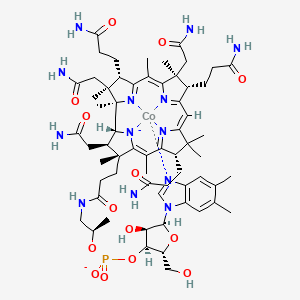
Vitamin B12 (cobalamin) is a water-soluble vitamin. The body needs it to make red blood cells and DNA, says the NIH (the US National Institutes of Health). B12 also helps build and keep the insulating coat of nerves. It contains the mineral cobalt, which is why compounds with B12 activity are called cobalamins. Adults need only 2.4 mcg (micrograms) a day, a few millionths of a gram.
Here is the part most people do not know: no plant and no animal makes vitamin B12. Only certain bacteria and archaea (single-celled microbes) do. Cows and sheep carry them in their stomachs. Plankton get B12 from bacteria and pass it on to fish larvae and shellfish.
So people get B12 mostly from ruminant meat and milk (from cud-chewing animals such as cows), fish and shellfish, according to a 2018 review. That is why plants do not make it. It also has the most complex structure of all vitamins, which Dorothy Hodgkin worked out in 1956, according to the Nobel Prize site.
Deficiency is more common than diet alone would suggest, because absorption has several steps and any of them can fail. In US survey data from 2007 to 2018, 3.6% of adults had a B12 below 200 pg/mL (picograms per milliliter of blood). And 12.5% were below 300 pg/mL. The body keeps a store of 2 to 3 mg, so a shortfall can take years to show.
Health benefits of vitamin B12
The top findings from 33 studies, strongest evidence first
What the stars mean
- Strong. Several randomized trials, pooled in a meta-analysis, point the same way, or regulators (FDA or EFSA) have approved the claim.
- Moderate. Good randomized trials support it, but there are fewer of them, or their results vary.
- Limited. Small, short or single trials, or mixed results. Promising, but it needs confirmation.
Population and lab studies get no stars: they show a link or a mechanism, not proof.
How we rate evidence →- ★★★B vitamins: no change in heart attacks, deathsIn 15 trials with 71,422 people, vitamin B6, folic acid or B12 (alone or combined) did not change heart attacks or deaths. B12 was mostly given with folic acid, so this is not a B12-only result, and strokes were slightly fewer (4.3% against 5.1%).
- ★★★Little or no benefit for thinkingIn 14 trials with 27,882 cognitively healthy people, mostly over 60, B vitamin pills probably did little or nothing for thinking. Among 879 people with mild memory problems (5 trials), there was no clear benefit either.
- ★★★Less B12 deficiency in children taking pillsIn 3 trials of 642 children under 12, B12 deficiency fell from 7.6% to 1.8% with B12 pills compared with placebo. Height, anemia and thinking skills showed little to no difference.
- ★★Pills raised B12 about as well as injectionsIn 3 trials of 153 people with B12 deficiency, 1,000 mcg a day by mouth gave levels not clearly different from injections. The evidence was low quality.
- ★★Long-term metformin lowered B12 levelsIn 390 people with type 2 diabetes taking insulin, metformin lowered B12 by 19% over 4.3 years. B12 deficiency at the end was 7.2 percentage points more likely.
All 26 studies, strongest evidence first
The EU allows eight B12 claims, including less tiredness and fatigue
Regulation (EU) No 432/2012 lists contributions to normal energy-yielding metabolism, nervous system function, homocysteine metabolism, psychological function, red blood cell formation and immune function. It also lists the reduction of tiredness and fatigue, and a role in cell division. A food may carry these claims only if it is at least a source of vitamin B12 (Regulation (EC) No 1924/2006). As a rule, that means 0.375 mcg per 100 g: 15% of the 2.5 mcg EU Reference Intake (Regulation (EU) No 1169/2011). The wording says vitamin B12 contributes to these functions; it is not a treatment claim.
Adding B12 to folic acid lowered homocysteine by a further 7%
This meta-analysis (a study that pools earlier trials) combined 12 randomized trials with data on 1,114 people. In randomized trials, people are assigned to groups by chance. Folic acid alone cut homocysteine, an amino acid in the blood, by 25% at typical Western starting levels. Vitamin B12 at a mean of 0.5 mg (500 mcg) a day added a 7% drop, and vitamin B6 added no clear drop. This shows what B12 does in the body, not a health benefit by itself.
Lowering homocysteine with B vitamins did not change heart attacks or deaths
This Cochrane review (a careful pooling of trials) covered 15 trials with 71,422 people. They took vitamin B6, folic acid or B12, alone or combined, for 1 to 7.3 years. Heart attacks were 1.02 times as common and deaths from any cause 1.01 times. Strokes were slightly fewer, 4.3% against 5.1% (0.90 times the risk). Most trials gave B12 in a mix with folic acid, so the result is not for B12 alone.
In healthy adults, B vitamins probably did little or nothing for thinking
This Cochrane review pooled 14 trials in 27,882 cognitively healthy people. They took folic acid, vitamin B12, vitamin B6 or combinations against a placebo (dummy pill). Most were adults over 60 with a history of heart or blood vessel disease. Global cognition changed by between −0.03 and 0.06 standard deviations up to 5 years, and −0.01 at 5 to 10 years. Data on side effects and on dementia were very sparse.
In children, B12 pills cut deficiency but barely changed growth
This Cochrane review covered 16 trials with 4,083 children under 12. They took oral B12 alone or with other micronutrients, at 0.9 to 150 mcg a day. Against placebo, B12 deficiency fell from 7.6% to 1.8% (0.27 times the risk; 3 trials, 642 children; high-certainty evidence). Height, anemia and cognitive function (thinking skills) showed little to no difference, mostly in low-certainty evidence (cognitive function: 0.09 standard deviations). No trial reported adverse effects.
B vitamin pills had little or no effect on cancer or deaths
This meta-analysis pooled 18 randomized trials with 74,498 people, mostly of mixes that included folic acid, B6 and B12. Cancer was 1.04 times as common, cancer deaths 1.05 times and all deaths 1.00 times. Melanoma was lower (0.47 times), but that was a subgroup finding.
High-dose B12 pills raised levels about as well as injections
This Cochrane review covered 3 randomized trials in 153 people with deficiency, followed for 3 to 4 months. At 1,000 mcg a day by mouth, B12 levels did not differ clearly from injections. One trial at 2,000 mcg a day found levels 680 pg/mL higher with oral B12. The evidence was low quality, and no trial reported symptoms or quality of life. Oral treatment cost less.
In diabetes, metformin lowered B12 by 19% over four years
This placebo-controlled trial ran for 4.3 years in 390 people with type 2 diabetes taking insulin. They took 850 mg of metformin or placebo three times a day. B12 was 19% lower on metformin. B12 deficiency (under 150 pmol/L, picomoles per liter) at the end was 7.2 percentage points more likely, and homocysteine rose with it. The authors suggest regular B12 checks during long-term metformin treatment.
Pregnancy B12 pills raised B12 status, not infant growth
In this double-blind trial in Nepal, 800 pregnant women took 50 mcg of oral B12 a day or a placebo. They took it from early pregnancy until 6 months after birth. At the start, 71% had low or marginal B12 (under 221 pmol/L). Infant length-for-age at 12 months was −0.57 against −0.55 (difference −0.02). The development (cognitive) score was 97.7 against 97.1 (difference 0.5). The authors say the findings support the WHO (World Health Organization) advice of no routine B12 in pregnancy.
In heart attack survivors, B vitamins did not cut major vascular events
This double-blind trial followed 12,064 heart attack survivors for 6.7 years. They took 2 mg of folic acid plus 1 mg of B12 a day, or placebo. Homocysteine fell by 3.8 µmol/L (28%). Major vascular events (serious heart and blood vessel problems) occurred in 25.5% on the vitamins and 24.8% on placebo (1.04 times the risk). Cancer was 11.2% against 10.6%, and the vitamins were a mix of folic acid and B12.
After a stroke, B vitamins did not clearly cut new events
This double-blind trial included 8,164 people who had had a stroke or mini-stroke. They took 2 mg of folic acid, 25 mg of B6 and 0.5 mg of B12 a day, or placebo. The median follow-up was 3.4 years. The main outcome (stroke, heart attack or vascular death) happened in 15% on the vitamins and 17% on placebo (0.91 times the risk). The authors say the vitamins were safe but did not seem more effective than placebo.
Folic acid plus B12 went with more cancer and deaths
This combined analysis followed up two double-blind trials in 6,837 heart patients: the Norwegian Vitamin Trial and the Western Norway B Vitamin Intervention Trial. Daily doses were 0.8 mg of folic acid plus 0.4 mg of B12, with or without 40 mg of B6. The comparison groups got B6 alone or placebo. Treatment lasted a median of 39 months, with 38 more months of follow-up. Cancer was 10.0% against 8.4% (1.21 times the risk), and death from any cause 16.1% against 13.8% (1.18 times). Results were mainly driven by lung cancer, and B6 alone had no clear effect. Norway does not fortify food with folic acid.
B vitamins cut macular degeneration by about a third in women
This double-blind trial included 5,205 women free of macular degeneration, an eye disease that blurs central vision. They took 2.5 mg of folic acid, 50 mg of B6 and 1 mg of cyanocobalamin a day, or placebo. The trial lasted 7.3 years on average. There were 55 cases on the mix and 82 on placebo (0.66 times the risk). For cases that affected vision, it was 26 against 44 (0.59 times). The women had heart disease or several heart risk factors, and the vitamins were a mix, so the result is not for B12 alone.
Seven years of B vitamins did not prevent depression in older women
This randomized trial included 4,331 women without earlier depression (mean age 63.6). They took 2.5 mg of folic acid, 50 mg of B6 and 1 mg of B12 a day, or a matching placebo. This went on for about 7 years. There were 524 new cases of depression, and the adjusted risk was 1.02 times that on placebo, even though homocysteine fell.
In older adults, B12 plus folic acid did not reduce fractures
This double-blind trial (B-PROOF) included 2,919 people aged 65 and over with high homocysteine. They took 500 mcg of B12 plus 400 mcg of folic acid a day, or placebo, for 2 years. Both tablets also held 600 IU of vitamin D3. Fractures occurred in 4.2% on the vitamins and 5.1% on placebo (0.84 times the risk). A lower risk in people over 80 who took their tablets (0.27 times) came from a subgroup analysis. More cancers were reported on the vitamins (1.56 times the risk).
In mild cognitive impairment, B vitamins showed no clear benefit for thinking
This Cochrane review covered 5 trials with 879 people with mild cognitive impairment (memory or thinking problems short of dementia). Four trials used vitamins B6, B12 and folic acid together, and one used folic acid alone, for 6 to 24 months. No trial reported dementia, and the evidence on overall cognition was very low quality. One study found slower brain shrinkage over 2 years.
In pregnancy, B12 pills may reduce deficiency; birth effects are uncertain
This Cochrane review covered 5 trials with 984 pregnant women in India, Bangladesh, South Africa and Croatia, at 5 to 250 mcg a day. Deficiency was 25.9% against 67.9% (0.38 times the risk; 2 trials, 272 women; very low-certainty evidence). Effects on preterm birth (0.97 times) and low birth weight (1.50 times) were uncertain. No trial looked at neural tube defects (birth defects of the brain and spine).
B12 injections changed only one of eight quality-of-life scores
This placebo-controlled trial in Aarhus, Denmark, gave 140 people weekly B12 injections for 4 weeks and checked them again 3 months later. Their methylmalonic acid, a sign of low B12 activity, was modestly raised (0.40 to 2.00 µmol/L). Only general health improved against placebo. The authors question the benefit of B12 treatment when a modestly raised methylmalonic acid is the only sign.
In mild memory problems, B vitamins slowed brain shrinkage
This single-center, double-blind trial (VITACOG) included 271 people over 70 with mild memory problems. They took 0.8 mg of folic acid, 0.5 mg of B12 and 20 mg of B6 a day for 24 months. A subset of 187 chose MRI scans, and 168 finished. Brain shrinkage was 0.76% a year against 1.08%, and the effect was larger when homocysteine was above 13 µmol/L (53% less shrinkage). Later reports from the same trial found cognitive benefit only in people with higher homocysteine. The Cochrane review calls it a single study that needs repeating, and it was a mix, not B12 alone.
B-PROOF follow-up: more colorectal cancer with folic acid plus B12
This is the same trial as the fracture study above. The Netherlands cancer registry tracked 2,524 of its people. They had taken 400 mcg of folic acid and 500 mcg of B12, or placebo, for 2 to 3 years. Colorectal (bowel) cancer was 3.4% against 2.0% (1.77 times the risk), and any cancer 13.6% against 11.3% (1.25 times). The trial was not designed to test cancer, and the NIH notes that the folic acid, rather than the B12, may be responsible.
Long-term acid reducers went with 65% higher odds of B12 deficiency
This case-control study in Kaiser Permanente Northern California compared 25,956 people with a new B12 deficiency diagnosis and 184,199 without. At least 2 years of proton pump inhibitors went with 1.65 times the odds, and of H2 blockers 1.25 times. Doses above 1.5 pills a day went with higher odds (1.95). An association like this does not prove the drugs caused the deficiency.
In British men, 52% of vegans had low B12
This cross-sectional analysis of the EPIC-Oxford cohort included 689 men. Low B12 was rarer in the other groups: 7% of vegetarians and one omnivore. Mean serum B12 was 281 pmol/L in omnivores, 182 in vegetarians and 122 in vegans, and deficient meant under 118 pmol/L. B12 did not vary with age or years on the diet, and folate was highest in vegans.
Low B12 plus high folate: more anemia and cognitive impairment
This analysis of the US NHANES survey (1999 to 2002) covered 1,459 seniors. Low B12 status went with anemia (2.7 times the odds) and cognitive impairment (2.5 times). In the low-B12 group, high serum folate (above 59 nmol/L) went with anemia (3.1 times) and cognitive impairment (2.6 times). With normal B12, high folate went with less cognitive impairment (0.4 times). Survey data cannot show cause.
Two to three times neural tube defect odds with low B12
These three nested case-control groups were Irish pregnant women, with blood taken at about 15 weeks of pregnancy, before folic acid fortification. The comparison was for women in the lowest B12 quartile, and odds were highest below 250 ng/L. The authors suggest a B12 level above 300 ng/L (221 pmol/L) before pregnancy. The Cochrane review of B12 in pregnancy found no trial on neural tube defects (defects of the baby’s brain and spine).
Men on high-dose B12 had about double the lung cancer risk
The VITAL cohort followed 77,118 people aged 50 to 76 and recorded 808 lung cancers. Among men, B12 from individual supplements above 55 mcg a day, averaged over 10 years, went with 1.98 times the risk. It was not seen in women or with multivitamins, and it was higher in men who smoked. This cannot show that B12 caused the cancers.
High blood B12 went with 4.7 times the one-year cancer rate
This cohort study of 757,185 people in UK primary care found 33,367 new cancers. People with B12 treatment before the test were excluded. For B12 above 1,000 pmol/L, the cancer rate was 4.72 times as high, most of all for liver, pancreas and blood cancers. The authors suggest some cancers may affect B12 metabolism, so a high blood level may mark a hidden cancer. It is a blood level, not a supplement dose.
Foods high in vitamin B12
B12 occurs naturally only in animal foods, and fish and shellfish lead our USDA ranking per serving. A 3 oz (85 g) serving of oysters has 13.6 mcg, 567% of the 2.4 mcg Daily Value (the FDA’s daily target for food labels). Herring follows with 11.6 mcg per 3 oz. Then come mackerel with 9.8 mcg per fillet (112 g) and sardines with 8.2 mcg per can (92 g).
Salmon, ground lamb and ground beef come next, then tuna and shrimp, as the ranking shows. Per 100 g, oysters have 16 mcg and herring 13.7 mcg.
Our ranking holds only 17 foods, so it leaves out some of the richest. The NIH table lists beef liver at 70.7 mcg per 3 oz and cooked clams at 17 mcg. A large egg has 0.5 mcg, plain fat-free yogurt 1.0 mcg per 6 oz container and cheddar 0.5 mcg per 1½ oz.
Absorption varies by food. The NIH says B12 seems about three times more available from dairy than from meat, fish and poultry. It also says supplements are absorbed about 50% better than food B12.
In a Norwegian survey of 5,937 people, plasma B12 rose with B12 from dairy and fish but not from meat or eggs. It plateaued at about 10 mcg a day. In the Framingham study, fortified cereal and dairy went with fewer low readings, and meat did not.
Cooking can cost some B12. In a study of round herring, grilling, boiling, frying, steaming and microwaving cut B12 by up to about 62%. Cooking in a vacuum-packed pouch did not. That is one fish in a lab, so treat the number as a hint.
Plants do not make B12. The NIH says fortified breakfast cereals and fortified nutritional yeast are readily available sources with high bioavailability (they are well absorbed). Nutritional yeast has 8.3 to 24 mcg per ¼ cup, so check the label. Dried purple laver (nori) is proposed as a plant source in one review.
For spirulina tablets, a bacterial test gave 6 to 9 times more B12 than a test based on intrinsic factor. Most of the intrinsic-factor-active compound (83%) was pseudovitamin B12, an inactive look-alike, rather than true B12. The one small study of chlorella had 17 people and no control group. The evidence for seaweed and algae is thin.
Per serving. Bars show the share of the Daily Value (2.4 µg a day). The line marks 100%.
Per 100 g. Bars show the share of the Daily Value (2.4 µg a day). The line marks 100%.
Per serving. Bars show the share of the EU Reference Intake (2.5 µg a day). The line marks 100%.
Per 100 g. Bars show the share of the EU Reference Intake (2.5 µg a day). The line marks 100%.
Per 100 kcal: the same calories of each food, for a fair comparison. Bars compare each food with the top food.
- 1.

- 2.

- 3.

- 4.

- 5.

- 6.

- 7.

- 8.

- 9.

- 10.



- 1.
- 2.
- 3.
- 4.
- 5.
- 6.
- 7.
- 8.
- 9.
- 10.
- 1.
- 2.
- 3.
- 4.
- 5.
- 6.

- 7.
- 8.
- 9.
- 10.



Sources
- FoodData Central. US Department of Agriculture, Agricultural Research Service. Values as shown in the ranking above.
- Vitamin B12: fact sheet for health professionals. National Institutes of Health, Office of Dietary Supplements. Updated July 2, 2025.
- Vogiatzoglou A, Smith AD, Nurk E, et al. Dietary sources of vitamin B-12 and their association with plasma vitamin B-12 concentrations in the general population: the Hordaland Homocysteine Study. Am J Clin Nutr. 2009.
- Tucker KL, Rich S, Rosenberg I, et al. Plasma vitamin B-12 concentrations relate to intake source in the Framingham Offspring study. Am J Clin Nutr. 2000.
- Nishioka M, Kanosue F, Yabuta Y, Watanabe F. Loss of vitamin B12 in fish (round herring) meats during various cooking treatments. J Nutr Sci Vitaminol (Tokyo). 2011.
- Watanabe F, Yabuta Y, Bito T, Teng F. Vitamin B12-containing plant food sources for vegetarians. Nutrients. 2014.
- Watanabe F, Katsura H, Takenaka S, et al. Pseudovitamin B12 is the predominant cobamide of an algal health food, spirulina tablets. J Agric Food Chem. 1999.
- Merchant RE, Phillips TW, Udani J. Nutritional supplementation with Chlorella pyrenoidosa lowers serum methylmalonic acid in vegans and vegetarians with a suspected vitamin B12 deficiency. J Med Food. 2015.
How vitamin B12 works
The biochemistry below is well established, but it comes from official reports and physiology studies, not from trials of B12 pills. Four ideas cover most of it.
B12 runs two enzymes, and absorption takes four steps and a special protein. The gut can take up only a little at a time, and the body keeps a store that it recycles. Then comes what has been seen in people.
It runs two enzymes
Two reactions in people need B12 as a coenzyme (an enzyme helper), according to EFSA (the EU’s food safety agency) and the NIH. In the cell fluid, methionine synthase turns homocysteine into the essential amino acid methionine, using a methyl group from folate. Methionine then forms S-adenosylmethionine, which hands methyl groups to almost 100 substances, among them DNA, RNA, proteins and fats.
In the mitochondria (the cell’s power plants), methylmalonyl-CoA mutase turns methylmalonyl-CoA into succinyl-CoA. This is part of breaking down propionate, a short-chain fat. When B12 runs short, homocysteine and methylmalonic acid build up.
That is why doctors measure them. The NIH says a methylmalonic acid above 0.271 µmol/L suggests B12 deficiency, and so does a homocysteine above 15 µmol/L. Homocysteine is also raised by low folate and poor kidney function, though.
The folate link is also why high folic acid intake worries some experts. A review notes concern about its possible harmful effects on nerves in people with an undetected B12 deficiency.
The two reactions that need vitamin B12 in people. Not to scale.
Absorption takes four steps and a special protein
B12 in food is bound to protein. Stomach acid and pepsin release it, and it first binds to haptocorrin, a protein in saliva. In the duodenum (the first part of the small intestine), enzymes free it from haptocorrin. It then binds to intrinsic factor, a protein made by cells of the stomach.
The complex is taken up in the last part of the small intestine through a receptor, then carried in the blood by transcobalamin. B12 added to fortified foods and supplements is already free, so it skips the first step, the NIH explains. This is why absorption fails in some people. Pernicious anemia is an autoimmune disease that destroys the cells making intrinsic factor.
Atrophic gastritis lowers stomach acid and intrinsic factor, which makes it hard to free B12 from food. It affects 8% to 9% of adults aged 65 and older. The Institute of Medicine estimated that 10% to 30% of older people may be unable to absorb the B12 that occurs naturally in food.
The route of vitamin B12 from food to the blood. B12 in supplements and fortified foods starts at step 2. Not to scale.
The gut can take up only a little at a time
Uptake through intrinsic factor is saturated (maxed out) at about 1.5 to 2 mcg per meal, EFSA says. The NIH puts the limit at 1 to 2 mcg. Above that, B12 crosses the gut wall by simple diffusion, which is far less efficient: 1% to 2% of the dose.
The NIH gives about 50% absorbed at doses under 1 to 2 mcg, about 2% at 500 mcg and 1.3% at 1,000 mcg. That works out to roughly 10 mcg and 13 mcg actually absorbed (our arithmetic from the NIH percentages), still several times the daily need. EFSA calls the often-used 50% absorption a likely overestimate at European intakes, and it uses 40% as a more careful figure.
Share of a vitamin B12 dose that is absorbed, as reported by the NIH, drawn to scale. Figures vary from person to person.
The body keeps a store and recycles it
The body holds about 2 to 3 mg of B12 (range 1 to 6 mg), according to EFSA. Around half is in the liver. The NIH puts the store at 1 to 5 mg, or 1,000 to 2,000 times the amount typically eaten in a day. Daily losses are only 0.1% to 0.2% of the store.
The bile carries B12 into the gut every day. An assumed 50% to 80% of it is taken up again, which needs intrinsic factor. Without intrinsic factor, all of the bile B12 is lost in stool.
So deficiency develops faster in pernicious anemia than in someone who simply eats no B12. Even then, EFSA says deficiency can take years to develop.
How the body recycles vitamin B12. Percentages are of the total body store. Not to scale.
What has been seen in people
The clearest human findings are about status. B12 pills correct a low B12, whether swallowed or injected. Metformin lowers it, and acid-reducing drugs are linked with deficiency.
Adding B12 to folic acid lowers homocysteine a little further, but lowering homocysteine did not prevent heart attacks or cancer. Trials in generally healthy adults found no clear gain for memory or mood. The NIH says B12 does not improve performance in people who have enough.
Trials in pregnancy and in children show better B12 status without a clear change in growth or development. All of these are among the study cards.
Sources
- EFSA Panel on Dietetic Products, Nutrition and Allergies (NDA). Scientific opinion on Dietary Reference Values for cobalamin (vitamin B12). EFSA J. 2015.
- Vitamin B12: fact sheet for health professionals. National Institutes of Health, Office of Dietary Supplements. Updated July 2, 2025.
- Institute of Medicine, Food and Nutrition Board. Dietary Reference Intakes for thiamin, riboflavin, niacin, vitamin B6, folate, vitamin B12, pantothenic acid, biotin, and choline (chapter 9, Vitamin B12). National Academy Press. 1998.
- Carmel R. Efficacy and safety of fortification and supplementation with vitamin B12: biochemical and physiological effects. Food Nutr Bull. 2008.
How much vitamin B12 do you need?
Adults need 2.4 mcg of vitamin B12 a day. That is the US recommended dietary allowance (RDA), an amount that covers nearly all healthy people. It is 2.6 mcg in pregnancy and 2.8 mcg while breastfeeding. EFSA’s adequate intake in the EU is higher: 4 mcg for adults, 4.5 mcg in pregnancy and 5 mcg when breastfeeding.
The two numbers differ because the panels worked from different evidence. The US RDA rests on the amount needed to keep blood counts and serum B12 normal, and it includes an assumed 50% absorption.
EFSA looked at four biomarkers together (serum B12, holotranscobalamin, methylmalonic acid and homocysteine). It could not set an average requirement. It set 4 mcg because intakes at or above that went with healthy readings on all four. Adults in several EU countries eat 4.2 to 8.6 mcg a day.
For pregnancy and breastfeeding, EFSA assumed 40% absorption. In the US, men get a mean of 5.84 mcg a day from food and women 3.69 mcg. Only 5% of men and 11% of women are below the 2 mcg average requirement.
For babies, the US adequate intake is 0.4 mcg in the first 6 months and 0.5 mcg from 7 to 12 months. It was set from the B12 in the breast milk of mothers with adequate B12 status.
Older adults and some other groups need extra thought. The Institute of Medicine estimates that 10% to 30% of older people may be unable to absorb food B12. So it advised that people over 50 meet most of their RDA from fortified foods or a supplement. The free B12 in those does not need stomach acid.
People with pernicious anemia need B12 under a doctor’s direction. So do people with Crohn’s disease of the last part of the small intestine, or a stomach removal, gastric bypass or ileal resection. Infants of vegan mothers should be given B12 from birth at the adequate intake.
Vitamin B12: recommended intake per day
US: Adequate Intake / Recommended Dietary Allowance (NASEM). EU: Adequate Intake (EFSA).
| Age and sex | US (RDA) | EU (AI) |
|---|---|---|
| Men, 31–50 years | 2.4 µg | 4 µg |
| Women, 31–50 years | 2.4 µg | 4 µg |
All ages, pregnancy and breastfeeding
| Age and sex | US (AI/RDA) | EU (AI) |
|---|---|---|
| Infants 0–6 months | 0.4 µg | None set |
| Infants 7–11 months | None set | 1.5 µg |
| Infants 7–12 months | 0.5 µg | None set |
| Children 1–3 years | 0.9 µg | 1.5 µg |
| Children 4–6 years | None set | 1.5 µg |
| Children 4–8 years | 1.2 µg | None set |
| Children 7–10 years | None set | 2.5 µg |
| Females 9–13 years | 1.8 µg | None set |
| Males 9–13 years | 1.8 µg | None set |
| Children 11–14 years | None set | 3.5 µg |
| Females 14–18 years | 2.4 µg | None set |
| Males 14–18 years | 2.4 µg | None set |
| Children 15–17 years | None set | 4 µg |
| Adults 18+ years | None set | 4 µg |
| Females 19–30 years | 2.4 µg | None set |
| Males 19–30 years | 2.4 µg | None set |
| Females 31–50 years | 2.4 µg | None set |
| Males 31–50 years | 2.4 µg | None set |
| Females 51–70 years | 2.4 µg | None set |
| Males 51–70 years | 2.4 µg | None set |
| Females >70 years | 2.4 µg | None set |
| Males >70 years | 2.4 µg | None set |
| Pregnancy 14–18 years | 2.6 µg | None set |
| Pregnancy | None set | 4.5 µg |
| Pregnancy 19–30 years | 2.6 µg | None set |
| Pregnancy 31–50 years | 2.6 µg | None set |
| Lactation 14–18 years | 2.8 µg | None set |
| Lactation | None set | 5 µg |
| Lactation 19–30 years | 2.8 µg | None set |
| Lactation 31–50 years | 2.8 µg | None set |
EU and US age bands differ; "None set" means that body sets no value for the group. Label reference: FDA Daily Value 2.4 µg, EU Reference Intake 2.5 µg.EU and US age bands differ; "None set" means that body sets no value for the group. Label reference: EU Reference Intake 2.5 µg, FDA Daily Value 2.4 µg.
Vitamin B12 deficiency: signs and who is at risk
The main signs of low B12 are megaloblastic anemia (large, abnormal red blood cells), fatigue, pale skin and palpitations, according to the NIH. Others are an inflamed tongue (glossitis), weight loss, numbness and tingling in the hands and feet, dementia and infertility. Nerve damage can occur without anemia and can become irreversible if it is not caught early.
The NIH adds that some studies link low B12 with depression. In pregnant and breastfeeding women, deficiency might cause neural tube defects, developmental delay and anemia in the child. Symptoms can take years to appear because of the body’s store.
The NIH lists the groups most at risk. Older adults are at risk, with deficiency in 3% to 43%, depending on the definition. So are people with pernicious anemia, gut disease such as celiac disease, or gastrointestinal surgery. Also at risk are people on metformin or acid-reducing drugs, vegetarians and vegans, and infants of vegan mothers.
Pernicious anemia is the most common cause of clinically evident deficiency worldwide. In the US it affects an estimated 151 per 100,000 people. Nitrous oxide (laughing gas) misuse is another cause, because it inactivates B12. In 20 patients with the resulting nerve and spinal cord damage, the mean serum B12 was normal while homocysteine was high.
Doctors usually start with serum B12, and most labs call a value under 200 or 250 pg/mL subnormal. If it is between 150 and 399 pg/mL, methylmalonic acid can help to confirm deficiency. In US data, 3.6% of adults were below 200 pg/mL, but 12.5% were below 300 pg/mL. So the cutoff changes the count a lot.
Treatment is a doctor’s call. Injections bypass absorption problems, and high oral doses may work too (see the Cochrane review in the study cards). Symptoms alone cannot tell low B12 from other causes, so ask for a blood test.
Sources
- Vitamin B12: fact sheet for health professionals. National Institutes of Health, Office of Dietary Supplements. Updated July 2, 2025.
- Institute of Medicine, Food and Nutrition Board. Dietary Reference Intakes for thiamin, riboflavin, niacin, vitamin B6, folate, vitamin B12, pantothenic acid, biotin, and choline (chapter 9, Vitamin B12). National Academy Press. 1998.
- EFSA Panel on Dietetic Products, Nutrition and Allergies (NDA). Scientific opinion on Dietary Reference Values for cobalamin (vitamin B12). EFSA J. 2015.
- Swart G, Blair C, Lu Z, et al. Nitrous oxide-induced myeloneuropathy. Eur J Neurol. 2021.
Forms of vitamin B12: absorption and effects
Vitamin B12 comes in four main forms: cyanocobalamin, methylcobalamin, adenosylcobalamin and hydroxocobalamin. Methylcobalamin and adenosylcobalamin are the active forms in the body. The other two are converted into them once inside the cell, according to the NIH.
EFSA adds that cells strip off the attached group first and then remake the two active forms, whichever form came in. Cyanocobalamin is the most common form in supplements. The NIH says no evidence indicates that absorption in supplements varies by form. It is about 50% at doses under 1 to 2 mcg, and much lower above that.
The honest bottom line: no trial we found shows that methylcobalamin or adenosylcobalamin is absorbed better or corrects deficiency better than cyanocobalamin. A 2015 review of the biochemistry concluded they are unlikely to be better. The route and the dose matter more.
High oral doses, injections and a tablet under the tongue all raised B12 in small trials, with no clear winner. Among the benefit trials, only the macular degeneration trial names its form (cyanocobalamin); the other abstracts do not. We found no trial of adenosylcobalamin against other forms.
| Form | Activity or conversion | What studies show | Source |
|---|---|---|---|
| Cyanocobalamin | Becomes active after it is converted to methylcobalamin or adenosylcobalamin. Most common form in supplements. | The form in the dose-finding trial (647 to 1,032 mcg a day fixed mild deficiency), in the 2 mg oral against injection trial, and in the macular degeneration trial. The Institute of Medicine says B12-deficient people at risk of Leber’s optic atrophy, a genetic disorder it links to chronic cyanide intoxication, should not be given it. Hydroxocobalamin is a cyanide antagonist. | 1, 3, 5, 6, 15 |
| Methylcobalamin (mecobalamin) | An active form in the body. Cells make it from any form (EFSA), so the pill need not contain it. | Oral 1,000 mcg matched hydroxocobalamin injections after gastric bypass (50 patients). A year of 1 mg a day helped nerve tests in a trial of 90 people with diabetic neuropathy. A meta-analysis of mecobalamin trials in nerve disease found a mixed result. No trial we found compared it with cyanocobalamin for absorption or deficiency. | 1, 2, 4, 7, 10, 11 |
| Adenosylcobalamin | An active form in the body (mitochondria). | We found no head-to-head human trial against other forms. EFSA and the 2015 review say cells process it by the same route as the others. | 1, 2, 4 |
| Hydroxocobalamin | Becomes active after it is converted. Given by injection. | Used for injections in the gastric bypass trial. A pilot of 1,500 mcg given in the nose raised mean plasma B12 eightfold within an hour in 6 patients. The Institute of Medicine notes that acne reports with high-dose injections were mostly with this form. | 1, 3, 7, 9 |
| Free B12 in fortified foods and supplements | Already free of protein, so it needs no stomach acid to be released. | Bread with 9.6 mcg raised serum B12 by 49% in 12 weeks. In older adults with atrophic gastritis, regular fortified foods went with better B12 but did not restore it to normal. Absorption of crystalline B12 does not fall with age, the Institute of Medicine says. | 1, 3, 12, 13 |
| Sublingual tablets (any form) | The same vitamin, taken under the tongue. | Under the tongue and swallowed 500 mcg tablets raised B12 equally in 30 people. The NIH says evidence suggests no difference between oral and sublingual. | 1, 8 |
| Nasal gel (prescription) | The same vitamin, given in the nose. | In a small study of 10 older adults, 1,000 mcg given in the nose had about 2% bioavailability, similar to an oral dose, according to the NIH. | 1 |
| Injection | Bypasses the gut. | Usual treatment when absorption is badly impaired. Oral 1,000 to 2,000 mcg a day matched injections in the Cochrane review of 3 trials. | 1, 14 |
Here are the head-to-head and form-specific studies, strongest evidence first, 7 in all. Note that the trials of pills against injections change the route, not just the form.
All 7 studies, strongest evidence first
Near-maximum effect at 647 to 1,032 mcg of oral B12
This double-blind dose-finding trial included 120 older people with mild deficiency. For 16 weeks, they took 2.5, 100, 250, 500 or 1,000 mcg of oral cyanocobalamin a day. Methylmalonic acid fell by 16%, 16%, 23%, 33% and 33%. The authors put the dose giving 80% to 90% of the maximum fall at 647 to 1,032 mcg. That is more than 200 times the recommended dietary allowance.
Fortified bread raised blood B12 by 49% in 12 weeks
In this double-blind trial, 142 Dutch adults aged 50 to 75 ate fortified or unfortified bread. The fortified bread held 9.6 mcg of B12 and 138 mcg of folic acid. B12 rose by 102 pmol/L against unfortified bread, holotranscobalamin (the active, carried form) by 35%, and methylmalonic acid fell by 10%. Marginal B12 (under 133 pmol/L) went from 8% to 0%. The bread held both vitamins, so the folic acid is part of the story.
Methylcobalamin helped some nerve patients but not pain scores
This meta-analysis pooled 15 trials with 1,707 people with diabetic or herpetic neuropathy (nerve damage). Of the trials, 73% were at high risk of bias. Against active controls, clinical efficacy was better with mecobalamin (methylcobalamin) alone (1.17 times) and in combination (1.32 times). Nerve conduction improved only in combination, and neither improved pain scores. It did not compare mecobalamin with other forms of B12.
After gastric bypass, oral methylcobalamin matched hydroxocobalamin injections
In this randomized trial in 50 gastric bypass patients, 27 got injections (2,000 mcg to start, then 1,000 mcg every other month). The other 23 took 1,000 mcg of oral methylcobalamin daily, for 6 months. B12 normalized in everyone, and B12, methylmalonic acid and homocysteine did not differ between groups. It changed the form and the route together, so it does not show that either form is better.
2 mg of oral cyanocobalamin a day worked as well as injections
In this trial, 38 patients with new B12 deficiency took part, and 33 could be evaluated. They were randomly given 1 mg by injection on a set schedule or 2 mg by mouth daily for 120 days. Blood and nerve findings improved alike in both groups. At 4 months, B12 was 1,005 against 325 pg/mL, and methylmalonic acid 169 against 265 nmol/L, in favor of the oral group. So oral B12 may have been better.
Under-the-tongue and swallowed tablets raised B12 equally
In this randomized trial, 30 people with low B12 were treated for 4 weeks. They took 500 mcg of cobalamin a day under the tongue (sublingual) or swallowed, or two B-complex tablets. B12 rose from 94 to 288 pmol/L under the tongue and from 108 to 286 pmol/L swallowed, with no difference between groups. The abstract does not name the form of cobalamin.
On metformin, oral methylcobalamin improved nerve tests, pain and quality of life
This double-blind, placebo-controlled trial included 90 people with type 2 diabetes and neuropathy, on metformin for at least four years. All had B12 below 400 pmol/L. They took 1 mg of oral methylcobalamin a day, or placebo, for a year. B12 rose from 232 to 777 pmol/L on methylcobalamin. Vibration threshold, sural nerve conduction, pain score and quality of life improved, while nerve conduction and pain worsened on placebo. It is a single small trial, in people whose B12 was below 400 pmol/L.
Sources
- Vitamin B12: fact sheet for health professionals. National Institutes of Health, Office of Dietary Supplements. Updated July 2, 2025.
- EFSA Panel on Dietetic Products, Nutrition and Allergies (NDA). Scientific opinion on Dietary Reference Values for cobalamin (vitamin B12). EFSA J. 2015.
- Institute of Medicine, Food and Nutrition Board. Dietary Reference Intakes for thiamin, riboflavin, niacin, vitamin B6, folate, vitamin B12, pantothenic acid, biotin, and choline (chapter 9, Vitamin B12). National Academy Press. 1998.
- Obeid R, Fedosov SN, Nexo E. Cobalamin coenzyme forms are not likely to be superior to cyano- and hydroxyl-cobalamin in prevention or treatment of cobalamin deficiency. Mol Nutr Food Res. 2015.
- Eussen SJ, de Groot LC, Clarke R, et al. Oral cyanocobalamin supplementation in older people with vitamin B12 deficiency: a dose-finding trial. Arch Intern Med. 2005.
- Kuzminski AM, Del Giacco EJ, Allen RH, Stabler SP, Lindenbaum J. Effective treatment of cobalamin deficiency with oral cobalamin. Blood. 1998.
- Schijns W, Homan J, van der Meer L, et al. Efficacy of oral compared with intramuscular vitamin B-12 supplementation after Roux-en-Y gastric bypass: a randomized controlled trial. Am J Clin Nutr. 2018.
- Sharabi A, Cohen E, Sulkes J, Garty M. Replacement therapy for vitamin B12 deficiency: comparison between the sublingual and oral route. Br J Clin Pharmacol. 2003.
- Slot WB, Merkus FW, Van Deventer SJ, Tytgat GN. Normalization of plasma vitamin B12 concentration by intranasal hydroxocobalamin in vitamin B12-deficient patients. Gastroenterology. 1997.
- Didangelos T, Karlafti E, Kotzakioulafi E, et al. Vitamin B12 supplementation in diabetic neuropathy: a 1-year, randomized, double-blind, placebo-controlled trial. Nutrients. 2021.
- Sawangjit R, Thongphui S, Chaichompu W, Phumart P. Efficacy and safety of mecobalamin on peripheral neuropathy: a systematic review and meta-analysis of randomized controlled trials. J Altern Complement Med. 2020.
- Winkels RM, Brouwer IA, Clarke R, Katan MB, Verhoef P. Bread cofortified with folic acid and vitamin B-12 improves the folate and vitamin B-12 status of healthy older people: a randomized controlled trial. Am J Clin Nutr. 2008.
- Porter KM, Hoey L, Hughes CF, et al. Associations of atrophic gastritis and proton-pump inhibitor drug use with vitamin B-12 status, and the impact of fortified foods, in older adults. Am J Clin Nutr. 2021.
- Wang H, Li L, Qin LL, et al. Oral vitamin B12 versus intramuscular vitamin B12 for vitamin B12 deficiency. Cochrane Database Syst Rev. 2018.
- Christen WG, Glynn RJ, Chew EY, Albert CM, Manson JE. Folic acid, pyridoxine, and cyanocobalamin combination treatment and age-related macular degeneration in women: the Women’s Antioxidant and Folic Acid Cardiovascular Study. Arch Intern Med. 2009.
Is vitamin B12 safe? Supplements, dose and interactions
There is no tolerable upper intake level (UL) for vitamin B12 in the US. The Institute of Medicine found too little evidence of harm to set one. The NIH says it is generally considered safe even at high doses.
EFSA, relying on the earlier EU scientific committee, likewise found no adverse effects it could use to set an upper level. It notes that daily doses of 1 to 5 mg by mouth or injection showed no adverse effects. They had been given for long periods to people with absorption problems. The Institute of Medicine suggests the low toxicity may be explained by the small share of a large oral dose that is absorbed.
- Side effects. The Institute of Medicine found no adverse effects from food or supplements in healthy people. Some studies link injected doses of 0.5 to 5 mg with acne, mostly with hydroxocobalamin. It noted that iodine in some preparations may have been responsible.
- Cancer questions. In the VITAL cohort, men taking individual B12 supplements above 55 mcg a day for 10 years had about double the lung cancer risk. In two Norwegian trials and the B-PROOF trial, folic acid plus B12 went with more cancer. The NIH points out that the folic acid, not the B12, may explain the B-PROOF result. A meta-analysis of 18 trials found no effect on cancer. A high B12 level in a blood test may also be a marker of an undiagnosed cancer rather than a cause. If your result is high and you are not taking B12, ask a doctor.
- Metformin. In a trial, it lowered B12 by 19% over 4.3 years and raised the chance of deficiency by 7.2 percentage points. In the Diabetes Prevention Program follow-up, borderline-low B12 was more common after metformin. At 5 years it was 19.1% against 9.5%, and at 13 years 20.3% against 15.6%. Do not stop metformin on your own; ask about a B12 test.
- Acid-reducing drugs. Proton pump inhibitors (PPIs) and H2 blockers can slow stomach acid and lead to B12 deficiency, the NIH says. In a large case-control study, two or more years of PPIs went with 65% higher odds of a deficiency diagnosis. For H2 blockers it was 25%.
- Leber’s optic atrophy. The Institute of Medicine advises that B12-deficient people at risk of this inherited eye disorder should not be treated with cyanocobalamin. It may raise the risk of irreversible nerve damage. Hydroxocobalamin is not associated with this problem.
- Who should ask a doctor. Ask if you have symptoms of low B12, pernicious anemia, bowel or stomach surgery or Crohn’s disease. Ask too if you have been on metformin or acid reducers for years, or if you are vegan and pregnant or breastfeeding. In US survey data, older adults with low B12 and high folate had more anemia and cognitive impairment, which does not prove cause.
Sources
- Vitamin B12: fact sheet for health professionals. National Institutes of Health, Office of Dietary Supplements. Updated July 2, 2025.
- Institute of Medicine, Food and Nutrition Board. Dietary Reference Intakes for thiamin, riboflavin, niacin, vitamin B6, folate, vitamin B12, pantothenic acid, biotin, and choline (chapter 9, Vitamin B12). National Academy Press. 1998.
- EFSA Panel on Dietetic Products, Nutrition and Allergies (NDA). Scientific opinion on Dietary Reference Values for cobalamin (vitamin B12). EFSA J. 2015.
- Aroda VR, Edelstein SL, Goldberg RB, et al. Long-term metformin use and vitamin B12 deficiency in the Diabetes Prevention Program Outcomes Study. J Clin Endocrinol Metab. 2016.
- Brasky TM, White E, Chen CL. Long-term, supplemental, one-carbon metabolism-related vitamin B use in relation to lung cancer risk in the Vitamins and Lifestyle (VITAL) cohort. J Clin Oncol. 2017.
- Ebbing M, Bønaa KH, Nygård O, et al. Cancer incidence and mortality after treatment with folic acid and vitamin B12. JAMA. 2009.
- Zhang SL, Chen TS, Ma CY, et al. Effect of vitamin B supplementation on cancer incidence, death due to cancer, and total mortality: a PRISMA-compliant cumulative meta-analysis of randomized controlled trials. Medicine (Baltimore). 2016.
- Arendt JFH, Sørensen HT, Horsfall LJ, Petersen I. Elevated vitamin B12 levels and cancer risk in UK primary care: a THIN database cohort study. Cancer Epidemiol Biomarkers Prev. 2019.
- de Jager J, Kooy A, Lehert P, et al. Long term treatment with metformin in patients with type 2 diabetes and risk of vitamin B-12 deficiency: randomised placebo controlled trial. BMJ. 2010.
- Lam JR, Schneider JL, Zhao W, Corley DA. Proton pump inhibitor and histamine 2 receptor antagonist use and vitamin B12 deficiency. JAMA. 2013.
- Morris MS, Jacques PF, Rosenberg IH, Selhub J. Folate and vitamin B-12 status in relation to anemia, macrocytosis, and cognitive impairment in older Americans in the age of folic acid fortification. Am J Clin Nutr. 2007.
How to get more vitamin B12
- Eat B12 foods through the week. In our ranking, oysters give 13.6 mcg per 3 oz, herring 11.6 mcg, mackerel 9.8 mcg per fillet and sardines 8.2 mcg per can. The NIH lists beef liver at 70.7 mcg per 3 oz. Milk adds 1.3 mcg per cup. The intrinsic factor route handles only about 1 to 2 mcg per meal, the NIH says, so a bigger serving is not absorbed in proportion.
- If you are over 50, or take metformin or acid reducers, add fortified foods or a supplement. Free B12 does not need stomach acid. The Institute of Medicine advises older adults to get most of their RDA from fortified foods or a supplement. Check the label of cereals and nutritional yeast for the amount.
- If you eat no animal foods, do not rely on plants alone. The NIH says fortified foods and supplements can substantially lower the risk of deficiency in vegans. In the EPIC-Oxford cohort, 52% of vegan men had low B12. A review of 40 studies found vegans who take no supplements at especially high risk. Nori, spirulina and chlorella are not proven substitutes.
Sources
- Vitamin B12: fact sheet for health professionals. National Institutes of Health, Office of Dietary Supplements. Updated July 2, 2025.
- Institute of Medicine, Food and Nutrition Board. Dietary Reference Intakes for thiamin, riboflavin, niacin, vitamin B6, folate, vitamin B12, pantothenic acid, biotin, and choline (chapter 9, Vitamin B12). National Academy Press. 1998.
- FoodData Central. US Department of Agriculture, Agricultural Research Service. Values as shown in the ranking above.
- Gilsing AM, Crowe FL, Lloyd-Wright Z, et al. Serum concentrations of vitamin B12 and folate in British male omnivores, vegetarians and vegans: results from a cross-sectional analysis of the EPIC-Oxford cohort study. Eur J Clin Nutr. 2010.
- Pawlak R, Lester SE, Babatunde T. The prevalence of cobalamin deficiency among vegetarians assessed by serum vitamin B12: a review of literature. Eur J Clin Nutr. 2014.
History of vitamin B12
The story starts with a deadly disease. Pernicious anemia was first described in 1849. Reports through the 19th century built a clear picture of it, including severe nerve damage that led to paralysis and death.
In 1926, George Minot and William Murphy gave patients a special diet with large amounts of liver. All of them improved in clinical and blood tests. They shared the 1934 Nobel Prize in Physiology or Medicine with George Whipple “for their discoveries concerning liver therapy in cases of anaemia”.
The next advance came from William Castle. He found that a stomach factor, which he called intrinsic factor, was missing in pernicious anemia. In 1948, two groups isolated the vitamin from liver at about the same time, and one of them published Crystalline Vitamin B12 in Science.
The vitamin was crystallized and characterized in Dorothy Hodgkin’s laboratory, and she determined its structure by X-ray methods in 1956. She received the 1964 Nobel Prize in Chemistry for her structure work.
Early clinical reports also recognized that B12 deficiency causes a severe neuropathy (nerve damage). Post-mortem studies showed loss of the insulating coat of the spinal cord. How B12 prevents these irreversible nerve lesions is still unclear, according to a 2012 history of the vitamin.
Sources
- Scott JM, Molloy AM. The discovery of vitamin B12. Ann Nutr Metab. 2012.
- Rickes EL, Brink NG, Koniuszy FR, Wood TR, Folkers K. Crystalline vitamin B12. Science. 1948.
- The Nobel Prize in Physiology or Medicine 1934. NobelPrize.org. Nobel Prize Outreach.
- Dorothy Crowfoot Hodgkin: facts. NobelPrize.org. Nobel Prize Outreach.
- Malouf R, Areosa Sastre A. Vitamin B12 for cognition. Cochrane Database Syst Rev. 2003.
Frequently asked questions about vitamin B12
Can vegans get enough vitamin B12 without supplements?
Not reliably. Vitamin B12 is not naturally in plant foods, the NIH says. So vegans need fortified foods, such as some cereals and nutritional yeasts, or a supplement. In the EPIC-Oxford cohort, 52% of vegan men had a serum B12 under 118 pmol/L, against 7% of vegetarians. Stores can last years, so a shortfall can take a long time to show. Nori, spirulina and chlorella are not proven substitutes.
How much vitamin B12 can you take in a day?
There is no official upper limit. The US panel found too little evidence of harm to set one, and EFSA found no adverse effects to base one on. Doses of 1,000 to 2,000 mcg a day by mouth are used to treat deficiency. At that size, only about 1.3% to 2% is absorbed, according to the NIH. One cohort study linked individual B12 supplements above 55 mcg a day for 10 years with more lung cancer in men. That cannot show cause, so talk to a doctor about high doses over the long term.
Does vitamin B12 give you energy?
Only if you are low. The NIH says B12 does not appear to improve performance or endurance in people who have enough. In a Danish trial of 140 people with slightly raised methylmalonic acid, B12 injections changed only one of eight quality-of-life scores. The EU allows foods that are a source of B12 to say it contributes to the reduction of tiredness and fatigue. That is a statement about normal function, not a treatment.
Is methylcobalamin better than cyanocobalamin?
No trial we found shows that. The NIH says no evidence indicates that absorption varies by form. A 2015 review concluded methylcobalamin and adenosylcobalamin are unlikely to beat cyanocobalamin, because cells convert all forms. One trial of 50 gastric bypass patients found 1,000 mcg of oral methylcobalamin matched hydroxocobalamin injections. The Institute of Medicine says people at risk of Leber’s optic atrophy should not be given cyanocobalamin.
Is sublingual B12 better than tablets?
No difference was found. In 30 people with low B12, 500 mcg a day under the tongue or swallowed raised B12 in 4 weeks. It rose from about 100 to about 290 pmol/L. There was no difference between groups. The NIH also says evidence suggests no difference in efficacy between oral and sublingual (under-the-tongue) forms. Choose the one you will take consistently.
Why do older adults and people on metformin need to watch vitamin B12?
Older adults often cannot release B12 from food. The Institute of Medicine estimates that 10% to 30% may be unable to absorb it. The NIH says atrophic gastritis affects 8% to 9% of adults aged 65 and older. Metformin lowered B12 by 19% over 4.3 years in a trial. Two or more years of acid-reducing drugs went with higher odds of deficiency. Fortified foods and supplements bypass the problem because their B12 is already free.
Which foods are highest in vitamin B12?
In our USDA ranking, oysters lead with 13.6 mcg per 3 oz. Herring (11.6 mcg), mackerel (9.8 mcg per fillet) and sardines (8.2 mcg per can) follow. The NIH table adds beef liver at 70.7 mcg per 3 oz and clams at 17 mcg, which our 17-food ranking does not include. Fortified nutritional yeast can have 8.3 to 24 mcg per ¼ cup. Plants do not make B12 on their own.
Can vitamin B12 protect your memory?
Not in people with normal B12. A Cochrane review of 14 trials in 27,882 healthy adults found little or no effect on thinking skills. Another review, of 5 trials in 879 people with mild cognitive impairment, found no clear benefit. The VITACOG trial found slower brain shrinkage (0.76% against 1.08% a year) with a mix of B12, B6 and folic acid. But it is one trial. Low B12 itself can cause memory problems, so a deficiency is worth treating.