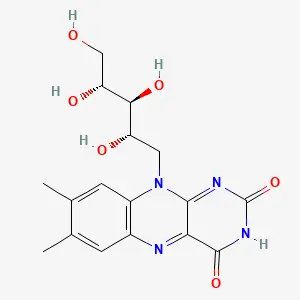
Riboflavin (vitamin B2) is a water-soluble B vitamin. It is yellow and glows under ultraviolet light, says the NIH (the US National Institutes of Health).
The body builds it into two coenzymes (enzyme helpers), FMN and FAD. These play major roles in making energy and in handling fats, drugs and steroids. Adults need only 1.1 to 1.3 mg a day.
Here is the part most people do not know: riboflavin has no classic deficiency disease of its own. It was tracked down through the growth of young rats. The first clue was a yellow-green glowing pigment that an English chemist saw in milk in 1872, according to a 2012 history.
Light breaks riboflavin down quickly. The NIH says that is why milk is not usually stored in glass bottles.
Most people in rich countries get enough. In US survey data from 2003 to 2006, fewer than 6% had an intake below the average requirement, the NIH reports.
A blood test of status gives a less clear picture, using a cutoff from EFSA (the EU’s food safety agency). In a UK national survey, 55% of adults aged 19 to 64 scored above 1.3, the cutoff EFSA uses for adequate status. On this test, a score above the cutoff means poorer status. That was despite an average intake of 1.61 mg a day, and experts still debate where the cutoff belongs.
Health benefits of riboflavin
The top findings from 24 studies, strongest evidence first
What the stars mean
- Strong. Several randomized trials, pooled in a meta-analysis, point the same way, or regulators (FDA or EFSA) have approved the claim.
- Moderate. Good randomized trials support it, but there are fewer of them, or their results vary.
- Limited. Small, short or single trials, or mixed results. Promising, but it needs confirmation.
Population and lab studies get no stars: they show a link or a mechanism, not proof.
How we rate evidence →- ★★Fewer migraines with high-dose supplements in adultsRiboflavin supplements of 400 mg a day lowered migraine days, duration, frequency and pain in a pooled analysis of 9 trials. US neurologists rate it probably effective for adults, but 200 mg did no better than placebo in one children’s trial.
- ★★Higher hemoglobin in women low in riboflavinIn young UK women low in riboflavin, supplements of 2 mg or 4 mg a day for 8 weeks raised hemoglobin most in those lowest. In anemic pregnant women in China, riboflavin plus retinol raised hemoglobin 5.4 g/L more than iron and folic acid alone (a mix, not riboflavin alone).
- ★Unclear effect on blood pressureA Cochrane review of 4 trials found riboflavin’s effect on blood pressure very uncertain. In 91 people with treated high blood pressure and the 677TT genotype, 1.6 mg daily cut the top number 5.6 mm Hg more than placebo.
- ★Lower homocysteine in one gene typeIn people with the MTHFR 677TT gene type, 1.6 mg a day for 12 weeks lowered homocysteine, a blood marker, from 16.1 to 12.5 µmol/L. It fell only in this group.
- ★Less cataract with riboflavin plus niacinIn poorly nourished people in rural China, a riboflavin and niacin pair (one of four tested) cut nuclear cataract (lens clouding) by 44%. A rarer type of cataract was more common with it.
All 21 studies, strongest evidence first
The EU allows nine riboflavin claims, including less tiredness and fatigue
Regulation (EU) No 432/2012 lists normal energy-yielding metabolism, normal functioning of the nervous system and normal iron metabolism. It also lists the maintenance of normal mucous membranes, red blood cells, skin and vision. Others are protection of cells from oxidative stress and reduction of tiredness and fatigue. A food may carry these claims only if it is at least a source of riboflavin (Regulation (EC) No 1924/2006). As a rule, that means 0.21 mg per 100 g: 15% of the 1.4 mg EU Reference Intake (Regulation (EU) No 1169/2011). The wording says riboflavin contributes to these functions; it is not a treatment claim.
400 mg a day lowered migraine days, duration, frequency and pain
This meta-analysis (a study that pools earlier trials) combined nine trials with 673 people: eight randomized trials and one controlled clinical trial. Vitamin B2 at 400 mg a day for three months clearly decreased migraine days, duration, frequency and pain score. The trials differed a lot from each other (heterogeneity of 89% for migraine days). The abstract gives no pooled effect size, so the size of the benefit is unclear.
US neurologists rate riboflavin probably effective for preventing migraine in adults
In this guideline update, the American Academy of Neurology and the American Headache Society reviewed 284 abstracts, which gave 49 Class I or II articles. Riboflavin, magnesium, feverfew and several anti-inflammatory drugs were rated probably effective (Level B). Butterbur was the only treatment rated effective (Level A). A guideline is a judgment on the trials, not a trial itself.
In low-status young women, riboflavin raised hemoglobin most in those lowest
This randomized trial (RIBOFEM), in which groups were assigned by chance, included 123 UK women aged 19 to 25 with low riboflavin status. Their score on the blood test, the erythrocyte glutathione reductase activation coefficient (EGRAC), was above 1.40. They took 2 mg, 4 mg or a placebo (dummy pill) a day for 8 weeks, and 119 finished. Women in the lowest tertile of status (EGRAC above 1.65) gained the most hemoglobin. Dietary iron and iron absorption did not change.
Adding riboflavin and retinol raised hemoglobin by 5.4 g/L more
This two-month randomized trial included 366 anemic women in late pregnancy in rural China. All took 60 mg of iron and 400 mcg (micrograms) of folic acid a day. Groups added 1.0 mg of riboflavin, 2,000 mcg of retinol, or both. The gain, compared with iron and folic acid alone, was in the group that got both, so it cannot be credited to riboflavin alone. Anemia fell more in the groups that got retinol, riboflavin or both.
The EGRAC blood test tracks riboflavin intake, a review found
This systematic review with meta-analysis covered 18 studies that gave riboflavin and measured up to 14 markers of status. EGRAC (14 studies) and basal glutathione reductase activity (5 studies) both changed with intake, though the studies varied a lot (heterogeneity above 66%). Plasma homocysteine did not track riboflavin in the general population. It may do so in people with a common MTHFR gene variant. This is about how status is measured, not about a health outcome.
Riboflavin’s effect on blood pressure is very uncertain
This Cochrane review covered four randomized trials with 374 adults, three of them at high risk of bias. The top (systolic) number changed by -1.94 mmHg (3 studies, 320 people), which could be chance. The bottom (diastolic) number changed by -3.03 mmHg (2 studies, 271 people), and both results were very low-certainty. One trial of 54 people reported adverse events: two with riboflavin and one without. The authors call for large, well-run trials.
Riboflavin cut headache days by half or more in 59%
In this three-month randomized trial, 55 people with migraine took 400 mg of riboflavin a day or a placebo. On placebo, 15% had that benefit. Riboflavin beat placebo for attack frequency and headache days, and the number needed to treat was 2.3. Three minor adverse events occurred: diarrhea and polyuria (passing a lot of urine) on riboflavin, and abdominal cramps on placebo. It is a small trial, and later trials gave mixed results.
In children’s trials, riboflavin went with half as many migraine attacks
This network meta-analysis compared treatments across 45 trials with 3,771 children and teens. Against placebo, riboflavin had a ratio of means of 0.50 for migraine frequency. But the authors say this came from individual studies and that more studies are needed. No treatment improved quality of life or attack duration.
In children, 200 mg a day did no better than placebo
In this randomized, double-blind trial, 48 children with migraine took riboflavin or placebo. Attacks dropped by 50% or more in 12 of 27 children on riboflavin and 14 of 21 on placebo, which was not a clear difference. The authors point to a high placebo response.
A riboflavin mix did no better than a low-riboflavin placebo
This randomized trial tested a daily mix of 400 mg of riboflavin, 300 mg of magnesium and 100 mg of feverfew. So the result is not for riboflavin alone. Of 49 people who finished three months, 10 (42%) on the mix and 11 (44%) on placebo had half as many migraines. The placebo held 25 mg of riboflavin, and the authors suggest it may itself have been active.
In the TT gene type, riboflavin lowered top blood pressure versus placebo
This randomized trial included 91 patients with treated high blood pressure and the MTHFR 677TT genotype, a common gene variant. They came from 1,427 patients with hypertension, of whom 157 had it. More than 60% of these had not reached their blood pressure goal despite treatment. They took 1.6 mg of riboflavin or placebo a day for 16 weeks. The top (systolic) number fell by 5.6 mm Hg more than on placebo, and the diastolic change was not clear. It applies only to people with this genotype.
In the TT gene type, riboflavin lowered homocysteine by up to 22%
This randomized 12-week trial tested 1.6 mg of riboflavin a day in 35 people with the MTHFR 677TT genotype. It also included age-matched people with the CT (26) and CC (28) genotypes. Riboflavin status improved in all groups. But homocysteine fell only in the TT group, from 16.1 to 12.5 µmol/L, and by 40% in those with lower starting status. Homocysteine is a blood marker, not a disease.
In rural China, riboflavin plus niacin cut nuclear cataract 44%
These were two randomized trials of 5 to 6 years in Linxian, rural China, with 2,141 and 3,249 people aged 45 to 74. The second trial tested four vitamin and mineral pairs, so the riboflavin and niacin pair is a mix, in a poorly nourished population. Nuclear cataract (clouding in the center of the lens) was less common with the pair, with the biggest effect in the 65 to 74 group. Posterior subcapsular cataract, which was rare, was more common with it.
B1 plus B2 lowered stress and poor-sleep scores, not anxiety
In this randomized, double-blind trial, 43 adults took 100 mg each of vitamins B1 and B2, or a placebo, for four weeks. Because the two vitamins were given together, the result is not for B2 alone. Scores for stress, sleep quality and daytime sleepiness fell in the supplement group, and anxiety did not change. The groups also started with different sleep scores (8.0 and 5.7), and four weeks is short.
In a rare transporter defect, oral riboflavin is lifesaving, authors say
This review of case reports covered 70 patients with a confirmed gene change in a riboflavin transporter (formerly called Brown-Vialetto-Van Laere syndrome). It causes weakness, hearing loss, and feeding and breathing problems. The authors advise starting riboflavin at once, without waiting for the genetic result. This is a rare disease, and there are no trials.
Higher riboflavin intake went with 13% lower colorectal cancer risk
This meta-analysis of observational studies covered 14 studies of intake (14,934 cases of colorectal, or bowel, cancer) and two of blood levels (1,593 cases). Comparing the highest with the lowest intake, the risk was 0.87 times. The curve was not a straight line, and risk was 10% lower at an intake of 5 mg a day. Observational studies cannot show that riboflavin caused the difference.
In two US cohorts, riboflavin did not clearly lower colorectal cancer risk
These cohorts (groups followed over time) included 100,033 women and 44,007 men for 24 to 26 years, with 3,037 cases of colorectal cancer. In the women, higher intake went with lower risk when only age was taken into account. The link was no longer clear after adjusting for other factors. Comparing the highest and lowest quintiles of total intake, the pooled risk was 0.93 times.
Top riboflavin intake went with half the odds of nuclear cataract
This cross-sectional study of 2,900 older Australians used food questionnaires and lens photographs. For riboflavin, the odds ratio for the highest against the lowest fifth of intake was 0.5. Results were similar for protein, vitamin A, niacin and thiamin. Because intake and cataract were measured at the same time, it cannot show cause.
Riboflavin went with clearer lenses, but only vitamin C stayed linked
This study followed 478 US women from the Nurses’ Health Study, aged 53 to 73. Their intake was averaged over 13 to 15 years of food questionnaires. Higher riboflavin intake went with fewer nuclear opacities (cloudy spots in the center of the lens) before adjustment. So did vitamins C and E, folate and carotenoids. After adjusting for other nutrients, only vitamin C remained significant.
Low riboflavin went with nearly five times the preeclampsia odds
This prospective study followed 154 high-risk pregnant women in Zimbabwe, with riboflavin status measured by EGRAC at the first visit. A third (33.8%) were deficient (EGRAC 1.4 or more). Preeclampsia, dangerous high blood pressure in pregnancy, developed in 28.8% of deficient women and 7.8% of the others (odds ratio 4.7). A link in a high-risk group does not show that supplements prevent preeclampsia.
Foods high in riboflavin
Milk, eggs, organ meats and lean meats are rich sources, according to the NIH. Grains and cereals are fortified with riboflavin in the United States and many other countries.
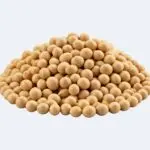
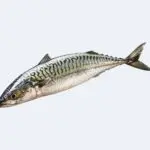
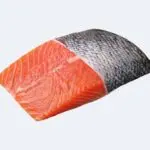
In our USDA ranking per serving, soy and milk lead. A cup (172 g) of soybeans has 0.49 mg, 38% of the 1.3 mg Daily Value (the FDA’s daily target for food labels). A cup of semi-skimmed milk has 0.46 mg, and mackerel gives 0.35 mg per fillet (112 g). Salmon, almonds and white mushrooms follow, as the ranking shows.
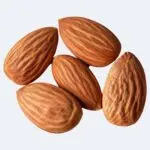
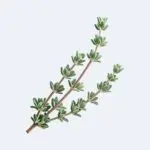
Per 100 g, almonds lead with 1.14 mg, followed by thyme (0.47 mg) and eggs (0.46 mg), then buckwheat and white mushrooms. Only 6 of the 141 foods in our database go above 20% of the Daily Value in a serving.
Our top ten leaves out some foods the NIH lists as rich. Beef liver has 2.9 mg per 3 oz (223% of the Daily Value). A fortified breakfast cereal with 100% of the Daily Value has 1.3 mg per serving, and fat-free yogurt has 0.6 mg per cup.
About 95% of the riboflavin in food is absorbed, up to roughly 27 mg per meal. In a study of 20 women, the riboflavin in spinach was absorbed about as well as that in milk (see the card under forms).
People who eat no dairy, eggs or meat can lean on soy, almonds, mushrooms and fortified cereals. Vegans and people who drink little milk are among those at risk of falling short, the NIH says.
Light and water take riboflavin away. Ultraviolet and visible light inactivate it rapidly, according to the NIH. The Institute of Medicine notes that milk stored in clear glass under light loses riboflavin.
In one test, milk held in glass bottles under fluorescent light at 1,076 lx (a measure of brightness) lost a significant share of its riboflavin. Milk in fiberboard cartons or kept in the dark did not differ from unexposed milk in flavor. In another test, riboflavin was lost faster in skim milk than in whole milk, and faster at higher light intensity.
Because riboflavin dissolves in water, boiling loses about twice as much into the cooking water as steaming or microwaving, the NIH says. In a study of 263 cooked foods and 260 meals, the authors estimated cooking losses of 52.2% for riboflavin. That compares with 30% for thiamine and 34.6% for vitamin C.
Per serving. Bars show the share of the Daily Value (1.3 mg a day).
Per 100 g. Bars show the share of the Daily Value (1.3 mg a day).
Per serving. Bars show the share of the EU Reference Intake (1.4 mg a day).
Per 100 g. Bars show the share of the EU Reference Intake (1.4 mg a day).
Per 100 kcal: the same calories of each food, for a fair comparison. Bars compare each food with the top food.
- 1.
- 2.

- 3.
- 4.
- 5.
- 6.

- 7.

- 8.
- 9.
- 10.



- 1.
- 2.
- 3.
- 4.
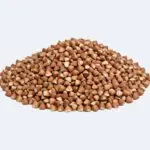
- 5.
- 6.
- 7.
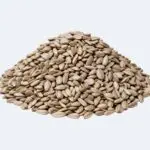
- 8.
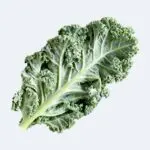
- 9.
- 10.


- 1.
- 2.
- 3.
- 4.
- 5.
- 6.
- 7.
- 8.

- 9.
- 10.


Sources
- FoodData Central. US Department of Agriculture, Agricultural Research Service. Values as shown in the ranking above.
- Riboflavin: fact sheet for health professionals. National Institutes of Health, Office of Dietary Supplements. Updated May 11, 2022.
- Institute of Medicine, Food and Nutrition Board. Dietary Reference Intakes for thiamin, riboflavin, niacin, vitamin B6, folate, vitamin B12, pantothenic acid, biotin, and choline (chapter 5, Riboflavin). National Academy Press. 1998.
- Dainty JR, Bullock NR, Hart DJ, et al. Quantification of the bioavailability of riboflavin from foods by use of stable-isotope labels and kinetic modeling. Am J Clin Nutr. 2007.
- Hoskin JC, Dimick PS. Evaluation of fluorescent light on flavor and riboflavin content of milk held in gallon returnable containers. J Food Prot. 1979.
- Gaylord AM, Warthesen JJ, Smith DE. Influence of milk fat, milk solids, and light intensity on the light stability of vitamin A and riboflavin in lowfat milk. J Dairy Sci. 1986.
- Agte V, Tarwadi K, Mengale S, Hinge A, Chiplonkar S. Vitamin profile of cooked foods: how healthy is the practice of ready-to-eat foods?. Int J Food Sci Nutr. 2002.
How riboflavin works
The biochemistry below is well established, but it comes from official reports and physiology studies, not from trials of riboflavin pills. Four ideas cover most of it.
The body turns riboflavin into two coenzymes, and those coenzymes keep three other vitamins working. The gut can absorb only about 27 mg from one dose. The body keeps little, so the extra leaves in urine. Then comes what has been seen in people.
It is turned into two coenzymes
Riboflavin does its work as part of FMN (flavin mononucleotide, also called riboflavin 5′-phosphate) and FAD (flavin adenine dinucleotide). In cells, an enzyme called flavokinase uses ATP to add a phosphate and make FMN. The FMN is mainly turned into FAD, according to EFSA. FAD and FMN act as proton carriers in the redox reactions (reactions that move electrons) of energy metabolism.
In tissues, most of the riboflavin sits inside enzymes as FAD or FMN, and little is free. Food supplies it ready-made: more than 90% of dietary riboflavin is already FAD or FMN, bound to protein. Stomach acid frees the coenzymes, and enzymes in the gut break them down to free riboflavin. The cells then rebuild it into FMN and FAD.
The route of riboflavin from food to its two coenzymes. Not to scale.
It keeps three other vitamins working
Several enzymes that other vitamins depend on need FAD or FMN, according to the Institute of Medicine and EFSA. An FAD enzyme helps make the niacin coenzymes from the amino acid tryptophan (see niacin). An FMN enzyme turns the phosphate forms of vitamin B6 into its active form, pyridoxal 5′-phosphate.
And the enzyme MTHFR needs FAD to make the folate form that helps turn homocysteine into methionine (see folate). FAD is also the cofactor (helper) of glutathione reductase, which makes the reduced glutathione that helps keep the cell’s inner environment reducing. The EGRAC blood test used to judge riboflavin status measures how fully that enzyme is loaded with FAD.
A common gene variant shows why this matters. About 12% to 24% of Europeans carry two copies of the MTHFR 677T variant (the TT genotype), EFSA reports. Its enzyme loses its FAD more easily and works up to 70% less well.
Homocysteine rises in these people only when their riboflavin status is also poor. EFSA concludes that the variant can raise the individual requirement, though by how much cannot be defined.
Three places where the riboflavin coenzymes support other vitamins. Not to scale.
The gut can absorb only so much
Riboflavin is taken up in the first part of the small intestine through a carrier that can be filled, EFSA explains. The amount absorbed rises with the dose up to about 25 to 30 mg. The most that a healthy adult absorbed from a single dose was 27 mg in one study (see the first card under forms).
The NIH says about 95% of the riboflavin from food is absorbed, up to about 27 mg per meal or dose. Absorption goes up when riboflavin is taken with other food and with bile salts, the Institute of Medicine says.
A migraine dose of 400 mg is far above the ceiling. If it is taken in one go, at most about 7% of it can be absorbed (27 divided by 400, our arithmetic). The rest passes through. The Institute of Medicine notes that riboflavin taken by mouth is sometimes used to mark stool in experiments.
Three amounts of riboflavin, drawn to scale. The first bar is too thin to see at this size.
The body keeps little, and the extra leaves in urine
Little riboflavin is stored in the body. When it is absorbed in excess, it is broken down, and urine is the main way out, according to EFSA. Urine therefore stays low at low intakes and rises sharply once the tissues are full.
Brewer and colleagues fed 14 young women diets with 0.79 to 2.72 mg of riboflavin a day, as EFSA describes. There were 3 to 9 women at each level. Daily urinary riboflavin was 0.07 mg at the lowest intake and 1.31 mg at the highest. The authors’ two regression lines crossed at intakes of 1.3 to 1.5 mg a day.
EFSA used this turning point in four studies to set the average requirement for adults at 1.3 mg a day.
Riboflavin in the urine of young women by daily intake, drawn to scale, as summarized by EFSA from Brewer and colleagues. Orange bars: intakes below the turning point. Teal bars: above it.
What has been seen in people
The clearest human findings are about status. Riboflavin supplements correct a low status. In women with a low status they raised hemoglobin, with the biggest gain in those who started lowest.
High-dose riboflavin is probably effective for preventing migraine in adults, though the benefit varies between trials and the evidence in children is mixed. People with the MTHFR TT variant lowered homocysteine and, in small trials, blood pressure. But a Cochrane review calls the blood pressure evidence very uncertain.
Riboflavin from spinach was absorbed about as well as from milk. Apart from rare genetic defects, we found no trial of riboflavin alone that showed a change in sleep or energy in people who have enough. All of these are among the study cards.
Sources
- EFSA Panel on Dietetic Products, Nutrition and Allergies (NDA). Dietary Reference Values for riboflavin. EFSA J. 2017.
- Riboflavin: fact sheet for health professionals. National Institutes of Health, Office of Dietary Supplements. Updated May 11, 2022.
- Institute of Medicine, Food and Nutrition Board. Dietary Reference Intakes for thiamin, riboflavin, niacin, vitamin B6, folate, vitamin B12, pantothenic acid, biotin, and choline (chapter 5, Riboflavin). National Academy Press. 1998.
How much riboflavin do you need?
Adults need 1.3 mg of riboflavin a day (men) or 1.1 mg (women). That is the US recommended dietary allowance (RDA), an amount that covers nearly all healthy people. It is 1.4 mg in pregnancy and 1.6 mg while breastfeeding.
EFSA’s population reference intake in the EU is higher and the same for both sexes. It is 1.6 mg for adults, 1.9 mg in pregnancy and 2 mg when breastfeeding.
The two numbers differ because the panels read the evidence differently. The US panel used the blood enzyme test and urinary excretion from controlled studies. It set an average requirement of 1.1 mg for men and 0.9 mg for women, then added 20% to cover nearly everyone.
EFSA used the intake at which urine riboflavin starts to climb, about 1.3 mg a day in four studies. It added the same margin to reach 1.6 mg. It saw no reason to set different values for men and women, or for younger and older adults.
For food labels, the US Daily Value is 1.3 mg and the EU Reference Intake is 1.4 mg. In the US, babies need 0.3 mg a day for the first 6 months and 0.4 mg from 7 to 12 months. These values were set from the intake of healthy breastfed infants.
Most people eat more than they need. The median US intake from food is about 2 mg for men and 1.5 mg for women, the Institute of Medicine reports. EU surveys put the average adult intake between 1.4 and 2.2 mg, according to EFSA.
Older adults do not have a higher RDA. In a 16-week feeding study of 14 elderly people in Guatemala, their requirement did not differ from that of younger adults. The Institute of Medicine used the same values for people over 70.
It does say that some people are likely to need extra, under a doctor’s direction. They include people on dialysis or with severe malabsorption, and women carrying or breastfeeding more than one baby. EFSA adds that the MTHFR TT genotype can raise the need, and that physical activity may raise the use of riboflavin. There are no data to put numbers on either.
Vitamin B2: recommended intake per day
US: Adequate Intake / Recommended Dietary Allowance (NASEM). EU: Adequate Intake / Population Reference Intake (EFSA).
| Age and sex | US (RDA) | EU (PRI) |
|---|---|---|
| Men, 31–50 years | 1.3 mg | 1.6 mg |
| Women, 31–50 years | 1.1 mg | 1.6 mg |
All ages, pregnancy and breastfeeding
| Age and sex | US (AI/RDA) | EU (AI/PRI) |
|---|---|---|
| Infants 0–6 months | 0.3 mg | None set |
| Infants 7–11 months | None set | 0.4 mg |
| Infants 7–12 months | 0.4 mg | None set |
| Children 1–3 years | 0.5 mg | 0.6 mg |
| Children 4–6 years | None set | 0.7 mg |
| Children 4–8 years | 0.6 mg | None set |
| Children 7–10 years | None set | 1 mg |
| Females 9–13 years | 0.9 mg | None set |
| Males 9–13 years | 0.9 mg | None set |
| Children 11–14 years | None set | 1.4 mg |
| Females 14–18 years | 1 mg | None set |
| Males 14–18 years | 1.3 mg | None set |
| Children 15–17 years | None set | 1.6 mg |
| Adults 18+ years | None set | 1.6 mg |
| Females 19–30 years | 1.1 mg | None set |
| Males 19–30 years | 1.3 mg | None set |
| Females 31–50 years | 1.1 mg | None set |
| Males 31–50 years | 1.3 mg | None set |
| Females 51–70 years | 1.1 mg | None set |
| Males 51–70 years | 1.3 mg | None set |
| Females >70 years | 1.1 mg | None set |
| Males >70 years | 1.3 mg | None set |
| Pregnancy 14–18 years | 1.4 mg | None set |
| Pregnancy | None set | 1.9 mg |
| Pregnancy 19–30 years | 1.4 mg | None set |
| Pregnancy 31–50 years | 1.4 mg | None set |
| Lactation 14–18 years | 1.6 mg | None set |
| Lactation | None set | 2 mg |
| Lactation 19–30 years | 1.6 mg | None set |
| Lactation 31–50 years | 1.6 mg | None set |
EU and US age bands differ; "None set" means that body sets no value for the group. Label reference: FDA Daily Value 1.3 mg, EU Reference Intake 1.4 mg.EU and US age bands differ; "None set" means that body sets no value for the group. Label reference: EU Reference Intake 1.4 mg, FDA Daily Value 1.3 mg.
Riboflavin deficiency: signs and who is at risk
The Institute of Medicine and EFSA list the signs of deficiency (ariboflavinosis). They include a sore throat, redness and swelling of the lining of the mouth and throat, and cracked lips. They also include sores at the corners of the mouth (angular stomatitis) and a swollen, magenta-colored tongue. Seborrheic dermatitis (a flaky, red skin rash) and anemia with normal-sized red cells are on their list too.
The NIH adds hair loss and itchy, red eyes. It says anemia and cataracts can develop if deficiency is severe and long-lasting. Deficiency usually comes with shortfalls of other nutrients, so the signs overlap.
Early changes reverse easily, but supplements rarely reverse cataracts. The NIH calls deficiency extremely rare in the United States.
The NIH names the groups most at risk. They are vegan or vegetarian athletes, and pregnant and breastfeeding women who rarely eat meat or dairy. Vegans and others who drink little milk are at risk too, as are people with a riboflavin transporter defect.
Chronic heavy drinking is another cause. Deficiency is common in chronic alcoholics, and in animal and lab studies alcohol blocks the release and absorption of riboflavin, EFSA says. Long light therapy for newborn jaundice or skin disease can also lower riboflavin. The Institute of Medicine lists cancer, heart disease and diabetes as conditions that can bring on or worsen deficiency.
Status is not routinely measured in healthy people. Doctors use the EGRAC blood test. The NIH treats 1.2 or less as adequate and above 1.4 as deficient, and EFSA treats 1.3 or less as adequate. The test cannot be used in people with G6PD deficiency, an inherited enzyme disorder.
A 24-hour urine collection is another way: at least 120 mcg is normal and below 40 mcg means deficiency. Lab methods are not standardized, which makes surveys hard to compare. The RIBOFEM trial suggested that the cutoff for deficiency might need to be raised. Because the signs overlap with other deficiencies, a test is the way to tell.
Sources
- Riboflavin: fact sheet for health professionals. National Institutes of Health, Office of Dietary Supplements. Updated May 11, 2022.
- Institute of Medicine, Food and Nutrition Board. Dietary Reference Intakes for thiamin, riboflavin, niacin, vitamin B6, folate, vitamin B12, pantothenic acid, biotin, and choline (chapter 5, Riboflavin). National Academy Press. 1998.
- EFSA Panel on Dietetic Products, Nutrition and Allergies (NDA). Dietary Reference Values for riboflavin. EFSA J. 2017.
Forms of riboflavin: absorption and effects
Riboflavin is sold in two forms: plain (free) riboflavin and riboflavin 5′-phosphate, which is the coenzyme FMN. Most supplements use the free form, but some use riboflavin 5′-phosphate, the NIH says. EFSA notes that both riboflavin and its sodium phosphate salt can be added to foods and supplements.
In the gut the difference mostly disappears. Food FMN and FAD are broken down to free riboflavin before it is taken up, EFSA explains. The NIH says the bioavailability (how much the body absorbs) of free riboflavin is similar to that of FAD and FMN.
The honest bottom line: we found no trial that compared riboflavin with riboflavin 5′-phosphate in supplements. We found none showing that a “coenzyme form” works better than plain riboflavin. The dose matters more than the form, because the gut takes up at most about 27 mg from one dose.
The Institute of Medicine says absorption rises when riboflavin is taken with other food. The trials of migraine, anemia, blood pressure and homocysteine named the vitamin simply as riboflavin in their abstracts.
| Form | Activity or conversion | What studies show | Source |
|---|---|---|---|
| Riboflavin (free) | The vitamin itself. Cells turn it into FMN and then FAD. The usual form in supplements. | The form named in the migraine, anemia, blood pressure and homocysteine trials. In 9 healthy adults, the most absorbed from a single oral dose was about 27 mg. | 1, 2, 4 |
| Riboflavin 5′-phosphate (FMN) | Broken down to free riboflavin in the gut before it is taken up. | Used in some supplements and allowed in foods. We found no trial comparing it with free riboflavin. | 1, 2 |
| FAD and FMN in food | More than 90% of dietary riboflavin. | About 95% is absorbed, up to roughly 27 mg per meal. Riboflavin from spinach was absorbed about as well as from milk in 20 women (60% and 67%). | 1, 2, 5 |
| Riboflavin added to foods | Free riboflavin, added to grains and cereals in the US and other countries. | A fortified cereal with 100% of the Daily Value has 1.3 mg per serving. We found no trial comparing absorption from fortified and natural foods. | 1, 3 |
| Slow-release, stomach-retaining capsule | The same riboflavin, released over hours. | In six fasting adults, a large version gave more than three times the bioavailability of an immediate-release dose. A research formulation. | 6 |
Here are the three studies of how riboflavin is absorbed, strongest evidence first. All three are small.
All 3 studies, strongest evidence first
From a single oral dose, at most about 27 mg is absorbed
In this randomized crossover trial (each person took every dose in turn), nine healthy adults took part: four men and five women. Each took oral doses of 20, 40 and 60 mg, and on another day 11.6 mg into a vein, with two weeks between doses. The half-life of absorption was 1.1 hours. The abstract names the vitamin simply as riboflavin.
Riboflavin from spinach was absorbed about as well as from milk
In this randomized crossover study, 20 healthy women aged 18 to 65 ate meals with labeled milk or labeled spinach. Urine monitoring put absorption at 60% from spinach and 67% from milk, which was not a clear difference. A second method, based on blood levels, gave 20% and 23%. But the authors say it underestimates absorption, because the liver removes much of the vitamin on its first pass.
A stomach-retained capsule delivered more than three times as much riboflavin
This research study tested a gastric retention formulation, made of natural carbohydrate polymers, that stays in the stomach. In six fasting healthy adults, urine data showed that the large-size version gave more than triple the bioavailability of an immediate-release dose. Riboflavin is absorbed at a limited site in the upper small intestine, which is why holding it in the stomach helped.
Sources
- Riboflavin: fact sheet for health professionals. National Institutes of Health, Office of Dietary Supplements. Updated May 11, 2022.
- EFSA Panel on Dietetic Products, Nutrition and Allergies (NDA). Dietary Reference Values for riboflavin. EFSA J. 2017.
- Institute of Medicine, Food and Nutrition Board. Dietary Reference Intakes for thiamin, riboflavin, niacin, vitamin B6, folate, vitamin B12, pantothenic acid, biotin, and choline (chapter 5, Riboflavin). National Academy Press. 1998.
- Zempleni J, Galloway JR, McCormick DB. Pharmacokinetics of orally and intravenously administered riboflavin in healthy humans. Am J Clin Nutr. 1996.
- Dainty JR, Bullock NR, Hart DJ, et al. Quantification of the bioavailability of riboflavin from foods by use of stable-isotope labels and kinetic modeling. Am J Clin Nutr. 2007.
- Ahmed IS, Ayres JW. Bioavailability of riboflavin from a gastric retention formulation. Int J Pharm. 2007.
Is riboflavin safe? Supplements, dose and interactions
Riboflavin has no tolerable upper intake level (UL) in the US. The Institute of Medicine found no reported adverse effects from food or supplements, but said the data were too limited for a risk assessment. EFSA likewise reports that no adverse effects of high intakes from food or supplements have been described. The earlier EU committee could not set an upper level either.
The NIH adds that 400 mg a day for at least 3 months has not been linked to harm. But it cautions that limited data do not prove high intakes are harmless. The Institute of Medicine suggests the low toxicity may reflect riboflavin’s limited solubility, its limited absorption and its quick loss in urine.
- Side effects. In the 55-person migraine trial, the two adverse events on 400 mg were diarrhea and polyuria, and one person on placebo had cramps. The NIH cites the Canadian Headache Society as saying that side effects such as discolored urine are minimal. Riboflavin is yellow and the extra leaves in urine, so it can color the urine.
- The migraine dose. 400 mg a day is about 300 times the RDA for men (our arithmetic: 400 divided by 1.3). The Canadian Headache Society recommends it for prevention but calls the evidence low in quality, according to the NIH. Talk to a doctor first, and note that trials in children are mixed.
- Medicines. The NIH says riboflavin is not known to have any clinically relevant interactions with medications, and we found none listed by EFSA.
- Light and newborn jaundice. The Institute of Medicine found harm from riboflavin only in lab studies, where intense light made it form reactive oxygen species (damaging molecules). It called the relevance to people highly questionable. It still calls extra photosensitivity (sensitivity to light) theoretically plausible, and sees a theoretical risk for infants treated with light for jaundice. Light therapy can also lower an infant’s riboflavin, according to EFSA, so this is a matter for the child’s doctor.
- Who should ask a doctor. Ask before taking 400 mg for headaches, and ask if your child has migraine. Ask too if you are on dialysis or have severe malabsorption, or if you are pregnant and considering supplements (the NIH calls the evidence mixed). People with a riboflavin transporter defect need high doses under a specialist.
Sources
- Riboflavin: fact sheet for health professionals. National Institutes of Health, Office of Dietary Supplements. Updated May 11, 2022.
- Institute of Medicine, Food and Nutrition Board. Dietary Reference Intakes for thiamin, riboflavin, niacin, vitamin B6, folate, vitamin B12, pantothenic acid, biotin, and choline (chapter 5, Riboflavin). National Academy Press. 1998.
- EFSA Panel on Dietetic Products, Nutrition and Allergies (NDA). Dietary Reference Values for riboflavin. EFSA J. 2017.
How to get more riboflavin
- Eat dairy, eggs, fish, mushrooms and nuts through the week. In our ranking, a cup of semi-skimmed milk has 0.46 mg and a large egg 0.23 mg. An ounce of almonds has 0.32 mg and a cup of white mushrooms 0.28 mg. The NIH lists beef liver at 2.9 mg per 3 oz. EU surveys put the average adult intake at 1.4 to 2.2 mg. So for most people, the job is to keep these foods in the diet.
- Keep it out of light and cooking water. Choose milk in opaque cartons and keep it out of bright light, because glass bottles under fluorescent light lost riboflavin in a test. Steam or microwave vegetables, since boiling loses about twice as much into the water, the NIH says.
- If you eat no dairy, eggs or meat, plan for it. In our ranking, soybeans give 0.49 mg per cup, almonds 0.32 mg per ounce and white mushrooms 0.28 mg per cup. A fortified cereal can give the full 1.3 mg. Vegans and people who drink little milk are among those at risk of falling short, the NIH says.
Sources
- Riboflavin: fact sheet for health professionals. National Institutes of Health, Office of Dietary Supplements. Updated May 11, 2022.
- FoodData Central. US Department of Agriculture, Agricultural Research Service. Values as shown in the ranking above.
- Hoskin JC, Dimick PS. Evaluation of fluorescent light on flavor and riboflavin content of milk held in gallon returnable containers. J Food Prot. 1979.
- EFSA Panel on Dietetic Products, Nutrition and Allergies (NDA). Dietary Reference Values for riboflavin. EFSA J. 2017.
History of riboflavin
English chemist Alexander Wynter Blyth saw a pigment in milk with a yellow-green glow in 1872. But it was not until the early 1930s that it was identified as riboflavin, according to a 2012 history. Researchers had been hunting for further water-soluble “accessory food factors” in milk, whole wheat, yeast and liver since the early 1900s.
With no classic deficiency disease to follow, they used the growth of young rats as their test. Riboflavin was the second vitamin to be isolated, and its need in people was shown in 1939.
The presentation speech for Richard Kuhn’s Nobel Prize credited him with first isolating vitamin B2, then called lactoflavin. It named von Szent-Györgyi and Wagner-Jauregg alongside him. Kuhn and his team got about 1 g of the pure yellow substance from 5,300 liters of skim milk. Paul Karrer worked out its chemical structure, and his method of making it led to industrial production.
Karrer shared the 1937 Nobel Prize in Chemistry “for his investigations on carotenoids, flavins and vitamins A and B2”. The committee held Kuhn’s 1938 prize over for a year, and his country’s authorities made him decline it. He later received the diploma and the medal.
Riboflavin was made by chemical synthesis for many decades. Fermentation has now replaced that process at industrial scale, using the microbes Bacillus subtilis and Ashbya gossypii.
Sources
- Northrop-Clewes CA, Thurnham DI. The discovery and characterization of riboflavin. Ann Nutr Metab. 2012.
- The Nobel Prize in Chemistry 1938: award ceremony speech. NobelPrize.org. Nobel Prize Outreach.
- The Nobel Prize in Chemistry 1938. NobelPrize.org. Nobel Prize Outreach.
- The Nobel Prize in Chemistry 1937: award ceremony speech. NobelPrize.org. Nobel Prize Outreach.
- The Nobel Prize in Chemistry 1937. NobelPrize.org. Nobel Prize Outreach.
- Revuelta JL, Ledesma-Amaro R, Lozano-Martinez P, et al. Bioproduction of riboflavin: a bright yellow history. J Ind Microbiol Biotechnol. 2017.
Frequently asked questions about riboflavin
Why does vitamin B2 turn urine bright yellow?
Riboflavin is a yellow, fluorescent vitamin. The gut can absorb only about 27 mg from one dose, so the extra leaves in urine, according to the NIH and EFSA. Discolored urine is the side effect the NIH names for high doses such as 400 mg a day. The Canadian Headache Society calls such side effects minimal.
Does riboflavin help migraines?
In adults, probably. The American Academy of Neurology and the American Headache Society rate it probably effective. A meta-analysis of nine trials with 673 people found that 400 mg a day for three months lowered migraine days, duration, frequency and pain. The trials varied a lot, and in children the results are mixed: 200 mg did no better than placebo in 48 children. That dose is far above the RDA, so talk to a doctor first.
Is vitamin B2 good for sleep?
We found no trial of riboflavin alone for sleep. One small trial of 43 adults gave 100 mg each of vitamins B1 and B2 for four weeks. It found lower stress and poor-sleep scores. But the two vitamins were given together, the groups started with different sleep scores, and four weeks is short. That is not enough to say riboflavin helps you sleep.
Does vitamin B2 give you energy?
Only if you are low. Riboflavin helps release energy from food. The EU lets foods that are a source of it say it contributes to the reduction of tiredness and fatigue. That is a statement about normal function, not a treatment. In women with low riboflavin status, 8 weeks of 2 or 4 mg a day raised hemoglobin more the lower the starting status. We found no good trial of extra energy in people who already get enough.
Which foods are highest in vitamin B2?
In our USDA ranking per serving, soybeans lead with 0.49 mg per cup. Semi-skimmed milk (0.46 mg per cup) and mackerel (0.35 mg per fillet) follow. Salmon and almonds (0.32 mg each) and white mushrooms (0.28 mg per cup) come next. The NIH table adds beef liver at 2.9 mg per 3 oz and fortified breakfast cereal at 1.3 mg per serving. Our top ten does not include them.
Does light destroy vitamin B2?
Yes. The NIH says ultraviolet and visible light inactivate riboflavin rapidly, which is why milk is not usually stored in glass. In one test, milk in glass bottles under fluorescent light lost a significant share of its riboflavin. Cooking also costs some, because boiling loses about twice as much into the water as steaming or microwaving.
Can you take too much vitamin B2?
No upper limit has been set. The US panel found no reported adverse effects from food or supplements and too little data for a limit. EFSA reports no adverse effects of high intakes. The gut absorbs at most about 27 mg from one dose, and the extra leaves in urine. The NIH still advises caution, because limited data do not prove high intakes are harmless.
Do people with the MTHFR variant need more vitamin B2?
Possibly. EFSA says the TT genotype, found in 12% to 24% of Europeans, can raise the individual need for riboflavin. It cannot say by how much. In a small trial, 1.6 mg a day lowered homocysteine by up to 22% in adults with the TT genotype and not in others. A 2025 Cochrane review calls the effect of riboflavin on blood pressure very uncertain, so ask a doctor before relying on it.