
Galactose is a simple sugar, and most people meet it as one half of lactose, the sugar of milk. Lactose is one glucose joined to one galactose, and the gut splits it apart.
Galactose is one of the sugars in food, and no official daily need or limit is set for it on its own. Healthy bodies turn it into glucose-pathway material through a short chain of three enzymes, the Leloir pathway. They also build it into the sugar chains on proteins and fats.
Most readers do not know that the body also makes its own galactose. A tracer study looked at three healthy men and three patients with classic galactosemia. Everyone made galactose at 0.53 to 1.05 mg per kilogram per hour, which the authors describe as gram quantities a day.
That is one reason people with galactosemia, a rare inherited disorder, still have raised galactose by-products on a strict dairy-free diet. For them galactose is a hazard, and the diet is lifelong.
For everyone else, the evidence on galactose is thin. We found no randomized trial (people assigned to groups by chance) of galactose intake for health in healthy people.
What exists is the work on galactosemia, and Swedish cohorts linking a lot of milk with earlier death (observational, and about milk, not galactose). There are also cataract and ovarian cancer studies that disagree, and a few small studies of galactose supplements in rare sugar-chain disorders. Finally there is a rodent “aging model” that is lab work only. This page sets out each at its real level.
Health effects of galactose
The top findings from 20 studies, strongest evidence first
What the stars mean
- Strong. Several randomized trials, pooled in a meta-analysis, point the same way, or regulators (FDA or EFSA) have approved the claim.
- Moderate. Good randomized trials support it, but there are fewer of them, or their results vary.
- Limited. Small, short or single trials, or mixed results. Promising, but it needs confirmation.
Population and lab studies get no stars: they show a link or a mechanism, not proof.
How we rate evidence →- ★Life-long low-galactose diet advised in galactosemiaAn expert guideline recommends a life-long diet without lactose and galactose from dairy products for classic galactosemia, an inherited disorder. The authors advise against treating the Duarte variant, and say many recommendations rest on expert opinion.
- ★Galactose may help in two rare disordersGalactose by mouth improved blood tests in six patients with PGM1 deficiency, and two with TMEM165 deficiency (1 g per kg a day). Both are rare disorders, and these small studies are not proof and say nothing about healthy people.
- ★Fruit galactose may matter little in galactosemiaIn one patient with galactosemia, 3 weeks of fruits and vegetables with relatively large amounts of free galactose barely changed by-product levels. Freezing or canning cut fruit galactose about 45%; drying did not.
- Population studyMany adults with galactosemia had complicationsAmong 33 adults with galactosemia on a dairy-free diet, all the women had premature ovarian insufficiency and 21% had cataracts. Low bone density affected 24%, depression 39% and anxiety 67%.
- Population studyMixed links between milk and early deathIn a Swedish study of women, drinking 3 or more glasses of milk a day went with almost twice the death risk (1.93 times). A pooled analysis of 29 cohorts found no link between milk or total dairy and death.
All 17 studies, strongest evidence first
Guideline: a life-long galactose-restricted diet for classic galactosemia
GalNet, an international network of experts, ran a systematic review using the GRADE system, then agreed recommendations by consensus. All but one reached full consensus, and 93% agreed on the age to start bone density screening. The diet removes lactose and galactose from dairy products but allows galactose from non-milk sources that add little. The authors say there is not enough evidence to set a specific amount for each age, and advise against treating the Duarte variant. Many recommendations rest on expert opinion, and the authors name knowledge gaps in most fields, mostly in treatment and follow-up.
Phosphoglucomutase 1 deficiency: galactose improved glycosylation tests in six patients
This disorder of sugar-chain building (glycosylation) comes from mutations in the PGM1 gene, found in two siblings and then in 15 other families. Patients’ blood proteins carried sugar chains lacking galactose, and skin cells grown with galactose restored them. In six patients, galactose by mouth, dosed by body weight through the day, gave changes the authors call suggestive of clinical improvement. It was a small study of a rare disease with no randomized comparison, and says nothing about galactose for healthy people. Funding included the Netherlands Organization for Scientific Research.
TMEM165 deficiency: 1 g/kg galactose daily helped two patients
TMEM165 deficiency is another sugar-chain disorder. In lab-grown cells, missing TMEM165 caused severe under-galactosylation of sugar chains, and adding galactose (or manganese) corrected it. The authors then gave oral d-galactose at 1 g per kilogram of body weight a day to two unrelated patients with the same mutation. Transferrin sugar chains, hormone (endocrine) function and clotting (coagulation) measures improved, and the authors recommend galactose therapy. It is a case report of two patients, so the result is hopeful but not proof.
Newborns: formula with two human milk sugars matched standard growth
Healthy infants aged 0 to 14 days got standard cow’s milk formula (87 infants) or the same with added sugars (88), up to 6 months. The added sugars were 1.0 g/L of 2′-fucosyllactose and 0.5 g/L of lacto-N-neotetraose. Weight gain was similar (−0.30 g a day), and parents reported fewer bronchitis cases (2.3% against 12.6% to 4 months). Antibiotic use to 12 months was 42.0% against 60.9%, but the authors call the infection findings secondary and in need of confirmation. The authors are from Nestlé, and the additives are human milk oligosaccharides, not galactose.
Galactosemia: all women had premature ovarian insufficiency; 21% had cataracts
The 33 adults, aged 18 to 59 (mean 32.6 years), had genotype-confirmed, undetectable GALT enzyme activity, and all followed a dairy-free diet. Tremor affected 46%, low bone density 24%, depression 39% and anxiety 67%, and mean full-scale IQ was 88. Between 75% and 80% reported low calcium and vitamin D intake. The data did not support the idea that galactosemia is a progressive neurodegenerative disease. Newborn screening and early treatment do not prevent every complication.
Duarte galactosemia: none of 73 developmental outcomes differed, whatever the infant milk
Duarte galactosemia is a milder form found by newborn screening, and the question was whether infants should avoid galactose. The study compared 206 affected children with 144 unaffected siblings, aged 6 to 12, in five areas of development. Parents reported infant diet in surveys looking back, and the team used discovery and validation sets. No outcome was linked to the condition or to milk in infancy, but the diet data were recalled by parents.
Duarte galactosemia under 6: no more problems or services than siblings
The same group analyzed parent-reported data for the same 350 children (206 with Duarte galactosemia, 144 siblings), so this is not an independent sample. Acute problems in infancy, early intervention services under 3 years and special education at 3 to 5 years did not differ between groups. They did not differ by galactose exposure either, whether or not children drank milk. The data were collected looking back.
Five Estonian children: a less strict diet gave outcomes like earlier reports
This review looked back at children with classic galactosemia aged 7 to 14, diagnosed since 1996. Their lactose-free diet removed lactose from dairy but did not restrict mature cheeses, fruits or vegetables. One child, diagnosed at 6 weeks, had moderate intellectual disability and cataracts, and one of four girls had premature ovarian insufficiency. Urinary galactose and galactitol stayed far above normal, and five children cannot show whether strictness matters.
Women: 3 or more milk glasses daily, almost twice the death risk
These two Swedish questionnaire cohorts had 61,433 women (mean follow-up 20.1 years, 15,541 deaths) and 45,339 men (11.2 years, 10,112 deaths). Against under one glass a day, the women’s hazard ratio was 1.93; per glass a day it was 1.15 in women and 1.03 in men. More milk did not lower fracture risk, and in subsamples of two further cohorts milk went with markers of oxidative stress and inflammation. The exposure was milk, not galactose, and the authors urge caution because of hidden factors (residual confounding) and reverse causation.
29 cohorts: milk, total dairy not linked with death or heart disease
This dose-response meta-analysis of 938,465 people counted 93,158 deaths, 28,419 coronary heart disease and 25,416 cardiovascular cases. Milk and total dairy showed no link. Each 20 g a day of fermented dairy (sour milk, cheese, yogurt) went with a slightly lower risk of death (relative risk 0.98). That link weakened after removing one large Swedish study, and results varied a lot between studies. This is the wider picture around the Swedish milk result, and it is about dairy foods, not galactose.
12 cohorts: milk, cheese, yogurt not linked with ovarian cancer (lactose 1.19)
The pooled analysis of 553,217 women counted 2,132 epithelial ovarian cancers. Lactose of 30 g a day or more, against under 10 g, gave a small, uncertain rise (relative risk 1.19). The trend test was not significant. The authors note that this lactose level equals three or more servings of milk a day and say it deserves further study. Lactose is not galactose, though half of it is.
22 studies: milk, dairy and galactose metabolism not linked to ovarian cancer
This meta-analysis combined 27 items from 22 independent studies published from 1966 to August 2003: 20 case-control and 2 cohort. Overall there was no link; whole milk and butter showed a relative risk above 1.2, which was not significant. The old idea that galactose harms the ovary comes from galactosemia, and this analysis did not confirm it for dairy intake. Mostly case-control data, which compare people with and without the disease, are open to recall bias.
In 235 women, a high lactose-to-enzyme ratio went with more ovarian cancer
This case-control study, which started the idea, compared 235 women with ovarian cancer and 239 without. GALT, the enzyme that processes galactose, was measured in red blood cells of 145 cases and 127 controls. Its activity was lower in cases, and the mean lactose-to-enzyme ratio was 1.17 in cases against 0.98 in controls. Yogurt at least monthly was reported by 49% of cases and 36% of controls. The authors called lactose a possible dietary risk factor, but later, larger studies above did not confirm it.
782 women: the milk-digesting gene variant did not raise ovarian cancer risk
This study genotyped the lactase persistence variant C/T-13910 in women from Finland (327 cases), Poland (303) and Sweden (152), against healthy controls. Odds ratios were 0.77 in Finland, 0.95 in Poland and 1.63 in Sweden, none a clear difference. The authors say the result does not support the hypothesis, and lactase persistence may even lower risk in Finland.
Korean adults: a high gene score, 2.1 times the age-related cataract risk
The 40,262 adults over 50 were in a hospital-based city cohort, and the score covered ten lactose and galactose metabolism gene variants. The highest odds ratio for a single variant was 1.26. Risk was highest in people with high scores whose diets were high in carbohydrate and low in dairy products and kimchi. The study measured genes, not galactose intake, and it does not point to dairy as the cause. That is one more reason to treat the milk and cataract idea with caution.
Rodent studies: d-galactose used to mimic brain aging, with weak methods
This systematic review of rodent studies found that few took steps against bias and that results varied widely. Rodents given d-galactose are held to show features of aging, including memory and oxidative-stress changes. The authors say the model needs better methods before it can help develop drugs for human aging. It is a lab model, not a test of what dairy foods do in people.
Review: d-galactose is used to age lab cells and animals faster
Giving d-galactose throughout the body artificially induces aging (senescence) in cell and animal studies, and is used to test possible anti-aging treatments. The review discusses the possible mechanisms in different organs. We found no human trial of dietary galactose as an aging factor, so this is lab evidence only. It tells nothing direct about eating milk, yogurt or fruit.
Foods high in galactose
Most galactose in the diet is locked inside lactose, so the main source is milk. By the USDA data on our lactose page, a cup (246 g) of semi-skimmed milk holds 12.3 g of lactose. Each lactose splits into one glucose and one galactose, so about half the sugar released is galactose, roughly 6 g a cup (our arithmetic).
The ranking below counts only the free galactose USDA lists. That is why milk appears with just 0.05 g a cup, and the real dairy total is understated.
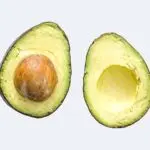
In that free-galactose ranking, per serving, cherries lead with 0.91 g in 1 cup (154 g). Honey (0.65 g in 1 tbsp) and celery (0.19 g in 1 stalk) follow, then plums, kiwifruit, avocados and cantaloupe. The ranking below has each amount. Per 100 g honey leads with 3.1 g, then cherries (0.59 g) and celery (0.48 g), and per 100 kcal celery leads with 3.43 g.
Free galactose also occurs in fermented milk and yogurt. In a 1993 study, people with lactase deficiency who avoid milk could digest lactose and absorb free galactose from them.
A caution on the numbers. A 1991 lab analysis of 45 fruits and vegetables found free galactose from under 0.1 mg per 100 g to 35.4 mg per 100 g. The lowest were artichoke, mushroom, olive and peanut, and the highest persimmon. Dates, papaya, bell pepper, tomato and watermelon were above 10 mg.
Those are milligrams, far below the USDA figures above (0.59 g is 590 mg per 100 g for cherries). The two data sets come from different analyses (gas chromatography for the older study). We cannot say which is closer to the truth, so treat the ranking as rough.
For people with galactosemia, the point is that on a lactose-free diet, fruit and vegetables supplied the dietary galactose in one patient. The international guideline allows them in any amount.
Per serving. No daily amount is set, so bars compare each food with the top food.
Per 100 g. No daily amount is set, so bars compare each food with the top food.
Per 100 kcal: the same calories of each food, for a fair comparison. Bars compare each food with the top food.
Food labels have no Daily Value or Reference Intake for galactose, so the % compares each food with the top food.
- 1.

- 2.

- 3.

- 4.

- 5.

- 6.
- 7.

- 8.

- 9.

- 10.


- 1.
- 2.
- 3.
- 4.

- 5.
- 6.
- 7.
- 8.
- 9.
- 10.

- 1.
- 2.
- 3.
- 4.
- 5.
- 6.
- 7.
- 8.
- 9.
- 10.
Sources
- U.S. Department of Agriculture, Agricultural Research Service. FoodData Central. Values as shown in the ranking above and on our lactose page.
- Gross KC, Acosta PB. Fruits and vegetables are a source of galactose: implications in planning the diets of patients with galactosaemia. J Inherit Metab Dis. 1991.
- Birlouez-Aragon I, Ravelontseheno L, Villate-Cathelineau B, et al. Disturbed galactose metabolism in elderly and diabetic humans is associated with cataract formation. J Nutr. 1993.
- Berry GT, Palmieri M, Gross KC, et al. The effect of dietary fruits and vegetables on urinary galactitol excretion in galactose-1-phosphate uridyltransferase deficiency. J Inherit Metab Dis. 1993.
- Welling L, Bernstein LE, Berry GT, et al. International clinical guideline for the management of classical galactosemia: diagnosis, treatment, and follow-up. J Inherit Metab Dis. 2017.
How galactose works
The basic biochemistry is long established, and what extra galactose does in people is tested in the study cards above. Five ideas cover most of it.
Lactose releases galactose in the gut, and a three-enzyme chain, the Leloir pathway, handles it. The body makes its own, and builds it into sugar chains on proteins and fats. When the chain breaks, the result is galactosemia.
Lactose releases it, and the gut absorbs it
Galactose is the product of lactose breakdown. In people whose lactase works normally, galactose is absorbed after lactose is split in the gut. People with lactase deficiency can still absorb free galactose from fermented milk and yogurt, as Birlouez-Aragon and colleagues found.
Being lactose intolerant has no bearing on whether galactose is harmful. See our page on lactose for the digestion side.
The Leloir pathway turns it into glucose-pathway material
Luis Leloir worked out how cells break down galactose. Timson’s history names three enzymes: galactokinase (GALK1), galactose-1-phosphate uridylyltransferase (GALT) and UDP-galactose 4′-epimerase (GALE).
Berry describes the central step: GALT converts galactose-1-phosphate and UDP-glucose into UDP-galactose and glucose-1-phosphate. Defects in GALT cause most galactosemia, and the two other forms involve galactokinase and the epimerase.
How the body handles galactose, simplified. Not to scale.
The speed at which the body clears a galactose dose is used as a liver test, called galactose elimination capacity. In 71 patients with chronic hepatitis C and advanced liver disease, it rose from 1.74 to 1.98 mmol/min a year after successful virus treatment. We cite it only to show how the test is used. It tells us nothing about dietary galactose.
The body makes its own
Berry and colleagues infused labeled galactose into three healthy men and three patients with classic galactosemia, and measured how much the body produced. Everyone made galactose at 0.53 to 1.05 mg per kilogram per hour. For a 70 kg adult that is roughly 890 to 1,760 mg a day (our arithmetic). By contrast, five people with galactosemia ate 17 to 108 mg a day from fresh fruit and vegetables in a diet study.
In one patient on a lactose-free diet, adding galactose-rich fruit and vegetables or a 200 mg a day supplement changed urine and blood by-products little. The authors concluded that the body’s own production drives them.
Galactose eaten on a galactose-restricted diet against galactose the body makes, in milligrams a day, drawn to scale. The eaten values are from five people with galactosemia, the made values from six people.
It is built into sugar chains on proteins and fats
Galactose is also a building block of the sugar chains on glycoproteins and glycolipids (proteins and fats with sugar attached). The evidence is clearest where it goes missing, as the two supplement cards above show. In phosphoglucomutase 1 deficiency, blood proteins carried sugar chains lacking galactose, and in TMEM165 deficiency the chains were under-galactosylated.
A review of the ovarian damage in galactosemia lists deficient galactosylation of glycoproteins and glycolipids among the possible mechanisms. Others are direct toxicity of galactose and its by-products, oxidative stress and cell death. A 1995 review places galactosemia on a galactose-free diet among diseases of aberrant glycosylation.
Human milk oligosaccharides
Human milk holds more than lactose. Human milk oligosaccharides (HMOs) are a family of structurally diverse sugars that are highly abundant in, and unique to, human milk. Bode’s review notes that most evidence for their benefits comes from lab, animal and mother-infant association studies, and that powered randomized trials are still needed.
One randomized formula trial is on the card above. We found no source in our review that measures how much galactose HMOs contribute, so we leave that out.
When the chain breaks: galactosemia
Classic galactosemia is an autosomal recessive disorder (a child must inherit a faulty gene from each parent) caused by severe GALT deficiency. After the first lactose feedings, affected newborns can develop a potentially lethal illness with several organs involved, including E. coli sepsis, Berry writes. So classic galactosemia is a medical emergency, and a lactose-restricted diet starts at once if it is suspected.
More than 230 GALT mutations are known. Most positive newborn screens come from the Duarte biochemical variant or are false positives.
The long-term picture is harder. The adult study above found ovarian, bone, speech and mood problems on a dairy-free diet, which is why the guideline calls for follow-up.
What has been seen in people
The data fit together this way. For galactosemia, a life-long restricted diet is standard care, but it does not prevent every complication. The body’s own production may be part of why.
For milk in healthy people, one pair of large Swedish cohorts links high intake with earlier death. A 29-study meta-analysis of cohorts finds no link for milk. The chart shows the Swedish numbers per glass of milk a day.
Hazard ratio per glass of milk a day with 95% confidence range (line), drawn to scale. Women (magenta) were followed for a mean 20.1 years, men (orange) for 11.2. Observational data; the exposure was milk, not galactose.
Taken together: the milk findings are associations, and the cataract and ovarian cancer findings disagree with each other. The aging model is lab work with injected sugar. Nothing here shows that the galactose in a normal diet harms healthy people, and nothing shows that extra galactose helps them.
Sources
- Timson DJ. The molecular basis of galactosemia – Past, present and future. Gene. 2015.
- Berry GT. Galactosemia: when is it a newborn screening emergency?. Mol Genet Metab. 2012.
- Structure and function of enzymes of the Leloir pathway for galactose metabolism. Holden HM, Rayment I, Thoden JB. J Biol Chem. 2003.
- Berry GT, Nissim I, Lin Z, et al. Endogenous synthesis of galactose in normal men and patients with hereditary galactosaemia. Lancet. 1995.
- Berry GT, Palmieri M, Gross KC, et al. The effect of dietary fruits and vegetables on urinary galactitol excretion in galactose-1-phosphate uridyltransferase deficiency. J Inherit Metab Dis. 1993.
- Hartnett C, Kim HO, Scaman CH. Effect of processing on galactose in selected fruits. Can J Diet Pract Res. 2007.
- Laursen TL, Siggaard CB, Kazankov K, et al. Time-dependent improvement of liver inflammation, fibrosis and metabolic liver function after successful direct-acting antiviral therapy of chronic hepatitis C. J Viral Hepat. 2020.
- Forges T, Monnier-Barbarino P, Leheup B, et al. Pathophysiology of impaired ovarian function in galactosaemia. Hum Reprod Update. 2006.
- Koscielak J. Diseases of aberrant glycosylation. Acta Biochim Pol. 1995.
- Bode L. Human milk oligosaccharides: every baby needs a sugar mama. Glycobiology. 2012.
- Waisbren SE, Potter NL, Gordon CM, et al. The adult galactosemic phenotype. J Inherit Metab Dis. 2012.
- Michaelsson K, Wolk A, Langenskiold S, et al. Milk intake and risk of mortality and fractures in women and men: cohort studies. BMJ. 2014.
- Guo J, Astrup A, Lovegrove JA, et al. Milk and dairy consumption and risk of cardiovascular diseases and all-cause mortality: dose-response meta-analysis of prospective cohort studies. Eur J Epidemiol. 2017.
- Birlouez-Aragon I, Ravelontseheno L, Villate-Cathelineau B, et al. Disturbed galactose metabolism in elderly and diabetic humans is associated with cataract formation. J Nutr. 1993.
How much galactose do you need?
There is no recommended intake for galactose: the body makes what it needs, and healthy people eat it mainly in lactose from dairy. We found no authority that sets a daily need or an upper limit for galactose on its own. The site’s intake box shows no FDA or EU reference value either. People with galactosemia are the exception: a metabolic specialist sets their amount, not a general rule.
| Source | Group | Value | Notes |
|---|---|---|---|
| Any authority we found | Healthy people | No daily need and no upper limit for galactose | The body makes galactose itself, in gram quantities a day in a tracer study of six people. |
| WHO guideline, 2015 | Adults and children | Free sugars under 10% of total energy; below 5% for added benefit (conditional) | Free sugars are monosaccharides and disaccharides added to foods and drinks, plus sugars in honey, syrups and fruit juices. The guideline does not refer to sugars naturally present in milk, so lactose in milk (and the galactose in it) is outside it. |
| Dietary Guidelines for Americans, 2025-2030 | People in the United States | No amount of added sugars is recommended; one meal should contain no more than 10 g of added sugars | Current edition, January 2026. The previous edition, 2020-2025, said under 10% of calories from added sugars from age 2. |
| International guideline on classic galactosemia, 2017 | People with classic galactosemia | A life-long diet that removes lactose and galactose from dairy products; no set amount for each age | It allows galactose from non-milk sources that add little, and says evidence is insufficient to set an age-related amount. Management belongs with a metabolic specialist. |
| Diet study of five people with galactosemia | People with galactosemia | Eaten: 17 to 108 mg a day from fresh fruit and vegetables | An observed range, not a limit. |
We found no deficiency state from too little dietary galactose. The body makes it, so this page has no deficiency section. If you avoid milk, the real concerns are calcium and vitamin D: in the adult galactosemia study 75% to 80% reported low intakes of both.
Sources
- WHO calls on countries to reduce sugars intake among adults and children. News release on the guideline Sugars intake for adults and children. World Health Organization. 4 March 2015.
- U.S. Department of Agriculture and U.S. Department of Health and Human Services. Dietary Guidelines for Americans, 2025-2030. January 2026.
- Welling L, Bernstein LE, Berry GT, et al. International clinical guideline for the management of classical galactosemia: diagnosis, treatment, and follow-up. J Inherit Metab Dis. 2017.
- Hartnett C, Kim HO, Scaman CH. Effect of processing on galactose in selected fruits. Can J Diet Pract Res. 2007.
- Berry GT, Nissim I, Lin Z, et al. Endogenous synthesis of galactose in normal men and patients with hereditary galactosaemia. Lancet. 1995.
- Waisbren SE, Potter NL, Gordon CM, et al. The adult galactosemic phenotype. J Inherit Metab Dis. 2012.
Forms of galactose: absorption and effects
Galactose reaches you bound in lactose (milk), and as free galactose in fermented milk, yogurt, fruit, vegetables and honey. It is also inside human milk oligosaccharides in breast milk and some formulas, and is sold as pure d-galactose powder.
The honest bottom line: no trial compares these forms for health in healthy people. What we have is food analysis for galactosemia diets, one old case-control study on milk and yogurt, and small supplement studies in rare disorders.
We found no trial for popular claims that a galactose powder helps energy, exercise or health, and the rodent aging model uses injections, not food.
| Form | What it is | What studies show | Source |
|---|---|---|---|
| Milk (lactose) | One glucose and one galactose joined; 12.3 g of lactose in a cup of semi-skimmed milk (USDA) | Milk intake was dose-related with cataract risk in people who digest lactose, particularly with diabetes, in a 1993 case-control study. The big Swedish cohort links more milk with earlier death; the exposure was milk, not galactose. | 4, 10 |
| Fermented milk and yogurt | Milk with some free galactose | People with lactase deficiency absorbed free galactose from them. Yogurt intake was protective against cataract in the 1993 study, for reasons unknown. Fermented dairy had a slight inverse link with death in the 29-cohort meta-analysis. | 4, 11 |
| Fruits and vegetables | Free galactose in plant tissue | Under 0.1 to 35.4 mg per 100 g in 45 foods. In one patient on a lactose-free diet they supplied the galactose eaten. Freezing, blanching, microwaving and canning cut the galactose in fruit by about 45%; drying did not. | 1, 2, 3 |
| Honey | Highest in the site’s per-100-g ranking at 3.1 g | We found no study of honey as a galactose source in people. Treat the USDA value as rough (see Foods above). | 9 |
| d-galactose powder | Pure galactose, by mouth | Used in two rare sugar-chain disorders, in 6 patients and 2 patients, with benefit on blood tests. We found no trial in healthy people. | 6, 7 |
| Human milk oligosaccharides | Separate milk sugars, not galactose; 2′-fucosyllactose and lacto-N-neotetraose in formula | One randomized trial found normal growth and fewer parent-reported infections as secondary findings; its authors are from the formula maker. | 8 |
| Injected d-galactose (rodents) | Lab model of aging | Results vary widely and few studies guard against bias. Lab only. | 5 |
Here are the form-specific studies, strongest evidence first, 3 in all.
All 3 studies, strongest evidence first
One patient: extra fruit and vegetable galactose barely changed by-products
This patient with GALT deficiency, on a lactose-free diet, ate fruits and vegetables with relatively large amounts of free galactose for 3 weeks. Next came a synthetic diet with under 8 mg of galactose a day for 1 week, and a 3-week 200 mg daily supplement. The measured intake matched the amount calculated from fruits and vegetables, but urinary galactitol and red cell galactose-1-phosphate changed little. The authors conclude that the body’s own production is mainly responsible, but this is one patient only.
Galactosemia: freezing or canning cut fruit galactose about 45%; drying did not
Researchers measured galactose in fruits that were frozen, blanched, microwaved, canned or dried, and estimated intake from five people’s three-day food records. Intakes were 17 to 108 mg a day with fresh values and 11 to 103 mg a day using processed fruits and vegetables only. The fall was significant in four of five people. The authors say the meaning for long-term outcome is unclear, given the body’s own production.
Case-control study: milk went with cataract in lactose digesters; yogurt was protective
This study looked back at milk and yogurt intake, galactose metabolism and cataract. Milk was dose-related with cataract risk in lactose digesters, particularly with diabetes, but not in lactose maldigesters. Peak blood galactose after an oral galactose test rose with age, and GALT activity was lower in elderly people with cataract. The authors concluded that milk lactose causes cataract through disturbed galactose metabolism in the elderly. Case-control data cannot prove cause, and the later Korean gene study above points elsewhere.
Sources
- Gross KC, Acosta PB. Fruits and vegetables are a source of galactose: implications in planning the diets of patients with galactosaemia. J Inherit Metab Dis. 1991.
- Berry GT, Palmieri M, Gross KC, et al. The effect of dietary fruits and vegetables on urinary galactitol excretion in galactose-1-phosphate uridyltransferase deficiency. J Inherit Metab Dis. 1993.
- Hartnett C, Kim HO, Scaman CH. Effect of processing on galactose in selected fruits. Can J Diet Pract Res. 2007.
- Birlouez-Aragon I, Ravelontseheno L, Villate-Cathelineau B, et al. Disturbed galactose metabolism in elderly and diabetic humans is associated with cataract formation. J Nutr. 1993.
- Sadigh-Eteghad S, Majdi A, McCann SK, et al. D-galactose-induced brain ageing model: A systematic review and meta-analysis on cognitive outcomes and oxidative stress indices. PLoS One. 2017.
- Tegtmeyer LC, Rust S, van Scherpenzeel M, et al. Multiple phenotypes in phosphoglucomutase 1 deficiency. N Engl J Med. 2014.
- Morelle W, Potelle S, Witters P, et al. Galactose supplementation in patients with TMEM165-CDG rescues the glycosylation defects. J Clin Endocrinol Metab. 2017.
- Puccio G, Alliet P, Cajozzo C, et al. Effects of infant formula with human milk oligosaccharides on growth and morbidity: a randomized multicenter trial. J Pediatr Gastroenterol Nutr. 2017.
- U.S. Department of Agriculture, Agricultural Research Service. FoodData Central. Values as shown in the ranking on this page.
- U.S. Department of Agriculture, Agricultural Research Service. FoodData Central. Lactose value as shown on our lactose page.
- Guo J, Astrup A, Lovegrove JA, et al. Milk and dairy consumption and risk of cardiovascular diseases and all-cause mortality: dose-response meta-analysis of prospective cohort studies. Eur J Epidemiol. 2017.
Is galactose safe? Limits and who should watch it
For almost everyone, the galactose in milk, yogurt, fruit and vegetables is not a safety concern. We found no tolerable upper intake level for galactose. The body clears it through the Leloir pathway and makes grams of its own each day. Food amounts are not the problem, and who needs to take care is a short list.
- Galactosemia. People with classic galactosemia must avoid lactose and galactose from dairy for life, as the international guideline recommends. A metabolic team should follow them. A suspected case in an infant means an immediate switch to a galactose-restricted formula, without waiting for confirmation. Newborn screening finds the disease.
- Duarte variant. The guideline recommends not treating the Duarte variant, and two analyses of 206 children found no difference in outcomes with or without milk. Ask your metabolic clinic.
- Cataract. Cataract is a known problem in galactosemia (21% of 33 adults). The guideline recommends an eye check at diagnosis and screening for people who do not follow the diet. For other people the milk and cataract link rests on one 1993 case-control study, and the Korean gene study points elsewhere.
- Milk in large amounts. The Swedish cohorts link three or more glasses a day in women with higher mortality (hazard ratio 1.93). But the 29-study meta-analysis found no link for milk, and the authors of the Swedish paper urge caution. Do not read it as a galactose finding.
- Ovarian cancer. The old hypothesis that dietary galactose raises risk has not held up in a 22-study meta-analysis or in a lactase gene study.
- Galactose supplements. We found no trial in healthy people, so no safe dose is known. The two small studies in rare sugar-chain disorders were run by specialists. Do not self-treat.
- Drug interactions. We found no report of an interaction between dietary galactose and a medicine.
How to handle galactose in your diet
- If you are healthy, eat normally. Milk, yogurt, fruit and vegetables supply galactose without any action from you, and the body makes more. See lactose if milk gives you gas or bloating, which is a different matter.
- If you have galactosemia, follow your metabolic team. The guideline asks for lactose and galactose from dairy to stay out for life, and allows fruits, vegetables and legumes in any amount. It asks for yearly calcium and vitamin D checks. Freezing or canning fruit cut its galactose by about 45% in one small study.
- Skip galactose powders unless a specialist prescribes one. The only supplement studies are in rare disorders, and there is no trial in healthy people.
Sources
- Welling L, Bernstein LE, Berry GT, et al. International clinical guideline for the management of classical galactosemia: diagnosis, treatment, and follow-up. J Inherit Metab Dis. 2017.
- Waisbren SE, Potter NL, Gordon CM, et al. The adult galactosemic phenotype. J Inherit Metab Dis. 2012.
- Carlock G, Fischer ST, Lynch ME, et al. Developmental outcomes in Duarte galactosemia. Pediatrics. 2019.
- Michaelsson K, Wolk A, Langenskiold S, et al. Milk intake and risk of mortality and fractures in women and men: cohort studies. BMJ. 2014.
- Guo J, Astrup A, Lovegrove JA, et al. Milk and dairy consumption and risk of cardiovascular diseases and all-cause mortality: dose-response meta-analysis of prospective cohort studies. Eur J Epidemiol. 2017.
- Qin LQ, Xu JY, Wang PY, et al. Milk/dairy products consumption, galactose metabolism and ovarian cancer: meta-analysis of epidemiological studies. Eur J Cancer Prev. 2005.
- Hartnett C, Kim HO, Scaman CH. Effect of processing on galactose in selected fruits. Can J Diet Pract Res. 2007.
History of galactose
Galactosemia was first described in the early 1900s by von Ruess, according to Timson’s historical review. The sugar’s metabolism was worked out later. Luis Leloir described the pathway of galactose breakdown in the 1940s and 1950s. That included a 1951 paper on the enzymatic change of uridine diphosphate glucose into a galactose derivative.
In 1956 Isselbacher, Anderson, Kurahashi and Kalckar reported in Science that congenital galactosemia is a single enzymatic block in galactose metabolism. Kalckar’s work established that defects in GALT cause most cases.
Two more forms followed over the next three decades, galactokinase deficiency and epimerase deficiency. From the 1970s, molecular biology mapped the three genes. Newborn screening changed the clinic: Berry notes that doctors now rarely see overwhelmingly ill newborns.
The long-term complications persist on a strict diet. They sit beside the 1995 finding that the body makes grams of galactose a day itself. Today researchers look for therapies such as antioxidants and drugs that stabilize misfolded enzymes.
Sources
- Timson DJ. The molecular basis of galactosemia – Past, present and future. Gene. 2015.
- Leloir LF. The enzymatic transformation of uridine diphosphate glucose into a galactose derivative. Arch Biochem Biophys. 1951.
- Isselbacher KJ, Anderson EP, Kurahashi K, Kalckar HM. Congenital galactosemia, a single enzymatic block in galactose metabolism. Science. 1956.
- Berry GT. Galactosemia: when is it a newborn screening emergency?. Mol Genet Metab. 2012.
- Berry GT, Nissim I, Lin Z, et al. Endogenous synthesis of galactose in normal men and patients with hereditary galactosaemia. Lancet. 1995.
Frequently asked questions about galactose
What is galactose?
Galactose is a simple sugar that pairs with glucose to form lactose, the sugar of milk. The gut splits lactose, and the body handles the galactose through the Leloir pathway. It is one of the sugars, and no official daily need is set for it.
Is galactose the same as glucose?
No. Both are simple sugars, but the body uses its own set of enzymes (galactokinase, GALT and an epimerase) to turn galactose into glucose-pathway material. The page on glucose covers that sugar. People who lack GALT cannot clear galactose and get galactosemia.
What foods contain galactose?
Milk and dairy hold the most, as part of lactose. A cup of semi-skimmed milk has 12.3 g of lactose, about half of it galactose (our arithmetic). Free galactose is in fermented milk, yogurt, fruit, vegetables and honey. In our USDA ranking cherries, honey and celery lead, though measured values vary by method.
How much galactose per day do you need?
None. No authority we found sets a daily need or a limit, and the body makes grams a day itself. In a tracer study of six people it made 0.53 to 1.05 mg per kilogram per hour. People with galactosemia follow a specialist’s plan instead.
What is galactosemia?
It is an inherited disorder in which the body cannot clear galactose, usually because GALT is missing. Newborn screening finds it, and a galactose-restricted diet starts at once. Even then, 21% of 33 adults had cataracts and all the women had premature ovarian insufficiency, so follow-up matters.
Does galactose in milk cause cataracts?
The evidence is weak. One 1993 case-control study linked milk with cataract in lactose digesters and found yogurt protective. But a 2022 Korean gene study of 40,262 adults pointed to carbohydrate-heavy, low-dairy diets. Cataract is a documented complication of galactosemia.
Does galactose age you?
Not in people that we know of. The idea comes from rodent studies that give d-galactose to mimic aging. A meta-analysis found few of them guarded against bias, and results varied widely. A Swedish cohort linking much milk with earlier death is observational and was about milk.
Is galactose safe as a supplement?
No trial in healthy people exists, so no safe dose is known. The only studies are two small ones in rare sugar-chain disorders, one in 6 patients and one in 2, supervised by specialists. Ask a doctor before trying a galactose powder.