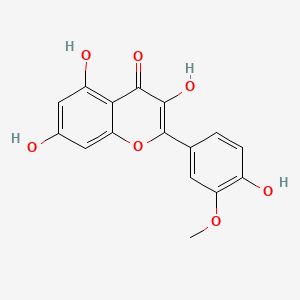
Isorhamnetin is a flavonol, a plant compound in the flavonoid family. It is quercetin with one small change: a methyl group (a carbon with three hydrogens) sits on its side ring. Plants make it and usually keep it with sugars attached.
In peach fruit, UV-B light raised the levels of isorhamnetin and related flavonol sugar compounds. Flavonols in general help plants cope with stress by mopping up reactive oxygen and by steering growth signals.
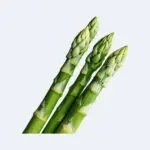
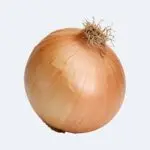
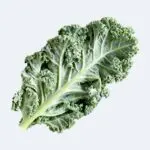
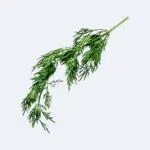
You meet it in onions, kale, dill, asparagus and chives, in sea buckthorn berries, and in the leaves of the ginkgo tree. In NutriScrolls’ ranking of USDA data, dill holds the most per 100 g, 43.5 mg. A cup of asparagus (134 g) gives the most per serving, 7.64 mg.
Here is the part most people do not know. After a fried onion meal, five volunteers’ blood carried a peak of isorhamnetin glucoside equal to 10.7% of the amount eaten. For the same sugar form of quercetin, it was only 0.13%.
Your own body also appears to turn some quercetin into isorhamnetin. Even so, it is little studied in people, and nearly all claims about it rest on cells and animals.
Health benefits of isorhamnetin
The top findings from 15 studies, strongest evidence first
What the stars mean
- Strong. Several randomized trials, pooled in a meta-analysis, point the same way, or regulators (FDA or EFSA) have approved the claim.
- Moderate. Good randomized trials support it, but there are fewer of them, or their results vary.
- Limited. Small, short or single trials, or mixed results. Promising, but it needs confirmation.
Population and lab studies get no stars: they show a link or a mechanism, not proof.
How we rate evidence →- ★Sea buckthorn berries did not change cholesterolIn 229 healthy adults, 28 g of sea buckthorn berries a day for 3 months raised blood isorhamnetin but did not change cholesterol or triglycerides. In another trial, sea buckthorn flavonols in porridge did not change oxidized LDL, CRP or homocysteine.
- ★Isorhamnetin from onions absorbed better than quercetinIn 5 volunteers eating 300 g of fried onions, isorhamnetin glucoside appeared in blood at 10.7% of the amount eaten, against 0.13% for quercetin glucoside.
- ★Lower DNA damage marker after fried onionsIn 6 healthy women, a fried onion meal raised blood isorhamnetin and quercetin, and a urine marker of DNA oxidation fell 4 hours later. Onions hold many compounds, and the group was tiny.
- Population studyLinked to lower Alzheimer dementia riskIn 921 older adults followed over time, the highest fifth of isorhamnetin intake had 0.62 times the risk of Alzheimer dementia of the lowest fifth. People who eat more flavonols may differ in other ways too.
- Population studyLinked to a lower risk of deathIn 11,679 US adults, higher isorhamnetin intake went with 0.72 times the risk of death overall and 0.62 times the risk of cancer death. Flavonol-rich foods come with other healthy habits.
All 15 studies, strongest evidence first
Sea buckthorn berries raised blood isorhamnetin but not cholesterol
In this randomized double-blind trial, 229 healthy adults who finished ate 28 g of berries a day for 3 months, or a placebo. Fasting blood isorhamnetin ended 3.9 ng/mL higher than on the dummy placebo, and quercetin 3.0 ng/mL higher. Cholesterol (total, HDL and LDL) and triglycerides did not change. The berries hold many compounds besides isorhamnetin, so no effect can be tied to it alone.
Sea buckthorn flavonols were absorbed fast but did not change blood markers
In this human trial, people ate flavonol aglycones from sea buckthorn, a rich source of isorhamnetin, in oatmeal porridge at two doses. Oxidized LDL, CRP, homocysteine, antioxidant potential and paraoxonase activity did not change. A little sea buckthorn oil in the porridge seemed to raise absorption at the higher dose. The abstract does not give the number of volunteers or the doses, and the flavonols were a mix, not isorhamnetin alone.
Isorhamnetin from fried onions was absorbed far better than quercetin
Five healthy volunteers ate 300 g of lightly fried yellow onions after 3 days on a low-flavonoid diet. Isorhamnetin glucoside peaked in blood at 1.8 hours, at 10.7% of the amount eaten, against 0.13% for quercetin glucoside. Urine held 17.4% of it, against 0.2% for quercetin glucoside. The authors say small differences in structure change absorption a lot, and the study measured blood levels, not health effects.
Fried onions made white-cell DNA harder to break in six women
In this randomized crossover trial, 6 healthy women ate a fried onion meal and, on another day, onions plus cherry tomatoes. The onion meal raised blood isorhamnetin and quercetin glucosides, and urinary 8-hydroxy-2’-deoxyguanosine, a marker of DNA oxidation, fell 4 hours later. Urinary MDA did not change, and after the onion and tomato meal only quercetin was found in blood. Onions hold many compounds, and 6 women is a very small group.
Older adults eating most isorhamnetin had lower Alzheimer dementia risk
This prospective cohort followed 921 people forward in time; they had no dementia at the start (mean age 81.2). Yearly checks and food questionnaires tracked them, and 220 developed Alzheimer dementia. The highest fifth of isorhamnetin intake had 0.62 times the risk of the lowest; for kaempferol it was 0.49 and myricetin 0.62. Quercetin was not linked (0.69, range 0.43 to 1.09), and people who eat more flavonols tend to eat differently in other ways too.
Higher isorhamnetin went with lower death rates, overall and from cancer
This cohort of 11,679 US adults from NHANES, a national health survey, used one 24-hour food recall and a median 7.80 years of follow-up. Higher isorhamnetin went with 0.72 times the risk of death from any cause and 0.62 times the risk of cancer death. The abstract reports no heart-disease link for isorhamnetin, though total flavonols, quercetin and myricetin had one. Flavonol-rich foods come with other healthy habits, so cause is not shown.
Higher isorhamnetin went with less albuminuria, not less kidney disease
This cross-sectional NHANES analysis, a single snapshot of US adults, used 24-hour food recalls. The highest fourth of intake had 0.669 times the odds of albuminuria, a sign of kidney damage, compared with the lowest (0.515 to 0.870). Blood-cell inflammation markers explained only 4.3 to 8.9% of the link, and the authors urge caution. A snapshot cannot show which came first.
Most isorhamnetin went with lower odds of chronic kidney disease
This cross-sectional NHANES analysis used dietary recalls in US adults. The highest intake had 0.637 times the odds of chronic kidney disease, and the odds fell steadily across fourths of intake. For total flavonols the trend was not clear. It uses similar NHANES data to the 2025 analysis above, which found no link with kidney disease overall, so the two are not independent confirmation.
In 40 heart patients, isorhamnetin went with lower systolic pressure in men
This study of patients with coronary artery disease used a food questionnaire. The correlation with systolic pressure (the top number) was -0.36 overall and -0.65 in men (p = 0.001), with no clear link in women. Main sources were onions, tomatoes, blueberries, apples, tea, coffee and wine. It is a very small study that shows a link, not a cause.
People with metabolic syndrome ate less isorhamnetin than healthy people
This study of 90 adults used a one-year food-frequency questionnaire. Isorhamnetin intake was clearly lower (p < 0.001) and fell as the syndrome advanced; quercetin, kaempferol, tomatoes and wine were lower too. Flavonol intake did not track blood fats, glucose or kidney function. The author suggests tomatoes may drive the link, and that any effect is on central obesity and blood pressure.
In test tubes, isorhamnetin blocked platelet clumping at 8.1 µM
This lab study used human platelets. Half-maximal inhibition, meaning half the clumping blocked, came at 8.1 µM for collagen and 16.1 µM for TRAP-6. ATP fell, pointing to lower mitochondrial function, and 20 µM cut platelet build-up on damaged vessel wall under flow. It was not tested in people.
In rat aorta, isorhamnetin, like quercetin, protected artery relaxation
This lab study kept rings of rat aorta for 6 hours with angiotensin II, a hormone that narrows blood vessels. It blunted relaxation, raised superoxide (a reactive oxygen molecule) and raised the NADPH oxidase subunit p47phox. Quercetin and isorhamnetin prevented all three, and the authors link it to more nitric oxide being available. This was rat tissue, not people.
In mice, isorhamnetin made atrial fibrillation harder to trigger and cut scarring
Male mice received angiotensin II for two weeks, with or without isorhamnetin injected into the abdomen at 5 mg/kg (milligrams per kilogram). Isorhamnetin started a week earlier; atrial fibrillation is a fast, irregular heartbeat. It also restored the heart’s refractory period (its reset time), calmed abnormal calcium activity and limited atrial enlargement. This was an injection in mice, not food eaten by people.
In mice with fatty liver disease, isorhamnetin cut liver fat and scarring
This study used a human-like mouse model of NASH, a serious form of fatty liver disease, giving 50 mg/kg of isorhamnetin by mouth. Treated mice had less fat and triglyceride in the liver, better liver injury markers and less collagen. The compound was synthesized isorhamnetin, not a food extract, and this was in mice only.
In mouse fat-cell precursors, isorhamnetin blocked fat-cell formation but also lowered adiponectin
Cell study in 3T3-L1 cells. Less triglyceride built up, and PPAR-gamma and C/EBP-alpha, two master switches of fat-cell formation, fell. Adiponectin, a hormone made by fat cells, was reduced too, and the abstract does not say whether that helps or harms. Cells in a dish only.
Foods high in isorhamnetin
Isorhamnetin is spread thinly across many everyday plants, mostly with sugars attached. A 2023 review calls it a minor flavonoid in onions, next to quercetin.
Per 100 g, the USDA flavonoid database ranks dill first at 43.5 mg, then kale (23.6), chives (6.75), asparagus (5.7) and onions (5.01). Dill is eaten in pinches, though. By serving, the leaders are asparagus (7.64 mg in a cup), a medium onion (5.51 mg) and a cup of kale (4.96 mg).
Outside that ranking, sea buckthorn berries are a rich source. The same 2023 review, whose authors include Amway staff, reports isorhamnetin compounds made up over 65% of the berries’ flavonols in one survey of cultivars. In a trial, 28 g of berries a day raised blood isorhamnetin by 3.9 ng/mL over placebo.
The review also names the nopal cactus, Opuntia ficus-indica, where isorhamnetin glycosides are the most abundant flavonoid. It names ginkgo leaves too, a medicinal herb and not a food. We did not see sea buckthorn or nopal in the USDA ranking below.
Per serving. No daily amount is set, so bars compare each food with the top food.
Per 100 g. No daily amount is set, so bars compare each food with the top food.
Per 100 kcal: the same calories of each food, for a fair comparison. Bars compare each food with the top food.
Food labels have no Daily Value or Reference Intake for isorhamnetin, so the % compares each food with the top food.
- 1.
- 2.
- 3.
- 4.
- 5.
- 6.
- 7.
- 8.
- 9.
- 10.


- 1.
- 2.
- 3.
- 4.
- 5.
- 6.
- 7.
- 8.
- 9.
- 10.

- 1.
- 2.
- 3.
- 4.
- 5.
- 6.
- 7.
- 8.
- 9.
- 10.
Sources
- USDA Database for the Flavonoid Content of Selected Foods, Release 3.3 (March 2018). Bhagwat S, Haytowitz DB. US Department of Agriculture, Agricultural Research Service. Public domain.
- Wang H, Chen L, Yang B, et al. Structures, sources, identification/quantification methods, health benefits, bioaccessibility, and products of isorhamnetin glycosides as phytonutrients. Nutrients. 2023. Two authors work for Amway (Shanghai) Innovation & Science Co.
- Larmo PS, Yang B, Hurme SA, et al. Effect of a low dose of sea buckthorn berries on circulating concentrations of cholesterol, triacylglycerols, and flavonols in healthy adults. Eur J Nutr. 2009.
How isorhamnetin works
Most of what we know about how isorhamnetin works comes from test tubes, cells and animals, and a 2020 review calls the mechanisms thinly validated. Four ideas come up most.
Plants, and perhaps your body, make it from quercetin. It switches on the cell’s protective enzymes, helps muscle cells take in sugar, and calms platelets and blood vessels in a dish. Here is each one, and what has been seen in people.
It is quercetin with one methyl group added
In quercetin, the 3′ spot on the side ring carries an –OH group. In isorhamnetin it carries –OCH3. Plants do this swap with an enzyme: in peach, one called PpFOMT1 methylated quercetin at that spot in lab tests to make isorhamnetin compounds.
People appear to take part too. A 2025 review notes that 3′-methylquercetin glucuronide shows up in blood after quercetin supplements. After onions, the isorhamnetin glucuronide in blood lingered with a half-life of 5.34 hours, against 1.71 to 2.33 hours for three quercetin conjugates.
A simplified sketch, not a full structure. The methyl group (CH3) is the only difference at the 3′ spot.
It switches on the cell’s protective enzymes
Benzo[a]pyrene, a Group 1 carcinogen, is turned in the body into a form that damages DNA. In cell tests, isorhamnetin and quercetin both cut the cell damage it caused and lowered DNA adducts, the sticky DNA damage it leaves.
They raised enzymes that break down harmful chemicals by moving two control proteins, AhR and NRF2, into the nucleus. Miquelianin, another quercetin metabolite, did not protect. This was done in cultured cells, not in people.
Two control switches inside the cell, as described in cell tests. The switches show the direction of the effect, not its size.
It helps muscle cells take in sugar
In L6 muscle cells, isorhamnetin at just 1 nM raised glucose uptake by moving the sugar transporter GLUT4 to the cell surface. It did so through JAK2 and STAT signals, while quercetin worked mainly through AMPK. The authors chose small amounts they call physiological, meaning like those in the body.
In mice, a quercetin glycoside at 10 and 100 mg/kg also moved GLUT4 in muscle. Blood quercetin aglycone reached only 4.95 and 6.80 nM. No human trial has tested this.
Two routes to the same step, as described in muscle cells in a dish.
It calms platelets and relaxes blood vessels in a dish
In human platelets, isorhamnetin blocked clumping triggered by collagen at 8.1 µM and by TRAP-6 at 16.1 µM. It seems to work by lowering mitochondrial function, the cell’s power supply. In isolated arteries from spontaneously hypertensive rats, quercetin and isorhamnetin both relaxed the vessels. Isorhamnetin was the more potent in each of the three vessel types tested.
In rat aorta it also prevented angiotensin II from damaging relaxation, as quercetin did. All of this was done in tissue or cells.
It can hold back fat-cell formation, but results disagree
In mouse fat-cell precursors, isorhamnetin cut triglyceride build-up and lowered PPAR-gamma, a master switch of fat-cell formation. A 2022 review says the effect appears at 10 µM or more. It adds that rodent studies are few and need more than two weeks of treatment. The same cell study also found lower adiponectin, and the review notes some contradictory results.
What has been seen in people
These effects are much easier to show in a dish than in a person. Lab tests often use micromoles, while a 2025 review puts blood levels of quercetin conjugates on unsupplemented diets below 50 nmol/L.
In people, the controlled studies mostly show absorption, and two sea buckthorn trials found no change in blood fats or CRP. The cohort studies above link higher intake to 0.62 times the risk of Alzheimer dementia and 0.72 times the risk of dying from any cause. But isorhamnetin arrives with onions, kale and tomatoes, so its own share cannot be pulled out.
Sources
- Gong G, Guan YY, Zhang ZL, et al. Isorhamnetin: a review of pharmacological effects. Biomed Pharmacother. 2020.
- Xie L, Guo Y, Ren C, et al. Unravelling the consecutive glycosylation and methylation of flavonols in peach in response to UV-B irradiation. Plant Cell Environ. 2022.
- Daryanavard H, Postiglione AE, Mühlemann JK, Muday GK. Flavonols modulate plant development, signaling, and stress responses. Curr Opin Plant Biol. 2023.
- Williamson G, Clifford MN. A critical examination of human data for the biological activity of quercetin and its phase-2 conjugates. Crit Rev Food Sci Nutr. 2025.
- Mullen W, Edwards CA, Crozier A. Absorption, excretion and metabolite profiling of methyl-, glucuronyl-, glucosyl- and sulpho-conjugates of quercetin in human plasma and urine after ingestion of onions. Br J Nutr. 2006.
- Kim M, Jee SC, Kim KS, et al. Quercetin and isorhamnetin attenuate benzo[a]pyrene-induced toxicity by modulating detoxification enzymes through the AhR and NRF2 signaling pathways. Antioxidants (Basel). 2021.
- Jiang H, Yamashita Y, Nakamura A, Croft K, Ashida H. Quercetin and its metabolite isorhamnetin promote glucose uptake through different signalling pathways in myotubes. Sci Rep. 2019.
- Rodríguez L, Badimon L, Méndez D, et al. Antiplatelet activity of isorhamnetin via mitochondrial regulation. Antioxidants (Basel). 2021.
- Ibarra M, Moreno L, Vera R, et al. Effects of the flavonoid quercetin and its methylated metabolite isorhamnetin in isolated arteries from spontaneously hypertensive rats. Planta Med. 2003.
- Sanchez M, Lodi F, Vera R, et al. Quercetin and isorhamnetin prevent endothelial dysfunction, superoxide production, and overexpression of p47phox induced by angiotensin II in rat aorta. J Nutr. 2007.
- Lee J, Jung E, Lee J, et al. Isorhamnetin represses adipogenesis in 3T3-L1 cells. Obesity (Silver Spring). 2009.
- González-Arceo M, Gomez-Lopez I, Carr-Ugarte H, et al. Anti-obesity effects of isorhamnetin and isorhamnetin conjugates. Int J Mol Sci. 2022.
Is isorhamnetin safe? Supplements, dose and interactions
We found no safety concern reported for isorhamnetin at food amounts, though none of these studies was built to test safety. In the studies above, adults ate 300 g of fried onions in one sitting. 229 healthy adults ate 28 g of sea buckthorn berries a day for 3 months.
We found no acceptable daily intake, upper level or health claim for isorhamnetin from EFSA (the EU’s food safety agency), the FDA or NIH. The nearest official benchmark is for its parent, quercetin. In 2024 the Norwegian Scientific Committee for Food and Environment (VKM) gave its view. It judged 500 mg a day of quercetin dihydrate in supplements safe for adults for at least three months.
- No dose has been tested. We found no human trial of isolated isorhamnetin. The human work used onions, sea buckthorn berries or flavonol mixes. So a safe amount of a purified supplement is not defined, and the quercetin figure above does not transfer to it.
- Blood clotting. In test tubes, isorhamnetin slowed human platelets at 8.1 µM. No human study tested whether this matters, so the concern is theoretical. Still, people on blood thinners should ask their clinic before taking concentrated extracts.
- Mixed products. Sea buckthorn and ginkgo extracts hold many compounds besides isorhamnetin. Their side effects or benefits cannot be put down to isorhamnetin.
- Pregnancy and breastfeeding. We found no data on isorhamnetin, and VKM says there were too few data on quercetin supplements for pregnant or breastfeeding women.
How to get more isorhamnetin
- Best food. By serving, asparagus (7.64 mg a cup), a medium onion (5.51 mg) and a cup of kale (4.96 mg) lead the USDA ranking. Sea buckthorn berries are a rich source too but harder to find.
- Keep it in its food form. In five volunteers, isorhamnetin glucoside from lightly fried onions reached 10.7% of the amount eaten in blood. A 2023 review, with Amway staff among its authors, says such glycosides reach higher blood levels and stay longer than the bare aglycone. No study here compared raw with cooked onions.
- A little fat may help. In one trial, a small amount of sea buckthorn oil in porridge seemed to raise absorption of the berry flavonols at the higher dose.
Sources
- Rutin and quercetin: health risks of intake of food supplements. Norwegian Scientific Committee for Food and Environment (VKM), VKM Bulletin 2024:09.
- Larmo PS, Yang B, Hurme SA, et al. Effect of a low dose of sea buckthorn berries on circulating concentrations of cholesterol, triacylglycerols, and flavonols in healthy adults. Eur J Nutr. 2009.
- Aziz AA, Edwards CA, Lean ME, Crozier A. Absorption and excretion of conjugated flavonols, including quercetin-4’-O-beta-glucoside and isorhamnetin-4’-O-beta-glucoside by human volunteers after the consumption of onions. Free Radic Res. 1998.
- Rodríguez L, Badimon L, Méndez D, et al. Antiplatelet activity of isorhamnetin via mitochondrial regulation. Antioxidants (Basel). 2021.
- Suomela JP, Ahotupa M, Yang B, Vasankari T, Kallio H. Absorption of flavonols derived from sea buckthorn (Hippophaë rhamnoides L.) and their effect on emerging risk factors for cardiovascular disease in humans. J Agric Food Chem. 2006.
- Wang H, Chen L, Yang B, et al. Structures, sources, identification/quantification methods, health benefits, bioaccessibility, and products of isorhamnetin glycosides as phytonutrients. Nutrients. 2023. Two authors work for Amway (Shanghai) Innovation & Science Co.
Frequently asked questions about isorhamnetin
What does isorhamnetin do for the body?
Nobody knows yet in people, because we found no trial of isolated isorhamnetin that tested a health outcome. In cohorts, higher dietary intake went with a lower risk of Alzheimer dementia (0.62 times the risk) and of death from any cause (0.72). But those studies cannot separate it from the foods it comes in. The more striking effects, on platelets, arteries, liver fat and heart rhythm, were seen in cells and animals.
Is isorhamnetin the same as quercetin?
No, but they are close relatives. Isorhamnetin is quercetin with one methyl group added at the 3′ spot. Plants make it that way, and people appear to as well. After fried onions, isorhamnetin glucoside reached 10.7% of intake in blood, against 0.13% for quercetin glucoside.
In the Alzheimer cohort, isorhamnetin intake was linked to lower risk (0.62) and quercetin was not (0.69, a result that could be chance).
Which foods are high in isorhamnetin?
By weight, USDA data put dill first at 43.5 mg per 100 g, then kale at 23.6 mg. By serving, a cup of asparagus gives 7.64 mg, a medium onion 5.51 mg and a cup of kale 4.96 mg. Sea buckthorn berries are another rich source but are not in that ranking.
How much isorhamnetin should you take a day?
No dose is established. The human studies used food: 300 g of fried onions in one meal, or 28 g of sea buckthorn berries a day for 3 months. We found no supplement trial of isorhamnetin and no limit from EFSA, the FDA or NIH. Norway’s VKM judged 500 mg a day of quercetin dihydrate safe for adults, but that is for quercetin, not isorhamnetin.
Does isorhamnetin have side effects?
We found no human safety trial of isolated isorhamnetin, so its side effects are not defined. In test tubes it slowed human platelets, a theoretical concern for people on blood thinners. Sea buckthorn and ginkgo products hold many compounds, so their effects cannot be assigned to isorhamnetin. Ask your doctor if you are pregnant or take blood thinners.
Does isorhamnetin lower blood pressure?
It is unproven. In 40 people with coronary artery disease, higher isorhamnetin intake went with lower systolic blood pressure (correlation -0.36). The link was mainly in men (-0.65), and a link is not proof. In rats, isorhamnetin relaxed isolated arteries, but no trial has tested it in people.
Is sea buckthorn a good source of isorhamnetin?
Yes as a source, less clearly as a treatment. In 229 healthy adults, 28 g of berries a day for 3 months raised blood isorhamnetin by 3.9 ng/mL over placebo. A review says isorhamnetin compounds make up over 65% of the berries’ flavonols in one survey. The berries did not change cholesterol or triglycerides, and they hold many other compounds.