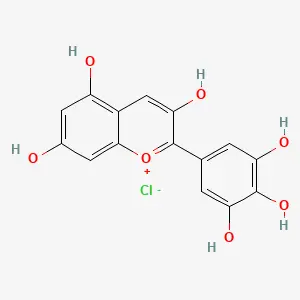
Delphinidin is an anthocyanidin, a pigment in the flavonoid family. It gives blue hues to flowers such as violets and larkspur, and the blue-red color to Cabernet Sauvignon grapes. Most blue flowers contain delphinidin-based pigments.
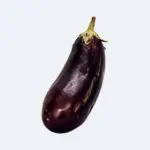
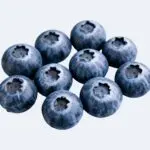
In food it is almost always attached to sugars. Eggplant leads the USDA data with 85.7 mg per 100 g, and its purple skin gets its color from a delphinidin pigment called nasunin. Blueberries have 35.4 mg per 100 g.
Most readers do not know that roses cannot make it. Roses lack the enzyme that builds delphinidin, which is why roses had no violet or blue varieties. In 2007 researchers added a gene from viola, and the petals held up to 95% delphinidin and turned bluish.
Later work found that delphinidin alone often gives purple or violet. A true blue needs help from other compounds.
Its color also depends on acidity, from red in acid to blue in base. In the lab it breaks down quickly, and anthocyanins are poorly absorbed.
Almost every human trial below used an extract or a mix of anthocyanins. Examples are the maqui berry extract Delphinol and the bilberry and black currant product Medox. None gave pure delphinidin, so each card names the product and says so when delphinidin was only one part.
Health benefits of delphinidin
The top findings from 22 studies, strongest evidence first
What the stars mean
- Strong. Several randomized trials, pooled in a meta-analysis, point the same way, or regulators (FDA or EFSA) have approved the claim.
- Moderate. Good randomized trials support it, but there are fewer of them, or their results vary.
- Limited. Small, short or single trials, or mixed results. Promising, but it needs confirmation.
Population and lab studies get no stars: they show a link or a mechanism, not proof.
How we rate evidence →- ★★Better artery widening with delphinidin-type anthocyaninsIn a review of 65 trials in healthy people, delphinidin-type anthocyanins improved artery widening by 1.59% with repeated intake, and by 1.69% after one dose. The delphinidin type also improved arterial stiffness (pulse wave velocity -0.33), but across all types blood fats, blood pressure and glucose were unaffected.
- ★★Mixed effects on cholesterol and blood fatsIn 18 trials, products led by delphinidin-type anthocyanins (mixtures, not pure delphinidin) lowered LDL and triglycerides and raised HDL, unlike cyanidin and malvidin types. Bilberry anthocyanins (320 mg a day) did not change LDL in a 28-day trial of 52 people with high cholesterol.
- ★★Lower blood sugar after meals in short trialsA review of 12 maqui berry supplement trials found lower blood sugar after a meal in short studies, but modest, inconsistent effects over months. In 10 people with glucose intolerance, Delphinol (a maqui extract) lowered blood sugar and insulin after a rice meal.
- ★Maqui extract eased dry eyesIn 74 screen workers, 60 mg a day of a maqui extract for 4 weeks raised tear production by 6.4 mm. In 20 patients with dry eye, a maqui extract lowered dry eye scores.
- ★Lower inflammation markers with anthocyanin mixesIn 150 people with high cholesterol, a purified anthocyanin mix (320 mg a day, 24 weeks) lowered the inflammation marker hsCRP by 21.6%. In 120 healthy adults, 300 mg a day of Medox lowered IL-8 by 45%, against 20% on placebo.
All 22 studies, strongest evidence first
Delphinidin-type anthocyanins improved artery widening by 1.59% in 65 trials
This systematic review pooled 65 randomized trials in healthy people, each giving at least 50 mg of anthocyanins a day. It added 18 cohort studies and sorted trials by anthocyanin type. With repeated intake, the delphinidin type improved artery widening (flow-mediated dilation), and after a single dose by 1.69%. It also improved arterial stiffness (pulse wave velocity -0.33), insulin (-2.32 pmol/L) and triglycerides (-0.10 mmol/L). Across all types, blood fats, blood pressure and glucose were unaffected. The US Highbush Blueberry Council helped fund the work, and the last author advises its grant committee.
In 18 trials, delphinidin-led products improved LDL, HDL and triglycerides
This meta-analysis grouped 18 randomized trials by the main anthocyanin in the test food, so the products were mixtures, not pure delphinidin. For the delphinidin group, LDL changed by -0.28, triglycerides by -0.24 and HDL (“good” cholesterol) by 0.11. Cyanidin and malvidin types did not show this, and the three groups clearly differed for total and LDL cholesterol. No group clearly affected glucose metabolism, and the authors declare no conflict of interest.
Maqui cut post-meal blood sugar in short trials, less over months
This systematic review covered 12 human trials of maqui supplements from 2014 to 2023; maqui is a berry rich in anthocyanins. Short studies found lower blood sugar after a meal, but effects over months were modest and inconsistent. Eye benefits (tear production, dry eye symptoms) were the most consistent finding. Certainty ranged from moderate to very low because the trials were small, short and varied. Two of the six authors work for Agrijohnson, a Chilean berry company.
Delphinol lowered blood sugar and insulin after a rice meal
10 people with glucose intolerance took Delphinol or placebo in random order, double-blind. The extract is standardized to at least 25% delphinidins and 35% total anthocyanins, and the abstract gives no dose. The same paper reports that delphinidin blocked sodium-dependent glucose transport in rodent gut, and the extract lowered fasting glucose in diabetic rats over four months. The abstract does not say who paid, and MNL Chile owns the Delphinol trademark.
Delphinol lowered oxidized LDL and a stress marker, but briefly
42 healthy, overweight smokers aged 45 to 65 took a maqui extract or placebo for 4 weeks each. The extract held 162 mg of anthocyanins, taken three times a day. Oxidized LDL and a urine stress marker (F2-isoprostanes) fell, but the changes were gone 40 days after the end. At week 4, blood pressure, body measures and blood fats did not differ from placebo. One author works for Enervit, and MNL Chile owns the Delphinol trademark.
Delphinol lowered HbA1c from 5.65% to 5.35%, no control described
31 people with newly found, moderate glucose intolerance took 180 mg of Delphinol a day for 3 months, checked monthly. HbA1c is a marker of long-term blood sugar, and the study described no control group. LDL cholesterol fell and HDL rose, while fasting glucose and insulin fell only slightly (could be chance) and glucose tolerance tests did not change. By our arithmetic, 180 mg at 25% or more delphinidins holds at least 45 mg of them. No adverse effects were reported.
Delphinol lowered fasting blood sugar and insulin in prediabetes
In this open, exploratory study, volunteers had four glucose tolerance tests at least a week apart, each with a different Delphinol dose an hour before. Fasting blood sugar and insulin fell with dose. Lower doses delayed the peaks after the drink and higher doses reversed that, while total glucose in the blood did not change. The abstract gives no number of volunteers or doses, and an unconditional grant from MNL-Chile, the trademark owner, paid for the work.
Bilberry or black rice anthocyanins did not change LDL cholesterol
52 people with high cholesterol took bilberry or black rice anthocyanins (320 mg a day) or placebo. Each was taken for 28 days, double-blind and in random order. Bilberry anthocyanins are the delphinidin type (three hydroxyl groups on the B ring), and black rice anthocyanins the cyanidin type (two). Neither changed other blood fats, glucose control markers, HDL function or bile acids. The authors say 28 days may have been too short.
Cyanidin-delphinidin extract blunted sugar and fat rises after a fatty meal
25 healthy adults ate a high-fat meal with the extract or a placebo, double-blind and in random order. The extract gave 320.4 mg of anthocyanins, 90% of them cyanidin and delphinidin, so the result cannot be credited to delphinidin alone. It blunted the rise in blood sugar, triglycerides and bacterial endotoxin, while rises in insulin, GLP-1 and cholesterol did not clearly change. Three authors work for Pharmanex Research (NSE Products), and two others have received grants from the company.
An anthocyanin mix lowered the inflammation marker hsCRP by 21.6%
This randomized, double-blind trial had 150 people with high cholesterol. They took 320 mg a day of a purified anthocyanin mixture or placebo for 24 weeks. On placebo, hsCRP fell only 2.5%. On the mixture, sVCAM-1 fell 12.3% and LDL cholesterol 10.4%, and HDL rose 14.0%. In cell tests, delphinidin-3-glucoside, cyanidin-3-glucoside and the mixture each cut inflammatory signals, the mixture most. The abstract names no brand. A paper from the same trial calls delphinidin-3-glucoside and cyanidin-3-glucoside the two main parts of the mixture.
The same mixture lowered platelet-release markers
This second paper from the trial above adds no new participants: the same 150 people with high cholesterol, 320 mg a day, 24 weeks. Beta-thromboglobulin, P-selectin and RANTES fell. In the lab, delphinidin-3-glucoside, cyanidin-3-glucoside and the mixture each blocked release from platelet granules. This was partly by calming the PI3K/Akt pathway.
Medox cut IL-8, RANTES and IFN-alpha more than placebo
120 healthy adults aged 40 to 74 took 300 mg a day of Medox or placebo for 3 weeks. Medox is made of anthocyanins from bilberries and black currants, so delphinidin glycosides are one part of a mix. IL-8, RANTES and IFN-alpha fell 45%, 15% and 40%, against 20%, 0% and 15% on placebo. In cultured monocytes the same mix also suppressed NF-κB activation.
320 mg of Medox cut collagen-triggered platelet clumping by 7.05%
In this double-blind trial, 93 people with dyslipidemia (abnormal blood fats) were randomized for 12 weeks. They got placebo or 40, 80, 160 or 320 mg a day of Medox. Medox is a mixed anthocyanin product from Norway in which delphinidin glycosides are one part. Even 80 mg a day cut clumping by 3.39%, and the effect grew with dose. The paper lists no funding.
Black currant juice did not change blood vessel reactivity
20 healthy adults drank 250 mL of a 20% black currant juice drink or placebo, double-blind and in random order. Markers of blood vessel lining function and blood fats did not change. Delphinidin-3-rutinoside was the main anthocyanin found in urine. Only 0.021% of the delphinidin glycosides eaten turned up there, against 0.009% for cyanidin glycosides.
MaquiBright raised tear production in adults with dry eyes
74 Japanese screen workers aged 30 to 60 took MaquiBright, a maqui extract, or placebo. The dose was 60 mg a day for 4 weeks, and tear production rose by 6.4 mm in the Schirmer test. Eye fatigue and some symptom scores also improved after screen work, and no adverse events were reported. The abstract does not give the extract’s delphinidin content or say who paid.
Maqui extract eased dry eye symptoms in 20 patients
In this randomized, placebo-controlled study, patients took maqui berry extract for 2 months. The dry eye score (OSDI) fell and the Schirmer tear test rose compared with placebo. Tear inflammation markers IL-1β, IL-6, IL-17A, TNF-alpha and MMP9 fell, while IL-10 rose. Tear break-up time and corneal staining did not change. The abstract gives no dose or delphinidin content, and the authors declare no conflict.
After one dose, delphinidin-3-glucoside peaked in blood at 1.0 hour
In 12 healthy adults taking Delphinol, it was back near baseline within 8 hours. Cyanidin-3-sambubioside peaked later, at 2.0 hours, and the breakdown products gallic acid and protocatechuic acid were also found. Anklam Extrakt sponsored the study and employs two authors, while an independent contract lab ran it, as the paper states. The abstract gives no dose.
Middle delphinidin intake linked to lower odds of esophageal cancer
This case-control study in China compared 820 patients with esophageal squamous cell cancer and 863 people without it, using a food questionnaire. The middle (third) intake quartile had 0.57 times the odds of the lowest, a stronger link than the highest quartile showed. Cyanidin looked similar (0.48), and isoflavones showed a stronger link. Food questionnaires cannot rule out other habits of people who eat more of these foods.
In vein cells, delphinidin-3-glucoside shielded mitochondria from oxidized LDL
This cell study with some animal data used human vein cells. Delphinidin-3-glucoside entered through the SGLT1 transporter, and reactive oxygen species and cell death fell. Blocking SGLT1 with glucose, the drug phlorizin or gene silencing stopped the uptake and removed the protection.
Delphinidin cut glucose uptake in mouse gut and human gut cells
The study used samples of mouse jejunum (small intestine) and three human gut cell lines (HT-29, Caco-2 and NCM460). Delphinidin acted through the FFA1 (GPR40) receptor and also affected the sodium-glucose transporter SGLT1. The authors note that anthocyanins are poorly absorbed, so a local action in the gut could help explain their antidiabetic effects.
Delphinidin’s lab half-life was about 30 minutes
This lab study used human umbilical vein cells. At 100 nM to 1 µM, delphinidin and its breakdown product gallic acid protected the cells and raised glutathione. At 100 µM both were toxic. The authors conclude that delphinidin itself is unlikely to act as a direct antioxidant in the body.
Delphinidin slowed prostate cancer cells and tumors in mice
In this cell and mouse study, delphinidin triggered cell death in four human prostate cancer cell lines, with little effect on normal prostate cells. The mice got 2 mg of delphinidin injected into the abdomen three times a week, not by mouth. Tumor growth slowed and NF-κB signaling fell in the tumors. It does not show an effect of food or supplements in people.
Foods high in delphinidin
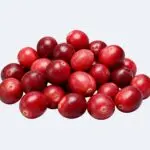
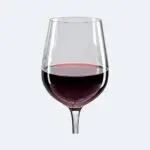
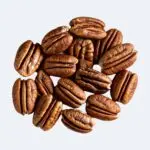
Eggplant leads the USDA data with 85.7 mg of delphinidin per 100 g, or 70.3 mg in a cup (82 g). Blueberries follow with 35.4 mg per 100 g (52.4 mg in a cup of 148 g). Then come cranberries (7.66 mg), pecans (7.28 mg) and red wine (2.01 mg), and the ranking below shows the rest.
Eggplant’s purple skin holds nasunin, a delphinidin pigment. In rats, nasunin was absorbed in its original form. Its plasma level was almost identical to delphinidin-3-glucoside at the same dose.
The berries used in research are not in the USDA top ten. Maqui berries hold 137.6 mg of anthocyanins per 100 g of fresh fruit, all of them delphinidin or cyanidin pigments. The main one, delphinidin 3-sambubioside-5-glucoside, makes up 34% of the total. By our arithmetic that is at least about 47 mg per 100 g.
Wikipedia also lists bilberries and black currant pomace as sources. For scale, 180 mg of Delphinol holds at least 45 mg of delphinidins. That is roughly the amount in 53 g of eggplant by the USDA figure, though the two may not be counted the same way.
In a large European study, cyanidins and malvidins, not delphinidin, were the main anthocyanidins people ate. Their total was about 19 to 65 mg a day across study centers. The ranking below is from USDA data.
Per serving. No daily amount is set, so bars compare each food with the top food.
Per 100 g. No daily amount is set, so bars compare each food with the top food.
Per 100 kcal: the same calories of each food, for a fair comparison. Bars compare each food with the top food.
Food labels have no Daily Value or Reference Intake for delphinidin, so the % compares each food with the top food.
- 1.
- 2.
- 3.
- 4.
- 5.
- 6.
- 7.
- 8.
- 9.
- 10.


- 1.
- 2.
- 3.
- 4.
- 5.
- 6.
- 7.
- 8.
- 9.
- 10.
- 1.
- 2.
- 3.
- 4.
- 5.
- 6.
- 7.
- 8.
- 9.
- 10.
Sources
- Bhagwat S, Haytowitz DB. USDA Database for the Flavonoid Content of Selected Foods, Release 3.3 (2018). US Department of Agriculture, Agricultural Research Service, Nutrient Data Laboratory.
- Escribano-Bailón MT, Alcalde-Eon C, Muñoz O, et al. Anthocyanins in berries of Maqui (Aristotelia chilensis (Mol.) Stuntz). Phytochem Anal. 2006.
- Ichiyanagi T, Terahara N, Rahman MM, Konishi T. Gastrointestinal uptake of nasunin, acylated anthocyanin in eggplant. J Agric Food Chem. 2006. Rat study.
- Zamora-Ros R, Knaze V, Luján-Barroso L, et al. Estimation of the intake of anthocyanidins and their food sources in the European Prospective Investigation into Cancer and Nutrition (EPIC) study. Br J Nutr. 2011.
- Delphinidin. Wikipedia. Glycosides, nasunin, sources.
- Alvarado J, Schoenlau F, Leschot A, et al. Delphinol standardized maqui berry extract significantly lowers blood glucose and improves blood lipid profile in prediabetic individuals in three-month clinical trial. Panminerva Med. 2016. Dose of 180 mg a day; extract standardized to at least 25% delphinidins per Hidalgo et al., 2014.
How delphinidin works
Most of what we know about how delphinidin works comes from test tubes, cells and animals, plus a few small absorption trials in people. Three ideas keep coming up.
It breaks down fast, so its pieces may do some of the work. It may slow the uptake of sugar in the gut. And it may protect blood vessel cells. Here is each one, and what has been seen in people.
It breaks down fast, so the pieces may matter
After one dose of the maqui extract Delphinol in 12 adults, delphinidin-3-glucoside peaked in blood after 1.0 hour. It was near baseline within 8 hours, and the breakdown products gallic acid and protocatechuic acid appeared.
In a black currant juice trial in 20 adults, only 0.021% of the delphinidin glycosides eaten turned up in urine. In a lab test, delphinidin had a half-life of about 30 minutes, and gallic acid was its main product.
Simplified from a maqui extract study in 12 adults, a black currant juice trial in 20 adults and a lab test. The blood levels are for delphinidin-3-glucoside after Delphinol, and the half-life comes from a lab test and not from people.
Why it breaks down is partly its structure. In a lab study under conditions that mimic the body, hydroxyl groups on the pigment’s B ring drove its breakdown to phenolic acids. Delphinidin carries three of them.
Gut bacteria add to this. In a test with human stool bacteria, anthocyanins degraded quickly, and the main stable products were phenolic acids from the B ring.
Not every result fits. In 6 people who ate a bilberry and lingonberry puree, no gallic acid was found in urine, although other phenolic acids rose. In cells, low doses of delphinidin and gallic acid (100 nM to 1 µM) protected vein cells, while 100 µM was toxic.
It may slow sugar uptake in the gut
Delphinidin blocked sodium-dependent glucose transport in rodent gut tissue. In mouse gut samples and human gut cell lines, it also cut glucose uptake through a receptor called FFA1 (GPR40). The sodium-glucose cotransporter SGLT1 was affected too.
The authors point out that anthocyanins are poorly absorbed, so a local action in the gut may explain effects that blood levels cannot. In people with prediabetes, the Delphinol glucose-drink study offered three possible routes. These were blocked gut transporters, a hormone (incretin) effect, or better insulin sensitivity. Their open study could not tell which one, if any, is real.
Findings in mouse gut tissue and human gut cell lines. In the 10-person Delphinol trial, blood sugar after a rice meal was lower than with placebo, but that trial cannot show this route was the cause.
It may protect blood vessel cells
In human umbilical vein cells, delphinidin-3-glucoside was taken up through SGLT1, the same transporter. It lowered the reactive oxygen species and mitochondrial damage caused by oxidized LDL. Cells survived better, and blocking SGLT1 removed the protection.
In a lab study of platelets, delphinidin-3-glucoside, cyanidin-3-glucoside and a purified anthocyanin mixture each blocked the release of granule contents. This was partly through the PI3K/Akt pathway.
Findings in cultured human vein cells, not in people. Blocking the SGLT1 transporter with glucose, a drug or gene silencing removed the protection.
Delphinidin has also been tested on cancer cells. In one study it stopped the growth of human prostate cancer cells and slowed tumors in mice that were injected with 2 mg. But this does not show an effect of food in people.
What has been seen in people
The effects in people are small and uneven, and almost none can be tied to delphinidin alone. Two meta-analyses of anthocyanin trials found delphinidin-led products widened arteries by about 1.6%. One also found lower LDL cholesterol and triglycerides, but a 52-person trial of bilberry anthocyanins found no change in LDL.
Delphinol lowered blood sugar after a rice meal in 10 people. HbA1c fell from 5.65% to 5.35% over 3 months in 31 people, with no described control group. Medox-type mixtures cut some inflammation and platelet markers.
Poor absorption makes it hard to explain such effects, and the gut mechanisms above may be part of the answer. All of these are among the study cards above.
Sources
- Schön C, Wacker R, Micka A, et al. Bioavailability Study of Maqui Berry Extract in Healthy Subjects. Nutrients. 2018. Sponsored by Anklam Extrakt, which employs two authors.
- Jin Y, Alimbetov D, George T, et al. A randomised trial to investigate the effects of acute consumption of a blackcurrant juice drink on markers of vascular reactivity and bioavailability of anthocyanins in human subjects. Eur J Clin Nutr. 2011.
- Goszcz K, Deakin SJ, Duthie GG, et al. Bioavailable Concentrations of Delphinidin and Its Metabolite, Gallic Acid, Induce Antioxidant Protection Associated with Increased Intracellular Glutathione in Cultured Endothelial Cells. Oxid Med Cell Longev. 2017.
- Aboufarrag H, Hollands WJ, Percival J, et al. No Effect of Isolated Anthocyanins from Bilberry Fruit and Black Rice on LDL Cholesterol or other Biomarkers of Cardiovascular Disease in Adults with Elevated Cholesterol: A Randomized, Placebo-Controlled, Cross-Over Trial. Mol Nutr Food Res. 2022. Calls bilberry anthocyanins the trihydroxy type.
- Woodward G, Kroon P, Cassidy A, Kay C. Anthocyanin stability and recovery: implications for the analysis of clinical and experimental samples. J Agric Food Chem. 2009.
- Fleschhut J, Kratzer F, Rechkemmer G, Kulling SE. Stability and biotransformation of various dietary anthocyanins in vitro. Eur J Nutr. 2006.
- Nurmi T, Mursu J, Heinonen M, et al. Metabolism of berry anthocyanins to phenolic acids in humans. J Agric Food Chem. 2009.
- Hidalgo J, Flores C, Hidalgo MA, et al. Delphinol standardized maqui berry extract reduces postprandial blood glucose increase in individuals with impaired glucose regulation by novel mechanism of sodium glucose cotransporter inhibition. Panminerva Med. 2014.
- Hidalgo J, Teuber S, Morera FJ, et al. Delphinidin Reduces Glucose Uptake in Mice Jejunal Tissue and Human Intestinal Cells Lines through FFA1/GPR40. Int J Mol Sci. 2017.
- Alvarado JL, Leschot A, Olivera-Nappa A, et al. Delphinidin-Rich Maqui Berry Extract (Delphinol) Lowers Fasting and Postprandial Glycemia and Insulinemia in Prediabetic Individuals during Oral Glucose Tolerance Tests. Biomed Res Int. 2016. Paid for by a grant from MNL-Chile.
- Jin X, Yi L, Chen ML, et al. Delphinidin-3-glucoside protects against oxidized low-density lipoprotein-induced mitochondrial dysfunction in vascular endothelial cells via the sodium-dependent glucose transporter SGLT1. PLoS One. 2013.
- Song F, Zhu Y, Shi Z, et al. Plant food anthocyanins inhibit platelet granule secretion in hypercholesterolaemia: Involving the signalling pathway of PI3K-Akt. Thromb Haemost. 2014.
- Hafeez BB, Siddiqui IA, Asim M, et al. A dietary anthocyanidin delphinidin induces apoptosis of human prostate cancer PC3 cells in vitro and in vivo: involvement of nuclear factor-kappaB signaling. Cancer Res. 2008.
Is delphinidin safe? Supplements, dose and interactions
Delphinidin in food comes with the fruit and vegetables that carry it. We found no upper intake level for it or for anthocyanins as a group. A 2015 review says dietary reference intakes do not exist for anthocyanins in the US, Canada or the EU.
EFSA, the EU’s food safety agency, re-evaluated anthocyanins as a food color (E 163). It found the toxicology data too thin to set a numerical acceptable daily intake. But it judged that exposure to aqueous grape skin and black currant extracts at current uses is unlikely to be a safety concern.
- Trial doses and side effects. Trials gave Delphinol at 180 mg a day for 3 months (well tolerated, no adverse effects in 31 people). MaquiBright was given at 60 mg a day for 4 weeks, with none in 74 people. Medox was given at 300 to 320 mg a day for up to 16 weeks. A 16-week pilot of Medox at 320 mg a day in 27 people also reported no adverse effects. The trials are small and short.
- Blood sugar medicines. Delphinol lowered blood sugar in prediabetes trials, so adding it to diabetes drugs could in theory lower it further. We found no study that tested this, so ask a doctor or pharmacist if you take diabetes medicine.
- Purified delphinidin. We found no human trials of pure delphinidin supplements. In cells, 100 µM was toxic while 100 nM to 1 µM was not. That is a reason not to assume that more is better.
- Pregnancy, breastfeeding and children. We found no safety trials of delphinidin or maqui extracts in pregnancy, breastfeeding or children, so stay with food amounts and ask a doctor.
How to get more delphinidin
- Best food. Eggplant with its skin leads the USDA data (85.7 mg per 100 g). Blueberries follow (35.4 mg per 100 g, or 52.4 mg in a cup), well ahead of cranberries (7.66 mg).
- Expect low absorption. Only 0.021% of the delphinidin glycosides in black currant juice reached the urine. Blood levels after Delphinol were back near baseline within 8 hours. We found no trial that tested cooking or eating with fat for delphinidin.
- Food versus supplement. The 180 mg Delphinol dose holds at least 45 mg of delphinidins, roughly 53 g of eggplant by the USDA figure. But no trial compared extract with food, and results were mixed.
Sources
- Wallace TC, Giusti MM. Anthocyanins. Adv Nutr. 2015.
- Gott D. Sharing experience: the re-evaluation of colours by the Panel on Food Additives and Nutrient Sources added to Food. European Food Safety Authority stakeholder workshop, Brussels, 28 April 2014. The panel’s vice-chair summarizes the E 163 anthocyanins conclusions; the opinion itself is EFSA Journal 2013;11(4):3145.
- Alvarado J, Schoenlau F, Leschot A, et al. Delphinol standardized maqui berry extract significantly lowers blood glucose and improves blood lipid profile in prediabetic individuals in three-month clinical trial. Panminerva Med. 2016.
- Yamashita SI, Suzuki N, Yamamoto K, et al. Effects of MaquiBright on improving eye dryness and fatigue in humans: A randomized, double-blind, placebo-controlled trial. J Tradit Complement Med. 2019.
- Karlsen A, Retterstøl L, Laake P, et al. Anthocyanins inhibit nuclear factor-kappaB activation in monocytes and reduce plasma concentrations of pro-inflammatory mediators in healthy adults. J Nutr. 2007.
- Zhu Y, Ling W, Guo H, et al. Anti-inflammatory effect of purified dietary anthocyanin in adults with hypercholesterolemia: a randomized controlled trial. Nutr Metab Cardiovasc Dis. 2013.
- Bergland AK, Soennesyn H, Dalen I, et al. Effects of Anthocyanin Supplementation on Serum Lipids, Glucose, Markers of Inflammation and Cognition in Adults With Increased Risk of Dementia – A Pilot Study. Front Genet. 2019. Open-label, 27 people, Medox 4 x 80 mg a day for 16 weeks.
- Goszcz K, Deakin SJ, Duthie GG, et al. Bioavailable Concentrations of Delphinidin and Its Metabolite, Gallic Acid, Induce Antioxidant Protection Associated with Increased Intracellular Glutathione in Cultured Endothelial Cells. Oxid Med Cell Longev. 2017.
- Jin Y, Alimbetov D, George T, et al. A randomised trial to investigate the effects of acute consumption of a blackcurrant juice drink on markers of vascular reactivity and bioavailability of anthocyanins in human subjects. Eur J Clin Nutr. 2011.
- Schön C, Wacker R, Micka A, et al. Bioavailability Study of Maqui Berry Extract in Healthy Subjects. Nutrients. 2018.
History of delphinidin
The story starts with the pigment family. In 1835 the German pharmacist Ludwig Clamor Marquart named the substance that makes flowers blue Anthokyan. Delphinidin is one of six anthocyanidins whose sugar forms are most common in nature. It colors the flowers of violets and of Delphinium, a genus whose name comes from the Greek word for dolphin.
Blue flowers became a test of the pigment. Roses lack the enzyme flavonoid 3′,5′-hydroxylase, which delphinidin needs, so they had no violet or blue varieties. In 2007 a team added a violet gene to roses. With further changes, they got petals that held only delphinidin and flowers with blue hues that breeding could not reach.
A 2017 study noted that delphinidin-producing roses, carnations and chrysanthemums came out purple or violet rather than blue. A blue chrysanthemum needed the pigment to bind with flavone glucosides in the petal.
Maqui, a Chilean berry, was first described scientifically by Juan Ignacio Molina in 1782, under the name Cornus chilensis. A 2006 analysis found eight delphinidin and cyanidin pigments in it, and trials of the standardized extract Delphinol date from 2014. The two meta-analyses on this page, from 2021 and 2026, then sorted anthocyanin trials by main pigment. They asked whether delphinidin behaves differently.
Sources
- Anthocyanin. Wikipedia. Marquart 1835 and the six common anthocyanidins.
- Delphinidin. Wikipedia. Flower colors, pH sensitivity and glycosides.
- Delphinium. Wikipedia. Genus name from the Greek word for dolphin.
- Aristotelia chilensis. Wikipedia. Molina, 1782.
- Katsumoto Y, Fukuchi-Mizutani M, Fukui Y, et al. Engineering of the rose flavonoid biosynthetic pathway successfully generated blue-hued flowers accumulating delphinidin. Plant Cell Physiol. 2007.
- Noda N, Yoshioka S, Kishimoto S, et al. Generation of blue chrysanthemums by anthocyanin B-ring hydroxylation and glucosylation and its coloration mechanism. Sci Adv. 2017.
- Escribano-Bailón MT, Alcalde-Eon C, Muñoz O, et al. Anthocyanins in berries of Maqui (Aristotelia chilensis (Mol.) Stuntz). Phytochem Anal. 2006.
Frequently asked questions about delphinidin
What does delphinidin do for the body?
Nobody can say for sure, because almost every human trial used an extract or a mix of anthocyanins. Two meta-analyses sorted trials by main pigment and found delphinidin-led products improved artery widening by about 1.6%. One found lower LDL cholesterol and triglycerides. Several trials found nothing, such as 320 mg a day of bilberry anthocyanins for 28 days on LDL cholesterol.
Which foods are high in delphinidin?
Eggplant leads the USDA data with 85.7 mg per 100 g, or 70.3 mg in a cup. Blueberries have 35.4 mg per 100 g (52.4 mg in a cup), cranberries 7.66 mg, pecans 7.28 mg and red wine 2.01 mg. Maqui, bilberries and black currants are rich sources in the research but are not in the USDA top ten.
What is Delphinol, and does it work?
Delphinol is a maqui berry extract standardized to at least 25% delphinidins and 35% total anthocyanins. It lowered blood sugar and insulin after a rice meal in 10 people. At 180 mg a day it lowered HbA1c from 5.65% to 5.35% over 3 months in 31 people, without a described control group. The trademark owner, MNL Chile, is tied to several of these studies. A 2026 review of 12 maqui trials rated the evidence moderate to very low.
How much delphinidin should you take a day?
No dose is established, and we found no upper limit. Trials used Delphinol at 180 mg a day, MaquiBright at 60 mg and Medox at 300 to 320 mg of anthocyanins. None of them was pure delphinidin. A cup of blueberries gives 52.4 mg of delphinidin by USDA data. Ask a clinician before using extracts if you take medicines.
Does delphinidin lower blood sugar?
The evidence is early. Delphinol lowered blood sugar after a rice meal in a 10-person crossover trial. But a meta-analysis of 18 trials found no clear effect on glucose metabolism for any main pigment. A 65-trial analysis found glucose unaffected overall. In gut tissue, delphinidin cut glucose uptake in the lab.
Delphinidin vs cyanidin: which is better?
Neither is proven better. In a meta-analysis, delphinidin-led products lowered LDL cholesterol and triglycerides, while cyanidin-led and malvidin-led products did not. A larger analysis found cyanidin and delphinidin both improved long-term artery widening, by 1.62% and 1.59%. In a 52-person trial, neither a delphinidin-type nor a cyanidin-type extract changed LDL.
Is delphinidin absorbed well?
No. After black currant juice, only 0.021% of the delphinidin glycosides eaten appeared in urine. After Delphinol, blood levels peaked at 1 hour and returned near baseline within 8 hours. In the lab it broke down with a half-life of about 30 minutes into gallic acid, and gut bacteria also turn anthocyanins into phenolic acids.
Does delphinidin have side effects?
Few were reported, but the trials are small and short. Delphinol at 180 mg a day for 3 months caused no adverse effects in 31 people. MaquiBright at 60 mg for 4 weeks caused none in 74 people. We found no studies in pregnancy or of drug interactions. Because Delphinol lowered blood sugar, ask a doctor if you take diabetes medicine.