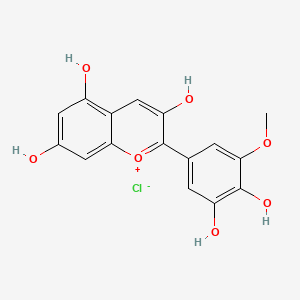
Petunidin is an anthocyanidin, a purple-red, water-soluble pigment in the flavonoid family. It colors many berries and grapes and some flower petals. Its name comes from the petunia, a word the French took from a Tupi-Guarani word for tobacco. Purple petunia petals do hold petunidin and malvidin pigments.
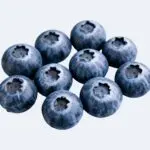
In food it occurs attached to sugars, as in petunidin-3-glucoside. Blueberries lead the USDA data with 31.5 mg per 100 g.
Chemically it sits between two better-known pigments. It is delphinidin with one extra methyl group on the B ring. In a lab experiment, an enzyme added a second methyl to petunidin-3-glucoside to make malvidin-3-glucoside.
Some foods lean on it more than others. In a study of four red- and purple-fleshed potato cultivars, petunidin was the main anthocyanidin in the purple ones. A 2026 review calls petunidin-derived pigments the most distinctive feature of black goji berries.
Most readers do not know how little of it turns up in the body after a berry or a glass of wine. In a grape juice study, the blood peak of petunidin-3-glucoside was only 1.0 nmol/L, a tiny amount. In another study, only 0.18% to 0.23% of the anthocyanins in red wine or red grape juice reached the urine.
We found no trial that gave pure petunidin to people. Every human result below comes from a berry, a juice, a drink or a food survey, so none can be credited to petunidin alone.
Health benefits of petunidin
The top findings from 15 studies, strongest evidence first
What the stars mean
- Strong. Several randomized trials, pooled in a meta-analysis, point the same way, or regulators (FDA or EFSA) have approved the claim.
- Moderate. Good randomized trials support it, but there are fewer of them, or their results vary.
- Limited. Small, short or single trials, or mixed results. Promising, but it needs confirmation.
Population and lab studies get no stars: they show a link or a mechanism, not proof.
How we rate evidence →- ★Little petunidin absorbed, and it peaks lateAfter Concord grape juice, blood petunidin-3-glucoside peaked at only 1.0 nmol/L. After wild blueberry powder, petunidin glucuronide (a breakdown product) peaked in blood at about 8.8 hours.
- ★Blueberry powder changed blood petunidinIn 38 healthy adults aged 60 to 75, 24 g a day of freeze-dried blueberry for 90 days changed 11 blood compounds, including petunidin-3-glucoside. Changes in test errors tracked other compounds, not petunidin.
- Population studyLinked to lower odds of heart-kidney-metabolic diseaseIn US survey data, people with more petunidin intake had 0.749 times the odds of combined cardiovascular-kidney-metabolic disease. Other differences between people may explain this link.
- Population studyLinked to lower tooth decay odds in childrenIn 1,818 US children and teens, high intake of anthocyanidins, including petunidin, went with 0.69 times the odds of tooth decay. No separate number is given for petunidin.
- Population studyLinked to lower odds of nearsightedness in teensIn 839 US teens, more petunidin intake went with 0.64 times the odds of myopia (nearsightedness). The pigments come in the same foods, so petunidin cannot be separated from the rest.
All 15 studies, strongest evidence first
Blueberry powder changed blood petunidin, but test changes tracked other compounds
In this randomized, double-blind trial, 38 healthy adults aged 60 to 75 took freeze-dried blueberry or a control for 90 days. The dose was 24 g a day, about a cup of fresh berries. Eleven blood compounds changed, including petunidin-3-glucoside and cyanidin, malvidin and peonidin pigments. Changes in test errors tracked ferulic acid glucuronide, syringic acid, malvidin-3-galactoside and hippuric acid, not petunidin, and a whole-fruit powder cannot isolate it.
After wild blueberries, petunidin glucuronide peaked in blood about 8.8 hours later
In this single-blind, randomized crossover study, people took a drink with 25 g of freeze-dried wild blueberry powder, or a placebo drink, with a meal. Blood was drawn over 24 hours, and the bioavailability (share absorbed) of blueberry anthocyanins was 1.1%. The parent pigments peaked at about 2 hours, and the glucuronides of peonidin, delphinidin, cyanidin and petunidin at about 2.6, 6.3, 7 and 8.8 hours. The authors suggest some compounds are recycled between the liver and gut.
In a grape-blueberry drink, petunidin appeared only in its native sugar form
In this randomized crossover study, 10 adults drank 0.33 liters of a grape and blueberry juice or smoothie. The juice held 841 mg of anthocyanins per liter and the smoothie 983 mg. Malvidin and peonidin were the most abundant and also appeared as glucuronides, while delphinidin, cyanidin and petunidin were minor and found only as native glycosides. Blood levels did not differ between juice and smoothie.
After grape juice, petunidin-3-glucoside peaked at only 1.0 nmol/L
This study gave Concord grape juice to healthy adults, with a companion test in people with an ileostomy (a gut opening that bypasses the colon). Peak blood levels ranged from 1.0 nmol/L for petunidin-3-glucoside to 355 nmol/L for dihydrocoumaric acid. Total anthocyanins in urine were 0.26% of the intake, and the timing suggests a little is absorbed in the small intestine. The abstract does not give the number of people.
Only 0.18% to 0.23% of wine or juice anthocyanins reached urine
9 volunteers had a single 400 mL dose of red wine (279.6 mg of total anthocyanins) or red grape juice (283.5 mg). Petunidin glucoside from wine was absorbed at 57.1% of the juice amount, and no pigment was shown to be bioequivalent between the two drinks. Very little reached the urine within 7 hours. The authors say any large health contribution from these anthocyanins is questionable.
More petunidin went with lower odds of cardiovascular-kidney-metabolic disease and depression
This observational analysis of national survey data (NHANES 2007 to 2010) used linked death records. For petunidin, the combined condition had 0.749 times the odds, and death from any cause 0.936 times the risk. Peonidin and total anthocyanidins also showed links. The authors stress these are associations that residual confounding (other unmeasured differences) may explain, not proof of a protective effect.
High intake of petunidin and three others went with lower caries odds
This cross-sectional analysis used NHANES 2017 to 2018: of 1,818 US children and teens aged 2 to 17, 786 (43.2%) had caries (tooth decay). High anthocyanidin intake went with 0.69 times the odds. The abstract names petunidin, cyanidin, malvidin and peonidin as linked to lower odds but gives no separate number for petunidin. A snapshot like this cannot show cause.
In 839 US teens, more petunidin went with lower odds of myopia
This cross-sectional analysis of NHANES 2007 to 2008 covered adolescents aged 12 to 17, of whom 245 had myopia (nearsightedness). Petunidin went with 0.64 times the odds, cyanidin 0.69 and delphinidin 0.71. Malvidin made up the largest share of anthocyanin intake (34.98%). The pigments come in the same foods, so the study cannot separate petunidin from the rest.
Oral petunidin raised bone volume in mice with induced bone loss
In mice with bone loss triggered by sRANKL, 7.5 mg per kg a day of oral petunidin raised bone volume, trabecular thickness and osteoblast numbers. It lowered osteoclast numbers, the cells that break down bone. In cell tests, petunidin above 5 µg/mL slowed the formation of bone-resorbing cells. Above 16 µg/mL it increased mineralized matrix in bone-forming cells, and there are no human data.
Petunidin protected rat hearts and heart cells from oxygen-deprivation injury
In Langendorff-perfused (isolated) rat hearts and rat heart cells, petunidin improved heart function and lowered oxidative stress and cell death. It cut NOX4 and Bax levels and raised Bcl-2, but did not change NOX2. The protection weakened when NOX4 was overexpressed, which points to NOX4 as the route. The abstract does not give the dose.
Petunidin protected the kidneys of diabetic mice
Diabetic db/db mice were treated for 8 weeks. Their kidneys had more Keap1 and less NQO1 moving into mitochondria, and petunidin reversed both, lowering oxidative stress and ferroptosis (iron-driven cell death). In kidney cells in high glucose, extra Keap1 removed the protection. The abstract does not give the dose or the size of the effect.
Petunidin lowered thyroid antibodies and inflammation in mice with autoimmune thyroiditis
In mice injected to mimic Hashimoto thyroiditis, petunidin lowered thyroid antibodies (TPOAb, TgAb), oxidative stress and the signals IFN-gamma and IL-17A. It also lowered NOX4 and PKM2 levels, and people with the disease had higher NOX4 and PKM2 levels. The abstract does not give the dose.
Petunidin calmed mouse retinal immune cells exposed to a bacterial toxin
This cell work used a mouse microglia line and primary retinal microglia; microglia are the immune cells of the brain and retina. Petunidin cut the release of inflammatory cytokines and the rise of lipocalin 2 by turning down OGT and NF-κB. These are cultured cells, not animals or people.
Berries richer in methylated pigments better protected mice from high-fat-diet damage
This mouse study used whole berries. Methylated anthocyanins (malvidin, petunidin and peonidin) made up 57% of the pigments in blueberries and 33% in Concord grapes. Both berries improved body composition, and the methylated pigments were more effective at raising mitochondrial respiration in fat tissue. Whole berries contain many compounds, so this cannot be credited to petunidin.
In cells petunidin out-scored delphinidin as an antioxidant; in tubes it trailed
This study combined computer modeling with chemical and cell tests comparing the two pigments. Delphinidin scored higher on the two test-tube radical tests, ABTS and DPPH, while petunidin ranked ahead in the cell-based test, in line with the modeling. The authors present it as a way to link structure to antioxidant activity.
Foods high in petunidin
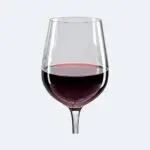
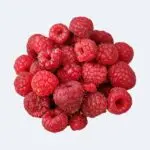
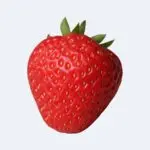
Blueberries lead the USDA data for petunidin with 31.5 mg per 100 g, or 46.7 mg in a cup (148 g). Red wine has 1.98 mg per 100 g (2.91 mg in a 5 fl oz glass of 147 g), about 6% of the blueberry figure. Raspberries (0.31 mg) and strawberries (0.11 mg) follow, and the USDA data list only these four foods for petunidin.
Other foods appear in published analyses, mostly as a main pigment or a share of the pigment, not as milligrams of petunidin. In four red- and purple-fleshed potato cultivars, petunidin was the main anthocyanidin of the purple ones. Fully matured tubers held 10 to 39 mg of total anthocyanidins per 100 g fresh weight.
In native Andean potatoes, the main pigment was a petunidin glycoside (petanin). The darkest cultivar held 16.33 mg of total anthocyanins per gram of dry weight.
In black bean seed coats, delphinidin dominated, with lesser petunidin and malvidin. In 16 Korean kidney beans, petunidin 3-glucoside ranged from 0 to 0.17 mg per gram of dried seed coat.
Red table grapes carry petunidin 3-glucoside among 69 to 151 mg of skin anthocyanins per kg. Fresh blueberries had more petunidin-3-galactoside than bilberries, whose main pigments were delphinidin and cyanidin glycosides.
How much do people eat? In US food data from 2001 to 2002, cyanidin, delphinidin and malvidin supplied 45%, 21% and 15% of anthocyanin intake. So petunidin sits in the remaining 19% that it shares with two other pigments.
In a European study of 36,037 adults, cyanidins and malvidins were the main anthocyanidins. The ranking below is from USDA data.
Per serving. No daily amount is set, so bars compare each food with the top food.
Per 100 g. No daily amount is set, so bars compare each food with the top food.
Per 100 kcal: the same calories of each food, for a fair comparison. Bars compare each food with the top food.
Food labels have no Daily Value or Reference Intake for petunidin, so the % compares each food with the top food.
- 1.
- 2.
- 3.
- 4.


- 1.
- 2.
- 3.
- 4.
- 1.
- 2.
- 3.
- 4.
Sources
- USDA Database for the Flavonoid Content of Selected Foods, Release 3.3 (2018). Bhagwat S, Haytowitz DB. US Department of Agriculture, Agricultural Research Service, Nutrient Data Laboratory.
- Šulc M, Kotíková Z, Paznocht L, et al. Changes in anthocyanidin levels during the maturation of color-fleshed potato (Solanum tuberosum L.) tubers. Food Chem. 2017.
- Andre CM, Oufir M, Guignard C, et al. Antioxidant profiling of native Andean potato tubers (Solanum tuberosum L.) reveals cultivars with high levels of beta-carotene, alpha-tocopherol, chlorogenic acid, and petanin. J Agric Food Chem. 2007.
- Giusti MM, Polit MF, Ayvaz H, Tay D, Manrique I. Characterization and quantitation of anthocyanins and other phenolics in native Andean potatoes. J Agric Food Chem. 2014.
- Marles MA, Balasubramanian P, Bett KE. Differential accumulation of polyphenolics in black bean genotypes grown in four environments. J Agric Food Chem. 2010.
- Choung MG, Choi BR, An YN, Chu YH, Cho YS. Anthocyanin profile of Korean cultivated kidney bean (Phaseolus vulgaris L.). J Agric Food Chem. 2003.
- Cantos E, Espín JC, Tomás-Barberán FA. Varietal differences among the polyphenol profiles of seven table grape cultivars studied by LC-DAD-MS-MS. J Agric Food Chem. 2002.
- Müller D, Schantz M, Richling E. High performance liquid chromatography analysis of anthocyanins in bilberries (Vaccinium myrtillus L.), blueberries (Vaccinium corymbosum L.), and corresponding juices. J Food Sci. 2012.
- Liu Y, Meng Z, Liu S, et al. Lycium ruthenicum as a functional food resource: chemical composition, nutritional value, health benefits, and biological activities. Nutrients. 2026.
- Wu X, Beecher GR, Holden JM, et al. Concentrations of anthocyanins in common foods in the United States and estimation of normal consumption. J Agric Food Chem. 2006.
- Zamora-Ros R, Knaze V, Luján-Barroso L, et al. Estimation of the intake of anthocyanidins and their food sources in the European Prospective Investigation into Cancer and Nutrition (EPIC) study. Br J Nutr. 2011.
How petunidin works
Most of what we know about how petunidin works comes from test tubes, cells and animals, plus a few absorption studies in people. Three ideas come up: its small chemical change from delphinidin, its poor and late absorption, and its effect on oxidative stress enzymes in cells. Here is each one, and what has been seen in people.
It is delphinidin with one extra methyl group
Petunidin is the B-ring 5’-O-methylated form of delphinidin, according to a 2019 bone study. In the lab, an enzyme called catechol-O-methyltransferase methylated the B ring of petunidin-3-glucoside to make malvidin-3-glucoside. So petunidin sits one step before malvidin. See our delphinidin and malvidin pages for the neighbors.
The three pigments differ by the number of methyl groups on the B ring: none, one and two. The drawing is simplified from two lab studies.
The extra methyl changes how it behaves, but not in one direction. In a comparison with delphinidin, petunidin scored higher in a cell-based antioxidant test and lower in two test-tube radical tests.
Purified standards were also heated, microwaved or treated with ultrasound. Delphinidin was more stable, microwaving broke both down fastest, and the breakdown products were weaker antioxidants. Petunidin broke into phloroglucinaldehyde, petunidin chalcone and 3-methoxy-4,5-dihydroxybenzoic acid.
In mice, blueberries and Concord grapes, rich in methylated pigments such as malvidin and petunidin, protected better against high-fat-diet damage than berries with fewer. Those berries hold many other compounds, so the result is not proof for petunidin.
Little is absorbed, and the pieces appear late
In 9 volunteers, only 0.18% to 0.23% of the anthocyanins in red wine or red grape juice reached the urine within 7 hours. The authors called any large health contribution questionable. After Concord grape juice, petunidin-3-glucoside peaked at 1.0 nmol/L in blood, the lowest value reported.
After a wild blueberry drink, the bioavailability of its anthocyanins was 1.1%. The petunidin glucuronide peaked about 8.8 hours later, after the parent pigments at about 2 hours. In 10 adults drinking a grape and blueberry beverage, petunidin appeared only in its native sugar form.
Time of the blood peak after a wild blueberry drink, drawn to scale from 0 to 10 hours. Petunidin’s glucuronide was the latest of the four conjugates measured.
It may turn down oxidative stress enzymes in cells
In isolated rat hearts and rat heart cells deprived of oxygen, petunidin lowered NOX4, an enzyme that makes reactive oxygen species. The protection weakened when NOX4 was overexpressed. In mice with induced thyroiditis, petunidin also lowered NOX4 and PKM2, along with antibodies and inflammatory signals.
In diabetic mice, it reversed a rise in Keap1 and restored NQO1 in kidney mitochondria, which eased oxidative stress and ferroptosis. In mouse retinal immune cells it turned down OGT and NF-κB. All of these studies used cultured cells or animals, and the abstracts give little or no dose.
Findings from rat hearts and cells, mouse thyroid and diabetic mouse kidney. Nothing here has been tested in people.
What has been seen in people
Human work tells us where petunidin goes, not what it does. The absorption studies show small amounts in blood and urine. The 90-day blueberry trial tied the cognitive changes to other compounds, not to petunidin.
The survey results are modest: odds ratios of 0.64 for myopia and 0.75 for combined disease and depression. They come from foods that carry many pigments and cannot show cause. The lab effects above come from cells and animals and have not been tested in people. All of these studies are among the cards above.
Sources
- Nagaoka M, Maeda T, Moriwaki S, et al. Petunidin, a B-ring 5’-O-methylated derivative of delphinidin, stimulates osteoblastogenesis and reduces sRANKL-induced bone loss. Int J Mol Sci. 2019.
- Zimman A, Waterhouse AL. Enzymatic synthesis of [3’-O-methyl-(3)H]malvidin-3-glucoside from petunidin-3-glucoside. J Agric Food Chem. 2002.
- Chen B, Ma Y, Li H, et al. The antioxidant activity and active sites of delphinidin and petunidin measured by DFT, in vitro chemical-based and cell-based assays. J Food Biochem. 2019.
- Wang F, Li H, Qin Y, et al. Effects of heat, ultrasound, and microwave processing on the stability and antioxidant activity of delphinidin and petunidin. J Food Biochem. 2019.
- Skates E, Overall J, DeZego K, et al. Berries containing anthocyanins with enhanced methylation profiles are more effective at ameliorating high fat diet-induced metabolic damage. Food Chem Toxicol. 2018.
- Zhong S, Sandhu A, Edirisinghe I, Burton-Freeman B. Characterization of wild blueberry polyphenols bioavailability and kinetic profile in plasma over 24-h period in human subjects. Mol Nutr Food Res. 2017.
- Frank T, Netzel M, Strass G, Bitsch R, Bitsch I. Bioavailability of anthocyanidin-3-glucosides following consumption of red wine and red grape juice. Can J Physiol Pharmacol. 2003.
- Stalmach A, Edwards CA, Wightman JD, Crozier A. Gastrointestinal stability and bioavailability of (poly)phenolic compounds following ingestion of Concord grape juice by humans. Mol Nutr Food Res. 2012.
- Kuntz S, Rudloff S, Asseburg H, et al. Uptake and bioavailability of anthocyanins and phenolic acids from grape/blueberry juice and smoothie in vitro and in vivo. Br J Nutr. 2015.
- Cai X, Yang C, Shao L, et al. Targeting NOX 4 by petunidin improves anoxia/reoxygenation-induced myocardium injury. Eur J Pharmacol. 2020.
- Qiu Y, Chen C, Li X, et al. Petunidin alleviates diabetic nephropathy injury via the inhibition of oxidative stress and ferroptosis through the Keap1/mitoNQO1 pathway. Front Cell Dev Biol. 2025.
- Liu B, Li L, Wang X. Petunidin suppresses Hashimoto’s thyroiditis by regulating Th1/Th17 homeostasis and oxidative stress. Cell Immunol. 2024.
- Yu M. Petunidin attenuates lipopolysaccharide-induced retinal microglia inflammatory response in diabetic retinopathy by targeting OGT/NF-κB/LCN2 axis. Open Med (Wars). 2025.
Is petunidin safe? Supplements, dose and interactions
Petunidin in food comes with the berries and other plants that carry it. We found no upper intake level for it or for anthocyanins as a group.
A 2015 review says dietary reference intakes do not exist for anthocyanins in the US, Canada or the EU. China has proposed 50 mg a day for total anthocyanins, it adds.
In 2014 the EFSA panel (EFSA is the EU’s food safety agency) presented its re-evaluation of anthocyanins as food additives. It said the toxicology data were too limited for a numerical acceptable daily intake. But it judged that exposure to aqueous (water-based) grape skin and black currant extracts at current uses is unlikely to be a safety concern.
- No petunidin supplement has been tested. We found no human trial of petunidin as a pill or extract, so there is no tested dose. In mice, the bone study gave 7.5 mg per kg a day by mouth, which cannot be turned into a human dose.
- Food-sized amounts in trials. The human studies here used 24 g of freeze-dried blueberry a day for 90 days, or 25 g in one drink. Others used 0.33 liters of juice, or 400 mL of wine or juice. The abstracts do not describe side effects, and none was designed to test safety.
- Pregnancy, breastfeeding, children and medicines. We found no safety data on petunidin in these groups or with drugs. Food amounts are the cautious choice, and a doctor or pharmacist can advise on berry extracts.
How to get more petunidin
- Best food. Blueberries give 31.5 mg per 100 g (46.7 mg a cup), far ahead of red wine (1.98 mg) and raspberries (0.31 mg). Purple potatoes and black goji berries also carry petunidin pigments, but we found no petunidin-only values for them.
- Expect low absorption. Only 0.18% to 0.23% of wine or juice anthocyanins reached the urine, and 1.1% of blueberry anthocyanins were bioavailable. We found no trial that tested eating petunidin with fat or other foods.
- Heat can break it down. In a lab test of purified petunidin, heat, ultrasound and microwaving all degraded it, and it was less stable than delphinidin. We found no cooking study in food, so treat this as a caution, not a rule.
Sources
- Wallace TC, Giusti MM. Anthocyanins. Adv Nutr. 2015.
- Sharing experience: the re-evaluation of colours by the Panel on Food Additives and Nutrient Sources added to Food. Gott D, Vice-Chair of the EFSA ANS Panel. Stakeholder workshop slides, Brussels, April 28, 2014.
- USDA Database for the Flavonoid Content of Selected Foods, Release 3.3 (2018). Bhagwat S, Haytowitz DB. US Department of Agriculture, Agricultural Research Service, Nutrient Data Laboratory.
- Nagaoka M, Maeda T, Moriwaki S, et al. Petunidin, a B-ring 5’-O-methylated derivative of delphinidin, stimulates osteoblastogenesis and reduces sRANKL-induced bone loss. Int J Mol Sci. 2019.
- Rutledge GA, Sandhu AK, Miller MG, et al. Blueberry phenolics are associated with cognitive enhancement in supplemented healthy older adults. Food Funct. 2021.
- Zhong S, Sandhu A, Edirisinghe I, Burton-Freeman B. Characterization of wild blueberry polyphenols bioavailability and kinetic profile in plasma over 24-h period in human subjects. Mol Nutr Food Res. 2017.
- Frank T, Netzel M, Strass G, Bitsch R, Bitsch I. Bioavailability of anthocyanidin-3-glucosides following consumption of red wine and red grape juice. Can J Physiol Pharmacol. 2003.
- Stalmach A, Edwards CA, Wightman JD, Crozier A. Gastrointestinal stability and bioavailability of (poly)phenolic compounds following ingestion of Concord grape juice by humans. Mol Nutr Food Res. 2012.
- Wang F, Li H, Qin Y, et al. Effects of heat, ultrasound, and microwave processing on the stability and antioxidant activity of delphinidin and petunidin. J Food Biochem. 2019.
Frequently asked questions about petunidin
What does petunidin do for the body?
Nobody knows yet, because no trial has tested petunidin alone. Human studies show that small amounts are absorbed after blueberries, grape juice or wine. US surveys link higher intake to lower odds of myopia (0.64 times the odds in 839 teens) and dental caries. In one analysis, it also went with lower odds of depression with cardiovascular-kidney-metabolic disease, but surveys cannot show cause.
Effects in cells and mice, such as bone gain and kidney protection, have not been tested in people.
Which foods are high in petunidin?
Blueberries lead the USDA data with 31.5 mg per 100 g (46.7 mg in a cup). Red wine has 1.98 mg, raspberries 0.31 mg and strawberries 0.11 mg. Published analyses also find petunidin pigments in purple potatoes, black bean seed coats, red grapes and black goji berries, but not as milligrams per serving.
What is the difference between petunidin, delphinidin and malvidin?
The number of methyl groups on the B ring: delphinidin has none, petunidin one and malvidin two. In lab comparisons petunidin scored higher than delphinidin in a cell-based antioxidant test and lower in two test-tube tests. Delphinidin was also more stable under heat. See our delphinidin and malvidin pages.
Is there a petunidin supplement, and how much should you take?
We found no human trial of petunidin as a supplement, so no dose is tested. Berry powders and juices contain it among many other pigments, and their results cannot be credited to it. The mouse bone study used 7.5 mg per kg a day, which is not a human dose.
Does petunidin have side effects?
We found no human safety data on petunidin alone. No upper intake level exists for anthocyanins. An EFSA panel judged that exposure to aqueous grape skin and black currant extracts at current food uses is unlikely to be a safety concern. We found no data for pregnancy, breastfeeding or medicine interactions, so ask a doctor before using extracts.
Is petunidin absorbed by the body?
Only a little. In 9 volunteers, 0.18% to 0.23% of the anthocyanins in red wine or grape juice reached the urine within 7 hours. After a wild blueberry drink, 1.1% of the anthocyanins were bioavailable, and the petunidin glucuronide peaked at about 8.8 hours in blood.
Does cooking destroy petunidin?
Heat can break it down in the lab. Purified petunidin degraded under heating, ultrasound and microwaving, microwaving fastest, and it was less stable than delphinidin. We found no study that measured petunidin in cooked food.