
Campesterol is a plant sterol, also called a phytosterol. It is the plant relative of cholesterol, a waxy molecule that sits in cell membranes. Plants make several sterols, and the three found in the largest amounts are beta-sitosterol, campesterol and stigmasterol. The name comes from rapeseed, Brassica campestris, where it was first isolated.
Plants also use a little campesterol as raw material. They turn it into brassinosteroids, steroid hormones that steer growth, and dwarf mutant plants that cannot make enough of the sterol stay small.
You take campesterol in with plant foods, and your body absorbs little of it. In one study of 10 healthy adults, the gut absorbed 9.6% of campesterol, against 33% of cholesterol. In six healthy men, blood held about 0.5 mg/dL of campesterol next to 167.5 mg/dL of cholesterol.
Here is the part most readers do not know. Researchers use the level of campesterol in blood, compared with cholesterol, as a clue to how much cholesterol a person absorbs from the gut. Whether a high level is good or bad for the heart is a different question, and the studies disagree.
The cholesterol-lowering products sold with added plant sterols are mixtures, so their results are covered on the beta-sitosterol page.
Health benefits of campesterol
One finding reaches strong evidence, and it is about mixtures, not campesterol alone. Products with added plant sterols and stanols lowered LDL (“bad”) cholesterol by 6 to 12%. That was at 0.6 to 3.3 g a day (details on the beta-sitosterol page). In the US, the plant sterol mix behind the official heart-disease health claim must be at least 80% sitosterol, campesterol and stigmasterol combined. No trial we found tested campesterol by itself.
The rest of the evidence is about what blood campesterol tells us. It tracks how much cholesterol the gut absorbs, but its link to heart disease is unsettled. Some studies find none, one large cohort found lower risk with higher intake, and another found higher odds of disease with higher blood levels.
Here is what 23 studies found, strongest evidence first, including the ones that found nothing.
Plant sterol and stanol products lowered LDL cholesterol by 6 to 12%
This meta-analysis (a study that pools earlier studies) covered 124 randomized studies (201 groups) at 0.6 to 3.3 g a day. The effect grew with dose up to about 3 g a day, to an average of 12%. These products are mixtures of sterols and stanols, so the result cannot be credited to campesterol alone.
Sterol-enriched foods raised blood campesterol about 37%, sitosterol 31%
This meta-analysis covered 41 randomized studies (55 groups, 2,084 people) with 1.6 g a day of plant sterols from enriched foods on average. Campesterol rose by 5.00 µmol/L, and by 7.64 µmol/L at 2.0 to 3.2 g a day, while LDL cholesterol fell by 8.5%. The authors note that plant sterols stay below 1% of the sterols circulating in blood.
The campesterol ratio tracked how much cholesterol the gut absorbed
37 healthy men took a placebo, ezetimibe (which blocks absorption), simvastatin or both, and were compared with 18 vegans. Absorption was measured with stable isotopes. The campesterol-to-cholesterol ratio matched it in every group and confirmed lower absorption on ezetimibe. The sitosterol ratio did not follow absorption in all situations.
The diabetes drug empagliflozin raised blood campesterol
In this open-label randomized trial, 51 people with type 2 diabetes were treated for 12 weeks. 32 took empagliflozin 10 mg a day and 19 had standard therapy. Campesterol rose only on the drug, from 4.14 to 4.90 µg/mL, together with a small rise in HDL cholesterol (54.4 to 58.8 mg/dL). The authors call campesterol a marker of cholesterol absorption and link the two rises, which is an association only.
Show 19 more studies
3 g of sterols daily raised campesterol, not clearly total cholesterol
16 healthy volunteers with no or mild high cholesterol ate a plant sterol ester margarine or a placebo margarine for 4 weeks each, double-blind. Campesterol rose by 0.16 mg/dL and sitosterol by 0.27 mg/dL, and markers of the body’s own cholesterol making rose too. Total cholesterol did not change clearly, though it came close. The margarine held a mix of sterols.
The gut absorbed 9.6% of campesterol, against 33% of cholesterol
This perfusion study of the upper small intestine covered 10 healthy people. Sitosterol was absorbed at 4.2% and stigmasterol at 4.8%. Campesterol and cholesterol absorption rose and fell together. The authors tie a longer side chain on the sterol to lower absorption.
The liver cleared campesterol faster than cholesterol but slower than sitosterol
Six healthy men received labeled campesterol and sitosterol through a tube in the upper intestine. Liver clearance was 2.11 dL/h for campesterol, 4.97 for sitosterol and 0.31 for cholesterol. Bile carried 0.76 mg/h of campesterol, 1.23 of sitosterol and 47.7 of cholesterol. The authors link this to the ABCG5/G8 pumps.
Across 17 studies, blood campesterol was not linked to heart disease
This systematic review covered case-control, cohort and cross-sectional studies with 11,182 people, searched to April 2010. Neither campesterol itself nor its ratio to cholesterol was tied to cardiovascular disease, and the same held for sitosterol. Funnel plots suggested small unpublished studies with null results.
More campesterol in food went with 11% lower coronary risk
Three cohorts of US health professionals covered 213,992 people and 8,725 coronary cases over more than 5.5 million person-years. Comparing the top and bottom fifth of campesterol intake, the top had 0.89 times the coronary artery disease risk. The benefit leveled off at about 30 mg a day. Intake came from food questionnaires, and the link for total phytosterols (0.93) could be chance.
Absorption markers, campesterol included, did not predict heart events
This study followed 2,616 Framingham Offspring adults without cardiovascular disease, and not on lipid drugs, for 10 years. Cholesterol absorption markers (campesterol, sitosterol, cholestanol) predicted neither coronary death or heart attack nor the wider set of cardiovascular events. That held in women and in men.
Blood campesterol did not differ in people who later got coronary disease
This nested case-control study in EPIC-Norfolk compared 373 people who later had coronary disease with 758 who did not. Campesterol was 0.31 against 0.32 mg/dL, and the adjusted odds for the top third were 0.97, showing no difference. Sitosterol was, if anything, lower in cases. The authors conclude that plant sterols in the normal range do not look harmful here.
In Spain, more blood plant sterols went with lower coronary risk
This nested case-control study compared 299 people who developed coronary disease with 584 who did not, in a population with high plant sterol intake. Higher plant sterols went with lower, not higher, risk, with a weaker link for campesterol. From the lowest to the highest sitosterol third, the adjusted odds fell to 0.59. The authors read sitosterol as a marker of a healthier profile, since HDL was higher and body fat lower.
In Japan, higher campesterol went with more cardiovascular disease
This cross-sectional study of 2,895 adults included 339 people with coronary disease, 108 with cerebrovascular disease and 88 with peripheral artery disease. Campesterol, an absorption marker, was linked positively, mostly to coronary disease. Lathosterol, a marker of cholesterol making, was linked inversely. The links held after excluding users of statins or ezetimibe, and there was none with cerebrovascular disease; a snapshot cannot show which came first.
In adults without symptoms, higher campesterol went with carotid plaques
This cross-sectional study covered 270 adults in Brazil, and 19% had plaques in the neck arteries. The odds ratio was 1.71 in a simple analysis that did not adjust for other risk factors. Two ratios of the production marker lathosterol to the absorption markers were linked the other way.
In bypass patients, campesterol was higher with family heart disease
53 patients waiting for coronary bypass surgery had never taken lipid-lowering treatment. In the 26 with a first-degree relative with coronary disease, campesterol was 0.50 against 0.38 mg/dL, and sitosterol 0.40 against 0.31 mg/dL. The study was very small and cross-sectional.
An oxidized campesterol was higher before heart events, not clearly after adjustment
This study followed 376 patients having elective coronary angiography, none on lipid drugs, and 82 had cardiovascular events over about 4 years. 7α-hydroxycampesterol had a median of 0.46 against 0.25 nmol/L. After adjustment, each standard deviation went with 1.19 times the risk, a link that could be chance. Other oxidized plant sterols showed no link.
Genetics pointed to sitosterol as a likely cause of coronary disease
This genome-wide meta-analysis of 32 phytosterol traits covered up to 9,758 people. It was followed by Mendelian randomization, which uses gene variants as a stand-in for lifelong blood levels. It reported a causal effect of sitosterol on coronary artery disease, partly through cholesterol, and its abstract gives no campesterol result.
The campesterol ratio was not linked to LDL cholesterol
This analysis used three published data sets: young adults on different diets, adults with mildly high cholesterol, and healthy Framingham controls. Neither measured cholesterol absorption nor the campesterol-to-cholesterol ratio was linked to LDL cholesterol. The young adults had 50% lower LDL than the second group, but not lower absorption markers. The authors call for confirmation in large studies.
In 63 men, blood campesterol rose with cholesterol absorption
The men, Finns aged 50, came from a random population sample. Campesterol was tied to the share of dietary cholesterol absorbed, to dietary plant sterols and to bile cholesterol secretion. Cholesterol-precursor sterols moved the other way. The authors say these sterols may help monitor cholesterol metabolism in large studies.
In Japanese adults, campesterol was lower in people with diabetes
The CACHE study covered 2,182 adults, 830 of them with diabetes. Campesterol and the campesterol-to-lathosterol ratio were lower. They fell as glucose and HbA1c (a long-term blood sugar measure) rose, also after excluding users of statins or ezetimibe. Lathosterol did not differ. The authors read this as lower cholesterol absorption, so blood campesterol reflects health status as well as diet.
Children with lower campesterol more often had gallstones as adults
The Cardiovascular Risk in Young Finns Study compared 95 adults later diagnosed with gallstones and 190 matched controls, with blood taken at about age 11. Campesterol was 11 to 12% lower in the gallstone group, and so were sitosterol and avenasterol. Low vegetable intake also predicted gallstones. Low, not high, absorption markers flagged the disease.
Campesterol slowed the growth of blood-vessel cells in lab tests
Campesterol isolated from the plant Chrysanthemum coronarium reduced growth factor-driven proliferation and tube formation of human umbilical vein cells, at doses that were not toxic. It also disrupted new vessel growth in chick embryo membranes. Cells and eggs only, so it says nothing yet about people.
Campesterol killed ovarian cancer cells grown in 3D cultures
This study used two human ovarian cancer cell lines. Campesterol triggered cell death, raised calcium and reactive oxygen species, and suppressed proliferation and the cell cycle. It added to the effect of standard anticancer drugs. This is cell work only, with no animal or human data.
Foods high in campesterol
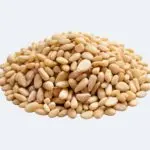
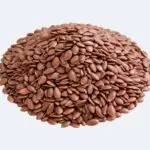
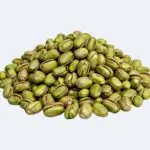
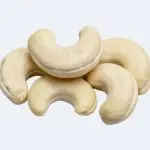
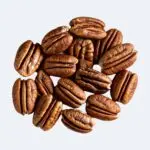
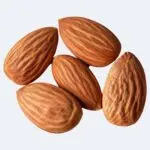
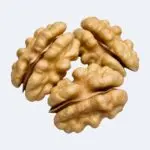
Campesterol is in every plant food, but in small amounts, and nuts and seeds lead. In the USDA data, flaxseeds hold the most per 100 g at 45 mg, followed by pine nuts (20 mg) and pistachios (10 mg).
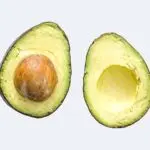
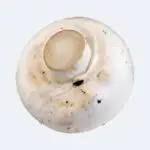
Per serving, pine nuts lead with 5.67 mg in an ounce, then half an avocado (5.03 mg) and a tablespoon of flaxseeds (4.64 mg). Per 100 calories, white mushrooms come first with 9.09 mg. The ranking below has the full list.
The USDA ranking lists no vegetable oils or cereals, though they are big sources of plant sterols overall. In a 2019 estimate for the Chinese diet, edible oils supplied 46.3% and cereals 38.9% of the 392.3 mg a day of total phytosterols. Rapeseed oil was the largest single source, at 22.9%. That figure covers all phytosterols, not campesterol alone.
A 2005 lab study of nuts and seeds found higher total phytosterol values than food databases of the time. That was probably because it counted sterols bound to a sugar. Treat the USDA numbers as a guide to the ranking, not exact amounts.
Per serving. No daily amount is set, so bars compare each food with the top food.
Per 100 g. No daily amount is set, so bars compare each food with the top food.
Per 100 kcal: the same calories of each food, for a fair comparison. Bars compare each food with the top food.
Food labels have no Daily Value or Reference Intake for campesterol, so the % compares each food with the top food.
- 1.
- 2.
- 3.
- 4.
- 5.
- 6.
- 7.
- 8.
- 9.
- 10.


- 1.
- 2.
- 3.
- 4.
- 5.
- 6.
- 7.
- 8.
- 9.
- 10.
- 1.
- 2.
- 3.
- 4.
- 5.
- 6.
- 7.
- 8.
- 9.
- 10.

Sources
- Phillips KM, Ruggio DM, Ashraf-Khorassani M. Phytosterol composition of nuts and seeds commonly consumed in the United States. J Agric Food Chem. 2005.
- Yang R, Xue L, Zhang L, et al. Phytosterol contents of edible oils and their contributions to estimated phytosterol intake in the Chinese diet. Foods. 2019.
How campesterol works
Some of what we know about how campesterol works comes from small human studies of absorption. The rest comes from cells, animals and plant genetics. Researchers keep coming back to four ideas. The gut takes up much less campesterol than cholesterol, and two pumps send most of it back out. Plant sterols compete with cholesterol, and plants turn campesterol into growth hormones.
The gut takes up far less of it than cholesterol
Campesterol is built like cholesterol, with an added methyl group on its side chain. Sitosterol and stigmasterol carry a longer ethyl group there. In 10 healthy adults, the gut absorbed 33% of cholesterol, 9.6% of campesterol, 4.8% of stigmasterol and 4.2% of sitosterol. The authors tie a longer side chain to lower absorption.
Drawn to scale. Campesterol is absorbed more than twice as well as sitosterol, but less than a third as well as cholesterol.
Campesterol absorption rose and fell with cholesterol absorption in the same people. That is why the campesterol-to-cholesterol ratio works as a research marker. In the 2017 study above it matched isotope measurements, and it showed the drop when the drug ezetimibe blocked absorption.
Two pumps send most of it back out
Cells lining the gut take in cholesterol and plant sterols through a transporter called NPC1L1, which ezetimibe blocks. A pair of pumps, ABCG5 and ABCG8, then push absorbed plant sterols back into the gut. The same pumps work in the liver, where they move sterols into bile.
People with sitosterolemia, a rare inherited disease in which plant sterols build up, carry faulty copies of these genes. The pumps also fit the human numbers: in six healthy men, the liver cleared campesterol faster than cholesterol and slower than sitosterol.
A simplified diagram, not drawn to scale. The pump roles come from studies of the inherited disease, cells and animals.
Plant sterols crowd cholesterol out
In the gut, plant sterols are thought to compete with cholesterol for uptake. A review lists three routes. They may turn down NPC1L1 gene activity and slow the wrapping of cholesterol for transport (esterification by ACAT2). They may also turn up the ABCG5 and ABCG8 pumps.
A 2017 review puts the resulting drop in blood total and LDL cholesterol at 5 to 15%. Most of this work used mixtures of sterols, or animals and cells, not campesterol alone. In a 4-week crossover trial, about 1.6 g a day of plant sterols in capsules cut cholesterol absorption efficiency. It fell by about 17% in 15 control volunteers and 22% in 10 carriers of an ABCG8 variant.
Plants turn it into growth hormones
In plants, a small share of campesterol is the starting material for brassinosteroids. These hormones help control root and shoot growth, flowering, seed germination and responses to stress. Genetics shows the link. Some dwarf mutants have a defect near the end of sterol making and lack the sterol precursor of the hormones.
A simplified diagram of the pathway as described in plant biology reviews. It has no numbers and is not to scale.
What has been seen in people
The gut studies explain the blood tests. In one study about a tenth of campesterol was absorbed, and blood campesterol rose by about 37% when people ate sterol-enriched foods. The heart question is open.
A meta-analysis of 17 studies found no link, and a large US cohort found 11% lower coronary risk with higher campesterol intake. A Japanese cross-sectional study found higher odds of cardiovascular disease with higher blood campesterol. Blood campesterol reflects both diet and cholesterol absorption, so it is hard to say which of the two, if either, matters for the heart. All of these are among the study cards above.
Sources
- Heinemann T, Axtmann G, von Bergmann K. Comparison of intestinal absorption of cholesterol with different plant sterols in man. Eur J Clin Invest. 1993.
- Valitova JN, Sulkarnayeva AG, Minibayeva FV. Plant sterols: diversity, biosynthesis, and physiological functions. Biochemistry (Mosc). 2016.
- Stellaard F, von Bergmann K, Sudhop T, Lütjohann D. The value of surrogate markers to monitor cholesterol absorption, synthesis and bioconversion to bile acids under lipid lowering therapies. J Steroid Biochem Mol Biol. 2017.
- von Bergmann K, Sudhop T, Lütjohann D. Cholesterol and plant sterol absorption: recent insights. Am J Cardiol. 2005.
- Berge KE, Tian H, Graf GA, et al. Accumulation of dietary cholesterol in sitosterolemia caused by mutations in adjacent ABC transporters. Science. 2000.
- Sudhop T, Sahin Y, Lindenthal B, et al. Comparison of the hepatic clearances of campesterol, sitosterol, and cholesterol in healthy subjects suggests that efflux transporters controlling intestinal sterol absorption also regulate biliary secretion. Gut. 2002.
- Sanclemente T, Marques-Lopes I, Puzo J, García-Otín AL. Role of naturally-occurring plant sterols on intestinal cholesterol absorption and plasmatic levels. J Physiol Biochem. 2009.
- Fardet A, Morise A, Kalonji E, Margaritis I, Mariotti F. Influence of phytosterol and phytostanol food supplementation on plasma liposoluble vitamins and provitamin A carotenoid levels in humans: an updated review of the evidence. Crit Rev Food Sci Nutr. 2017.
- Myrie SB, Mymin D, Triggs-Raine B, Jones PJ. Serum lipids, plant sterols, and cholesterol kinetic responses to plant sterol supplementation in phytosterolemia heterozygotes and control individuals. Am J Clin Nutr. 2012.
- Schaller H. The role of sterols in plant growth and development. Prog Lipid Res. 2003.
- Bajguz A, Chmur M, Gruszka D. Comprehensive overview of the brassinosteroid biosynthesis pathways: substrates, products, inhibitors, and connections. Front Plant Sci. 2020.
Is campesterol safe? Supplements, dose and interactions
Campesterol is part of every plant-based diet. We found no upper intake level or acceptable daily intake set for campesterol alone. We found no report of harm at food amounts in people without sitosterolemia. The official positions concern plant sterol mixtures added to foods.
In the US, FDA allows a health claim for plant sterol esters at 1.3 g or more a day (21 CFR 101.83). They must be eaten in two servings at different times of the day with other foods. A 2003 expert workshop found that 2 g a day lowered LDL cholesterol by 10%, and that higher intakes added little.
- Trial doses. Trials of enriched foods used about 1.6 g a day of mixed plant sterols on average, and blood campesterol rose by about 37%. The 2003 workshop called the resulting risk largely hypothetical. A 2025 review argues the risk depends on gene variants in NPC1L1 and ABCG5/G8. It says people with normal LDL gain little. The question is not settled.
- Vitamins and carotenoids. A review of 49 intervention studies of sterol-enriched foods found no significant effect on vitamins A, D and K. It found a median 10% drop in alpha-tocopherol (vitamin E), and a median 24% drop in beta-carotene in the 20 studies that saw one. More fruit and vegetables can offset the carotenoid drop.
- Sitosterolemia. In this rare inherited disease, plant sterols build up in the blood. Guidance is a diet low in plant sterols (vegetable oils, margarine, nuts, seeds, avocados and chocolate) and the drug ezetimibe. Margarines with added stanols are contraindicated, and anyone with this diagnosis should follow their specialist.
- Heart risk. Whether a high blood campesterol level harms the heart is unsettled, as the study cards show. We found no trials of campesterol taken alone as a supplement, so no dose for it can be given.
How to get more campesterol
- Best foods. Flaxseeds hold 45 mg per 100 g, and a tablespoon gives 4.64 mg. In the large US cohort, lower coronary risk leveled off near 30 mg of campesterol a day. That is about 67 g of flaxseeds by the USDA figure.
- Oils, cereals and heat. Rapeseed, corn and rice bran oils are the richest oils in total phytosterols. In a lab test, a sitosterol and campesterol mix was heated in fat at 180 °C for 4 hours. It formed oxidation products at 96.69 to 268.35 µg/g, depending on added antioxidants. What this means for home cooking is not known.
- Food versus enriched products. A serving of nuts or seeds gives a few milligrams of campesterol. The enriched foods in trials gave about 1.6 g a day of mixed plant sterols. Only the second has been shown to lower LDL cholesterol.
Sources
- Ras RT, Hiemstra H, Lin Y, Vermeer MA, Duchateau GS, Trautwein EA. Consumption of plant sterol-enriched foods and effects on plasma plant sterol concentrations: a meta-analysis of randomized controlled studies. Atherosclerosis. 2013.
- Katan MB, Grundy SM, Jones P, et al. Efficacy and safety of plant stanols and sterols in the management of blood cholesterol levels. Mayo Clin Proc. 2003.
- Stellaard F, Lütjohann D. Phytosterol-enriched dietary supplements for lowering plasma LDL-cholesterol: yes or no?. Nutrients. 2025.
- Fardet A, Morise A, Kalonji E, Margaritis I, Mariotti F. Influence of phytosterol and phytostanol food supplementation on plasma liposoluble vitamins and provitamin A carotenoid levels in humans: an updated review of the evidence. Crit Rev Food Sci Nutr. 2017.
- Myrie SB, Steiner RD, Mymin D. Sitosterolemia. In: Adam MP, et al., editors. GeneReviews. University of Washington, Seattle. 2013, updated 2020.
- 21 CFR 101.83: Health claims: plant sterol/stanol esters and risk of coronary heart disease (CHD). Code of Federal Regulations, US Food and Drug Administration.
- Wang Y, Liu B, Hu Y, et al. Phytosterol intake and risk of coronary artery disease: results from 3 prospective cohort studies. Am J Clin Nutr. 2024.
- Yang R, Xue L, Zhang L, et al. Phytosterol contents of edible oils and their contributions to estimated phytosterol intake in the Chinese diet. Foods. 2019.
- Kmiecik D, Korczak J, Rudzińska M, et al. Stabilisation of phytosterols by natural and synthetic antioxidants in high temperature conditions. Food Chem. 2015.
History of campesterol
Campesterol is named after rapeseed. It was first isolated from Brassica campestris, a rapeseed species. Plant sterols were first shown in the 1950s to lower LDL cholesterol.
A rare disease showed that these sterols can build up. In 1974, Bhattacharyya and Connor described two sisters with tendon xanthomas, fatty lumps under the skin, and normal cholesterol. Their blood held 27.1 and 17.7 mg/100 mL of sitosterol and 9.7 and 8.2 mg/100 mL of campesterol.
The plant sterols made up 15.6 and 11.3% of the sterols in plasma. One sister absorbed about 24% of sitosterol and the other 28%, where normal absorption is under 5%. The authors named the disease beta-sitosterolemia and suggested it was inherited.
The cause was found in 2000. Berge and colleagues identified seven different mutations in two neighboring genes, ABCG5 and ABCG8, in nine patients with sitosterolemia. The genes code for the pumps that limit sterol absorption and send sterols into bile.
Sources
- Campesterol. Wikipedia.
- Bhattacharyya AK, Connor WE. Beta-sitosterolemia and xanthomatosis. A newly described lipid storage disease in two sisters. J Clin Invest. 1974.
- Berge KE, Tian H, Graf GA, et al. Accumulation of dietary cholesterol in sitosterolemia caused by mutations in adjacent ABC transporters. Science. 2000.
- Katan MB, Grundy SM, Jones P, et al. Efficacy and safety of plant stanols and sterols in the management of blood cholesterol levels. Mayo Clin Proc. 2003.
Frequently asked questions about campesterol
What does campesterol do in the body?
Mostly it acts as a marker. About 9.6% of campesterol is absorbed from the gut, against 33% of cholesterol, and the two track each other. So researchers use blood campesterol to estimate cholesterol absorption. We found no trial of campesterol alone for health benefits. Mixtures of plant sterols lower LDL cholesterol by 6 to 12% at 0.6 to 3.3 g a day.
Is a high blood campesterol level bad for the heart?
The studies disagree. A meta-analysis of 17 studies found no link with heart disease. The EPIC-Norfolk study found similar levels in people who later had coronary disease and those who did not. A Japanese study of 2,895 adults and a Brazilian one of 270 found higher campesterol with more disease and plaques. Cross-sectional studies cannot show cause, so ask your doctor about your own cholesterol numbers.
Which foods are high in campesterol?
Nuts and seeds lead in the USDA data. Flaxseeds hold 45 mg per 100 g, pine nuts 20 mg and pistachios 10 mg. Half an avocado gives 5.03 mg and a tablespoon of flaxseeds 4.64 mg. Vegetable oils and cereals are major sources of plant sterols overall, but the USDA ranking does not list them.
What is the difference between campesterol, beta-sitosterol and stigmasterol?
They are the three main plant sterols and differ in the side chain. Campesterol has a methyl group, while sitosterol and stigmasterol have a longer ethyl group. Campesterol is absorbed best of the three, at 9.6% against 4.2% for sitosterol and 4.8% for stigmasterol. See the beta-sitosterol and stigmasterol pages.
Does campesterol lower cholesterol?
Not as a single compound, as far as we found. Sterol products are mixtures that contain campesterol. A meta-analysis of 124 studies found they lowered LDL cholesterol by 6 to 12% at 0.6 to 3.3 g a day. That effect cannot be credited to campesterol alone, and a serving of nuts or seeds supplies only a few milligrams.
Should you take a campesterol supplement?
There is no evidence for one. We found no trial of campesterol taken alone, so no dose can be given. Sterol-enriched foods are a separate matter: FDA allows a heart-disease claim at 1.3 g or more of plant sterol esters a day. People with sitosterolemia are told to avoid margarines with added stanols. Anyone on cholesterol drugs should ask their doctor first.
Do plant sterol products have side effects?
The best-documented effect is on blood vitamins. A review of 49 intervention studies found no significant change in vitamins A, D and K, and a median 10% drop in alpha-tocopherol. In the 20 studies that saw a beta-carotene drop, the median drop was 24%. Eating more fruit and vegetables can offset the carotenoid drop. Blood campesterol also rises by about 37%, and experts disagree on whether that matters.