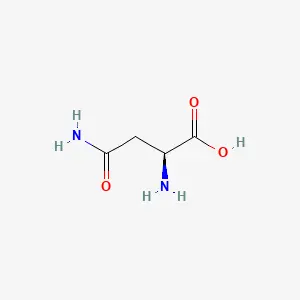
Asparagine is an amino acid, one of the building blocks of protein. It is the amide of aspartic acid: the same four-carbon backbone with an amide group in place of one of the acid groups. Its formula is C4H8N2O3.
Whether you have to eat it depends on its group, and the sources agree. The US National Academies (NASEM, 2005), the WHO/FAO/UNU 2007 report and EFSA, the EU’s food safety agency, all list it as dispensable (non-essential). The body makes it from aspartate and glutamine with an enzyme called asparagine synthetase. So nobody needs to eat asparagine on purpose, and protein from varied foods supplies it anyway.
Beyond building protein, asparagine has a job that is easy to miss. Sugar chains are attached to proteins at asparagine residues. A 2018 review calls this change ubiquitous and, in eukaryotes (organisms whose cells have a nucleus), essential. Its supply in the blood also matters to some cancer cells, and that is the basis of a leukemia drug.
Here is what most readers do not know. Asparagine matters in two places far from the supplement shelf.
In children with acute lymphoblastic leukemia, doctors give an enzyme, asparaginase, that strips asparagine out of the blood. With the best current protocols, overall survival reaches 90%, according to a 2023 Cochrane review.
In the kitchen, asparagine is the main raw material for acrylamide. This compound forms when potatoes, cereals and coffee beans are fried, baked or roasted at high heat. The name comes from asparagus, where it was first isolated in 1806.
Health benefits of asparagine
The top findings from 16 studies, strongest evidence first
What the stars mean
- Strong. Several randomized trials, pooled in a meta-analysis, point the same way, or regulators (FDA or EFSA) have approved the claim.
- Moderate. Good randomized trials support it, but there are fewer of them, or their results vary.
- Limited. Small, short or single trials, or mixed results. Promising, but it needs confirmation.
Population and lab studies get no stars: they show a link or a mechanism, not proof.
How we rate evidence →- ★★Leukemia drug asparaginase: E. coli form beat ErwiniaAsparaginase is a prescription enzyme drug that removes asparagine, not a food. In 700 children with leukemia or lymphoma, 73.4% were event-free at 6 years on the E. coli form, against 59.8% on Erwinia.
- ★★Calaspargase every 3 weeks matched pegaspargaseBoth are prescription drugs for children and young adults with leukemia, not foods. Five-year event-free survival was 88.1% with calaspargase and 84.9% with pegaspargase, a gap that could be chance.
- ★Daily chips raised stress and inflammation markersIn 14 healthy volunteers, 160 g of potato chips a day for 4 weeks raised markers such as oxidized LDL and C-reactive protein. There was no control group, and asparagine itself was not tested.
- Population studyAcrylamide not linked to most cancersAcrylamide is made by heat from asparagine. For 13 of 14 cancer sites, the highest intake came with 0.87 to 1.14 times the risk of the lowest. A later review of 16 studies found no link except for lung cancer in smokers.
- Population studyHigher blood asparagine linked to less breast cancerIn 1,624 women with breast cancer and matched controls, the odds of breast cancer were 0.83 times as high per standard deviation of blood asparagine. This is a blood level, not what anyone ate.
All 13 studies, strongest evidence first
More doses of PEG-asparaginase probably did not improve event-free survival
This 2023 Cochrane network meta-analysis in children with leukemia found only three randomized trials, too few to rank the regimens. In 625 children, 8 doses instead of 15 made little difference to event-free survival (risk ratio 1.01). They probably meant less pancreatitis, inflammation of the pancreas (risk ratio 0.31). In 1,857 children, 6 doses instead of 2 changed event-free survival little (1.01) but probably raised hypersensitivity (12.05) and pancreatitis (4.84). PEG-asparaginase, which depletes asparagine, is a prescription enzyme given by injection or infusion, not a food or a supplement.
E. coli asparaginase beat Erwinia asparaginase for 6-year event-free survival
The EORTC-CLG 58881 phase 3 trial randomized 700 children with leukemia or lymphoma to E. coli or Erwinia asparaginase. Both got the same dose, 10,000 IU per m² twice weekly. Event-free survival at 6 years was 73.4% with E. coli and 59.8% with Erwinia. Overall survival was also higher with E. coli asparaginase (83.9% versus 75.1%), but blood clotting problems were more frequent (30.2% versus 11.9%). The authors conclude that the Erwinia form was inferior at this dose and schedule.
Calaspargase pegol every 3 weeks matched pegaspargase every 2 weeks
The DFCI 11-001 trial randomized 239 children and young adults aged 1 to 21 with leukemia. They got two long-acting forms of E. coli asparaginase for 30 weeks after induction, the first phase of treatment. Both were given at 2,500 IU per m² into a vein. Five-year event-free survival was 88.1% with calaspargase and 84.9% with pegaspargase, a gap that could be chance. On day 25 after the induction dose, 88% on calaspargase and 17% on pegaspargase still had enzyme activity of 0.1 IU/mL or more. Allergy, pancreatitis and clotting rates did not differ, and several authors report consulting or research ties to drug makers.
Native and PEG E. coli asparaginase cleared from blood at different speeds
This small randomized study measured enzyme and asparagine levels in 40 children with relapsed leukemia during reinduction therapy. The native form cleared faster than the PEG form. Children with antibodies to PEG asparaginase cleared it faster and had higher asparagine in cerebrospinal fluid, the fluid around the brain and spine. Modeling suggested that either form can deplete asparagine equally well if the dose is changed, and the study measured drug and asparagine levels, not survival.
Daily potato chips raised blood markers of oxidative stress and inflammation
In this pilot study with no control group, 14 healthy volunteers ate 160 g of potato chips a day for 4 weeks. The daily chips held 157 µg (micrograms) of acrylamide. Acrylamide adducts on hemoglobin, a sign of exposure, rose in everyone, and so did oxidized LDL, interleukin-6, C-reactive protein and gamma-glutamyltransferase. The markers fell part of the way 28 days after stopping. The group had 8 women and 6 heavy smokers (more than 20 cigarettes a day), mean age 35. The chips contain more than acrylamide, and asparagine itself was not tested.
Across 32 publications, dietary acrylamide was not linked to most cancers
This 2015 meta-analysis searched to July 2014. For 13 of 14 cancer sites, the highest intake came with 0.87 to 1.14 times the risk of the lowest. Examples are breast 0.96, colorectal 0.94 and lung 0.88. Kidney cancer was borderline (1.20), and so were endometrial (1.23) and ovarian (1.39) cancers in never-smokers. The authors say a modest link for those cancers cannot be excluded.
Acrylamide was not linked to any site-specific cancer, except lung in smokers
This 2022 systematic review and dose-response meta-analysis pooled 16 studies with 1,151,189 adults, covering cancers other than gynecological ones. Over a median follow-up of 14.9 years, 48,175 people developed cancer, and the mean estimated intake across studies was 23 µg a day. The highest versus the lowest exposure was not linked to any site-specific cancer except lung cancer in smokers. The dose-response analysis showed no threshold. The authors conclude that high dietary acrylamide exposure was not associated with a higher risk of these cancers.
Babies with the most acrylamide exposure weighed 132 g less at birth
The NewGeneris cohort recruited 1,101 pregnant women in Denmark, England, Greece, Norway and Spain in 2006 to 2010. It measured acrylamide and glycidamide adducts on hemoglobin in cord blood. Babies in the highest quartile of adducts weighed 132 g less at birth than those in the lowest, and head circumference was 0.33 cm smaller. Fried potatoes were linked to higher adducts. These are associations that the authors say need confirming, and some authors are stakeholders in the company that owns the adduct measurement method.
Higher blood asparagine before diagnosis went with lower breast cancer risk
This nested case-control study in the EPIC cohort compared 1,624 women with breast cancer and 1,624 matched controls. The odds of breast cancer were 0.83 times as high per standard deviation (a unit of spread) of blood asparagine. Among 2,248 women not using hormones, the odds ratio for asparagine was 0.83. Arginine was also lower in the women who developed cancer. This is a blood level, not dietary intake, and it points the opposite way from the mouse work below. The authors say the findings need replication.
Higher plasma asparagine and glutamine went with lower breast cancer risk
This case-cohort analysis in Cancer Prevention Study 3 compared 1,695 women who developed breast cancer with a comparison group of 1,983. It looked at 868 named metabolites in blood taken before diagnosis. The authors list glutamine and asparagine among the findings that confirmed earlier studies, with lower risk in pre- and postmenopausal women. Again, this is a blood level, not what anyone ate.
In asparagine synthetase deficiency, every child had microcephaly and developmental delay
This retrospective study looked at 13 Saudi families with this rare inherited disorder. Microcephaly (a small head) was present from birth, infantile seizures occurred in 93% and spasticity in 86%. Seven homozygous variants, gene changes inherited from both parents, accounted for the disease. A spinal fluid asparagine test caught 83% of patients: 83% sensitivity and 98% specificity. Some patients do not have low asparagine, so the authors favor gene testing over this spinal fluid test as the first step.
In four families, ASNS gene mutations caused microcephaly, intellectual disability and seizures
This 2013 study tied the disorder to recessive mutations in ASNS, the gene for asparagine synthetase. The microcephaly was congenital (present from birth), and brain atrophy was also seen. Two missense mutations sharply cut the amount of enzyme. Mice with a weakened Asns gene had enlarged brain ventricles, a thinner cortex and learning and memory deficits. The authors conclude that making asparagine is essential for the brain but not for other organs. Whether the harm comes from too little asparagine or from a build-up of aspartate and glutamate is not settled.
In mice, limiting asparagine reduced breast cancer spread; extra asparagine promoted it
In mice, knocking down asparagine synthetase, giving L-asparaginase or restricting dietary asparagine reduced metastasis without affecting the primary tumor. More dietary asparagine, or forced expression of the synthetase, promoted spread. In people, asparagine synthetase in the primary tumor was most strongly correlated with later metastatic relapse. This is mouse and cell work. It has not been tested as a diet in people and is not advice to cut asparagine.
Foods high in asparagine
Asparagine is part of every protein, so a diet with enough protein supplies it. The National Academies give the average as about 7.4 g of L-asparagine per 100 g of dietary protein, citing a 1992 report.
Take a 70 kg adult who eats the EFSA reference intake of 0.83 g of protein per kg, or 58 g. By our arithmetic, that gives about 4.3 g of asparagine a day. A serving with 20 g of protein gives about 1.5 g. These are averages across protein, not measured values for any one food.
We have no ranking of foods by asparagine, because our food database has no measured asparagine values. Protein quality scores such as the WHO’s PDCAAS compare the indispensable amino acids, so they say nothing about asparagine.
What the literature does measure is free asparagine, the unbound amino acid in plants, because it is the part that turns into acrylamide. It varies a great deal with variety, soil and fertilizer. The EU regulation on acrylamide says typical asparagine levels in cereals are highest in rye, then oats, wheat and maize, and lowest in rice.
A 2017 potato paper notes that cereal grains generally hold much less free asparagine than potatoes, typically under 10 mmol (millimoles) per kg. But wheat grown short of sulfur reached levels in the same range as potatoes. By our conversion, 1 mmol of asparagine is about 132 mg. So 3.9 to 5.7 g per kg is about 30 to 43 mmol per kg.
| Food | Free asparagine, as published | Source |
|---|---|---|
| Wheat grain, 92 varieties | 137 to 471 mg/kg | 4 |
| Whole-grain flour, hulless oat | 859.8 mg/kg | 5 |
| Whole-grain flour, durum wheat | 603.2 mg/kg | 5 |
| Whole-grain flour, rye | 530.3 mg/kg | 5 |
| Wheat flour, one cultivar grown with enough sulfur | 0.03 to 0.4 g/kg | 6 |
| Wheat flour, same cultivar grown with the two lowest sulfur amounts (30 and 60 mg per pot) | 3.9 to 5.7 g/kg | 6 |
| Potato tubers at harvest, 13 varieties at three nitrogen fertilizer levels | 9.6 to 100.8 mmol/kg (back-transformed means; higher at the top nitrogen level than with none in every variety; the paper does not state fresh or dry weight) | 7 |
Sources
- Institute of Medicine, Food and Nutrition Board. Dietary Reference Intakes for energy, carbohydrate, fiber, fat, fatty acids, cholesterol, protein, and amino acids. National Academies Press. 2005.
- EFSA Panel on Dietetic Products, Nutrition and Allergies (NDA). Scientific opinion on dietary reference values for protein. EFSA J. 2012.
- Protein and amino acid requirements in human nutrition: report of a joint WHO/FAO/UNU expert consultation. WHO Technical Report Series 935. World Health Organization. 2007.
- Emebiri LC. Genetic variation and possible SNP markers for breeding wheat with low-grain asparagine, the major precursor for acrylamide formation in heat-processed products. J Sci Food Agric. 2014.
- Žilić S, Aktağ IG, Dodig D, Filipović M, Gökmen V. Acrylamide formation in biscuits made of different wholegrain flours depending on their free asparagine content and baking conditions. Food Res Int. 2020.
- Granvogl M, Wieser H, Koehler P, Von Tucher S, Schieberle P. Influence of sulfur fertilization on the amounts of free amino acids in wheat: correlation with baking properties as well as with 3-aminopropionamide and acrylamide generation during baking. J Agric Food Chem. 2007.
- Muttucumaru N, Powers SJ, Elmore JS, Mottram DS, Halford NG. Effects of nitrogen and sulfur fertilization on free amino acids, sugars, and acrylamide-forming potential in potato. J Agric Food Chem. 2013.
- Muttucumaru N, Powers SJ, Elmore JS, et al. Acrylamide-forming potential of potatoes grown at different locations, and the ratio of free asparagine to reducing sugars at which free asparagine becomes limiting for acrylamide generation. Food Chem. 2017.
- European Commission. Commission Regulation (EU) 2017/2158 of 20 November 2017 establishing mitigation measures and benchmark levels for the reduction of the presence of acrylamide in food. Official Journal of the European Union, L 304. 2017.
How asparagine works
Most of what follows comes from biochemistry, cell work and animal studies, plus the drug trials above. No human trial has tested asparagine itself in healthy people.
These ideas cover most of it. The body makes asparagine from aspartate and glutamine and turns it back into aspartate, and it marks the places where sugar chains attach to proteins. Some cancer cells depend on its supply, and heat turns it into acrylamide in food. Here is each one, and what has been seen in people.
The body makes it from aspartate and glutamine
According to a 2017 review, the enzyme asparagine synthetase (ASNS) turns aspartate and glutamine into asparagine and glutamate, using ATP, the energy carrier of cells. It is present in most, if not all, mammalian organs. But how much of it a cell makes varies widely, and cell stress raises it.
The National Academies add that asparagine is rapidly turned into aspartic acid in the gut. It is either deaminated during food processing or converted into aspartate by gut cells. The enzyme asparaginase, which food makers use and doctors give as a drug, also converts asparagine to aspartic acid. We found no study that measured blood asparagine after an oral dose in healthy people.
How asparagine is made and broken down. Not to scale. Arrows show the direction of each reaction, not the amounts.
It marks where sugar chains attach to proteins
Cells attach sugar chains to proteins at asparagine residues. This happens in a stretch of protein written Asn-X-Ser/Thr, where X is any amino acid except proline. A 2018 review calls this N-glycosylation a ubiquitous protein modification, essential in eukaryotes. It is a job for asparagine already built into a protein, so it does not depend on how much you eat.
Some cancer cells depend on its supply
Standard treatment of childhood acute lymphoblastic leukemia uses an enzyme to deplete blood asparagine, according to a 2006 review. Drug resistance may be correlated with raised ASNS.
A 2014 history tells why it works. Bertha Madras proposed that cells with low asparagine synthetase are the ones that die after asparaginase. Her assay supported it, because cells with normal ASNS were protected.
A 2017 review adds that high ASNS goes with resistance in childhood leukemia and may also relate to how some solid tumors respond. In KRAS-mutant lung cancer, a 2018 study combined an AKT inhibitor, which blocked ASNS expression, with depleting outside asparagine. Together they decreased tumor growth in models.
The 2018 mouse study on the cards above found that asparagine supply changed breast cancer spread. All of this is cell and animal work, except the leukemia trials.
Why the drug is selective, as the 2014 history describes it. Not to scale.
Heat turns it into acrylamide
Two papers in Nature in October 2002 showed that acrylamide forms when asparagine reacts with sugars in the Maillard reaction, the reaction that browns food. One calls asparagine a crucial participant and a major amino acid in potatoes and cereals. The other found acrylamide released by heating asparagine, especially with reducing sugars.
EFSA says it forms above 120 °C with little water, in frying, baking, roasting and industrial processing. The EU regulation names potatoes, cereals and coffee beans as the raw materials that carry the precursors. In wheat flour, a 2014 paper says, acrylamide formation is almost exclusively determined by free asparagine in the grain.
Potatoes are more complex. A 2017 study put the tipping point at a ratio of free asparagine to reducing sugars of about 2.3. Below that ratio, asparagine can affect how much acrylamide forms.
The route from asparagine to acrylamide. Not to scale.
What does EU law ask of food makers? Commission Regulation (EU) 2017/2158 has applied since 11 April 2018. It requires mitigation measures from makers of French fries and other potato products, bread, breakfast cereals and fine bakery wares. Coffee, coffee substitutes and baby food are covered too.
For potatoes these start with varieties low in reducing sugars and asparagine. For cereals they include sulfur and nitrogen practices in the field, flours low in asparagine, and the enzyme asparaginase where it is effective and possible. For fine bakery wares, the text adds that asparaginase has little or no effect in recipes high in fat or pH, or low in moisture. A 2016 review calls asparaginase a powerful tool for the food industry, with sensory effects and enzyme contact still to be worked out.
The regulation sets benchmark levels, not limits. They are performance indicators that makers check their results against, and the European Commission says maximum levels are under consideration.
EU benchmark levels for acrylamide in µg per kg, drawn to scale. Orange: potato products; magenta: coffee; teal: cereal-based foods. Benchmarks are indicators for food makers, not legal limits. Foods shown are a selection from Annex IV.
What has been seen in people
The best-supported human findings are about the drug, not the nutrient. Trials in children with leukemia show that asparaginase works as part of treatment. The form matters too: at one dose, E. coli asparaginase did better than the Erwinia form. More doses mainly mean more side effects.
For acrylamide, two large meta-analyses found no link between dietary acrylamide and most cancers. EFSA says human studies are limited and inconsistent, and its concern rests on animal studies. One cohort tied acrylamide adducts to lower birth weight, and a 14-person pilot saw higher inflammation markers on a chips-heavy diet.
Blood asparagine was lower in women who later had breast cancer, which points the opposite way from the mouse work. The inherited deficiency shows that asparagine synthesis matters for the developing brain. No trial shows that raising or lowering asparagine through diet changes any outcome in people.
Sources
- Lomelino CL, Andring JT, McKenna R, Kilberg MS. Asparagine synthetase: function, structure, and role in disease. J Biol Chem. 2017.
- Xu F, Oruna-Concha MJ, Elmore JS. The use of asparaginase to reduce acrylamide levels in cooked food. Food Chem. 2016.
- Kohda D. Structural basis of protein Asn-glycosylation by oligosaccharyltransferases. Adv Exp Med Biol. 2018.
- Richards NG, Kilberg MS. Asparagine synthetase chemotherapy. Annu Rev Biochem. 2006.
- Seeman P. Discovery of why acute lymphoblastic leukaemia cells are killed by asparaginase: adventures of a young post-doctoral student, Bertha K Madras. J Med Biogr. 2014.
- Gwinn DM, Lee AG, Briones-Martin-Del-Campo M, et al. Oncogenic KRAS regulates amino acid homeostasis and asparagine biosynthesis via ATF4 and alters sensitivity to L-asparaginase. Cancer Cell. 2018.
- Knott SRV, Wagenblast E, Khan S, et al. Asparagine bioavailability governs metastasis in a model of breast cancer. Nature. 2018.
- Mottram DS, Wedzicha BL, Dodson AT. Acrylamide is formed in the Maillard reaction. Nature. 2002.
- Stadler RH, Blank I, Varga N, et al. Acrylamide from Maillard reaction products. Nature. 2002.
- Emebiri LC. Genetic variation and possible SNP markers for breeding wheat with low-grain asparagine, the major precursor for acrylamide formation in heat-processed products. J Sci Food Agric. 2014.
- Muttucumaru N, Powers SJ, Elmore JS, et al. Acrylamide-forming potential of potatoes grown at different locations, and the ratio of free asparagine to reducing sugars at which free asparagine becomes limiting for acrylamide generation. Food Chem. 2017.
- European Food Safety Authority. Acrylamide. EFSA topic page, with its FAQ summarizing the 2015 opinion.
- EFSA Panel on Contaminants in the Food Chain (CONTAM). Scientific opinion on acrylamide in food. EFSA J. 2015;13(6):4104.
- European Commission. Commission Regulation (EU) 2017/2158 of 20 November 2017 establishing mitigation measures and benchmark levels for the reduction of the presence of acrylamide in food. Official Journal of the European Union, L 304. 2017.
- European Commission, Food Safety. Acrylamide.
- Institute of Medicine, Food and Nutrition Board. Dietary Reference Intakes for energy, carbohydrate, fiber, fat, fatty acids, cholesterol, protein, and amino acids. National Academies Press. 2005.
How much asparagine do you need?
No daily amount of asparagine is set, because the body makes it. The National Academies list it as dispensable in their classification table. The WHO/FAO/UNU report names it among the dispensable amino acids that can supply amino acid nitrogen.
EFSA also lists it as dispensable and gives reference values for protein, noting that amino acids are not provided as individual nutrients but as protein. The WHO table of adult amino acid requirements and the National Academies’ estimated average requirements and recommended allowances cover the nine indispensable amino acids only. The site has no Daily Value for asparagine, because neither the FDA nor the EU has set one.
What people actually take in is on record only as a share of protein. The National Academies give about 7.4 g of L-asparagine per 100 g of dietary protein. We found no values for children, pregnancy or breastfeeding, because no requirement exists. For newborns the National Academies note a suggestion that only alanine, aspartate, glutamate, serine and probably asparagine are truly dispensable in the diet.
Asparagine deficiency: signs and who is at risk
A diet shortfall is not known to cause asparagine deficiency, and we found no report of one. The WHO report says total amino acid nitrogen can come from dispensable amino acids or other sources of non-essential nitrogen. The National Academies say that at adequate nitrogen intake, the mix of amino acids in food protein meets both nitrogen and specific amino acid needs.
The one true deficiency is inherited. Asparagine synthetase deficiency is a rare disorder in which the ASNS gene does not work. GeneReviews describes mainly a triad: congenital microcephaly, severe developmental delay and axial hypotonia (weak trunk muscles), followed by spastic quadriplegia (stiff, weak arms and legs). Most have seizures soon after birth.
A low spinal fluid asparagine level helps the diagnosis. But in the largest group studied, 13 families, that test found 83% of patients. Some do not have low levels, so the diagnosis rests on gene testing.
Treatment is supportive. Whether asparagine itself helps is unclear: see the three case reports under Forms below. Asparaginase treatment for leukemia also lowers blood asparagine, but that is the drug working as intended, not a deficiency from diet.
Sources
- Protein and amino acid requirements in human nutrition: report of a joint WHO/FAO/UNU expert consultation. WHO Technical Report Series 935. World Health Organization. 2007.
- Institute of Medicine, Food and Nutrition Board. Dietary Reference Intakes for energy, carbohydrate, fiber, fat, fatty acids, cholesterol, protein, and amino acids. National Academies Press. 2005.
- EFSA Panel on Dietetic Products, Nutrition and Allergies (NDA). Scientific opinion on dietary reference values for protein. EFSA J. 2012.
- Alfadhel M, El-Hattab AW. Asparagine synthetase deficiency. In: Adam MP, et al., editors. GeneReviews. University of Washington, Seattle. 1993-2026.
- Alharby E, Faqeih EA, Saleh M, et al. Clinical, molecular, and biochemical delineation of asparagine synthetase deficiency in Saudi cohort. Genet Med. 2020.
- Ruzzo EK, Capo-Chichi JM, Ben-Zeev B, et al. Deficiency of asparagine synthetase causes congenital microcephaly and a progressive form of encephalopathy. Neuron. 2013.
- Alfadhel M, Alrifai MT, Trujillano D, et al. Asparagine synthetase deficiency: new inborn errors of metabolism. JIMD Rep. 2015.
Forms of asparagine: absorption and effects
Asparagine reaches people in a few ways. It comes bound in food protein, as free L-asparagine in powders or capsules, and as free amino acid in plant foods. In a different sense, it is the target of the enzyme asparaginase, which is sold as a drug and used by food makers.
Unlike minerals, no source we found lists absorption rates for these. We found no human study comparing free L-asparagine with asparagine from food protein, and no trial of an asparagine supplement in healthy people.
The honest bottom line: for healthy people the form is not the question, because there is nothing to compare. The National Academies say asparagine is rapidly converted to aspartic acid in the gut. They found no toxicity data for it as a single amino acid supplement. The only human use of oral free asparagine we found is in the inherited disorder above, in three case reports with mixed results.
| Form | What it is | What studies show | Source |
|---|---|---|---|
| Asparagine in food protein | Bound in protein, the main way people get it | About 7.4 g of L-asparagine per 100 g of dietary protein. It is either deaminated during food processing or converted into aspartate by gut cells. We found no study of how it is absorbed compared with the free form. | 1 |
| Free L-asparagine (powder, capsules) | The single amino acid, not bound in protein | The only human use we found is three case reports in asparagine synthetase deficiency, with mixed results and one dose reported (50 to 100 mg per kg a day). No trial in healthy people, none for energy, mood or sport, and no toxicity data for the single amino acid. | 2, 3, 4, 1 |
| Free asparagine in plant foods | The unbound amino acid in potatoes, cereals and coffee beans | It is what heating turns into acrylamide. Measured values are in the foods table above, and the regulation says cereal levels are highest in rye and lowest in rice. | 7 |
| D-asparagine | The mirror image of the natural form | Isolated by Piutti in 1886. L-asparagine had no taste and D-asparagine was intensely sweet. The natural form is L-asparagine. We found no human study of the D form. | 5, 6 |
| Asparaginase (enzyme) | Not a form of asparagine: it removes it | A prescription drug in leukemia, with moderate-evidence trials on the cards above, and a processing aid in food, where it is used where effective and works little in high-fat, low-moisture or high-pH recipes. | 9, 10, 11, 7, 8 |
All 3 studies, strongest evidence first
In two siblings, oral asparagine was well tolerated; disease did not progress
This case report describes two children from Turkey with asparagine synthetase deficiency and a new ASNS variant. Both took oral free asparagine for 24 months, and one child gained some attention and communication. The abstract does not state the dose, and the authors say it should be studied further. It is two patients without a comparison group.
In one child, asparagine supplements made the seizures worse and were stopped
This case report describes a child with asparagine synthetase deficiency. The child first moved from a vegetative to a minimally conscious state, then became irritable, slept badly and had more seizures. The authors say there was no documented trial of asparagine for this disorder. It may not control seizures and is likely to worsen them, they add. The abstract does not state the dose.
In a preterm girl, oral asparagine brought no meaningful developmental progress
This 2026 case report describes a preterm girl with asparagine synthetase deficiency. Spinal fluid asparagine was low (4.42 µmol/L; reference range 8 to 34). Oral L-asparagine began at 5 months of age at 50 mg per kg a day. After one week it rose to 100 mg per kg a day. Seizures fell, but phenobarbital was stopped and topiramate started at the same time, so the authors call the benefit uncertain.
Sources
- Institute of Medicine, Food and Nutrition Board. Dietary Reference Intakes for energy, carbohydrate, fiber, fat, fatty acids, cholesterol, protein, and amino acids. National Academies Press. 2005.
- Sprute R, Ardicli D, Oguz KK, et al. Clinical outcomes of two patients with a novel pathogenic variant in ASNS: response to asparagine supplementation and review of the literature. Hum Genome Var. 2019.
- Alrifai MT, Alfadhel M. Worsening of seizures after asparagine supplementation in a child with asparagine synthetase deficiency. Pediatr Neurol. 2016.
- Yıldırım T, Selamioğlu A, Altaş MH, Özel A, Mete F. Asparagine synthetase deficiency: clinical features and experience with asparagine supplementation. J Pediatr Endocrinol Metab. 2026.
- Gal J. The discovery of stereoselectivity at biological receptors: Arnaldo Piutti and the taste of the asparagine enantiomers: history and analysis on the 125th anniversary. Chirality. 2012.
- Plimmer RHA. The chemical constitution of the proteins. Part I: Analysis. 2nd ed. Longmans, Green and Co. 1912. p. 112.
- European Commission. Commission Regulation (EU) 2017/2158 of 20 November 2017 establishing mitigation measures and benchmark levels for the reduction of the presence of acrylamide in food. Official Journal of the European Union, L 304. 2017.
- Xu F, Oruna-Concha MJ, Elmore JS. The use of asparaginase to reduce acrylamide levels in cooked food. Food Chem. 2016.
- Lynggaard LS, Rank CU, Als-Nielsen B, et al. PEG-asparaginase treatment regimens for acute lymphoblastic leukaemia in children: a network meta-analysis. Cochrane Database Syst Rev. 2023.
- Duval M, Suciu S, Ferster A, et al. Comparison of Escherichia coli-asparaginase with Erwinia-asparaginase in the treatment of childhood lymphoid malignancies: results of a randomized EORTC-Children’s Leukemia Group phase 3 trial. Blood. 2002.
- Vrooman LM, Blonquist TM, Stevenson KE, et al. Efficacy and toxicity of pegaspargase and calaspargase pegol in childhood acute lymphoblastic leukemia: results of DFCI 11-001. J Clin Oncol. 2021.
Is asparagine safe? Supplements, dose and interactions
Asparagine from food is not a concern for most people. The National Academies set no tolerable upper intake level, the most a person can safely take each day. There are no data on the toxicity of L-asparagine as a single amino acid supplement, and none to characterize a dose-response. Because it is rapidly converted to aspartic acid in the gut, they say its effects should be considered under the limit for aspartic acid.
EFSA found the data insufficient to set an upper level for protein in 2012, and we found no EFSA upper level for asparagine. The real food safety question is acrylamide, the compound heat makes from it.
- Acrylamide in browned food. Based on animal studies, EFSA concluded in 2015 that acrylamide in food potentially increases the risk of cancer for consumers of all ages. Children are the most exposed group on a body weight basis. Human studies gave limited and inconsistent evidence, and the two large meta-analyses above found no link for most cancers. EFSA did not see a concern for the nervous system, development or male reproduction at current exposure. Fried potato products and coffee are the main sources for adults, and rusks and biscuits for infants.
- Supplements. The only doses on record are in case reports: 50 to 100 mg per kg a day in one baby. One child’s seizures got worse. People with asparagine synthetase deficiency should use asparagine only under their metabolic team.
- The drug asparaginase. It is a medicine given by cancer teams, with side effects. A randomized trial lists anaphylaxis (severe allergy), pancreatitis, diabetes, clotting abnormalities and thrombosis. The Cochrane review found that 6 doses instead of 2 probably raised hypersensitivity (risk ratio 12.05).
- Cancer and diet. No human trial shows that cutting asparagine from the diet helps against cancer. The mouse results on the cards above are not advice, and anyone being treated for cancer should follow their care team.
- Drug interactions. We found no reported interaction between asparagine supplements and medicines.
- Who should ask a doctor. Anyone who is pregnant or breastfeeding, has kidney or liver disease, or has an inherited metabolic disorder. We found no trial of asparagine supplements in pregnancy or in kidney or liver disease. In pregnancy, one cohort linked higher acrylamide to lower birth weight. Its authors suggest cutting dietary acrylamide if the finding is confirmed.
How to get enough asparagine
- Eat enough protein from varied foods. Asparagine makes up about 7.4 g per 100 g of dietary protein. By our arithmetic, that comes to about 4.3 g a day at the EFSA reference intake for a 70 kg adult. Nobody has to aim for it.
- Skip asparagine pills. No trial shows a benefit in healthy people, and the only supplement reports are in a rare brain disorder, with mixed results.
- Keep browning light. EFSA’s advice is to lightly brown food, not burn it. Toasting bread for 5 minutes instead of 3 can raise acrylamide from 31 to 118 µg/kg, according to the studies EFSA summarizes. Boiling, steaming or sautéing as well as frying or roasting helps vary exposure. EFSA also notes that potatoes stored below 8 °C generally have more sugar, which can mean more acrylamide.
Sources
- Institute of Medicine, Food and Nutrition Board. Dietary Reference Intakes for energy, carbohydrate, fiber, fat, fatty acids, cholesterol, protein, and amino acids. National Academies Press. 2005.
- EFSA Panel on Dietetic Products, Nutrition and Allergies (NDA). Scientific opinion on dietary reference values for protein. EFSA J. 2012.
- EFSA Panel on Contaminants in the Food Chain (CONTAM). Scientific opinion on acrylamide in food. EFSA J. 2015;13(6):4104.
- European Food Safety Authority. Acrylamide. EFSA topic page, with its FAQ summarizing the 2015 opinion.
- European Commission, Food Safety. Acrylamide.
- Duval M, Suciu S, Ferster A, et al. Comparison of Escherichia coli-asparaginase with Erwinia-asparaginase in the treatment of childhood lymphoid malignancies: results of a randomized EORTC-Children’s Leukemia Group phase 3 trial. Blood. 2002.
- Lynggaard LS, Rank CU, Als-Nielsen B, et al. PEG-asparaginase treatment regimens for acute lymphoblastic leukaemia in children: a network meta-analysis. Cochrane Database Syst Rev. 2023.
- Pedersen M, von Stedingk H, Botsivali M, et al. Birth weight, head circumference, and prenatal exposure to acrylamide from maternal diet: the European prospective mother-child study (NewGeneris). Environ Health Perspect. 2012.
- Filippini T, Halldorsson TI, Capitão C, et al. Dietary acrylamide exposure and risk of site-specific cancer: a systematic review and dose-response meta-analysis of epidemiological studies. Front Nutr. 2022.
- Pelucchi C, Bosetti C, Galeone C, La Vecchia C. Dietary acrylamide and cancer risk: an updated meta-analysis. Int J Cancer. 2015.
- Alrifai MT, Alfadhel M. Worsening of seizures after asparagine supplementation in a child with asparagine synthetase deficiency. Pediatr Neurol. 2016.
- Yıldırım T, Selamioğlu A, Altaş MH, Özel A, Mete F. Asparagine synthetase deficiency: clinical features and experience with asparagine supplementation. J Pediatr Endocrinol Metab. 2026.
- Knott SRV, Wagenblast E, Khan S, et al. Asparagine bioavailability governs metastasis in a model of breast cancer. Nature. 2018.
- European Commission. EU Register of nutrition and health claims made on foods.
History of asparagine
Asparagine was isolated in 1806 by the French chemists Robiquet and Vauquelin from the juice of asparagus (Asparagus officinalis). The plant gave it its name. A 1912 history of protein chemistry adds that it also occurs in the seedlings of lupines, peas and vetches, from which it is best prepared.
According to the same book, cystine was first described in 1810 and glycine in 1820. Aspartic acid was first obtained from asparagine in 1827, by boiling it with lead hydroxide, as the same history tells it.
In 1886 the Italian chemist Arnaldo Piutti isolated the mirror-image form, D-asparagine. He found that L-asparagine had no taste and D-asparagine was intensely sweet. A 2012 review calls this the first example of enantioselectivity, a receptor telling mirror-image molecules apart, in a biological activity.
The medical story began with a surprise. JG Kidd found that guinea pig serum could make tumors disappear in mice. In 1963 JD Broome showed that the L-asparaginase in that serum was responsible. Bertha Madras then explained why only some cells were killed, as the 2014 history above recounts.
Acrylamide was first detected in foods in April 2002, according to EFSA. By October of that year, two Nature papers had tied it to asparagine. The inherited deficiency came last: in 2013 a study of four families connected the ASNS gene to a syndrome of microcephaly and seizures.
Sources
- Plimmer RHA. The chemical constitution of the proteins. Part I: Analysis. 2nd ed. Longmans, Green and Co. 1912. p. 112.
- Gal J. The discovery of stereoselectivity at biological receptors: Arnaldo Piutti and the taste of the asparagine enantiomers: history and analysis on the 125th anniversary. Chirality. 2012.
- Seeman P. Discovery of why acute lymphoblastic leukaemia cells are killed by asparaginase: adventures of a young post-doctoral student, Bertha K Madras. J Med Biogr. 2014.
- Broome JD. Evidence that the L-asparaginase of guinea pig serum is responsible for its antilymphoma effects. I. Properties of the L-asparaginase of guinea pig serum in relation to those of the antilymphoma substance. J Exp Med. 1963.
- European Food Safety Authority. Acrylamide. EFSA topic page, with its FAQ summarizing the 2015 opinion.
- Mottram DS, Wedzicha BL, Dodson AT. Acrylamide is formed in the Maillard reaction. Nature. 2002.
- Stadler RH, Blank I, Varga N, et al. Acrylamide from Maillard reaction products. Nature. 2002.
- Ruzzo EK, Capo-Chichi JM, Ben-Zeev B, et al. Deficiency of asparagine synthetase causes congenital microcephaly and a progressive form of encephalopathy. Neuron. 2013.
Frequently asked questions about asparagine
Is asparagine an essential amino acid?
No. Asparagine is dispensable (non-essential), because the body makes it from aspartate and glutamine with the enzyme asparagine synthetase. The National Academies, the WHO/FAO/UNU report and EFSA all list it as dispensable. For newborns, the National Academies note a suggestion that asparagine is probably truly dispensable. Protein from varied foods supplies it anyway.
What does asparagine do in the body?
Asparagine builds proteins, and sugar chains are attached to proteins at asparagine residues, a change that is essential in eukaryotes. The body can also turn it back into aspartate. Some cancer cells depend on outside asparagine, which is why the leukemia drug asparaginase removes it from the blood.
Does asparagine in food cause cancer because of acrylamide?
Asparagine itself does not. Foods rich in it include potatoes, cereals and coffee beans. When they are fried, baked or roasted above 120 °C, part of it reacts with sugars and forms acrylamide. EFSA says that, based on animal studies, acrylamide in food potentially raises the risk of cancer at all ages. But human studies are limited and inconsistent, and meta-analyses found no link for most cancers.
How can I cut acrylamide at home?
Brown food lightly instead of dark, as EFSA advises. In the studies it summarizes, toasting bread for 5 minutes rather than 3 raised acrylamide from 31 to 118 µg/kg. Frying French fries above 175 °C led to much higher levels. Boiling, steaming and sautéing also vary your exposure, and potatoes stored below 8 °C generally have more sugar.
What is the difference between asparagine and aspartic acid?
Asparagine is the amide of aspartic acid. The National Academies say it is either deaminated during food processing or converted into aspartate by gut cells. The enzyme asparaginase also converts it to aspartic acid. Both are dispensable amino acids, and the body can make each from the other.
Asparagine vs glutamine: what is the difference?
They are separate amino acids with different jobs. Glutamine is a conditionally indispensable amino acid in the National Academies’ table, while asparagine is dispensable. They are linked in the body: asparagine synthetase turns aspartate and glutamine into asparagine and glutamate.
Why is it named after asparagus, and is asparagus high in it?
It was first isolated in 1806 from asparagus juice, which gave it its name. A 1912 history says it also occurs in the seedlings of lupines, peas and vetches. We found no measured asparagine value for asparagus that we could cite, so we cannot say how it ranks against other foods.
Should I take an asparagine supplement?
No trial supports it for healthy people, and the National Academies found no toxicity data for it as a single amino acid supplement. The only reports of oral asparagine are three case reports in a rare inherited brain disorder. One child improved, one had worse seizures and one had an uncertain result. Anyone with that disorder should decide with their metabolic team.