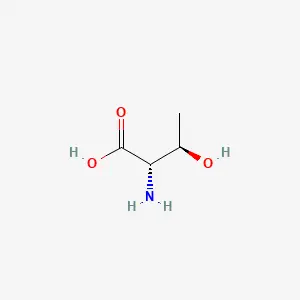
Threonine is an amino acid, one of the building blocks of protein. The WHO, the US National Academies (NASEM) and the European Food Safety Authority (EFSA) all list it as essential (indispensable). That means food has to supply it.
EFSA goes one step further and calls threonine, with lysine, strictly indispensable. The body cannot swap its nitrogen group in or out, and it cannot reverse its breakdown. Threonine is the L-form that occurs in food and in supplements.
Beyond building protein, threonine is a main ingredient of mucins, the slippery proteins that coat the gut. EFSA says 50% to 60% of the threonine we eat is used by the intestine, mainly for mucin made by goblet cells.
A small part is turned into glycine, the simplest amino acid. In adults, that route was about 7% to 11% of threonine breakdown in a tracer study of six men. A tracer study follows labeled molecules through the body.
Here is what most readers do not know. For decades the adult need was set at 7 mg per kg of body weight a day. That figure came from a 1957 review by the nutrition scientist William Rose. Between 2000 and 2002, three studies showed it was too low, and the WHO now uses 15 mg per kg.
In practice it hardly matters. One 4 oz chicken breast holds 1.14 g, more than the 1,050 mg that figure gives for a 70 kg adult (our arithmetic). Trials of threonine pills are few, mostly old and small. We found none in healthy people for sleep, mood or sport.
Health benefits of threonine
The top findings from 21 studies, strongest evidence first
What the stars mean
- Strong. Several randomized trials, pooled in a meta-analysis, point the same way, or regulators (FDA or EFSA) have approved the claim.
- Moderate. Good randomized trials support it, but there are fewer of them, or their results vary.
- Limited. Small, short or single trials, or mixed results. Promising, but it needs confirmation.
Population and lab studies get no stars: they show a link or a mechanism, not proof.
How we rate evidence →- ★Modest, uncertain help for muscle stiffnessAt 6 g a day, L-threonine supplements modestly eased leg muscle stiffness against placebo in people with spinal spasticity. In MS and inherited spasticity, exam scores improved but doctors and patients saw no clear gain.
- ★No benefit in ALSIn 95 people with ALS, lung capacity fell about 2.5 times faster on threonine (4 g a day, with B6) or an amino acid mix. The authors say chance may explain this, and in another trial 2 g a day of L-threonine for a year did not slow decline.
- ★No clear harm up to 12 g dailyIn healthy men, up to 12 g a day for 4 weeks changed no body measures or blood chemistry. The one exception was a minor enzyme rise at 9 g; only men were studied.
- ★Daily need higher than the old WHO figureTracer studies found the old WHO figure of 7 mg per kg a day was too little for adults. One study of six young men put the need at 19 mg per kg a day, and one of Indian men at 15.
- ★Whey-rich formula raised preterm babies’ blood threonineIn preterm babies, blood threonine rose as the formula had more whey (228, 344 and 419 µmol/L), against 208 on breast milk. An acid whey formula gave lower levels than a sweet whey one.
All 17 studies, strongest evidence first
In spinal spasticity, L-threonine modestly eased muscle stiffness compared with placebo
In this double-blind, placebo-controlled crossover trial, patients with spinal spasticity took L-threonine and a placebo (a dummy pill) in turn. The dose was 6 g a day by mouth. Neither patients nor researchers knew which was which. The main measure was muscle tone in selected leg muscles on the Ashworth scale, and a 10% fall in the score counted as a response. Under a sequential design, which checks results as patients are added, the trial stopped in favor of L-threonine after 33 patients. Side effects were minimal.
In MS, threonine reduced spasticity signs, but doctors and patients noticed nothing
This randomized crossover trial included 26 people with multiple sclerosis (MS) who could walk. The total daily dose was 7.5 g. Signs of spasticity on examination fell, but neither doctors nor patients noticed a change in symptoms. No side effects or toxic effects were found, unlike the sedation and weakness that go with common antispasticity drugs. Threonine rose in blood and spinal fluid during treatment, but glycine did not change.
L-threonine beat placebo on spasticity scores, but not by a useful amount
This double-blind crossover trial included 18 patients with inherited spastic paraparesis. They took L-threonine at 4.5 g and 6.0 g a day, each for 2 weeks, and placebo. Spasticity and motor impairment scores fell more than on placebo, a statistically significant difference (unlikely to be chance). But the doctors’ and patients’ overall impressions did not differ, and the gain was not large enough to be clinically valuable. Threonine rose in blood and spinal fluid, and glycine did not change.
In healthy men, up to 12 g daily caused no clear harm
This randomized, double-blind crossover trial gave healthy men placebo and graded doses of 0, 3, 6, 9 and 12 g a day. Doses went up to 12 g a day for 4 weeks. Body measures, food intake and blood chemistry did not change. The exception was a minor, non-specific rise in two enzymes (AST and creatine kinase) at 9 g but not at 12 g. Blood threonine and its breakdown product L-2-aminobutyrate rose from 6 g up. Mild and moderate adverse events appeared at random and faded while dosing continued. The authors set their no-observed-adverse-effect level, the highest dose with no harm seen, at that top dose. Only men were studied, and two authors work for Ajinomoto, a maker of amino acids.
In six patients, threonine improved motor performance by 29% on average
In this small pilot study, patients with inherited spasticity took 500 mg of threonine a day for 12 months. They were then followed for 4 months off treatment. All six improved partly: by 19% in the arms and 42% in the legs on average. Individual gains overall ranged from 19% to 35%. No toxic effects were seen. The authors asked for a controlled trial, and the later controlled trials used much higher doses.
Evidence on MS spasticity drugs was too poorly documented to guide treatment
This Cochrane review covered 26 placebo-controlled and 13 comparative trials of spasticity drugs in multiple sclerosis. Cochrane is a group known for careful reviews of trials. The drugs included baclofen, tizanidine, cannabinoids and threonine. Only 15 trials used the Ashworth scale, and a meta-analysis (pooling the results) was not possible. This is the latest version of the review, from 2003.
In ALS, L-threonine did not slow decline compared with placebo
In this randomized, double-blind, placebo-controlled trial, people with ALS took 2 g of L-threonine a day or placebo for a year, and 15 patients finished. The placebo group declined as expected in ALS. The difference from the threonine group was not statistically significant.
In ALS, threonine gave no benefit, and lung capacity fell faster
This two-center, double-blind trial had three arms, with 95 people with ALS in all. The threonine group (32 people) took 4 g of L-threonine a day. It came with 160 mg a day of pyridoxal phosphate, a form of vitamin B6. The others took a branched-chain amino acid mix (31 people) or placebo (32 people) for 6 months, and 77 finished. Forced vital capacity, a measure of lung capacity, fell about 2.5 times faster in both amino acid groups than on placebo, a statistically significant difference. Weight loss was 3.2 kg on threonine against 1.1 kg on placebo. Nothing else differed. The authors say chance may explain the lung result, but an adverse effect cannot be ruled out.
In hyperphenylalaninemia, threonine lowered blood phenylalanine compared with placebo
In this placebo-controlled crossover trial, 12 patients with hyperphenylalaninemia took about 50 mg of threonine per kg a day. Each spent 8 weeks on threonine or maltodextrin (a starch-based placebo), then an 8-week break (washout), then 8 weeks on the other. Blood phenylalanine fell more on threonine, and the drop was not explained by more phenylalanine in the urine. The authors say the mechanism is unknown and should be clarified before threonine is used as a treatment.
Young men needed far more threonine than the old WHO figure
This study used indicator oxidation, a tracer method, in six young men. It put the threonine requirement at 19 mg per kg a day, far above the old WHO figure of 7. Each man ate six different threonine intakes with 1.0 g per kg of an L-amino acid mixture. The burning (oxidation) of labeled phenylalanine served as the indicator. The upper safe intake for 95% of the population was 26.2 mg per kg a day, almost four times the WHO estimate of the time.
Indian men needed about twice the old WHO threonine figure
This 24-hour tracer study included 16 Indian men. Diets were based on an L-amino acid mixture, with threonine at 7, 11, 15, 19, 22 or 27 mg per kg a day. Each man was studied at three of these intakes after 6 days of adaptation. The breakpoint was 15 mg per kg a day, with a 95% confidence range of 11 to 27. The breakpoint is the intake above which the marker stopped changing. The authors concluded that the 1985 value of 7 is inadequate.
In 15 adults, 7 mg per kg a day was not enough
Adults were randomly given 7, 15 or 46 mg of threonine per kg a day in an L-amino acid mixture. They were studied after 6 and 13 days of adaptation, using a 24-hour leucine balance. Leucine balance and oxidation differed between 7 and each higher intake, but not between 15 and 46, which gave the same result. Adapting for 13 days instead of 6 changed nothing.
Days on the diet did not change the threonine estimate
This study measured 11 men after 1, 3 and 7 days on the diet. The threonine requirement came out at 10.5, 10.6 and 12.1 mg per kg a day, with no real difference between days. Each man was studied at six threonine intakes from 5 to 35 mg per kg a day. Each intake took 9 days: 2 days at 1.0 g per kg of protein, then 7 days on the test diet. Labeled phenylalanine served as the indicator. The estimates did not differ statistically, so a short 8-hour test gives the same answer as a week of adaptation. These values sit below the 15 the WHO uses.
Higher threonine intake went with lower odds of high systolic pressure
This secondary analysis used a diet trial of low-fat versus Mediterranean-style diets in 92 adults with heart disease. Blood pressure and food intake were followed for 2 years. Each higher quartile of threonine intake went with 0.84 times the odds of high systolic (top number) pressure. The diastolic result was borderline (0.87). Histidine also showed an inverse link, while methionine and alanine intakes went with higher pressure. The study was small, amino acids tend to move together in food, and an association does not show cause.
Threonine’s link to less ischemic stroke weakened after counting proline
This prospective cohort study, which followed 356,142 people across seven European countries, estimated 19 amino acids from questionnaires. Median follow-up was 12.9 years, with 4,295 ischemic strokes (from blocked arteries) and 1,375 hemorrhagic strokes (from bleeding). After correction for multiple testing, only proline stood out, with 12% lower ischemic stroke risk per standard deviation. The inverse links of threonine and several other amino acids each weakened after adjusting for proline. No amino acid was clearly linked to hemorrhagic stroke.
In hospital patients, blood threonine was not significantly linked to death
This secondary analysis of a trial of nutritional support had complete amino acid data for 237 patients at nutritional risk. Of these, 58 died within 30 days. Low methionine was linked to death (1.98 times the risk, after adjustment) and to decline in function. Lysine and threonine were not significantly linked to death or to loss of function.
Threonine in the diet and in blood were only weakly linked
This cohort study of 3,768 European adults compared intakes from questionnaires and 24-hour recalls with blood amino acid levels. Correlations ranged from -0.15 to 0.17 across all amino acids. Most essential amino acids, threonine included, had weak positive links. Higher intake groups (quintiles) went with higher blood levels for the essential amino acids other than histidine and phenylalanine.
Foods high in threonine
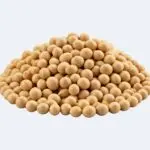
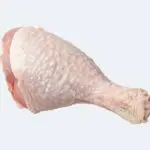
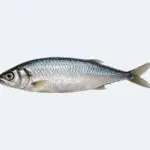
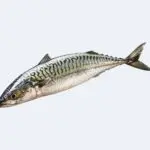
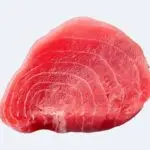
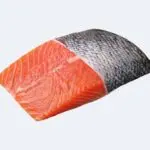
Soybeans lead our USDA ranking per serving: 1 cup holds 1.24 g. Chicken breast follows with 1.14 g in 4 oz, then a chicken drumstick (1.11 g) and sardines (0.99 g per can). Mackerel, tuna, ground lamb and shrimp come next.
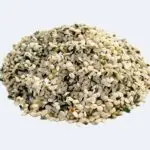
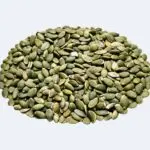
Per 100 g, hemp seeds come first with 1.27 g, then sardines (1.08 g), chicken breast (1.01 g) and pumpkin seeds (1 g). Per 100 kcal, cod (0.95 g), tuna (0.94 g) and chicken breast (0.84 g) lead, and spinach gives 0.53 g. The ranking below shows the full lists.
Threonine is in every protein, so a diet with enough protein has enough threonine. The WHO’s adult requirement pattern is 23 mg per g of protein. NASEM’s scoring pattern for ages 1 and up is 27 mg per g.
In the WHO’s table of ten food proteins, threonine runs from 127% of the WHO pattern in wheat to 223% in egg. So none of them falls short (chart below).
Protein quality scores such as the PDCAAS, which NASEM describes, multiply digestibility by the score of the scarcest amino acid. They are checked on lysine, the sulfur amino acids, threonine and tryptophan.
By our arithmetic, 1 cup of soybeans (1.24 g) gives more than the WHO figure of 1,050 mg for a 70 kg adult. So does 4 oz of chicken breast (1.14 g), and a can of sardines (0.99 g) comes close. Against the NASEM allowance of 1,400 mg, the chicken is 81% and the soybeans 89%.
Per serving. No daily amount is set, so bars compare each food with the top food.
Per 100 g. No daily amount is set, so bars compare each food with the top food.
Per 100 kcal: the same calories of each food, for a fair comparison. Bars compare each food with the top food.
Food labels have no Daily Value or Reference Intake for threonine, so the % compares each food with the top food.
- 1.
- 2.

- 3.
- 4.
- 5.
- 6.
- 7.
- 8.

- 9.
- 10.


- 1.
- 2.
- 3.
- 4.
- 5.
- 6.
- 7.
- 8.
- 9.
- 10.


- 1.

- 2.
- 3.
- 4.
- 5.
- 6.
- 7.
- 8.
- 9.
- 10.


Sources
- FoodData Central. US Department of Agriculture, Agricultural Research Service. Values as shown in the ranking above.
- Protein and amino acid requirements in human nutrition: report of a joint WHO/FAO/UNU expert consultation. WHO Technical Report Series 935. World Health Organization. 2007.
- Institute of Medicine, Food and Nutrition Board. Dietary Reference Intakes for energy, carbohydrate, fiber, fat, fatty acids, cholesterol, protein, and amino acids. National Academies Press. 2005.
How threonine works
Most of what follows comes from reviews, tracer studies and a few small human experiments, and some of it from infants. Human trials of threonine itself are few, and they are on the cards above.
A few ideas cover most of it. Threonine goes into protein and gut mucus, and the gut takes a large share. A small part becomes glycine, the requirement was long underestimated, and plant proteins are rarely short of it. Here is each one, and what has been seen in people.
Three routes for threonine in the body. Not to scale. The 89% to 93% is our arithmetic from the 7% to 11% glycine share.
Mostly protein, and the gut takes a large share
EFSA says 50% to 60% of the threonine we eat is used by the intestine, mainly for mucin made by goblet cells. A review of mostly animal work adds that mucin cannot be digested and reused. So mucin that leaves the gut is a net loss of threonine from the body. The review adds that threonine need may rise in illnesses such as ileitis (gut inflammation) and sepsis.
NASEM makes the same point from the other side: gut secretions are rich in threonine and cysteine and add to the requirement. In preterm infants, the intestine took up 82% of the threonine during partial tube feeding and 70% during full tube feeding. The authors read this as a high built-in need for threonine in the gut.
Share of dietary threonine taken up by the gut on its first pass, drawn to scale. The infant values come from eight preterm infants. The EFSA range is an overview figure.
Only a small part goes to glycine in adults
In animals, a route called threonine dehydrogenase turns much threonine into glycine. In six healthy men given a tracer, it accounted for only 7% to 11% of threonine breakdown, even when they ate a large excess. So it is a minor route in adults. The same group found threonine oxidation (breakdown) rose threefold on the large excess.
In 10 newborns, no threonine could be traced into glycine at all. The authors conclude the infants break it down by another route, the serine/threonine dehydratase pathway. In the 2025 safety trial, plasma L-2-aminobutyrate, a breakdown product, rose along with threonine from 6 g a day.
Why the old requirement was too low
William Rose began feeding healthy male graduate students purified amino acid diets in 1942. He tested what happened without each essential amino acid. Without threonine they showed a pronounced negative nitrogen balance, meaning their bodies lost more protein nitrogen than they took in. That is how threonine was shown to be essential for adults.
The WHO says its 1973 and 1985 value of 7 mg per kg a day came from Rose’s 1957 review of adult amino acid needs. That review gave a figure of 500 mg a day. When tracer methods arrived, three studies put the need at 15 to 19 mg per kg, and the WHO took 15 in 2007. NASEM averaged four estimates (13.5, 19.0, 15.0 and 15.0, a mean of 15.6 by our arithmetic) and rounded to 16 for its average requirement.
A 2025 systematic review of requirement studies since 2000 found limited studies across the life cycle. This was particularly true in pregnancy, lactation, infancy, childhood and adolescence.
Estimates of the adult threonine requirement, drawn to scale. Red is the old WHO figure of 1973 and 1985, orange are single studies, teal are the current official values.
Plant proteins are rarely short of threonine
A limiting amino acid is whichever runs short first. The WHO says dietary proteins are mostly limited by lysine (most cereals) or the sulfur amino acids (legumes). Others are tryptophan (some cereals such as maize) or threonine (some cereals). In its table of food proteins, though, threonine is above the requirement pattern everywhere, from 127% in wheat to 223% in egg.
Lysine is the one that drops, to 57% in wheat and 86% in rice. Egg (223%) and beef (202%) score highest, and milk and soy tie at 191%. Potato, maize, rice and wheat come in at 167%, 157%, 153% and 127%. All of them clear 100%, so mixing foods matters more for lysine than for threonine.
Threonine in food proteins as a share of the WHO requirement pattern, drawn to scale. The values are for protein, not for whole foods.
What has been seen in people
The clearest results in people are about need: tracer studies put the adult requirement near 15 mg per kg a day, not 7. Beyond that the picture is thin. Controlled trials in multiple sclerosis and inherited spasticity found a small drop in examination scores without a gain patients could feel. A 2002 review of oral spasticity drugs said that one randomized trial of threonine does not support its effectiveness.
Trials in ALS found no benefit, and in one the lung measure fell faster on threonine. One small trial lowered blood phenylalanine. A 2025 trial found no clear harm up to 12 g a day in healthy men. All of these are among the study cards above except the review, which is listed below.
Sources
- EFSA Panel on Dietetic Products, Nutrition and Allergies (NDA). Scientific opinion on dietary reference values for protein. EFSA J. 2012.
- Mao X, Zeng X, Qiao S, Wu G, Li D. Specific roles of threonine in intestinal mucosal integrity and barrier function. Front Biosci (Elite Ed). 2011.
- van der Schoor SR, Wattimena DL, Huijmans J, Vermes A, van Goudoever JB. The gut takes nearly all: threonine kinetics in infants. Am J Clin Nutr. 2007.
- Darling PB, Grunow J, Rafii M, Brookes S, Ball RO, Pencharz PB. Threonine dehydrogenase is a minor degradative pathway of threonine catabolism in adult humans. Am J Physiol Endocrinol Metab. 2000.
- Parimi PS, Gruca LL, Kalhan SC. Metabolism of threonine in newborn infants. Am J Physiol Endocrinol Metab. 2005.
- Institute of Medicine, Food and Nutrition Board. Dietary Reference Intakes for energy, carbohydrate, fiber, fat, fatty acids, cholesterol, protein, and amino acids. National Academies Press. 2005.
- Protein and amino acid requirements in human nutrition: report of a joint WHO/FAO/UNU expert consultation. WHO Technical Report Series 935. World Health Organization. 2007.
- Matsumoto H, Miura N, Naito M, Elango R. Evaluation of safe utilization of L-threonine for supplementation in healthy adults: a randomized double blind controlled trial. Amino Acids. 2025.
- Carter HE, Coon MJ. William Cumming Rose, April 4, 1887 to September 25, 1985. Biographical Memoirs. National Academy of Sciences.
- Rose WC, Coon MJ, Lockhart HB, Lambert GF. The amino acid requirements of man. XI. The threonine and methionine requirements. J Biol Chem. 1955.
- Wilson DC, Rafii M, Ball RO, Pencharz PB. Threonine requirement of young men determined by indicator amino acid oxidation with use of L-[1-13C]phenylalanine. Am J Clin Nutr. 2000.
- Kurpad AV, Raj T, Regan MM, et al. Threonine requirements of healthy Indian men, measured by a 24-h indicator amino acid oxidation and balance technique. Am J Clin Nutr. 2002.
- Borgonha S, Regan MM, Oh SH, Condon M, Young VR. Threonine requirement of healthy adults, derived with a 24-h indicator amino acid balance technique. Am J Clin Nutr. 2002.
- Szwiega S, Pencharz PB, Ball RO, et al. Length of adaptation has no effect on the threonine requirement determined in healthy young adult males using the indicator amino acid oxidation method. J Nutr. 2023.
- Burstad KM, Lamina T, Erickson A, et al. Evaluation of dietary protein and amino acid requirements: a systematic review. Am J Clin Nutr. 2025.
- Paisley S, Beard S, Hunn A, Wight J. Clinical effectiveness of oral treatments for spasticity in multiple sclerosis: a systematic review. Mult Scler. 2002.
How much threonine do you need?
Adults need about 15 mg of threonine per kg of body weight a day, according to the WHO. That is about 1,050 mg for a 70 kg adult. The US National Academies set an average requirement of 16 mg per kg for adults 19 and older. Their recommended allowance (RDA, enough for nearly all healthy people) is 20 mg per kg, about 1,400 mg for a 70 kg adult.
The site has no Daily Value for threonine, because neither the FDA nor the EU has set one.
| Source | Requirement (mg per kg a day) | For a 70 kg adult | Notes |
|---|---|---|---|
| WHO/FAO/UNU 2007, adults | 15 | 1,050 mg | Average requirement, from two 24-hour leucine-balance studies that each gave 15. Fed-state oxidation studies pointed to 10 to 20. The report adds 24% for a safe level, about 18.6 mg per kg (our arithmetic). It found too little data for a separate pattern in older adults and uses the adult one. |
| EFSA 2012, adults | 15 | 1,050 mg | EFSA reproduces the WHO mean requirement in its protein opinion. It sets no separate reference value for threonine and notes that only the US set recommended allowances for indispensable amino acids. |
| NASEM 2005, adults 19 and older, EAR | 16 | 1,120 mg | Average of four estimates, 13.5 to 19.0, rounded. Men and women, young and old, could not be separated for lack of data. |
| NASEM 2005, adults 19 and older, RDA | 20 | 1,400 mg | EAR plus 24% (1.24 times the EAR, rounded). |
| NASEM 2005, pregnancy | 21 (EAR), 26 (RDA) | 1,470 mg (EAR), 1,820 mg (RDA) | Essentially no data. The non-pregnant EAR was multiplied by 1.33, in step with the protein need. |
| NASEM 2005, breastfeeding | 24 (EAR), 30 (RDA) | 1,680 mg (EAR), 2,100 mg (RDA) | Adds the threonine secreted in human milk to the adult value. |
Children need more per kg of body weight because they are growing. The WHO gives 34 mg per kg a day at 6 months and 23 at 1 to 2 years. It gives 18 at 3 to 10 years and also at 11 to 14 years. At 15 to 18 years it is 17, against 15 for adults.
The National Academies’ adequate intake for babies up to 6 months, based on human milk, is 436 mg a day or 73 mg per kg. Its recommended allowances are 49 mg per kg at 7 to 12 months and 32 at 1 to 3 years. They are 24 at 4 to 8 years, and at 9 to 13, 24 for boys and 22 for girls. At 14 to 18, the figure for boys is 22.
Most people eat well above these figures. In US survey data from 1988 to 1994, the mean intake of threonine from food and supplements was 3.0 g a day for all groups.
The median for adult men ranged from 2.74 to 4.21 g a day, according to the National Academies. For adult women it ranged from 2.10 to 2.59 g. By our arithmetic, 3.0 g is about 2.9 times the WHO figure for a 70 kg adult.
Threonine deficiency: signs and who is at risk
We found no report of threonine deficiency from diet in people who eat enough protein. It has been produced on purpose: in Rose’s experiments, adults fed diets without threonine showed a pronounced negative nitrogen balance. The WHO says threonine is present at low concentrations in cereal proteins, which is why it is listed as a possible limiting amino acid there. Its own food table, though, shows wheat at 127% of the pattern.
The need is most pressing in preterm babies, whose gut takes up most of what they are fed, and in people on artificial nutrition. In newborns on intravenous feeding after surgery, the requirement was 32.8 to 37.6 mg per kg a day. That is 22% to 32% of the amount in commercial solutions.
In hospital patients at nutritional risk, low blood threonine was not significantly linked to death within 30 days. We found no study that measured threonine status in vegans or in older adults.
Sources
- Protein and amino acid requirements in human nutrition: report of a joint WHO/FAO/UNU expert consultation. WHO Technical Report Series 935. World Health Organization. 2007.
- Institute of Medicine, Food and Nutrition Board. Dietary Reference Intakes for energy, carbohydrate, fiber, fat, fatty acids, cholesterol, protein, and amino acids. National Academies Press. 2005.
- EFSA Panel on Dietetic Products, Nutrition and Allergies (NDA). Scientific opinion on dietary reference values for protein. EFSA J. 2012.
- Carter HE, Coon MJ. William Cumming Rose, April 4, 1887 to September 25, 1985. Biographical Memoirs. National Academy of Sciences.
- Chapman KP, Courtney-Martin G, Moore AM, Ball RO, Pencharz PB. Threonine requirement of parenterally fed postsurgical human neonates. Am J Clin Nutr. 2009.
- Wunderle C, Haller L, Laager R, et al. The association of the essential amino acids lysine, methionine, and threonine with clinical outcomes in patients at nutritional risk: secondary analysis of a randomized clinical trial. Nutrients. 2024.
- Burstad KM, Lamina T, Erickson A, et al. Evaluation of dietary protein and amino acid requirements: a systematic review. Am J Clin Nutr. 2025.
Forms of threonine: absorption and effects
Threonine is sold as free L-threonine in capsules and powders. It also comes bound in food protein and inside amino acid blends. Unlike minerals, there is no list of forms with known absorption rates. We found no human study that compared free L-threonine with threonine from food protein, or compared the free form with a salt.
The supplement trials in the benefits section all used L-threonine. Doses were 500 mg to 12 g a day in adults, and about 50 mg per kg a day in a small trial in hyperphenylalaninemia.
The honest bottom line: for threonine itself, the form does not seem to be the question. The questions are whether anyone needs extra, which the trials mostly do not show. Another is whether products sold under a similar name contain the amino acid at all.
Magnesium L-threonate is a magnesium salt of threonic acid. A 2026 paper describes threonic acid as an ascorbic acid (vitamin C) metabolite, a product of its breakdown. So it is not threonine, and its trials say nothing about threonine. We found no trial that credited a blend’s result to threonine.
| Form | What it is | What studies show | Source |
|---|---|---|---|
| Free L-threonine (capsules, powder) | The single amino acid, not bound in protein | Used at 4.5 to 7.5 g a day in spasticity trials, 2 to 4 g in ALS trials and 0 to 12 g in a 4-week safety trial. Blood threonine rose from 6 g a day. We found no trial comparing it with threonine from protein. | 1, 2, 3, 4, 5, 6 |
| Threonine in food protein | Bound in protein, 23 to 27 mg per g in the requirement patterns | Food covers the requirement without supplements (see Foods high in threonine). In the gut, 50% to 60% is used for mucin. We found no study comparing absorption from protein and from the free form. | 7, 13, 14 |
| Whey formula with glycomacropeptide | Sweet whey, which holds a threonine-rich fragment of milk protein | In preterm infants, blood threonine rose with the whey share of the formula, and the sweet whey formula, which held 17.2% more threonine, gave significantly higher blood threonine than a glycomacropeptide-free one. | 8, 9 |
| Magnesium L-threonate | A magnesium salt of threonic acid, a vitamin C metabolite; not an amino acid | Two industry-linked trials of 80 and 100 adults reported gains in sleep and cognition measures. The results belong to the magnesium compound, not to threonine. | 10, 11, 12 |
| Essential amino acid blends | Mixtures of several amino acids, threonine among them | We found no human trial that credits a blend’s result to threonine. The only branched-chain amino acid arm in the ALS trial had no threonine. | 6 |
Here are the studies that compare forms or test a threonine-containing product, strongest evidence first, four in all.
All 4 studies, strongest evidence first
Acid whey formula gave preterm babies lower blood threonine than sweet whey
In this randomized crossover trial, 14 preterm infants had each formula for at least 7 days. The acid whey formula had no glycomacropeptide, and the sweet whey formula had 17.2% more threonine. Hyperthreoninemia, too much threonine in the blood, is well known in infants on whey-predominant formulas. That is because sweet whey contains the threonine-rich glycomacropeptide. Plasma threonine was significantly lower on the glycomacropeptide-free formula, while glycine, serine and urea did not change. The authors recommend acid whey formulas for preterm infants.
In preterm babies, blood threonine rose with the formula’s whey share
This study included 17 preterm infants. Twelve were randomly assigned formula with whey to casein ratios of 20:80, 40:60 or 60:40, and 5 had their mothers’ milk. On these formulas, from least to most whey, blood threonine was 228, 344 and 419 µmol/L (micromoles per liter). It stayed low on breast milk (208). Threonine intake rose from 48.5 to 63.2 µmol per kg an hour across the formulas, against 58.0 on breast milk. Formula-fed infants oxidized a smaller share of their threonine intake (17.1% against 24.3% on breast milk). So they broke down the excess less readily.
Magnesium L-threonate, not threonine, improved several sleep and mood scores
This tests a magnesium salt of threonic acid, not the amino acid threonine, so the result belongs to the magnesium compound. In this randomized, double-blind, parallel-arm trial, 80 adults with sleep problems took 1 g a day or placebo for 21 days. Sleep was tracked with questionnaires and an Oura ring. Deep and REM sleep scores, energy, mood and alertness improved against placebo. One author is affiliated with AIDP, a supplement company.
Magnesium L-threonate improved a thinking score but not ring-measured sleep
Again, this is a magnesium salt, not threonine. In this randomized, double-blind, placebo-controlled trial, 100 adults with poor sleep took 2 g a day for 6 weeks. An overall cognition score improved, a result that just reached statistical significance, but sleep measured by a ring did not. Raven’s reasoning test did not differ, and self-reported sleep disturbances did not differ overall. Resting heart rate fell and heart rate variability rose. The study was funded by Threotech Inc., which supplied the product and took part in the design.
Sources
- Matsumoto H, Miura N, Naito M, Elango R. Evaluation of safe utilization of L-threonine for supplementation in healthy adults: a randomized double blind controlled trial. Amino Acids. 2025.
- Growdon JH, Nader TM, Schoenfeld J, Wurtman RJ. L-threonine in the treatment of spasticity. Clin Neuropharmacol. 1991.
- Hauser SL, Doolittle TH, Lopez-Bresnahan M, et al. An antispasticity effect of threonine in multiple sclerosis. Arch Neurol. 1992.
- Lee A, Patterson V. A double-blind study of L-threonine in patients with spinal spasticity. Acta Neurol Scand. 1993.
- Blin O, Pouget J, Aubrespy G, et al. A double-blind placebo-controlled trial of L-threonine in amyotrophic lateral sclerosis. J Neurol. 1992.
- Tandan R, Bromberg MB, Forshew D, et al. A controlled trial of amino acid therapy in amyotrophic lateral sclerosis: I. Clinical, functional, and maximum isometric torque data. Neurology. 1996.
- EFSA Panel on Dietetic Products, Nutrition and Allergies (NDA). Scientific opinion on dietary reference values for protein. EFSA J. 2012.
- Darling PB, Dunn M, Sarwar G, et al. Threonine kinetics in preterm infants fed their mothers’ milk or formula with various ratios of whey to casein. Am J Clin Nutr. 1999.
- Rigo J, Boehm G, Georgi G, et al. An infant formula free of glycomacropeptide prevents hyperthreoninemia in formula-fed preterm infants. J Pediatr Gastroenterol Nutr. 2001.
- Oh S, Park S, Kim EK. Threonic acid, an ascorbic acid metabolite, synergizes with intermittent fasting to ameliorate obesity. Exp Mol Med. 2026.
- Hausenblas HA, Lynch T, Hooper S, Shrestha A, Rosendale D, Gu J. Magnesium-L-threonate improves sleep quality and daytime functioning in adults with self-reported sleep problems: a randomized controlled trial. Sleep Med X. 2024.
- Lopresti AL, Smith SJ. The effects of magnesium L-threonate (Magtein®) on cognitive performance and sleep quality in adults: a randomised, double-blind, placebo-controlled trial. Front Nutr. 2025.
- Institute of Medicine, Food and Nutrition Board. Dietary Reference Intakes for energy, carbohydrate, fiber, fat, fatty acids, cholesterol, protein, and amino acids. National Academies Press. 2005.
- Protein and amino acid requirements in human nutrition: report of a joint WHO/FAO/UNU expert consultation. WHO Technical Report Series 935. World Health Organization. 2007.
Is threonine safe? Supplements, dose and interactions
Threonine from food is not a concern for most people. The US National Academies set no tolerable upper intake level (UL) for threonine; a UL is the highest daily intake likely to pose no risk. They found no data on healthy people given L-threonine supplements, so there was nothing to base one on.
In patients with spasticity, 4.5 to 6.0 g a day for 14 days caused no adverse clinical effects. For comparison, the 99th percentile of intake from food and supplements was 7.1 g a day in men aged 51 to 70. EFSA could not set an upper level for total protein either, and we found no EFSA upper level for threonine.
- Tested doses. In the 2025 trial, healthy men took up to 12 g a day for 4 weeks. The authors set a no-observed-adverse-effect level of 12 g a day. That is one study’s finding in men, not an official limit. Two of its four authors work for a maker of amino acids. The spasticity trials gave 4.5 to 7.5 g a day and reported minimal or no side effects.
- ALS. In a 6-month ALS trial, 4 g a day of L-threonine with vitamin B6 was well tolerated. But lung capacity fell faster than on placebo, and weight loss was larger. The authors say chance may explain it and an adverse effect cannot be ruled out.
- Babies. NASEM suggests threonine intake should not exceed about 140 mg per kg a day in premature infants. It cites a study of 163 infants whose blood threonine tracked the formula’s threonine. Whey-predominant formulas can raise blood threonine in preterm infants. Feeding choices for babies belong with a pediatrician.
- Drugs and conditions. We found no study of threonine with any medicine. In 12 patients with hyperphenylalaninemia, about 50 mg per kg a day lowered blood phenylalanine, and the authors say the mechanism is unknown. Anyone with that condition, ALS, kidney or liver disease, or who is pregnant should ask a doctor before taking threonine pills.
Sources
- Institute of Medicine, Food and Nutrition Board. Dietary Reference Intakes for energy, carbohydrate, fiber, fat, fatty acids, cholesterol, protein, and amino acids. National Academies Press. 2005.
- EFSA Panel on Dietetic Products, Nutrition and Allergies (NDA). Scientific opinion on dietary reference values for protein. EFSA J. 2012.
- Matsumoto H, Miura N, Naito M, Elango R. Evaluation of safe utilization of L-threonine for supplementation in healthy adults: a randomized double blind controlled trial. Amino Acids. 2025.
- Growdon JH, Nader TM, Schoenfeld J, Wurtman RJ. L-threonine in the treatment of spasticity. Clin Neuropharmacol. 1991.
- Hauser SL, Doolittle TH, Lopez-Bresnahan M, et al. An antispasticity effect of threonine in multiple sclerosis. Arch Neurol. 1992.
- Lee A, Patterson V. A double-blind study of L-threonine in patients with spinal spasticity. Acta Neurol Scand. 1993.
- Tandan R, Bromberg MB, Forshew D, et al. A controlled trial of amino acid therapy in amyotrophic lateral sclerosis: I. Clinical, functional, and maximum isometric torque data. Neurology. 1996.
- Rigo J, Boehm G, Georgi G, et al. An infant formula free of glycomacropeptide prevents hyperthreoninemia in formula-fed preterm infants. J Pediatr Gastroenterol Nutr. 2001.
- Darling PB, Dunn M, Sarwar G, et al. Threonine kinetics in preterm infants fed their mothers’ milk or formula with various ratios of whey to casein. Am J Clin Nutr. 1999.
- Sanjurjo P, Aldamiz L, Georgi G, et al. Dietary threonine reduces plasma phenylalanine levels in patients with hyperphenylalaninemia. J Pediatr Gastroenterol Nutr. 2003.
How to get more threonine
- Best food. One cup of soybeans gives 1.24 g, a 4 oz chicken breast 1.14 g and a can of sardines 0.99 g. Per 100 g, hemp seeds lead with 1.27 g.
- Eat enough protein from varied foods. In the WHO’s table, threonine in wheat, rice and maize is 127%, 153% and 157% of the requirement pattern. So threonine is rarely the amino acid to plan around. Lysine is the one the WHO flags in cereals.
- Skip the pills unless a doctor suggests them. No trial shows a benefit of threonine pills for healthy people, and the spasticity and ALS trials were small and mixed.
Sources
- FoodData Central. US Department of Agriculture, Agricultural Research Service. Values as shown in the ranking above.
- Protein and amino acid requirements in human nutrition: report of a joint WHO/FAO/UNU expert consultation. WHO Technical Report Series 935. World Health Organization. 2007.
- Matsumoto H, Miura N, Naito M, Elango R. Evaluation of safe utilization of L-threonine for supplementation in healthy adults: a randomized double blind controlled trial. Amino Acids. 2025.
- Tandan R, Bromberg MB, Forshew D, et al. A controlled trial of amino acid therapy in amyotrophic lateral sclerosis: I. Clinical, functional, and maximum isometric torque data. Neurology. 1996.
- Lee A, Patterson V. A double-blind study of L-threonine in patients with spinal spasticity. Acta Neurol Scand. 1993.
- Hauser SL, Doolittle TH, Lopez-Bresnahan M, et al. An antispasticity effect of threonine in multiple sclerosis. Arch Neurol. 1992.
History of threonine
Threonine was the last of the 20 common amino acids in protein to be found. The American biochemist William Rose worked for several years with his colleagues Richard McCoy and Curtis Meyer. They aimed to obtain an unknown growth factor in pure crystalline form, and reported it in 1935 as a new essential amino acid. The form (isomer) that supported growth in rats was named L-threonine, and the name reflects its likeness to threonic acid, a four-carbon acid.
Rose then turned to people: from 1942 he fed healthy male graduate students diets of purified amino acids. He found that only eight were essential for adults, threonine among them. The 500 mg a day that the WHO later turned into 7 mg per kg came from this era. In 1951 and 1955 he published papers on the role of threonine and on the threonine requirement.
The old figure stood until the tracer studies of 2000 to 2002. Meanwhile, threonine was tried as a spasticity treatment from 1982. The reason was that it is a precursor of glycine, and animal work suggested it raises glycine in the spinal cord. In the controlled trials, the effects on examination scores were small, glycine in spinal fluid did not rise, and in ALS there was no benefit.
Sources
- Threonine. Wikipedia.
- Nutrition classics from The Journal of Biological Chemistry 112:283-302, 1935-1936. Feeding experiments with mixtures of highly purified amino acids. 8. Isolation and identification of a new essential amino acid. By Richard H. McCoy, Curtis E. Meyer, and William C. Rose. Nutr Rev. 1974.
- Carter HE, Coon MJ. William Cumming Rose, April 4, 1887 to September 25, 1985. Biographical Memoirs. National Academy of Sciences.
- Rose WC, Haines WJ, Warner DT, Johnson JE. The amino acid requirements of man. II. The role of threonine and histidine. J Biol Chem. 1951.
- Rose WC, Coon MJ, Lockhart HB, Lambert GF. The amino acid requirements of man. XI. The threonine and methionine requirements. J Biol Chem. 1955.
- Protein and amino acid requirements in human nutrition: report of a joint WHO/FAO/UNU expert consultation. WHO Technical Report Series 935. World Health Organization. 2007.
- Wilson DC, Rafii M, Ball RO, Pencharz PB. Threonine requirement of young men determined by indicator amino acid oxidation with use of L-[1-13C]phenylalanine. Am J Clin Nutr. 2000.
- Kurpad AV, Raj T, Regan MM, et al. Threonine requirements of healthy Indian men, measured by a 24-h indicator amino acid oxidation and balance technique. Am J Clin Nutr. 2002.
- Borgonha S, Regan MM, Oh SH, Condon M, Young VR. Threonine requirement of healthy adults, derived with a 24-h indicator amino acid balance technique. Am J Clin Nutr. 2002.
- Growdon JH, Nader TM, Schoenfeld J, Wurtman RJ. L-threonine in the treatment of spasticity. Clin Neuropharmacol. 1991.
- Hauser SL, Doolittle TH, Lopez-Bresnahan M, et al. An antispasticity effect of threonine in multiple sclerosis. Arch Neurol. 1992.
- Blin O, Pouget J, Aubrespy G, et al. A double-blind placebo-controlled trial of L-threonine in amyotrophic lateral sclerosis. J Neurol. 1992.
- Tandan R, Bromberg MB, Forshew D, et al. A controlled trial of amino acid therapy in amyotrophic lateral sclerosis: I. Clinical, functional, and maximum isometric torque data. Neurology. 1996.
Frequently asked questions about threonine
Is threonine an essential amino acid?
Yes. The WHO, the US National Academies and EFSA all list threonine as indispensable, so food must supply it. EFSA calls threonine and lysine strictly indispensable, because they are not transaminated (they cannot swap their nitrogen group) and their breakdown cannot be reversed. In Rose’s experiments, adults fed diets without threonine showed a pronounced negative nitrogen balance.
How much threonine do you need a day?
The WHO sets 15 mg per kg of body weight a day for adults, about 1,050 mg for a 70 kg adult. The US National Academies set an average requirement of 16 mg per kg and a recommended allowance of 20 mg per kg, about 1,400 mg. The allowance is 26 mg per kg in pregnancy and 30 mg per kg while breastfeeding. The 70 kg figures are our arithmetic. Mean intake in US survey data from 1988 to 1994 was 3.0 g a day.
Which foods are highest in threonine?
Soybeans lead our USDA ranking per serving, with 1.24 g in 1 cup. Next come chicken breast (1.14 g in 4 oz), chicken drumstick (1.11 g) and sardines (0.99 g per can). Per 100 g, hemp seeds lead with 1.27 g, then sardines (1.08 g) and chicken breast (1.01 g). Per 100 kcal, cod (0.95 g) and tuna (0.94 g) lead, and spinach gives 0.53 g.
What does threonine do in the body?
Mostly it is built into protein. It is a main ingredient of mucins, and EFSA says 50% to 60% of dietary threonine is used by the intestine, mainly for mucin. A small part, 7% to 11% of its breakdown in a tracer study of six men, becomes glycine. The glycine route is the only conversion the human studies on this page measured.
Does threonine help with spasticity or ALS?
Only a little for spasticity, and not for ALS. In controlled trials, 4.5 to 7.5 g a day lowered spasticity scores in multiple sclerosis and inherited spastic paraparesis. But in two of them, patients and doctors did not notice a gain in symptoms. In ALS, trials of 2 and 4 g a day found no benefit.
Does threonine have side effects?
At food amounts, none are expected. In a 4-week trial, healthy men took up to 12 g a day with no clear harm. Spasticity trials of 4.5 to 7.5 g a day reported minimal or no side effects. The National Academies set no upper limit because the data were not adequate. In ALS, lung capacity fell faster on 4 g a day with vitamin B6, though chance may explain it.
Can vegans get enough threonine?
Almost certainly yes. In the WHO’s table, threonine in plant proteins is 127% to 191% of the requirement pattern: wheat 127%, rice 153%, maize 157% and soy 191%. No food protein listed falls below 100%. Lysine is the amino acid vegans on cereal-heavy diets should watch, and we found no study that measured threonine status in vegans.
Is magnesium threonate the same as threonine?
No. Magnesium L-threonate is a magnesium salt of threonic acid, which a 2026 paper describes as a vitamin C metabolite, not the amino acid. Its two trials, of 80 and 100 adults, were linked to supplement companies and say nothing about threonine. As for serine, it is a dispensable amino acid and threonine is an indispensable one. That is the main nutritional difference.