Lignin is a woody polymer in plant cell walls, and it is not a carbohydrate. Its building blocks are phenols, not sugars, cross-linked into a tangle that people cannot digest. It still counts as dietary fiber: fiber definitions have long included lignin together with the non-starch polysaccharides, and lab methods weigh it in the fiber residue. On this site it sits with the insoluble fibers, next to cellulose.
Lignin is a large share of what plants are made of: one research group puts it at about 30% of plant biomass. Most readers do not know that it is barely studied in people. We found three small crossover trials of purified lignin from the 1980s, all from one research group, and none found a significant effect. The rest of the evidence is from rats, mice and test tubes.
One more thing to keep apart: lignin is not the same as lignans, plant compounds that act somewhat like estrogen and that occur in cereals, vegetables, fruit and berries. The names are close and the molecules differ. This page is about lignin only.
Health benefits of lignin
Evidence on lignin itself is thin, and no study reaches strong or moderate evidence. The best human data are three 4-week crossover trials of 12 g a day of lignin in healthy volunteers: no significant change in cholesterol, triglycerides or bile acids, and a stool weight rise of 27% that was not significant. Lab work suggests that gut microbes change part of it and that it can scavenge free radicals, but those findings come from rats, mice and test tubes. We found no trial of lignin for constipation, diabetes, heart disease or cancer. Here are the 12 studies we found, strongest evidence first, including the null results.
In 3 groups of 10 healthy adults, 12 g a day of lignin for 4 weeks did not change cholesterol or triglycerides
Randomized crossover studies of 8 weeks each tested lignin (12 g a day), pectin (12 g) and cellulose (15 g) as supplements, one group per fiber, in healthy people with normal cholesterol. Diet records showed no other change in intake. Total cholesterol, HDL cholesterol, triglycerides and the HDL ratio did not differ with any of the three fibers. This is the only lignin trial on blood lipids we found, and it is small, old and in people with no lipid problem.
Lignin at 12 g a day raised stool weight by 27% and cut transit time by 20%, but not significantly
Randomized crossover studies in healthy volunteers, a companion report from the same authors with the same fiber doses (lignin 12 g, pectin 12 g, cellulose 15 g a day). Cellulose did better: stool weight rose 57%, transit time fell 27% and stool pH fell from 6.38 to 6.12, all significant. Lignin lowered pH from 6.34 to 6.25. Pectin changed none of the three. The authors say individual fibers differ in what they do in the colon.
In 10 healthy adults, 12 g a day of purified lignin for 4 weeks did not change bile acids or the cholesterol saturation of bile
Randomized crossover study from the same authors, with the same doses and group size as the 1985 cholesterol report, so it comes from the same supplementation program. Lignin had no significant effect on any bile measure. Pectin and cellulose shifted the shares of some bile acids: deoxycholic acid rose from 18.2 to 25.4 with pectin and fell from 18.6 to 14.2 with cellulose. Bile started out unsaturated with cholesterol, which limits what the study could show.
In stool from healthy adults on a wheat bran supplement, the lab method changed how much lignin was counted
A methods study on fecal fiber from a wheat bran trial. Leaving sodium sulfite out of the standard detergent step raised the lignin found and the nitrogen in it. The authors suggest that part of what is read as lignin can be Maillard products formed during the analysis. Subtracting Klason lignin (the residue left after acid treatment) from fecal fiber removed one negative digestibility. Counting lignin in food and stool is less exact than counting sugars.
Show 8 more studies
In mice on a high-fat diet, a lignin-rich fraction of brewer’s spent grain lowered LDL and total cholesterol
Mice ate a high-fat diet plus 20% of the lignin-rich insoluble residue, 20% cellulose or a mix of both for 14 weeks. Only the residue and the mix lowered LDL and total cholesterol. Fecal bile acids rose with all fibers, and liver genes for cholesterol and bile acid handling changed with the residue. The residue also holds beta-glucan and arabinoxylan, so the effect is not lignin alone. Some authors are affiliated with a food ingredient company.
In rats, gut microbes changed lignin, and small phenolic fragments appeared in urine
Rats ate birch xylan extracts with residual lignin or extracts richer in lignin. The lignin in their stool was chemically altered, and urine held ferulic acid, sinapic acid and their sulfate and glucuronide forms. This suggests that lignin pieces enter the blood and are processed in the liver. The lignin came with xylan, not on its own, and no people were studied.
In a colon model, a lignin-rich brewer’s grain fraction was partly broken down by gut microbes without blocking fermentation
In vitro study with human fecal microbes. The fraction did not suppress short-chain fatty acid production, did not slow lactobacilli or bifidobacteria, and bifidobacteria survived longer on it than on glucose. Phenolic compounds that likely came from lignin appeared and then went away, which suggests partial breakdown. No people or animals were involved.
In a colon model, the alkali-soluble lignin changed slightly, and the insoluble lignin stayed intact
In vitro study that exposed brewer’s spent grain lignin fractions to fecal microbes after enzyme treatment. The soluble polymer changed a little in structure. The lignin left in the insoluble residue did not change. A lab model with one type of grain material.
In test-tube fermentation, soluble lignin made modestly more short-chain fatty acids than less soluble lignin
In vitro batch fermentation with gut microbes compared a water-soluble lignin with two less soluble fractions. Total short-chain fatty acids were about 8.72 mM with soluble lignin and about 7.80 mM with the others. Soluble lignin also shifted the mix of bacteria. The authors call it a possible functional ingredient to explore, not a proven one.
In test tubes, alkali-lignin scavenged free radicals and slowed the growth of HeLa cancer cells
Chemical and cell assays with a purified lignin preparation. Half of the superoxide radicals were scavenged at 46.29 µg/ml and half of the hydroxyl radicals at 250 µg/ml, and lipid peroxidation was inhibited. The authors propose that this might play a part in the fiber and colon cancer link. Nothing was tested in people.
A water-soluble hardwood lignin reduced oxidative DNA damage in rat cells, in the dish and in cells from lignin-fed rats
Testicular cells and blood lymphocytes from Sprague-Dawley rats were exposed to hydrogen peroxide or light-excited methylene blue, with and without lignin. Lignin lowered DNA lesions both in vitro and ex vivo, after rats ate a lignin-supplemented diet. This is a lab finding on DNA damage in rats, not a cancer outcome.
In rats, 4 days of a lignin-based anti-diarrhea product at 2 g per kg left intestinal enzymes and tissue unchanged
The product, Ligmed-A, is about 90% lignin from sugarcane and is used for diarrhea in weaned pigs. Sucrase and alkaline phosphatase activity and the structure of the small intestine did not differ from controls. The authors say studies in people are still needed.
Lignin also features in bigger fiber stories without being tested alone. A review of the fiber and colon cancer idea argued that cell walls with phenolic parts such as lignin may matter more than the sugar-based fiber alone, which is a hypothesis and not a result. Wheat bran, which contains lignin, has trial evidence for stool bulk on the insoluble fiber page, but those trials cannot separate lignin from the rest of the bran.
Sources
- Hillman LC, Peters SG, Fisher CA, Pomare EW. The effects of the fiber components pectin, cellulose and lignin on serum cholesterol levels. Am J Clin Nutr. 1985.
- Hillman L, Peters S, Fisher A, Pomare EW. Differing effects of pectin, cellulose and lignin on stool pH, transit time and weight. Br J Nutr. 1983.
- Hillman LC, Peters SG, Fisher CA, Pomare EW. Effects of the fibre components pectin, cellulose, and lignin on bile salt metabolism and biliary lipid composition in man. Gut. 1986.
- Marlett JA, Johnson EJ. Composition of fecal fiber from human subjects. J Nutr. 1985.
- Raza GS, Maukonen J, Makinen M, et al. Hypocholesterolemic effect of the lignin-rich insoluble residue of brewer’s spent grain in mice fed a high-fat diet. J Agric Food Chem. 2019.
- Lahtinen MH, Kynkäänniemi E, Jian C, et al. Metabolic fate of lignin in birch glucuronoxylan extracts as dietary fiber studied in a rat model. Mol Nutr Food Res. 2023.
- Niemi P, Aura AM, Maukonen J, et al. Interactions of a lignin-rich fraction from brewer’s spent grain with gut microbiota in vitro. J Agric Food Chem. 2013.
- Ohra-aho T, Niemi P, Aura AM, et al. Structure of brewer’s spent grain lignin and its interactions with gut microbiota in vitro. J Agric Food Chem. 2016.
- Zhu J, Ning Q, Wang T, et al. Soluble lignin: a potential prebiotic modulating gut microbiota and short-chain fatty acid production in in vitro fermentation. Food Chem. 2026.
- Lu FJ, Chu LH, Gau RJ. Free radical-scavenging properties of lignin. Nutr Cancer. 1998.
- Lábaj J, Slameňová D, Lazarová M, Kosiková B. Lignin-stimulated reduction of oxidative DNA lesions in testicular cells and lymphocytes of Sprague-Dawley rats in vitro and ex vivo. Nutr Cancer. 2004.
- Mitjans M, García L, Marrero E, Vinardell MP. Study of Ligmed-A, an antidiarrheal drug based on lignin, on rat small intestine enzyme activity and morphometry. J Vet Pharmacol Ther. 2001.
- Ferguson LR, Chavan RR, Harris PJ. Changing concepts of dietary fiber: implications for carcinogenesis. Nutr Cancer. 2001.
- Asp NG. Dietary fibre–definition, chemistry and analytical determination. Mol Aspects Med. 1987.
- Tetens I, Turrini A, Tapanainen H, et al. Dietary intake and main sources of plant lignans in five European countries. Food Nutr Res. 2013.
Foods high in lignin
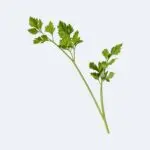
The values on this page come from Frida, the Danish food composition database, for 17 foods, so the list is short and cannot rank every food. By weight, rye leads at 0.7 g per 100 g, followed by brown rice (0.65 g), parsley (0.59 g), wheat (0.5 g), pears (0.4 g), tomatoes (0.3 g) and bell peppers (0.29 g). Amounts are small next to total fiber, and a serving of fruit or a vegetable adds little: a medium pear gives 0.71 g and a medium tomato 0.37 g.
Per 100 kcal the order changes, because tomatoes (1.67 g) and parsley (1.64 g) are low in energy. Wheat bran lignin has been described in detail in a Dutch study, which treats bran as a side stream of flour milling. See our pages on rye and wheat. We found no other measured lignin values in the literature to add.
Per serving. No daily amount is set, so bars compare each food with the top food.
Per 100 g. No daily amount is set, so bars compare each food with the top food.
Per 100 kcal: the same calories of each food, for a fair comparison. Bars compare each food with the top food.
Food labels have no Daily Value or Reference Intake for lignin, so the % compares each food with the top food.
- 1.

- 2.

- 3.

- 4.
- 5.
- 6.
- 7.
- 8.

- 9.

- 10.



- 1.
- 2.
- 3.
- 4.
- 5.
- 6.
- 7.
- 8.

- 9.
- 10.


- 1.
- 2.
- 3.
- 4.
- 5.
- 6.

- 7.
- 8.
- 9.
- 10.

Sources
- National Food Institute, Technical University of Denmark. Frida, the Danish food composition database. Lignin values for the foods on this page, as imported by NutriScrolls.
- van Erven G, Veersma RJ, Kabel MA. Comprehensive structural characterization of wheat bran lignin. J Agric Food Chem. 2025.
How lignin works
Most of what we know about what lignin does in the body comes from rats, lab fermenters and stool analysis, and the human trials show small effects at best. Three ideas matter: it resists digestion, it adds little bulk, and gut microbes may change part of it. Here is each one.
Where lignin sits and what happens to it in the gut. Not to scale.
It resists digestion
Lignin is a highly cross-linked polymer of phenylpropane units, and a review of fiber chemistry lists it with the fiber that is not digested or absorbed in the human small intestine. Lab methods find it as the residue left after acids and enzymes remove everything else, and that residue can include other material, as the stool method study above shows.
It adds little bulk
In the Hillman trials, 12 g of lignin a day moved stool toward more weight and faster passage, less than cellulose did. The chart compares the two, drawn to scale. The lignin changes did not reach significance in groups of this size, so we cannot say they are real.
Change in stool weight and transit time on fiber supplements in healthy volunteers, drawn to scale. Green bars are significant, grey bars are not.
Gut microbes may change part of it
Lignin was once thought to be inert. In rats, the lignin in stool was chemically altered and phenolic fragments appeared in urine. In colon models with human fecal microbes, a soluble lignin fraction was slightly changed and gave a little more short-chain fatty acids, while insoluble lignin stayed intact. A review of insoluble fibers says lignin takes part in gut microbial interactions and may improve the availability of plant polyphenols, which is a review claim and not a trial result. Whether people absorb these fragments, and what they do, is not known.
What has been seen in people
In people, purified lignin at 12 g a day changed nothing significant. We found no trials of lignin by itself on blood sugar, weight, gut symptoms or disease risk. The best human evidence for bran and whole grains is on our insoluble fiber page.
Sources
- Asp NG. Dietary fibre–definition, chemistry and analytical determination. Mol Aspects Med. 1987.
- Hillman L, Peters S, Fisher A, Pomare EW. Differing effects of pectin, cellulose and lignin on stool pH, transit time and weight. Br J Nutr. 1983.
- Lahtinen MH, Kynkäänniemi E, Jian C, et al. Metabolic fate of lignin in birch glucuronoxylan extracts as dietary fiber studied in a rat model. Mol Nutr Food Res. 2023.
- Niemi P, Aura AM, Maukonen J, et al. Interactions of a lignin-rich fraction from brewer’s spent grain with gut microbiota in vitro. J Agric Food Chem. 2013.
- Ohra-aho T, Niemi P, Aura AM, et al. Structure of brewer’s spent grain lignin and its interactions with gut microbiota in vitro. J Agric Food Chem. 2016.
- Zhu J, Ning Q, Wang T, et al. Soluble lignin: a potential prebiotic modulating gut microbiota and short-chain fatty acid production in in vitro fermentation. Food Chem. 2026.
- Baky MH, Salah M, Ezzelarab N, et al. Insoluble dietary fibers: structure, metabolism, interactions with human microbiome, and role in gut homeostasis. Crit Rev Food Sci Nutr. 2024.
- Marlett JA, Johnson EJ. Composition of fecal fiber from human subjects. J Nutr. 1985.
How much lignin do you need?
No daily need or limit is set for lignin on its own, and we found no official intake figure for it. It counts toward total fiber, which has adequate intakes: 14 g per 1,000 kcal in the US (28 g on a 2,000 kcal diet, our arithmetic), 25 g a day for adults in the EU, and at least 25 g a day in the WHO guideline. See our fiber page for values by age and sex. The 12 g a day used in the trials above is a supplement dose, not a recommended intake.
Lignin is not an essential nutrient, and we found no source that describes a deficiency of it. Low total fiber intake is a different question, covered on the fiber page.
Sources
- Fiber. NutriScrolls. Adequate intakes from the US National Academies (2005) and EFSA (2010), as shown on that page.
- European Food Safety Authority. Summary of Dietary Reference Values for the EU population (version 4). 2017. The values for dietary fibre come from the opinion of the EFSA NDA Panel, 2010.
- World Health Organization. Carbohydrate intake for adults and children: WHO guideline. 2023.
- Hillman LC, Peters SG, Fisher CA, Pomare EW. The effects of the fiber components pectin, cellulose and lignin on serum cholesterol levels. Am J Clin Nutr. 1985.
Forms of lignin: absorption and effects
Lignin reaches people mainly inside foods: bran, grains, fruit and vegetables. Purified lignin supplements are rare, and the studies on purified or processed lignin fractions are the ones above. A fiber consensus statement makes the general point that the plant cell wall as a whole gives benefits that fiber isolates may not.
| Form | What it is | What studies show | Source |
|---|---|---|---|
| Lignin inside foods and bran | Part of the cell wall, with cellulose and hemicellulose | No trial tests lignin alone in food, and bran trials cannot separate it from the other fibers. A fiber consensus separates intrinsic fiber from purified fiber. | 1 |
| Purified lignin, 12 g a day | Supplement given to healthy volunteers in the 1980s | No significant change in cholesterol, triglycerides, bile acids, stool weight or transit time over 4 weeks. | 2, 3, 4 |
| Lignin-rich brewer’s grain fraction | Insoluble residue that also holds beta-glucan and arabinoxylan | Lowered LDL in mice on a high-fat diet; partly broken down in colon models. Not tested in people. | 5, 6, 7 |
| Soluble lignin | Water-soluble fraction made by processing | Slightly more short-chain fatty acids than less soluble fractions in a test tube. Not tested in people. | 8 |
| Lignin-based veterinary product | Ligmed-A, about 90% lignin from sugarcane, used for diarrhea in piglets | No change in rat intestinal enzymes or tissue over 4 days. Studies in people are still needed, according to the authors. | 9 |
Popular claims about lignin supplements, such as lower cholesterol, a stronger gut or anticancer effects, have no human trial behind them that we could find. The one cholesterol trial was null, and the cancer ideas come from test tubes and rat cells. We name no brands.
Sources
- Augustin LSA, Aas AM, Astrup A, et al. Dietary fibre consensus from the International Carbohydrate Quality Consortium (ICQC). Nutrients. 2020.
- Hillman LC, Peters SG, Fisher CA, Pomare EW. The effects of the fiber components pectin, cellulose and lignin on serum cholesterol levels. Am J Clin Nutr. 1985.
- Hillman L, Peters S, Fisher A, Pomare EW. Differing effects of pectin, cellulose and lignin on stool pH, transit time and weight. Br J Nutr. 1983.
- Hillman LC, Peters SG, Fisher CA, Pomare EW. Effects of the fibre components pectin, cellulose, and lignin on bile salt metabolism and biliary lipid composition in man. Gut. 1986.
- Raza GS, Maukonen J, Makinen M, et al. Hypocholesterolemic effect of the lignin-rich insoluble residue of brewer’s spent grain in mice fed a high-fat diet. J Agric Food Chem. 2019.
- Niemi P, Aura AM, Maukonen J, et al. Interactions of a lignin-rich fraction from brewer’s spent grain with gut microbiota in vitro. J Agric Food Chem. 2013.
- Ohra-aho T, Niemi P, Aura AM, et al. Structure of brewer’s spent grain lignin and its interactions with gut microbiota in vitro. J Agric Food Chem. 2016.
- Zhu J, Ning Q, Wang T, et al. Soluble lignin: a potential prebiotic modulating gut microbiota and short-chain fatty acid production in in vitro fermentation. Food Chem. 2026.
- Mitjans M, García L, Marrero E, Vinardell MP. Study of Ligmed-A, an antidiarrheal drug based on lignin, on rat small intestine enzyme activity and morphometry. J Vet Pharmacol Ther. 2001.
Is lignin safe? Supplements, dose and interactions
Lignin in food is eaten every day as part of fiber and is not a safety concern for healthy people. We found no tolerable upper intake level for lignin. In the Hillman trials, 12 g a day for 4 weeks was given to healthy volunteers, and the abstracts mention no side effects. That is a small, short set of studies, so it does not show long-term safety of purified lignin.
- Side effects. We found no reported side effects of lignin alone in people. Fiber in general can cause gas and bloating when intake rises quickly. See the fiber page.
- Minerals. A review says fiber may bind minerals, but that phytic acid, which comes with fiber in grains, makes it hard to separate the two. We found no mineral study of lignin alone.
- Medicines. We found no study of lignin and drug absorption. People who take medicines with a narrow dose range should ask a doctor before starting a fiber supplement.
- Animal data. A lignin-based product given at 2 g per kg for 4 days left rat intestinal tissue unchanged. That is animal data, not a safe dose for people.
How to get more lignin
- Choose whole grains. Rye (0.7 g per 100 g) and brown rice (0.65 g) lead our food list, and wheat has 0.5 g.
- Eat whole fruit and vegetables. Pears, tomatoes and bell peppers are on the list, and parsley gives 0.59 g per 100 g.
- Do not buy a supplement for it. No trial shows a benefit of purified lignin, so total fiber from varied plant foods is the aim.
Sources
- Hillman LC, Peters SG, Fisher CA, Pomare EW. The effects of the fiber components pectin, cellulose and lignin on serum cholesterol levels. Am J Clin Nutr. 1985.
- Hillman LC, Peters SG, Fisher CA, Pomare EW. Effects of the fibre components pectin, cellulose, and lignin on bile salt metabolism and biliary lipid composition in man. Gut. 1986.
- Mitjans M, García L, Marrero E, Vinardell MP. Study of Ligmed-A, an antidiarrheal drug based on lignin, on rat small intestine enzyme activity and morphometry. J Vet Pharmacol Ther. 2001.
- Torre M, Rodriguez AR, Saura-Calixto F. Effects of dietary fiber and phytic acid on mineral availability. Crit Rev Food Sci Nutr. 1991.
- National Food Institute, Technical University of Denmark. Frida, the Danish food composition database. Lignin values for the foods on this page, as imported by NutriScrolls.
Frequently asked questions about lignin
Is lignin a carbohydrate?
No. Lignin is a phenolic polymer built from phenylpropane units, not sugars. It is counted as dietary fiber because it is part of the plant cell wall and is not digested in the small intestine. It is grouped with insoluble fiber on this site.
Is lignin the same as lignans?
No. Lignans are a different group of plant compounds that act somewhat like estrogen, found in cereals, vegetables, fruit and berries. Lignin is a structural polymer in cell walls.
Does lignin lower cholesterol?
Not in the one human trial we found. In 3 groups of 10 healthy adults, 12 g a day of lignin for 4 weeks did not change total cholesterol, HDL or triglycerides. In mice, a lignin-rich brewer’s grain residue lowered LDL, but it also contained beta-glucan and arabinoxylan.
Can people digest lignin?
No. Human enzymes do not split it, and most of it is thought to pass through. In rats and colon models, gut microbes changed part of it into small phenolic compounds, which appeared in rat urine. Whether the same happens in people is not known.
Does lignin help with constipation?
We found no trial of lignin for constipation. At 12 g a day it raised stool weight by 27% and cut transit time by 20%, but neither change was significant, while cellulose at 15 g raised weight by 57%. Wheat bran has trial evidence, covered on the insoluble fiber page.
Which foods have the most lignin?
Rye leads our list at 0.7 g per 100 g, then brown rice (0.65 g), parsley (0.59 g), wheat (0.5 g) and pears (0.4 g). Per serving, a medium pear gives 0.71 g. The values come from Frida, the Danish food composition database.
Is lignin safe to take as a supplement?
We found no tolerable upper intake level and no reports of harm, but also no evidence of benefit. Healthy volunteers took 12 g a day for 4 weeks in the Hillman trials, and the abstracts mention no side effects. People on medicines or with bowel problems should ask a doctor before a fiber supplement.
How is lignin different from cellulose?
Cellulose is a chain of glucose units, so it is a carbohydrate, while lignin is a phenolic polymer. In the same trials, cellulose at 15 g a day raised stool weight by 57% and cut transit time by 27%, both significant, and lignin at 12 g did less. See the cellulose page.