
Sucrose is table sugar: one molecule of glucose joined to one molecule of fructose (C12H22O11, 342.30 g/mol). It is a disaccharide, one of the sugars, and plants make it.
The sugar in a spoon of table sugar comes from sugar cane or sugar beet. The same molecule sits naturally in mango, pineapple, carrots and peas. Nobody needs sucrose itself, and no daily need or limit is set for it on its own.
Your body cannot absorb sucrose whole. An enzyme on the lining of the small intestine, sucrase-isomaltase, splits it into glucose and fructose. Those two sugars are what enter the blood.
That detail matters in sugar science. In breath tests, 10 healthy adults handled 100 g of sucrose without any fructose malabsorption. Yet 8 of them could not absorb all of 50 g of fructose eaten alone.
Most readers do not know how rarely studies test sucrose by itself. Many results people quote are for added sugars, free sugars or sugary drinks, and a sweetened drink may use high-fructose corn syrup rather than sucrose. This page keeps the trials that fed sucrose apart from those that tested a class of sugars, and every card says which is which.
Health effects of sucrose
The top findings from 30 studies, strongest evidence first
What the stars mean
- Strong. Several randomized trials, pooled in a meta-analysis, point the same way, or regulators (FDA or EFSA) have approved the claim.
- Moderate. Good randomized trials support it, but there are fewer of them, or their results vary.
- Limited. Small, short or single trials, or mixed results. Promising, but it needs confirmation.
Population and lab studies get no stars: they show a link or a mechanism, not proof.
How we rate evidence →- ★★★Lower pain scores in newborns having heel lancesIn hospital, a little sucrose solution by mouth before a heel lance lowered newborns’ pain scores (by 1.70 points on the PIPP scale). One trial found no change in pain-related brain activity.
- ★★★Lower after-meal blood sugar when fructose replaces sucroseIn trials that swapped sucrose or glucose for the same energy of fructose, peak blood glucose and insulin after a meal were lower. This shows a meal’s response, not months of eating.
- ★★★More free sugars, more tooth decayEFSA calls sugars as a group (sucrose is one) a well-established tooth decay hazard, with no risk-free intake. A WHO review found fewer cavities with free sugars under 10% of energy.
- ★★More weight on more sugars, less on fewerIn adults eating freely, more sugars as a group meant about 0.75 kg more weight, and fewer sugars about 0.80 kg less. In overweight adults, 10 weeks of high-sucrose supplements (152 g a day) raised fat mass by 1.3 kg, while sweeteners lowered it by 0.3 kg.
- ★★No clear effect on children’s behavior or thinkingA review of 23 studies found sugar did not clearly change children’s behavior or thinking against a sweetener placebo. A 3-week high-sucrose diet trial found the same, even in children parents called sugar-sensitive.
All 24 studies, strongest evidence first
EU health claim: fructose swaps give a lower blood glucose rise
Regulation (EU) No 432/2012 words the claim as “Consumption of foods containing fructose leads to a lower blood glucose rise compared to foods containing sucrose or glucose”. To bear it, glucose and/or sucrose must be replaced by fructose in sugar-sweetened foods or drinks. The reduction in glucose and/or sucrose must be at least 30%. The Regulation lists EFSA’s 2011 opinion (ID 558) as the scientific basis. The claim is about a swap that removes sucrose from a food, and does not say that fructose is healthier overall.
Fructose instead of sucrose or glucose lowered after-meal glucose and insulin peaks
This systematic review and meta-analysis pooled randomized trials that replaced glucose, sucrose or both with the same energy of fructose, in food or drinks. Participants were healthy adults or children, with or without diabetes. The fall in peak blood glucose was most marked in people with prediabetes and type 1 or type 2 diabetes. Insulin fell too, peak blood triglycerides did not rise significantly, and the authors call the evidence strong for this after-meal effect. It measures the response to a meal, not months of eating, and it tests a swap, not extra fructose on top of the diet.
In 74 trials, a little sucrose solution lowered newborn pain scores
This Cochrane review (2016 version) covered 7,049 infants having heel lances, venipuncture (blood draws from a vein) and injections. High-quality evidence supported 24% sucrose with a pacifier, or 0.5 mL by mouth, before a heel lance. The Premature Infant Pain Profile (PIPP) score was 1.70 lower 30 seconds afterward (3 studies, 278 infants). For venipuncture, 2 mL of 24% sucrose lowered the score by 2.79. Sucrose did not reduce circumcision pain, the best dose could not be identified, and the effect on long-term neurodevelopment is unknown. Reported side effects were minor and similar to controls; this is a hospital procedure, not a reason to give sugar to babies.
EFSA 2022: sugars are a well-established tooth decay hazard; no risk-free level
This scientific opinion, based on systematic reviews, covers sugars as a class (total, added and free sugars; sucrose is one of them), not sucrose alone. Prospective cohorts did not link sugars eaten in place of other macronutrients to chronic metabolic diseases. Randomized trials on surrogate endpoints (stand-in measures) showed a causal link between added and free sugars and some of these diseases. Certainty was moderate for obesity and dyslipidemia (unhealthy blood fats), low for fatty liver disease and type 2 diabetes, and very low for hypertension. No intake that leaves caries or metabolic risk unchanged could be identified, so no upper level was set. EFSA says added and free sugars should be as low as possible in a nutritionally adequate diet.
In 23 studies, sugar did not change behavior or thinking in children
This meta-analysis pooled 16 reports covering 23 within-subject studies, each with a known sugar dose, an artificial-sweetener placebo and blinding of children, parents and staff. Effect sizes ranged from −0.14 (direct observations) to +0.30 (academic tests), and none of the 14 outcome groups showed a clear effect. The authors say a small effect, or effects in subsets of children, cannot be ruled out. They suggest parents’ strong belief may come from expectation. The search used the terms sugar, sucrose and attention deficit disorder, and the abstract does not give the sugar type of each study.
Newer Cochrane review: sucrose probably lowers scores after a single heel lance
This review of 55 trials covered 6,273 newborns. Against control, the PIPP score was 1.74 lower at 30 seconds and 2.14 lower at 60 seconds after lancing. Sucrose made little or no difference compared with glucose or with expressed breast milk. Evidence was very uncertain for comparisons with breastfeeding, pacifier sucking and other methods. Adverse events were minor, and the authors advise caution when sucrose is combined with other non-drug methods. It graded the heel-lance evidence as moderate certainty, lower than the 2016 Cochrane review (Stevens et al.) did.
In 55 studies, fewer cavities with free sugars under 10% of energy
This systematic review for the WHO sugars guideline (PRISMA and GRADE methods) covered 3 intervention, 8 cohort, 20 population and 24 cross-sectional studies. In 42 of 50 studies in children and 5 of 5 in adults, at least one result linked sugars with caries. The evidence was of moderate quality for under 10% of energy and of very low quality for under 5%. The studies cover free sugars as a class, not sucrose alone, and the authors declare no conflicts of interest.
In overweight adults, sucrose added 1.6 kg; sweeteners took off 1.0 kg
Overweight men and women (21 on sucrose, 20 on sweeteners) took daily supplements of drinks and foods for 10 weeks. Sucrose supplements gave on average 3.4 MJ (megajoules) and 152 g of sucrose a day, mostly as drinks; sweetener supplements gave 1.0 MJ. Sucrose reached 28% of energy intake, and fat mass rose 1.3 kg with sucrose and fell 0.3 kg with sweeteners. Systolic and diastolic blood pressure rose 3.8 and 4.1 mm Hg with sucrose, and fell 3.1 and 1.2 mm Hg with sweeteners. The comparison is sucrose against sweeteners at a large dose; the same groups were also followed for inflammatory markers in a separate report.
A liter of sucrose cola daily raised liver fat over 6 months
47 overweight adults drank 1 L a day of regular (sucrose-sweetened) cola, same-calorie semi-skimmed milk, aspartame diet cola or water, in random groups. Relative changes were higher with cola than the other three drinks for liver fat (132 to 143%) and skeletal muscle fat (117 to 221%). They were also higher for visceral fat around the organs (24 to 31%), blood triglycerides (32%) and total cholesterol (11%). Total fat mass did not differ, and milk and diet cola lowered systolic blood pressure by 10 to 15% compared with regular cola. A secondary analysis of the same trial (Bruun et al., 2015) found blood uric acid rose about 15% with regular cola.
A high-sucrose diet did not change children’s behavior or thinking
In this double-blind trial, families of 25 preschool and 23 school-age children followed three diets for 3 weeks each. The diets were high in sucrose, low in sucrose with aspartame, or low in sucrose with saccharin as the placebo. Preschool children ate about 5,600 mg of sucrose per kg of body weight a day on the sucrose diet. The school-age children, whom parents described as sensitive to sugar, ate about 4,500 mg per kg. In those children, no difference showed up in any of 39 behavior and thinking measures; in preschoolers, 4 of 31 differed with no consistent pattern. The authors conclude that even above usual intakes, sucrose did not affect behavior or cognitive function.
Free-eating adults: more sugars, about +0.75 kg; fewer, about −0.80 kg
This review pooled 30 trials and 38 cohort studies on dietary sugars as a class, not sucrose alone. That means total sugars, parts of total sugars, and sugar-containing foods and drinks. The weight changes come from adult trials where people ate as they pleased. Swapping sugars for other carbohydrates at the same energy changed weight by only 0.04 kg, so the authors conclude the effect runs through energy intake. Trials in children showed no overall change. In cohorts, the odds of overweight or obesity were 1.55 times as high in the highest sugary-drink group than in the lowest.
39 trials: more free sugar raised triglycerides, total and LDL cholesterol
This meta-analysis of randomized trials covered free sugars as a class, not sucrose alone; 37 trials reported blood fats and 12 blood pressure. Higher against lower sugar intake raised triglycerides by 0.11 mmol/L, total cholesterol by 0.16 and LDL (“bad”) cholesterol by 0.12. The link was most marked in trials that kept energy balanced, and the authors say it is independent of weight. In trials of 8 weeks or longer, systolic blood pressure was 6.9 mm Hg higher and diastolic 5.6 mm Hg higher. Results varied moderately to strongly between trials.
In 59 newborns, sucrose did not change pain-specific brain activity
In this double-blind randomized trial in London, babies got 0.5 mL of 24% sucrose or sterile water 2 min before a needed heel lance. Brain activity was recorded by EEG. Pain-related brain activity did not differ (sucrose 0.10, water 0.08), and neither did the spinal reflex. The PIPP score was lower with sucrose (5.8 against 8.5). The authors suggest sucrose might not be an effective pain-relief drug, and that lower observed scores should not be read as pain relief. The Medical Research Council funded it.
In 34 healthy men, 80 g daily sucrose did not raise palmitate
In this randomized crossover trial, healthy men had four 3-week phases of sweetened drinks with the same calories. The drinks gave medium fructose (40 g a day), high fructose (80 g), high sucrose (80 g) or high glucose (80 g). Palmitate, a marker of fatty acid synthesis, was 19.40% of fatty acids after high sucrose, the same as at baseline. It was 22.97% after high fructose and 26.1% after medium fructose. Fasting long-chain acylcarnitines rose after both fructose and sucrose, which the authors read as impaired fat burning. The men were normal weight, the drinks moderate, and palmitate is a surrogate marker rather than a disease outcome.
19% sucrose diet: no worse glucose or blood fats than starch
In random order, 12 people with type 2 diabetes ate two diets of common foods, each for 28 days. Both had the same calories and 55% of energy from carbohydrate, prepared in a metabolic kitchen. One diet drew 19% of energy from sucrose and the other under 3%, with starch as the main carbohydrate. Mean plasma glucose at day 28 was 9.6 mM on sucrose and 9.4 mM on starch. Urine glucose, fasting total, HDL and LDL cholesterol and triglycerides did not differ either. It was small and short, and it tested a swap with starch at the same energy.
In 10 healthy adults, up to 100 g sucrose caused no malabsorption
Hydrogen breath tests followed 10% solutions of fructose. Breath hydrogen rose by 20 ppm or more after 50, 37.5, 25, 20 and 15 g of fructose. That happened in 8, 7, 5, 4 and 1 of the 10 adults. After 100, 75 or 50 g of sucrose, or 50 g glucose with 50 g fructose, no one showed malabsorption. Adding only 25 or 12.5 g of glucose to 50 g of fructose left malabsorption in 3 and 7 adults; symptoms were mild or absent. The authors conclude that fructose absorption capacity is much higher when it is given as sucrose, and that glucose raises fructose uptake dose by dose.
2015 analysis: a log-linear dose-response between sucrose and lifelong caries
This review with quantitative analyses is by Sheiham and James. They argue that dietary sugars are the only cause of caries. Processed starches have potential to cause caries when eaten with sucrose, they say, but human studies give no unequivocal data. They add that scientific confusion, partly induced by pressure from major industrial sugar interests, has delayed calls for drastic cuts in sugars intake. This is the authors’ interpretation in a review, not a trial.
Mothers told their son had sugar rated him more hyperactive
This randomized challenge study took thirty-five 5- to 7-year-old boys whose mothers called them sugar sensitive. All boys received aspartame as the placebo, but mothers in the experimental group were told their son had a large dose of sugar. On videotape, those mothers kept closer physically and tended to criticize and talk to their sons more, especially cognitively rigid mothers. The study tests the belief about sugar, not sucrose itself.
In 28 children, sacrosidase cut stools and symptoms on a normal diet
In this randomized, double-blind trial, children aged 5 months to 11 years had congenital sucrase-isomaltase deficiency, an inborn lack of the enzyme. Sacrosidase, a yeast-derived liquid with sucrase activity, lowered breath hydrogen in sucrose breath tests compared with placebo. In a dose-response phase of four 10-day treatments, the two higher concentrations gave fewer stools and lower symptom scores. That was against the two lower ones and a baseline period on a sucrose- and starch-free diet. Gas, cramps and bloating fell, but vomiting did not differ. The only significant adverse event was wheezing in one child with asthma.
Sucrose over 15% of energy went with 37% higher coronary risk
The Malmö Diet and Cancer cohort followed 26,190 Swedish adults free of diabetes and cardiovascular disease for an average of 17 years. There were 2,493 coronary events. Sucrose intake came from a diet history with 7-day records and a 168-item questionnaire. After adjusting for confounders, the highest group (5% of participants) had a 37% higher risk than those under 5%. Lifestyle factors did not change the link, and observational data cannot show cause.
Urine sucrose tracked overweight; reported intake went the other way
This sub-cohort of 1,734 EPIC-Norfolk adults in the UK kept 7-day diet diaries. Spot urine samples were tested for sucrose, an objective marker of intake. After 3 years, the top fifth against the bottom fifth had 1.54 times the odds of a BMI above 25.0 by the urine marker. By self-reported intake, the odds were 0.56 times. The authors conclude that future studies should use objective biomarkers, because self-reports can mislead.
Gene variant 15Phe went with a higher irritable bowel syndrome risk
This multicenter study had 1,887 cases and controls, plus familial cases. 15Phe, a common sucrase-isomaltase variant, was in 6 of 7 sequenced familial cases. It raised IBS risk (odds ratio 1.36), most clearly for diarrhea-type IBS. The enzyme with 15Phe had 35% less activity in vitro. Mutations that cause congenital sucrase-isomaltase deficiency were also more common in patients. The difference was not significant against the study’s controls (odds ratio 1.84), but it was against reference exomes (1.57). Some authors report research grants or honoraria from QOL Medical.
About 3% of Inuit may have congenital sucrase-isomaltase deficiency, from one mutation
The enzyme lacking in this condition digests sucrose and isomaltose. Researchers sequenced the SI gene in a child with severe fermentative diarrhea and failure to thrive. They found a founder frameshift mutation, c.273_274delAG. They then genotyped 128 Inuit controls from the Canadian Arctic. The allele frequency was 17.2%, which predicts a prevalence of 3.0%. Earlier estimates in several Inuit populations were 5 to 10%.
Mouth bacteria use sucrose to build the sticky glue of plaque
This review of mostly lab and animal biology describes 3 genetically distinct glucosyltransferases made by S. mutans. They stick to enamel and to other microbes and build glucans, which give bacteria sites to attach and an insoluble plaque matrix. The main sources of plaque polysaccharide are these enzymes’ products from sucrose and starch hydrolysates, and each makes its glucan from sucrose. The authors note the enzymes are drug targets, but agents that block them in solution often work less well on enzymes stuck to surfaces.
Foods high in sucrose
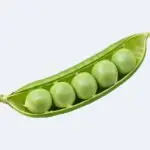
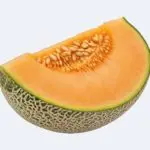
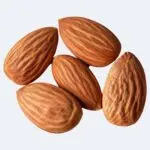
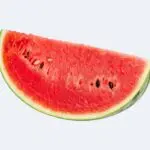
Whole foods carry sucrose, and fruit leads our USDA ranking. Per serving, mango leads with 11.5 g in 1 cup (165 g), followed by pineapple (9.88 g in 1 cup). Peas, cantaloupe and apricots come next.
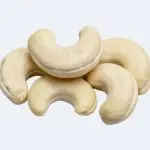
Per 100 g, mango (6.97 g) and pistachio nuts (6.87 g) top the list, ahead of pineapple, apricots and cashews. Per 100 kcal, cantaloupe (12.8 g) and apricots (12.2 g) lead, then pineapple and mango. The ranking below shows every amount.
The ranking shows the sucrose that occurs naturally in whole foods. Table sugar, candy, soft drinks and baked goods are not in it, and they supply most of the sucrose people add.
The 2025-2030 US Dietary Guidelines list label names to look for: sucrose, cane sugar, beet sugar, turbinado sugar and molasses, among others. They do not count the sugars that occur naturally in fruit and plain milk as added sugars. WHO’s free sugars, by contrast, include table sugar, honey, syrups, fruit juices and fruit juice concentrates.
Our arithmetic: WHO equates 50 g with about 12 level teaspoons, so a teaspoon is roughly 4 g. The 11.5 g of sucrose in a cup of mango weighs about as much as 3 teaspoons of table sugar. It comes with fiber, water and other sugars, though.
WHO says a can of sugar-sweetened soda has up to 40 g of sugars, about 10 teaspoons. The type of sugar depends on the drink.
Per serving. No daily amount is set, so bars compare each food with the top food.
Per 100 g. No daily amount is set, so bars compare each food with the top food.
Per 100 kcal: the same calories of each food, for a fair comparison. Bars compare each food with the top food.
Food labels have no Daily Value or Reference Intake for sucrose, so the % compares each food with the top food.
- 1.

- 2.

- 3.
- 4.
- 5.

- 6.

- 7.

- 8.

- 9.

- 10.



- 1.
- 2.
- 3.
- 4.
- 5.
- 6.
- 7.

- 8.
- 9.

- 10.


- 1.
- 2.
- 3.
- 4.
- 5.
- 6.
- 7.
- 8.
- 9.
- 10.

Sources
- U.S. Department of Agriculture, Agricultural Research Service. FoodData Central. Values as shown in the ranking above.
- U.S. Department of Health and Human Services and U.S. Department of Agriculture. Dietary Guidelines for Americans, 2025-2030. 2026.
- World Health Organization. Healthy diet. Fact sheet.
- World Health Organization. WHO calls on countries to reduce sugars intake among adults and children. News release. 2015.
How sucrose works
Sucrose digestion is textbook biochemistry, so this section leans on reviews and a few human physiology tests rather than on trials of health outcomes.
Four ideas cover it. The gut lining splits sucrose into glucose and fructose. Fructose eaten as sucrose is easier on the gut than fructose alone.
Mouth bacteria use sucrose to build plaque, and a missing enzyme causes trouble. Here is each one, and what has been seen in people.
The gut lining splits it into glucose and fructose
Sucrose is broken down before it crosses the gut wall. A group of brush border enzymes on the lining of the small intestine digests the disaccharides. Sucrase-isomaltase is the one that handles sucrose, and the structure of the human enzyme’s N-terminal catalytic domain was solved in 2010.
The two halves then take different routes in. Glucose crosses the brush border with the sodium-glucose transporter SGLT1, and fructose with the passive transporter GLUT5. One review notes that absorbing sugars from a disaccharide appears to have a kinetic (speed) advantage.
How the body handles sucrose, simplified. Not to scale.
Fructose goes mostly to the liver. A review in Physiological Reviews describes almost complete extraction there, and fast conversion into glucose, glycogen, lactate and fat. An older review ties most of fructose’s metabolic effects to its fast use by the liver.
Glucose carries on in the blood. In 12 people with type 2 diabetes, a diet with 19% of energy from sucrose did not worsen blood glucose compared with starch. So at that dose, sucrose did not raise blood glucose more than starch did.
The fructose half is less clear-cut. In 34 healthy men, 80 g a day of sucrose in drinks did not raise palmitate, a marker of fatty acid synthesis. But fasting long-chain acylcarnitines rose after sucrose as they did after fructose, which the authors read as impaired fat burning.
Fructose inside sucrose is easier on the gut than fructose alone
The gut can absorb only so much free fructose at a time. A review of the transporters says GLUT5 capacity may explain the malabsorption seen in some infants and adults.
Sucrose behaves differently. In a breath-hydrogen study, 5 of 10 healthy adults failed to fully absorb 25 g of fructose, and 8 of 10 failed with 50 g. None failed after up to 100 g of sucrose.
Adding glucose to fructose helped in a dose-dependent way. The chart puts the counts on one scale.
Healthy adults, out of 10, with fructose malabsorption (a breath hydrogen rise of 20 ppm or more), by what they ate, drawn to scale. Fructose doses were given as 10% solutions.
Mouth bacteria turn it into plaque and acid
Sucrose is also food for bacteria on the teeth. A review of the biology explains that Streptococcus mutans makes three different glucosyltransferases, enzymes that build glucans from sucrose.
The plaque matrix comes mainly from these enzymes, and from fructosyltransferases, acting on sucrose and starch breakdown products. Those enzymes stick to enamel and to other microbes, so the plaque gets sites for bacteria to attach and an insoluble frame.
A separate review adds that sugars are the substrate that lets acid-making bacteria flourish and make enamel-demineralizing acids. This is lab and review evidence, and the human data on caries are on the cards above.
How sucrose feeds tooth decay, from lab work and reviews. Not to scale.
A missing enzyme causes trouble
In congenital sucrase-isomaltase deficiency the enzyme is absent or defective. Sucrose reaches the colon undigested, where it ferments.
A review of disaccharide digestion calls the condition very rare except in Greenland. A Canadian study found one founder mutation, inherited from a shared ancestor, behind prevalence of about 3% among Inuit people. Milder gene variants may play a part in irritable bowel syndrome, and the cards above give the numbers.
What has been seen in people
Putting the cards together: the glucose and fructose from sucrose are absorbed well. Fructose handled as sucrose is easier on the gut than the same amount alone.
In large doses on top of the diet, sucrose added weight and fat in overweight adults. That was 28% of energy for 10 weeks in one trial, and 1 L of cola a day for 6 months in another. But when it replaced starch at the same energy, it did not worsen glucose or blood fats in a small type 2 diabetes crossover trial. It did not change children’s behavior either.
Cohort data are mixed and depend on how intake is measured: in EPIC-Norfolk the biomarker pointed one way and the diary the other. We found no long trial that fed moderate sucrose against starch at the same energy and tracked heart disease, diabetes or tooth decay.
Sources
- Gudmand-Høyer E, Skovbjerg H. Disaccharide digestion and maldigestion. Scand J Gastroenterol Suppl. 1996.
- Sim L, Willemsma C, Mohan S, et al. Structural basis for substrate selectivity in human maltase-glucoamylase and sucrase-isomaltase N-terminal domains. J Biol Chem. 2010.
- Wright EM, Martín MG, Turk E. Intestinal absorption in health and disease–sugars. Best Pract Res Clin Gastroenterol. 2003.
- Levin RJ. Digestion and absorption of carbohydrates–from molecules and membranes to humans. Am J Clin Nutr. 1994.
- Tappy L, Lê KA. Metabolic effects of fructose and the worldwide increase in obesity. Physiol Rev. 2010.
- Mayes PA. Intermediary metabolism of fructose. Am J Clin Nutr. 1993.
- Rumessen JJ, Gudmand-Høyer E. Absorption capacity of fructose in healthy adults. Comparison with sucrose and its constituent monosaccharides. Gut. 1986.
- Douard V, Ferraris RP. The role of fructose transporters in diseases linked to excessive fructose intake. J Physiol. 2013.
- Bowen WH, Koo H. Biology of Streptococcus mutans-derived glucosyltransferases: role in extracellular matrix formation of cariogenic biofilms. Caries Res. 2011.
- Sheiham A, James WP. Diet and dental caries: the pivotal role of free sugars reemphasized. J Dent Res. 2015.
- Hochuli M, Aeberli I, Weiss A, et al. Sugar-sweetened beverages with moderate amounts of fructose, but not sucrose, induce fatty acid synthesis in healthy young men: a randomized crossover study. J Clin Endocrinol Metab. 2014.
- Bantle JP, Swanson JE, Thomas W, Laine DC. Metabolic effects of dietary sucrose in type II diabetic subjects. Diabetes Care. 1993.
- Raben A, Vasilaras TH, Møller AC, Astrup A. Sucrose compared with artificial sweeteners: different effects on ad libitum food intake and body weight after 10 wk of supplementation in overweight subjects. Am J Clin Nutr. 2002.
- Maersk M, Belza A, Stødkilde-Jørgensen H, et al. Sucrose-sweetened beverages increase fat storage in the liver, muscle, and visceral fat depot: a 6-mo randomized intervention study. Am J Clin Nutr. 2012.
- Wolraich ML, Lindgren SD, Stumbo PJ, et al. Effects of diets high in sucrose or aspartame on the behavior and cognitive performance of children. N Engl J Med. 1994.
- Marcadier JL, Boland M, Scott CR, et al. Congenital sucrase-isomaltase deficiency: identification of a common Inuit founder mutation. CMAJ. 2015.
- Kuhnle GG, Tasevska N, Lentjes MA, et al. Association between sucrose intake and risk of overweight and obesity in a prospective sub-cohort of the European Prospective Investigation into Cancer in Norfolk (EPIC-Norfolk). Public Health Nutr. 2015.
How much sucrose is too much?
No daily need and no limit is set for sucrose alone. The limits that cover it are for free sugars and added sugars.
WHO advises under 10% of energy from free sugars. For a person of healthy body weight, it equates that with 50 g, about 12 level teaspoons. It says a further cut to 5% or less may give extra benefit.
The US Dietary Guidelines for 2025-2030 go further: no amount of added sugars is recommended. One meal should contain no more than 10 g of added sugars.
Sucrose inside whole fruit is not counted as added sugar by the US guidelines. So these limits are about the sugar bowl, sweets, sweetened drinks and baked goods. WHO and EFSA count sugars in honey, syrups, fruit juices and juice concentrates as free sugars.
For children, the guidelines advise avoiding added sugars during infancy and early childhood. They say no amount of added sugars is recommended at ages 5 to 10.
| Source | Group | Value | Notes |
|---|---|---|---|
| National Academies (IOM) 2005, RDA and AMDR | Adults | Digestible carbohydrate 130 g a day; 45 to 65% of energy | Total carbohydrate, not sucrose. Neither value is set for any single sugar. |
| National Academies 2005, added sugars | Everyone | Limit to no more than 25% of total energy | A suggested maximal intake, because data were too thin to set an upper level. About 125 g on 2,000 kcal. |
| WHO 2015, free sugars | Adults and children | Under 10% of energy (strong recommendation); below 5% (conditional) | 10% is 50 g, about 12 level teaspoons, for a person of healthy body weight. 5% is roughly 25 g, 6 teaspoons. Free sugars include sucrose, honey, syrups and fruit juices. |
| EFSA 2022, dietary sugars | Adults and children | No upper level or safe level could be set; intake of added and free sugars “as low as possible” in a nutritionally adequate diet | Covers added and free sugars as a class. Sucrose is one of the sugars assessed. |
| US Dietary Guidelines 2025-2030 | Everyone | No amount of added sugars is recommended; one meal no more than 10 g of added sugars | Avoid added sugars in infancy and early childhood. Sucrose, cane sugar, beet sugar, turbinado sugar and molasses are named as added sugars. About 2.4 teaspoons in 10 g (our arithmetic). |
| FDA label Daily Value | Nutrition Facts label | Added sugars 50 g a day | Based on a 2,000 kcal daily diet. FDA notes the Dietary Guidelines recommend limiting calories from added sugars to less than 10 percent of total calories per day. |
| American Heart Association 2009 | Most US women; most US men | No more than 100 calories; no more than 150 calories a day from added sugars | About 25 g and 38 g (our arithmetic at 4 kcal per g). |
Here is a worked example for a 2,000 kcal diet (our arithmetic). WHO’s 10% is 200 kcal, or 50 g, and its 5% is 25 g. A can of sugar-sweetened soda with up to 40 g of sugars, as WHO describes, would use most of the 10% allowance by itself.
Cohort data point the same way. In a Swedish cohort, people eating over 15% of energy as sucrose had a 37% higher risk of a coronary event than those under 5%. And EFSA found no level at which caries or metabolic risk stops rising.
We found no source that describes a deficiency from eating no sucrose. The 130 g carbohydrate RDA is for total digestible carbohydrate, so this page has no deficiency section.
Sources
- Institute of Medicine, Food and Nutrition Board. Dietary Reference Intakes for energy, carbohydrate, fiber, fat, fatty acids, cholesterol, protein, and amino acids. National Academies Press. 2005.
- Health Canada. Dietary reference intakes tables: reference values for macronutrients. 2005.
- World Health Organization. WHO calls on countries to reduce sugars intake among adults and children. News release. 2015.
- World Health Organization. Healthy diet. Fact sheet.
- EFSA Panel on Nutrition, Novel Foods and Food Allergens (NDA). Tolerable upper intake level for dietary sugars. EFSA J. 2022.
- U.S. Department of Health and Human Services and U.S. Department of Agriculture. Dietary Guidelines for Americans, 2025-2030. 2026.
- U.S. Food and Drug Administration. Added sugars on the Nutrition Facts label.
- Johnson RK, Appel LJ, Brands M, et al. Dietary sugars intake and cardiovascular health: a scientific statement from the American Heart Association. Circulation. 2009.
- Warfa K, Drake I, Wallström P, et al. Association between sucrose intake and acute coronary event risk and effect modification by lifestyle factors: Malmö Diet and Cancer Cohort Study. Br J Nutr. 2016.
Forms of sucrose: absorption and effects
Sucrose reaches people as white table sugar, as brown and raw cane sugars, and inside molasses, honey and syrups. It is also in whole fruit and in a hospital solution for newborns, and it is the standard that high-fructose corn syrup is compared with.
The honest bottom line: lab analyses describe the forms well, while trials of health outcomes are scarce. We found no trial of brown sugar against white sugar, none of cane sugar against beet sugar, and one small trial of honey against sucrose. The popular idea that brown, raw or cane sugar is healthier than white rests on antioxidant tests in a test tube.
In the trials above, sucrose was table sugar or the sugar in regular cola, at 70 g to 152 g a day. A result belongs to that form and dose.
Do not confuse sucrose with sucralose, a sweetener made by swapping three of sucrose’s hydroxyl groups for chlorine. Sucralose is sweeter and passes mostly unchanged through the body.
| Form | What it is | What studies show | Source |
|---|---|---|---|
| White table sugar | Refined sucrose from cane or beet. US guidelines list sucrose, cane sugar and beet sugar as added-sugar names | Refined white sugar had minimal antioxidant activity in a lab test. Trials on the cards used it at 70 g and 152 g a day, or as the sugar in regular cola | 1, 10 |
| Cane sugar versus beet sugar | The same molecule from a C4 plant (sugar cane) or a C3 plant (sugar beet) | The two can be told apart in the lab by carbon-13 patterns. We found no human trial comparing their health effects | 2 |
| Raw cane sugar and turbinado sugar | A Codex draft describes raw cane sugar as sucrose crystals covered with a film of cane molasses. Turbinado sugar is named as an added sugar by the US guidelines | Raw cane sugar scored 0.1 mmol per 100 g on a test-tube antioxidant assay. We found no trial of health outcomes. It counts as an added sugar | 11, 1, 10 |
| Brown sugar | A Codex draft describes soft brown sugar as a moist, light to dark brown sugar with sucrose plus invert sugar of not less than 88% | Brown sugar scored 0.2 to 0.7 mmol per 100 g on the same assay, a test-tube measure. We found no trial against white sugar, and it counts as an added sugar | 11, 1, 10 |
| Molasses | A dark syrup that clings to raw cane sugar crystals; the US guidelines name it as an added sugar | Dark and blackstrap molasses scored 4.6 to 4.9 mmol per 100 g on the assay, the highest of the sweeteners tested. No health trial found | 1, 10 |
| Honey | A mixed sugar syrup that WHO counts as free sugar | In a double-blind trial of 60 young adults, 70 g a day of honey improved blood fats while 70 g of sucrose worsened them. One small trial | 6, 9 |
| Maple syrup | A plant sap syrup that WHO counts as free sugar | Scored 0.2 to 0.7 mmol per 100 g on the assay. We found no trial against sucrose | 1, 9 |
| High-fructose corn syrup (HFCS) | Glucose and fructose as free monosaccharides, not bound as in sucrose. EFSA: typically 42% fructose in processed foods and 55% in sweetened drinks. Sucrose is 50% fructose | Measured in drinks: fructose averaged 59% of the HFCS used (range 47 to 65%) in 23 beverages, and 60.6% in a later analysis. In a 12-week weight-loss trial, sucrose and HFCS gave similar results (industry funded) | 8, 4, 3, 5, 7 |
| Whole fruit and vegetables | Sucrose inside food with fiber and water. The US guidelines do not count the sugars in fruit and plain milk as added sugars | Mango, pineapple, peas and apricots lead our ranking. We found no trial that tested the sucrose in whole fruit against table sugar | 10 |
| Fruit juice and juice concentrates | Free sugars under WHO’s and EFSA’s definitions, though the sugar occurs naturally | Counted toward the free-sugar limits | 9, 8 |
| 24% sucrose solution for newborns | A small oral dose given by hospital staff before a painful procedure such as a heel lance | Lowers pain scores in Cochrane reviews, though one trial found no change in pain-specific brain activity | 12, 13 |
| Sucralose (not sucrose) | Made by selective substitution of sucrose hydroxyl groups with chlorine; about 600 times as sweet | In 8 men given a labeled dose, 78.3% of the radioactivity was in feces within 5 days and 14.5% in urine, essentially unchanged sucralose in feces | 14, 15 |
Here are the form-specific studies, strongest evidence first, 6 in all.
All 6 studies, strongest evidence first
In overweight dieters, sucrose and high-fructose corn syrup gave similar weight loss
In this randomized, double-blind trial, people spent 12 weeks on four equally reduced-calorie diets (average deficit 309 kcal), plus an exercise-only group. The diets had different prescribed levels of sucrose or high-fructose corn syrup (HFCS). Body mass, BMI, percent body fat, waist and fat mass fell in all four diet groups. The Corn Refiners Association, an industry group, funded it with a grant, and one author reports receiving that research funding.
70 g of honey a day improved blood fats; sucrose worsened them
In this double-blind randomized trial, 60 healthy adults aged 18 to 30 took 70 g a day of honey or of sucrose. Honey lowered total cholesterol, triglycerides and LDL and raised HDL. Sucrose raised total cholesterol, triglycerides and LDL and lowered HDL. These results were adjusted for age, physical activity and some nutrient intake. The abstract reports the direction of change but not its size, and the authors say more trials are needed to confirm it. One small trial, and honey is also a free sugar.
Review: no direct evidence HFCS is metabolically worse than sucrose
This is a narrative review in Physiological Reviews. Our main sources of fructose are sucrose from beet or cane, HFCS, fruits and honey. The liver extracts fructose almost completely and quickly turns it into glucose, glycogen, lactate and fat. The authors judge that very high fructose intakes harm people as well as rodents, and that evidence for moderate doses is not unequivocal. Sweetened drinks, whether made with sucrose or a glucose-fructose mix, go with higher energy intake and weight in epidemiological studies.
Drinks made with HFCS held 60.6% fructose; sucrose is half and half
Independent laboratories analyzed sugar-sweetened beverages and juice drinks, made with or without HFCS, by three methods. HFCS drinks had a fructose-to-glucose ratio of about 60:40, so 50% more fructose than glucose. Some pure fruit juices had twice as much fructose as glucose (67% of sugars). The authors conclude such drinks have a sugar profile very different from sucrose; this is a composition result, not a health trial.
Lab test: brown sugar, maple syrup, honey had more antioxidant capacity
Major US brands of 12 sweetener types, plus refined white sugar and corn syrup, were tested with the FRAP assay, a test-tube measure. Brown sugar, maple syrup and honey had 0.2 to 0.7 mmol of antioxidant capacity per 100 g. Refined sugar, corn syrup and agave nectar had under 0.01 mmol per 100 g. Raw cane sugar had 0.1, and dark and blackstrap molasses 4.6 to 4.9. Replacing 130 g a day of refined sugar with alternatives could add 2.6 mmol a day, the authors calculate. That is about what a serving of berries or nuts gives, and no health outcome was measured.
Carbon-13 NMR can tell cane sucrose from beet sucrose
The method was validated on blends of cane and beet sugar from 0 to 100 wt% beet. It was applied to ten commercial sucrose-based sugar products of different botanical origin. Cane is a C4 plant and beet a C3 plant. The aim was to catch cane sugar products falsified with cheaper beet sugar. The two sugars differ in carbon-13 pattern, which says nothing about health. We found no human trial that compared cane sugar with beet sugar.
Sources
- Phillips KM, Carlsen MH, Blomhoff R. Total antioxidant content of alternatives to refined sugar. J Am Diet Assoc. 2009.
- Monakhova YB, Diehl BW. Authentication of the origin of sucrose-based sugar products using quantitative natural abundance 13C NMR. J Sci Food Agric. 2016.
- Walker RW, Dumke KA, Goran MI. Fructose content in popular beverages made with and without high-fructose corn syrup. Nutrition. 2014.
- Ventura EE, Davis JN, Goran MI. Sugar content of popular sweetened beverages based on objective laboratory analysis: focus on fructose content. Obesity (Silver Spring). 2011.
- Lowndes J, Kawiecki D, Pardo S, et al. The effects of four hypocaloric diets containing different levels of sucrose or high fructose corn syrup on weight loss and related parameters. Nutr J. 2012.
- Rasad H, Entezari MH, Ghadiri E, et al. The effect of honey consumption compared with sucrose on lipid profile in young healthy subjects (randomized clinical trial). Clin Nutr ESPEN. 2018.
- Tappy L, Lê KA. Metabolic effects of fructose and the worldwide increase in obesity. Physiol Rev. 2010.
- EFSA Panel on Nutrition, Novel Foods and Food Allergens (NDA). Tolerable upper intake level for dietary sugars. EFSA J. 2022.
- World Health Organization. Healthy diet. Fact sheet.
- U.S. Department of Health and Human Services and U.S. Department of Agriculture. Dietary Guidelines for Americans, 2025-2030. 2026.
- FAO/WHO Codex Alimentarius. Proposed draft amendment for the Standard for Sugars. Draft at Step 5/8.
- Stevens B, Yamada J, Ohlsson A, et al. Sucrose for analgesia in newborn infants undergoing painful procedures. Cochrane Database Syst Rev. 2016.
- Yamada J, Bueno M, Santos L, et al. Sucrose analgesia for heel-lance procedures in neonates. Cochrane Database Syst Rev. 2023.
- Knight I. The development and applications of sucralose, a new high-intensity sweetener. Can J Physiol Pharmacol. 1994.
- Roberts A, Renwick AG, Sims J, Snodin DJ. Sucralose metabolism and pharmacokinetics in man. Food Chem Toxicol. 2000.
Is sucrose bad for you? Limits and who should watch it
Sucrose in food is safe for most people in moderate amounts, and no source we found sets a toxic dose. The limits that apply are limits on free and added sugars.
EFSA could not set a tolerable upper intake level for dietary sugars and says added and free sugars should be as low as possible. WHO advises under 10% of energy, and the National Academies suggest no more than 25%. The groups below deserve more care.
- Teeth. Caries is the best-established harm. EFSA calls dietary sugars a well-established hazard, and caries was lower when free sugars gave under 10% of energy. A review describes a log-linear dose-response between sucrose intake and caries.
- Weight, liver fat and blood fats. Large sucrose doses added weight, fat and blood pressure in overweight adults in the 10-week trial. In the 6-month trial, 1 L of sucrose cola a day raised liver fat and triglycerides. A pooled analysis of free sugars as a class found higher triglycerides and LDL cholesterol. In healthy men, 80 g a day of sucrose did not raise the fatty acid synthesis marker that fructose did.
- Diabetes. In 12 people with type 2 diabetes, a diet with 19% of energy from sucrose did not worsen blood glucose or blood fats versus starch. Swapping sucrose for fructose lowers the peak after a meal. EFSA rates the certainty of a causal link between added or free sugars and type 2 diabetes as low. People with diabetes should follow the carbohydrate plan from their care team.
- Congenital sucrase-isomaltase deficiency. A rare inherited condition causing diarrhea, cramps and bloating after sucrose and starch, with a prevalence of about 3% among Inuit people. The sacrosidase trial in 28 children eased symptoms on a normal diet. Gene variants with less enzyme activity went with a higher risk of irritable bowel syndrome. Ask a doctor if symptoms follow sweets and starchy meals.
- Hereditary fructose intolerance. GeneReviews lists sucrose with fructose and sorbitol as exposures that cause low blood sugar, vomiting and liver and kidney harm in this rare condition. It says dietary restriction of fructose, sucrose, sucralose and sorbitol is the cornerstone of treatment. It also flags some medicines, formulas and two sucrose-containing rotavirus vaccines as potentially harmful.
- Babies and young children. The US guidelines advise avoiding added sugars in infancy and early childhood. The hospital use of 24% sucrose for newborn pain is a medical procedure, with minor adverse events in the Cochrane reviews.
How to eat less sucrose
- Start with drinks. In the 10-week trial, most of the 152 g of sucrose a day came as drinks. In the 6-month trial, the cola group had more liver fat than the milk, diet cola and water groups. WHO says a can of sugar-sweetened soda has up to 40 g of sugars.
- Read the label names. The US guidelines list sucrose, cane sugar, beet sugar, turbinado sugar and molasses as names for added sugars. Honey, syrups, glucose, fructose and fruit juice concentrate are on the list too.
- Keep the fruit, trim the added. The sucrose in whole fruit is not counted as added sugar. The guidelines say one meal should have no more than 10 g of added sugars, about 2.4 teaspoons (our arithmetic).
Sources
- EFSA Panel on Nutrition, Novel Foods and Food Allergens (NDA). Tolerable upper intake level for dietary sugars. EFSA J. 2022.
- World Health Organization. Healthy diet. Fact sheet.
- U.S. Department of Health and Human Services and U.S. Department of Agriculture. Dietary Guidelines for Americans, 2025-2030. 2026.
- Institute of Medicine, Food and Nutrition Board. Dietary Reference Intakes for energy, carbohydrate, fiber, fat, fatty acids, cholesterol, protein, and amino acids. National Academies Press. 2005.
- Moynihan PJ, Kelly SA. Effect on caries of restricting sugars intake: systematic review to inform WHO guidelines. J Dent Res. 2014.
- Raben A, Vasilaras TH, Møller AC, Astrup A. Sucrose compared with artificial sweeteners: different effects on ad libitum food intake and body weight after 10 wk of supplementation in overweight subjects. Am J Clin Nutr. 2002.
- Maersk M, Belza A, Stødkilde-Jørgensen H, et al. Sucrose-sweetened beverages increase fat storage in the liver, muscle, and visceral fat depot: a 6-mo randomized intervention study. Am J Clin Nutr. 2012.
- Te Morenga LA, Howatson AJ, Jones RM, Mann J. Dietary sugars and cardiometabolic risk: systematic review and meta-analyses of randomized controlled trials of the effects on blood pressure and lipids. Am J Clin Nutr. 2014.
- Hochuli M, Aeberli I, Weiss A, et al. Sugar-sweetened beverages with moderate amounts of fructose, but not sucrose, induce fatty acid synthesis in healthy young men: a randomized crossover study. J Clin Endocrinol Metab. 2014.
- Bantle JP, Swanson JE, Thomas W, Laine DC. Metabolic effects of dietary sucrose in type II diabetic subjects. Diabetes Care. 1993.
- Evans RA, Frese M, Romero J, et al. Fructose replacement of glucose or sucrose in food or beverages lowers postprandial glucose and insulin without raising triglycerides: a systematic review and meta-analysis. Am J Clin Nutr. 2017.
- Treem WR, McAdams L, Stanford L, et al. Sacrosidase therapy for congenital sucrase-isomaltase deficiency. J Pediatr Gastroenterol Nutr. 1999.
- Marcadier JL, Boland M, Scott CR, et al. Congenital sucrase-isomaltase deficiency: identification of a common Inuit founder mutation. CMAJ. 2015.
- Henström M, Diekmann L, Bonfiglio F, et al. Functional variants in the sucrase-isomaltase gene associate with increased risk of irritable bowel syndrome. Gut. 2018.
- Gaughan S, Ayres L, Baker PR II. Hereditary fructose intolerance. In: Adam MP, et al., editors. GeneReviews. University of Washington, Seattle. 1993-2026.
- Stevens B, Yamada J, Ohlsson A, et al. Sucrose for analgesia in newborn infants undergoing painful procedures. Cochrane Database Syst Rev. 2016.
- World Health Organization. WHO calls on countries to reduce sugars intake among adults and children. News release. 2015.
History of sucrose
Sugar beet came late. Two papers from 1947 mark the 200th anniversary of Andreas Marggraf’s discovery of sugar in the beet, which puts it in 1747. One of them calls beet sugar a German invention.
Today the sucrose from cane and from beet is the same molecule. Only lab methods that read its carbon-13 pattern can tell them apart.
Sucrose also gave dentistry its most famous experiment. The Vipeholm dental caries study, done in Sweden and reported in 1954, observed 436 individuals for five years at different levels of carbohydrate intake.
Later reviews describe its main conclusion as high caries activity when sugars in sticky foods were eaten between meals. One review notes that about 40% of those who ate toffee very often had no new cavity over 2 years, a sign of individual susceptibility.
A 2026 ethics paper counts the Vipeholm dental caries experiments among infamous examples of research that abused people without the capacity to consent.
The sugar industry’s role is a story of its own. From 1957, John Yudkin argued that sucrose was at least as important as fat in heart disease. In 1964 he and Roddy reported on the levels of dietary sucrose in patients with occlusive atherosclerotic disease (blocked arteries).
Industry documents show that in 1965 the Sugar Research Foundation paid for a literature review that played down the evidence on sucrose. It was published in 1967 without disclosing the funding. The Foundation also ended a rat study of sucrose and blood fats in 1971 without publishing it.
A third analysis looked at the 1971 call for research of the National Institute of Dental Research. It found that 78% of the cane and beet sugar industry’s submission was carried into that call. Research that could have harmed the industry was left out. These are historical analyses of industry documents, which is why the cards state funding where it is known.
In 1960, Weijers and colleagues described diarrhea caused by deficiency of sugar-splitting enzymes in The Lancet. It is the earliest report on this condition we found. Later work tied it to the sucrase-isomaltase gene, and in 2015 a Canadian team found the founder mutation behind its high prevalence in Inuit people.
Sources
- Habel H. Beet sugar, a German invention; a reminder of Marggraf’s discovery of sugar in the beet 200 years ago. Pharm Zentralhalle Dtschl. 1947.
- Häussler EP. Andreas Siegmund Marggraf and two hundred years of beet sugar. Chimia (Aarau). 1947.
- Monakhova YB, Diehl BW. Authentication of the origin of sucrose-based sugar products using quantitative natural abundance 13C NMR. J Sci Food Agric. 2016.
- Gustafsson BE, Quensel CE, Lanke LS, et al. The Vipeholm dental caries study; the effect of different levels of carbohydrate intake on caries activity in 436 individuals observed for five years. Acta Odontol Scand. 1954.
- Gupta P, Gupta N, Pawar AP, et al. Role of sugar and sugar substitutes in dental caries: a review. ISRN Dent. 2013.
- Twetman S. Who gets dental caries? A comprehensive review. Dent J (Basel). 2026.
- Broström L, Nilsson M. Including research subjects without decision-making capacity only as last resort. Ethics Hum Res. 2026.
- Yudkin J, Roddy J. Levels of dietary sucrose in patients with occlusive atherosclerotic disease. Lancet. 1964.
- Kearns CE, Schmidt LA, Glantz SA. Sugar industry and coronary heart disease research: a historical analysis of internal industry documents. JAMA Intern Med. 2016.
- Kearns CE, Apollonio D, Glantz SA. Sugar industry sponsorship of germ-free rodent studies linking sucrose to hyperlipidemia and cancer: an historical analysis of internal documents. PLoS Biol. 2017.
- Kearns CE, Glantz SA, Schmidt LA. Sugar industry influence on the scientific agenda of the National Institute of Dental Research’s 1971 National Caries Program: a historical analysis of internal documents. PLoS Med. 2015.
- Weijers HA, van de Kamer JH, Mossel DA, Dicke WK. Diarrhoea caused by deficiency of sugar-splitting enzymes. Lancet. 1960.
- Marcadier JL, Boland M, Scott CR, et al. Congenital sucrase-isomaltase deficiency: identification of a common Inuit founder mutation. CMAJ. 2015.
Frequently asked questions about sucrose
Is sucrose the same as sucralose?
No. Sucrose is table sugar, made of glucose and fructose. Sucralose is a sweetener made by swapping sucrose’s hydroxyl groups for chlorine, about 600 times as sweet. In a study of 8 men given a labeled dose, 78.3% of it was in feces within 5 days, essentially unchanged, and 14.5% in urine. People with hereditary fructose intolerance are told to avoid both sucrose and sucralose, according to GeneReviews.
Is brown sugar healthier than white sugar?
Not shown. Brown sugar scored 0.2 to 0.7 mmol per 100 g on a test-tube antioxidant assay, against under 0.01 for refined sugar. That is a lab measure, not a health result. We found no trial of brown sugar against white sugar. The US guidelines count brown sugar, molasses and turbinado sugar as added sugars.
Is cane sugar better than beet sugar?
Chemically they are the same sucrose. Only lab methods that read the carbon-13 pattern can tell cane (a C4 plant) from beet (a C3 plant). We found no human trial that compared them. Both count as added sugar in the US guidelines.
Is sucrose worse than fructose or high-fructose corn syrup?
Sucrose is half glucose and half fructose, while drinks made with HFCS held about 60% fructose in one lab analysis. A review in Physiological Reviews found no direct evidence that HFCS has worse metabolic effects than sucrose. A 12-week weight-loss trial found similar results, though industry funded it. Replacing sucrose with fructose lowers the peak glucose after a meal, which is why the EU has a claim. But very high fructose intakes harm people.
Does sugar make children hyperactive?
Trials say no. A meta-analysis of 23 blinded studies found no effect of sugar on children’s behavior or thinking. A trial with 3 weeks per diet found no effect of a high-sucrose diet in 25 preschool and 23 school-age children. In another trial, mothers told their sons had eaten sugar rated them as more hyperactive, though all got a placebo.
Does sucrose cause cavities?
Yes, in the sense that matters for teeth. EFSA calls dietary sugars a well-established hazard for dental caries, and mouth bacteria use sucrose to build plaque and make acid. Caries was lower when free sugars gave under 10% of energy. No upper level was set because no safe level of intake could be identified.
Is the sucrose in fruit the same as table sugar?
The molecule is the same: glucose joined to fructose. In fruit it comes with fiber and water, and the US guidelines do not count the sugars in fruit and plain milk as added sugars. A cup of mango holds 11.5 g of sucrose in our USDA ranking. Fruit juice and concentrates are different: WHO counts them as free sugars.
What is sucrose intolerance?
Congenital sucrase-isomaltase deficiency, a rare inherited lack of the enzyme that splits sucrose, causes diarrhea, cramps and gas after sugar and starch. About 3% of Inuit people may have it. In a trial of 28 children, a yeast-derived enzyme liquid, sacrosidase, cut stools and symptoms. A doctor can confirm it, and the CMAJ study suggests targeted testing for the common Inuit mutation in Inuit patients with chronic diarrhea.