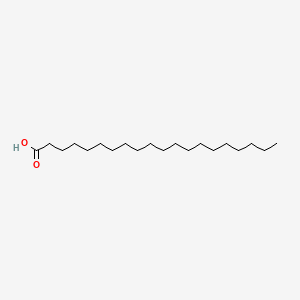
Arachidic acid is a saturated fat with 20 carbons in a straight chain and no double bonds. It is also called eicosanoic or icosanoic acid (C20:0; formula C20H40O2). Researchers group it with behenic acid (C22:0) and lignoceric acid (C24:0) as the very long chain saturated fatty acids, or VLSFAs. These are saturated fats with 20 or more carbons.
It is a minor fat. In a study of 301 peanut varieties, it made up 0.93% to 2.42% of the seed’s fatty acids, and macadamia nuts lead our food ranking. Your body also makes it. Gene variants that change its blood level sit in genes for building sphingolipids, a family of membrane fats.
Do not confuse it with arachidonic acid (ARA, 20:4 n-6). Both have 20 carbons, but arachidonic acid has four double bonds and arachidic acid has none. Even researchers slip: the abstract of a 2021 kidney transplant study calls C20:0 arachidonic acid.
The name, taken from the peanut, does not make it an allergen either. A review explains that the protein left in an oil is what causes allergic reactions, and refining removes almost all of it. In a challenge trial of 60 peanut-allergic people, none reacted to refined peanut oil.
The health interest comes from blood tests. Large cohorts follow big groups of people for years. In these studies, people with higher blood arachidic acid had less type 2 diabetes, heart failure and atrial fibrillation. But their risk of death was no lower in the one study that looked.
These are observational findings, and diet explains little of the blood level. We found no trial of arachidic acid itself, no Daily Value from the FDA and no EU Reference Intake. We also found no health claim for it in the annex of Regulation (EU) No 432/2012.
Health benefits of arachidic acid
The top findings from 24 studies, strongest evidence first
What the stars mean
- Strong. Several randomized trials, pooled in a meta-analysis, point the same way, or regulators (FDA or EFSA) have approved the claim.
- Moderate. Good randomized trials support it, but there are fewer of them, or their results vary.
- Limited. Small, short or single trials, or mixed results. Promising, but it needs confirmation.
Population and lab studies get no stars: they show a link or a mechanism, not proof.
How we rate evidence →- ★★No reactions to refined peanut oilIn 60 people with proven peanut allergy, none reacted to refined peanut oil in a blinded test. Six people (10%) reacted to crude oil, which the authors say should still be avoided, so this tests the oil, not arachidic acid.
- ★Lower LDL in two of three macadamia trialsCompared with a typical American diet, LDL was lower on macadamia diets in two trials (3.22 against 3.37 mmol/L, and 3.14 against 3.44 mmol/L). Adding macadamia nuts to the usual diet for 8 weeks did not clearly change LDL or weight, and none of this is arachidic acid alone.
- ★Peanuts lowered cholesterol ratios versus peanut-oil butterOver 6 months in 63 healthy adults, 25 g of peanuts a day lowered total and LDL to HDL cholesterol ratios versus a peanut-oil butter. Peanuts are a whole food, not arachidic acid alone.
- Population studyLinked to lower type 2 diabetes riskPeople near the top of blood arachidic acid levels had 0.78 times the diabetes risk of people near the bottom, in 12 cohorts. In exploratory models that also adjusted for palmitic acid and triglycerides, the link disappeared.
- Population studyLinked to a lower risk of heart failureIn a study of 4,249 older adults, the top fifth of blood arachidic acid had 0.72 times the risk of heart failure. In another study, the top quarter had 0.61 times the risk.
All 24 studies, strongest evidence first
Nobody with peanut allergy reacted to refined peanut oil
In a university hospital unit, 60 people with proven peanut allergy got both refined and crude peanut oil in a blinded test. None reacted to refined oil, but 6 (10%) reacted to crude oil, much less severely than they had reported before. The authors concluded that crude peanut oil should still be avoided and suggested labels that tell refined from crude. This tests the oil, not arachidic acid.
Skin-roasted peanuts lowered total and LDL to HDL ratios against peanut-oil butter
For 6 months, 63 healthy adults in the ARISTOTLE trial added peanuts, peanut butter or a control butter of peanut oil to their usual diet. They ate 25 g a day of peanuts, 32 g a day of peanut butter or 32 g a day of control butter. Peanuts are a whole food with many fats, fiber and polyphenols, not arachidic acid alone. The paper also pooled 11 trials: peanuts lowered triglycerides a little (mean difference −0.13), and people at high cardiometabolic risk gained weight (0.97). Some authors report fees or support from food industry groups, including a walnut commission and the International Nut Council.
Over 8 weeks, macadamia nuts did not clearly change LDL or weight
35 adults with abdominal obesity (extra waist fat) ate their usual diet with macadamia nuts for 8 weeks, and without them for 8 weeks. The nuts gave about 15% of daily calories, with a 2-week break between periods. Total cholesterol fell 2.1% and LDL 4% (4.7 mg/dL), but both changes could be chance. Lipids fell more in people with overweight than with obesity. Macadamia nuts top our arachidic acid ranking, but they also change the mix of every other fat.
A macadamia diet lowered LDL cholesterol in 30 volunteers
Volunteers aged 18 to 53 ate three diets for 30 days each, in random order. These were a typical American diet high in saturated fat, an American Heart Association Step 1 diet and a macadamia diet. On the macadamia diet, LDL cholesterol was 3.22 mmol/L, against 3.37 mmol/L on the typical diet. Total cholesterol was 4.95 mmol/L against 5.20 mmol/L. The macadamia diet was high in monounsaturated fat, so the result says little about arachidic acid.
A macadamia-rich diet lowered LDL cholesterol in 25 adults
Adults with mildly high cholesterol ate each diet for 5 weeks, in random order, with all their food provided. LDL cholesterol was 3.14 mmol/L on the macadamia diet against 3.44 mmol/L on an average American diet, and triglycerides did not change. The macadamia diet gave 42.5 g (1.5 ounces) of nuts per 2,100 kcal. It supplied 7% of energy as saturated fat, against 13% on the American diet. The drop comes from swapping fats and nuts together, so it is not an effect of arachidic acid.
Higher blood arachidic acid went with less diabetes in 12 cohorts
The pooled analysis followed 51,431 people, and 14,276 developed type 2 diabetes. People at the 90th percentile of blood arachidic acid had 0.78 times the risk of people at the 10th. Behenic acid (0.84) and lignoceric acid (0.75) gave similar results. But in exploratory models that also adjusted for palmitic acid and triglycerides the link disappeared, so it may run through those two.
The top quarter of plasma arachidic acid had 47% lower diabetes risk
The Cardiovascular Health Study followed 3,179 older adults (mean age 75) to 2011, and 284 developed diabetes. After adjusting for triglycerides and palmitic acid, the lower risk shrank to 32%. Behenic acid (33% lower) and lignoceric acid (37% lower) lost their significance after the same adjustment, so they could be chance. Only arachidic acid stayed significant.
Top quarter of plasma arachidic acid had about half the diabetes risk
Two US cohorts, the Nurses’ Health Study and Health Professionals Follow-Up Study, tracked type 2 diabetes in 2,854 women and 2,831 men. Against the bottom quarter, the top group had 0.51 times the risk (243 cases in 39,941 person-years), adjusted for lifestyle and diet. Behenic acid (0.43) and lignoceric acid (0.40) were similar. Intakes of peanuts, peanut butter, vegetable fat and dairy fat were only weakly linked to these blood levels (correlations of 0.19 or less).
The same fat pointed both ways for diabetes, depending on its carrier
The EPIC-Potsdam case-cohort study, with 774 diabetes cases, measured very long chain saturated fats in 12 lipid classes. Ceramides carrying C20:0 went with lower diabetes risk (hazard ratio 0.52), but dihydroceramides carrying it went with higher risk (1.36). C20:0 was spread across more lipid classes than C22:0 and C24:0. Most links appeared only after the authors accounted for correlated lipids, which suggests that one blood level can hide opposite signals.
A blood marker of 6 months of peanuts went with less diabetes
In ARISTOTLE, 63 healthy young adults ate 25 g a day of roasted peanuts, 32 g of peanut butter or 32 g of peanut-oil butter. The 51 blood fatty acid sums that changed were mostly in very long chain saturated lipids, especially sphingolipids, and were combined into a signature. In EPIC-Potsdam (774 diabetes and 547 cardiovascular cases), each standard deviation went with 0.89 times the diabetes risk but no link with cardiovascular disease (1.01). Body mass index could explain 89% (57% to 100%) of the diabetes link, a hypothesis-generating result; the signature is not arachidic acid alone.
The top fifth of arachidic acid had less heart failure
The Cardiovascular Health Study followed 4,249 older adults: 1,304 heart failure cases in 45,030 person-years. The top group had 0.72 times the risk, adjusted for major risk factors and other circulating fatty acids. Behenic acid (0.72) and lignoceric acid (0.67) were similar. The pattern looked alike for both main types of heart failure (preserved and reduced ejection fraction).
Top quarter of arachidic acid had 0.61 times the heart failure risk
The Multi-Ethnic Study of Atherosclerosis followed 6,408 US adults for a median 14 years, and 320 developed heart failure. The comparison was with the bottom quarter. Behenic acid (0.62) and stearic acid (0.91 per 1% rise) also went with lower risk. The authors call very long chain saturated fats promising markers that need mechanism studies.
More arachidic acid, less atrial fibrillation; palmitic acid the opposite
The Cardiovascular Health Study followed 2,899 older adults for a median 11.2 years, with 707 cases of atrial fibrillation (an irregular heartbeat). The top quarter of arachidic acid had 0.78 times the risk, while palmitic acid had 1.48. Stearic (0.76), behenic (0.62) and lignoceric acid (0.68) also went with lower risk. The authors stress the split between palmitic acid and the longer saturated fats.
Very long chain saturated fats went with less coronary heart disease
Nested case-control studies compared 794 people with coronary heart disease and 1,233 controls in the Nurses’ Health Study and Health Professionals Follow-Up Study. Top against bottom fifth, the plasma sum of arachidic, behenic and lignoceric acid had 0.48 times the risk. That was after adjusting for lifestyle, diet, omega-3 and trans fats; in red blood cells the trend could be chance (0.66). The abstract gives no result for arachidic acid alone.
Higher arachidic acid went with less cardiovascular disease in 7 studies
This meta-analysis (a study that pools the results of earlier studies) covered 8,592 people and 3,172 cardiovascular events. The highest circulating level had 0.67 times the risk of the lowest; behenic acid gave 0.66 and lignoceric acid 0.57. In the paper’s own Chinese cohort of 2,198 adults, the result for new carotid plaque in women was 0.80, which could be chance. Men showed no link.
More arachidic acid in red blood cells, 30% lower cardiac arrest risk
This Seattle case-control study compared 265 people who had a sudden cardiac arrest outside hospital with 415 community controls. The cases had no known heart disease, and controls were matched by age, sex and year. The lower risk was per standard deviation higher arachidic acid, and it held after adjusting for omega-3 and trans fats. Behenic acid (odds ratio 0.71) and lignoceric acid (0.79) were similar.
Plasma arachidic acid was not linked to death from any cause
The Cardiovascular Health Study followed 3,941 older adults from 1992 to 2011, and 3,134 died. Behenic and lignoceric acid were linked: top against bottom fifth, the hazard ratio was 0.85 for behenic acid and 0.80 for lignoceric acid. Palmitic acid had 1.25. One author reports honoraria and consulting for food and drug companies.
No clear link between arachidic acid and kidney disease in 13 cohorts
This meta-analysis covered 18,193 people in 9 countries, with 2,554 new cases of chronic kidney disease over a weighted median 7.6 years. Stearic acid went with lower risk: 0.87 times per interquintile range. No other saturated fat, including arachidic acid, had a clear link.
More arachidic acid, fewer infection deaths after kidney transplant
Researchers followed 680 kidney transplant recipients for a median 5.6 years; 146 died, 41 of them from infection. Each standard deviation higher arachidic acid went with 0.53 times the risk of death from infection. All three very long chain saturated fats were lower in recipients than in 193 healthy controls. For death from any cause, only behenic acid was clearly linked (0.79). The abstract calls C20:0 arachidonic acid, a slip: C20:0 is arachidic acid.
Blood arachidic acid was not linked to thinking skills in older adults
This cross-sectional study used 2011 to 2014 data from NHANES, a US national health survey. It measured serum (blood) fatty acids in 1,366 adults aged 60 and over (690 women, 676 men). C23:0 went with better global cognition, an overall thinking score, and in women only, behenic and lignoceric acid went with better scores. A single survey (a snapshot in time) cannot show cause.
Higher blood arachidic acid went with more colorectal cancer in China
This case-control study compared 680 people with colorectal cancer and 680 matched controls. The very long chain saturated fats together went with less cancer (odds ratio 0.51, top against bottom quarter), and total saturated fats with more (2.64). Behenic and lignoceric acid went with less cancer; lauric, myristic, palmitic and heptadecanoic acid went with more. The abstract gives no number for arachidic acid alone.
More arachidic acid in the diet, lower odds of metabolic syndrome
This was Korea’s 2013 national survey. It is a cross-sectional design (a single snapshot), so it cannot show that the fat caused the difference. Higher intake of very long chain saturated fats also went with lower triglycerides. The foods behind the intake were not separated in the abstract.
Alcohol went with lower blood arachidic acid; peanut intake did not
This review covered 12 mostly cross-sectional (snapshot) studies. Peanut intake went with behenic and lignoceric acid, not arachidic acid. Physical activity went with higher behenic and lignoceric acid, and results for smoking conflicted. Most analyses did not adjust for confounders (other factors that could explain a link), so the authors call the evidence limited.
In rats, arachidic acid raised relative liver weight and liver macrophages
Rats with high blood sugar got 0.3 mg of arachidic acid a day for 20 days. Some also got kojibiose, a prebiotic sugar that eased the liver changes. Arachidic acid raised the liver’s share of body weight and liver macrophages (immune cells) by 11%. This is an animal test at an unknown human equivalent, and we found no human study of arachidic acid on its own.
Foods high in arachidic acid
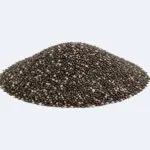
Nuts and seeds fill the top of our USDA ranking. Per serving, macadamia nuts lead with 0.55 g in 1 oz (28 g). That is about six times hemp seeds at 0.09 g in 3 tbsp (30 g) (our arithmetic). Cashews follow at 0.08 g, then pine nuts and pumpkin seeds at 0.06 g and Brazil nuts at 0.05 g, each in 1 oz.
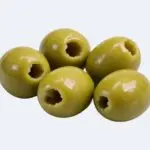
The top 10 are all nuts and seeds. The first other food is farmed Atlantic salmon, with 0.02 g in 3 oz (85 g). Per 100 g, the order is macadamia nuts 1.94 g, hemp seeds 0.31 g, cashews 0.27 g and pine nuts 0.23 g. Per 100 kcal, olives appear at 0.05 g, level with cashews.
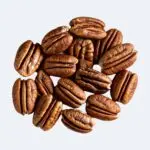
Peanuts gave the fat its name, but they are not in our top 10, and our food page for peanuts shows no arachidic acid value. The best figure we found is from a study of 301 peanut varieties grown in Korea. Arachidic acid was 0.93% to 2.42% of the seed’s fatty acids, and it did not clearly differ between landraces, cultivars and breeding lines.
The name comes from Arachis, the peanut genus. Eating more macadamia nuts to raise your intake is a stretch, though. A serving gives about half a gram, and we found no trial that shows a benefit from raising it.
Roasting does not seem to matter much. In a study of raw and roasted macadamia nuts from two varieties grown in China, roasting changed fatty acid content only a little. We found no study of how refining or frying changes arachidic acid.
Per serving. No daily amount is set, so bars compare each food with the top food.
Per 100 g. No daily amount is set, so bars compare each food with the top food.
Per 100 kcal: the same calories of each food, for a fair comparison. Bars compare each food with the top food.
Food labels have no Daily Value or Reference Intake for arachidic acid, so the % compares each food with the top food.
- 1.
- 2.
- 3.
- 4.
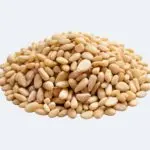
- 5.
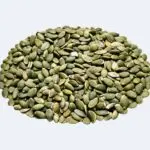
- 6.
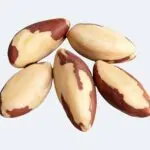
- 7.
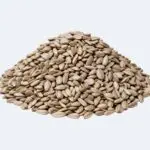
- 8.

- 9.
- 10.


- 1.
- 2.
- 3.
- 4.
- 5.
- 6.
- 7.
- 8.
- 9.
- 10.
- 1.
- 2.
- 3.
- 4.
- 5.
- 6.
- 7.
- 8.
- 9.
- 10.

Sources
- FoodData Central. US Department of Agriculture, Agricultural Research Service. Values as shown in the ranking above.
- National Center for Biotechnology Information. PubChem compound summary for eicosanoic acid (CID 10467). US National Library of Medicine. C20H40O2; icosanoic acid.
- Li W, Yoo E, Lee S, et al. Seed Weight and Genotype Influence the Total Oil Content and Fatty Acid Composition of Peanut Seeds. Foods. 2022.
- Tu XH, Wu BF, Xie Y, et al. A comprehensive study of raw and roasted macadamia nuts: Lipid profile, physicochemical, nutritional, and sensory properties. Food Sci Nutr. 2021.
- Arachidic acid. Wikipedia. Name from the Latin word arachis, peanut.
How arachidic acid works
Almost everything known about what arachidic acid does comes from blood measurements, cells and animals, not from trials. This section covers where blood arachidic acid comes from and how it differs from palmitic acid. It also covers what the cohorts show side by side, and what has been seen in people.
Your blood level is partly food and partly your own metabolism
Three links to blood arachidic acid (20:0). The enzyme result comes from cell tests, the gene result from a genome-wide study of 10,129 people and the food result from two US cohorts. Not to scale.
In cell tests, the enzyme ELOVL1 was highly active on saturated chains of 20 and 22 carbons. It was essential for making 24-carbon sphingolipids, and its activity was coordinated with ceramide synthase 2.
A genome-wide study of 10,129 people of European ancestry looked at gene variants. A variant in the SPTLC3 gene, which starts sphingolipid building, went with higher arachidic acid. A variant in CERS4 went with higher 20:0 and lower behenic and lignoceric acid. A systematic review notes that these fats come from the body’s own production as well as diet.
Food explains little. Researchers checked this in the Nurses’ Health Study and Health Professionals Follow-Up Study. Intakes of peanuts, peanut butter, vegetable fat, dairy fat, and palmitic and stearic acid matched blood very long chain saturated fats only weakly. The correlations were 0.19 or less.
The systematic review found peanut intake went with behenic and lignoceric acid, not with arachidic acid, and alcohol went with lower arachidic acid. In a 6-month peanut trial, the blood fats that changed were mostly in very long chain saturated lipids. But the studies do not say which share was C20:0.
Longer saturated fats behave differently from palmitic acid
Hazard ratios for atrial fibrillation in the Cardiovascular Health Study, drawn to scale; the line marks 1.0, no difference. Palmitic acid points up, the four longer saturated fats point down. This is a blood marker study, not a test of any fat.
In the same group of 2,899 older adults, palmitic acid (16:0) went with more atrial fibrillation. Stearic, arachidic, behenic and lignoceric acid went with less. A review of this field reports the same parallel for plasma ceramides and sphingomyelins that carry a very long chain fat. These went with lower risk of heart failure, atrial fibrillation and death.
For diabetes there is no such parallel. Triglycerides and palmitic acid, possible markers of fat made in the liver from sugar, may confound or explain the link. The pooled diabetes analysis fits that picture: results disappeared once palmitic acid and triglycerides were in the model. In one cohort, arachidic acid was the only very long chain fat that stayed significant after that adjustment.
Six cohorts, one direction, with gaps
Results for blood arachidic acid (20:0) from six cohort analyses, drawn to scale. The comparisons differ (fifths, quarters, percentiles), so compare them loosely. CHS is the Cardiovascular Health Study, MESA the Multi-Ethnic Study of Atherosclerosis, NHS and HPFS the Nurses’ Health Study and Health Professionals Follow-Up Study.
The ratios point the same way for heart failure, atrial fibrillation, diabetes and cardiovascular disease, but not for everything. Arachidic acid was not linked to total mortality, kidney disease or cognition. In a Chinese case-control study it went with more colorectal cancer, the opposite of behenic and lignoceric acid. And in the German EPIC-Potsdam cohort, the same fatty acid carried by different lipid classes pointed in opposite directions.
What has been seen in people
Higher blood arachidic acid goes with lower risk of several conditions in older adults, with risk ratios from about 0.5 to 0.8. No trial has raised arachidic acid to see whether the risk falls. And the strongest link, diabetes, is the one that vanishes when palmitic acid and triglycerides are counted.
Two feeding trials of macadamia diets showed LDL cholesterol falling, but they swapped saturated fat for monounsaturated fat at the same time. Our reading: arachidic acid looks like a marker of a metabolic profile, not a proven benefit of a fat to add to your diet.
Sources
- Ohno Y, Suto S, Yamanaka M, et al. ELOVL1 production of C24 acyl-CoAs is linked to C24 sphingolipid synthesis. Proc Natl Acad Sci U S A. 2010.
- Lemaitre RN, King IB, Kabagambe EK, et al. Genetic loci associated with circulating levels of very long-chain saturated fatty acids. J Lipid Res. 2015.
- Ardisson Korat AV, Malik VS, Furtado JD, et al. Circulating Very-Long-Chain SFA Concentrations Are Inversely Associated with Incident Type 2 Diabetes in US Men and Women. J Nutr. 2020.
- Lai KZH, Yehia NA, Semnani-Azad Z, et al. Lifestyle Factors Associated with Circulating Very Long-Chain Saturated Fatty Acids in Humans: A Systematic Review of Observational Studies. Adv Nutr. 2023.
- Fretts AM, Mozaffarian D, Siscovick DS, et al. Plasma phospholipid saturated fatty acids and incident atrial fibrillation: the Cardiovascular Health Study. J Am Heart Assoc. 2014.
- Lemaitre RN, King IB Very long-chain saturated fatty acids and diabetes and cardiovascular disease. Curr Opin Lipidol. 2022.
- Fretts AM, Imamura F, Marklund M, et al. Associations of circulating very-long-chain saturated fatty acids and incident type 2 diabetes: a pooled analysis of prospective cohort studies. Am J Clin Nutr. 2019.
- Lemaitre RN, Fretts AM, Sitlani CM, et al. Plasma phospholipid very-long-chain saturated fatty acids and incident diabetes in older adults: the Cardiovascular Health Study. Am J Clin Nutr. 2015.
- Domínguez-López I, Eichelmann F, Prada M, et al. Very long-chain saturated fatty acids in plasma lipids: association with cardiometabolic risk influenced by lipid interactions. Cardiovasc Diabetol. 2025.
- Wu Q, Shi D, Dong T, et al. Serum Saturated Fatty Acids including Very Long-Chain Saturated Fatty Acids and Colorectal Cancer Risk among Chinese Population. Nutrients. 2023.
- Fretts AM, Mozaffarian D, Siscovick DS, et al. Associations of Plasma Phospholipid SFAs with Total and Cause-Specific Mortality in Older Adults Differ According to SFA Chain Length. J Nutr. 2016.
- Lidgard B, Fretts AM, Zelnick LR, et al. Circulating saturated fatty acids and incident chronic kidney disease: a meta-analysis of de-novo prospective cohort investigations. Am J Clin Nutr. 2026.
- Lin G, Tang J, Pang K, et al. Sex-specific association of serum phospholipid very-long-chain saturated fatty acids with cognitive performance among elderly adults. Clin Nutr. 2025.
- Domínguez-López I, Eichelmann F, Parilli-Moser I, et al. Peanuts-derived plasma lipids and lower risk of type 2 diabetes: association mediated by body mass index-an intervention and case-cohort study. Am J Clin Nutr. 2026.
How much arachidic acid do you need?
No health body sets a daily amount of arachidic acid. The FDA has set no Daily Value for it and the EU no Reference Intake. We found no accepted need for it in the studies on this page.
Your body makes some of it: a genome-wide study found gene variants that change the blood level. A systematic review also notes the body’s own production besides diet.
We found no disease named for a lack of arachidic acid and no accepted blood threshold. We also found no trial that raised blood levels to test an outcome, so there is no deficiency to describe. The blood levels in the cohort studies are markers of a metabolic profile, not targets.
For the saturated fat group as a whole, WHO advises no more than 10% of total energy. That is 200 kcal or about 22 g on a 2,000 kcal diet (our arithmetic); see the safety section.
Sources
- Lemaitre RN, King IB, Kabagambe EK, et al. Genetic loci associated with circulating levels of very long-chain saturated fatty acids. J Lipid Res. 2015.
- Lai KZH, Yehia NA, Semnani-Azad Z, et al. Lifestyle Factors Associated with Circulating Very Long-Chain Saturated Fatty Acids in Humans: A Systematic Review of Observational Studies. Adv Nutr. 2023.
- Commission Regulation (EU) No 432/2012 establishing a list of permitted health claims made on foods: annex. Text as published on legislation.gov.uk. We found no entry for arachidic acid or very long chain saturated fats.
- World Health Organization. WHO updates guidelines on fats and carbohydrates. News release. 17 July 2023.
Forms of arachidic acid: absorption and effects
Arachidic acid reaches you in three ways. It is in the fat of nuts, seeds and peanut oil, your body makes it, and it is in fully hydrogenated fats.
We found no supplement trial. We also found no human study that compared one form with another or measured how well arachidic acid alone is absorbed. Claims that a form is better absorbed or healthier have no trial behind them.
The outcome trials above used whole foods: roasted peanuts and peanut butter (ARISTOTLE) and macadamia nuts. The cohort studies used no form at all, only what blood held.
| Form | What it is | What studies show | Source |
|---|---|---|---|
| Nuts, seeds and peanut oil | Arachidic acid inside the fat of the food, among many other fats | In 63 young adults, 6 months of peanuts, peanut butter or peanut-oil butter changed 51 blood fatty acid sums, mostly in very long chain saturated lipids. A review found peanut intake went with behenic and lignoceric acid, not arachidic acid. | 1, 2 |
| Made in the body | Very long chain fats are lengthened by elongase enzymes in cells and built into sphingolipids | ELOVL1 was highly active on 20- and 22-carbon chains in cell tests. Variants in SPTLC3 and CERS4 changed blood 20:0 in a study of 10,129 people. | 3, 4 |
| Fully hydrogenated fat | Fish oil hydrogenated completely, which leaves little trans fat and a high content of very long chain saturated fats | In rats, a fully hydrogenated fish oil rich in very long chain saturated fats was absorbed at 61% against 95% for a partly hydrogenated oil and 99% for soybean oil, and 20:0 and 22:0 rose in serum triglycerides. We found no human study. | 5 |
| Isolated arachidic acid | The pure fatty acid fed alone | We found no human trial. In hyperglycemic rats, 0.3 mg a day for 20 days raised the liver’s share of body weight. | 6 |
Sources
- Domínguez-López I, Eichelmann F, Parilli-Moser I, et al. Peanuts-derived plasma lipids and lower risk of type 2 diabetes: association mediated by body mass index-an intervention and case-cohort study. Am J Clin Nutr. 2026.
- Lai KZH, Yehia NA, Semnani-Azad Z, et al. Lifestyle Factors Associated with Circulating Very Long-Chain Saturated Fatty Acids in Humans: A Systematic Review of Observational Studies. Adv Nutr. 2023.
- Ohno Y, Suto S, Yamanaka M, et al. ELOVL1 production of C24 acyl-CoAs is linked to C24 sphingolipid synthesis. Proc Natl Acad Sci U S A. 2010.
- Lemaitre RN, King IB, Kabagambe EK, et al. Genetic loci associated with circulating levels of very long-chain saturated fatty acids. J Lipid Res. 2015.
- Granlund L, Larsen LN, Christiansen EN, et al. Absorption of very-long-chain saturated fatty acids in totally hydrogenated fish oil. Br J Nutr. 2000.
- Moisés Laparra J, Díez-Municio M, Javier Moreno F, et al. Kojibiose ameliorates arachidic acid-induced metabolic alterations in hyperglycaemic rats. Br J Nutr. 2015.
Is arachidic acid safe? Supplements, dose and interactions
At the amounts in food, we found no source that describes arachidic acid as a safety concern. We also found no upper limit set for it. It is a saturated fat, so the general advice for the whole group applies.
WHO advises that no more than 10% of total energy come from saturated fatty acids, for everyone aged 2 and over, with fat mostly unsaturated. That is 200 kcal, or about 22 g, on a 2,000 kcal diet (our arithmetic).
A Cochrane review of 15 trials looked at cutting saturated fat for at least two years. It lowered combined cardiovascular events by 17% (risk ratio 0.83) and had little or no effect on deaths from any cause. Those are results for saturated fat as a class, not for arachidic acid.
- Peanut allergy. Arachidic acid is not the trigger; protein is. In a challenge of 60 peanut-allergic people, none reacted to refined peanut oil, while 6 reacted to crude oil. So crude peanut oil should still be avoided. A risk assessment found the chance of a reaction to traces of peanut protein in other refined oils extremely low. If you have a peanut allergy, ask your allergist before using any peanut oil.
- No supplements to take. We found no human trial of arachidic acid capsules, and a rat study that fed it daily saw liver changes. There is no reason to supplement it. Do not mix it up with arachidonic acid products, which are a different fat.
- Nuts are rich in calories. A pooled analysis found people at high cardiometabolic risk gained weight with peanuts. A trial of macadamia nuts at about 15% of daily calories saw no gain in body weight or fat. If you have a nut allergy or a health condition, ask a doctor before making large changes to your diet.
How to get more arachidic acid wisely
- Eat the nuts you like. Macadamia nuts lead our ranking at 0.55 g in 1 oz (28 g), ahead of hemp seeds, cashews, pine nuts, pumpkin seeds and Brazil nuts. Roasting changed macadamia fats only a little.
- Do not chase a blood level. Food explains little of it, no trial shows that raising it helps, and it can fall as well as rise with alcohol, habits and metabolism.
- Choose the whole picture. Replacing saturated fat with polyunsaturated fat or carbohydrate is the strategy the Cochrane review supports. Nuts such as macadamia can fit when they replace saturated fat, as in the trials above.
Sources
- World Health Organization. WHO updates guidelines on fats and carbohydrates. News release. 17 July 2023.
- Hooper L, Martin N, Jimoh OF, et al. Reduction in saturated fat intake for cardiovascular disease. Cochrane Database Syst Rev. 2020.
- Hourihane JO, Bedwani SJ, Dean TP, et al. Randomised, double blind, crossover challenge study of allergenicity of peanut oils in subjects allergic to peanuts. BMJ. 1997.
- Crevel RW, Kerkhoff MA, Koning MM Allergenicity of refined vegetable oils. Food Chem Toxicol. 2000.
- Blom WM, Kruizinga AG, Rubingh CM, et al. Assessing food allergy risks from residual peanut protein in highly refined vegetable oil. Food Chem Toxicol. 2017.
- Moisés Laparra J, Díez-Municio M, Javier Moreno F, et al. Kojibiose ameliorates arachidic acid-induced metabolic alterations in hyperglycaemic rats. Br J Nutr. 2015.
- Parilli-Moser I, Hurtado-Barroso S, Guasch-Ferré M, et al. Effect of Peanut Consumption on Cardiovascular Risk Factors: A Randomized Clinical Trial and Meta-Analysis. Front Nutr. 2022.
- Jones JL, Sabaté J, Heskey C, et al. Macadamia nut effects on cardiometabolic risk factors: a randomised trial. J Nutr Sci. 2023.
- Griel AE, Cao Y, Bagshaw DD, et al. A macadamia nut-rich diet reduces total and LDL-cholesterol in mildly hypercholesterolemic men and women. J Nutr. 2008.
- Tu XH, Wu BF, Xie Y, et al. A comprehensive study of raw and roasted macadamia nuts: Lipid profile, physicochemical, nutritional, and sensory properties. Food Sci Nutr. 2021.
Frequently asked questions about arachidic acid
What is arachidic acid?
Arachidic acid, also called eicosanoic or icosanoic acid (C20:0), is a saturated fat with 20 carbons and no double bonds. It is one of the very long chain saturated fats, with behenic and lignoceric acid. It occurs in small amounts in macadamia nuts, other nuts and seeds, and peanut oil. Your body also makes some itself.
Is arachidic acid the same as arachidonic acid?
No. Arachidonic acid (ARA, 20:4 n-6) has four double bonds and is an omega-6 fat; arachidic acid (20:0) has none. Both have 20 carbons, which is why the names get mixed up, even in research abstracts. See our page on arachidonic acid.
Does arachidic acid cause peanut allergy?
No. Peanut allergy is a reaction to peanut protein, and a review says refining removes almost all of it from oil. In a trial of 60 peanut-allergic people, none reacted to refined peanut oil, but 6 reacted to crude oil. If you are allergic, avoid crude peanut oil and ask your allergist.
Which foods are highest in arachidic acid?
In our USDA ranking, macadamia nuts lead with 0.55 g in 1 oz (28 g). Hemp seeds (0.09 g in 3 tbsp), cashews (0.08 g), pine nuts and pumpkin seeds (0.06 g each) and Brazil nuts (0.05 g) follow. Peanuts gave the fat its name, but we have no USDA value for them.
Is arachidic acid good or bad for you?
We do not know. In cohort studies, higher blood levels go with less diabetes, heart failure and atrial fibrillation, but not with lower total mortality. One study linked it to more colorectal cancer. No trial has tested the fat itself, so it is best seen as a marker, not a benefit.
Do higher arachidic acid levels protect against diabetes?
Cohorts say lower risk: 0.78 times the risk across 12 cohorts, comparing the 90th with the 10th percentile. But that result vanished once palmitic acid and triglycerides were adjusted for. No trial has raised arachidic acid to test it, and your own metabolism sets much of the level.
Should I take an arachidic acid supplement?
No. We found no human trial of arachidic acid capsules and no health claim for it. A rat study that fed it daily saw liver changes. Nuts and seeds supply small amounts as part of a normal diet.