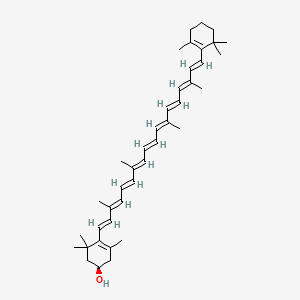
Beta-cryptoxanthin is an orange-red pigment in the carotenoid family, the same family as beta-carotene and lutein. In chemical terms it is beta-carotene with one hydroxyl group (an oxygen-hydrogen pair) added, which makes it a xanthophyll. Plants make it, and it is found in tangerines, red peppers, papaya and pumpkin.
In Satsuma mandarins the fruit stores it as fatty acid esters, mostly with lauric, myristic and palmitic acid. The amounts build up gradually as the fruit ripens.
Most people do not know that its level in your blood can follow the fruit season. In 27 healthy Japanese volunteers followed for a year, blood beta-cryptoxanthin rose sharply as their Satsuma mandarin intake rose. The biggest rise came in January, and the authors suggest the blood level can serve as a marker of how many mandarins someone ate.
In a 12-week trial, 2 mg a day with fat-containing food also made the palms of the hands more yellow, measured with a colorimeter.
It is also a provitamin A, which means the body can turn it into vitamin A. Official tables count 24 µg (micrograms) from food as 1 µg of vitamin A, half the credit given to beta-carotene (12 to 1). But studies that compared blood levels with what people ate suggest beta-cryptoxanthin is absorbed far better than beta-carotene. So those tables may undersell it.
Health benefits of beta-cryptoxanthin
The top findings from 28 studies, strongest evidence first
What the stars mean
- Strong. Several randomized trials, pooled in a meta-analysis, point the same way, or regulators (FDA or EFSA) have approved the claim.
- Moderate. Good randomized trials support it, but there are fewer of them, or their results vary.
- Limited. Small, short or single trials, or mixed results. Promising, but it needs confirmation.
Population and lab studies get no stars: they show a link or a mechanism, not proof.
How we rate evidence →- ★Well absorbed from tangerines and juiceEating tangerines raised blood beta-cryptoxanthin by 830% in 135 breastfeeding women in Bangladesh, but did not raise breast milk vitamin A. In 12 volunteers, it was absorbed 1.8 times better from pasteurized juice than from oranges.
- ★Supplements raised blood levels and were well toleratedIn 90 healthy Asian women, 6 mg a day for 8 weeks raised blood levels from 0.4 to 9.0 µmol/L, against placebo. Mood, sleep and blood retinol did not change.
- ★Fatty liver cleared in more people, with dietIn 92 adults in Iran, a low-calorie, high-protein diet plus beta-cryptoxanthin cleared fatty liver in 82.6%, against 0% on a standard diet. The diet alone cleared it in 13.0%, so the carotenoid’s own effect cannot be separated.
- ★Lower LDL, but only in a combined drinkIn 38 postmenopausal women, a fruit drink with beta-cryptoxanthin (0.75 mg) and plant sterols (1.5 g) lowered total cholesterol, LDL, HDL and bone turnover markers. Drinks with only one of the two did not.
- ★Smaller evening rise in a stress markerIn 23 young women in pharmacy training, beta-cryptoxanthin-rich juice blunted the evening rise of saliva alpha-amylase, a stress marker. The group was small, and no dose was given.
All 28 studies, strongest evidence first
Tangerine beta-cryptoxanthin was absorbed about 4 times better than sweet potato beta-carotene
In this randomized trial (chance decided who ate what), 135 breastfeeding women in Bangladesh with low vitamin A status ate set foods for 3 weeks. The options were tangerines (5.3 mg of beta-cryptoxanthin a day) or orange sweet potatoes (12 mg of beta-carotene). Others ate white sweet potatoes with or without a vitamin A capsule. Blood beta-cryptoxanthin rose 830% and beta-carotene 250%. Yet neither food raised breast milk vitamin A; only the capsule did.
A diet plus beta-cryptoxanthin cleared fatty liver in 82.6% of people
In this randomized trial, 92 adults with fatty liver in Iran (23 per group) were followed for 12 weeks. The tested plan was a low-calorie, high-protein diet plus beta-cryptoxanthin, while a standard diet cleared it in 0%. On that plan, ALT (a liver enzyme) fell 27.2 IU/L more than on the control diet. Beta-cryptoxanthin with a standard diet cleared it in 17.4% and the high-protein diet alone in 13.0%, so the effect of the carotenoid cannot be separated. The abstract gives no dose (the trial protocol planned 6 mg a day). It was a single center, we found no repeat trial, and sixteen people reported minor side effects.
Same diet plus beta-cryptoxanthin lowered CRP and IL-6, two inflammation markers
This second report comes from the same 92 people (12 weeks, 4 groups), so it is not an independent confirmation. All had fatty liver. Against the control diet, the high-protein diet plus beta-cryptoxanthin lowered CRP by 1.0 mg/L and IL-6 by 2.0 ng/L. It also lowered MDA (a marker of fat damage) by 1.9 nmol/mL and raised adiponectin by 1.9 mg/L.
6 mg daily raised blood levels from 0.4 to 9.0 µmol/L
In this randomized, placebo-controlled trial, 90 healthy Asian women aged 21 to 35 took 3 mg, 6 mg or a placebo for 8 weeks. The 3 mg group reached 6.0 µmol/L. Mood, sleep, physical activity, gene activity, metabolic markers and gut bacteria were unchanged. It was safe and well tolerated, and blood retinol and other carotenoids did not change. Two authors are at DSM Nutritional Products.
A fruit drink with sterols and beta-cryptoxanthin lowered LDL and bone turnover
In this randomized, double-blind crossover trial, 38 postmenopausal women drank 250 mL a day of a milk-based fruit drink for 4 weeks. It held 0.75 mg of beta-cryptoxanthin, 1.5 g of plant sterols or both, with 4 weeks off between drinks. Only the combined drink lowered total cholesterol, LDL, HDL and bone turnover markers; the other drinks did not. The abstract gives no sizes, and one author works for the food company Hero Group.
Beta-cryptoxanthin-rich juice blunted the evening rise of a stress marker
In this double-blind trial, 23 young women in pharmacy training drank 125 mL of beta-cryptoxanthin-rich juice after breakfast, or the same juice with it removed. They drank it from 1 week before the training and for 5 days into it. On placebo, saliva alpha-amylase, a stress marker, was higher in the evening than the morning, but not on beta-cryptoxanthin. The group is small, and the abstract gives no dose.
4.7 mg daily raised adiponectin and lowered PAI-1 in obese women
This before-and-after study had no placebo group: 17 moderately obese postmenopausal Japanese women drank a Satsuma mandarin beverage for 3 weeks. Blood beta-cryptoxanthin rose 4-fold. High-molecular-weight adiponectin, a hormone from fat tissue, rose and PAI-1, a clot-related protein, fell. Weight and BMI did not change.
Taking it with fat-containing food raised its absorption 1.8-fold
These were two studies in healthy adults. After a single dose, blood levels rose with the dose and returned to baseline after 14 to 17 days. With 2 mg a day for 12 weeks, palms turned more yellow. Blood level and palm yellowness, measured with a colorimeter, rose together (R = 0.55) and fell after stopping. The authors’ contact addresses are at the food company Yakult.
Canned tangerines raised blood beta-cryptoxanthin within 5 hours
These were two crossover studies in healthy adults, 8 in the first and 11 in the second, each eating tangerines or pink grapefruit. Meals were 234 to 304 g of tangerines or 60 to 540 g of grapefruit. Lycopene and beta-carotene stayed flat after a similar citrus meal, while beta-cryptoxanthin stayed high through the 24 hours measured. It shows absorption, not a health effect.
From pasteurized juice, it was absorbed 1.8 times better than from oranges
In this randomized crossover trial, 12 volunteers ate two meals with 744 µg of beta-cryptoxanthin, from navel oranges or from juice. Blood was sampled for 9.5 hours. In a lab digestion test, 5.3 times more beta-cryptoxanthin was released from the juice. More fiber in the food went with less absorption.
High intake: 21% lower odds of osteoporosis, 29% for hip fracture
This systematic review covered 15 observational studies and pooled 7 of them (100,496 people). Osteoporosis odds were 0.79 times and hip fracture odds 0.71 times, in men and women and in Western and Asian groups. These studies cannot show cause, and the authors call for longer follow-up.
In seven cohorts, top intake went with 24% lower lung cancer risk
This pooled analysis of 7 cohort studies in North America and Europe covered 399,765 people and 3,155 lung cancers, followed for 7 to 16 years. People in the top fifth of intake had 0.76 times the risk, while beta-carotene intake showed no link. It held after adjusting for smoking, vitamin C, folate and other carotenoids, and was similar in never, past and current smokers. Intake came from food questionnaires.
A review found 0.80 times the lung cancer risk at top intake
This review covered 25 prospective observational studies and 6 trials of beta-carotene pills. The authors call the drop at top beta-cryptoxanthin intake small and not clear. Beta-carotene pills did not lower lung cancer risk (1.10 times). The authors say the inverse links may reflect a healthier lifestyle or leftover smoking effects, and the abstract gives no range for the 0.80.
In 63,257 Singaporeans, top intake went with 27% lower lung cancer risk
This prospective cohort in Singapore followed Chinese adults aged 45 to 74, with 482 lung cancers over 8 years. The top fifth of beta-cryptoxanthin intake had 0.73 times the risk of the lowest group, and current smokers 0.63 times. Other carotenoids were not clearly linked after adjusting for smoking. The authors note that errors in reported smoking could affect the result.
In 56,837 Canadian women, no clear link with lung cancer was found
This case-cohort study in the Canadian National Breast Screening Study had 155 lung cancers. The top quarter of beta-cryptoxanthin intake had 0.66 times the rate of the lowest, but the range was wide. No carotenoid showed a clear trend, and the authors conclude there was no association.
Top blood beta-cryptoxanthin went with 57% lower type 2 diabetes risk
The Mikkabi cohort study (Shizuoka, Japan) followed 864 adults free of diabetes at the start for about 8 years (7.8). Of them, 55 developed it. The top third of blood levels had 0.43 times the risk of the bottom, after adjusting for other factors. Alpha-carotene (0.35) and total provitamin A carotenoids (0.41) also showed it, while beta-carotene and zeaxanthin did not clearly do so.
Higher blood levels went with 49% lower risk of raised ALT
This Mikkabi cohort study had 787 Japanese adults with normal ALT, a liver enzyme, at the start (213 men, 574 women); 80 developed raised ALT. The top third of blood beta-cryptoxanthin had 0.51 times the risk of the bottom. Beta-carotene (0.43) and total provitamin A carotenoids (0.52) showed it too. ALT is a marker, not a diagnosis.
Higher blood levels went with 34% lower risk of dyslipidemia
In this Mikkabi cohort study, 67 people developed metabolic syndrome over about 8 years. The top third of blood beta-cryptoxanthin had 0.66 times the risk of dyslipidemia, a blood fat disorder. There was no link with obesity, high blood pressure or high blood sugar. Beta-carotene was the one carotenoid linked to lower metabolic syndrome risk (0.47).
Frequent Satsuma mandarin eating went with less artery stiffening
This Mikkabi cohort study had 635 adults, and 99 developed a high pulse wave velocity, a measure of artery stiffness, over 57,921 person-months. Eating Satsuma mandarins 3 to 4 times a day was compared with less than once a day. Blood beta-cryptoxanthin was higher in frequent eaters, and the top third had lower risk than the bottom. The abstract does not give the size of the drop.
In postmenopausal women, high levels went with much lower osteoporosis odds
This Mikkabi cohort follow-up of 457 Japanese people (212 postmenopausal women) lasted 4 years. Fifteen postmenopausal women developed new osteoporosis; none of the men or premenopausal women did. The top third had 0.07 times the odds of the bottom, with a very wide range because so few cases occurred. No link was seen in men or premenopausal women.
People who later got inflammatory arthritis ate about 40% less beta-cryptoxanthin
This nested case-control study in the Norfolk part of the EPIC cohort used 7-day diet diaries. It compared 88 new cases with 176 matched controls. The top third of intake had 0.51 times the odds of the bottom, with a range that just reached 1 (0.25 to 1.02). The authors call the link significant after taking energy, protein and smoking into account, though the range just touches 1.
In 946 Framingham adults, intake was not linked to hip fracture
This cohort of 370 men and 576 women, followed for 17 years, had 100 hip fractures. People with more total carotenoids or lycopene in their diet had fewer hip fractures. Alpha-carotene, beta-cryptoxanthin and lutein plus zeaxanthin showed no clear link. It disagrees with the Japanese bone findings above.
Higher maternal levels went with slightly higher child scores at age 2
This Singapore mother-child cohort had 419 pairs, with blood taken from the mothers at delivery. For each standard deviation of the mother’s level, the child’s cognitive scores were 0.18 standard deviations higher, and motor scores were also slightly higher. Nothing was clear at age 4.5. Some authors report speaker fees or consortium funding from nutrition companies.
Similar food intakes gave 686% higher blood beta-cryptoxanthin than beta-carotene
Apparent absorption is blood level divided by intake. The authors’ own studies (633 adults with normal retinol) were combined with 22 other studies (29,700 people). Alpha-carotene was 55% higher than beta-carotene. This is not a controlled trial, so storage and conversion also play a part.
In mice without ovaries, beta-cryptoxanthin held back bone loss
This study was in mice, not people. Removing the ovaries is a model of bone loss after menopause, and daily beta-cryptoxanthin also held back osteoclast activation. In cell tests, it kept osteoclasts, the cells that break bone down, from maturing by calming the NF-κB signal. The abstract gives no dose.
Beta-cryptoxanthin blocked an inflammation enzyme (IKKβ) in mouse bone cultures
This lab study used mouse bone and cells. Beta-cryptoxanthin lowered the signals that make osteoclasts form, cut bone breakdown, and directly slowed IKKβ in a test tube. A computer docking simulation suggests it binds the enzyme’s ATP pocket. None of this was tested in people.
In mouse bone-forming cells, bone-building genes switched on
This cell study used the mouse MC3T3-E1 line, with beta-cryptoxanthin at 0.1 to 1 µmol/L. Genes for Runx2, collagen and alkaline phosphatase rose within 3 days, and mineral deposits rose after 5 to 21 days. Vitamin A did not raise Runx2 in the same test, which suggests beta-cryptoxanthin does not work only through vitamin A.
Mice fed beta-cryptoxanthin had less lung inflammation after cigarette smoke
In this mouse study, normal mice and mice missing both vitamin A-making enzymes (BCO1 and BCO2) ate beta-cryptoxanthin for 14 days. Then they breathed smoke for 14 days. Inflammatory cells, IL-6, TNF-alpha and two tissue-damaging enzymes were lower in both types. So the protection did not depend on conversion to vitamin A in this model.
Foods high in beta-cryptoxanthin
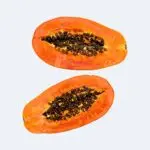
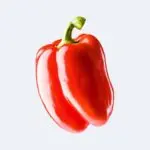
Beta-cryptoxanthin comes mostly from orange and red fruit and vegetables. In USDA data, papaya and bell peppers lead. Papaya has 589 µg per 100 g, or 854 µg in a cup of diced fruit (145 g). Bell peppers have 490 µg per 100 g.
A review names tangerines, red peppers and pumpkin as sources, and papaya, persimmon and Japanese mandarins turn up in lab papers too.
Satsuma mandarins and persimmons, classic sources in Japan, are not among the top ten in the USDA ranking below. One published measurement is juice from ponkan, a mandarin type, at 0.50 to 0.66 mg per 100 mL, depending on how it was pressed. For scale, think of the 5.3 mg a day eaten as tangerines in the Bangladesh trial above. Matching it would take more than 6 cups of diced papaya (our arithmetic from the USDA figure).
Per serving. Bars show the share of the Daily Value for vitamin A (900 µg a day).
Per 100 g. Bars show the share of the Daily Value for vitamin A (900 µg a day).
Per serving. Bars show the share of the EU Reference Intake for vitamin A (800 µg a day).
Per 100 g. Bars show the share of the EU Reference Intake for vitamin A (800 µg a day).
Per 100 kcal: the same calories of each food, for a fair comparison. Bars compare each food with the top food.
No daily need is set for beta-cryptoxanthin itself. The % shows how much of your daily vitamin A it can supply, counting 24 µg of it from food as 1 µg of vitamin A (US RAE).
- 1.
- 2.
- 3.
- 4.
- 5.
- 6.
- 7.
- 8.
- 9.
- 10.



- 1.
- 2.
- 3.
- 4.
- 5.
- 6.
- 7.
- 8.
- 9.
- 10.


- 1.
- 2.
- 3.
- 4.
- 5.
- 6.
- 7.
- 8.
- 9.
- 10.

Sources
- FoodData Central. U.S. Department of Agriculture, Agricultural Research Service. Source of the ranking above.
- Burri BJ, La Frano MR, Zhu C. Absorption, metabolism, and functions of β-cryptoxanthin. Nutr Rev. 2016.
- Nogata Y, Ohta H, Sumida T, Sekiya K. Effect of extraction method on the concentrations of selected bioactive compounds in mandarin juice. J Agric Food Chem. 2003.
- Hirata N, Ichimaru R, Tominari T, et al. Beta-cryptoxanthin inhibits lipopolysaccharide-induced osteoclast differentiation and bone resorption via the suppression of inhibitor of NF-κB kinase activity. Nutrients. 2019. Lists Japanese mandarin, persimmon, papaya, paprika and carrot as sources.
- Turner T, Burri BJ, Jamil KM, Jamil M. The effects of daily consumption of β-cryptoxanthin-rich tangerines and β-carotene-rich sweet potatoes on vitamin A and carotenoid concentrations in plasma and breast milk of Bangladeshi women with low vitamin A status in a randomized controlled trial. Am J Clin Nutr. 2013.
- Sugiura M, Matsumoto H, Kato M, Ikoma Y. Multiple linear regression analysis of the seasonal changes in the serum concentration of beta-cryptoxanthin. J Nutr Sci Vitaminol (Tokyo). 2004.
- Ma G, Zhang L, Iida K, et al. Identification and quantitative analysis of β-cryptoxanthin and β-citraurin esters in Satsuma mandarin fruit during the ripening process. Food Chem. 2017.
How beta-cryptoxanthin works
Most of what we know about how beta-cryptoxanthin works comes from test tubes, cells and animals. Researchers come back to three ideas. The body can turn it into vitamin A, and its single hydroxyl group changes how it sits in a cell membrane. And in lab work, it acts on the cells that build and break down bone.
Here is each one, and what has been seen in people.
It can be turned into vitamin A
An enzyme called BCO1 makes vitamin A by cutting a carotenoid in the middle and releasing retinal, the aldehyde form of vitamin A. A carotenoid needs at least one unmodified ring at the end of its chain to qualify. Beta-carotene has an unmodified ring at both ends and gives two retinal molecules.
Beta-cryptoxanthin has one unmodified ring and one ring with a hydroxyl group, and in enzyme tests a ring with a hydroxyl group was not converted. That leaves room for one retinal per molecule, which fits the official ratio of half the credit of beta-carotene. In test tubes, BCO1 also worked less efficiently on beta-cryptoxanthin than on beta-carotene. In mouse gut, a second enzyme, BCO2, helps process it in steps.
Where the enzyme cuts. Beta-carotene is a symmetric molecule with an unmodified ring at each end. Beta-cryptoxanthin is lopsided, with a hydroxyl group on one ring.
Its one hydroxyl group changes how it sits in a membrane
Beta-carotene has no polar group. Lutein has a hydroxyl group at each end, and beta-cryptoxanthin has one. A hydroxyl group is polar, so it tends to hold on to the watery surface of a cell membrane.
In a test on artificial membranes, carotenoids made the membrane more ordered and less fluid. The effect was strongest for lutein, clearly weaker for beta-cryptoxanthin and negligible for beta-carotene. The authors read this as the hydroxyl groups anchoring the molecules at the membrane surfaces. We found no study that shows where beta-cryptoxanthin lies in a human cell membrane.
Structures drawn as a schematic, not to scale. The ranking of effects comes from spin-label measurements on artificial membranes; the abstract gives no numbers.
It acts on the cells that build and break down bone
Bone is renewed all the time. Osteoblasts build new bone and osteoclasts break old bone down. In lab work, mostly from Japanese groups, beta-cryptoxanthin pushed both in the helpful direction. In a mouse bone-forming cell line it switched on bone genes and raised mineralization, at 0.1 to 1 µmol/L.
In mouse bone cultures it blocked osteoclasts from forming, apparently by slowing an enzyme called IKKβ that drives the NF-κB inflammation signal. In mice that had lost their ovaries it held back bone loss. Vitamin A did not raise a key bone gene in the cell test, so beta-cryptoxanthin may not work only by turning into vitamin A.
Two kinds of bone cell, as described in cell and mouse studies. The panel switches show direction only, not size.
What has been seen in people
These effects are easier to show in a dish than in a person. The vitamin A route is real, yet a 3-week tangerine trial did not raise breast milk vitamin A. And 6 mg a day for 8 weeks did not change blood retinol in healthy women.
For bone, the lab work fits the Japanese cohort findings and a pooled odds ratio of 0.79 for osteoporosis. But the Framingham cohort found no link with hip fracture, and no trial has tested fractures. All of this is in the study cards above.
Sources
- Kelly ME, Ramkumar S, Sun W, et al. The biochemical basis of vitamin A production from the asymmetric carotenoid β-cryptoxanthin. ACS Chem Biol. 2018.
- dela Seña C, Narayanasamy S, Riedl KM, Curley RW Jr, Schwartz SJ, Harrison EH. Substrate specificity of purified recombinant human β-carotene 15,15’-oxygenase (BCO1). J Biol Chem. 2013.
- Carotenoids. Micronutrient Information Center, Linus Pauling Institute, Oregon State University. Gives the official vitamin A ratios (24 to 1 for beta-cryptoxanthin, 12 to 1 for dietary beta-carotene) and two retinal molecules from beta-carotene.
- Wisniewska A, Widomska J, Subczynski WK. Carotenoid-membrane interactions in liposomes: effect of dipolar, monopolar, and nonpolar carotenoids. Acta Biochim Pol. 2006.
- Uchiyama S, Yamaguchi M. beta-cryptoxanthin stimulates cell differentiation and mineralization in osteoblastic MC3T3-E1 cells. J Cell Biochem. 2005.
- Hirata N, Ichimaru R, Tominari T, et al. Beta-cryptoxanthin inhibits lipopolysaccharide-induced osteoclast differentiation and bone resorption via the suppression of inhibitor of NF-κB kinase activity. Nutrients. 2019.
- Ozaki K, Okamoto M, Fukasawa K, et al. Daily intake of β-cryptoxanthin prevents bone loss by preferential disturbance of osteoclastic activation in ovariectomized mice. J Pharmacol Sci. 2015.
- Amengual J, Widjaja-Adhi MAK, Rodriguez-Santiago S, et al. Two carotenoid oxygenases contribute to mammalian provitamin A metabolism. J Biol Chem. 2013.
Is beta-cryptoxanthin safe? Supplements, dose and interactions
Beta-cryptoxanthin is a normal part of fruit, and we found no safety concern at food amounts. We also found no EFSA acceptable daily intake, no FDA safety determination and no official upper level for it. The Linus Pauling Institute page on carotenoids lists no toxicity data and no recommended intake for beta-cryptoxanthin. Supplements are not common, and they are not a proven way to get any benefit.
- Trial doses and side effects. Trials used 0.75 to 6 mg a day for 3 to 12 weeks. In 90 healthy women, 3 and 6 mg a day for 8 weeks were safe and well tolerated, with no change in blood retinol. In the Iranian fatty-liver trial, 16 people reported minor side effects.
- Skin color. At 2 mg a day with food for 12 weeks, palm yellowness rose and then fell after the supplement was stopped. The paper used it as a marker of blood level, not as a harm.
- Smokers. No trial has tested beta-cryptoxanthin supplements in smokers. Trials of beta-carotene pills found no benefit for lung cancer, and a pooled analysis of six of them found 1.10 times the risk. Whether beta-cryptoxanthin behaves the same is unknown, so this is a theoretical concern.
- Pregnancy and breastfeeding. The Linus Pauling Institute says the safety of carotenoid supplements other than beta-carotene in pregnancy and lactation has not been established. Ask your doctor before taking one.
How to get more beta-cryptoxanthin
- Best food. Papaya has 589 µg per 100 g in USDA data and bell peppers 490 µg. Tangerines raised blood levels within 5 hours in a trial of canned fruit.
- Eat it with fat. Beta-cryptoxanthin dissolves in fat. Taking it with fat-containing food raised absorption 1.8-fold in healthy adults.
- Juice absorbs better than whole fruit. Pasteurized orange juice gave 1.8 times the absorption of fresh oranges in 12 volunteers, and more fiber went with less absorption.
Sources
- Tan KML, Chee J, Lim KLM, et al. Safety, tolerability, and pharmacokinetics of β-cryptoxanthin supplementation in healthy women: a double-blind, randomized, placebo-controlled clinical trial. Nutrients. 2023.
- Carotenoids. Micronutrient Information Center, Linus Pauling Institute, Oregon State University. Lists no toxicity data and no recommended intake for beta-cryptoxanthin.
- Haidari F, Hojhabrimanesh A, Helli B, Seyedian SS, Ahmadi-Angali K, Abiri B. A hypocaloric high-protein diet supplemented with β-cryptoxanthin improves non-alcoholic fatty liver disease: a randomized controlled trial. BMC Gastroenterol. 2020.
- Iwata A, Fujiwara S, Matsubara S, Miyazaki K. Intake of β-cryptoxanthin with fat-containing food increases β-cryptoxanthin serum level and palmar yellowness in healthy adults. Nutr Res. 2019.
- Männistö S, Smith-Warner SA, Spiegelman D, et al. Dietary carotenoids and risk of lung cancer in a pooled analysis of seven cohort studies. Cancer Epidemiol Biomarkers Prev. 2004.
- Gallicchio L, Boyd K, Matanoski G, et al. Carotenoids and the risk of developing lung cancer: a systematic review. Am J Clin Nutr. 2008.
- Zhu CH, Gertz ER, Cai Y, Burri BJ. Consumption of canned citrus fruit meals increases human plasma β-cryptoxanthin concentration, whereas lycopene and β-carotene concentrations did not change in healthy adults. Nutr Res. 2016.
- Aschoff JK, Rolke CL, Breusing N, et al. Bioavailability of β-cryptoxanthin is greater from pasteurized orange juice than from fresh oranges, a randomized cross-over study. Mol Nutr Food Res. 2015.
- FoodData Central. U.S. Department of Agriculture, Agricultural Research Service.
Frequently asked questions about beta-cryptoxanthin
What does beta-cryptoxanthin do for the body?
Its main job is as a source of vitamin A, which the body makes from it. Beyond that, the evidence is limited. Small trials show it is absorbed well. Long-term studies link higher blood levels to less osteoporosis, diabetes and raised liver enzymes, but they cannot show cause. No trial has tested whether it prevents any disease, and supplement trials used only 0.75 to 6 mg a day.
Which foods are highest in beta-cryptoxanthin?
In USDA data, papaya leads with 589 µg per 100 g, followed by bell peppers at 490 µg and oranges at 116 µg. A cup of diced papaya (145 g) has 854 µg. Satsuma mandarins and persimmons are classic sources in Japan, but they are not in the USDA top ten.
Is beta-cryptoxanthin vitamin A?
No, but the body can turn it into vitamin A. Official tables count 24 µg of beta-cryptoxanthin from food as 1 µg of vitamin A. In a trial of breastfeeding women with low vitamin A status, 3 weeks of tangerines did not raise vitamin A in breast milk. And 6 mg a day for 8 weeks did not change blood retinol in healthy women.
Beta-cryptoxanthin vs beta-carotene: which is better?
Neither is proven better for health. Official tables give beta-carotene twice the vitamin A credit (12 to 1 against 24 to 1), but beta-cryptoxanthin is absorbed more. Its blood level was 686% higher than beta-carotene for similar food intakes, and about 4 times higher per milligram eaten in a tangerine trial. Beta-carotene pills did not lower lung cancer risk in trials, and nobody has compared the two head to head for health.
Is beta-cryptoxanthin good for bones?
Possibly, but it is unproven. A meta-analysis found 21% lower odds of osteoporosis and 29% lower odds of hip fracture at high intakes. Japanese cohort data point the same way. The Framingham cohort found no link with hip fracture, and no trial has tested fractures. Lab and mouse studies show it acts on bone-building and bone-resorbing cells.
Does beta-cryptoxanthin lower the risk of lung cancer?
Cohort studies lean that way, but the evidence is not firm. A pooled analysis of seven cohorts found 24% lower risk in the top fifth of intake, and a Singapore cohort found 27% lower. A Canadian cohort of women found no clear link. A systematic review says such drops are small and may reflect healthier lifestyles or leftover smoking effects.
How much beta-cryptoxanthin should you get a day?
We found no official recommended intake or upper level for it. Trials used 0.75 to 6 mg a day, and 3 and 6 mg a day for 8 weeks were well tolerated in 90 healthy women. A cup of diced papaya has about 0.85 mg. Eat it with some fat, which raised absorption 1.8-fold.