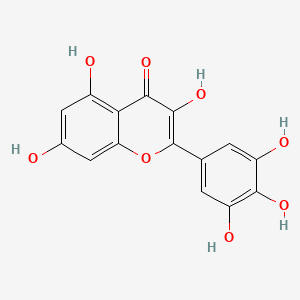
Myricetin is a flavonol, a member of the flavonoid family, and when it is purified it forms light yellow crystals. Flavonoids as a group absorb ultraviolet light and collect in the outer cells of plants. Plants make more of them after UV exposure, so they are assumed to shield the plant. A 2021 plant review adds that there is very little direct proof of this in living plants.
Myricetin carries six hydroxyl (OH) groups, and three of them sit together on one ring.
It was first isolated in the late 18th century from the bark of an Indian tree, Myrica nagi, because people wanted its dye. Chemists sometimes call it hydroxyquercetin, since it looks like quercetin with one more OH group. That extra OH is also why it behaves differently from quercetin and kaempferol in the lab.
Here is what most readers do not know. Myricetin has been tested in people very little. A 2020 review said few clinical trials exist, and the only trial we found gave it inside a three-ingredient product.
What we have in people is mostly diet surveys. In cell studies, myricetin can act as an oxidant as well as an antioxidant. It is also not dihydromyricetin, a close relative: the two differ by one double bond, and the difference matters in the test tube.
Health benefits of myricetin
The top findings from 18 studies, strongest evidence first
What the stars mean
- Strong. Several randomized trials, pooled in a meta-analysis, point the same way, or regulators (FDA or EFSA) have approved the claim.
- Moderate. Good randomized trials support it, but there are fewer of them, or their results vary.
- Limited. Small, short or single trials, or mixed results. Promising, but it needs confirmation.
Population and lab studies get no stars: they show a link or a mechanism, not proof.
How we rate evidence →- ★A three-ingredient product lowered blood alcoholIn a small trial of 20 wine drinkers, a product with myricetin, silymarin and PQQ cut blood alcohol by 33%. It cannot show what myricetin does alone.
- Population studyLinked to lower death rates, including heart diseaseIn 11,679 US adults, higher intake went with 0.77 times the risk of death from any cause, and 0.61 times from heart disease.
- Population studyLinked to lower type 2 diabetes riskIn 8 European countries, 12,403 new cases of type 2 diabetes were compared with 16,154 people. Higher myricetin intake went with 0.77 times the risk.
- Population studyLinked to lower Alzheimer risk, but not declineIn older adults, the highest fifth of myricetin intake had 0.62 times the risk of Alzheimer dementia. In the same cohort, myricetin was not linked to slower decline in thinking.
- Population studyNo clear link with several cancersIn studies of women, myricetin was not linked to overall cancer risk or to ovarian cancer. In Chinese patients, it was not linked to esophageal cancer.
All 18 studies, strongest evidence first
Silymarin-PQQ-myricetin product cut blood alcohol by 33% in wine drinkers
In this small randomized single-blind pilot trial, 20 wine drinkers took the product, in which myricetin was only one of three ingredients. The alcohol drop was measured at 120 minutes, and checks came right after the dose and after 1 week of use. Total antioxidant capacity rose 9 to 12% and 8-isoprostane, a marker of fat damage, fell 22 to 27%. The abstract gives no myricetin dose and the authors ask for confirmation, so this cannot show what myricetin does on its own.
In 8 European countries, more myricetin went with lower diabetes risk
The EPIC-InterAct case-cohort study followed 340,234 people for 3.99 million person-years, with 12,403 new type 2 diabetes cases. A comparison group of 16,154 was drawn, and diet came from questionnaires. Myricetin went with 0.77 times the risk, and it was the only flavonol the abstract names as linked. This shows an association, not that myricetin prevents diabetes.
More myricetin went with lower death rates, overall and from heart disease
This NHANES cohort of 11,679 US adults had a median follow-up of 7.80 years, with diet from one 24-hour recall. Higher intake went with 0.77 times the risk of death from any cause and 0.61 times the risk of heart-disease death. Myricetin was also linked to lower Alzheimer-specific death (0.34). The abstract reports cancer-specific links for other flavonols, not for myricetin.
Older adults eating most myricetin had lower Alzheimer dementia risk
The Rush Memory and Aging Project followed 921 older adults, mean age 81.2, in the community; 220 developed Alzheimer dementia. The highest fifth of myricetin intake had 0.62 times the risk of the lowest. Kaempferol (0.49) and isorhamnetin (0.62) were linked too, but quercetin was not (0.69, range 0.43 to 1.09).
Myricetin was not linked to cognitive decline, though total flavonols were
This used the same Rush cohort as the Alzheimer study above: 961 people aged 60 to 100, followed for an average of 6.9 years. They took 19 cognitive tests every year. Total flavonol intake went with slower decline in global cognition (0.004) and in several skills. Kaempferol and quercetin did too, but myricetin and isorhamnetin did not.
More myricetin went with steadily lower stroke odds in a snapshot study
This cross-sectional NHANES analysis reports 3,806 older US participants. The top quartile of total flavonol intake had 61% lower odds of stroke (0.390 times the odds), and the myricetin link was linear. A snapshot counts people who already had a stroke, so it cannot show which came first.
People with mild cognitive impairment ate less myricetin than matched peers
This matched case-control study compared older adults with mild cognitive impairment and peers with normal thinking, using a food questionnaire. Lower intake of myricetin and kaempferol went with the impairment. Higher intake of both went with lower blood S100β, a marker of blood-brain barrier integrity. The abstract gives no group sizes or myricetin amounts.
More myricetin went with less advanced prostate cancer, not prostate cancer overall
The Netherlands Cohort Study followed 58,279 men, with 3,362 prostate cancers, of which 1,164 were advanced (stage III or IV). Intake of myricetin, kaempferol, catechin and epicatechin, and black tea, went with a lower risk of stage III/IV or stage IV disease. There was no link for overall or non-advanced cancer. The abstract gives no myricetin-specific risk number.
Myricetin’s link to lower prostate cancer odds faded after full adjustment
This NHANES analysis of 2,629 US men included 144 who reported a history of prostate cancer. Cancer status was self-reported and diet came from recalls. Only selenium stayed clear after full adjustment (0.50 times the odds). A machine-learning model listed myricetin among its key features, with a U-shaped pattern.
More myricetin went with lower pancreatic cancer risk only in current smokers
The Multiethnic Cohort in Hawaii and California followed 183,518 people for 8 years, with 529 pancreatic cancers. Among current smokers, the highest quartile of myricetin had 0.55 times the risk of the lowest, and no link showed in never or former smokers. For all people, total flavonols gave 0.77 (range 0.58 to 1.03). The abstract gives no overall myricetin result.
In Dutch adults, flavonols were not linked to colorectal cancer overall
The Netherlands Cohort Study followed 120,852 people aged 55 to 69 for 13.3 years, with 1,444 male and 1,041 female cases. Total flavonol intake showed no link, and only after splitting by body weight did a link appear. Higher myricetin and kaempferol intake went with less colorectal cancer in women with a BMI under 25 kg/m2. The authors conclude the findings generally do not support a link.
Myricetin and four other flavonoids were not linked to cancer risk
The Women’s Health Study followed 38,408 women aged 45 or older for 11.5 years, with 3,234 cancers. For the highest versus lowest fifth of total flavonoid intake, risks were 1.03 for breast, 1.01 for colorectal and 1.03 for lung cancer. They were 1.15 for endometrial and 1.09 for ovarian cancer, none clear, and single flavonols such as myricetin behaved similarly.
In 1,141 women with ovarian cancer, myricetin showed no link
This population-based case-control study compared these women with 1,183 controls and looked at five flavonoids, including myricetin. Total flavonoid intake showed no link (risk 1.06, range 0.78 to 1.45). Only apigenin gave a borderline lower risk (0.79, range 0.59 to 1.06). The authors call the support for a link limited.
Myricetin showed little link to lung cancer, unlike quercetin in smokers
This population-based case-control study had 558 people with lung cancer and 837 controls. Among smokers, 9 mg a day more quercetin went with 0.65 times the odds, and 2 mg a day more kaempferol with 0.68. Myricetin, hesperetin, naringenin and total flavonoids showed little link whatever the smoking status.
In 820 Chinese patients, myricetin was not linked to esophageal cancer
This population-based case-control study in Yanting County compared them with 863 controls, using a 76-item food questionnaire. Isoflavones went with lower risk of esophageal squamous cell cancer (0.34 times the odds), and moderate anthocyanidin intake did too. Total flavonoids, flavonols, quercetin, myricetin and kaempferol did not.
In 21 mouse studies, myricetin lowered blood sugar, insulin and blood fats
This meta-analysis pooled 21 studies in 514 mice with metabolic disease. Effect sizes were -1.45 for blood glucose, -1.78 for insulin, -2.60 for triglycerides, -1.86 for total cholesterol and -2.95 for LDL. HDL did not clearly change (0.71, p = 0.05). Results varied a lot between studies (I2 62 to 86%), and the authors say human studies are needed.
In Parkinson-model rats, myricetin eased movement problems and dopamine neuron loss
Rats were injected with MPTP, a toxin, and human nerve-type cells were exposed to MPP+. Myricetin lowered iron, reactive oxygen and a fat-damage marker and raised glutathione in the affected brain region. A drug that triggers ferroptosis (iron-driven cell death) reversed these effects. In cells it moved Nrf2 into the nucleus and raised GPX4, and the abstract gives no dose.
A cranberry myricetin compound cut bacteria in urinary infections in mice
Mice (C57BL/6) got myricetin-3-O-galactoside, a sugar-bound form isolated from cranberries, by mouth. They got it before and after infection with the E. coli strain CFT073, and bacterial counts fell in urine, bladder and kidneys. In dish tests it lowered bacterial sticking and invasion by reducing the bacteria’s adhesion proteins and disrupting their pili. Myricetin by itself and human infections were not tested here.
Foods high in myricetin
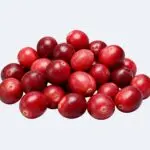
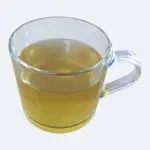
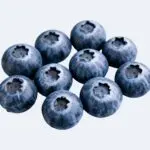
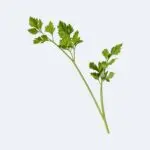
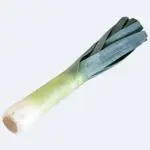
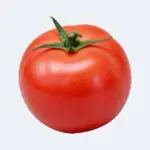
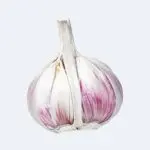
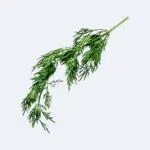
Cranberries and parsley lead the USDA ranking below, and the order depends on how you measure. Per 100 g, parsley comes first at 14.8 mg and cranberries second at 7.63 mg. Garlic (1.61 mg), blueberries (1.3 mg) and green tea (1.02 mg) follow.
Per serving, a cup of cranberries leads with 7.63 mg, ahead of a cup of green tea (2.5 mg) and blueberries (1.92 mg).
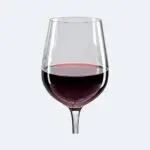
Serving size changes the picture. A tablespoon of parsley (3.8 g) holds only 0.56 mg, a little less than a 5 fl oz glass of red wine (0.62 mg). Tea matters because people drink a lot of it. A 2008 analysis of US diets found that tea was the major source of flavonols as a group.
Per serving. No daily amount is set, so bars compare each food with the top food.
Per 100 g. No daily amount is set, so bars compare each food with the top food.
Per 100 kcal: the same calories of each food, for a fair comparison. Bars compare each food with the top food.
Food labels have no Daily Value or Reference Intake for myricetin, so the % compares each food with the top food.
- 1.
- 2.
- 3.
- 4.
- 5.
- 6.
- 7.
- 8.
- 9.
- 10.



- 1.
- 2.
- 3.
- 4.
- 5.
- 6.
- 7.
- 8.
- 9.
- 10.


- 1.
- 2.
- 3.
- 4.
- 5.
- 6.
- 7.
- 8.
- 9.
- 10.

Sources
- Bhagwat S, Haytowitz DB. USDA Database for the Flavonoid Content of Selected Foods, Release 3.3. US Department of Agriculture, Agricultural Research Service. 2018.
- Song WO, et al. Tea is the major source of flavan-3-ol and flavonol in the U.S. diet. J Nutr. 2008.
How myricetin works
Most of what we know about how myricetin works comes from test tubes, cells and animals. Four ideas come up again and again. It can calm radicals (reactive, damaging molecules) but also make them, it blocks a growth-signal enzyme, and it slows a starch-digesting enzyme. And very little of it reaches the blood.
Here is each one, and what has been seen in people.
It can calm radicals, and it can also make them
The three OH groups together on one ring give myricetin a different profile from its relatives. In test tubes, how well a flavonol worked depended on the kind of radical.
Quercetin gave up hydrogen better than myricetin, and myricetin beat kaempferol. Against superoxide and hydroxyl radicals, myricetin ranked below both. The authors link that to the three-OH ring.
Rank among these three flavonols in each test (the study also tested fisetin and morin). A rank does not show how far apart they were.
In cell dishes, myricetin can also make hydrogen peroxide by oxidizing itself. In one study of triple-negative breast cancer cells, that peroxide and the iron-driven reactions it set off were what killed the cells. Blocking either one stopped the damage.
Myricetin was less inhibiting to normal cells, but it made peroxide in their dishes too. A 2026 review also says it can act as a pro-oxidant when metal ions are present.
It blocks a growth-signal enzyme
MEK1 is an enzyme that passes growth signals along inside a cell. In mouse skin cells, myricetin at 10 µM blocked most of the cell transformation (the change to a cancer-like state) caused by two growth triggers. That was far more than resveratrol managed at 20 µM. It bound MEK1 directly without competing with the cell’s fuel molecule, ATP.
This is a lab result in one cell type. How much myricetin reaches such cells after a meal is a separate question, covered below.
Drawn to scale. TPA and EGF are two triggers that push these cells toward becoming tumor-like.
It slows a starch-digesting enzyme
Alpha-glucosidase is an enzyme that helps break carbohydrate down into sugars, and blocking it delays carbohydrate digestion, according to the paper’s authors. In a 2026 test-tube study, myricetin blocked it as a competitive inhibitor. It was far more potent than dihydromyricetin, which differs only by lacking one double bond. By our arithmetic, it took about 33 times less myricetin to do the same job.
Drawn to scale. The numbers are the concentrations needed to block half of the enzyme.
Very little reaches the blood
Myricetin dissolves poorly in water. A 2026 review blames that for its low bioavailability (how much the body absorbs), along with fast sulfation and glucuronidation. These are the body attaching sulfate or glucuronic acid to it.
In rats, only about a tenth of an oral dose reached the blood. We found no study of how much reaches the blood in people. So the concentrations used in cell work may not be reachable by eating food.
Drawn to scale. Absolute bioavailability, measured by comparing oral with intravenous doses in rats.
What has been seen in people
These effects are easier to show in a dish than in a person. The closest link is for blood sugar. The diet survey of 12,403 diabetes cases found 0.77 times the risk for myricetin, and mouse studies found lower glucose. But no human trial tested the enzyme idea.
The cell results on cancer are not echoed by most diet cohorts. The Women’s Health Study and the ovarian, lung and esophageal studies found no link, while some prostate, pancreatic and lean-women colorectal analyses did. All of these are among the study cards above.
Sources
- Wang L, et al. Distinctive antioxidant and antiinflammatory effects of flavonols. J Agric Food Chem. 2006.
- Knickle A, et al. Myricetin-induced apoptosis of triple-negative breast cancer cells is mediated by the iron-dependent generation of reactive oxygen species from hydrogen peroxide. Food Chem Toxicol. 2018.
- Pathak R, et al. Unveiling the health potential of myricetin: bio-accessibility, safety considerations, and therapeutic mechanisms. Curr Pharm Des. 2026.
- Lee KW, et al. Myricetin is a novel natural inhibitor of neoplastic cell transformation and MEK1. Carcinogenesis. 2007.
- Jiang Z, et al. Differential inhibitory mechanisms of myricetin and dihydromyricetin on α-glucosidase: a combined molecular docking, isothermal titration calorimetry and surface plasmon resonance study. Foods. 2026.
- Dang Y, et al. Quantitative determination of myricetin in rat plasma by ultra performance liquid chromatography tandem mass spectrometry and its absolute bioavailability. Drug Res (Stuttg). 2014.
- Ferreyra MLF, et al. Recent advances on the roles of flavonoids as plant protective molecules after UV and high light exposure. Physiol Plant. 2021.
- Taheri Y, et al. Myricetin bioactive effects: moving from preclinical evidence to potential clinical applications. BMC Complement Med Ther. 2020.
- Semwal DK, Semwal RB, Combrinck S, Viljoen A. Myricetin: a dietary molecule with diverse biological activities. Nutrients. 2016.
Is myricetin safe? Supplements, dose and interactions
Myricetin from food is not a known safety concern. It is a normal part of berries, vegetables, tea and wine. A 2016 review found very few studies raising concerns about adverse effects, although most of that work was in cells and animals.
We found no opinion, acceptable daily intake or upper level for myricetin from EFSA, the FDA, Health Canada or the NIH Office of Dietary Supplements. So no official number can be given.
- Trial doses and side effects. We cannot name a dose that was studied in people. The only trial we found gave myricetin inside a three-ingredient product, and its abstract gives no myricetin dose and no side-effect results. A 2020 review notes that few clinical trials exist.
- High doses in animals and cells. A 2016 review reports no toxic effects or deaths in mice after 1,000 mg/kg injected into the abdomen. A 2026 review reports a lethal dose of 800 mg/kg in mice, with possible liver and kidney harm at high doses. The 2016 review also found that 450 µM damaged gut cells from guinea pigs in a dish. These are not doses people take.
- Drug interactions. In rats, myricetin raised the absorption of the cancer drug doxorubicin by 51 to 117%. It also blocked the enzyme CYP3A4 (half-blocked at 7.8 µM). A later test-tube study found only minor effects on CYP3A4, CYP2C9 and CYP2C19. But it found strong effects on the transporters OATP1B1 and OATP2B1. It had a moderate effect on the warfarin-binding site of albumin, a blood protein. We found no human interaction study, so this is a theoretical concern. If you take warfarin or other prescription drugs, ask your clinic or pharmacist before using a myricetin supplement.
- Pregnancy and children. We found no safety studies in pregnancy, breastfeeding or children, so ask your doctor before using a supplement.
How to get more myricetin
- Best food. Parsley holds the most per 100 g at 14.8 mg, but you eat it by the pinch. A cup of cranberries (7.63 mg) is the biggest source per serving in the USDA ranking.
- Do not boil it long. In a water test, myricetin degraded quickly in boiling water, and adding vitamin C raised the share left after 100 minutes from 32.8% to 91.4%. That was a lab solution, not a cooked meal, but it suggests keeping heat short.
- Food versus supplement. Only 9.6 to 9.7% of an oral dose reached the blood in rats, and we found no human absorption study. No trial shows that a supplement does more than food, and the diet studies above are about food.
Sources
- Semwal DK, Semwal RB, Combrinck S, Viljoen A. Myricetin: a dietary molecule with diverse biological activities. Nutrients. 2016.
- Taheri Y, et al. Myricetin bioactive effects: moving from preclinical evidence to potential clinical applications. BMC Complement Med Ther. 2020.
- Bosco G, et al. Consumption of silymarin, pyrroloquinoline quinone sodium salt and myricetin: effects on alcohol levels and markers of oxidative stress, a pilot study. Nutrients. 2024.
- Pathak R, et al. Unveiling the health potential of myricetin: bio-accessibility, safety considerations, and therapeutic mechanisms. Curr Pharm Des. 2026.
- Choi SJ, et al. Effects of myricetin on the bioavailability of doxorubicin for oral drug delivery in rats: possible role of CYP3A4 and P-glycoprotein inhibition by myricetin. Arch Pharm Res. 2011.
- Dombi Á, Kaci H, Valentová K, Bakos É, Özvegy-Laczka C, Poór M. Interaction of myricetin, ampelopsin (dihydromyricetin), and their sulfate metabolites with serum albumin, cytochrome P450 (CYP2C9, 2C19, and 3A4) enzymes, and organic anion-transporting polypeptides (OATP1B1 and OATP2B1). Pharmacol Res Perspect. 2024.
- Chen S, et al. Vitamin C prevents myricetin degradation in boiling water by reducing ortho-quinone intermediates. Food Chem. 2025.
- Dang Y, et al. Quantitative determination of myricetin in rat plasma by ultra performance liquid chromatography tandem mass spectrometry and its absolute bioavailability. Drug Res (Stuttg). 2014.
- Bhagwat S, Haytowitz DB. USDA Database for the Flavonoid Content of Selected Foods, Release 3.3. US Department of Agriculture, Agricultural Research Service. 2018.
History of myricetin
Myricetin was first isolated in the late 18th century from the bark of Myrica nagi, harvested in India, as light yellow crystals. Interest in it was sparked mainly by its use as a dye. Later the chemist Perkin characterized it, set its melting point at 357 °C, and described its sugar-bound form myricitrin for the first time. He also found that breaking it down yields phloroglucinol and gallic acid, which helped confirm its structure.
Making it in the lab took a while. A first attempt in 1925 by Dean and Nierenstein did not work, and in the same year Kalff and Robinson succeeded. A 2016 review says myricetin has also been used to preserve foods that contain oils and fats, because it protects fats against oxidation.
Myricetin also sits in a traditional drink. Vine tea has been used as an herbal tea by several ethnic minorities in China for hundreds of years. A 2021 review lists dihydromyricetin and myricetin among its major bioactive compounds.
Sources
- Semwal DK, Semwal RB, Combrinck S, Viljoen A. Myricetin: a dietary molecule with diverse biological activities. Nutrients. 2016.
- Zhang Q, et al. Recent advances in research on vine tea, a potential and functional herbal tea with dihydromyricetin and myricetin as major bioactive compounds. J Pharm Anal. 2021.
Frequently asked questions about myricetin
What does myricetin do for the body?
No one knows yet, because it has barely been tested in people. In large diet surveys, higher myricetin intake went with lower risk of type 2 diabetes (0.77), death from any cause (0.77) and Alzheimer dementia (0.62). These are associations, and the cancer studies mostly found nothing. Mouse studies found lower blood glucose and cholesterol.
Which foods are high in myricetin?
Parsley and cranberries lead. Per 100 g, USDA lists parsley at 14.8 mg, cranberries at 7.63 mg, garlic at 1.61 mg and blueberries at 1.3 mg. Per serving, a cup of cranberries holds 7.63 mg, a cup of green tea 2.5 mg and a cup of blueberries 1.92 mg.
Does myricetin help with blood sugar or diabetes?
There is a hint, not proof. In the EPIC-InterAct study of 12,403 new diabetes cases, higher myricetin intake went with 0.77 times the risk of type 2 diabetes. A meta-analysis of 21 mouse studies found lower blood glucose and insulin, and a test-tube study found that myricetin blocks a starch-digesting enzyme. No human trial has tested myricetin for blood sugar.
Is myricetin good for the brain?
The evidence is mixed. In 921 older adults, the highest myricetin intake went with 0.62 times the risk of Alzheimer dementia. Adults with mild cognitive impairment also ate less of it.
But in 961 adults followed for about 7 years, myricetin was not linked to the rate of decline in global cognition. Rat studies are encouraging, but none is a trial in people.
Does myricetin have side effects?
We found no reported side effects in people, but that reflects how little has been studied. The only trial we found tested a three-ingredient product, and its abstract does not report safety results. Animal and cell work points to possible drug interactions and possible harm at very high doses. Ask a clinician before taking a supplement, especially if you take prescription drugs.
What is the difference between myricetin and dihydromyricetin?
They differ by one double bond, and that changes how they behave. Dihydromyricetin lacks the C2=C3 double bond that myricetin has.
In a 2026 test-tube study, it took 453.9 µM of dihydromyricetin and only 13.6 µM of myricetin to block half of the enzyme alpha-glucosidase. Vine tea contains both compounds. We found no head-to-head human trial.
Myricetin vs quercetin: which is better?
No one can say, because they have not been compared in trials. Myricetin has three OH groups on one ring and quercetin has two, and in test tubes quercetin gave up hydrogen better. In one cohort, myricetin was linked to Alzheimer risk (0.62) and quercetin was not (0.69, a result that could be chance). In a later analysis of the same cohort, quercetin was linked to slower global decline and myricetin was not.
Does cooking destroy myricetin?
Long boiling can. In a water test, myricetin degraded quickly in boiling water, and adding vitamin C raised the share left after 100 minutes from 32.8% to 91.4%. The test used a pure solution, not a cooked meal, so treat it as a hint that short cooking is gentler.