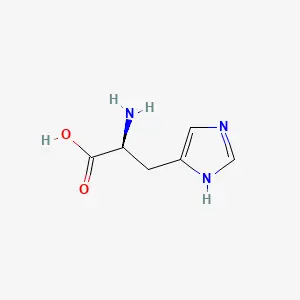
Histidine is an amino acid, one of the building blocks of protein. The WHO and the US National Academies both list it as essential (indispensable), which means food has to supply it.
Its side chain, called an imidazole ring, can pick up or release a hydrogen ion at about the pH of the body. That makes histidine a buffer (it steadies acidity) and a good grip for metal ions such as iron and zinc. Hemoglobin is about 8% histidine, according to the National Academies.
Beyond building protein, the body turns histidine into histamine, which takes part in immune responses, stomach acid and signaling in the brain. It also joins histidine to beta-alanine to make carnosine, a buffer in muscle.
In the skin, histidine from the barrier protein filaggrin ends up as urocanic acid, part of the skin’s natural moisturizing factor. The liver breaks the rest down to glutamic acid, a step that needs folate.
Here is what most readers do not know. Histidine is essential, but not in the way the other eight are.
Adults hold large stores in hemoglobin and in muscle carnosine, and the National Academies say it takes more than 60 days to deplete them. So taking histidine out of the diet does not make nitrogen balance (whether the body keeps or loses protein) fall right away. The WHO still sets a requirement of 10 mg per kg of body weight a day. But it says that whether histidine is indispensable in healthy adults remains unresolved.
In practice it hardly matters. One 4 oz chicken breast holds 0.95 g, more than that figure for a 70 kg adult (our arithmetic). And the supplement trials below are few, small and mixed.
Health benefits of histidine
The top findings from 20 studies, strongest evidence first
What the stars mean
- Strong. Several randomized trials, pooled in a meta-analysis, point the same way, or regulators (FDA or EFSA) have approved the claim.
- Moderate. Good randomized trials support it, but there are fewer of them, or their results vary.
- Limited. Small, short or single trials, or mixed results. Promising, but it needs confirmation.
Population and lab studies get no stars: they show a link or a mechanism, not proof.
How we rate evidence →- ★★Zinc histidine was no worse than zinc acetateIn people with low blood zinc, zinc histidine supplements were no worse than zinc acetate at keeping zinc in range (86.4% against 80.4%). Nausea occurred in 2.8% against 6.4%, but the trial was open-label and several authors work for the maker.
- ★★Carnosine-type dipeptides raised delayed recallAcross 10 trials, supplements of histidine-containing dipeptides such as carnosine raised delayed recall by 1.5 points on a memory scale. Other tests did not change, and these are not histidine alone.
- ★Without histidine, blood counts fellAfter about 5 weeks without histidine, hematocrit (share of blood that is red cells) fell 25% in seven men, three of them with kidney failure. In four healthy adults, hemoglobin fell 11% after 48 days.
- ★Less severe eczema in two small pilot trialsIn a 24-adult pilot, histidine cut eczema severity 34% (doctor’s score) and 39% (patients’ own score), while placebo did nothing. In a 49-child pilot, 0.8 g of histidine cut eczema scores 49%.
- ★Lower insulin resistance in obese womenIn 100 obese women with metabolic syndrome, 4 g a day of histidine for 12 weeks lowered insulin resistance (HOMA-IR) by 1.09 against placebo. We found no repeat of this trial by another group.
All 15 studies, strongest evidence first
After about five weeks without histidine, hematocrit fell 25% in seven men
This metabolic ward study (a hospital unit where all food is controlled) enrolled four healthy and three chronically uremic men (with kidney failure). After a 40 g protein diet, they ate an amino acid diet with no histidine for about 35 days, then the same diet with histidine. Hematocrit (the share of blood that is red cells) fell, nitrogen balance turned negative, and serum albumin fell in six men. Plasma histidine fell 82% and muscle histidine 62%, and serum iron rose. Five men developed a skin lesion with fine scales, dry skin and mild erythema (redness). Everything reversed when histidine returned, and this is the study the WHO uses for its adult requirement.
48 histidine-free days cut protein turnover 24% to 28% in four adults
Four healthy adults ate a histidine-free diet with enough energy. Their protein came from 1.0 g per kg of body weight a day of a mixed L-amino acid formula. Whole-body protein turnover fell, and hemoglobin fell 11%, albumin 12% and transferrin (an iron carrier) 17%. Urinary nitrogen, urea and creatinine did not change. The authors say the large metabolic adjustment leaves it unresolved whether histidine is essential in healthy adults.
Seven men on almost no histidine hit negative nitrogen balance only late
This 85-day study enrolled seven young men. They ate a low-nitrogen amino acid diet with 10 mg of histidine a day for 8 weeks. Hemoglobin fell somewhat and serum iron rose, and nitrogen balance turned negative only at the end. Two weeks of added histidine made nitrogen balance positive again. Two control men fed 1.05 g of histidine a day for 8 weeks showed no change. The authors conclude that histidine is indispensable for young men on a low-nitrogen diet.
In obese women, 4 g histidine lowered insulin resistance against placebo
This randomized, double-blind trial gave 100 obese women with metabolic syndrome 4 g a day of histidine tablets or placebo for 12 weeks. Of them, 92 finished. Against placebo, HOMA-IR (a measure of insulin resistance) fell by 1.09, BMI 0.86 kg/m², waist 2.86 cm and fat mass 2.71 kg. Inflammation markers TNF-α and IL-6 were lower and adiponectin was higher. No side effects were seen, and we found no repeat of this trial by another group.
In a 24-adult pilot, histidine cut eczema severity 34% and 39%
This was a randomized, double-blind, placebo-controlled crossover pilot. The first figure is a doctor’s score and the second the patients’ own score, both after 4 weeks of once-daily histidine, while placebo did nothing. A later review of the same trial gives the dose as 4 g a day for 8 weeks. The authors say the effect was similar to a mid-potency topical steroid, and that histidine raised filaggrin and skin barrier function in lab skin models. One author is a founder of a company that holds patents in this field. It was small, and we found no larger trial.
In a 49-child pilot, 0.8 g histidine cut eczema scores 49%
A review reports this placebo-controlled pilot (mean age 3.5 years), with scores measured at 12 weeks and no effect on placebo. The same review covers the adult trial on the previous card and a survey of 98 adults taking 4 g a day. In the children, 50 minor adverse events occurred on histidine and 39 on placebo, and 78% were judged unrelated. The author works at a company in this field, and this is not a full trial report.
Histidine-treated children with a rare gene disorder kept stable hearing and vision
This clinical trial gave 50 mg per kg twice a day for 3 years to 14 children with a rare gene disorder. They all carry the same HARS1 variant (Y454S), first described as Usher syndrome type 3B. Hearing and vision stayed stable, growth improved, and the gains lasted more than 4 more years on varying doses. No placebo group is described, and several authors work for a drug company. This is a treatment for a gene defect, not evidence for healthy people.
In 20 very tired people, two weeks of histidine beat placebo
This double-blind crossover trial was in people with high fatigue and sleep disruption scores. After two weeks on histidine, the fatigue score on the Profile of Mood States fell more than on placebo. Reaction time on a working-memory task was shorter, and self-rated clear thinking and attentiveness were higher. The study is small, and the authors work for an amino acid maker.
A single histidine dose did not beat placebo overall in tired people
This randomized trial in healthy people with regular fatigue used a mental workload task. In the planned analysis of all participants, histidine was not better than placebo on any endpoint. In an exploratory high-fatigue subgroup (not planned in advance), fatigue-inertia, confusion, depression and total mood disturbance scores fell more than on placebo, and vigor rose. All authors are employees of an amino acid maker.
In rheumatoid arthritis, 4.5 g histidine daily did no better than placebo
This randomized, double-blind cooperative trial compared oral L-histidine, 4.5 g a day, with placebo over 30 weeks. None of the clinical measures favored histidine. Rheumatoid factor titer fell slightly and hematocrit rose slightly in the histidine group. Doctors’ and patients’ ratings hinted at a benefit in more active, longer disease. No adverse effects were noted, and the authors said histidine could not be advocated as a treatment.
In kidney patients, 4 g of histidine daily did not improve anemia
This randomized, double-blind trial ran 17.5 weeks in 16 chronically uremic patients (with kidney failure) and 26 on maintenance dialysis. In the dialysis group, hemoglobin and packed cell volume rose slightly and similarly on histidine and placebo. The rise was clear only on placebo. A 2020 review notes that an earlier report of benefit was criticized for its design.
4 g histidine daily did not change appetite, food intake or weight
In this double-blind, balanced crossover trial, eight volunteers took histidine for 2 weeks and placebo for 2 weeks, in gelatin capsules. Taste and smell, total serum zinc and urinary histidine did not change either. Serum histidine rose, and urinary zinc was higher after 1 week but not after 2 weeks. The authors concluded that histidine at this dose is no use as an appetite suppressant.
Very large histidine doses caused zinc loss in six patients
Six patients with progressive systemic sclerosis (scleroderma) took oral histidine at doses far above food amounts. Each developed anorexia (loss of appetite), taste and smell loss, mental changes and cerebellar signs (problems with balance and coordination). Their serum zinc fell and more zinc went into urine. Zinc given by mouth, even while histidine continued, returned the signs to or toward normal within 8 to 24 hours.
In advanced kidney disease, low blood histidine went with higher death risk
This observational study followed 325 patients before dialysis (median age 54 years) for up to 60 months, with 101 deaths. Low plasma histidine went with protein-energy wasting, inflammation and oxidative stress. It went with 1.55 times the risk of death, after adjusting for age, sex, heart disease, inflammation, diabetes and albumin. It shows an association only, and the trial of histidine supplements in kidney failure above did not help anemia.
Imidazole propionate, made by gut bacteria, went with more heart disease
This cohort analysis of the Nurses’ Health Studies and the Health Professionals Follow-up Study covered 7,432 US health professionals. Gut bacteria make imidazole propionate from histidine. Comparing the top and bottom fifth of plasma imidazole propionate, the risk was 1.82 times. Histidine intake showed an inverse link with heart disease that could be chance, and it was not tied to imidazole propionate levels. Fiber, especially pectin, predicted lower levels, and levels rose with histidine intake only when pectin intake was low.
Foods high in histidine
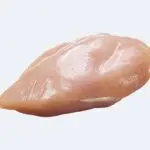
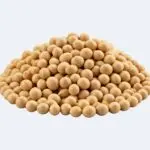
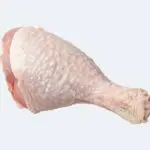
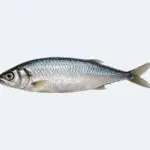
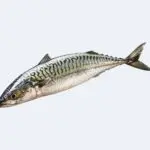
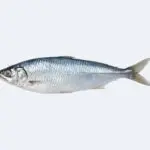
Chicken breast leads our USDA ranking per serving: 4 oz holds 0.95 g. Soybeans follow with 0.77 g per cup, then chicken drumstick (0.7 g) and sardines (0.67 g per can).
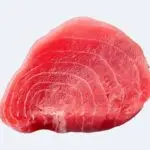
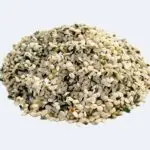
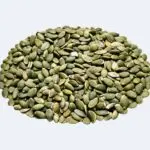
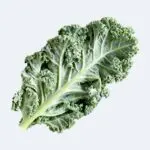
Per 100 g, hemp seeds come first with 0.97 g, then chicken breast (0.84 g), pumpkin seeds (0.78 g) and sardines (0.73 g). Per 100 kcal, chicken breast (0.7 g), cod (0.64 g) and tuna (0.63 g) lead, and kale gives 0.49 g. The ranking below shows the full lists.
Histidine is in every protein, so a diet with enough protein has enough histidine. A review puts it at 25 to 30 mg per g of protein in meat, chicken and fish. It gives 20 to 30 mg per g in plant proteins such as soybean, kidney bean, pea, oat and wheat. The National Academies list 22 mg per g in whole wheat flour, 28 in navy beans and milk, and 24 in eggs.
The WHO’s adult requirement pattern is 15 mg per g of protein, so these foods sit above it. The WHO’s comparison of food proteins found only lysine (in cereals, cassava and yam) and the branched-chain amino acids (in cassava) falling short, not histidine.
By our arithmetic, 4 oz of chicken breast (0.95 g) gives more than the WHO figure of 700 mg for a 70 kg adult. So does 1 cup of soybeans (0.77 g), and a can of sardines (0.67 g) comes close.
Per serving. No daily amount is set, so bars compare each food with the top food.
Per 100 g. No daily amount is set, so bars compare each food with the top food.
Per 100 kcal: the same calories of each food, for a fair comparison. Bars compare each food with the top food.
Food labels have no Daily Value or Reference Intake for histidine, so the % compares each food with the top food.
- 1.
- 2.
- 3.
- 4.
- 5.
- 6.
- 7.
- 8.
- 9.
- 10.


- 1.
- 2.
- 3.
- 4.
- 5.
- 6.
- 7.
- 8.
- 9.
- 10.


- 1.
- 2.

- 3.
- 4.
- 5.
- 6.
- 7.
- 8.
- 9.
- 10.


Sources
- FoodData Central. US Department of Agriculture, Agricultural Research Service. Values as shown in the ranking above.
- WHO/FAO/UNU Expert Consultation. Protein and amino acid requirements in human nutrition. WHO Technical Report Series 935. World Health Organization. 2007.
- Institute of Medicine, Food and Nutrition Board. Dietary Reference Intakes for energy, carbohydrate, fiber, fat, fatty acids, cholesterol, protein, and amino acids. National Academies Press. 2005.
- Holeček M. Histidine in health and disease: metabolism, physiological importance, and use as a supplement. Nutrients. 2020.
How histidine works
Most of what follows comes from reviews, chemistry, cell work and animal studies. Human trials of histidine itself are few, and they are on the cards above.
A few ideas cover most of it. Histidine buffers acid and grips metals, becomes histamine, and pairs with beta-alanine to make carnosine. It feeds the skin barrier and is broken down with the help of folate. Gut bacteria add a sixth route. Here is each one, and what has been seen in people.
Four routes for histidine in the body. Not to scale.
It buffers acid and grips metal ions
Of all the amino acid side chains in proteins, only the imidazole ring of histidine works as a buffer near body pH. Its pKa, the pH at which it is half charged, is 6.2 for free histidine. It is 6.5 when histidine sits in a protein, according to a 2020 review.
In hemoglobin, histidine side chains help buffer hydrogen ions and carry carbon dioxide. They also drive the Bohr effect, which makes hemoglobin release oxygen where tissue is acidic.
The same ring binds iron, zinc and copper. Histidine is where iron attaches in hemoglobin and myoglobin, and a frequent part of the active site of enzymes that hold metals.
It becomes histamine
The enzyme histidine decarboxylase turns histidine into histamine. Most histamine is made and stored in mast cells and basophils (immune cells). There is more in the stomach’s acid-making cells and in nerve cells of the brain’s hypothalamus, which help control appetite, wakefulness and thinking.
A review notes that allergic reactions or peptic ulcers have not been reported after histidine was given as a supplement. Histamine also forms outside the body. In pelagic (open-sea) fish such as tuna and mackerel that are handled badly, bacteria turn free histidine into the histamine that causes scombroid poisoning.
It pairs with beta-alanine to make carnosine
Carnosine is histidine joined to beta-alanine, and muscle holds a lot of it as a buffer. Reviews say histidine’s imidazole ring is the active part, and beta-alanine mainly sets how much carnosine is made.
In a trial of 30 adults, muscle carnosine rose with beta-alanine and did not rise with histidine alone. But histidine fell about 31% in plasma and muscle on beta-alanine alone. Most carnosine from food is split by blood carnosinase back into histidine and beta-alanine.
The WHO report adds that muscle carnosine could, in theory, cover older children and adults for several weeks on a histidine-free diet, but not infants.
Which partner limits carnosine in muscle. Not to scale. The result is from a trial in 30 healthy adults.
It feeds the skin barrier
The skin barrier protein filaggrin is rich in histidine. When filaggrin breaks down, it releases histidine and urocanic acid, both part of the skin’s natural moisturizing factor. The skin has the enzyme that makes urocanate from histidine but lacks the next enzyme. So urocanate builds up in the outer layer and absorbs ultraviolet light.
People with moderate-to-severe eczema have lower levels of these breakdown products than healthy people, and the levels follow filaggrin gene variants. In lab skin models, histidine raised filaggrin and barrier function. Whether pills raise it in people is what the eczema pilots on the cards above tested.
The liver breaks it down with help from folate
In the liver, histidase turns histidine into urocanate and ammonia. Further steps lead through formiminoglutamate (FIGLU) to glutamate. The last step needs folate, so FIGLU piles up in urine when folate is low. That is why a histidine dose followed by a urine test was used to spot folate deficiency.
A small 2002 report found that people with folate deficiency lost more histidine in urine. They lost a mean of 203 mg a day, against 51.5 mg in normal subjects. At high doses the pathway makes a lot of ammonia and shifts blood amino acids.
A metabolomic follow-up (a scan of many blood compounds) looked at the 4 g a day trial in obese women. Serum glycine, alanine, lysine, asparagine and tyrosine rose. Leucine, isoleucine, ornithine and citrulline fell.
The main route for breaking down histidine, simplified. Not to scale. Skin lacks the enzyme for the second step.
Carriers and gut bacteria
Amino acids cross cell membranes on shared carriers. One of them, LAT1, brings essential amino acids, including large neutral ones, into the brain and the placenta. In tests with the purified human protein, histidine was its preferred substrate (the molecule it carries best).
In the gut, some bacteria turn histidine into imidazole propionate. In a large US cohort, higher blood imidazole propionate went with more heart disease, but histidine intake itself did not. Fiber, especially pectin, predicted lower levels.
What has been seen in people
The clearest result in people is about deficiency: without histidine, blood counts and protein turnover fall slowly and recover when it returns. Beyond that, the picture is thin. One trial in obese women with metabolic syndrome and two small eczema pilots found gains.
Trials in rheumatoid arthritis and kidney-failure anemia found none, and a trial of 4 g a day found no change in appetite. Very large doses lowered zinc. A trial in a rare gene disorder showed a real use, for a few children. All of these are among the study cards above.
Sources
- Holeček M. Histidine in health and disease: metabolism, physiological importance, and use as a supplement. Nutrients. 2020.
- Boldyrev AA, Aldini G, Derave W. Physiology and pathophysiology of carnosine. Physiol Rev. 2013.
- Berenbrink M. Evolution of vertebrate haemoglobins: histidine side chains, specific buffer value and Bohr effect. Respir Physiol Neurobiol. 2006.
- Blancquaert L, Everaert I, Missinne M, et al. Effects of histidine and β-alanine supplementation on human muscle carnosine storage. Med Sci Sports Exerc. 2017.
- WHO/FAO/UNU Expert Consultation. Protein and amino acid requirements in human nutrition. WHO Technical Report Series 935. World Health Organization. 2007.
- Institute of Medicine, Food and Nutrition Board. Dietary Reference Intakes for energy, carbohydrate, fiber, fat, fatty acids, cholesterol, protein, and amino acids. National Academies Press. 2005.
- Tan SP, Brown SB, Griffiths CE, Weller RB, Gibbs NK. Feeding filaggrin: effects of l-histidine supplementation in atopic dermatitis. Clin Cosmet Investig Dermatol. 2017.
- Kezic S, O’Regan GM, Yau N, et al. Levels of filaggrin degradation products are influenced by both filaggrin genotype and atopic dermatitis severity. Allergy. 2011.
- Cooperman JM, Lopez R. The role of histidine in the anemia of folate deficiency. Exp Biol Med. 2002.
- Du S, Sun S, Liu L, et al. Effects of histidine supplementation on global serum and urine 1H NMR-based metabolomics and serum amino acid profiles in obese women from a randomized controlled study. J Proteome Res. 2017.
- Scalise M, Galluccio M, Console L, Pochini L, Indiveri C. The human SLC7A5 (LAT1): the intriguing histidine/large neutral amino acid transporter and its relevance to human health. Front Chem. 2018.
- Liang X, Zhu L, Li J, et al. Circulating imidazole propionate and coronary heart disease risk: interplay between histidine intake, fiber, and gut microbiome. BMC Med. 2026.
- Hungerford JM. Histamine and scombrotoxins. Toxicon. 2021.
How much histidine do you need?
Adults need about 10 mg of histidine per kg of body weight a day, according to the WHO. That is about 700 mg for a 70 kg adult.
The US National Academies set an average requirement of 11 mg per kg for adults 19 and older. Their recommended allowance, which covers nearly all healthy people, is 14 mg per kg. That is about 980 mg for a 70 kg adult.
The site has no Daily Value for histidine, because neither the FDA nor the EU has set one.
| Source | Requirement (mg per kg a day) | For a 70 kg adult | Notes |
|---|---|---|---|
| WHO/FAO/UNU 2007, adults | 10 | 700 mg | Average requirement. The report says histidine may be needed at 8 to 12 mg per kg, takes more than 56 days to deplete, and that its indispensability in healthy adults remains unresolved. It adds 24% for a safe level, about 12.4 mg per kg (our arithmetic). |
| NASEM 2005, adults 19 and older, EAR | 11 | 770 mg | No direct measurement exists. The value was calculated from the protein requirement. |
| NASEM 2005, adults 19 and older, RDA | 14 | 980 mg | EAR plus 24% (1.24 times the EAR, rounded). |
| NASEM 2005, pregnancy | 15 (EAR), 18 (RDA) | 1,050 mg (EAR), 1,260 mg (RDA) | Essentially no data. Assumed to rise in step with the protein requirement. |
| NASEM 2005, breastfeeding | 15 (EAR), 19 (RDA) | 1,050 mg (EAR), 1,330 mg (RDA) | Adds the histidine secreted in milk to the adult value. |
Children need more per kg of body weight because they are growing. The WHO gives 22 mg per kg a day at 6 months, 15 at 1 to 2 years and 12 at 3 to 10 years. At 15 to 18 years it is 11, against 10 for adults.
The National Academies’ recommended allowance is 32 mg per kg at 7 to 12 months. It is 21 at 1 to 3 years and 16 at 4 to 8 years.
For breastfed infants, the WHO calculates an intake of 36 mg per kg a day at 1 month, falling to 20 at 6 months. The WHO found too little data to set a different pattern for older adults, so it uses the adult one.
Most people eat well above these figures. In US survey data from 1988 to 1994, the mean intake of histidine from food and supplements was 2.2 g a day. The highest median, in men aged 19 to 30, was 3.1 g, according to the National Academies. By our arithmetic, 2.2 g is about three times the WHO figure for a 70 kg adult.
Histidine deficiency: signs and who is at risk
Deficiency from diet alone is not known in people who eat enough protein. It has been produced on purpose in feeding studies. After weeks on a histidine-free diet, hemoglobin, albumin and transferrin fell and nitrogen balance became negative. Some men developed dry, scaly skin, which cleared when histidine returned.
The National Academies explain why it takes so long. Hemoglobin is about 8% histidine, muscle carnosine is a second store, and more than 60 days are needed to deplete them. The WHO says these stores are why the requirement could not be measured directly.
Low blood histidine has been seen in people with advanced kidney disease, according to a review. There it went with inflammation, protein-energy wasting and a higher risk of death in one cohort. The review says it has also been seen in rheumatoid arthritis, for reasons that are not clear. Folate deficiency increases loss of histidine in urine.
Whether raising histidine helps any of these groups is not shown: the kidney-failure and arthritis trials above found no benefit. Eczema skin has lower levels of histidine and urocanic acid, mainly because of filaggrin gene variants.
The WHO notes that infants cannot draw on carnosine the way older children and adults can. They have little of the enzyme that releases histidine from it.
Sources
- WHO/FAO/UNU Expert Consultation. Protein and amino acid requirements in human nutrition. WHO Technical Report Series 935. World Health Organization. 2007.
- Institute of Medicine, Food and Nutrition Board. Dietary Reference Intakes for energy, carbohydrate, fiber, fat, fatty acids, cholesterol, protein, and amino acids. National Academies Press. 2005.
- Kopple JD, Swendseid ME. Evidence that histidine is an essential amino acid in normal and chronically uremic man. J Clin Invest. 1975.
- Kriengsinyos W, Rafii M, Wykes LJ, Ball RO, Pencharz PB. Long-term effects of histidine depletion on whole-body protein metabolism in healthy adults. J Nutr. 2002.
- Watanabe M, Suliman ME, Qureshi AR, et al. Consequences of low plasma histidine in chronic kidney disease patients: associations with inflammation, oxidative stress, and mortality. Am J Clin Nutr. 2008.
- Holeček M. Histidine in health and disease: metabolism, physiological importance, and use as a supplement. Nutrients. 2020.
- Cooperman JM, Lopez R. The role of histidine in the anemia of folate deficiency. Exp Biol Med. 2002.
- Kezic S, O’Regan GM, Yau N, et al. Levels of filaggrin degradation products are influenced by both filaggrin genotype and atopic dermatitis severity. Allergy. 2011.
Forms of histidine: absorption and effects
Histidine is sold as free L-histidine. It also comes bound in protein, as histidine-containing dipeptides such as carnosine and anserine, and as a carrier for zinc or copper. Unlike minerals, there is no list of forms with known absorption rates.
We found no human study comparing free L-histidine with histidine from food protein, or comparing the free form with its hydrochloride salt. The supplement trials in the benefits section all used free L-histidine. Doses were 4 to 4.5 g a day in adults and 0.8 g a day in a children’s eczema pilot. In a rare gene disorder, it was 50 mg per kg twice a day.
The honest bottom line: for histidine itself, the form does not seem to be the question. The first real question is whether anyone needs extra, and the trials mostly do not show it. The second is whether products with histidine in them work because of the histidine. Those products include carnosine, zinc histidine and copper histidinate.
In the carnosine trial above, histidine was not the limiting part. Zinc and copper histidine are metal carriers, and the trials test the metal, not the amino acid. We found no trial that compared forms of histidine for sleep, mood, skin or any other outcome.
| Form | What it is | What studies show | Source |
|---|---|---|---|
| Free L-histidine (capsules, tablets, powder) | The single amino acid, not bound in protein | Used at 4 to 4.5 g a day in the trials in the benefits section, at 0.8 g a day in a children’s eczema pilot and at 50 mg per kg twice a day in a rare gene disorder. Serum histidine rose on 4 g a day in two of them. We found no trial comparing it with histidine from protein. | 3, 4, 12, 13 |
| L-histidine monohydrochloride | A salt of the free amino acid | The National Academies cite a 104-week rat study with this salt in which neither dose raised tumors or showed other harm, and judged it unfit for setting a human limit. We found no human trial comparing it with the free form. | 2 |
| Histidine in food protein | Bound in protein, 20 to 30 mg per g | Food covers the requirement without supplements (see Foods high in histidine). We found no human study comparing how fast or how much histidine is absorbed from protein and from the free form. | 1, 2, 14 |
| Zinc histidine | Zinc bound to histidine | In 10 healthy volunteers it raised serum zinc 25% more than zinc sulfate. In 103 people on zinc histidine hydrate and 107 on zinc acetate, with low zinc, zinc histidine hydrate kept zinc in the target range as well as zinc acetate (86.4% against 80.4%), with less nausea (2.8% against 6.4%). That trial was open-label and the product maker employs several authors. | 5, 6 |
| Copper histidinate | Copper bound to histidine, injected under the skin | Used for Menkes disease, where the gut cannot absorb copper. In 60 patients, treatment before symptoms gave better development. A 2026 review says the US FDA approved it in January 2026 for pediatric patients with Menkes disease. It is a drug for one disorder. | 7, 8 |
| Carnosine and anserine | Dipeptides of histidine with beta-alanine (carnosine) or a methylated version (anserine) | Most dietary carnosine is split by blood carnosinase into histidine and beta-alanine. A meta-analysis of 10 trials found a small gain in delayed recall and no change in other cognitive tests. A scoping review found the evidence for obesity and diabetes mostly from lab studies. | 1, 9, 10 |
| Beta-alanine | The other half of carnosine; not a form of histidine | Raised muscle carnosine in 30 adults, with or without histidine. Histidine alone did not. Plasma and muscle histidine fell about 31% on beta-alanine alone. | 11 |
Here are the studies that compare forms or test a histidine-containing product, strongest evidence first, five in all.
All 5 studies, strongest evidence first
For low zinc, zinc histidine worked as well as zinc acetate
This randomized, multicenter, open-label non-inferiority trial (testing whether it is no worse) enrolled people with low blood zinc. It compared zinc histidine hydrate (103 people) with zinc acetate dihydrate (107 people) for up to 24 weeks. Starting doses were 50 or 100 mg a day, set by baseline serum zinc. Serum zinc stayed in the target range in 86.4% against 80.4%. Nausea occurred in 2.8% against 6.4% and vomiting in 0.9% against 2.8%. Several authors are employees of the company that makes the zinc histidine product, and the trial was not blinded.
Carnosine-type dipeptides raised delayed recall 1.5 points, other tests unchanged
This systematic review and meta-analysis pooled 10 randomized trial reports of histidine-containing dipeptides (carnosine, anserine, beta-alanine and others). The gain was 1.5 points on delayed recall in the Wechsler Memory Scale. There was no effect on the Alzheimer’s Disease Assessment Scale, the Mini-Mental State Examination or digit span. These are dipeptides, not histidine alone, and doses varied between trials.
In Menkes disease, early copper histidine gave better neurodevelopment
This phase I/II trial gave copper histidine by injection under the skin to 60 patients with Menkes disease, a copper transport disorder. Patients treated before symptoms (35) did better on motor, adaptive, personal-social and language scores. Mortality at age 3 was 50% in children who were older and symptomatic when treatment began, and 28.6% in the early group. This is a treatment for a copper transport disorder, not a supplement for healthy people.
Muscle carnosine rose with beta-alanine, but not with histidine alone
This randomized trial in 15 men and 15 women lasted 23 days. They took 6 g a day of beta-alanine, 3.5 g a day of L-histidine, or both. Muscle carnosine rose in both beta-alanine groups, with or without added histidine, and stayed unchanged on histidine alone. Plasma and muscle histidine fell by about 31% on beta-alanine alone, and adding histidine prevented the fall.
In 10 volunteers, zinc histidine raised serum zinc 25% more than sulfate
This 1987 study in healthy volunteers compared zinc histidine at ratios of 1:2 and 1:12 with zinc sulfate. Calculated uptake was 30% to 40% higher with zinc histidine, and urinary excretion did not differ. A dose of 15 mg of zinc as zinc histidine 1:2 matched the serum zinc response of 45 mg of zinc as zinc sulfate. It was a small study.
Sources
- Holeček M. Histidine in health and disease: metabolism, physiological importance, and use as a supplement. Nutrients. 2020.
- Institute of Medicine, Food and Nutrition Board. Dietary Reference Intakes for energy, carbohydrate, fiber, fat, fatty acids, cholesterol, protein, and amino acids. National Academies Press. 2005.
- Feng RN, Niu YC, Sun XW, et al. Histidine supplementation improves insulin resistance through suppressed inflammation in obese women with the metabolic syndrome: a randomised controlled trial. Diabetologia. 2013.
- Schechter PJ, Prakash NJ. Failure of oral L-histidine to influence appetite or affect zinc metabolism in man: a double-blind study. Am J Clin Nutr. 1979.
- Schölmerich J, Freudemann A, Köttgen E, et al. Bioavailability of zinc from zinc-histidine complexes. I. Comparison with zinc sulfate in healthy men. Am J Clin Nutr. 1987.
- Asaoka D, Ishihara T, Ezoe S, et al. Randomized, multicenter, active-controlled open-label study of NPC-25, zinc histidine hydrate, (non-inferiority to NOBELZIN, zinc acetate dihydrate) for patients with hypozincemia. J Trace Elem Med Biol. 2025.
- Kaler SG. Neurodevelopment and brain growth in classic Menkes disease is influenced by age and symptomatology at initiation of copper treatment. J Trace Elem Med Biol. 2014.
- Blair HA. Copper histidinate: pediatric first approval. Paediatr Drugs. 2026.
- Bell SM, Hariharan R, Laud PJ, Majid A, de Courten B. Histidine-containing dipeptide supplementation improves delayed recall: a systematic review and meta-analysis. Nutr Rev. 2024.
- Saadati S, Kabthymer RH, Aldini G, et al. Histidine-containing dipeptides in obesity and cardiometabolic health: a systematic scoping review. Obes Rev. 2025.
- Blancquaert L, Everaert I, Missinne M, et al. Effects of histidine and β-alanine supplementation on human muscle carnosine storage. Med Sci Sports Exerc. 2017.
- Siu VM, Kenana R, Chakrabarti R, et al. Histidine supplementation stabilizes hearing and vision and improves growth in HARS1-related autosomal recessive disorder associated with Usher-like symptoms. Am J Med Genet A. 2026.
- Gibbs NK. l-Histidine supplementation in adults and young children with atopic dermatitis (eczema). J Nutr. 2020.
- WHO/FAO/UNU Expert Consultation. Protein and amino acid requirements in human nutrition. WHO Technical Report Series 935. World Health Organization. 2007.
Is histidine safe? Supplements, dose and interactions
Histidine from food is not a concern for most people. The US National Academies set no tolerable upper intake level (UL, the most you can take daily without likely harm) for histidine. They judged the data not adequate to derive one for long-term use of L-histidine supplements.
They found some evidence that 4 to 4.5 g a day on top of food caused no adverse effects. But they called it tentative, because few people were studied and no dose-response data exist. The same report notes that 99th percentile intake from food and supplements was 5.2 g a day in men aged 51 to 70.
- Doses and side effects. Trials gave 4 to 4.5 g a day for up to 30 weeks, and the 12-week and 30-week trials reported no side effects. The National Academies note that the older trials did not make clear which adverse effects were checked. They add that in one study at 4 g a day, people reported headaches, weakness, drowsiness and nausea. At 24 and 64 g a day, two women reported loss of appetite, painful sensations in the eyes and changes in visual acuity. A 2020 review found no reports of toxicity or mutagenic activity (damage to genes).
- Zinc and copper. In six patients, histidine at 8 to 65 g a day lowered serum zinc and caused loss of taste and smell and other signs. Zinc reversed them within 8 to 24 hours. Infants on intravenous nutrition lost about 70% more zinc in urine on 165 mg per kg a day of histidine than on 95 mg. In rats, very high intakes lowered plasma copper and zinc. At 4 g a day, a 2-week trial in eight volunteers found no change in serum zinc. Urinary zinc was higher only at week 1. A review also lists reduced folate status and loss of appetite as possible concerns at high intakes.
- Liver disease. Histidine loads raised ammonia and glutamine and lowered branched-chain amino acids in blood, and in rats a histidine-rich diet enlarged the liver. A 2020 review concludes that supplements may be inappropriate in people with liver disease.
- Histamine and fish. Eating histidine does not seem to cause allergy, according to a review. We found no study showing that it causes histamine intolerance, a mismatch between histamine from food and the body’s ability to break it down. Histamine poisoning from fish comes from bacteria acting on free histidine after fish is kept warm or handled badly. It is prevented by keeping fish cold. One review of dietary management was funded by a maker of a diamine oxidase supplement.
- Who should ask a doctor. Anyone who is pregnant, has kidney or liver disease, takes zinc or copper supplements, or has a rare inherited disorder. The gene-disorder trial gave 50 mg per kg twice a day.
How to get more histidine
- Best food. One 4 oz chicken breast gives 0.95 g, soybeans give 0.77 g per cup and a can of sardines 0.67 g. Per 100 g, hemp seeds lead with 0.97 g.
- Eat enough protein from varied foods. Plant proteins hold 20 to 30 mg of histidine per g, above the WHO pattern of 15 mg per g. So histidine is rarely the amino acid to plan around. Lysine is the one the WHO flags in cereals.
- Skip the pills, and keep fish cold. No trial shows a benefit of histidine pills for healthy people. Histamine in tuna and mackerel forms with time and warmth, so keep them cold from purchase to plate.
Sources
- Institute of Medicine, Food and Nutrition Board. Dietary Reference Intakes for energy, carbohydrate, fiber, fat, fatty acids, cholesterol, protein, and amino acids. National Academies Press. 2005.
- Holeček M. Histidine in health and disease: metabolism, physiological importance, and use as a supplement. Nutrients. 2020.
- Hungerford JM. Histamine and scombrotoxins. Toxicon. 2021.
- Jackson K, Busse W, Gálvez-Martín P, Terradillos A, Martínez-Puig D. Evidence for dietary management of histamine intolerance. Int J Mol Sci. 2025.
- Henkin RI, Patten BM, Re PK, Bronzert DA. A syndrome of acute zinc loss. Cerebellar dysfunction, mental changes, anorexia, and taste and smell dysfunction. Arch Neurol. 1975.
- Geliebter AA, Hashim SA, Van Itallie TB. Oral L-histidine fails to reduce taste and smell acuity but induces anorexia and urinary zinc excretion. Am J Clin Nutr. 1981.
- Schechter PJ, Prakash NJ. Failure of oral L-histidine to influence appetite or affect zinc metabolism in man: a double-blind study. Am J Clin Nutr. 1979.
- Pinals RS, Harris ED, Burnett JB, Gerber DA. Treatment of rheumatoid arthritis with L-histidine: a randomized, placebo-controlled, double-blind trial. J Rheumatol. 1977.
- Feng RN, Niu YC, Sun XW, et al. Histidine supplementation improves insulin resistance through suppressed inflammation in obese women with the metabolic syndrome: a randomised controlled trial. Diabetologia. 2013.
- Siu VM, Kenana R, Chakrabarti R, et al. Histidine supplementation stabilizes hearing and vision and improves growth in HARS1-related autosomal recessive disorder associated with Usher-like symptoms. Am J Med Genet A. 2026.
- WHO/FAO/UNU Expert Consultation. Protein and amino acid requirements in human nutrition. WHO Technical Report Series 935. World Health Organization. 2007.
- FoodData Central. US Department of Agriculture, Agricultural Research Service. Values as shown in the ranking above.
History of histidine
Histidine was isolated in 1896. The German chemist Albrecht Kossel was studying protamines, simple basic proteins from the sperm of fish. He broke down sturine from sturgeon sperm and found a previously unknown base, which he proposed to name histidine.
The name carries the Greek root histos, tissue or web, as in histones, a name Kossel coined in 1884. Sven Hedin is credited with finding it independently the same year.
Histidine was first classed as dispensable for adults. In experiments in 1951 and 1957, William Rose fed men amino acid diets without histidine, as the National Academies describe them. The men stayed in nitrogen balance for up to 2.4 months, with similar reports in women and children.
In 1975 Kopple and Swendseid fed seven men for longer and found that nitrogen balance gradually went negative and hematocrit fell. The changes reversed when histidine returned. The WHO accepted histidine as indispensable for adults in its 1985 report, despite the controversy.
The question is still not closed. In 2002 a 48-day study of four adults found large metabolic adjustments. The WHO’s 2007 report says the indispensability of histidine in healthy adults remains unresolved, while still setting 10 mg per kg a day.
Meanwhile histidine has found uses as a treatment. Copper histidinate was approved in the US in January 2026 for Menkes disease in children. In 2026 a trial reported that histidine kept hearing and vision stable in children with a rare disorder caused by a HARS1 variant.
Sources
- Chemtymology. Histidine. chemtymology.co.uk. 2020.
- Histidine. Wikipedia.
- Institute of Medicine, Food and Nutrition Board. Dietary Reference Intakes for energy, carbohydrate, fiber, fat, fatty acids, cholesterol, protein, and amino acids. National Academies Press. 2005.
- WHO/FAO/UNU Expert Consultation. Protein and amino acid requirements in human nutrition. WHO Technical Report Series 935. World Health Organization. 2007.
- Kopple JD, Swendseid ME. Evidence that histidine is an essential amino acid in normal and chronically uremic man. J Clin Invest. 1975.
- Cho ES, Anderson HL, Wixom RL, Hanson KC, Krause GF. Long-term effects of low histidine intake on men. J Nutr. 1984.
- Kriengsinyos W, Rafii M, Wykes LJ, Ball RO, Pencharz PB. Long-term effects of histidine depletion on whole-body protein metabolism in healthy adults. J Nutr. 2002.
- Blair HA. Copper histidinate: pediatric first approval. Paediatr Drugs. 2026.
- Siu VM, Kenana R, Chakrabarti R, et al. Histidine supplementation stabilizes hearing and vision and improves growth in HARS1-related autosomal recessive disorder associated with Usher-like symptoms. Am J Med Genet A. 2026.
Frequently asked questions about histidine
Is histidine an essential amino acid?
Yes. The WHO and the US National Academies both list histidine as indispensable, so food must supply it. It is an unusual case, though. Adults hold reserves in hemoglobin and muscle carnosine. In a 48-day study of four adults without histidine, hemoglobin fell 11% and whole-body protein turnover 24% to 28%. The WHO says the indispensability of histidine in healthy adults remains unresolved. The National Academies say it does not meet their usual test of prompt negative nitrogen balance.
How much histidine do you need a day?
The WHO sets 10 mg per kg of body weight a day for adults, about 700 mg for a 70 kg adult. The US National Academies set an average requirement of 11 mg per kg and a recommended allowance of 14 mg per kg, about 980 mg. They set 18 mg per kg in pregnancy and 19 mg per kg while breastfeeding. The 70 kg figures are our arithmetic. Mean intake in US survey data from 1988 to 1994 was 2.2 g a day.
Which foods are highest in histidine?
Chicken breast leads our USDA ranking per serving, with 0.95 g in 4 oz. Soybeans (0.77 g per cup), chicken drumstick (0.7 g) and sardines (0.67 g per can) follow. Per 100 g, hemp seeds lead with 0.97 g, then chicken breast (0.84 g), pumpkin seeds (0.78 g) and sardines (0.73 g). Per 100 kcal, chicken breast (0.7 g) and cod (0.64 g) lead, and kale gives 0.49 g.
Does histidine help eczema?
Possibly, but the evidence is thin. In a crossover pilot of 24 adults, once-daily histidine cut eczema severity by 34% (doctor score) and 39% (patient score) after 4 weeks. Placebo brought no gain. A pilot of 49 young children taking 0.8 g a day reported a 49% fall in eczema scores at 12 weeks. Both were small, the authors are linked to a company in this field, and we found no larger trial.
Can histidine help with weight loss or metabolic syndrome?
One trial says it may, and it has not been repeated. In 100 obese women with metabolic syndrome, 4 g a day for 12 weeks lowered insulin resistance (HOMA-IR down 1.09) more than placebo. Waist (2.86 cm) and fat mass (2.71 kg) also fell more. A separate 2-week trial of 4 g a day in eight volunteers found no change in appetite, food intake or body weight. Histidine is not a proven weight-loss aid.
What is the difference between histidine and histamine?
Histidine is the amino acid, and histamine is the compound the body makes from it with the enzyme histidine decarboxylase. Histamine intolerance is a mismatch between histamine from food and the body’s ability to break it down. So the foods that matter are those that hold histamine, such as aged cheese, wine and spoiled fish. We found no study showing that eating histidine itself causes it. In fish, histamine forms when bacteria act on free histidine after poor handling.
Does histidine have side effects?
At food amounts, none are expected. Two trials of 4 to 4.5 g a day reported no side effects. But the National Academies set no upper limit and call the evidence tentative. At very high doses (8 to 65 g a day), histidine lowered serum zinc in six patients and caused loss of taste and smell. A 2020 review advises against supplements in liver disease.
Can vegans get enough histidine?
Probably yes. Plant proteins hold 20 to 30 mg of histidine per g, against the WHO’s adult pattern of 15 mg per g of protein. The WHO’s comparison of food proteins found lysine and the branched-chain amino acids falling short, not histidine. We found no study that measured histidine status in vegans.