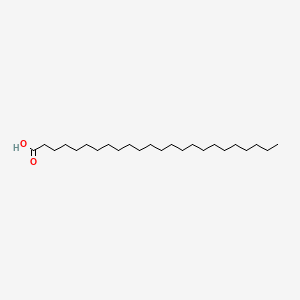
Lignoceric acid (tetracosanoic acid, 24:0, C24H48O2) is a saturated fat with 24 carbons. That makes it a very long chain fatty acid. Its nearest relatives in food are behenic acid (22 carbons) and arachidic acid (20 carbons).
PubChem, a US chemical database, lists it in wood tar, in cerebrosides (lipids of nerve tissue) and, in small amounts, in most natural fats. The name points to wood (lignum is the Latin word).
Peanut oil is the classic food source. The Codex standard for named vegetable oils puts lignoceric acid at 0.5% to 2.5% of peanut oil’s fatty acids. The body also makes it, so what you eat is only part of the story.
Most people never think about it, but doctors measure it. Lignoceric acid is broken down in peroxisomes, small compartments in cells. When the breakdown fails, very long chain fatty acids pile up.
That happens in X-linked adrenoleukodystrophy (X-ALD) and in Zellweger spectrum disorders, both rare inherited diseases. The blood test for them reads hexacosanoic acid (C26:0) and its ratio to lignoceric acid. In the nervous system, ceramides with chains of 22 to 24 carbons are building blocks of myelin lipids in mice. The best-known diet story from that disease, Lorenzo’s oil, is told on our erucic acid page.
As a food fat, the evidence is thin. Cohorts (groups followed for years) that measured lignoceric acid in blood link higher levels to lower risks of diabetes, heart failure and death. But blood levels are not the same as intake, and we found no randomized trial of lignoceric acid itself.
Several cohort papers below come from the same study of older adults. This page weighs 18 studies, 14 of them in people, and says plainly where the evidence stops.
Health benefits of lignoceric acid
The top findings from 18 studies, strongest evidence first
What the stars mean
- Strong. Several randomized trials, pooled in a meta-analysis, point the same way, or regulators (FDA or EFSA) have approved the claim.
- Moderate. Good randomized trials support it, but there are fewer of them, or their results vary.
- Limited. Small, short or single trials, or mixed results. Promising, but it needs confirmation.
Population and lab studies get no stars: they show a link or a mechanism, not proof.
How we rate evidence →- ★Peanut foods changed many blood fatsIn 63 healthy young adults, six months of peanut foods changed 51 blood fats, mostly sphingolipids with very long chain saturated fats. Lignoceric acid itself was not named.
- Population studyLinked to lower type 2 diabetes riskIn 12 cohorts, people with high blood levels (90th percentile) had 0.75 times the diabetes risk of those with low levels (10th percentile). The link vanished in some models, so it may be a marker.
- Population studyLinked to a lower risk of heart failureOlder adults in the top fifth of blood levels had 0.67 times the heart failure risk of the bottom fifth. This link does not prove cause.
- Population studyLinked to fewer deaths and healthier agingOlder adults in the top fifth of blood levels had 0.80 times the risk of death. In another study, the top fifth had 0.84 times the risk of unhealthy aging.
- Population studyLinked to a lower risk of atrial fibrillationIn 2,899 older adults, the top quarter of lignoceric acid had 0.68 times the risk of atrial fibrillation (an irregular heartbeat). They were followed for a median of 11.2 years.
All 17 studies, strongest evidence first
Six months of peanut foods changed 51 sets of blood fats
63 healthy young adults ate 25 g a day of skin-roasted peanuts, or 32 g of peanut butter or of control butter with peanut oil. Most changed lipids in this trial (ARISTOTLE) carried very long chain saturated fats, especially sphingolipids; lignoceric acid was not named. In an exploratory analysis in the EPIC-Potsdam cohort, this peanut lipid signature went with 0.89 times the type 2 diabetes risk per standard deviation. Heart disease showed no link (1.01), body mass index was a possible go-between, and peanuts are a whole food, so nothing here isolates lignoceric acid.
Higher blood lignoceric acid, lower type 2 diabetes risk, in 12 cohorts
This pooled analysis of 51,431 people counted 14,276 diabetes cases. The 90th percentile of lignoceric acid had 0.75 times the risk of the 10th, against 0.78 for arachidic and 0.84 for behenic acid. The link vanished in exploratory models that added blood palmitic acid (16:0) and triglycerides. So the fat may mark lower fat-making in the body, not cause lower risk; this is observational.
Top fifth of lignoceric acid: 0.67 times the heart failure risk
The Cardiovascular Health Study (CHS) followed 4,249 older adults for 45,030 person-years, with 1,304 cases of heart failure, comparing top and bottom fifths. Behenic and arachidic acid each gave 0.72, after adjusting for heart failure risk factors and other blood fatty acids. The pattern held for both main types of heart failure (preserved and reduced ejection fraction, a pumping measure). This is observational.
Top quarter of plasma lignoceric acid: 0.40 times the diabetes risk
Two US cohorts, the Nurses’ Health Study and Health Professionals Follow-Up Study, had 243 type 2 diabetes cases over 39,941 person-years. Results were adjusted for background, lifestyle and diet; the contrast, top against bottom quarter, differs from the pooled analysis above. Eating peanuts, peanut butter, vegetable fat, dairy fat and palmitic and stearic acids tracked blood levels only weakly (correlations up to 0.19). In red blood cells, only arachidic and behenic acid were linked to diabetes; this is observational.
Top fifth of plasma lignoceric acid: 0.80 times the risk of death
CHS followed 3,941 older adults from 1992 to 2011, with 3,134 deaths over 45,450 person-years. Behenic and stearic acid each gave 0.85, but palmitic acid went the other way (1.25), and arachidic acid showed no link. One author discloses honoraria from food and drug companies. This is observational.
Top fifth of lignoceric acid: 16% lower risk of unhealthy aging
CHS followed 2,680 older adults for a median of 6.4 years, and 2,484 had an unhealthy aging event. That meant a new chronic disease (heart, cancer, lung or severe kidney disease), loss of physical function or cognitive decline. The figure was 0.84 times the risk; behenic acid gave a 15% lower risk, and arachidic acid no link. This is observational.
More red-cell lignoceric acid, fewer new artery plaques in women, not men
Of 2,198 adults without neck-artery plaques, 573 women (35.1%) and 281 men (49.6%) developed them over a median 7.2 years. In women, the higher level went with 0.75 times the risk. The same paper pooled 7 studies with 8,592 people and 3,172 heart events: highest against lowest level gave 0.57 times the risk. This is observational.
Higher arachidic, behenic and lignoceric acid: about half the heart disease risk
The Nurses’ Health Study and Health Professionals Follow-Up Study compared extreme fifths of plasma levels in 794 coronary heart disease cases and 1,233 matched controls. The result, 0.48 times the risk, is for the three fats combined, not lignoceric acid alone. In red blood cells the trend was not clear (0.66 times). The levels also went with better blood fats and lower C-reactive protein; this is observational.
Top quarter of lignoceric acid: 0.68 times the atrial fibrillation risk
CHS followed 2,899 older adults for a median of 11.2 years, with 707 cases. Behenic acid gave 0.62, arachidic acid 0.78 and stearic acid 0.76, while palmitic acid went with a higher risk (1.48). This is observational.
More very long chain fats in midlife, less decline in word fluency
The ARIC (Atherosclerosis Risk in Communities) cohort followed 3,229 adults for 20 years. The fats were arachidic, behenic, tricosanoic and lignoceric acid, and each went with less decline on the word fluency test. 1 standard deviation higher in the total went with 0.057 standard deviations less decline. Other thinking tests showed no link; this is observational.
In three heart disease cohorts, a ceramide ratio went with cardiovascular death
The ratio set Cer(d18:1/16:0) against Cer(d18:1/24:0). Per standard deviation, the odds ratios were 4.49, 1.64 and 1.77 in Corogene (160 stable patients), SPUM-ACS (1,637 patients) and a Norwegian cohort. Cer(d18:1/24:0) carries a lignoceric acid chain, so this is a sphingolipid result, not a result for the free fat. The ratio added to the GRACE risk score in acute coronary syndrome (net reclassification improvement 0.17); this is observational.
Peanuts and total fat went with higher behenic and lignoceric acid
This review covered 12 mostly snapshot (cross-sectional) studies; physical activity also went with higher levels. Two snapshot analyses showed the link with peanuts and total fat, and alcohol went with lower arachidic and behenic acid. Smoking results conflicted, and most studies gave only simple unadjusted analyses, so confounding is unclear. The authors conclude that evidence on lifestyle factors is limited; this is observational.
Every untreated man with X-ALD had raised very long chain fatty acids
The study covered 1,097 males with X-linked adrenoleukodystrophy, 1,282 women carriers, 797 patients with other peroxisomal disorders and 29,600 controls. The test reads hexacosanoic acid (C26:0) and its ratios to lignoceric and behenic acid; using all three avoids false negatives. Levels were raised at birth and stable with age; 85% of obligate carriers were abnormal, so a normal result does not exclude carriers. Levels were raised in all patients with Zellweger syndrome and several other peroxisomal disorders, and the excess tracked severity. Men who had taken Lorenzo’s oil or a high erucic acid diet were excluded from the headline finding.
Peroxisomes burned lignoceric acid 2 to 3 times faster than mitochondria
In rat liver and human skin cells, palmitic acid went the other way: mitochondria burned it 2 to 3 times faster. Potassium cyanide did not block lignoceric acid breakdown, so the authors judged it mainly, possibly only, a peroxisome job. They linked this to the build-up of very long chain fats in Zellweger syndrome and adrenoleukodystrophy, where peroxisomes are missing or faulty. Cells and animal tissue.
X-ALD impaired lignocerate and cerotate breakdown in skin cells, not palmitate’s
Lignocerate (C24:0) and cerotate (C26:0) are broken down in peroxisomes. In cells from patients with Zellweger syndrome, neonatal adrenoleukodystrophy and infantile Refsum disease, breakdown of all three fats was deficient. The authors blamed a lack of the peroxisomal enzyme very long chain fatty acyl-CoA synthetase. Later work traced the disease to the ABCD1 gene, which codes for a peroxisomal transporter of these fats; this is a cell study.
Without ceramide synthase 2, mice lost about half their compacted myelin
Ceramides with chains of 22 carbons or more fell, and the myelin loss began in early adulthood. The enzyme makes ceramides with C22 to C24 fatty acids, including lignoceric acid chains. The mice lost about 80% of myelin basic protein, developed cerebellar degeneration and, after 7 months, liver cancers. This covers a family of C22 to C24 chains, not lignoceric acid alone, in mice.
Without the enzyme in myelin cells, 90% of mice died young
In mice lacking ceramide synthase 2 only in myelin-making cells, C22 to C24 sphingolipids fell and shorter C18 ones took their place. By 6 weeks myelin was thinner and activated microglia (brain immune cells) appeared. By 16 weeks the mice had myelin atrophy, motor deficits and swollen axons, and the deaths came between 16 and 26 weeks. The authors say chain length matters for myelin; this mouse study covers C22 to C24 chains, not lignoceric acid alone.
Foods high in lignoceric acid
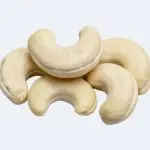
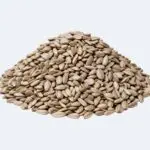
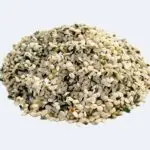
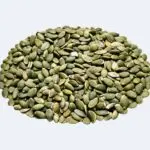
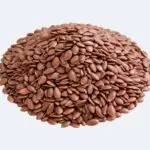
Our ranking is led by nuts and seeds, in small amounts. A 1 oz (28 g) serving of macadamia nuts shows 0.08 g, cashews 0.03 g and sunflower seeds 0.02 g. Hemp seeds and flaxseeds also make the list, per serving and per 100 g.
Even the richest food gives under a tenth of a gram a serving.
Peanuts and peanut oil are the textbook source, although peanuts are not in the top ten of our ranking. The Codex standard lists lignoceric acid at 0.5% to 2.5% of the fatty acids in peanut oil. That compares with 1.0% to 2.0% for arachidic acid and 1.5% to 4.5% for behenic acid. It says arachidic and higher fatty acids in peanut oil should not exceed 48 g per kg.
Peanuts do seem to move the blood level. In US cohorts, peanut and peanut butter intake was weakly correlated with plasma lignoceric acid (correlations up to 0.19). A review of 12 observational studies found peanut and total fat intake went with higher levels of behenic and lignoceric acid.
In the 6-month peanut trial, peanuts, peanut butter and peanut oil changed lipids that carry very long chain saturated fats. We found no study of how cooking or refining changes the lignoceric acid in a food.
Per serving. No daily amount is set, so bars compare each food with the top food.
Per 100 g. No daily amount is set, so bars compare each food with the top food.
Per 100 kcal: the same calories of each food, for a fair comparison. Bars compare each food with the top food.
Food labels have no Daily Value or Reference Intake for lignoceric acid, so the % compares each food with the top food.
- 1.

- 2.
- 3.
- 4.
- 5.
- 6.
- 7.

- 8.
- 9.

- 10.


- 1.
- 2.
- 3.
- 4.
- 5.
- 6.
- 7.

- 8.
- 9.
- 10.

- 1.
- 2.
- 3.
- 4.
- 5.
- 6.
- 7.

- 8.
- 9.
- 10.

Sources
- FoodData Central. US Department of Agriculture, Agricultural Research Service. Values as shown in the ranking above.
- Codex Alimentarius. Standard for named vegetable oils (CODEX STAN 210-1999). Amendment 2015. Table 1.
- National Center for Biotechnology Information. Lignoceric acid. PubChem compound record.
- Lai KZH, Yehia NA, Semnani-Azad Z, et al. Lifestyle factors associated with circulating very long-chain saturated fatty acids in humans: a systematic review of observational studies. Adv Nutr. 2023.
- Ardisson Korat AV, Malik VS, Furtado JD, et al. Circulating very-long-chain SFA concentrations are inversely associated with incident type 2 diabetes in US men and women. J Nutr. 2020.
- Domínguez-López I, Eichelmann F, Parilli-Moser I, et al. Peanuts-derived plasma lipids and lower risk of type 2 diabetes: association mediated by body mass index. Am J Clin Nutr. 2026.
How lignoceric acid works
Most of what we know about what the body does with lignoceric acid comes from cells, rats, mice and patients with rare diseases. Two ideas cover it: peroxisomes break it down, and a family of 22 to 24 carbon chains builds myelin lipids. A third chart then shows what cohort studies found in ordinary people.
Peroxisomes break it down, and tests use it
What happens to lignoceric acid, from rat liver, human skin cells and patient data. A diagram, not to scale.
Long chain fats such as palmitic acid are burned mainly in mitochondria, the cell’s power plants. Lignoceric acid is mostly handled by peroxisomes: in rat liver and human skin cells it was burned 2 to 3 times faster there. In skin cells from patients with Zellweger syndrome, where peroxisomes are lacking, the breakdown of lignocerate was deficient.
In X-ALD the cause is a fault in the ABCD1 gene. It codes for a protein that moves very long chain fatty acids (22 carbons and more) into the peroxisome. Levels then rise in blood and tissue.
The Zellweger spectrum is a group of disorders of peroxisome assembly. A review notes that most of their metabolic abnormalities can be detected in blood and urine.
Newborn screening for X-ALD now uses a related marker, C26:0-lysophosphatidylcholine, on dried blood spots. In the first four years in Pennsylvania, ABCD1 sequencing identified 21 hemizygous males and 24 heterozygous females. The authors put the US incidence at roughly 1 in 10,500.
It is a building block of myelin lipids
How C22 to C24 chains are used in myelin, from mouse studies. They cover lignoceric acid but also behenic acid and the 24-carbon monounsaturated chain. A diagram, not to scale.
Myelin is the insulating layer around nerve fibers, and about 70% of it is lipid. A 2023 study notes that galactosylceramide, sulfatide and sphingomyelin are essential for myelin. The first two are made mostly from C22 to C24 ceramides.
Mice that lack ceramide synthase 2, the enzyme that makes them, lost these lipids, and their myelin thinned or came apart. A 2026 study found that without them, myelin basic protein was displaced from membrane microdomains and oligodendrocytes (myelin-making cells) did not mature normally. These are mouse studies of a whole family of chains, so they do not show what dietary lignoceric acid does.
A related mouse model with a faulty elongase, Elovl1, had shorter myelin sphingolipid chains and poorer motor coordination.
What has been seen in people
Hazard ratios for higher against lower circulating lignoceric acid in cohort studies, drawn to scale. The comparison differs by study (percentiles, quarters or fifths) and so do the adjustments, so compare the direction, not the exact size. All are observational.
Every cohort here points the same way, toward lower risk at higher blood levels, but none can say that lignoceric acid is the reason. A 2022 review says the diabetes links may be confounded or mediated by triglycerides and palmitic acid. It adds that ceramides and sphingomyelins carrying a very long chain fatty acid show the same pattern for heart failure, atrial fibrillation and death.
Its closing line says the epidemiology has run ahead of the biology. One cohort that split lipids into classes found opposite signs for two of them (see the forms section). The only trial we found changed the lipids by feeding peanuts and did not test lignoceric acid alone.
Sources
- Singh I, Moser AE, Goldfischer S, Moser HW. Lignoceric acid is oxidized in the peroxisome: implications for the Zellweger cerebro-hepato-renal syndrome and adrenoleukodystrophy. Proc Natl Acad Sci U S A. 1984.
- Wanders RJ, van Roermund CW, van Wijland MJ, et al. Peroxisomal fatty acid beta-oxidation in relation to the accumulation of very long chain fatty acids in cultured skin fibroblasts from patients with Zellweger syndrome and other peroxisomal disorders. J Clin Invest. 1987.
- Moser AB, Kreiter N, Bezman L, et al. Plasma very long chain fatty acids in 3,000 peroxisome disease patients and 29,000 controls. Ann Neurol. 1999.
- Engelen M, Kemp S, de Visser M, et al. X-linked adrenoleukodystrophy (X-ALD): clinical presentation and guidelines for diagnosis, follow-up and management. Orphanet J Rare Dis. 2012.
- Klouwer FC, Berendse K, Ferdinandusse S, et al. Zellweger spectrum disorders: clinical overview and management approach. Orphanet J Rare Dis. 2015.
- Priestley JRC, Adang LA, Drewes Williams S, et al. Newborn screening for X-linked adrenoleukodystrophy: review of data and outcomes in Pennsylvania. Int J Neonatal Screen. 2022.
- Imgrund S, Hartmann D, Farwanah H, et al. Adult ceramide synthase 2 (CERS2)-deficient mice exhibit myelin sheath defects, cerebellar degeneration, and hepatocarcinomas. J Biol Chem. 2009.
- Teo JD, Marian OC, Spiteri AG, et al. Early microglial response, myelin deterioration and lethality in mice deficient for very long chain ceramide synthesis in oligodendrocytes. Glia. 2023.
- Sun H, Mo L, Cao M, et al. Very long chain sphingolipids govern brain myelination by regulating oligodendrocyte differentiation and membrane microdomain integrity. J Transl Med. 2026.
- Isokawa M, Sassa T, Hattori S, et al. Reduced chain length in myelin sphingolipids and poorer motor coordination in mice deficient in the fatty acid elongase Elovl1. FASEB Bioadv. 2019.
- Lemaitre RN, King IB. Very long-chain saturated fatty acids and diabetes and cardiovascular disease. Curr Opin Lipidol. 2022.
How much lignoceric acid do you need?
No daily amount of lignoceric acid is set. Neither the FDA nor the EU has set a Daily Value or EU Reference Intake for it. The EU list of permitted health claims (Regulation (EU) No 432/2012) has no entry for it.
Its saturated fat claim reads “Reducing consumption of saturated fat contributes to the maintenance of normal blood cholesterol levels”. That claim is about saturated fat as a group, for foods that are at least low in saturated fat.
The body also makes lignoceric acid. So a review of lifestyle factors describes circulating levels as the product of the body’s own production as well as diet. We found no study that set a dietary target for it.
There is no deficiency to write about. We found no report of a shortage of lignoceric acid from food. The opposite problem, a build-up of very long chain fatty acids, is a genetic disease (see the safety section). It is not a result of eating too much.
Sources
- European Commission. Commission Regulation (EU) No 432/2012 establishing a list of permitted health claims made on foods. Official Journal of the European Union. 2012.
- Lai KZH, Yehia NA, Semnani-Azad Z, et al. Lifestyle factors associated with circulating very long-chain saturated fatty acids in humans: a systematic review of observational studies. Adv Nutr. 2023.
- Moser HW, Borel J. Dietary management of X-linked adrenoleukodystrophy. Annu Rev Nutr. 1995.
Forms of lignoceric acid: absorption and effects
There are no lignoceric acid supplements to compare. The forms people meet are the fat in peanut oil and other foods, the level measured in blood, and the lignoceric acid chains inside sphingolipids.
The honest bottom line: we found no study of how well the body absorbs lignoceric acid from food. We also found no human trial of a purified form. What exists is cohort work that measures it in different parts of the blood, and one trial that fed peanuts.
The table below lays out what each form is and what the studies found. The numbers in the last column refer to the list of sources under this section.
| Form | What it is | What studies show | Source |
|---|---|---|---|
| Peanut oil | A food fat; the Codex range for lignoceric acid is 0.5% to 2.5% of its fatty acids | The 6-month ARISTOTLE trial used control butter with peanut oil as one arm and changed lipids that carry very long chain saturated fats. It tested peanut foods, not lignoceric acid alone. | 1, 2 |
| Peanuts, peanut butter and other nuts | Whole foods with the fat inside | Peanut intake went with higher blood levels in a review of observational studies. In the peanut trial, whole peanuts and peanut butter were compared with control butter. | 2, 3 |
| Plasma and red-cell fatty acids | Where cohorts measure it, as a percent of total fatty acids | In two US cohorts, plasma lignoceric acid went with lower diabetes risk (hazard ratio 0.40); in red blood cells only arachidic and behenic acid did. In a US analysis, red-cell levels of the three fats combined showed only a nonsignificant trend with coronary heart disease. | 4 |
| Ceramides and sphingomyelin | Lignoceric acid bound to sphingosine in cell membranes | Ceramide with 24:0 went with lower diabetes risk and sphingomyelin with 24:0 with higher risk, in one cohort. A ceramide ratio with 24:0 in the denominator predicted cardiovascular death in patients with coronary disease. | 5 |
| Purified lignoceric acid or capsules | No product reviewed | We found no trial of any outcome. | not stated |
Here is the one head-to-head study of lipid classes, 1 in all.
Lignoceric acid in ceramides: lower diabetes risk; in sphingomyelin: higher
Two nested case-cohorts in EPIC-Potsdam had 1,911 people for type 2 diabetes (774 cases) and 1,704 for cardiovascular disease (547 cases). Per standard deviation, lignoceric ceramides gave 0.46 times the diabetes risk and lignoceric sphingomyelin 1.61 times, across 12 measured lipid classes. The pattern appeared only after accounting for correlated lipids, and higher C22:0 went with higher diabetes risk. Monoglycerides and cholesteryl esters with these fats went with higher risk of both outcomes, so any protection depends on which lipid carries it.
Sources
- Codex Alimentarius. Standard for named vegetable oils (CODEX STAN 210-1999). Amendment 2015.
- Domínguez-López I, Eichelmann F, Parilli-Moser I, et al. Peanuts-derived plasma lipids and lower risk of type 2 diabetes: association mediated by body mass index. Am J Clin Nutr. 2026.
- Lai KZH, Yehia NA, Semnani-Azad Z, et al. Lifestyle factors associated with circulating very long-chain saturated fatty acids in humans: a systematic review of observational studies. Adv Nutr. 2023.
- Ardisson Korat AV, Malik VS, Furtado JD, et al. Circulating very-long-chain SFA concentrations are inversely associated with incident type 2 diabetes in US men and women. J Nutr. 2020. Malik VS, Chiuve SE, Campos H, et al. Circulating very-long-chain saturated fatty acids and incident coronary heart disease in US men and women. Circulation. 2015.
- Domínguez-López I, Eichelmann F, Prada M, Schulze MB. Very long-chain saturated fatty acids in plasma lipids: association with cardiometabolic risk influenced by lipid interactions. Cardiovasc Diabetol. 2025. Laaksonen R, Ekroos K, Sysi-Aho M, et al. Plasma ceramides predict cardiovascular death in patients with stable coronary artery disease and acute coronary syndromes beyond LDL-cholesterol. Eur Heart J. 2016.
Is lignoceric acid safe? Limits and who should watch it
At the small amounts in nuts, seeds and peanut oil, we found no report of harm and no upper limit. The concerns are about two inherited diseases, one food allergy and not mistaking a blood marker for a goal.
- A build-up of very long chain fatty acids is a genetic disease, not a diet effect. X-ALD comes from a fault in the ABCD1 gene, and Zellweger spectrum disorders from PEX genes that assemble peroxisomes. These fats come from food and from the body, so a 2025 review found diet restriction of limited use. A guideline says most women who carry the X-ALD gene develop symptoms by age 60. Treatment is specialist care; Lorenzo’s oil is covered on our erucic acid page.
- A high level is a sign of disease in one setting and a lower risk in another. In X-ALD, the marker that rises is C26:0 and its ratio to C24:0, because the breakdown is blocked. In the cohorts, people in the top fifth for lignoceric acid had lower heart failure and mortality risk. These are different fats, different people and different mechanisms, so the cohort results are no reason to avoid or chase the fat.
- Supplements. We found no lignoceric acid supplement trial. The diabetes links faded once triglycerides and palmitic acid were added to the models, so the level may reflect other things. There is no evidence that taking it would lower risk.
- Peanut allergy. Peanuts are the best-known source, but a European guideline on IgE-mediated food allergy calls allergen avoidance essential after diagnosis. People with a peanut allergy should not eat peanuts to raise a blood fat.
- Drug interactions. We found no drug interaction specific to lignoceric acid.
- Who should ask a doctor. Anyone with an abnormal very long chain fatty acid result or a family history of X-ALD. The same goes for a baby with a positive newborn screen, or anyone with unexplained adrenal insufficiency or nerve symptoms.
How to eat lignoceric acid wisely
- Do not chase the number. No trial shows that raising lignoceric acid helps, and the cohort links to lower risk could reflect lower palmitic acid and triglycerides.
- Eat the foods, not the fat. Nuts and seeds carry it in tiny amounts (0.08 g in 1 oz of macadamia nuts). In the peanut trial, the lipid pattern from peanuts went with 0.89 times the diabetes risk in a cohort. An exploratory analysis suggests most of that link could run through body weight.
- If a test shows high very long chain fatty acids, see a specialist. Diagnosis uses C26:0 and its ratios together, and a normal result does not exclude carrier status.
Sources
- Engelen M, Kemp S, de Visser M, et al. X-linked adrenoleukodystrophy (X-ALD): clinical presentation and guidelines for diagnosis, follow-up and management. Orphanet J Rare Dis. 2012.
- Klouwer FC, Berendse K, Ferdinandusse S, et al. Zellweger spectrum disorders: clinical overview and management approach. Orphanet J Rare Dis. 2015.
- Braverman NE, Raymond GV, Rizzo WB, et al. Peroxisome biogenesis disorders in the Zellweger spectrum: an overview of current diagnosis, clinical manifestations, and treatment guidelines. Mol Genet Metab. 2016.
- Moser HW, Borel J. Dietary management of X-linked adrenoleukodystrophy. Annu Rev Nutr. 1995.
- Di Stefano A, Ricci L, Ferrari D, et al. Dietary approaches in the management of adrenoleukodystrophy: evidence summary for nutritional tips. Nutrients. 2025.
- Moser AB, Kreiter N, Bezman L, et al. Plasma very long chain fatty acids in 3,000 peroxisome disease patients and 29,000 controls. Ann Neurol. 1999.
- Santos AF, Riggioni C, Agache I, et al. EAACI guidelines on the management of IgE-mediated food allergy. Allergy. 2025.
- Fretts AM, Imamura F, Marklund M, et al. Associations of circulating very-long-chain saturated fatty acids and incident type 2 diabetes: a pooled analysis of prospective cohort studies. Am J Clin Nutr. 2019.
- Domínguez-López I, Eichelmann F, Parilli-Moser I, et al. Peanuts-derived plasma lipids and lower risk of type 2 diabetes: association mediated by body mass index. Am J Clin Nutr. 2026.
History of lignoceric acid
The name points to wood: lignum is the Latin word, and PubChem lists the acid among the fats found in wood tar. Its medical story starts with the peroxisome.
In 1984 Singh and colleagues showed that lignoceric acid is broken down mainly in peroxisomes. That tied the build-up of very long chain fats in Zellweger syndrome and adrenoleukodystrophy to the missing or faulty organelle. In 1987 Wanders and colleagues showed that cells from X-ALD patients could not break down lignocerate and cerotate, but could break down palmitate.
The blood test followed. The plasma assay for very long chain fatty acids was developed in Hugo Moser’s laboratory in 1981. By 1999, the group had measured it in about 3,000 patients with peroxisomal diseases and 29,000 controls. Newborn screening for X-ALD was added to the Pennsylvania program in 2017, using C26:0-lysophosphatidylcholine rather than lignoceric acid.
The food-and-health side is newer. The first big cohort reports on lignoceric acid and its relatives date from 2014 and 2015. A 2022 review described the epidemiology as running ahead of the biology.
Sources
- National Center for Biotechnology Information. Lignoceric acid. PubChem compound record.
- Singh I, Moser AE, Goldfischer S, Moser HW. Lignoceric acid is oxidized in the peroxisome: implications for the Zellweger cerebro-hepato-renal syndrome and adrenoleukodystrophy. Proc Natl Acad Sci U S A. 1984.
- Wanders RJ, van Roermund CW, van Wijland MJ, et al. Peroxisomal fatty acid beta-oxidation in relation to the accumulation of very long chain fatty acids in cultured skin fibroblasts from patients with Zellweger syndrome and other peroxisomal disorders. J Clin Invest. 1987.
- Moser AB, Kreiter N, Bezman L, et al. Plasma very long chain fatty acids in 3,000 peroxisome disease patients and 29,000 controls. Ann Neurol. 1999.
- Priestley JRC, Adang LA, Drewes Williams S, et al. Newborn screening for X-linked adrenoleukodystrophy: review of data and outcomes in Pennsylvania. Int J Neonatal Screen. 2022.
- Fretts AM, Mozaffarian D, Siscovick DS, et al. Plasma phospholipid saturated fatty acids and incident atrial fibrillation: the Cardiovascular Health Study. J Am Heart Assoc. 2014. Malik VS, Chiuve SE, Campos H, et al. Circulating very-long-chain saturated fatty acids and incident coronary heart disease in US men and women. Circulation. 2015.
- Lemaitre RN, King IB. Very long-chain saturated fatty acids and diabetes and cardiovascular disease. Curr Opin Lipidol. 2022.
- Lignoceric acid. Wikipedia. For the occurrence in wood tar and peanut oil.
Frequently asked questions about lignoceric acid
What is lignoceric acid?
Lignoceric acid (24:0, tetracosanoic acid) is a saturated fat with 24 carbons, found in peanut oil, nuts, seeds and nerve tissue lipids. The body makes it as well as eating it. The Codex standard lists it at 0.5% to 2.5% of the fatty acids in peanut oil. It is a very long chain fatty acid, like behenic acid and arachidic acid.
Is lignoceric acid bad for you?
Cohort studies suggest the opposite of what saturated fat usually suggests, but they do not prove benefit. In 12 pooled cohorts, higher blood lignoceric acid went with 0.75 times the risk of type 2 diabetes. In older adults it went with 0.67 times the heart failure risk and 0.80 times the risk of death.
The diabetes link faded after adjusting for palmitic acid and triglycerides, and we found no trial of lignoceric acid itself.
Which foods are high in lignoceric acid?
In our ranking, macadamia nuts lead with 0.08 g in a 1 oz serving. Cashews follow at 0.03 g, and sunflower and hemp seeds at 0.02 g.
Peanut oil is the textbook source, at 0.5% to 2.5% of its fatty acids by the Codex standard. But peanuts are not in the top ten of our ranking. All of these give well under a tenth of a gram a serving.
Does lignoceric acid cause adrenoleukodystrophy?
No, it does not. X-ALD comes from a fault in the ABCD1 gene, which stops very long chain fatty acids from being moved into peroxisomes and broken down. The fats then build up in blood and tissue.
Eating lignoceric acid does not cause the disease. The body also makes these fats, so restricting them in the diet has shown limited efficacy.
What does a high very long chain fatty acid blood test mean?
It points to a peroxisomal disorder such as X-ALD or a Zellweger spectrum disorder, and needs a specialist. The test reads hexacosanoic acid (C26:0) and its ratios to lignoceric acid (C24:0) and behenic acid (C22:0). In a study of about 3,000 patients and 29,600 controls, every untreated man with X-ALD had raised levels. A normal result did not exclude carrier women.
Should I take a lignoceric acid supplement?
No. We found no trial of lignoceric acid supplements for any outcome. The cohort links to lower diabetes and heart risk may reflect lower palmitic acid and triglycerides. A cohort that split lipids into classes found opposite signs for ceramide and sphingomyelin carrying it. Nuts and seeds supply it in small amounts with their other nutrients.
Do peanuts raise very long chain saturated fats in the blood?
Probably, as part of a wider change in blood lipids. For 6 months, 63 healthy young adults ate peanuts (25 g a day), peanut butter (32 g) or butter with peanut oil. This changed 51 sets of blood fats, mostly lipids that carry very long chain saturated fats.
Observational studies also tie peanut intake to higher blood levels. The abstract does not report lignoceric acid on its own.
How is lignoceric acid different from behenic and arachidic acid?
It is longer: 24 carbons against 22 for behenic acid and 20 for arachidic acid. All three come from peanut oil and nuts, and in cohorts they tend to point the same way, though not always. In older adults, lignoceric and behenic acid went with less unhealthy aging (0.84 and 0.85 times the risk). Arachidic acid did not.