Antioxidants are substances that may prevent or slow some kinds of damage to cells. During normal life, your cells make highly reactive molecules that contain oxygen. Too many of them can lead to what is called oxidative stress. That may damage cells and contribute to diseases such as heart disease and cancer.
Your body has its own defense system against this. The US National Center for Complementary and Integrative Health (NCCIH) says your body’s own antioxidant enzymes are the most important part of it. Food adds more antioxidants, from foods such as fruits, vegetables and grains.
This page explains which nutrients count as antioxidants and what the food ranking below measures. It also explains why antioxidant pills failed in large trials.
Which vitamins, minerals and plant compounds count?
- Vitamins. NCCIH names vitamin C and vitamin E as antioxidants. Both are also sold as supplements.
- Minerals. Selenium works as a building block, not on its own. Your body puts it into proteins called selenoproteins, and some of these have antioxidant effects.
- Plant compounds. Most of the active compounds in plants can act as antioxidants in a test tube, the authors of the FRAP food table write. Examples on this site are beta-carotene and the other carotenoids, and the flavonoids in tea, berries, citrus and onions.
Antioxidants are not interchangeable. NCCIH notes that each antioxidant in the body has different properties. It also warns that large amounts may interfere with normal functions of the cell, including its own defenses.
Foods high in antioxidant capacity (FRAP)
The ranking below uses FRAP (ferric reducing ability of plasma), a test-tube method. A food extract is mixed with a form of iron. The test measures how much of that iron the extract can change in 4 minutes. The more iron it changes, the higher the score.
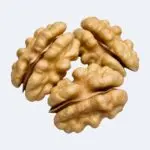
The result is given in millimoles (mmol), a unit chemists use for an amount of a substance. Our values come from a 2010 table of more than 3,100 foods by Carlsen and colleagues. They calibrated the test with a standard iron solution. So 21.9 mmol per 100 g for walnuts means that 100 g of walnuts changed as much iron as 21.9 mmol of that standard.
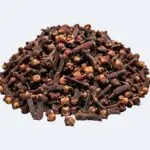
Per serving, walnuts (1 oz), coffee (1 cup) and cloves (1 teaspoon) come out about equal, at about 6.2 mmol each. Dried spices score very high per gram, but a teaspoon of cloves weighs only about 2 g.
Per serving. No daily amount is set, so bars compare each food with the top food.
Per 100 g. No daily amount is set, so bars compare each food with the top food.
Per 100 kcal: the same calories of each food, for a fair comparison. Bars compare each food with the top food.
Food labels have no Daily Value or Reference Intake for antioxidant capacity, so the % compares each food with the top food.
- 1.
- 2.

- 3.
- 4.

- 5.
- 6.
- 7.
- 8.
- 9.
- 10.


- 1.
- 2.
- 3.
- 4.
- 5.
- 6.
- 7.
- 8.
- 9.
- 10.


- 1.
- 2.
- 3.
- 4.
- 5.
- 6.
- 7.
- 8.
- 9.
- 10.


Why an antioxidant score is not a health score
A FRAP number describes the food in a test tube, not what happens in your body. The authors of the FRAP table say the antioxidant content of a food is not necessarily linked to antioxidant activity in your cells. The food first has to be digested and absorbed, and the body changes many compounds on the way.
The US Department of Agriculture (USDA) reached the same view about a similar score, ORAC. In 2012 it removed its ORAC table. It cited mounting evidence that such values have no relevance to the effects of plant compounds on human health. It added that food and supplement makers routinely misused the numbers.
Our article Whatever happened to antioxidant ORAC scores? tells the full story.
Each test also responds to its own chemistry. FRAP, for example, does not detect glutathione or the sulfur compounds of garlic. Read the ranking as a lab property of each food, not as a list of the healthiest foods.
Why antioxidant pills failed in large trials
Studies of eating habits had linked fruit and vegetables rich in carotenoids to less lung cancer. High blood levels of beta-carotene and vitamin E showed the same link. So researchers tested them as pills in randomized trials, where chance decides who gets a pill or a dummy pill (placebo). Here is what the largest trials found.
Across 78 trials, antioxidant pills did not lower the risk of death, and in the best-run trials deaths were 4% higher
Cochrane review of 296,707 people who took beta-carotene, vitamin A, vitamin C, vitamin E or selenium, or a placebo or nothing. In the trials with a low risk of bias, beta-carotene and vitamin E went with slightly more deaths. Vitamin C and selenium made no clear difference. The authors found no evidence to support antioxidant pills to prevent disease.
In 29,133 male smokers (ATBC trial), beta-carotene pills went with 18% more lung cancer, and vitamin E made no difference
Randomized, double-blind trial in Finland. For 5 to 8 years, men aged 50 to 69 took 50 mg of vitamin E, 20 mg of beta-carotene, both, or a placebo. Deaths from any cause were 8% higher with beta-carotene, mainly from lung cancer and heart disease. Vitamin E did not lower lung cancer, and there were more deaths from bleeding strokes in the vitamin E groups.
In 18,314 smokers, former smokers and asbestos workers (CARET trial), beta-carotene plus vitamin A raised lung cancer by 28%
Randomized, double-blind trial of 30 mg of beta-carotene and 25,000 IU of vitamin A a day against a placebo. People took them for 4 years on average. Deaths from any cause were 17% higher in the pill group. The trial was stopped 21 months earlier than planned.
In 34,887 healthy men (SELECT trial), vitamin E raised the risk of prostate cancer by 17%, and selenium did not prevent it
Randomized trial in the US, Canada and Puerto Rico. Men took 400 IU of vitamin E, 200 µg of selenium, both, or a placebo every day. The first report, in 2008, found that neither pill prevented prostate cancer. With longer follow-up, the vitamin E group had 1.6 extra prostate cancers for every 1,000 men followed for a year.
This does not make fruit and vegetables a waste of time. NCCIH points to extensive evidence that people who eat more of them have lower risks of chronic diseases. Those studies observe habits, so they cannot show that the antioxidants are the reason.
There is one exception for pills. In people who already have age-related macular degeneration, an eye disease, certain combinations of antioxidants and zinc can slow it down, NCCIH says. That is a decision to make with an eye doctor. If you take medicines or have a health condition, ask your doctor or pharmacist before starting any supplement.
Sources
- National Center for Complementary and Integrative Health (NIH). Antioxidant supplements: what you need to know. Last updated July 2023.
- Rayman MP. Selenium and human health. Lancet. 2012.
- Carlsen MH, Halvorsen BL, Holte K, et al. The total antioxidant content of more than 3100 foods, beverages, spices, herbs and supplements used worldwide. Nutr J. 2010.
- U.S. Department of Agriculture, Agricultural Research Service. Oxygen Radical Absorbance Capacity (ORAC) of Selected Foods, Release 2 (2010): notice of withdrawal. Archived copy captured 27 Aug 2012: web.archive.org.
- Lippman SM, Klein EA, Goodman PJ, et al. Effect of selenium and vitamin E on risk of prostate cancer and other cancers: the Selenium and Vitamin E Cancer Prevention Trial (SELECT). JAMA. 2009.
- FoodData Central. US Department of Agriculture, Agricultural Research Service. Serving sizes as shown in the ranking above.