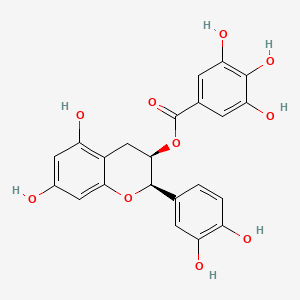
Epicatechin gallate, or ECG, is a tea catechin: the compound epicatechin with a gallic acid group attached. The tea plant, Camellia sinensis, makes it. It sits in green tea beside EGCG, the better-known one. In USDA data, a cup of green tea (245 g) holds 44 mg of ECG, about a quarter of its 172 mg of EGCG.
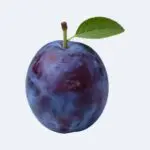
No other food comes close. Plums, next on the list, have 0.76 mg per 100 g, against 17.9 mg in green tea.
The gallic acid group is what sets ECG and EGCG apart from epicatechin and epigallocatechin. In a cell test, both gallates switched on a human bitter-taste receptor, hTAS2R14. The two catechins without the group did not.
Most readers do not know how long ECG lingers. After a single dose of pure ECG in 10 volunteers, its half-life in blood was 6.9 hours, against 3.9 for EGCG. It was still raised at 24 hours.
In the lab, ECG has also made MRSA bacteria sensitive again to an antibiotic they had resisted. That has not been tested in people. Almost all human data on ECG describe where it goes in the body, not what it does for health.
Health benefits of ECG
The top findings from 22 studies, strongest evidence first
What the stars mean
- Strong. Several randomized trials, pooled in a meta-analysis, point the same way, or regulators (FDA or EFSA) have approved the claim.
- Moderate. Good randomized trials support it, but there are fewer of them, or their results vary.
- Limited. Small, short or single trials, or mixed results. Promising, but it needs confirmation.
Population and lab studies get no stars: they show a link or a mechanism, not proof.
How we rate evidence →- ★Lasts longer than EGCG in blood, peaks lowerIn 10 volunteers, ECG took 6.9 hours to fall by half in blood, against 3.9 hours for EGCG. In 20 adults after green tea extract, ECG peaked at 0.16 μM and EGCG at 1.09 μM.
- ★Milk or soy protein lowered blood ECGIn 24 healthy women, adding milk, caseinate or soy protein to green tea extract cut ECG exposure to 66 to 77% of the extract alone.
- ★Reached prostate tissue in most menIn 31 men with prostate cancer, four weeks of green tea extract put ECG in prostate tissue in 93% to 94% of men.
- Population studyLinked to lower gastric cancer odds in womenJapanese women with the highest blood ECG (9.3 ng/mL or more) had 0.25 times the gastric cancer odds of women with none detectable. At 0.32 to 9.2 ng/mL the odds were 1.03 times.
- Population studyNot linked to breast cancer in two studiesIn Chinese women, serum ECG showed no link to breast cancer (792 cases). In Japanese women, the highest ECG group had 1.75 times the odds, which could be chance.
All 22 studies, strongest evidence first
Pure ECG lasted longer in blood than EGCG: half-life 6.9 hours
In this randomized crossover study, 10 healthy volunteers each took 1.5 mmol of ECG, EGC and EGCG on separate occasions. By the same measure EGCG lasted 3.9 hours and EGC 1.7. ECG was still above baseline at 24 hours, with none found in urine. Very little changed into epicatechin, so the gallate group does not need to come off for ECG to be absorbed. Plasma antioxidant activity rose after ECG and EGC, but not clearly after EGCG. The authors work at Unilever Research.
Milk or protein cut blood ECG to 66 to 77%
In this randomized crossover trial, 24 healthy women drank 1.75 g of green tea extract with or without skimmed milk, caseinate or soy protein. ECG exposure over 4.5 hours was 68% with milk, 66% with caseinate and 77% with soy protein, compared with the extract alone. EGCG fell to 63 to 76%, while non-galloylated catechins rose. The extract is a mixture, and the abstract does not give its ECG dose.
After 14 days, ECG stayed in fasting blood; EGCG did not
Five healthy 22-year-old women ate green tea catechins in chocolate daily, and blood was taken after an overnight fast. In a single-dose test, the chocolate lowered plasma ECG at 1.5 hours and EGCG at 6 hours. In plasma, ECG and EGCG were mostly unconjugated (not yet changed by the body). In rats given about equal amounts of both, ECG levels also stayed higher than EGCG, but five women is a very small sample.
Taken fasting, free ECG in blood changed like free EGCG
In this randomized crossover study, 30 healthy volunteers took Polyphenon E fasting or with a light breakfast. It is a decaffeinated green tea catechin mixture, dosed at 400, 800 or 1,200 mg of EGCG. On an empty stomach, free EGCG rose more than 3.5 times, and free ECG changed in a similar way. ECG was in plasma mostly as the free form, and urine ECG was very low or undetectable either way. The abstract gives no ECG amounts, and this trial also appears on our EGCG page.
After green tea extract, blood ECG peaked at only 0.16 μM
20 healthy adults took 1.1 g of decaffeinated green tea extract (836 mg of catechins), with a meal at 60 minutes. 10 had each COMT gene variant. ECG peaked after about 85 minutes. EGCG peaked much higher, at 1.09 μM. ECG and EGCG showed a single peak, while EGC and EC showed two. The gene variant made no clear difference.
ECG reached the prostate in 93 to 94% of men
In this randomized trial, 31 men with prostate cancer took 1 g of green tea extract a day for four weeks before surgery. It held 830 mg of tea polyphenols, and they also took 800 mg of quercetin or a placebo. Prostate tissue held ECG in 93% of the quercetin group and 94% of the placebo group, against 67% and 75% for EGCG. Quercetin did not change tea polyphenol levels in the tissue, and no liver toxicity was seen.
Gallated catechins raised blood ECG and made LDL harder to oxidize
In this randomized, placebo-controlled crossover trial, 19 healthy men took a green tea extract capsule with 1 g of catechins. Blood ECG and EGCG rose within an hour. More than 99% of the catechins were gallated types, so the effect cannot be credited to ECG alone. In test tubes, gallated catechins moved into LDL particles, and a second study of 5 women confirmed it in people. LDL oxidizability is a lab measure, not heart disease, and several authors work at the research institute of the tea company ITO EN.
Black tea raised blood ECG, but catechins did not track vessel health
66 patients with coronary artery disease drank 450 mL of black tea once, then 900 mL a day for 4 weeks. Total catechins rose 33% after one dose and 29% after 4 weeks. Of the single catechins, only ECG clearly rose after the single dose. Tea did not improve plasma antioxidant capacity or lower urine stress markers, and the authors suggest black tea’s vessel benefit may not come from catechins.
Higher blood ECG and EGCG went with better bone measures, unevenly
This prospective cohort in Guangzhou followed 1,708 adults for 13 years, with four bone scans. Moderate tea drinkers had the highest average bone density scores, for example 0.107 for the whole body. Differences were widest across ECG and EGCG groups, but several patterns rose and fell rather than climbing steadily. This shows a link only.
Highest blood ECG linked to lower gastric cancer odds in Japanese women
This case-control study sat inside a large Japanese cohort of 36,745 people who gave blood. It matched 494 gastric cancer cases to 494 controls. Women with 9.3 ng/mL of ECG or more had 0.25 times the odds of women with none detectable. At 0.32 to 9.2 ng/mL the odds were 1.03 times. In men, a high level of EGC, not ECG, went with higher risk, and the authors suggest smoking may explain the sex difference.
In Japanese women, plasma ECG was not linked to breast cancer risk
This nested case-control study covered 144 breast cancers, with two matched controls each, among 24,226 women followed for 10.6 years on average. The highest ECG group had 1.75 times the odds of the lowest, but the range was wide and this could be chance. EGC, EC and EGCG showed no link either.
In Chinese women, serum ECG was not linked to breast cancer
This hospital-based case-control study compared 792 breast cancer cases and 813 controls. Serum flavan-3-ols, EGC and EGCG went with higher breast cancer risk. Catechin, epicatechin and ECG showed no link. The authors say prospective studies are needed to confirm the findings.
In 57 Japanese women, more urine ECG went with lower triglycerides
In this cross-sectional study (a snapshot at a single time), women aged 38 to 73 gave a urine and blood sample. Higher urine ECG went with lower triglycerides (correlation r = -0.33). Plasma ECG also had weak to moderate links with triglycerides or LDL cholesterol. But the links were weak, the sample was small, and this design cannot show cause.
In test tubes, ECG made two MRSA strains sensitive to oxacillin again
This lab study used two MRSA strains, bacteria resistant to common antibiotics. ECG cut the oxacillin needed to stop them from 256 and 512 mg/L to 1 to 4 mg/L. The gallate group was essential, since epicatechin without it could not reverse resistance. ECG also brought the doses of flucloxacillin, imipenem and meropenem needed against 40 MRSA isolates down to the susceptibility breakpoint or below. ECG and catechin gallate worked better than EGCG, and we found no human trial of this effect.
ECG lowered the beta-lactam doses needed to stop MRSA
This short lab report came from Okayama University. ECG from green tea markedly lowered the doses of oxacillin and other beta-lactams, but not those of other antibiotics. ECG together with oxacillin killed the bacteria rather than just slowing them. The abstract gives no concentrations.
ECG settled into the MRSA membrane and moved a wall-building enzyme
This lab study looked at how ECG sensitizes MRSA. ECG bound mostly to the cell membrane, first stiffening it and then making it more fluid. It also pulled a cell-wall enzyme, PBP2, away from the dividing site. The authors found no evidence that ECG blocks the resistance protein PBP2a directly. They argue that many effects come from changes in membrane fluidity.
MRSA-infected zebrafish survived better only with ECG-grown bacteria
Zebrafish embryos were infected with the epidemic strain EMRSA-16. ECG in the water around them (12.5 to 100 μg/mL), with or without oxacillin, did not clearly raise survival. Bacteria grown in 12.5 μg/mL ECG before infection did, and immune cells cleared them more easily. So this is a result for ECG-treated bacteria, not a treatment.
In rats, ECG with EGCG cut cholesterol absorption more than other catechins
This was test-tube work plus rats with a tube in the lymph duct. A mix of ECG and EGCG cut cholesterol absorption more than a mix of the non-gallate catechins did. Both mixtures made cholesterol drop out of bile-salt micelles (tiny fat droplets), and the gallate mix did so more strongly. With purified catechins, EGCG worked better than ECG, and the non-gallate forms were weaker still. We found no pure-ECG result in rats and no human trial.
ECG was found in fatty artery plaque, not normal aorta
This lab study used a monoclonal antibody specific for ECG on human aorta samples. It found ECG in the foam cells of atherosclerotic aorta; foam cells are immune cells (macrophages) swollen with fat. In macrophage-like cell lines, ECG built up inside the cells and lowered the activity of CD36, a receptor involved in foam cell formation. The abstract does not say whether the donors drank tea, so it does not show how ECG got there or that it protects.
In mice, ECG blocked foam cells and made plaques more stable
This study used cells treated with oxidized LDL and ApoE-deficient mice on a high-fat diet. ECG lowered CD36 and LOX-1 and helped at different stages of plaque. It damped the NF-κB inflammation pathway and activated HO-1/Nrf2. The abstract gives no dose, and this is a mouse model, not a person.
In pancreatic cancer cells, ECG slowed growth far more than EGCG
This lab study used four human pancreatic cancer cell lines. ECG and catechin gallate had much stronger anti-growth effects than EGCG. ECG blocked the TNF-alpha-induced activation of NF-κB and the release of IL-8 and uPA. Cells in a dish are exposed to far more catechin than blood ever carries.
In breast cancer cells, ECG switched on HIF-1, a survival pathway
This lab study used T47D breast cancer cells. ECG switched on HIF-1 more strongly than any other tea catechin tested and raised its target genes GLUT-1, VEGF and CDKN1A. Iron and ascorbate blocked the effect, so ECG may act by binding iron. EGCG was less active, though the authors note it is unstable in this system; they warn that high-dose green tea extracts might undercut cancer prevention.
Foods high in ECG
Green tea is the one real source of ECG. In USDA data a cup of green tea (245 g) holds 44 mg, which is 17.9 mg per 100 g.
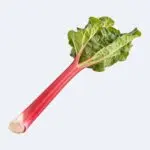
The next foods hold far less. Plums have 0.76 mg per 100 g (about 1 mg in two plums) and rhubarb 0.6 mg, then strawberries and cashews 0.15 mg. A cup of green tea has roughly 40 times the ECG in two plums.
Green tea has about a quarter as much ECG as EGCG, 44 mg against 172 mg a cup. The ranking gives one average figure for green tea, so a given cup will differ. Black tea also raised blood ECG in a study of 66 people with heart disease, but it is not in the ranking.
Per serving. No daily amount is set, so bars compare each food with the top food.
Per 100 g. No daily amount is set, so bars compare each food with the top food.
Per 100 kcal: the same calories of each food, for a fair comparison. Bars compare each food with the top food.
Food labels have no Daily Value or Reference Intake for epicatechin gallate, so the % compares each food with the top food.
- 1.
- 2.
- 3.
- 4.
- 5.
- 6.
- 7.
- 8.
- 9.
- 10.


- 1.
- 2.
- 3.
- 4.
- 5.
- 6.
- 7.
- 8.
- 9.
- 10.
- 1.
- 2.
- 3.
- 4.
- 5.
- 6.
- 7.
- 8.
- 9.
Sources
- Bhagwat S, Haytowitz DB. USDA Database for the Flavonoid Content of Selected Foods, Release 3.3. US Department of Agriculture, Agricultural Research Service. 2018. Source of the ranking above.
- Widlansky ME, Duffy SJ, Hamburg NM, et al. Effects of black tea consumption on plasma catechins and markers of oxidative stress and inflammation in patients with coronary artery disease. Free Radic Biol Med. 2005.
How ECG works
Most of what we know about how ECG works comes from test tubes, bacteria, cells and animals. Researchers keep coming back to four ideas.
ECG can switch off antibiotic resistance in MRSA, and it can pull cholesterol out of the gut’s fat droplets. Very little of it reaches the blood, but what does lingers. And in cells it often acts differently from EGCG. Here is each one, and what has been seen in people.
It makes MRSA bacteria sensitive to antibiotics again
MRSA resists oxacillin because of a protein called PBP2a. It lets the bacterium keep building its cell wall after the drug has blocked its other wall-building enzymes.
In 1999 a team at Okayama University reported that ECG from green tea markedly lowered the oxacillin and other beta-lactam antibiotics needed to stop MRSA. It did not lower the amount of other antibiotics. A team at the University of London then found that the gallate group was essential. ECG cut the oxacillin needed against two strains from 256 and 512 mg/L to 1 to 4 mg/L.
Drawn to scale. The result with ECG is a range of 1 to 4 mg/L for both strains, shown as one bar at a minimum visible width.
ECG does not seem to block PBP2a directly. It settles into the bacterial cell membrane, which first stiffens and then loosens. PBP2 is then pulled away from the spot where the cell divides. Bacteria grown with ECG also had thicker cell walls and less d-alanine on their wall teichoic acid, which lowers the wall’s positive charge.
In zebrafish embryos, ECG in the water did not help infected embryos, but bacteria grown with ECG beforehand were less lethal. All of this is lab work. We found no human trial of ECG against MRSA, so ECG is not a treatment.
It pulls cholesterol out of the gut’s fat droplets
To be absorbed, cholesterol in the gut rides inside tiny droplets built from bile salts, called micelles. In test tubes, gallate catechins, ECG among them, made cholesterol drop out of those droplets. In rats with a tube in the lymph duct, an ECG and EGCG mix cut cholesterol absorption more than a non-gallate mix.
With purified catechins, EGCG did better than ECG. A 2003 study found that catechin gallate, which forms from ECG during retort pasteurization (heat sterilizing in sealed containers), did better than ECG. A 2019 study with EGCG and its derivatives pointed to the galloyl group as the part that interacts with a bile salt.
A diagram of the findings in test tubes and rats. It is not drawn to scale.
We found no human trial of purified ECG on cholesterol. The green tea trials on cholesterol use mixtures, and they are covered on the EGCG page.
Little reaches the blood, but ECG lingers
In people, ECG is absorbed in small amounts. After a green tea extract with 836 mg of catechins, the peak ECG level in blood was 0.16 μM, against 1.09 μM for EGCG.
Drawn to scale. The same study also reported 0.08 μM for a methylated form of EGCG, not shown.
Once there, ECG hangs around. Each pure catechin was given as a single 1.5 mmol dose. The half-life of ECG in blood was 6.9 hours, against 3.9 hours for EGCG and 1.7 hours for EGC.
Drawn to scale. The half-lives come from 10 volunteers who each took all three catechins.
Most ECG in the blood is the free form, unlike epicatechin and EGC, which are mostly conjugated. Little ECG shows up in urine. In 24 women, drinking green tea extract with milk or other protein lowered ECG exposure to 66 to 77% of the tea-alone level.
A chocolate matrix lowered it in five women. In that study, ECG but not EGCG was still found in blood after two weeks of daily intake and an overnight fast. Whether lingering matters for health is not known.
In cells it can act differently from EGCG
In several cell tests ECG did more than EGCG. In four pancreatic cancer cell lines, it slowed growth far more and blocked the inflammation switch NF-κB. In human aorta samples, an antibody for ECG found it inside foam cells. In macrophages and mice, ECG lowered CD36, a receptor involved in foam cell formation.
But a cell result can also point the wrong way. In breast cancer cells, ECG switched on HIF-1, which cancer cells use to survive low oxygen, more strongly than any other tea catechin tested.
Dish amounts are also often far above blood levels. The authors of one human trial note that catechin levels in human blood are many times lower than the effective levels in test systems.
What has been seen in people
These effects are much easier to show in a dish than in a person. The human data on ECG describe its path through the body, not a health result. They show low peaks, a long half-life, lower levels with milk or protein, and a presence in prostate tissue.
Where blood ECG was linked to disease, the answers differed. Gastric cancer odds were lower in Japanese women, but two studies found no breast cancer link. The MRSA and cholesterol findings have not been tested with ECG in people.
Sources
- Stapleton PD, Shah S, Anderson JC, Hara Y, Hamilton-Miller JM, Taylor PW. Modulation of beta-lactam resistance in Staphylococcus aureus by catechins and gallates. Int J Antimicrob Agents. 2004.
- Shiota S, Shimizu M, Mizushima T, et al. Marked reduction in the minimum inhibitory concentration (MIC) of beta-lactams in methicillin-resistant Staphylococcus aureus produced by epicatechin gallate, an ingredient of green tea (Camellia sinensis). Biol Pharm Bull. 1999.
- Bernal P, Lemaire S, Pinho MG, Mobashery S, Hinds J, Taylor PW. Insertion of epicatechin gallate into the cytoplasmic membrane of methicillin-resistant Staphylococcus aureus disrupts penicillin-binding protein (PBP) 2a-mediated beta-lactam resistance by delocalizing PBP2. J Biol Chem. 2010.
- Bernal P, Zloh M, Taylor PW. Disruption of D-alanyl esterification of Staphylococcus aureus cell wall teichoic acid by the beta-lactam resistance modifier (-)-epicatechin gallate. J Antimicrob Chemother. 2009.
- Stevens CS, Rosado H, Harvey RJ, Taylor PW. Epicatechin gallate, a naturally occurring polyphenol, alters the course of infection with beta-lactam-resistant Staphylococcus aureus in the zebrafish embryo. Front Microbiol. 2015.
- Ikeda I, Imasato Y, Sasaki E, et al. Tea catechins decrease micellar solubility and intestinal absorption of cholesterol in rats. Biochim Biophys Acta. 1992.
- Ikeda I, Kobayashi M, Hamada T, et al. Heat-epimerized tea catechins rich in gallocatechin gallate and catechin gallate are more effective to inhibit cholesterol absorption than tea catechins rich in epigallocatechin gallate and epicatechin gallate. J Agric Food Chem. 2003.
- Sakakibara T, Sawada Y, Wang J, Nagaoka S, Yanase E. Molecular mechanism by which tea catechins decrease the micellar solubility of cholesterol. J Agric Food Chem. 2019.
- Miller RJ, Jackson KG, Dadd T, et al. A preliminary investigation of the impact of catechol-O-methyltransferase genotype on the absorption and metabolism of green tea catechins. Eur J Nutr. 2012.
- Van Amelsvoort JM, Van Hof KH, Mathot JN, et al. Plasma concentrations of individual tea catechins after a single oral dose in humans. Xenobiotica. 2001.
- Chow HH, Hakim IA, Vining DR, et al. Effects of dosing condition on the oral bioavailability of green tea catechins after single-dose administration of Polyphenon E in healthy individuals. Clin Cancer Res. 2005.
- Egert S, Tereszczuk J, Wein S, et al. Simultaneous ingestion of dietary proteins reduces the bioavailability of galloylated catechins from green tea in humans. Eur J Nutr. 2013.
- Mukai R, Fukuda T, Ohnishi A, et al. Chocolate as a food matrix reduces the bioavailability of galloylated catechins from green tea in healthy women. Food Funct. 2021.
- Kürbitz C, Heise D, Redmer T, et al. Epicatechin gallate and catechin gallate are superior to epigallocatechin gallate in growth suppression and anti-inflammatory activities in pancreatic tumor cells. Cancer Sci. 2011.
- Kawai Y, Tanaka H, Murota K, Naito M, Terao J. (-)-Epicatechin gallate accumulates in foamy macrophages in human atherosclerotic aorta: implication in the anti-atherosclerotic actions of tea catechins. Biochem Biophys Res Commun. 2008.
- Yu J, Zhou L, Song H, et al. (-)-Epicatechin gallate blocked cellular foam formation in atherosclerosis by modulating CD36 expression in vitro and in vivo. Food Funct. 2023.
- Zhou YD, Kim YP, Li XC, et al. Hypoxia-inducible factor-1 activation by (-)-epicatechin gallate: potential adverse effects of cancer chemoprevention with high-dose green tea extracts. J Nat Prod. 2004.
Is ECG safe? Supplements, dose and interactions
Tea is how most people take in ECG, and we found no safety limit set for ECG itself. EFSA, the EU’s food safety agency, built its 2018 opinion on green tea catechins around EGCG. It considered catechins from traditionally prepared green tea infusions safe at the intakes seen in Europe, while noting rare liver injury. For green tea extract safety, including the 800 mg a day liver finding, see our EGCG page.
- Trials and side effects. We found no safety trial of purified ECG. The one human study that gave it alone was a single-dose study in 10 volunteers, and its abstract does not report side effects. In 31 men, 1 g a day of green tea extract for 4 weeks showed no liver toxicity. It held 830 mg of tea polyphenols, ECG among them. But that is one small trial of a mixture.
- Medicines. In cell and liver-sample tests, ECG was carried by the drug transporter OATP1A2 (Km 10.4 μM). It blocked OATP1A2, OATP1B1 and OATP2B1. It also blocked the liver enzyme AADAC (IC50 3.0 μM). Whether this changes drug levels in people has not been tested for ECG. Ask a pharmacist before taking a tea extract with regular medicine.
- Cell results. In breast cancer cells ECG switched on HIF-1. The authors warn that high-dose green tea extracts might work against cancer prevention. This is a cell finding that has not been shown in people.
- Pregnancy, breastfeeding and children. We found no studies of ECG in these groups, so ask your doctor before using an extract.
How to get more ECG
- Best food. Green tea, with 44 mg a cup and 17.9 mg per 100 g in USDA data. Nothing else on the list has more than 0.76 mg per 100 g.
- Skip the milk. In 24 women, milk, caseinate or soy protein lowered ECG exposure from green tea extract to 66 to 77% of the tea-alone level. A chocolate matrix lowered it in five women.
- Mind the heat. A 2003 study notes that retort pasteurization turns ECG into catechin gallate, so heat treatment may change which catechin you get.
Sources
- EFSA Panel on Food Additives and Nutrient Sources added to Food (ANS). Scientific opinion on the safety of green tea catechins. EFSA J. 2018. Abstract read; the opinion is built around EGCG.
- Van Amelsvoort JM, Van Hof KH, Mathot JN, et al. Plasma concentrations of individual tea catechins after a single oral dose in humans. Xenobiotica. 2001. Authors work at Unilever Research.
- Henning SM, Wang P, Lee RP, et al. Prospective randomized trial evaluating blood and prostate tissue concentrations of green tea polyphenols and quercetin in men with prostate cancer. Food Funct. 2020.
- Roth M, Timmermann BN, Hagenbuch B. Interactions of green tea catechins with organic anion-transporting polypeptides. Drug Metab Dispos. 2011.
- Yasuda K, Watanabe K, Fukami T, et al. Epicatechin gallate and epigallocatechin gallate are potent inhibitors of human arylacetamide deacetylase. Drug Metab Pharmacokinet. 2021.
- Zhou YD, Kim YP, Li XC, et al. Hypoxia-inducible factor-1 activation by (-)-epicatechin gallate: potential adverse effects of cancer chemoprevention with high-dose green tea extracts. J Nat Prod. 2004.
- Egert S, Tereszczuk J, Wein S, et al. Simultaneous ingestion of dietary proteins reduces the bioavailability of galloylated catechins from green tea in humans. Eur J Nutr. 2013.
- Mukai R, Fukuda T, Ohnishi A, et al. Chocolate as a food matrix reduces the bioavailability of galloylated catechins from green tea in healthy women. Food Funct. 2021.
- Ikeda I, Kobayashi M, Hamada T, et al. Heat-epimerized tea catechins rich in gallocatechin gallate and catechin gallate are more effective to inhibit cholesterol absorption than tea catechins rich in epigallocatechin gallate and epicatechin gallate. J Agric Food Chem. 2003.
Frequently asked questions about ECG
What does ECG do for the body?
Nobody knows yet, because no trial has tested ECG alone for a health outcome. Human studies show it reaches the blood in small amounts and stays there longer than EGCG. In an observational study of Japanese women, the highest blood ECG group had 0.25 times the odds of gastric cancer. But two studies found no link with breast cancer. The strongest lab finding is that it made MRSA strains sensitive to oxacillin again in test tubes.
Which foods are high in ECG?
Green tea, by a wide margin. USDA data list 44 mg per cup (245 g) and 17.9 mg per 100 g. The next foods are plums at 0.76 mg per 100 g and rhubarb at 0.6 mg, then strawberries and cashews at 0.15 mg. So green tea has about 24 times more than plums per 100 g.
What is the difference between ECG and EGCG?
ECG is built on epicatechin and EGCG on epigallocatechin, and both carry a gallic acid group. Green tea holds about four times more EGCG than ECG in USDA data, 172 mg against 44 mg a cup. ECG peaks lower in blood (0.16 against 1.09 μM in one study) but lasts longer (half-life 6.9 against 3.9 hours in another). In test tubes ECG did better than EGCG against MRSA strains and pancreatic cancer cells; see our EGCG page for the evidence on EGCG.
Does ECG lower cholesterol?
Not shown in people. In rats and test tubes, a mix of ECG and EGCG cut cholesterol absorption by making cholesterol drop out of bile-salt micelles. Purified EGCG did this better than ECG. Human trials of green tea catechins use mixtures, and their cholesterol results are on our EGCG page.
Can ECG help antibiotics work against MRSA?
In the lab yes, in people not known. ECG cut the oxacillin needed to stop two MRSA strains from 256 and 512 mg/L to 1 to 4 mg/L. In zebrafish embryos, only bacteria grown with ECG first were less lethal. We found no human trial, so green tea or an ECG supplement is not a substitute for antibiotics; talk to your doctor about any infection.
How well is ECG absorbed?
Only in small amounts, but it stays in the blood. After a green tea extract with 836 mg of catechins, peak ECG was 0.16 μM against 1.09 μM for EGCG. Yet the half-life of ECG was 6.9 hours against 3.9. Drinking the extract with milk or protein lowered ECG exposure to 66 to 77% of the tea-alone level.
Does ECG have side effects?
We found no safety trial of purified ECG. In 31 men, 830 mg of tea polyphenols a day for 4 weeks showed no liver toxicity. But EFSA found raised liver enzymes at 800 mg a day or more of EGCG from supplements. In cell tests ECG blocked drug transporters and a liver enzyme; whether that matters in people is untested. See our EGCG page for extract safety.
When is the best time to take ECG?
No trial tested time of day. On an empty stomach, free ECG in blood changed in a similar way to EGCG, which rose more than 3.5 times in one trial. Milk or protein lowered ECG exposure to 66 to 77%. Because extracts on an empty stomach are linked to higher EGCG exposure and liver concerns, see our EGCG page before using one.