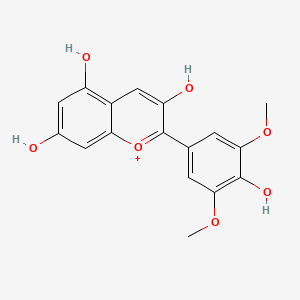
Malvidin is a purple-red pigment in the anthocyanin family, a branch of the flavonoids. Strictly, malvidin is the sugar-free core, called an anthocyanidin. In grapes, red wine and blueberries it nearly always carries a sugar, most often as malvidin-3-glucoside, also called oenin.
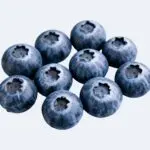
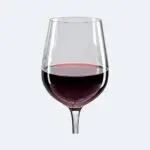
Malvidin is mainly responsible for the color of red wine. In USDA data, blueberries are the richest food, with 67.6 mg per 100 g, and red wine comes second at 13.8 mg.
Its color depends on acidity. Slightly acidic and neutral solutions look red, and basic (alkaline) ones turn blue. A 2022 review says a wine’s color is set by the anthocyanin in its positively charged flavylium form. That form is strongly shaped by the wine’s pH, its acidity.
Wine color also changes with age. In 1998 French chemists found a new class of stable red pigments in grape pomace, the skins and seeds left after pressing. The main one was malvidin-3-glucoside joined to pyruvic acid, a yeast metabolite, and this reaction made the color more stable.
Here is a fact most readers do not know: malvidin has helped date wine. At Areni-1, a cave in Armenia, researchers found a winery from about 4100 to 4000 BC. Chemists found malvidin on three pottery fragments. They called it highly reliable evidence of wine, because the only other local fruit with it, pomegranate, left no remains at the site.
Health benefits of malvidin
The top findings from 15 studies, strongest evidence first
What the stars mean
- Strong. Several randomized trials, pooled in a meta-analysis, point the same way, or regulators (FDA or EFSA) have approved the claim.
- Moderate. Good randomized trials support it, but there are fewer of them, or their results vary.
- Limited. Small, short or single trials, or mixed results. Promising, but it needs confirmation.
Population and lab studies get no stars: they show a link or a mechanism, not proof.
How we rate evidence →- ★★No clear effect on blood fatsAmong 18 trials of anthocyanin-rich foods and supplements, the products whose main anthocyanin was malvidin had no clear effect on blood fats or glucose. They were mixed foods, so no result belongs to malvidin alone.
- ★Poorly absorbed from red wine and grape juiceOnly 0.18% of wine anthocyanins and 0.23% of juice anthocyanins reached the urine. In 6 men, malvidin-3-glucoside blood levels after wine were about half those after grape juice.
- ★Lower inflammation marker after a red wine extractIn 7 healthy volunteers, 12 g of an anthocyanin extract from red wine lowered the inflammation marker MCP-1 and raised antioxidant capacity in blood. There was no placebo group, and the extract held other compounds besides malvidin.
- Population studyLinked to lower odds of frailtyIn a US survey of adults, higher intake of malvidin, delphinidin and total anthocyanidins each went with lower odds of frailty. A one-time survey cannot show cause.
- Population studyLinked to lower Alzheimer’s odds in older adultsIn a US survey of 3,806 adults over 60, the highest anthocyanidin intake group had 0.979 times the odds of Alzheimer’s of the lowest group. Cyanidin and malvidin were the main contributors.
All 15 studies, strongest evidence first
Malvidin-rich foods did not clearly change blood fats in 18 trials
This meta-analysis (a study pooling earlier trials) covered 18 randomized trials of anthocyanin-rich foods and supplements, sorted by main anthocyanin: cyanidin, delphinidin or malvidin. Delphinidin-based products lowered triglycerides and LDL and raised HDL, but malvidin-based ones had no clear effect on blood fats or glucose. Total cholesterol and HDL leaned favorable for malvidin (both p below 0.1). The authors suggest methylated anthocyanins such as malvidin may work less well; the products were mixed foods, so no result belongs to malvidin alone.
After red wine or grape juice, malvidin-3-glucoside was poorly absorbed
In this randomized crossover trial, 6 healthy men drank 500 mL of red wine, dealcoholized red wine or red grape juice. The drinks gave 68, 58 and 117 mg of malvidin-3-glucoside, and it appeared in plasma and urine. Its sugar-free form and its sulfate or glucuronide forms were not detected. Blood levels after wine, with or without alcohol, were about half those after grape juice, which held about twice as much. The authors suggest other compounds in wine, or breakdown products, may explain wine’s effects.
Only 0.18% of wine and 0.23% of juice anthocyanins reached urine
9 healthy volunteers had a single 400 mL dose of red wine (279.6 mg total anthocyanins) or red grape juice (283.5 mg). The malvidin glucoside in wine was absorbed 61.9% as well as from juice, and no anthocyanin was shown to be bioequivalent. Given the low urine recovery within 7 hours and no shown bioequivalence, the authors call a health role for these anthocyanins questionable. They add that the clinical meaning needs more research.
Red wine extract lowered an inflammation marker and raised antioxidant capacity
Seven healthy volunteers took 12 g of an anthocyanin extract made from red wine after an overnight fast. Glucosides of delphinidin, cyanidin, petunidin, peonidin and malvidin appeared in plasma within about 30 minutes, along with glucuronides of peonidin and malvidin. It lowered the inflammation marker MCP-1 and raised plasma antioxidant capacity. Only 0.05% of the dose reached the urine, about 94% of it within 6 hours. The abstract describes no placebo group, and the extract held other compounds besides malvidin.
After grape-blueberry juice, malvidin and peonidin led in blood and urine
In this randomized crossover study, 10 people had 0.33 liter of a grape and blueberry juice or smoothie. The juice held 841 mg of anthocyanins per liter and the smoothie 983 mg. Malvidin and peonidin appeared mostly as glucuronides, and blood levels and urinary recovery did not differ between the drinks. The authors note that such drinks also have a relatively high sugar content.
Concord grape juice raised a malvidin metabolite in veterans’ blood
In this randomized, double-blind trial, 26 veterans with Gulf War Illness who finished and took at least 80% of the drink were analyzed. Of 76 blood metabolites, three were higher on juice than placebo at 24 weeks: cyanidin glucuronide, methyl-cyanidin glucuronide and methyl-malvidin glucuronide. The cognitive links in the abstract involved other metabolites, not malvidin. It shows malvidin is absorbed and modified, not that it helped.
Higher malvidin and delphinidin intake went with lower frailty odds
This cross-sectional analysis of NHANES survey data in US adults is a snapshot, so it cannot show cause. Malvidin, delphinidin and total anthocyanidin intake each went with lower odds of frailty. Total intake followed a U-shaped curve, with the lowest odds at about 33 mg a day. The abstract gives no sample size or odds ratios.
Malvidin and three other anthocyanidins went with lower caries odds
This cross-sectional analysis of NHANES 2017 to 2018 is a snapshot, so it cannot show cause. Of the 1,818 US children and teens, 786 (43.2%) had caries (tooth decay). High anthocyanidin intake overall went with 0.69 times the odds (range 0.52 to 0.92). Cyanidin, petunidin, malvidin and peonidin each fit the pattern, but the abstract gives no separate number for malvidin.
Malvidin led teens’ anthocyanin intake but showed no clear myopia link
This cross-sectional analysis of NHANES 2007 to 2008 is a snapshot, so it cannot show cause. Of the 839 US adolescents, 245 had myopia (nearsightedness). Malvidin made up 34.98% of anthocyanin intake, and total intake went with 0.69 times the odds (range 0.51 to 0.92). The abstract names cyanidin (0.69), petunidin (0.64) and delphinidin (0.71) as linked to lower odds, with no clear result for malvidin.
Cyanidin and malvidin were the main contributors to lower Alzheimer’s odds
This cross-sectional analysis of NHANES data (2007 to 2010 and 2017 to 2018) covered 3,806 adults over 60, so it cannot show cause. The fourth intake group had 0.979 times the odds of the lowest (range 0.966 to 0.992). A weighted quantile method named cyanidin and malvidin as the main contributors among six anthocyanidins. The authors say the finding needs confirming.
Malvidin-3-glucoside cut inflammation signal ICAM-1 by 54.4% in cells
In this cell study, not in people, endothelial cells (which line blood vessels) were exposed to TNF-alpha, an inflammation trigger. Malvidin-3-glucoside and malvidin-3-galactoside, the two main blueberry anthocyanins, both blunted the rise in MCP-1, ICAM-1 and VCAM-1. At 1 µM the glucoside lowered these proteins by 35.9%, 54.4% and 44.7%. The effect ran through the NF-κB pathway, and the glucoside beat the galactoside.
In macrophages, malvidin damped NF-κB and MAPK inflammation switches
In this cell study, RAW 264.7 macrophages (immune cells) were stimulated by bacterial LPS, a toxin. Malvidin, the sugar-free form, reduced NF-κB, PARP and MAPK activation, reactive oxygen species and mitochondrial depolarization. It raised the protective proteins MKP-1 and Akt, and the abstract gives no concentrations. The sugar-free form is not what the human study above found in blood after wine.
In colitis mice, malvidin 3-glucoside improved colon scores, raised IL-10
This mouse study caused colitis with a chemical, dextran sulfate sodium. The compound also restored the Firmicutes to Bacteroidetes ratio, cut a harmful gut bacterium (Ruminococcus gnavus) and reversed some inflammatory fats. The authors say it acts on gut microbes differently from whole blueberry. The abstract gives no dose, and mice are not people.
In pancreatic beta cells, malvidin-3-glucoside increased insulin release
In INS-1 beta cells, insulin release rose at both 4 and 11 mM glucose, and cells stayed alive up to 100 µM. Genes for insulin, GLUT2 and glucokinase went up. Calcium inside the cells rose, entering through L-type channels and released from the endoplasmic reticulum. It was not tested in animals or people.
Malvidin-3-galactoside slowed liver cancer cells; in animals, tumor cells died
Lab and animal study of the other main blueberry malvidin glycoside. In HepG2 liver cancer cells it reduced growth, migration and invasion and shifted cell-cycle and cell-death proteins. In the animal part it promoted death of tumor cells. The abstract gives no doses or effect sizes, and this is far from any use in people.
Foods high in malvidin
Blueberries and red wine lead the USDA data. Blueberries hold 67.6 mg per 100 g, about 100 mg in a cup (148 g). Red wine holds 13.8 mg per 100 g, about 20 mg in a 5 fl oz glass.
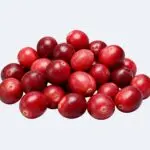
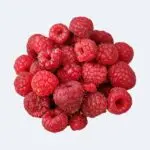
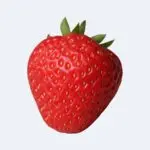
Cranberries, raspberries and strawberries hold under 0.5 mg per 100 g. The ranking below is from USDA data.
Red grape juice is another source. In one human study, 500 mL of red wine gave 68 mg of malvidin-3-glucoside. 500 mL of a red grape juice gave 117 mg, about 23 mg per 100 mL by our arithmetic.
A survey covered 36,037 adults in ten European countries. Malvidins and cyanidins were the main anthocyanidins in their diet, and the biggest sources were fruit, wine, non-alcoholic drinks and some vegetables.
Per serving. No daily amount is set, so bars compare each food with the top food.
Per 100 g. No daily amount is set, so bars compare each food with the top food.
Per 100 kcal: the same calories of each food, for a fair comparison. Bars compare each food with the top food.
Food labels have no Daily Value or Reference Intake for malvidin, so the % compares each food with the top food.
- 1.
- 2.
- 3.
- 4.
- 5.


- 1.
- 2.
- 3.
- 4.
- 5.
- 1.
- 2.
- 3.
- 4.
- 5.
Sources
- Bhagwat S, Haytowitz DB. USDA Database for the Flavonoid Content of Selected Foods, Release 3.3 (2018). US Department of Agriculture, Agricultural Research Service, Nutrient Data Laboratory.
- Bub A, Watzl B, Heeb D, et al. Malvidin-3-glucoside bioavailability in humans after ingestion of red wine, dealcoholized red wine and red grape juice. Eur J Nutr. 2001.
- Zamora-Ros R, Knaze V, Luján-Barroso L, et al. Estimation of the intake of anthocyanidins and their food sources in the European Prospective Investigation into Cancer and Nutrition (EPIC) study. Br J Nutr. 2011.
How malvidin works
Part of what we know comes from people, such as how little malvidin is absorbed. Most of the rest comes from test tubes, cells and animals. Three ideas come up again and again. The body takes up only a little and changes it, gut chemistry breaks the rest into smaller acids, and in cells it dampens inflammation signals.
Wine ageing adds a chemical twist. Here is each one, and what has been seen in people.
Very little gets into the blood
Malvidin glycosides do reach the blood and urine after red wine or grape juice, but only a sliver of the dose. In 9 volunteers, 0.18% of the anthocyanins in red wine and 0.23% of those in red grape juice reached the urine within 7 hours. In 7 volunteers given a red wine anthocyanin extract, 0.05% did over 24 hours. In a perfusion experiment in rat intestine, malvidin-3-glucoside was absorbed less (10.7%) than cyanidin-3-glucoside (22.4%).
Drawn to scale, from 0 to 0.25%. A full dose (100%) would be more than 400 times longer than the longest bar. The figures cover all anthocyanins in the drink, not malvidin alone.
Gut chemistry breaks it into smaller acids
In a simulated digestion of Cabernet Sauvignon wine, anthocyanins stayed stable at stomach pH but fell sharply in the simulated intestine. Malvidin-3-glucoside broke down into syringic, protocatechuic and vanillic acid. In pig gut contents, a grape anthocyanin extract was undetectable after 6 hours, and three products had appeared.
The authors of that study say these products may carry some of the protective effects attributed to anthocyanins. The human wine and juice study made a similar suggestion, but that has not been shown.
Breakdown products named in two lab studies. The arrow shows direction only, not amounts, and the pig gut contents stand in for the human colon.
It dampens inflammation signals in cells
In cell studies, malvidin and its glycosides turned down NF-κB, a switch that turns on inflammation. In endothelial cells, the cells lining blood vessels, malvidin-3-glucoside held back MCP-1, ICAM-1 and VCAM-1, signals of vessel inflammation. In macrophages, malvidin reduced NF-κB activation.
In human blood cells exposed to a bacterial toxin, it lowered IL-6, TNF-alpha, IL-1β and COX-2. It also blocked the NF-κB steps that start them. Two cautions: some of these tests used the sugar-free form, which was not found in human blood after wine. And the human studies above found only small amounts of any form in blood.
Drawn to scale, from 0 to 100% of the rise caused by TNF-alpha. Cell study; a 1 µM concentration in a dish says nothing about what a person reaches.
Wine ageing turns it into new pigments
During fermentation and ageing, malvidin-3-glucoside reacts with other wine molecules to form pyranoanthocyanins. In Grenache wines, vitisins A and B formed only during alcoholic fermentation. Pinotin A, made from malvidin-3-glucoside and caffeic acid, formed only during ageing.
In lab tests, the new pigments that carry an extra phenol group scavenged free radicals better than malvidin-3-glucoside. Two types, the oxovitisins and methylpyranomalvidin-3-glucoside, did worse. We found no human study of these pigments.
What has been seen in people
These effects are much easier to show in a dish than in a person. Only a fraction of a percent of the anthocyanins in wine or juice reached the urine. The one meta-analysis that sorted trials by main anthocyanin found no clear blood fat effect for malvidin-based foods.
Surveys link higher intake to lower odds of frailty and dental caries, but cannot show cause. All of these are among the study cards above.
Sources
- Frank T, Netzel M, Strass G, et al. Bioavailability of anthocyanidin-3-glucosides following consumption of red wine and red grape juice. Can J Physiol Pharmacol. 2003.
- Garcia-Alonso M, Minihane AM, Rimbach G, et al. Red wine anthocyanins are rapidly absorbed in humans and affect monocyte chemoattractant protein 1 levels and antioxidant capacity of plasma. J Nutr Biochem. 2009.
- Talavéra S, Felgines C, Texier O, et al. Anthocyanins are efficiently absorbed from the small intestine in rats. J Nutr. 2004.
- Yang P, Yuan C, Wang H, et al. Stability of anthocyanins and their degradation products from Cabernet Sauvignon red wine under gastrointestinal pH and temperature conditions. Molecules. 2018.
- Forester SC, Waterhouse AL. Identification of Cabernet Sauvignon anthocyanin gut microflora metabolites. J Agric Food Chem. 2008.
- Bub A, Watzl B, Heeb D, et al. Malvidin-3-glucoside bioavailability in humans after ingestion of red wine, dealcoholized red wine and red grape juice. Eur J Nutr. 2001.
- Huang WY, Liu YM, Wang J, et al. Anti-inflammatory effect of the blueberry anthocyanins malvidin-3-glucoside and malvidin-3-galactoside in endothelial cells. Molecules. 2014.
- Bognar E, Sarszegi Z, Szabo A, et al. Antioxidant and anti-inflammatory effects in RAW264.7 macrophages of malvidin, a major red wine polyphenol. PLoS One. 2013.
- Bastin AR, Sadeghi A, Abolhassani M, et al. Malvidin prevents lipopolysaccharide-induced oxidative stress and inflammation in human peripheral blood mononuclear cells. IUBMB Life. 2020.
- Rentzsch M, Schwarz M, Winterhalter P, Hermosín-Gutiérrez I. Formation of hydroxyphenyl-pyranoanthocyanins in Grenache wines: precursor levels and evolution during aging. J Agric Food Chem. 2007.
- Azevedo J, Oliveira J, Cruz L, et al. Antioxidant features of red wine pyranoanthocyanins: experimental and theoretical approaches. J Agric Food Chem. 2014.
Is malvidin safe? Supplements, dose and interactions
We found no safety concern for malvidin at food amounts, and no upper level set for malvidin itself. In the European survey above, adults ate roughly 19 to 65 mg a day of anthocyanidins in total, mostly from fruit, wine and other drinks.
Food colors made from grape skin are rich in malvidin glucosides. For them, the FAO/WHO expert committee JECFA set an acceptable daily intake of 0 to 2.5 mg per kg of body weight in 1982. That is about 175 mg for a 70 kg adult, by our arithmetic.
In 2013, the EU’s food safety agency (EFSA) found toxicity data too limited to set a figure for anthocyanins as a food additive (E 163). But it judged that exposure from current uses of grape skin and blackcurrant extracts was unlikely to be a safety concern. These rules cover food colors, not supplements.
- Supplements and doses. We found no trial of purified malvidin as a supplement, so no dose has been tested for benefit or safety. The human absorption studies used drinks holding 58 to 117 mg of malvidin-3-glucoside. One gave a single 12 g dose of a red wine anthocyanin extract.
- Red wine is not a health food. Alcohol is a known risk factor for cancer. A 2026 review of 27 meta-analyses linked wine to higher risk of oral and throat cancer (2.12 times the risk) and esophageal cancer (5.34). It found similar breast cancer estimates for red and white wine. Berries and grape juice give malvidin without alcohol.
- Juice and sugar. The authors of the juice and smoothie study note that these drinks have a relatively high sugar content.
- Medicines and pregnancy. We found no study of malvidin with medicines or in pregnancy. If you take regular medicines or are pregnant, ask your doctor before using any concentrated grape or berry extract.
How to get more malvidin
- Best food. In the USDA data, blueberries give about 100 mg of malvidin in a cup (148 g). A 5 fl oz glass of red wine gives about 20 mg.
- Juice or wine. In 6 men, blood malvidin-3-glucoside after red grape juice was about twice that after red wine. The juice held about twice as much (117 against 68 mg in 500 mL). Juice is alcohol free.
- Expect small amounts in blood. Only 0.18 to 0.23% of the anthocyanins in wine or juice reached the urine within 7 hours. The gut breaks much of the rest into smaller acids. We found no trial showing that more malvidin brings a health gain.
Sources
- Bub A, Watzl B, Heeb D, et al. Malvidin-3-glucoside bioavailability in humans after ingestion of red wine, dealcoholized red wine and red grape juice. Eur J Nutr. 2001.
- Frank T, Netzel M, Strass G, et al. Bioavailability of anthocyanidin-3-glucosides following consumption of red wine and red grape juice. Can J Physiol Pharmacol. 2003.
- Zamora-Ros R, Knaze V, Luján-Barroso L, et al. Estimation of the intake of anthocyanidins and their food sources in the European Prospective Investigation into Cancer and Nutrition (EPIC) study. Br J Nutr. 2011.
- Scientific Opinion on the re-evaluation of anthocyanins (E 163) as a food additive. EFSA ANS Panel. EFSA J. 2013.
- Grape skin extract (INS 163ii). JECFA evaluation, Joint FAO/WHO Expert Committee on Food Additives. Latest evaluation 1982, ADI 0 to 2.5 mg/kg body weight.
- Bertola C, Conciarelli L, Russo PP, Fabiani R. Wine intake and cancer risk: an umbrella review of meta-analyses. Cancer Epidemiol. 2026.
- Alcohol and Cancer Risk. National Cancer Institute.
- Kuntz S, Rudloff S, Asseburg H, et al. Uptake and bioavailability of anthocyanins and phenolic acids from grape/blueberry juice and smoothie in vitro and in vivo. Br J Nutr. 2015.
- Garcia-Alonso M, Minihane AM, Rimbach G, et al. Red wine anthocyanins are rapidly absorbed in humans and affect monocyte chemoattractant protein 1 levels and antioxidant capacity of plasma. J Nutr Biochem. 2009.
- Bhagwat S, Haytowitz DB. USDA Database for the Flavonoid Content of Selected Foods, Release 3.3 (2018). US Department of Agriculture.
History of malvidin
The oldest chemical story of malvidin is about wine itself. At Areni-1, a cave complex in Armenia, excavators found a wine press, a fermentation vat, grape seeds and dried vines. Radiocarbon dating placed the installation at about 4100 to 4000 BC, in the Late Chalcolithic (Copper Age). That is roughly 1,000 years older than the earliest comparable find.
Malvidin in the residue on pottery pointed to grapes. The vat’s size, about 14 to 15 gallons, suggested the contents were wine, since that much juice would spoil quickly.
Modern chemistry has shown how wine keeps its color. In 1998 a team in Montpellier, France, described the malvidin-3-glucoside and pyruvic acid pigment from grape pomace. They proposed that such reactions may be an important route to stable pigments during wine maturation and ageing. Later work followed the vitisins and related pigments through fermentation and ageing in single wines.
Malvidin also colors food. JECFA lists grape skin extract (INS 163ii) as a color additive whose main coloring matters are the glucosides of peonidin, malvidin, delphinidin and petunidin. It evaluated the extract in 1977 without setting a limit, and set an acceptable daily intake of 0 to 2.5 mg per kg in 1982. EFSA re-evaluated anthocyanins as food additives in 2013.
Sources
- Barnard H, Dooley AN, Areshian G, et al. Chemical evidence for wine production around 4000 BCE in the Late Chalcolithic Near Eastern highlands. J Archaeol Sci. 2011.
- Oldest known wine-making equipment found in Armenian cave. ScienceDaily, from a University of California, Los Angeles press release, 2011. Reports the study by Barnard et al., J Archaeol Sci, 2011.
- Areni-1 winery. Wikipedia.
- Malvidin. Wikipedia. Color and pH, oenin, red wine.
- Fulcrand H, Benabdeljalil C, Rigaud J, Cheynier V, Moutounet M. A new class of wine pigments generated by reaction between pyruvic acid and grape anthocyanins. Phytochemistry. 1998.
- Zhang XK, Jeffery DW, Li DM, et al. Red wine coloration: a review of pigmented molecules, reactions, and applications. Compr Rev Food Sci Food Saf. 2022.
- Rentzsch M, Schwarz M, Winterhalter P, Hermosín-Gutiérrez I. Formation of hydroxyphenyl-pyranoanthocyanins in Grenache wines: precursor levels and evolution during aging. J Agric Food Chem. 2007.
- Grape skin extract (INS 163ii). JECFA evaluation, Joint FAO/WHO Expert Committee on Food Additives.
Frequently asked questions about malvidin
What does malvidin do for the body?
No trial has tested pure malvidin in people, so its effects are not proven. A meta-analysis of 18 trials found no clear blood fat effect for malvidin-based foods. Surveys link higher intake to lower odds of frailty and dental caries but cannot show cause. Cell studies show anti-inflammatory effects at concentrations people may not reach.
Which foods are high in malvidin?
Blueberries lead the USDA data at 67.6 mg per 100 g, about 100 mg in a cup. Red wine follows at 13.8 mg per 100 g, and cranberries, raspberries and strawberries hold under 0.5 mg. Red grape juice is another source: one study measured 117 mg of malvidin-3-glucoside in 500 mL.
How much malvidin does the body absorb?
Very little reaches the urine intact. In 9 volunteers, 0.18% of the anthocyanins in red wine and 0.23% of those in red grape juice were excreted within 7 hours.
In 6 men, malvidin-3-glucoside was found in blood after wine and juice. It did not appear as the sugar-free form or as sulfate or glucuronide forms. Other studies did find glucuronides of malvidin in blood.
Is red wine healthy because of malvidin?
Not on current evidence. Malvidin-3-glucoside is poorly absorbed from wine, and the authors of that study suggest other compounds may explain any effects.
Alcohol is a known cancer risk factor. A 2026 review of 27 meta-analyses linked wine to higher oral and throat cancer risk (2.12 times) and esophageal cancer risk (5.34). A cup of blueberries gives about 100 mg of malvidin without alcohol.
Should you take a malvidin supplement?
There is no evidence to support it. We found no trial of a purified malvidin supplement, so no dose has been tested for benefit or safety. EFSA and JECFA looked at grape skin color additives, not supplements. Talk to a doctor before using a concentrated grape or berry extract if you take medicines or are pregnant.
What is the difference between malvidin, cyanidin and delphinidin?
All three are anthocyanidins, the colored cores of anthocyanin pigments. A meta-analysis found that delphinidin-based foods lowered LDL cholesterol and triglycerides, while cyanidin- and malvidin-based foods did not significantly. The authors suggest methylated anthocyanins such as malvidin may work less well than unmethylated ones. See also the cyanidin and delphinidin pages.
What is oenin?
Oenin is another name for malvidin-3-glucoside, malvidin with one glucose sugar attached. It is the form tested in the human absorption studies of red wine and grape juice. It is also the form in blueberries and in the skin of red grapes. In cells, 1 µM of malvidin-3-glucoside cut the inflammation signal ICAM-1 by 54.4%.
Why does red wine change color as it ages?
Young wine gets its color from grape anthocyanins such as malvidin-3-glucoside and from copigments that stabilize them. During ageing, new pigments form and copigmentation fades, according to a 2022 review. Some of the new pigments, such as the pyruvic acid derivative of malvidin-3-glucoside, are more color-stable than the original.