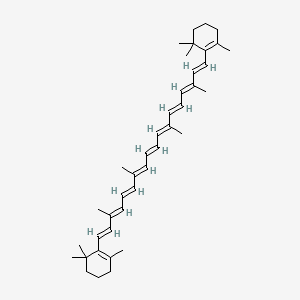
Beta-carotene is the red-orange pigment that colors carrots, sweet potatoes, pumpkins and cantaloupe. It is a carotenoid, a family of plant pigments, and the word carotene comes from the Latin carota, carrot. Plants make it, and in leaves it helps photosynthesis. It passes light energy on to chlorophyll and soaks up energy from singlet oxygen, a damaging excited form of oxygen.
In spinach and kale, chlorophyll hides the orange.
People cannot make beta-carotene, so it comes from food, and its main job is to become vitamin A. That makes it the best-known provitamin A carotenoid. A review covered 11 studies from 8 industrialized countries. In them, carotenoids supplied about 35% of vitamin A intake, and the mean beta-carotene intake was 3.9 mg a day.
Two things surprise most readers. First, the body is picky. The official tables count 12 µg (micrograms) of beta-carotene from food as 1 µg of vitamin A. Studies of single foods found anything from 3.6 to 1 up to 28 to 1.
Second, the pill is not the food. In two large trials, 20 to 30 mg a day of supplemental beta-carotene raised lung cancer in smokers and asbestos workers. Yet EFSA, the European food safety agency, sees no sign of harm from beta-carotene eaten in food.
Health benefits of beta-carotene
The top findings from 20 studies, strongest evidence first
What the stars mean
- Strong. Several randomized trials, pooled in a meta-analysis, point the same way, or regulators (FDA or EFSA) have approved the claim.
- Moderate. Good randomized trials support it, but there are fewer of them, or their results vary.
- Limited. Small, short or single trials, or mixed results. Promising, but it needs confirmation.
Population and lab studies get no stars: they show a link or a mechanism, not proof.
How we rate evidence →- ★★Pills raised lung cancer in smokersIn Finnish male smokers, 20 mg of beta-carotene a day raised lung cancer by 18%. In smokers and asbestos workers, 30 mg with vitamin A raised it by 28%, and the trial stopped early.
- ★★No change in cancer or heart diseaseIn 22,071 male physicians, 50 mg on alternate days for 12 years did not change cancer, heart disease or death. In 39,876 women, 50 mg on alternate days changed neither cancer nor heart disease.
- ★★Slightly higher risk of death in best trialsIn a Cochrane review of 78 trials of antioxidant pills, the 26 best-run beta-carotene trials found death risk about 5% higher (1.05 times).
- ★★Macular degeneration mix helped; beta-carotene not neededIn people with macular degeneration signs, a mix of 15 mg of beta-carotene, vitamins C and E and zinc cut advanced disease odds by 28%. A later trial found no difference without beta-carotene, and lung cancers were more common with it (2.0% against 0.9%, mostly former smokers, a secondary finding).
- ★★Fewer pregnancy-related deaths in undernourished womenIn rural Nepal, 42 mg a week of beta-carotene cut pregnancy-related deaths by 49% in 44,646 undernourished women. The dose was about 6 mg a day.
All 20 studies, strongest evidence first
In the best of 78 trials, beta-carotene raised death risk about 5%
This Cochrane review pooled 78 randomized trials of antioxidant pills, with 296,707 people who took pills for a median of 2 years. In the 26 best-run beta-carotene trials, those with low risk of bias, the risk of death was 1.05 times higher. All antioxidants together did not clearly change deaths in the main analysis (1.02). The authors found no evidence to support antioxidant supplements for prevention.
20 mg daily raised lung cancer 18% in Finnish male smokers
This randomized double-blind trial followed 29,133 male smokers aged 50 to 69 for 5 to 8 years, with vitamin E tested alongside. Among 876 new lung cancers, the beta-carotene group had 18% more. Total deaths were 8% higher, mostly from lung cancer and heart disease. A 20 mg pill holds about as much beta-carotene as 1.4 medium sweet potatoes, at 14.3 mg each in the USDA data on this page. But pills are absorbed better than food.
With vitamin A, 30 mg raised lung cancer 28%; trial stopped early
This randomized double-blind trial (neither the people nor the researchers knew who got what) covered 18,314 smokers, former smokers and asbestos-exposed workers. They took 30 mg of beta-carotene with 25,000 IU of retinyl palmitate (a form of vitamin A) a day for an average of 4 years. Lung cancer risk was 28% higher (1.28 times), lung cancer deaths 46% higher and deaths from any cause 17% higher. The trial ended 21 months early, and the two supplements cannot be told apart.
Alternate-day 50 mg did not change cancer, heart disease or death
This randomized double-blind trial gave 22,071 US male physicians beta-carotene or a placebo (dummy pill) for 12 years; 11% smoked and 39% were former smokers. Any cancer: 1,273 cases on beta-carotene against 1,293 on placebo (0.98 times the risk). Lung cancers numbered 82 against 88, and deaths from any cause 979 against 968. Results did not differ in current and former smokers.
50 mg on alternate days did not change cancer or heart disease
This randomized double-blind trial had 39,876 women aged 45 or older, who took beta-carotene or a placebo. The beta-carotene part ended early, after a median of 2.1 years of treatment and 4.1 years of follow-up. Cancers numbered 378 on beta-carotene and 369 on placebo (1.03 times the risk). Heart attacks, strokes and deaths were similar. Only 13% of the women smoked, and the treatment time was short.
A mix with zinc cut odds of advanced macular degeneration 28%
This randomized double-blind trial followed 3,640 people aged 55 to 80 for 6.3 years on average. All had signs of age-related macular degeneration (AMD), an eye disease. The daily mix held 15 mg of beta-carotene, vitamins C and E and zinc, and gave 0.72 times the odds of advanced AMD. Antioxidants alone (0.80) and zinc alone (0.75) did not reach a clear effect. The 15 mg of beta-carotene equals about one medium sweet potato (14.3 mg). The authors advise people without contraindications such as smoking to consider it.
Dropping beta-carotene from the AREDS formula made no difference to macular degeneration
AREDS2 randomly assigned 4,203 people aged 50 to 85 at risk of advanced AMD and followed them for a median of 5 years. Some also took part in a second random assignment that left out beta-carotene, lowered zinc, or both. Lung cancers were more common with beta-carotene, mostly in former smokers: 23 (2.0%) against 11 (0.9%) without. That was a secondary finding, not corrected for multiple tests. The authors say lutein plus zeaxanthin could replace beta-carotene.
Weekly beta-carotene cut pregnancy-related deaths by 49% in rural Nepal
This double-blind trial assigned 270 wards by chance (a cluster-randomized trial), with 44,646 married women. They got placebo, vitamin A or beta-carotene once a week for more than 3.5 years. The beta-carotene dose was nutritional: 42 mg a week, about 6 mg a day. Pregnancy-related deaths were 361 per 100,000 pregnancies on beta-carotene against 704 on placebo (0.51 times the risk). Vitamin A gave 0.60. The women were undernourished, and the causes of death could not be told apart.
Beta-carotene pills protected against sunburn, but only after at least 10 weeks
This meta-analysis (a study that pools earlier studies) covered seven skin studies of supplements. Protection grew with the length of the study, by about 0.5 standard deviations for each extra month. The abstract does not give doses, and it does not test beta-carotene as a replacement for sunscreen.
18 years on, ATBC lung cancer risk was no longer clearly higher
This registry follow-up tracked 25,563 men from the ATBC trial after it ended. After the pills stopped, lung cancer risk in men who had taken beta-carotene was 1.04 times that of the other men, not a clear difference. Death from any cause was 1.02 times. Deaths from prostate cancer were higher in the former beta-carotene group (1.20 times the risk).
After 18 years on beta-carotene, memory scores were slightly higher
This memory testing was part of the Physicians’ Health Study II, in 5,956 men older than 65 who took 50 mg every other day. In 4,052 men who had taken it for an average of 18 years, the global score was 0.047 standard units higher. Verbal memory was 0.063 higher. In 1,904 men treated for about one year, scores were the same. The gains are small, and the global score result was borderline.
24 mg daily reduced skin redness after UV light
This placebo-controlled trial had 12 volunteers of skin type II in each group, for 12 weeks. They took beta-carotene, a 24 mg carotenoid mix (8 mg each of beta-carotene, lutein and lycopene) or placebo. Redness 24 hours after a solar simulator was lower than at the start in both carotenoid groups. The mix worked about as well as beta-carotene alone, and the trial did not test replacing sunscreen.
Golden Rice beta-carotene turned into vitamin A at about 3.8 to 1
This tracer study had five healthy adults. The rice was grown with heavy water so its beta-carotene was labeled. Volunteers ate 65 to 98 g of it (0.99 to 1.53 mg of beta-carotene) with 10 g of butter. Labeled vitamin A in the blood was compared, by weight, with a reference dose of vitamin A. The ratio ranged from 1.9 to 6.4 to 1 between people, and only adults were tested, not children.
An orange sweet potato program raised blood retinol 0.10 µmol/L
This 2-year farming and nutrition program in Mozambique was not randomized. It followed 741 young children who were about 13 months old at the start. Children in program areas more often ate the sweet potato on 3 or more days a week (55% against 8%). Their median vitamin A intake was 426 against 56 µg RAE a day. Blood retinol (vitamin A) rose in program children and did not clearly rise in the others.
In 69 cohorts, more carotenoids went with lower disease and death risk
This systematic review and dose-response meta-analysis covered carotenoid intake and blood levels, including beta-carotene. Higher levels went with lower risk of heart disease, cancer and early death. The abstract gives no separate numbers for beta-carotene. The authors treat carotenoid levels as markers of fruit and vegetable intake, and say the results support eating more of them, not taking antioxidant supplements.
Top blood beta-carotene went with 36% lower risk of dying
This analysis followed 29,103 Finnish male smokers from the ATBC study for 31 years, with 23,796 deaths. The top fifth for blood beta-carotene had 0.64 times the risk of the bottom fifth, after adjusting for risk factors. Adjusting for fruit and vegetable intake changed little. Blood beta-carotene reflects diet, so this does not show that pills help, and the ATBC pills themselves raised lung cancer.
More carotenoids went with about 21% less lung cancer; pills did not
This systematic review covered 25 cohort studies and 6 trials. The highest intake of total carotenoids had 0.79 times the risk of the lowest. Dietary beta-carotene alone gave 0.92, which could be chance, and the pooled trials of beta-carotene pills gave 1.10. The authors say the cohort link may reflect a healthier lifestyle or leftover effects of smoking.
High predicted carotenoids went with 25% to 35% lower advanced AMD risk
Two US cohorts of 63,443 women and 38,603 men aged 50 or older were followed for up to 26 years, with 1,118 advanced AMD cases. Carotenoid scores, including beta-carotene, were predicted from food questionnaires. The link was strongest for lutein plus zeaxanthin (0.59 times the risk), and there was no link with intermediate AMD.
In smoke-exposed ferrets, high-dose beta-carotene caused abnormal lung tissue
This six-month study was in ferrets, not people. All animals given beta-carotene had a strong rise in lung cell growth and squamous metaplasia (a change in the lining), and smoke made it worse. Lung retinoic acid fell, and activity of the RARβ gene fell by 18% to 73%. With beta-carotene plus smoke, the c-Jun and c-Fos genes were 3 to 4 times more active. The authors suggest weaker retinoid signaling as a cause.
Ferrets: a 30 mg-equal dose caused squamous metaplasia, 6 mg did not
This six-month study was in smoke-exposed ferrets, not people. It gave 0.43 or 2.4 mg per kg of body weight. The authors scale these to 6 or 30 mg a day in humans. The high dose with smoke raised cyclin D1 and caused keratinized squamous metaplasia. The low dose did not, and the authors say it may even protect weakly.
Foods high in beta-carotene
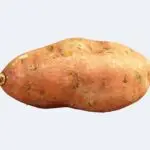
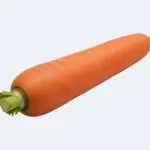
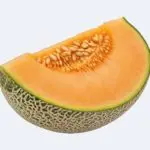
Orange and yellow vegetables and fruits lead the list. In the USDA ranking below, a medium sweet potato (151 g) holds 14,260 µg (14.3 mg) of beta-carotene. A medium carrot (61 g) holds 5,054 µg and a cup of cantaloupe 3,232 µg.
Per 100 g, sweet potatoes have 9,444 µg, carrots 8,285 µg and spinach 5,626 µg. Chlorophyll hides the color of leafy greens, which is why spinach ranks so high while looking green.
At the 12-to-1 ratio of the US reference intakes, one medium sweet potato gives about 1,190 µg RAE (14,260 divided by 12). RAE means retinol activity equivalents, the unit for vitamin A. That is more than the vitamin A RDA of 900 µg RAE for men and 700 µg RAE for women. The RDA is the daily target that covers nearly everyone.
Treat that as a rough guide, because conversion varies between people and foods. The mean intake in industrialized countries is about 3.9 mg a day. So a single serving of a top food can cover several days of a typical intake.
Per serving. Bars show the share of the Daily Value for vitamin A (900 µg a day). The line marks 100%.
Per 100 g. Bars show the share of the Daily Value for vitamin A (900 µg a day).
Per serving. Bars show the share of the EU Reference Intake for vitamin A (800 µg a day). The line marks 100%.
Per 100 g. Bars show the share of the EU Reference Intake for vitamin A (800 µg a day).
Per 100 kcal: the same calories of each food, for a fair comparison. Bars compare each food with the top food.
No daily need is set for beta-carotene itself. The % shows how much of your daily vitamin A it can supply, counting 12 µg of it from food as 1 µg of vitamin A (US RAE).
- 1.
- 2.
- 3.
- 4.
- 5.
- 6.
- 7.
- 8.
- 9.
- 10.


- 1.
- 2.
- 3.
- 4.
- 5.
- 6.
- 7.
- 8.
- 9.
- 10.


- 1.
- 2.
- 3.
- 4.
- 5.
- 6.
- 7.
- 8.
- 9.
- 10.

How beta-carotene works
Most of what we know about how beta-carotene works comes from test tubes, cells and animals. Four ideas come up again and again. The body cuts it in two to make vitamin A, and how much vitamin A you get varies a lot. It sits in the fatty core of cell membranes.
And in lab tests, it can switch from protecting fats to damaging them when oxygen pressure is high. Here is each one, and what has been seen in people.
It is cut in two to make vitamin A
Beta-carotene is a long chain with a ring at each end, and the body makes vitamin A by cutting it in the middle. The enzyme that does this was first identified in fruit flies in 2000. That filled a gap in vitamin A research that had lasted about 50 years.
Its human counterpart, BCO1, cuts the central bond and gives two molecules of retinal. A second enzyme, BCO2, cuts off-center and makes other fragments. These may be precursors of retinoic acid or have effects nobody knows yet.
In people, most of the absorbed beta-carotene is cut inside the cells of the gut wall. The retinal is then turned into retinol, which is vitamin A, stored as retinyl esters and sent into the blood. EFSA’s 2024 review, citing two tracer studies, puts about 81% of the vitamin A made from a beta-carotene dose at the gut wall. The other 19% is made in other tissues such as the liver.
Where beta-carotene is cut. Simplified: one cut in the middle gives two retinal molecules in theory, and real yields are lower. Based on enzyme studies in fruit flies and mice and on EFSA’s review of human data.
How much vitamin A you get varies a lot
The cut is not the main bottleneck. EFSA’s review says absorption of beta-carotene from food runs from about 5% to 65%. This spread, more than the cutting step, drives the differences between people.
The body also adjusts. When vitamin A is plentiful, the gut makes less of the enzyme and takes up less beta-carotene, a feedback loop shown in mice. In Filipino schoolchildren, conversion went down as vitamin A status went up.
Genes matter too. Two common variants of the BCMO1 gene lowered the ability of women to convert beta-carotene by 32% and 69%. The same group estimates that up to 45% of people are poor responders. In 11 healthy men under controlled conditions, absorption averaged only 2.2% and conversion was low and variable.
That is why the US reference intakes count 12 µg of beta-carotene from food as 1 µg of vitamin A (1 µg RAE). From a supplement, it takes only 2 µg of beta-carotene. A review of human studies found ratios for dietary beta-carotene from 3.6 to 1 up to 28 to 1.
Drawn to scale. The supplement and food figures are the US reference values; the Golden Rice figure comes from five adults; the grey bar is the range of food ratios in studies.
It stays in the fatty core of membranes
Beta-carotene is a hydrocarbon with no oxygen, so it has no water-loving end. In artificial membranes, such carotenoids sit in the oily inner core. There they are badly placed to catch free radicals that arrive from the watery side.
Carotenoids with polar (water-loving) end groups span the membrane. In the same tests, zeaxanthin and beta-cryptoxanthin protected the fats better than beta-carotene. The astaxanthin page shows the same picture.
Where carotenoids sit in a membrane, as found in lab tests on artificial membranes. A sketch, not to scale.
Position may matter for more than protection. In another lab test, beta-carotene and lycopene disordered the membrane and raised fat damage (lipid hydroperoxides) by more than 85%, while astaxanthin cut it by 40%. Results differ between tests: in solution, all the carotenoids Woodall’s team tried slowed fat oxidation.
It can switch from protecting to damaging when oxygen is high
Beta-carotene is not a plain antioxidant. In 1984, Burton and Ingold showed in the test tube that it traps radicals well only at low oxygen pressures. That means well below 150 torr, the pressure in normal air, and most tissues have pressures that low.
At higher pressures it loses this effect and speeds up oxidation, especially at high concentrations.
Lung tissue sits near that tipping point, which is why researchers tested cigarette smoke. In rat lung membranes exposed to cigarette tar, beta-carotene protected at 15 mmHg of oxygen. It lost its protection at 50 to 100 mmHg and acted as a pro-oxidant (it sped up damage) from 100 to 760 mmHg. The authors give lung tissue as 100 to 150 mmHg, and vitamin E prevented the effect.
Drawn to scale on the oxygen axis. The colors show the direction of the effect in rat lung membranes with cigarette tar, not its size. The tested points were 15, 50 to 100 and 100 to 760 mmHg.
Other labs disagree. In liposomes (tiny fat bubbles) exposed to gas-phase smoke, beta-carotene mildly protected the fats, and the authors judged a pro-oxidant effect unlikely under realistic conditions. In ferrets, high doses with smoke caused squamous metaplasia and lower retinoic acid in the lung. A dose equal to 6 mg a day in people did not.
No study has shown which of these explains the human trials, and EFSA says the data cannot describe a dose-response relationship.
What has been seen in people
The lab picture fits the human trials only in part. In smokers and asbestos workers, 20 mg a day raised lung cancer by 18% (ATBC). In CARET, 30 mg a day with vitamin A raised it by 28%. In trials of mostly non-smokers, 50 mg every other day brought neither harm nor benefit.
EFSA points out that ATBC also used a better-absorbed pill taken daily, which raised blood beta-carotene 17-fold against 4-fold in the doctors’ trial. As a source of vitamin A, beta-carotene works. Weekly doses cut pregnancy-related deaths by 49% in Nepal, and orange sweet potatoes raised blood retinol in Mozambique.
For preventing disease, the effects in the study cards above are small or absent. And the links with lower risk in cohort studies cannot show that beta-carotene itself is responsible.
Sources
- von Lintig J, Vogt K. Filling the gap in vitamin A research. Molecular identification of an enzyme cleaving beta-carotene to retinal. J Biol Chem. 2000.
- Kiefer C, Hessel S, Lampert JM, et al. Identification and characterization of a mammalian enzyme catalyzing the asymmetric oxidative cleavage of provitamin A. J Biol Chem. 2001.
- EFSA Panel on Nutrition, Novel Foods and Food Allergens (NDA). Scientific opinion on the tolerable upper intake level for preformed vitamin A and β-carotene. EFSA J. 2024.
- von Lintig J. Provitamin A metabolism and functions in mammalian biology. Am J Clin Nutr. 2012.
- Ribaya-Mercado JD, Solon FS, Solon MA, et al. Bioconversion of plant carotenoids to vitamin A in Filipino school-aged children varies inversely with vitamin A status. Am J Clin Nutr. 2000.
- Leung WC, Hessel S, Méplan C, et al. Two common single nucleotide polymorphisms in the gene encoding beta-carotene 15,15′-monoxygenase alter beta-carotene metabolism in female volunteers. FASEB J. 2009.
- Lietz G, Oxley A, Leung W, Hesketh J. Single nucleotide polymorphisms upstream from the β-carotene 15,15′-monoxygenase gene influence provitamin A conversion efficiency in female volunteers. J Nutr. 2012.
- Hickenbottom SJ, Follett JR, Lin Y, et al. Variability in conversion of beta-carotene to vitamin A in men as measured by using a double-tracer study design. Am J Clin Nutr. 2002.
- Tang G. Bioconversion of dietary provitamin A carotenoids to vitamin A in humans. Am J Clin Nutr. 2010.
- Tang G, Qin J, Dolnikowski GG, Russell RM, Grusak MA. Golden Rice is an effective source of vitamin A. Am J Clin Nutr. 2009.
- Vitamin A and Carotenoids: Health Professional Fact Sheet. NIH Office of Dietary Supplements. Updated March 10, 2025.
- Woodall AA, Britton G, Jackson MJ. Carotenoids and protection of phospholipids in solution or in liposomes against oxidation by peroxyl radicals: relationship between carotenoid structure and protective ability. Biochim Biophys Acta. 1997.
- McNulty HP, Byun J, Lockwood SF, Jacob RF, Mason RP. Differential effects of carotenoids on lipid peroxidation due to membrane interactions: X-ray diffraction analysis. Biochim Biophys Acta. 2007.
- Burton GW, Ingold KU. beta-Carotene: an unusual type of lipid antioxidant. Science. 1984.
- Palozza P, Serini S, Trombino S, et al. Dual role of beta-carotene in combination with cigarette smoke aqueous extract on the formation of mutagenic lipid peroxidation products in lung membranes: dependence on pO2. Carcinogenesis. 2006.
- Baker DL, Krol ES, Jacobsen N, Liebler DC. Reactions of beta-carotene with cigarette smoke oxidants. Identification of carotenoid oxidation products and evaluation of the prooxidant/antioxidant effect. Chem Res Toxicol. 1999.
- Wang XD, Liu C, Bronson RT, et al. Retinoid signaling and activator protein-1 expression in ferrets given beta-carotene supplements and exposed to tobacco smoke. J Natl Cancer Inst. 1999.
- Liu C, Wang XD, Bronson RT, et al. Effects of physiological versus pharmacological beta-carotene supplementation on cell proliferation and histopathological changes in the lungs of cigarette smoke-exposed ferrets. Carcinogenesis. 2000.
Is beta-carotene safe? Supplements, dose and interactions
Beta-carotene from food is not a safety concern. EFSA’s 2024 opinion found no indication that beta-carotene from the background diet is linked to adverse effects. For supplements it could not set an upper level, because the data could not describe a dose-response relationship for lung cancer. It advises smokers to avoid beta-carotene supplements, and the general population to use them only to meet vitamin A needs.
NIH ODS (the US Office of Dietary Supplements) says the US Food and Nutrition Board has set no upper level for beta-carotene. It advises against beta-carotene supplements for the general population, except as a provitamin A source to prevent deficiency. The UK Expert Group on Vitamins and Minerals set a safe level of 7 mg a day for supplements in non-smokers, as EFSA cites.
- Smokers and asbestos workers. In ATBC, 20 mg a day raised lung cancer by 18%, and in CARET, 30 mg a day with vitamin A raised it by 28%. In AREDS2, lung cancers were more common in the group that took beta-carotene (2.0% against 0.9%), mostly in former smokers. NIH ODS reads the trials as harm from large doses in current and former smokers and asbestos workers. It says the effect of food or multivitamin amounts is not known.
- Typical doses. Trials used 15 mg a day (AREDS), 20 mg (ATBC), 30 mg (CARET) and 50 mg every other day (doctors and women). In an EU market survey, 74% of supplements held 5 mg or less per serving. And 2% held more than 15 mg, up to 18 mg. Pills are absorbed better than food. In one trial, 21.6 mg a day as a water-dispersible powder gave a blood level of 5.04 µmol/L. From 18 mg a day in carrot juice, it was 1.71 µmol/L.
- Orange skin. Long, high intakes can cause carotenodermia, a yellow-orange skin tint that is harmless and fades when you stop. NIH ODS says even 20 to 30 mg a day for long periods has not been linked to toxicity.
- Vitamin A and pregnancy. Preformed vitamin A has an upper level of 3,000 µg a day for adults. Beta-carotene is not known to cause birth defects, and the body slows conversion when stores are full. Check labels, because some products mix beta-carotene with retinyl palmitate, and we did not verify any specific drug interaction.
How to get more beta-carotene
- Best food. A medium sweet potato holds 14,260 µg of beta-carotene and a medium carrot 5,054 µg, according to the USDA ranking above.
- Eat it with fat. In 7 people, salads with a fat-free dressing gave negligible absorption of beta-carotene, and 28 g of oil gave more than 6 g.
- Cook or puree it. In 8 women, pureed, heat-processed carrots and spinach tended to give about three times the blood response of the raw vegetables. Breaking up spinach raised its relative absorption from 5.1% to 9.5%.
Sources
- EFSA Panel on Nutrition, Novel Foods and Food Allergens (NDA). Scientific opinion on the tolerable upper intake level for preformed vitamin A and β-carotene. EFSA J. 2024. The UK safe level, the EU supplement survey and the carrot juice comparison are quoted from this opinion.
- Vitamin A and Carotenoids: Health Professional Fact Sheet. NIH Office of Dietary Supplements. Updated March 10, 2025.
- Alpha-Tocopherol, Beta Carotene Cancer Prevention Study Group. The effect of vitamin E and beta carotene on the incidence of lung cancer and other cancers in male smokers. N Engl J Med. 1994.
- Omenn GS, Goodman GE, Thornquist MD, et al. Effects of a combination of beta carotene and vitamin A on lung cancer and cardiovascular disease. N Engl J Med. 1996.
- AREDS2 Research Group. Lutein + zeaxanthin and omega-3 fatty acids for age-related macular degeneration: the Age-Related Eye Disease Study 2 (AREDS2) randomized clinical trial. JAMA. 2013.
- Brown MJ, Ferruzzi MG, Nguyen ML, et al. Carotenoid bioavailability is higher from salads ingested with full-fat than with fat-reduced salad dressings as measured with electrochemical detection. Am J Clin Nutr. 2004.
- Rock CL, Lovalvo JL, Emenhiser C, et al. Bioavailability of beta-carotene is lower in raw than in processed carrots and spinach in women. J Nutr. 1998.
- Castenmiller JJ, West CE, Linssen JP, van het Hof KH, Voragen AG. The food matrix of spinach is a limiting factor in determining the bioavailability of beta-carotene and to a lesser extent of lutein in humans. J Nutr. 1999.
- Weber D, Grune T. The contribution of β-carotene to vitamin A supply of humans. Mol Nutr Food Res. 2012.
History of beta-carotene
Beta-carotene was first pulled out of carrots. In 1831, Heinrich Wackenroder got small ruby-red flakes of it from carrot juice while looking for worm remedies, and the flakes turned fats yellow. Richard Willstätter later gave carotene its formula, C40H56, and the structure of beta-carotene was worked out in 1930.
In 1937 Paul Karrer received the Nobel Prize in Chemistry for his work on carotenoids and vitamins A and B2. Vitamin A became the first vitamin to have its structure mapped.
The best-known modern story is Golden Rice. In 2000, a team led by Ingo Potrykus and Peter Beyer reported rice that makes provitamin A in its grain. It was meant to help in regions where rice eaters often lack vitamin A. In 2005, Syngenta’s Golden Rice 2 reached up to 37 µg of carotenoids per gram, up to 23 times more than the first version. In 2009 a tracer trial in five adults found a conversion of about 3.8 to 1.
Approval has been slow. Australia, New Zealand, Canada and the United States judged Golden Rice safe to eat in 2018. In July 2021 the Philippines issued the first biosafety permit to grow it commercially. In April 2024, a Philippine appeals court ordered a stop to commercial growing, citing a lack of full scientific certainty, according to Wikipedia.
The supplement story went the other way. The ATBC and CARET trials were run to test whether pills could prevent lung cancer. In 1994 and 1996 they found more lung cancer in the beta-carotene groups, and CARET was stopped early.
Sources
- Carotene. Wikipedia. Discovery by Wackenroder in 1831, naming, Willstätter’s formula.
- β-Carotene. Wikipedia. Structure deduced in 1930.
- Paul Karrer: facts. NobelPrize.org.
- Ye X, Al-Babili S, Klöti A, et al. Engineering the provitamin A (beta-carotene) biosynthetic pathway into (carotenoid-free) rice endosperm. Science. 2000.
- Paine JA, Shipton CA, Chaggar S, et al. Improving the nutritional value of Golden Rice through increased pro-vitamin A content. Nat Biotechnol. 2005.
- Tang G, Qin J, Dolnikowski GG, Russell RM, Grusak MA. Golden Rice is an effective source of vitamin A. Am J Clin Nutr. 2009.
- Golden rice. Wikipedia. Project history, 2018 approvals, 2021 permit and 2024 court order.
- Alpha-Tocopherol, Beta Carotene Cancer Prevention Study Group. The effect of vitamin E and beta carotene on the incidence of lung cancer and other cancers in male smokers. N Engl J Med. 1994.
- Omenn GS, Goodman GE, Thornquist MD, et al. Effects of a combination of beta carotene and vitamin A on lung cancer and cardiovascular disease. N Engl J Med. 1996.
Frequently asked questions about beta-carotene
What does beta-carotene do for the body?
Its main job is to be turned into vitamin A. One molecule can be cut into two retinal molecules. But the US reference intakes count 12 µg of beta-carotene from food as only 1 µg of vitamin A. In Nepal, weekly beta-carotene cut pregnancy-related deaths by 49% in undernourished women. As a pill to prevent cancer, heart disease or early death it has not worked. A Cochrane review of 78 trials found a 5% higher risk of death with beta-carotene.
Which foods are high in beta-carotene?
Sweet potatoes lead the USDA ranking. A medium sweet potato holds 14,260 µg, a medium carrot 5,054 µg and a cup of cantaloupe 3,232 µg. Per 100 g, sweet potatoes have 9,444 µg, carrots 8,285 µg and spinach 5,626 µg. Eat them with some fat, because salads with a fat-free dressing gave negligible absorption in a small trial.
How much beta-carotene should you take a day?
No requirement has been set for beta-carotene itself. The US RDA for vitamin A is 900 µg RAE for men and 700 µg RAE for women. At 12 to 1, that equals about 10.8 mg and 8.4 mg of beta-carotene from food (our arithmetic). Adults in industrialized countries eat about 3.9 mg a day, with preformed vitamin A supplying most of the rest. EFSA says supplements should only be used to meet vitamin A needs. The UK expert group’s safe level for supplements in non-smokers is 7 mg a day.
Is beta-carotene safe, and does it have side effects?
Beta-carotene from food is safe, but supplements are risky for smokers. In ATBC (20 mg a day) and CARET (30 mg a day with vitamin A), lung cancer was 18% and 28% higher. EFSA says smokers should avoid beta-carotene supplements. In AREDS2, lung cancers were also more common with beta-carotene, mostly in former smokers (2.0% against 0.9%). In trials of mostly non-smokers there was neither harm nor benefit, and the usual side effect is orange-tinted skin.
Can too much beta-carotene turn your skin orange?
Yes, and it is harmless. The condition is called carotenodermia, a yellow-orange tint of the skin that fades after you cut back. It follows long, high intakes from carrots or supplements. NIH ODS says even 20 to 30 mg a day for long periods has not been linked to toxicity.
What is the difference between beta-carotene and vitamin A?
Vitamin A is retinol and its relatives, while beta-carotene is a plant pigment the body can turn into it. The US counts 1 µg of vitamin A (RAE) as 12 µg of beta-carotene from food or 2 µg from supplements. Preformed vitamin A has an upper level of 3,000 µg a day for adults, while beta-carotene has none and is not known to cause birth defects. The body also slows conversion when vitamin A is plentiful.
Does beta-carotene prevent cancer?
Not as a pill. The Physicians’ Health Study (50 mg every other day for 12 years) and the Women’s Health Study found no change in cancer. In smokers, the ATBC and CARET trials found more lung cancer. Cohort studies link higher total carotenoid intake to lower lung cancer risk (0.79 times the risk). The figure for beta-carotene intake alone could be chance (0.92), and the link may reflect a healthier lifestyle. The supported advice is to eat more vegetables and fruit.
What is the best time to take beta-carotene?
No trial here tested time of day, but fat matters. In 7 people, salads with a fat-free dressing gave negligible absorption, and 28 g of oil gave more than 6 g. Pureed, heat-processed carrots and spinach tended to give about three times the blood response of raw ones in 8 women. If you take a supplement, take it with a meal that contains fat, and read the safety section first.