Soluble fiber is the part of dietary fiber that dissolves in water or swells in it, often into a gel. Your enzymes cannot digest it, so it reaches the colon. There, bacteria ferment some kinds, and other kinds pass through largely intact.
Examples are the psyllium husk used in fiber supplements, the pectin of fruit, the inulin of chicory root and the beta-glucan of oats and barley. Three kinds have pages of their own: pectin, fructans (inulin) and beta-glucan. Beans, oats, barley, seeds, fruit and vegetables hold soluble fiber together with insoluble fiber.
Here is what most people do not know: the word “soluble” is shaky. In the lab, the soluble part of a food’s fiber is the part that dissolves in water. After enzymes digest the rest, it can be made to settle out with ethanol.
A 2008 position paper from the American Dietetic Association says the soluble share of a food’s fiber varies two- to threefold between lab methods. It notes that an Institute of Medicine report recommended dropping the terms soluble and insoluble. It also calls the support for “soluble fibers lower cholesterol, insoluble fibers add stool bulk” inconsistent at best.
A 2017 review points to what predicts the effects better: how thick the fiber makes the gut contents (its viscosity), and whether bacteria ferment it.
So this page does not treat soluble fiber as one thing. The best evidence is for thick, gel-forming fibers such as psyllium, glucomannan and beta-glucan. They lower LDL cholesterol (the “bad” kind) and blunt blood sugar in people with type 2 diabetes, and psyllium helps irritable bowel syndrome.
Effects on weight are small. The US Food and Drug Administration (FDA) and the EU allow health claims for some of these fibers, with conditions that are quoted below.
Health benefits of soluble fiber
The best-supported finding is that soluble fiber lowers LDL cholesterol, but the effect is small. In a pooled analysis of 67 trials, each gram lowered LDL by 0.057 mmol/L (a unit for blood levels). About 10.2 g of psyllium a day lowered it by 0.33 mmol/L across 28 trials. The FDA allows a heart disease claim for soluble fiber from oats, barley and psyllium husk.
The EU allows cholesterol claims for pectins, guar gum, glucomannan, hydroxypropyl methylcellulose and beta-glucans. Thick fibers also lower HbA1c (long-term blood sugar) in type 2 diabetes, by 0.58% across 28 trial comparisons. Psyllium helps irritable bowel syndrome. Effects on weight are small, 0.33 kg across 62 trials, and the evidence on appetite is mixed.
Cohort data (from studies that follow groups of people) are weaker, and the one trial in ulcerative colitis was open-label: people knew what they took. Most trials test one fiber, usually as a supplement, and each card says which.
Here is what 19 studies found, strongest evidence first, including the ones that found nothing. Trials of single forms, such as glucomannan, guar gum, pectin types and methylcellulose, are in the section on forms below.
In 67 trials, each gram of soluble fiber lowered LDL cholesterol slightly
This meta-analysis (a study that pools earlier studies) tested pectin, oat bran, guar gum and psyllium at 2 to 10 g a day. Each gram lowered LDL by 0.057 mmol/L and total cholesterol by 0.045 mmol/L. Oat, psyllium and pectin worked about equally, and triglycerides and HDL (the “good” cholesterol) did not clearly change. Guar could not be compared, because too few trials used 2 to 10 g. The authors call it a small help to diet therapy. Their estimate: 3 g of oat soluble fiber (about 3 servings of 28 g oatmeal) lowers total and LDL cholesterol by about 0.13 mmol/L.
EU claims for pectins: normal cholesterol and a smaller glucose rise
Regulation (EU) No 432/2012 lists two pectin claims, based on a 2010 opinion of EFSA, the EU’s food safety agency. They cover normal blood cholesterol at 6 g a day and a smaller blood glucose rise after a meal at 10 g in the meal. Only food that provides those amounts may carry them. Both need a choking warning for people with swallowing difficulties or low fluid intake, with advice to take the pectin with plenty of water. The table below gives the wording and conditions, with the claims the register lists for other soluble fibers. Pectin has its own page, and trial results on its cholesterol effect depend on the pectin type, as the section on forms explains.
About 10.2 g of psyllium a day lowered LDL in 28 trials
These randomized trials (groups assigned by chance) gave psyllium (Plantago ovata) supplements for at least 3 weeks to 1,924 people. Some had high cholesterol and some did not. LDL fell by 0.33 mmol/L, non-HDL cholesterol by 0.39 mmol/L and apolipoprotein B by 0.05 g/L. The authors rated the LDL and non-HDL results moderate quality because the trials disagreed, and the apolipoprotein B result high quality.
In irritable bowel syndrome, soluble fiber eased symptoms but bran did not
This meta-analysis pooled 14 trials of fiber supplements in 906 people, against placebo, control therapy or usual care. Fiber cut the risk of staying symptomatic to 0.86 times (10 people treated for each person helped). The benefit came only from soluble fiber (0.83 times the risk; 7 treated for each person helped), while bran showed no clear effect (0.90). The trials agreed with one another, and the authors found no evidence that bran does harm, as some had feared.
Show 15 more studies
In 16 IBS trials, 52% responded to fiber, 44% to placebo
This meta-analysis covered 30 randomized trials of fiber supplements against placebo in 1,904 adults with irritable bowel syndrome (IBS). Most tested wheat bran (7 trials), psyllium (6), inulin-type fructans (5) or beta-galacto-oligosaccharides (2). Clinical response, in 16 trials of 1,293 people, was 1.21 times as likely on fiber and 1.53 times on psyllium. Overall symptom scores (9 trials, 497 people) did not clearly change except with beta-galacto-oligosaccharides, and the trials differed a lot (I2 of 78%). Results were not reported by IBS subtype.
Thick fiber added to a normal diet cut weight by 0.33 kg
This meta-analysis pooled 62 randomized trials of at least 4 weeks in 3,877 people. They added viscous (thick) fiber of several kinds to a diet eaten freely. BMI (body mass index) fell by 0.28 and waist size by 0.63 cm; body fat fell by 0.78%, but that could be chance. Weight fell more in people with overweight, diabetes or metabolic syndrome. The authors rated the evidence moderate for body weight and call the effect modest.
In diabetes, thick fiber supplements lowered long-term blood sugar
This meta-analysis pooled 28 randomized trial comparisons, each lasting at least 3 weeks, in 1,394 people with type 2 diabetes. Adding about 13.1 g a day of viscous fiber supplements to usual care lowered HbA1c by 0.58%. Fasting blood glucose fell by 0.82 mmol/L and insulin resistance (HOMA-IR) by 1.89. The authors rated the evidence moderate for HbA1c, fasting glucose, fasting insulin and HOMA-IR, and low for fructosamine. The trials used different viscous fibers, so the result is not a figure for one fiber.
In IBS, 10 g of daily psyllium beat placebo; bran did not
This 12-week randomized trial in family practice enrolled 275 people with irritable bowel syndrome. They took 10 g of psyllium (85 people), 10 g of bran (97) or 10 g of rice flour as placebo (93). In the first month, 57% on psyllium reported adequate relief against 35% on placebo (1.60 times as likely). In the second month it was 59% against 41%. Bran beat placebo only in the third month, and not in the worst-case analysis. After 3 months, symptom severity had fallen by 90 points with psyllium and 49 with placebo, a clear difference. Quality of life did not differ. Only 64% on psyllium finished, against 56% on bran and 60% on placebo; early dropout was most common on bran, because symptoms worsened.
Psyllium twice a day lowered LDL 6.7% more than placebo
This randomized trial ran at several centers. Men and women with LDL between 3.36 and 4.91 mmol/L first spent 8 weeks on an American Heart Association Step I diet. For 26 weeks they then took 5.1 g of psyllium husk or a cellulose placebo, and stayed on the diet. Total cholesterol was 4.7% lower with psyllium, and other outcomes did not clearly differ. The authors suggest that psyllium may be an alternative to drug therapy for some patients.
16 g psyllium: 2.5 stool leaks a week, against 5.5 on placebo
In this single-blind randomized trial, 189 people with leaks of loose stool (bowel incontinence) had 14 days of baseline. They then took a placebo or 16 g of total fiber a day as psyllium, gum arabic or carboxymethylcellulose for 32 days. Estimated leaks a week were 5.5 on placebo, 2.5 on psyllium, 4.3 on gum arabic and 6.2 on carboxymethylcellulose, which made leaks more frequent. Only psyllium formed a gel in stool, which the authors propose as the way it works. Few people had trouble with the supplements, and quality of life did not differ.
In type 2 diabetes, psyllium before meals lowered fasting glucose and LDL
In this double-blind, placebo-controlled trial in a primary care clinic, 125 people first had 6 weeks of diet counseling. They then took 5 g of psyllium or placebo three times a day before meals for 6 weeks, alongside a low-fat diet. Fasting glucose, total and LDL cholesterol and triglycerides clearly fell, HDL cholesterol rose, body weight did not change, and there were no notable side effects. The trial was short, and the changes are reported only as significant (unlikely to be chance). So the size of the effect is best judged from the larger meta-analyses above.
Oat bran or bean diets lowered LDL by 23% and 24%
This randomized trial fed 20 men with high cholesterol on a hospital ward for 21 days, using foods, not supplements. The control and test diets matched in energy, fat and cholesterol. But the test diets had twice the total fiber and three times the soluble fiber. Total cholesterol fell by 19% on each test diet. Oat bran raised stool weight by 43% and beans did not. The trial was small and short, and it enrolled only men with raised cholesterol.
Psyllium with 10 mg of simvastatin matched 20 mg alone
In this blinded randomized trial, 68 adults took 15 g of psyllium or placebo with simvastatin (a cholesterol drug) for 12 weeks. Blood was tested at 4 and 8 weeks. After 8 weeks, LDL had fallen by 63 mg/dL (1.63 mmol/L) with 10 mg of simvastatin plus psyllium. It fell by 55 mg/dL (1.42 mmol/L) with 10 mg of simvastatin plus placebo, a clear difference. The fall with 20 mg of simvastatin plus placebo was the same as with 10 mg plus psyllium. Apolipoprotein B and total cholesterol followed the same pattern, all treatments were well tolerated, and the trial was small.
In 23 adults, a thick fiber blend cut LDL more than bran
In this randomized crossover trial, healthy adults ate each fiber for 3 weeks in an enriched cereal. About one-third of the fiber was wheat bran (570 cP), psyllium (14,300 cP) or a high-viscosity blend (136,300 cP); cP (centipoise) measures thickness. Intakes were 10.8, 9.0 and 5.1 g, so 5.1 g of the blend beat 10.8 g of wheat bran. The blend lowered LDL by 12.6% more than psyllium and 14.6% more than wheat bran, and the fall grew with viscosity (correlation 0.41). The blend was a novel mixture, so the result is not a figure for single fibers.
In 1978, the thicker the fiber, the flatter the blood sugar curve
Groups of four to six volunteers had a 50 g glucose tolerance test (a sugar drink, then blood tests). Some drinks contained guar, pectin, gum tragacanth, methylcellulose, wheat bran or cholestyramine, each equal to 12 g of fiber. Guar flattened the glucose response most, but not when it was broken down into a thin form. The drop in the peak glucose rise matched each substance’s viscosity (correlation 0.926), and so did the slower passage from mouth to cecum (0.885). These were one-off doses in a few people.
Pectin in a liquid meal slowed stomach emptying but not glucose
In this randomized crossover trial, 10 healthy men had three test meals of 450 kcal in 500 mL. They were fiber-free, with 2.0 g of agar, or with 5.2 g of pectin. The time to empty half the meal, measured with a breath test, was clearly longer after the 5.2 g pectin meal. Agar slowed emptying too. Neither fiber changed blood glucose after the meal. This was a single meal in healthy volunteers, so it says little about people with diabetes.
Most fibers did not cut appetite or food intake within a day
This systematic review covered 107 treatments from 44 publications in healthy people, each comparing a fiber with a low- or no-fiber control. Each study lasted a day or less. Of the 107, 39% lowered appetite as people rated it, and 22% lowered food or energy intake. Beta-glucan, lupin kernel fiber, rye bran, whole grain rye and a mixed high-fiber diet had effects backed by more than one publication. Neither fiber type nor dose was linked to the response, and the review covers 38 fiber sources, not only soluble ones.
In ulcerative colitis, psyllium seeds kept remission about as often as mesalamine
This open-label randomized trial (people knew what they took) included 105 people with ulcerative colitis in remission, over 12 months. They took Plantago ovata seeds (10 g twice a day), mesalamine (500 mg three times a day) or both. Within 12 months, treatment failed in 40% on psyllium seeds (14 of 35) and 35% on mesalamine (13 of 37). It failed in 30% on both (9 of 30), a difference that could be chance. Butyrate in stool rose with psyllium seeds, and 3 people withdrew for constipation or gas. The trial was small and open-label, so it cannot show that the treatments are equal.
Top quarter of soluble fiber eaters: 0.85 times the heart risk
The NHANES I Epidemiologic Follow-up Study followed 9,776 US adults for 19 years, with 1,843 coronary heart disease cases and 3,762 cardiovascular disease cases. Diet came from one 24-hour recall at the start. The highest against the lowest quarter of water-soluble fiber (median 5.9 against 0.9 g a day) had 0.85 times the risk of coronary events. For cardiovascular events it was 0.90. For total fiber (20.7 against 5.9 g a day), coronary risk (0.88) was not clearly lower. Cohorts cannot prove cause, and people who eat more soluble fiber differ from others in other ways.
What the US and EU health claims say
A health claim is a regulated sentence on a label, not a study result, and each one has conditions that a food must meet. This table gives the wording and conditions as published. Each applies only to a food that provides the stated amount of an isolated fiber, which is far more than a typical portion of fruit.
| Authority and rule | Claim wording | Conditions | Source |
|---|---|---|---|
| US FDA, 21 CFR 101.81 | Model claim: “Soluble fiber from foods such as [name of the source], as part of a diet low in saturated fat and cholesterol, may reduce the risk of heart disease.” | The claim names the daily amount tied to it: 3 g or more of beta-glucan soluble fiber from whole oats or barley, or 7 g or more of soluble fiber from psyllium seed husk. The husk must be at least 95% pure. The food must have at least 0.75 g of soluble fiber (oat and barley foods) or 1.7 g (psyllium foods) per reference amount customarily consumed, be low in saturated fat and cholesterol, and be low in fat unless the fat comes from whole oats. The label must state the soluble fiber amount. | 1 |
| EU, Regulation (EU) No 432/2012: pectins | “Pectins contribute to the maintenance of normal blood cholesterol levels”, and “Consumption of pectins with a meal contributes to the reduction of the blood glucose rise after that meal” | Food must provide 6 g of pectins a day (cholesterol claim), or contain 10 g of pectins per quantified portion eaten as part of the meal (glucose claim). The consumer must be told the amount needed. A warning of choking for people with swallowing difficulties and advice to take it with plenty of water are required. | 2, 3 |
| EU, Regulation (EU) No 432/2012: guar gum | “Guar gum contributes to the maintenance of normal blood cholesterol levels” | 10 g of guar gum a day. The same choking warning and advice to take it with plenty of water. | 2, 4 |
| EU, Regulation (EU) No 432/2012: glucomannan | “Glucomannan contributes to the maintenance of normal blood cholesterol levels”, and “Glucomannan in the context of an energy restricted diet contributes to weight loss” | 4 g of glucomannan a day (cholesterol claim). For the weight claim, 1 g per quantified portion, and the label must say the effect comes with 3 g a day in three doses of 1 g each, with 1 to 2 glasses of water, before meals and within an energy-restricted diet. The same choking warning. | 2, 5 |
| EU, Regulation (EU) No 432/2012: hydroxypropyl methylcellulose (HPMC) | “Hydroxypropyl methylcellulose contributes to the maintenance of normal blood cholesterol levels”, and “Consumption of Hydroxypropyl methylcellulose with a meal contributes to a reduction in the blood glucose rise after that meal” | 5 g of HPMC a day (cholesterol claim), or 4 g of HPMC per quantified portion as part of the meal (glucose claim). The same choking warning. | 2, 6 |
| EU, Regulation (EU) No 432/2012: beta-glucans | “Beta-glucans contribute to the maintenance of normal blood cholesterol levels”, and a claim for a smaller blood glucose rise after a meal | Beta-glucans from oats, oat bran, barley, barley bran or mixtures: at least 1 g per portion and 3 g a day (cholesterol); at least 4 g from oats or barley for each 30 g of available carbohydrates in the meal (glucose). The details are on the beta-glucan page. | 2 |
| EU, Regulation (EU) 2015/2314: chicory inulin | “Chicory inulin contributes to normal bowel function by increasing stool frequency” | A daily intake of 12 g of native chicory inulin, a non-fractionated mixture of monosaccharides (under 10%), disaccharides, inulin-type fructans and inulin extracted from chicory, with a mean degree of polymerization of 9 or more. | 7, 8 |
We found no entry for psyllium in the annex of Regulation (EU) No 432/2012, although psyllium has the FDA claim. The register also holds claims for fibers that are mostly insoluble, such as wheat bran, which are covered on the insoluble fiber page.
Soluble and insoluble fiber in the trials
Where trials compare the two, the split matters less than the fiber. In irritable bowel syndrome, the pooled benefit was in the soluble fiber trials and bran gave none. In a 275-person trial, psyllium helped and bran did not. In healthy adults, a thick fiber blend lowered LDL cholesterol more than wheat bran or psyllium, even though less of it was eaten.
For leaks of loose stool, psyllium helped, while carboxymethylcellulose, a modified cellulose that dissolves in water, made leaks more frequent. The 2008 position paper adds that when a soluble fiber is not viscous, or is treated to lose its viscosity, the cholesterol-lowering effect is lost.
Sources
- Health claims: soluble fiber from certain foods and risk of coronary heart disease (CHD). 21 CFR 101.81. US Food and Drug Administration, Code of Federal Regulations (eCFR).
- Commission Regulation (EU) No 432/2012 establishing a list of permitted health claims made on foods, other than those referring to the reduction of disease risk and to children’s development and health. Annex, entries for pectins, guar gum, glucomannan, hydroxypropyl methylcellulose and beta-glucans. Official Journal of the European Union. 2012.
- EFSA Panel on Dietetic Products, Nutrition and Allergies (NDA). Scientific opinion on the substantiation of health claims related to pectins and reduction of post-prandial glycaemic responses (ID 786), maintenance of normal blood cholesterol concentrations (ID 818)… EFSA J. 2010.
- EFSA Panel on Dietetic Products, Nutrition and Allergies (NDA). Scientific opinion on the substantiation of health claims related to guar gum and maintenance of normal blood glucose concentrations (ID 794), increase in satiety (ID 795) and maintenance of normal blood cholesterol concentrations (ID 808) EFSA J. 2010.
- EFSA Panel on Dietetic Products, Nutrition and Allergies (NDA). Scientific opinion on the substantiation of health claims related to konjac mannan (glucomannan) and reduction of body weight (ID 854, 1556, 3725), reduction of post-prandial glycaemic responses (ID 1559)… EFSA J. 2010.
- EFSA Panel on Dietetic Products, Nutrition and Allergies (NDA). Scientific opinion on the substantiation of health claims related to hydroxypropyl methylcellulose (HPMC) and maintenance of normal bowel function (ID 812), reduction of post-prandial glycaemic responses (ID 814)… EFSA J. 2010.
- Commission Regulation (EU) 2015/2314 authorising a health claim made on foods, other than those referring to the reduction of disease risk and to children’s development and health. Annex, native chicory inulin. Official Journal of the European Union. 2015.
- EFSA Panel on Dietetic Products, Nutrition and Allergies (NDA). Scientific opinion on the substantiation of a health claim related to “native chicory inulin” and maintenance of normal defecation by increasing stool frequency pursuant to Article 13.5 of Regulation (EC) No 1924/2006 EFSA J. 2015.
- Slavin JL. Position of the American Dietetic Association: health implications of dietary fiber. J Am Diet Assoc. 2008.
- McRorie JW Jr, McKeown NM. Understanding the Physics of Functional Fibers in the Gastrointestinal Tract: An Evidence-Based Approach to Resolving Enduring Misconceptions about Insoluble and Soluble Fiber. J Acad Nutr Diet. 2017.
Foods high in soluble fiber
Beans, seeds, fruit and some vegetables lead our list. It uses USDA Foundation records and the Danish Frida database, and covers the foods that have a measured soluble fiber value.
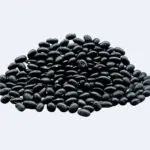
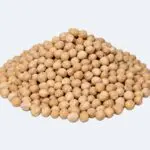
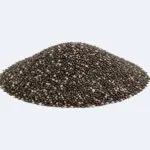
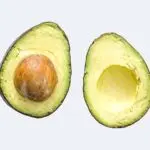
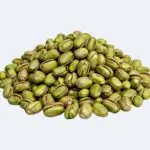
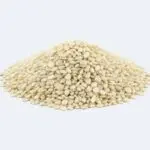
Per serving, black beans come first with 4.35 g in 1 cup (172 g), followed by chickpeas with 3.93 g in 1 cup (164 g). Chia seeds, avocados and apricots come next. Per 100 g, chia seeds lead (5.35 g), ahead of sesame seeds (3.35 g) and pistachio nuts (2.75 g), then black beans and chickpeas.
Per 100 kcal, carrots lead with 3.41 g, followed by black beans (1.92 g), apricots (1.91 g) and chickpeas (1.46 g). A food missing from the ranking may still be a good source, because the list only includes foods with a measured value.
Per serving. No daily amount is set, so bars compare each food with the top food.
Per 100 g. No daily amount is set, so bars compare each food with the top food.
Per 100 kcal: the same calories of each food, for a fair comparison. Bars compare each food with the top food.
Food labels have no Daily Value or Reference Intake for soluble fiber, so the % compares each food with the top food.
- 1.
- 2.
- 3.
- 4.
- 5.

- 6.

- 7.
- 8.
- 9.

- 10.


- 1.
- 2.
- 3.
- 4.
- 5.
- 6.
- 7.
- 8.
- 9.

- 10.


- 1.
- 2.
- 3.
- 4.
- 5.

- 6.
- 7.

- 8.
- 9.
- 10.



Treat the numbers as approximate. The same food can show a different soluble share under a different lab method, as the 2008 position paper explains. A published list of cholesterol-lowering fibers names apples, barley, beans and other legumes, fruits and vegetables, oatmeal, oat bran and rice hulls among the foods. Whole foods also bring other things with them, which is one reason food trials and supplement trials are not interchangeable.
In practice, 1 cup of black beans gives 4.35 g in the ranking. That is inside the 2 to 10 g a day used in the trials of the 67-trial meta-analysis (our comparison). That analysis tested pectin, oat bran, guar gum and psyllium, not beans.
But a 21-day ward trial in 20 men tested bean and oat bran diets with three times the soluble fiber of the control diet. They lowered LDL cholesterol by 24% and 23%.
Foods that carry the FDA claim must show the soluble fiber amount on the label. It must be at least 0.75 g per reference amount for oat and barley foods, and 1.7 g for foods with psyllium husk. For oats and barley see the beta-glucan page, and for the inulin in chicory root, onions and garlic, the inulin page.
Sources
- U.S. Department of Agriculture, Agricultural Research Service. FoodData Central. Values as shown in the ranking above.
- Slavin JL. Position of the American Dietetic Association: health implications of dietary fiber. J Am Diet Assoc. 2008.
- Brown L, Rosner B, Willett WW, Sacks FM. Cholesterol-lowering effects of dietary fiber: a meta-analysis. Am J Clin Nutr. 1999.
- Anderson JW, Story L, Sieling B, et al. Hypocholesterolemic effects of oat-bran or bean intake for hypercholesterolemic men. Am J Clin Nutr. 1984.
- Health claims: soluble fiber from certain foods and risk of coronary heart disease (CHD). 21 CFR 101.81. US Food and Drug Administration, Code of Federal Regulations (eCFR).
How soluble fiber works
Most of what we know about how soluble fiber works comes from short physiology trials, lab models and reviews. What it does in people over months is tested in the study cards above.
Three ideas cover most of it. Thickness matters more than solubility, a thick gel slows sugar and traps bile acids, and bacteria ferment some soluble fibers but not others. Here is each one, and what has been seen in people.
Thickness matters more than dissolving
A fiber can dissolve and still stay thin. A 2017 review of fiber supplements tied the small-bowel benefits, lower cholesterol and better blood sugar control, closely to viscosity. High-viscosity fibers such as beta-glucan, psyllium and raw guar gum had an effect. Soluble fibers that stay thin (inulin, fructooligosaccharides, wheat dextrin) and insoluble wheat bran did not.
A crossover trial in 23 healthy adults tested this. There, 5.1 g of a very thick fiber blend lowered LDL cholesterol more than 10.8 g of wheat bran or 9.0 g of psyllium.
Grams of fiber eaten in a 3-week crossover trial, drawn to scale, with each fiber’s thickness in centipoise (cP). The thickest fiber was eaten in the smallest amount and lowered LDL cholesterol the most.
A thick gel slows sugar and traps bile acids
A 1978 trial linked viscosity to blood sugar. With guar, pectin, gum tragacanth, methylcellulose or wheat bran added to a glucose drink, the drop in the peak glucose rise matched each substance’s viscosity. Guar lost its effect when it was broken down into a thin form. Pectin also slowed stomach emptying in 10 healthy men, but it did not change their blood glucose in that single meal.
For cholesterol, the dietetic position paper explains that viscosity interferes with bile acid absorption from the last part of the small bowel. So the liver pulls LDL cholesterol from the blood to make new bile acids.
A crossover trial in 20 men with high cholesterol measured this directly. Taking 15 g of psyllium a day for 40 days lowered LDL cholesterol and relative cholesterol absorption. It also sped up the turnover of the two main bile acids. The authors concluded that psyllium lowers LDL mainly by stimulating bile acid production.
LDL cholesterol and cholic acid turnover at baseline, on psyllium and on a cellulose placebo, drawn to scale from zero. The LDL bars differ by only a few mg/dL, as in the paper.
Some soluble fibers are fermented, and some are not
Soluble does not mean fermentable. The dietetic position paper says fiber can be fermented in the large intestine or pass through unfermented. A fully and quickly fermented fiber adds no stool weight. In the studies the paper summarizes, isolated pectin added 1.3 g of stool for each gram eaten, against 5.4 g for wheat bran.
In lab tests with colon bacteria from three people, gum arabic was fermented more than psyllium, and psyllium more than carboxymethylcellulose. In the trial of 189 people with leaks of loose stool, only psyllium formed a gel in stool, and only psyllium cut the leaks.
Bacteria turn fermentable fiber into short-chain fatty acids, mainly acetate, propionate and butyrate. These act on gut receptors and fuel colon cells, according to a review based mostly on lab and animal work. Our fiber page shows measured levels of these acids in the human gut.
Estimated episodes of fecal incontinence a week after 32 days on 16 g of fiber a day, drawn to scale. The lab fermentation order is from a separate in vitro experiment by the same group.
What has been seen in people
The chart puts the pooled falls in LDL cholesterol from four meta-analyses on one scale. The three viscous fibers lowered LDL by 0.25 to 0.35 mmol/L, and the thin inulin-type fructans by 0.15 mmol/L. That fits the idea that thickness counts. The trials differ in dose, population and length, so the bars are not a ranking.
Pooled fall in LDL cholesterol against control in four meta-analyses of randomized trials, in mmol/L, drawn to scale. Green bars are fibers described as viscous (konjac glucomannan, psyllium, oat beta-glucan) and the pink bar is a fermentable fiber described as non-viscous. Doses and populations differ.
Putting the cards together: the effects are real but modest, and they belong to particular fibers. LDL cholesterol falls by a few tenths of a mmol/L. In one trial, adding psyllium to a low statin dose gave about the same fall as doubling the statin.
HbA1c falls by about half a percentage point in type 2 diabetes, and body weight by a third of a kilogram. Psyllium eases irritable bowel syndrome and leaks of loose stool. We found no randomized trial of a soluble fiber with heart attacks or deaths as the outcome, so the claims rest on blood fats. Observational data go the same way, but they cannot prove cause.
Sources
- McRorie JW Jr, McKeown NM. Understanding the Physics of Functional Fibers in the Gastrointestinal Tract: An Evidence-Based Approach to Resolving Enduring Misconceptions about Insoluble and Soluble Fiber. J Acad Nutr Diet. 2017.
- Vuksan V, Jenkins AL, Rogovik AL, et al. Viscosity rather than quantity of dietary fibre predicts cholesterol-lowering effect in healthy individuals. Br J Nutr. 2011.
- Jenkins DJ, Wolever TM, Leeds AR, et al. Dietary fibres, fibre analogues, and glucose tolerance: importance of viscosity. Br Med J. 1978.
- Sanaka M, Yamamoto T, Anjiki H, et al. Effects of agar and pectin on gastric emptying and post-prandial glycaemic profiles in healthy human volunteers. Clin Exp Pharmacol Physiol. 2007.
- Slavin JL. Position of the American Dietetic Association: health implications of dietary fiber. J Am Diet Assoc. 2008.
- Everson GT, Daggy BP, McKinley C, Story JA. Effects of psyllium hydrophilic mucilloid on LDL-cholesterol and bile acid synthesis in hypercholesterolemic men. J Lipid Res. 1992.
- Bliss DZ, Weimer PJ, Jung HJ, Savik K. In vitro degradation and fermentation of three dietary fiber sources by human colonic bacteria. J Agric Food Chem. 2013.
- Bliss DZ, Savik K, Jung HJ, et al. Dietary fiber supplementation for fecal incontinence: a randomized clinical trial. Res Nurs Health. 2014.
- Koh A, De Vadder F, Kovatcheva-Datchary P, Bäckhed F. From Dietary Fiber to Host Physiology: Short-Chain Fatty Acids as Key Bacterial Metabolites. Cell. 2016.
- Ho HVT, Jovanovski E, Zurbau A, et al. A systematic review and meta-analysis of randomized controlled trials of the effect of konjac glucomannan, a viscous soluble fiber, on LDL cholesterol and the new lipid targets non-HDL cholesterol and apolipoprotein B. Am J Clin Nutr. 2017.
- Jovanovski E, Yashpal S, Komishon A, et al. Effect of psyllium (Plantago ovata) fiber on LDL cholesterol and alternative lipid targets, non-HDL cholesterol and apolipoprotein B: a systematic review and meta-analysis of randomized controlled trials. Am J Clin Nutr. 2018.
- Whitehead A, Beck EJ, Tosh S, Wolever TMS. Cholesterol-lowering effects of oat β-glucan: a meta-analysis of randomized controlled trials. Am J Clin Nutr. 2014.
- Liu F, Prabhakar M, Ju J, et al. Effect of inulin-type fructans on blood lipid profile and glucose level: a systematic review and meta-analysis of randomized controlled trials. Eur J Clin Nutr. 2017.
- Moreyra AE, Wilson AC, Koraym A. Effect of combining psyllium fiber with simvastatin in lowering cholesterol. Arch Intern Med. 2005.
How much soluble fiber do you need?
No daily need or upper limit is set for soluble fiber on its own. The official values cover total fiber, mostly from food. In the US it is 14 g per 1,000 kcal. The EU sets 25 g a day for adults, and WHO says at least 25 g a day.
Soluble fiber is part of that total. The doses behind the label claims for isolated fibers are much higher than a typical daily intake from foods. The table gives each value as published.
| Source | Group | Value | Notes | |
|---|---|---|---|---|
| National Academies (IOM) 2005, adequate intake, as listed in the Dietary Guidelines for Americans 2020 to 2025 | Adults and children aged 2 and older | 14 g of total fiber per 1,000 kcal | There is no value for soluble fiber on its own. At 2,000 kcal this is 28 g (our arithmetic; Table A1-2 lists 28 g at that calorie level). The IOM report did not set a tolerable upper intake level for dietary or functional fiber, according to the dietetic position paper. | 1, 2 |
| EFSA 2010, adequate intake | Adults | 25 g of dietary fibre a day | Total fibre. Children: 10 g (1 to 3 years) up to 21 g (15 to 17 years). | 3 |
| WHO 2023 guideline | Adults | At least 25 g a day of naturally occurring fiber, as eaten in food | Total fiber, as a strong recommendation. WHO found no undesirable effects at these intakes except a higher risk of endometrial cancer, based on very low certainty evidence. | 4 |
| FDA Daily Value | Adults and children aged 4 and older | 28 g of dietary fiber a day | Label reference value for total fiber. The label of a food that carries the FDA claim must state its soluble fiber amount. | 5, 6 |
| Dietary Guidelines for Americans 2025 to 2030 | General population | No gram value for fiber | The guidelines say to prioritize fiber-rich whole grains, with a goal of 2 to 4 servings of whole grains a day, and that high-fiber foods support a diverse gut microbiome. | 7 |
| Doses behind health claims (not daily needs) | People using a fiber for its claim | US: 7 g or more of soluble fiber from psyllium husk. EU: pectins 6 g, guar gum 10 g, glucomannan 4 g, HPMC 5 g a day | These are amounts of isolated fibers tied to a label claim. The trials pooled in the 67-trial meta-analysis used 2 to 10 g of soluble fiber a day. | 6, 8, 9 |
Soluble fiber is not an essential nutrient, and we found no source that describes a deficiency of it. Low intake of total fiber is a separate question, covered on our fiber page.
Sources
- U.S. Department of Agriculture and U.S. Department of Health and Human Services. Dietary Guidelines for Americans, 2020–2025. Appendix 1, Table A1-2, daily nutritional goals for ages 2 and older. 9th edition. 2020.
- Slavin JL. Position of the American Dietetic Association: health implications of dietary fiber. J Am Diet Assoc. 2008.
- European Food Safety Authority. Summary of Dietary Reference Values for the EU population (version 4). 2017. The value for dietary fibre comes from the opinion of the EFSA NDA Panel, 2010.
- World Health Organization. Carbohydrate intake for adults and children: WHO guideline. 2023.
- Nutrition labeling of food. 21 CFR 101.9. US Food and Drug Administration, Code of Federal Regulations (eCFR).
- Health claims: soluble fiber from certain foods and risk of coronary heart disease (CHD). 21 CFR 101.81. US Food and Drug Administration, Code of Federal Regulations (eCFR).
- U.S. Department of Agriculture and U.S. Department of Health and Human Services. Dietary Guidelines for Americans, 2025–2030. January 2026.
- Commission Regulation (EU) No 432/2012 establishing a list of permitted health claims made on foods, other than those referring to the reduction of disease risk and to children’s development and health. Annex, entries for pectins, guar gum, glucomannan, hydroxypropyl methylcellulose and beta-glucans. Official Journal of the European Union. 2012.
- Brown L, Rosner B, Willett WW, Sacks FM. Cholesterol-lowering effects of dietary fiber: a meta-analysis. Am J Clin Nutr. 1999.
Forms of soluble fiber: absorption and effects
Fiber is not absorbed, so “absorption” here means what reaches the colon and how the fiber behaves on the way. Soluble fibers differ in how thick they get, how fast bacteria ferment them and how well they have been tested. A supplement also differs from food: the fiber comes alone, in a measured dose, and needs water.
The honest bottom line: psyllium has the broadest trial base, for LDL cholesterol, irritable bowel syndrome and stool problems. Thick fibers such as glucomannan, HPMC (hydroxypropyl methylcellulose), pectin and beta-glucan lower LDL cholesterol in the trials. A fiber that is fermented and not thick, such as inulin, does less for cholesterol.
Two popular ideas have little behind them. Guar gum and glucomannan are sold for weight loss, and the pooled trials found no clear loss. And the trials measure blood fats, blood sugar and symptoms; we found no trial of a soluble fiber supplement that tested heart attacks or deaths.
Regulators decide which isolated fibers count as fiber on a label. The FDA names psyllium husk, guar gum, pectin and HPMC among them. It says it will allow glucomannan, inulin and gum arabic to be counted while it completes its rules.
| Form | What it is | What studies show | Source |
|---|---|---|---|
| Fiber in foods (beans, oats, barley, fruit, vegetables) | Soluble fiber inside the plant, with insoluble fiber and other nutrients | Oat bran and bean diets lowered LDL cholesterol by 23% and 24% in a 21-day ward trial in 20 men. The dietetic position paper lists apples, barley, beans and other legumes, fruits and vegetables, oatmeal, oat bran and rice hulls among foods that lower blood cholesterol. We found no trial that compared a food with the same amount of an isolated soluble fiber. | 1, 2 |
| Psyllium husk (ispaghula) | Seed husk of Plantago ovata and related species. Gel-forming, and fermented less than gum arabic in lab tests | About 10.2 g a day lowered LDL by 0.33 mmol/L in 28 trials, and 5.1 g twice a day for 26 weeks lowered it 6.7% more than placebo. Psyllium plus 10 mg of simvastatin matched 20 mg of simvastatin in 68 adults. The risk ratio for response in irritable bowel syndrome was 1.53, and 16 g a day cut leaks of loose stool from 5.5 to 2.5 a week. The FDA allows a claim at 7 g of soluble fiber from the husk. Allergy, including a fatal case, is described (see the section on safety). | 3, 4, 5, 6, 7, 8, 9 |
| Guar gum and partially hydrolyzed guar gum (PHGG) | Seed gum of the guar bean. Raw guar is very thick; PHGG is guar cut into shorter chains | The EU allows a cholesterol claim for guar gum at 10 g a day, and 19 trials found LDL lower by 16.19 mg/dL. In 11 pooled trials guar did not change body weight. In 1978 a hydrolyzed, non-viscous guar lost its effect on the glucose rise. PHGG at 6 g a day reduced bloating in irritable bowel syndrome. Guar slowed metformin absorption in 6 volunteers, and a guar diet pill caused blockages. | 10, 11, 12, 13, 14, 15, 16 |
| Glucomannan (konjac) | Very viscous soluble fiber from the tubers of the konjac plant | The EU allows claims for cholesterol (4 g a day) and for weight loss within an energy-restricted diet (3 g a day in three doses). Twelve trials found LDL lower by 0.35 mmol/L. Eight weight-loss trials found a difference of 0.22 kg that was not significant. A case report describes an esophageal blockage after a glucomannan diet aid. | 10, 17, 18, 19 |
| Pectin | Gel-forming fiber from fruit. Its effect depends on its type (degree of esterification and chain length) | The EU allows claims at 6 g a day for cholesterol and 10 g in a meal for the glucose rise. At 15 g a day for 4 weeks, citrus or apple pectin with a degree of esterification of 70 lowered LDL by 7 to 10%, and other types did less. Pectin delayed stomach emptying in healthy men without changing glucose, and in 9 obese people 15 g of pectin delayed emptying and raised fullness compared with 15 g of methylcellulose. | 10, 20, 21, 22 |
| Methylcellulose and hydroxypropyl methylcellulose (HPMC) | Cellulose chemically modified so that it dissolves and thickens | The EU allows HPMC claims for cholesterol (5 g a day) and for the glucose rise (4 g in a meal). In 40 adults, 15 g a day of ultra-high-viscosity HPMC lowered LDL by 15% over placebo. In 31 overweight adults without diabetes, 4 g or 8 g of high-viscosity HPMC in a meal lowered the peak glucose from 8.6 to 7.4 mmol/L. Methylcellulose at 1 to 4 g a day raised stool frequency and stool water in 59 constipated people. FDA lists HPMC among the fibers that meet its definition. | 10, 23, 24, 25, 26 |
| Inulin and oligofructose | Chains of fructose. Soluble, not thick, and readily fermented | Twenty trials found LDL lower by 0.15 mmol/L, the smallest fall among the fibers charted above. The EU allows a bowel claim for native chicory inulin at 12 g a day (stool frequency). See the inulin page. | 27, 28 |
| Oat and barley beta-glucan | Thick, mixed-link glucose chain from the grain’s cell walls | At least 3 g a day lowered LDL by 0.25 mmol/L across 28 trials. The FDA and the EU allow cholesterol claims at 3 g a day. See the beta-glucan page. | 29, 8, 10 |
| Gum arabic and carboxymethylcellulose | Gum arabic (acacia gum) was the most fermented of the three fibers in lab tests. Carboxymethylcellulose is a modified cellulose and the least fermented | In 189 people with leaks of loose stool, leaks a week were estimated at 4.3 on gum arabic and 6.2 on carboxymethylcellulose, against 5.5 on placebo and 2.5 on psyllium. Carboxymethylcellulose made leaks more frequent. FDA is exercising enforcement discretion to let gum arabic count as fiber on labels. | 7, 30, 26 |
Here are the form-specific studies, strongest evidence first, 11 in all.
EU claim: glucomannan contributes to normal cholesterol, 4 g a day
Regulation (EU) No 432/2012 allows the claim on food that provides 4 g of glucomannan a day. It needs a choking warning for people with swallowing difficulties and advice to take it with plenty of water. It rests on EFSA’s 2010 opinion on konjac mannan. A separate claim covers weight loss as part of an energy-restricted diet (1 g per portion, 3 g a day in three doses). Yet a meta-analysis of weight-loss trials found no clear loss.
EU claim: guar gum contributes to normal cholesterol, 10 g a day
Regulation (EU) No 432/2012 allows the claim on food that provides 10 g of guar gum a day. It needs a choking warning and advice to take it with plenty of water. It rests on EFSA’s 2010 opinion on guar gum, which also looked at blood glucose and satiety (feeling full). We found only the cholesterol claim for guar gum in the register.
In 12 trials, konjac glucomannan lowered LDL cholesterol by 0.35 mmol/L
This meta-analysis pooled randomized trials of at least 3 weeks in 370 people (8 trials in adults, 4 in children). Non-HDL cholesterol fell by 0.32 mmol/L, and 6 trials suggested no effect on apolipoprotein B. The authors say about 3 g a day of konjac glucomannan lowered LDL cholesterol by 10% and non-HDL cholesterol by 7%. They note that trials of it have been few, small and short.
In 19 trials, guar gum lowered LDL cholesterol by 16.19 mg/dL
This meta-analysis pooled placebo-controlled randomized trials of guar gum supplements in adults. Total cholesterol fell by 19.34 mg/dL and LDL cholesterol by 16.19 mg/dL, while triglycerides and HDL did not change. The authors say earlier reviews had methodological limits and that large trials in varied groups are still needed.
In 11 pooled trials, guar gum did not change body weight
This meta-analysis looked for double-blind, placebo-controlled randomized trials of guar gum alone: 34 were found, 20 included and 11 could be pooled. The pooled difference against placebo was −0.04 kg, and six trials with similar methods gave −0.3 kg. The commonest side effects were belly pain, gas, diarrhea and cramps, and 11 people (3%) dropped out because of them. The authors concluded that guar gum cannot be recommended for weight loss.
15 g of citrus or apple pectin cut LDL 7 to 10%
In these crossover studies, adults with mildly raised cholesterol took 15 g a day of pectin or cellulose with food for 4 weeks. Pectin with a degree of esterification (DE, a chemical feature) of 70 worked best. Pectin with a DE of 35, orange pulp fiber, low-molecular-weight pectin and pectin with a DE of 0 did less. A 3-week trial at 6 g a day found that DE-70 citrus pectin and high-molecular-weight pectin lowered LDL by 6 to 7%. Pectin did not change C-reactive protein or homocysteine. The authors say the EU cholesterol claim for pectins should require the pectin to be described by its degree of esterification and molecular weight.
15 g of very thick HPMC cut LDL 15% more than placebo
HPMC (hydroxypropyl methylcellulose) is a modified cellulose that thickens in water. In this 8-week trial, 20 women and 20 men with mildly raised cholesterol took ultra-high-viscosity HPMC or a placebo. Averaged over weeks 4 to 8, 5 g a day lowered total and LDL cholesterol by 7 and 8% against placebo. At 15 g a day the falls were 12 and 15%. A first trial in 12 people gave 15 g a day of each grade for 1 week. The medium-viscosity grade lowered LDL by 15.3%, the high grade by 23.5% and the ultra-high grade by 19.4%. Side effects were minimal, and the trials were short.
In IBS, daily 6 g guar gum eased bloating more than placebo
In this double-blind trial, 121 adults took partially hydrolyzed guar gum or placebo for 12 weeks. A 2-week run-in came first and 4 weeks of follow-up after the 12 weeks; 108 people were analyzed. The bloating score improved by 4.1 points against 1.2 on placebo, and the effect lasted at least 4 weeks after the last dose. Other symptoms, severity scores and quality of life did not change. Dropouts were more frequent on placebo (49.15% against 22.45%).
Thick gels cut colon gas from inulin once they reached the colon
In this three-way crossover trial, 22 healthy volunteers took 15 g of inulin with 15 g of methylcellulose, 15 g of psyllium or maltodextrin placebo. Hourly MRI scans for 6 hours tracked the colonic gas made from the 15 g of inulin. Over the whole 6 hours the gels did not clearly change it, but from 180 to 360 minutes there was less gas. Both gels made the colon contents more watery, more so with methylcellulose, which is not fermented. Breath hydrogen over 24 hours did not differ. The authors suggest this may help people with IBS tolerate fermentable carbohydrates, but the trial did not test patients.
In 6 volunteers, guar gum slowed absorption of the diabetes drug metformin
Each person took 1,700 mg of metformin with a standard meal, with and without guar gum. Blood levels showed slower absorption with guar over the first 6 hours. The authors suggest the combination may weaken metformin’s blood-sugar-lowering action. It was a very small study in people without diabetes, and it did not test the effect on blood glucose.
FDA reports on a guar gum pill: 18 esophagus, 7 small-bowel blockages
This case series covered 26 spontaneous reports about one guar gum diet pill. Half of the people with esophageal blockage already had a disorder of the esophagus (food pipe) or stomach. Most were treated successfully by endoscopy (a camera tube). One person died of a complication after surgery to repair an esophageal tear. One more death was reported without enough detail to judge the cause. Guar gum can swell 10 to 20 times in size, and the pill was removed from the US market.
Sources
- Anderson JW, Story L, Sieling B, et al. Hypocholesterolemic effects of oat-bran or bean intake for hypercholesterolemic men. Am J Clin Nutr. 1984.
- Slavin JL. Position of the American Dietetic Association: health implications of dietary fiber. J Am Diet Assoc. 2008.
- Jovanovski E, Yashpal S, Komishon A, et al. Effect of psyllium (Plantago ovata) fiber on LDL cholesterol and alternative lipid targets, non-HDL cholesterol and apolipoprotein B: a systematic review and meta-analysis of randomized controlled trials. Am J Clin Nutr. 2018.
- Anderson JW, Davidson MH, Blonde L, et al. Long-term cholesterol-lowering effects of psyllium as an adjunct to diet therapy in the treatment of hypercholesterolemia. Am J Clin Nutr. 2000.
- Moreyra AE, Wilson AC, Koraym A. Effect of combining psyllium fiber with simvastatin in lowering cholesterol. Arch Intern Med. 2005.
- Staudacher HM, Rucco V, Mancell S, Dimidi E, Whelan K. Fiber supplementation in irritable bowel syndrome: a systematic review and meta-analysis of randomized controlled trials. Gastroenterology. 2026.
- Bliss DZ, Savik K, Jung HJ, et al. Dietary fiber supplementation for fecal incontinence: a randomized clinical trial. Res Nurs Health. 2014.
- Health claims: soluble fiber from certain foods and risk of coronary heart disease (CHD). 21 CFR 101.81. US Food and Drug Administration, Code of Federal Regulations (eCFR).
- Khalili B, Bardana EJ Jr, Yunginger JW. Psyllium-associated anaphylaxis and death: a case report and review of the literature. Ann Allergy Asthma Immunol. 2003.
- Commission Regulation (EU) No 432/2012 establishing a list of permitted health claims made on foods, other than those referring to the reduction of disease risk and to children’s development and health. Annex, entries for pectins, guar gum, glucomannan, hydroxypropyl methylcellulose and beta-glucans. Official Journal of the European Union. 2012.
- Setayesh L, Pourreza S, Zeinali Khosroshahi M, et al. The effects of guar gum supplementation on lipid profile in adults: a GRADE-assessed systematic review, meta-regression and dose-response meta-analysis of randomised placebo-controlled trials. Br J Nutr. 2023.
- Pittler MH, Ernst E. Guar gum for body weight reduction: meta-analysis of randomized trials. Am J Med. 2001.
- Jenkins DJ, Wolever TM, Leeds AR, et al. Dietary fibres, fibre analogues, and glucose tolerance: importance of viscosity. Br Med J. 1978.
- Niv E, Halak A, Tiommny E, et al. Randomized clinical study: Partially hydrolyzed guar gum (PHGG) versus placebo in the treatment of patients with irritable bowel syndrome. Nutr Metab (Lond). 2016.
- Gin H, Orgerie MB, Aubertin J. The influence of Guar gum on absorption of metformin from the gut in healthy volunteers. Horm Metab Res. 1989.
- Lewis JH. Esophageal and small bowel obstruction from guar gum-containing “diet pills”: analysis of 26 cases reported to the Food and Drug Administration. Am J Gastroenterol. 1992.
- Ho HVT, Jovanovski E, Zurbau A, et al. A systematic review and meta-analysis of randomized controlled trials of the effect of konjac glucomannan, a viscous soluble fiber, on LDL cholesterol and the new lipid targets non-HDL cholesterol and apolipoprotein B. Am J Clin Nutr. 2017.
- Onakpoya I, Posadzki P, Ernst E. The efficacy of glucomannan supplementation in overweight and obesity: a systematic review and meta-analysis of randomized clinical trials. J Am Coll Nutr. 2014.
- Vanderbeek PB, Fasano C, O’Malley G, Hornstein J. Esophageal obstruction from a hygroscopic pharmacobezoar containing glucomannan. Clin Toxicol (Phila). 2007.
- Brouns F, Theuwissen E, Adam A, et al. Cholesterol-lowering properties of different pectin types in mildly hyper-cholesterolemic men and women. Eur J Clin Nutr. 2012.
- Sanaka M, Yamamoto T, Anjiki H, et al. Effects of agar and pectin on gastric emptying and post-prandial glycaemic profiles in healthy human volunteers. Clin Exp Pharmacol Physiol. 2007.
- Di Lorenzo C, Williams CM, Hajnal F, Valenzuela JE. Pectin delays gastric emptying and increases satiety in obese subjects. Gastroenterology. 1988.
- Reppas C, Swidan SZ, Tobey SW, Turowski M, Dressman JB. Hydroxypropylmethylcellulose significantly lowers blood cholesterol in mildly hypercholesterolemic human subjects. Eur J Clin Nutr. 2009.
- Maki KC, Carson ML, Miller MP, et al. High-viscosity hydroxypropylmethylcellulose blunts postprandial glucose and insulin responses. Diabetes Care. 2007.
- Hamilton JW, Wagner J, Burdick BB, Bass P. Clinical evaluation of methylcellulose as a bulk laxative. Dig Dis Sci. 1988.
- U.S. Food and Drug Administration. Questions and answers on dietary fiber.
- Liu F, Prabhakar M, Ju J, et al. Effect of inulin-type fructans on blood lipid profile and glucose level: a systematic review and meta-analysis of randomized controlled trials. Eur J Clin Nutr. 2017.
- Commission Regulation (EU) 2015/2314 authorising a health claim made on foods, other than those referring to the reduction of disease risk and to children’s development and health. Annex, native chicory inulin. Official Journal of the European Union. 2015.
- Whitehead A, Beck EJ, Tosh S, Wolever TMS. Cholesterol-lowering effects of oat β-glucan: a meta-analysis of randomized controlled trials. Am J Clin Nutr. 2014.
- Bliss DZ, Weimer PJ, Jung HJ, Savik K. In vitro degradation and fermentation of three dietary fiber sources by human colonic bacteria. J Agric Food Chem. 2013.
Is soluble fiber safe? Supplements, dose and interactions
Soluble fiber from food is safe for healthy people at the amounts studied. The Institute of Medicine set no tolerable upper intake level (safe daily maximum) for dietary or functional fiber, the dietetic position paper says.
WHO found no undesirable effects at fiber intakes of at least 25 g a day. The only exception was a higher risk of endometrial cancer, on very low certainty evidence. The concerns below are mostly about supplements, about raising intake too fast, and about a few medical situations.
- Gas, bloating and cramps. Bacteria make hydrogen, methane and carbon dioxide when they ferment fiber. In the pooled guar gum trials, belly pain, gas, diarrhea and cramps were the commonest side effects. Because of them, 11 people (3%) dropped out. In the glucomannan trials they were belly discomfort, diarrhea and constipation. The dietetic paper advises raising fiber gradually, drinking more fluid and using the smallest dose that gives normal bowel movements.
- Blockage of the esophagus or bowel. Thick fibers swell in water. The FDA received 26 reports of blockages after a guar gum diet pill. Half of the people with esophageal blockage already had a disorder of the esophagus or stomach. A case report describes a glucomannan blockage in a woman with an esophageal web. The EU requires a choking warning and advice to take plenty of water on its claims for pectins, guar gum, glucomannan and HPMC. Anyone with trouble swallowing, a narrowed esophagus or bowel, or a past blockage should ask a doctor first.
- Medicines. Guar gum slowed the absorption of metformin in 6 healthy volunteers, and the authors suggest the combination may weaken metformin’s effect. In type 2 diabetes, viscous fibers lowered HbA1c on top of usual care. So people who take glucose-lowering medicines should tell their doctor before starting a supplement. Ask a pharmacist how to space a fiber supplement and your other medicines.
- Allergy. Psyllium allergy is described in health workers and drug factory staff. It caused nose and throat symptoms when inhaled and anaphylaxis (a severe, whole-body reaction) when eaten. A review including a fatal case found a clear link with atopy, a tendency to allergies. It has also been described in a baker who used psyllium in gluten-free baking. People with allergies should be careful with psyllium products.
- Minerals, children and older adults. The dietetic paper says very high fiber intakes can reduce absorption of vitamins, minerals, protein and energy. Problems are unlikely in healthy adults within the recommended ranges. But high intakes may not suit children and older people, because so little research covers them.
Sources
- Slavin JL. Position of the American Dietetic Association: health implications of dietary fiber. J Am Diet Assoc. 2008.
- World Health Organization. Carbohydrate intake for adults and children: WHO guideline. 2023.
- Pittler MH, Ernst E. Guar gum for body weight reduction: meta-analysis of randomized trials. Am J Med. 2001.
- Onakpoya I, Posadzki P, Ernst E. The efficacy of glucomannan supplementation in overweight and obesity: a systematic review and meta-analysis of randomized clinical trials. J Am Coll Nutr. 2014.
- Lewis JH. Esophageal and small bowel obstruction from guar gum-containing “diet pills”: analysis of 26 cases reported to the Food and Drug Administration. Am J Gastroenterol. 1992.
- Vanderbeek PB, Fasano C, O’Malley G, Hornstein J. Esophageal obstruction from a hygroscopic pharmacobezoar containing glucomannan. Clin Toxicol (Phila). 2007.
- Commission Regulation (EU) No 432/2012 establishing a list of permitted health claims made on foods, other than those referring to the reduction of disease risk and to children’s development and health. Annex, entries for pectins, guar gum, glucomannan, hydroxypropyl methylcellulose and beta-glucans. Official Journal of the European Union. 2012.
- Gin H, Orgerie MB, Aubertin J. The influence of Guar gum on absorption of metformin from the gut in healthy volunteers. Horm Metab Res. 1989.
- Jovanovski E, Khayyat R, Zurbau A, et al. Should viscous fiber supplements be considered in diabetes control? Results from a systematic review and meta-analysis of randomized controlled trials. Diabetes Care. 2019.
- Khalili B, Bardana EJ Jr, Yunginger JW. Psyllium-associated anaphylaxis and death: a case report and review of the literature. Ann Allergy Asthma Immunol. 2003.
- Jungewelter S, Suomela S, Airaksinen L. Occupational IgE-mediated psyllium allergy in contemporary gluten-free and vegan baking: a case of allergic rhinitis. Am J Ind Med. 2021.
How to get more soluble fiber
- Eat beans, lentils and oats. In our ranking, a cup of black beans gives 4.35 g of soluble fiber and a cup of chickpeas 3.93 g. In a 21-day ward trial in 20 men, diets rich in beans or oat bran lowered LDL cholesterol by 24% and 23%.
- Add it slowly, with water. Bacteria make gas as they ferment fiber, so raise intake gradually, drink more fluid and use the smallest dose that works. Take thick supplements with plenty of water, as the EU warnings say.
- Pick the fiber for the goal. Psyllium has the broadest trial base for LDL cholesterol and irritable bowel syndrome, at about 10 g a day in the cholesterol trials. The FDA claim uses 7 g of soluble fiber a day from the husk. Food comes first: WHO’s fiber recommendation covers fiber as eaten in food.
Sources
- U.S. Department of Agriculture, Agricultural Research Service. FoodData Central. Values as shown in the ranking above.
- Anderson JW, Story L, Sieling B, et al. Hypocholesterolemic effects of oat-bran or bean intake for hypercholesterolemic men. Am J Clin Nutr. 1984.
- Slavin JL. Position of the American Dietetic Association: health implications of dietary fiber. J Am Diet Assoc. 2008.
- Commission Regulation (EU) No 432/2012 establishing a list of permitted health claims made on foods, other than those referring to the reduction of disease risk and to children’s development and health. Annex, entries for pectins, guar gum, glucomannan, hydroxypropyl methylcellulose and beta-glucans. Official Journal of the European Union. 2012.
- Jovanovski E, Yashpal S, Komishon A, et al. Effect of psyllium (Plantago ovata) fiber on LDL cholesterol and alternative lipid targets, non-HDL cholesterol and apolipoprotein B: a systematic review and meta-analysis of randomized controlled trials. Am J Clin Nutr. 2018.
- Health claims: soluble fiber from certain foods and risk of coronary heart disease (CHD). 21 CFR 101.81. US Food and Drug Administration, Code of Federal Regulations (eCFR).
- World Health Organization. Carbohydrate intake for adults and children: WHO guideline. 2023.
History of soluble fiber
The split into soluble and insoluble came from the lab. According to the 2008 position paper, fiber was divided this way to try to link body effects to chemical types. Oat bran, barley bran and psyllium, mostly soluble, were linked to blood fats, and wheat bran and other insoluble fibers to laxation (easier bowel movements).
In 1976 Hugh Trowell described dietary fiber as the part of plant food that human digestive enzymes cannot break down. The full story of the term is on our fiber page.
In 1978 Jenkins and colleagues found that the thicker a fiber, the more it flattened the blood glucose curve. In 1984 Anderson and colleagues fed 20 men oat bran or beans on a hospital ward and saw LDL cholesterol fall by about a quarter.
The FDA first published its soluble fiber and heart disease claim, 21 CFR 101.81, in January 1997, for soluble fiber from oat sources. The current rule, amended repeatedly through 2023, also covers barley and psyllium husk. Not every product was a success. In 1992 the FDA had received 26 reports of blockages from a guar gum diet pill, which was then removed from the US market.
Since then the question has moved from “soluble or insoluble?” to “how thick, and how fermentable?”. An Institute of Medicine report in 2002 recommended that the terms soluble and insoluble not be used. The 2008 position paper called the old split inconsistent at best, and reviews in 2017 and 2021 put viscosity and fermentability in front.
Sources
- Slavin JL. Position of the American Dietetic Association: health implications of dietary fiber. J Am Diet Assoc. 2008.
- Trowell H. Definition of dietary fiber and hypotheses that it is a protective factor in certain diseases. Am J Clin Nutr. 1976.
- Jenkins DJ, Wolever TM, Leeds AR, et al. Dietary fibres, fibre analogues, and glucose tolerance: importance of viscosity. Br Med J. 1978.
- Anderson JW, Story L, Sieling B, et al. Hypocholesterolemic effects of oat-bran or bean intake for hypercholesterolemic men. Am J Clin Nutr. 1984.
- Health claims: soluble fiber from certain foods and risk of coronary heart disease (CHD). 21 CFR 101.81. US Food and Drug Administration, Code of Federal Regulations (eCFR).
- Lewis JH. Esophageal and small bowel obstruction from guar gum-containing “diet pills”: analysis of 26 cases reported to the Food and Drug Administration. Am J Gastroenterol. 1992.
- McRorie JW Jr, McKeown NM. Understanding the Physics of Functional Fibers in the Gastrointestinal Tract: An Evidence-Based Approach to Resolving Enduring Misconceptions about Insoluble and Soluble Fiber. J Acad Nutr Diet. 2017.
- Gill SK, Rossi M, Bajka B, Whelan K. Dietary fibre in gastrointestinal health and disease. Nat Rev Gastroenterol Hepatol. 2021.
Frequently asked questions about soluble fiber
What is the difference between soluble and insoluble fiber?
Soluble fiber dissolves in water or swells into a gel, as psyllium, pectin and beta-glucan do; insoluble fiber such as wheat bran does not. The split is a rough guide: a 2008 position paper says the soluble share varies two- to threefold with the lab method. A 2017 review found that thick, gel-forming fibers lowered cholesterol and improved blood sugar control. Thin soluble fibers like inulin, and insoluble wheat bran, did not.
Does soluble fiber lower cholesterol?
Yes, modestly: across 67 trials, each gram of soluble fiber lowered LDL cholesterol by 0.057 mmol/L. About 10.2 g of psyllium a day lowered it by 0.33 mmol/L in 28 trials. The effect comes mainly from thick fibers; inulin-type fructans lowered LDL by only 0.15 mmol/L.
The FDA allows a heart disease claim for oats, barley and psyllium husk. The EU allows cholesterol claims for pectins (6 g), guar gum (10 g), glucomannan (4 g) and HPMC (5 g a day).
Which foods are highest in soluble fiber?
In our list, black beans lead per serving with 4.35 g in 1 cup. Chickpeas (3.93 g in 1 cup) and chia seeds (1.52 g in 1 oz) follow. Avocados (1.37 g in half an avocado) and apricots (0.96 g in 3) come next.
Per 100 g, chia seeds have 5.35 g and sesame seeds 3.35 g. The ranking only covers foods with a measured value, and beta-glucan (oats and barley), pectin and inulin have pages of their own.
Is psyllium the best soluble fiber supplement?
It has the broadest trial base. Psyllium lowered LDL in 28 trials and helped irritable bowel syndrome (1.53 times the response rate in a 2026 meta-analysis). It also cut leaks of loose stool from 5.5 to 2.5 a week in 189 people.
We found no trial that put psyllium head to head with other thick fibers for heart attacks or deaths. It can cause gas, it needs water, and allergy is described.
Does soluble fiber help irritable bowel syndrome?
Psyllium does: in a 2014 meta-analysis of 14 trials, only the soluble fiber trials showed a benefit (0.83 times the risk), not bran. In a 2026 meta-analysis of 30 trials, 52% responded to fiber against 44% to placebo. In 275 people in family practice, 57% on psyllium reported relief in the first month, against 35% on placebo. In a small MRI trial in 22 healthy people, psyllium and methylcellulose gels cut colon gas from 15 g of inulin in later hours.
Does soluble fiber help you lose weight?
Only a little: across 62 trials, viscous fiber added to a normal diet lowered body weight by 0.33 kg. Guar gum did not change weight in 11 pooled trials. Glucomannan did not cause clear weight loss in 8 trials, although the EU allows a weight claim for it within an energy-restricted diet. In single-meal studies, most fibers did not reduce appetite or food intake.
How much soluble fiber should I eat a day?
No daily amount is set for soluble fiber on its own. The official values are for total fiber: 14 g per 1,000 kcal in the US and 25 g a day in the EU. WHO says at least 25 g a day.
The trials pooled in the 67-trial meta-analysis used 2 to 10 g of soluble fiber a day. The FDA claim for psyllium husk uses 7 g a day.
Can soluble fiber cause side effects or interact with medicines?
Yes: gas, bloating and cramps are the most common. Thick fibers can block the esophagus or bowel in people who are at risk: the FDA received 26 reports about one guar gum diet pill. Guar gum slowed metformin absorption in 6 volunteers, and viscous fibers lowered HbA1c on top of usual care.
So tell your doctor if you take diabetes medicine. Raise intake slowly and drink water with it.