Inulin is a chain of fructose units that your body cannot digest. That makes it a soluble fiber, in the soluble fiber group. The wider family is called fructans: any carbohydrate whose bonds are mostly fructose-to-fructose links. Inulin is the name for the linear kind, with beta(2→1) bonds.
Chicory inulin, the kind sold as a food ingredient, has chains of 2 to 60 units, with an average of 12. The bonds resist your digestive enzymes, so inulin reaches the colon. There, bacteria ferment it, and it supplies about 1.5 kcal a gram.
That one property makes inulin two things at once. In nutrition research it is a prebiotic, a fiber that feeds bifidobacteria, a group of gut bacteria. EU law allows a claim that chicory inulin increases stool frequency at 12 g a day.
In a dietitian’s clinic the same fructans are a FODMAP (fermentable oligo-, di- and monosaccharides and polyols). That is one of the fermentable carbohydrates that can set off bloating and pain in people with irritable bowel syndrome (IBS). This page covers both sides, with the trials. It also sets inulin beside beta-glucan, the other soluble fiber with strong claims.
Two facts surprise most readers. First, the fructan values on this page are total fructans, not inulin alone. They come from a lab method (AOAC 999.03) that counts inulin, oligofructose and other fructans together.
Second, in a US national survey, the biggest source of inulin and oligofructose was wheat, not chicory. About 70% came from wheat and about 25% from onions. And in one trial, 2.1 g of fructans bloated people who believed they were sensitive to gluten more than 5.7 g of gluten did.
Health benefits of inulin and fructans
The best-supported findings are modest. For bowel function, the EU authorizes a claim for chicory inulin at 12 g a day. In constipation trials, a meta-analysis (a study that pools earlier trials) found softer, more frequent stools, but no less pain or bloating.
Inulin-type fructans reliably raise bifidobacteria. That is a marker, not a health outcome. Fewer or lower-certainty trials back a rise in calcium absorption in adolescents and small falls in LDL cholesterol (the “bad” kind), triglycerides and body weight.
In IBS the picture flips. Prebiotic fructans did not help symptoms and made flatulence worse. Fructans are also one of the triggers the low-FODMAP diet removes.
Most trials use chicory inulin or oligofructose powders at 5 to 21 g a day, and each card gives the dose. That is far more than food supplies: about 5 g of inulin and oligofructose a day in a US survey (our sum). Studies of foods rich in fructans are scarce, and none of the trials below measured fractures, heart attacks or cancer.
Here is what 20 studies found, strongest evidence first, including the trials that found nothing. Head-to-head studies of forms are in the section on forms below.
EU-approved claim: 12 g of chicory inulin daily increases stool frequency
EFSA, the EU’s food safety agency, found that native chicory inulin causes more frequent stools, which keeps bowel movements normal. Commission Regulation (EU) 2015/2314 of 7 December 2015 then added the claim to the EU list, Regulation (EU) No 432/2012. Native inulin means an unseparated chicory extract of inulin, other fructans, disaccharides and under 10% simple sugars, with chains averaging 9 or more units. Labels must say the effect needs 12 g a day, and only foods that give at least 12 g a day may use it. The applicant, BENEO-Orafti, had sole use for five years from 1 January 2016, and now any food business may use it.
In constipation, inulin made stools softer and more frequent
This meta-analysis pooled 5 randomized trials (people assigned to groups by chance) in 252 people with constipation; one author is affiliated with a food company. Inulin made stools more frequent (effect size 0.69) and softer on the Bristol stool scale (1.07). Transit time fell (−0.57), and hard stools were 0.42 times as likely, but pain and bloating did not improve. Only 5 of 24 articles found were pooled and the range for stool frequency was wide, so the true size is uncertain.
Constipation: inulin raised median weekly stools from 3.0 to 4.0 against placebo
44 people with constipation took 3 × 4 g of chicory inulin a day (12 g) or a maltodextrin placebo (dummy powder), 4 weeks each. Each person had both in random order, with a 2-week break, and neither they nor the researchers knew which was which (double-blind). Over the 4 weeks, stools also got softer; satisfaction rose a little, but that could be chance. Two authors work at the BENEO-Institute, and the inulin was the maker’s product. A later paper on this trial (Vandeputte et al., 2017, in the sources) found more Bifidobacterium and less Bilophila, which went with softer stools.
Across 50 studies, chicory fructans raised gut bifidobacteria
This review pooled randomized trials of at least 7 days in 2,525 people aged 0 to 83 years. They took 3 to 20 g a day of chicory inulin-type fructans; Bifidobacterium rose (effect size 0.83), and healthy people’s bowel function improved. The rise was clear in healthy people and in groups with non-gut health problems, but such counts are a marker, not a health outcome. Two authors are affiliated with the BENEO-Institute, and the company BENEO-Orafti applied for the EU chicory inulin claim.
Show 16 more studies
In adolescents, fructans raised calcium absorption 8.5% at 8 weeks
Adolescents in puberty were randomly assigned 8 g a day of short- and long-chain inulin-type fructans or a maltodextrin placebo. Calcium absorption, measured with stable isotopes (non-radioactive tracers), was still 5.9% higher at 1 year. After 1 year the fructan group had gained 35 g more whole-body bone mineral content and 0.015 g/cm2 more bone density than controls. Adolescents with the ff genotype of the vitamin D receptor Fok1 gene responded least at first. A related report by the same group (Abrams et al., 2007, in the sources below) found that not every adolescent responded.
Across 55 trials, fructans slightly lowered LDL, triglycerides and weight
This review pooled randomized trials of at least 2 weeks in 2,518 adults. LDL cholesterol fell 0.14 mmol/L (a unit for blood levels), triglycerides 0.06 mmol/L and body weight 0.97 kg. The certainty was very low for LDL cholesterol (38 trials) and low for triglycerides (40 trials) and body weight (36 trials). Fasting blood glucose, blood pressure and other risk factors changed little or not at all. Effects were larger in trials of 6 weeks or more and in people with overweight or obesity, and the authors call for better trials.
In IBS, prebiotics did not ease symptoms, and fructans worsened flatulence
This review pooled 11 placebo-controlled randomized trials in 729 adults with IBS and other functional bowel disorders. Overall improvement was reported by 54% on prebiotics and 63% on placebo, no difference; pain, bloating and quality of life did not differ either. Flatulence was worse with inulin-type fructans (effect size 0.85), and better at 6 g a day or less and with non-inulin-type prebiotics. Prebiotics did raise bifidobacteria, but no study had a low risk of bias in every category.
In active Crohn’s disease, short-chain fructans gave no clinical benefit
In this double-blind trial, 103 people were randomly assigned 15 g a day of fructo-oligosaccharides, a short-chain fructan, or a placebo for 4 weeks. A clinical response came in 22% on the fructans and 39% on placebo, not a clear difference. More people on the fructans dropped out before week 4 (26% against 8%). The fructans changed some immune cell responses but not stool bifidobacteria.
In self-reported gluten sensitivity, fructans bloated people more than gluten did
In this double-blind crossover trial, 59 people on a gluten-free diet they had started themselves took part; celiac disease was ruled out. Each ate muesli bars hiding 5.7 g of gluten, 2.1 g of fructans or a placebo, 7 days each with breaks between. Overall symptom scores averaged 38.6 on fructans, 33.1 on gluten and 34.3 on placebo; bloating scores were 11.6, 9.3 and 10.1. Gluten did not differ from placebo, and responses varied: 24 people scored worst on fructans, 13 on gluten and 22 on placebo.
In IBS, low-FODMAP eating cut symptoms to 22.8 mm against 44.9 mm
30 people with IBS tried both diets for 21 days each, in random order, with at least 21 days between. Bloating, pain and wind also fell compared with a typical Australian diet, but symptoms in 8 healthy controls did not change. The trial was single-blind, with almost all food provided and a goal of under 0.5 g of FODMAPs per meal. The diet removes fructans along with the other FODMAPs, so this result is not for fructans alone.
In IBS, a low-FODMAP diet ranked first for overall symptoms
This network meta-analysis compared diets across 13 randomized trials in 944 people, against a usual diet and other treatments. People on the diet were 0.67 times as likely not to improve, and it also ranked first for pain, bloating and bowel habit. It beat standard British dietary advice for bloating or distension (relative risk 0.72). Most trials ran in specialist care, and most skipped reintroducing foods or personalizing the diet. Again, the diet removes all FODMAPs, not fructans alone.
In IBS, low-FODMAP did no better than traditional dietary advice
In this single-blind trial at several Swedish centers, 75 people with IBS were randomly assigned to either approach for 4 weeks. Symptoms eased clearly in both groups, with no difference between them. A drop of at least 50 points on the severity scale came in 50% on the low-FODMAP diet and 46% on traditional advice. Traditional advice includes eating fewer beans, cabbage and onions, and the authors suggest combining the two approaches.
In 15 adult trials, fructans did not change appetite or energy intake
In this review of randomized trials in 545 adults, five found no effect on appetite sensations, and 11 found none on daily energy intake. Of 3 trials that weighed people, 2 found a significant fall, so weight results were mixed. In 97 adolescents aged 9 to 13, 8 g a day of oligofructose plus inulin for 1 year reduced the gain in body weight. The authors judge that limited data suggest long-term use may contribute to weight reduction.
In overweight adults, oligofructose cut 1.03 kg; placebo added 0.45 kg
48 adults with overweight or obesity took 21 g a day of oligofructose or a maltodextrin placebo for 12 weeks, double-blind. On oligofructose, the ghrelin (hunger hormone) response was lower, the peptide YY (fullness hormone) response higher, and reported calorie intake lower. Active GLP-1 did not change, and a rating scale suggested it was well tolerated. It is one 12-week trial, at a dose well above what food supplies.
Healthy men: chicory inulin did not raise stool weight or speed transit
12 healthy men on a controlled diet took 20 g of chicory inulin a day for 3 weeks, in a randomized, double-blind crossover trial. The inulin (chains of 2 to 60 units) was baked into a low-fat ice cream. Total anaerobes and Lactobacillus rose, ammonia and β-glucuronidase activity fell, and flatulence increased. The authors call 20 g well tolerated but of minimal effect on laxation in healthy people; the constipation trial above used 12 g.
IBS, 96 people: 12 weeks of fructans did no better than placebo
At several centers, after a 2-week run-in, 52 people were randomly assigned 20 g a day of fructo-oligosaccharides and 46 a placebo. The trial was double-blind, and data from 96 were analyzed; after 4 to 6 weeks, symptoms had improved more on placebo. At the end, symptoms were better in 58% on fructans and 65% on placebo and worse in 8% and 13%, not clear differences. Symptoms worsened when the fructans were first started, but 12 weeks of use did not worsen them.
Suspected gluten sensitivity: low-FODMAP eased symptoms; gluten was no worse than whey
37 people with IBS and self-reported non-celiac gluten sensitivity took part in this double-blind crossover trial. After 2 weeks on reduced FODMAPs, they ate high-gluten (16 g a day), low-gluten or control diets for 1 week each. Symptoms improved on the reduced-FODMAP diet and worsened to a similar degree with gluten or whey protein. Gluten-specific effects showed in only 8% of people, the order of the diets affected results, and the trial was small and short.
In IBS on a gluten-free diet, gluten brought back symptoms in 68%
In this randomized, double-blind trial lasting up to 6 weeks, 34 people got bread and muffins with gluten or a placebo. Of 19 on gluten, 13 said symptoms were not adequately controlled, against 6 of 15 on placebo (40%). This trial did not control FODMAPs. The same research group’s 2013 trial above put people on a reduced-FODMAP diet first and found no gluten-specific effect in most.
In IBS, fructans left symptoms uncontrolled in 77%, glucose in 14%
25 people with IBS who had improved by cutting free fructose and fructans ate provided food low in both. In a randomized, double-blind order, they had drinks with fructose, fructans, both or glucose with meals for up to 2 weeks, with breaks between. Symptoms were not controlled in 70% on fructose, 77% on fructans and 79% on the mixture, and they rose with the dose. The authors conclude the diet works by restricting poorly absorbed short-chain carbohydrates in general.
In IBS food diaries, fructan intake was not linked to symptom scores
147 people with IBS kept 4-day food diaries in this observational study, which can find links but cannot show cause. Splitting them into thirds by fructan intake showed no clear difference in symptom scores. The study was mainly about gluten: people with the lowest and middle gluten intakes had worse symptoms but also ate fewer calories. A challenge trial found symptoms from 2.1 g of fructans (Skodje, above).
Prebiotic, fiber and FODMAP: three names for the same molecules
Each label asks a different question about fructans. Fiber asks whether the carbohydrate escapes digestion, and inulin does. The FDA lists “inulin and inulin-type fructans” among the non-digestible carbohydrates it intends to propose adding to its definition of dietary fiber. Until that rulemaking is done, it intends to exercise enforcement discretion, so makers can count them in the fiber declaration.
Prebiotic asks whether gut microbes use the substance selectively, to the host’s benefit. A 2017 expert panel defined a prebiotic as a substrate selectively used by host microbes that confers a health benefit. It said the benefit must be documented.
A 2010 review by academic and industry experts called the prebiotic effect a well-established scientific fact. But it said the role of the microbiota changes in health benefits remains to be definitively proven.
FODMAP asks whether the carbohydrate ferments fast enough to cause symptoms in a sensitive gut. The trials in IBS, and in people who think they are gluten sensitive, address that question.
So the same fructan can be a prebiotic for one person and a trigger for another. The IBS meta-analysis above found both in one set of trials: bifidobacteria rose, and symptoms did not improve.
What the EU and the FDA say about inulin
A health claim is a regulated sentence on a label, not a study result, and it comes with conditions. This table gives the wording and conditions as published, and the FDA’s fiber position.
| Authority and rule | Statement | Conditions | Source |
|---|---|---|---|
| EU, Regulation (EU) 2015/2314, adding an entry to Regulation (EU) No 432/2012 | Chicory inulin contributes to normal bowel function by increasing stool frequency | Consumers must be told that the effect comes with a daily intake of 12 g of chicory inulin. The claim can be used only for food that provides at least 12 g a day of native chicory inulin, a non-fractionated mixture of monosaccharides (under 10%), disaccharides, inulin-type fructans and inulin extracted from chicory, with a mean degree of polymerization of 9 or more. Restricted to the applicant, BENEO-Orafti, for five years from 1 January 2016; after that any food business operator may use it. | 1, 2 |
| US FDA, dietary fiber | Inulin and inulin-type fructans are on the list of non-digestible carbohydrates that FDA intends to propose adding to the dietary fiber definition | Until FDA completes rulemaking it intends to exercise enforcement discretion to allow manufacturers to include them in the dietary fiber declaration. This is not an authorized health claim. | 3 |
Sources
- Commission Regulation (EU) 2015/2314 authorising a health claim made on foods, other than those referring to the reduction of disease risk and to children’s development and health, and amending Regulation (EU) No 432/2012. Annex, native chicory inulin. Official Journal of the European Union. 2015.
- EFSA Panel on Dietetic Products, Nutrition and Allergies (NDA). Scientific opinion on the substantiation of a health claim related to “native chicory inulin” and maintenance of normal defecation by increasing stool frequency pursuant to Article 13.5 of Regulation (EC) No 1924/2006. EFSA J. 2015.
- U.S. Food and Drug Administration. Questions and answers on dietary fiber. Page content current as of 25 July 2024.
- Gibson GR, Hutkins R, Sanders ME, et al. Expert consensus document: The International Scientific Association for Probiotics and Prebiotics (ISAPP) consensus statement on the definition and scope of prebiotics. Nat Rev Gastroenterol Hepatol. 2017.
- Roberfroid M, Gibson GR, Hoyles L, et al. Prebiotic effects: metabolic and health benefits. Br J Nutr. 2010.
- Vandeputte D, Falony G, Vieira-Silva S, et al. Prebiotic inulin-type fructans induce specific changes in the human gut microbiota. Gut. 2017.
- Abrams SA, Griffin IJ, Hawthorne KM. Young adolescents who respond to an inulin-type fructan substantially increase total absorbed calcium and daily calcium accretion to the skeleton. J Nutr. 2007.
Foods high in inulin and fructans
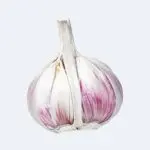
Garlic is by far the richest everyday source. In four Italian garlic landraces (local varieties), the fructans measured 45.8 to 54.4 g per 100 g of dry weight. The list below shows the fresh-weight figure converted from that paper. Onions come next, at 1.97 g per 100 g in Slovenian samples, then wheat flour at 0.75 g per 100 g.
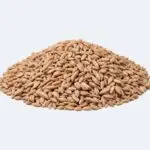
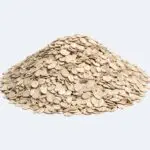
Every other food the Slovenian team tested held less than 1 g per 100 g, and they found none in potatoes, rice, kohlrabi or cucumbers. Australian measurements put garlic, artichoke, shallots, leek bulb and onions between 1.2 and 17.4 g per 100 g of fresh weight. See our pages on garlic, onions, barley and oats.
Two cautions apply to the list. The values are total fructans by AOAC 999.03, which counts inulin, oligofructose and other fructans together, so they are not inulin alone. They are also single sets of measurements. The Slovenian authors report that bread and some other foods came out lower than in earlier studies, and say method and sample can explain gaps.
Small amounts add up when a food is eaten daily. In the US survey, wheat supplied about 70% of dietary inulin and oligofructose, and onions about 25%. “Gluten-free” does not mean fructan-free either. UK gluten-free breads held 1.00 g per 100 g on average, with brands from 0.36 to 1.79 g.
Our arithmetic for realistic servings: the EU claim needs 12 g a day. A medium onion (110 g) gives about 2.2 g by the list below. So reaching 12 g from onions alone would take five to six of them every day. That is why trials use powders, and why most people eat only a few grams of fructans a day from food.
Per serving. No daily amount is set, so bars compare each food with the top food.
Per 100 g. No daily amount is set, so bars compare each food with the top food.
Per 100 kcal: the same calories of each food, for a fair comparison. Bars compare each food with the top food.
Food labels have no Daily Value or Reference Intake for fructans, so the % compares each food with the top food.
- 1.

- 2.
- 3.

- 4.

- 5.
- 6.

- 7.

- 8.
- 9.
- 10.


- 1.
- 2.
- 3.
- 4.
- 5.
- 6.
- 7.

- 8.
- 9.
- 10.

- 1.
- 2.
- 3.
- 4.
- 5.
- 6.
- 7.
- 8.
- 9.
- 10.


| Food | Total fructans | What the number is | Source |
|---|---|---|---|
| Garlic, four Italian landraces | 45.8 to 54.4 g per 100 g dry weight | Measured range; not converted to fresh weight | 2 |
| Garlic, artichoke, shallots, leek bulb and onions | 1.2 to 17.4 g per 100 g fresh weight | Range for the vegetables with the most fructans among 60 vegetables and 43 fruits (Australia) | 3 |
| Wheat flour (T500) | 0.75 g per 100 g | Fresh weight as bought, Slovenia | 1 |
| Cooked pasta | 0.33 g per 100 g | Fresh weight, Slovenia | 1 |
| Hazelnut, almond, walnut | 0.73, 0.60 and 0.37 g per 100 g | Fresh weight, Slovenia | 1 |
| Canned peas, canned beans | 0.33 and 0.24 g per 100 g | Fresh weight, Slovenia | 1 |
| White bread, brown bread | 0.14 g per 100 g for each | Fresh weight, Slovenia | 1 |
| UK breads: wheat, rye and gluten-free | 0.61 to 1.94 g per 100 g; rye 1.94; gluten-free 1.00 | Measured range across breads (AOAC 999.03) | 4 |
| Couscous, rice, oats (cooked or as eaten) | 1.12, 0 and 0.11 g per portion | Per portion as eaten | 5 |
| Potatoes, rice, kohlrabi, cucumbers | Not detectable | Below the assay’s limit, Slovenia | 1 |
Sources
- Ferjančič B, Korošec M, Kočevar Baloh A, et al. Fructan content in most commonly consumed Slovenian foods and estimation of daily fructan consumption. Front Nutr. 2024.
- Lisciani S, Gambelli L, Durazzo A, et al. Carbohydrates components of some Italian local landraces: garlic (Allium sativum L.). Sustainability. 2017.
- Muir JG, Shepherd SJ, Rosella O, et al. Fructan and free fructose content of common Australian vegetables and fruit. J Agric Food Chem. 2007.
- Whelan K, Abrahmsohn O, David GJ, et al. Fructan content of commonly consumed wheat, rye and gluten-free breads. Int J Food Sci Nutr. 2011.
- Biesiekierski JR, Rosella O, Rose R, et al. Quantification of fructans, galacto-oligosacharides and other short-chain carbohydrates in processed grains and cereals. J Hum Nutr Diet. 2011.
- Moshfegh AJ, Friday JE, Goldman JP, et al. Presence of inulin and oligofructose in the diets of Americans. J Nutr. 1999.
How inulin and fructans work
Most of what we know about how inulin works comes from lab fermenters, gut models and short physiology studies (tests of body function) in people. What it does over months is tested in the cards above.
The main ideas are these. Human enzymes cannot split it, and chain length sets how fast bacteria ferment it. Fermentation feeds some bacteria and makes short-chain fatty acids and gas, and that gas is what bothers a sensitive gut. Here is each one, and what has been seen in people.
Human enzymes cannot split it
Inulin is a general term for linear fructans with beta(2→1) bonds. These bonds have a beta shape at the anomeric C2 carbon of each fructose unit, so your gut’s digestive enzymes cannot split them. That is why inulin-type fructans count as non-digestible carbohydrates and dietary fibers.
Products differ in chain length, which is called the degree of polymerization (DP). Chicory inulin has a DP of 2 to 60, with an average of 12. Oligofructose, made by partly breaking down chicory inulin with enzymes, has 2 to 8 (average 4), and long-chain inulin 10 to 60 (average 25).
In 10 healthy adults, breath hydrogen and blood acetate rose in step with the dose of chicory fructans. The response looked like that to lactulose, a sugar that is not absorbed.
Top: a fructan chain is fructose units joined by beta(2→1) bonds. Bottom: the range of chain lengths in three products, drawn to scale, with a black mark at the average. The chain drawing is schematic.
Chain length sets the pace
Short chains ferment faster. In a lab test with human stool bacteria, short-chain oligosaccharides fermented more quickly and gave more short-chain fatty acids and gas than longer chains. Mixing short and long chains slowed the short-chain fermentation.
In a gut simulator, inulin took longer than oligofructose to show effects. But its effect on butyrate, propionate and bifidobacteria was stronger and lasted longer in the far end of the colon. In people the pattern matches: long-chain fructans took longer to pass through (75 minutes against 30 for short chains). Symptoms rose with dose and with shorter chains.
Gut bacteria ferment it
Bacteria in the colon turn what reaches them into short-chain fatty acids and gas. Bifidobacteria are the group most often reported to increase, but not every strain can use these fructans. In a lab test of 18 Bifidobacterium strains, some could not break down oligofructose or inulin. Others broke down oligofructose but did not grow on inulin, and some could break down inulin partly.
In people, the whole community shifts a little. In the constipation trial, inulin changed the share of Anaerostipes, Bilophila and Bifidobacterium, while stool metabolite profiles did not change significantly. The starting point matters too: a low starting count of bifidobacteria predicted a bigger rise in the 200-volunteer trial. Whether these shifts cause any health effect is not settled, as the review in the section on benefits says.
What happens to inulin after it is eaten. Not to scale.
Why fermentation can cause symptoms
The same fermentation makes gas. Some people with IBS had improved on a diet low in free fructose and fructans. When fructans were given back as drinks with meals, symptoms returned in a dose-dependent way, and the chart shows how often. Healthy volunteers also reported more symptoms at higher doses, though the changes were mild at up to 20 g a day.
Share of 25 people with irritable bowel syndrome whose symptoms were not adequately controlled after drinks with each carbohydrate, drawn to scale. The drinks were given in graded doses with meals for up to 2 weeks, and each person took each drink in a random order.
What has been seen in people
The trials point in two directions. In constipation, 12 g a day of chicory inulin raised median stool frequency from 3.0 to 4.0 a week and softened stools. Adolescents absorbed more calcium on 8 g a day and gained more bone mineral over a year.
Pooled trials found small falls in LDL cholesterol (0.14 mmol/L), triglycerides (0.06 mmol/L) and body weight (0.97 kg). The certainty was low or very low.
In IBS the direction reversed: prebiotic fructans did not help symptoms and made flatulence worse. In a challenge trial, 2.1 g of fructans caused more bloating than gluten. None of these effects is large, and most come from powders at doses above usual food intake.
Sources
- Roberfroid MB. Introducing inulin-type fructans. Br J Nutr. 2005.
- Rumessen JJ, Gudmand-Høyer E. Fructans of chicory: intestinal transport and fermentation of different chain lengths and relation to fructose and sorbitol malabsorption. Am J Clin Nutr. 1998.
- Hernot DC, Boileau TW, Bauer LL, et al. In vitro fermentation profiles, gas production rates, and microbiota modulation as affected by certain fructans, galactooligosaccharides, and polydextrose. J Agric Food Chem. 2009.
- van de Wiele T, Boon N, Possemiers S, et al. Inulin-type fructans of longer degree of polymerization exert more pronounced in vitro prebiotic effects. J Appl Microbiol. 2007.
- Falony G, Lazidou K, Verschaeren A, et al. In vitro kinetic analysis of fermentation of prebiotic inulin-type fructans by Bifidobacterium species reveals four different phenotypes. Appl Environ Microbiol. 2009.
- Vandeputte D, Falony G, Vieira-Silva S, et al. Prebiotic inulin-type fructans induce specific changes in the human gut microbiota. Gut. 2017.
- Bouhnik Y, Raskine L, Simoneau G, et al. The capacity of nondigestible carbohydrates to stimulate fecal bifidobacteria in healthy humans: a double-blind, randomized, placebo-controlled, parallel-group, dose-response relation study. Am J Clin Nutr. 2004.
- Shepherd SJ, Parker FC, Muir JG, et al. Dietary triggers of abdominal symptoms in patients with irritable bowel syndrome: randomized placebo-controlled evidence. Clin Gastroenterol Hepatol. 2008.
- Bruhwyler J, Carreer F, Demanet E, et al. Digestive tolerance of inulin-type fructans: a double-blind, placebo-controlled, cross-over, dose-ranging, randomized study in healthy volunteers. Int J Food Sci Nutr. 2009.
- Roberfroid M, Gibson GR, Hoyles L, et al. Prebiotic effects: metabolic and health benefits. Br J Nutr. 2010.
- Micka A, Siepelmeyer A, Holz A, et al. Effect of consumption of chicory inulin on bowel function in healthy subjects with constipation: a randomized, double-blind, placebo-controlled trial. Int J Food Sci Nutr. 2017.
- Abrams SA, Griffin IJ, Hawthorne KM, et al. A combination of prebiotic short- and long-chain inulin-type fructans enhances calcium absorption and bone mineralization in young adolescents. Am J Clin Nutr. 2005.
- Talukdar JR, Cooper M, Lyutvyn L, et al. The effects of inulin-type fructans on cardiovascular disease risk factors: systematic review and meta-analysis of randomized controlled trials. Am J Clin Nutr. 2024.
- Wilson B, Rossi M, Dimidi E, et al. Prebiotics in irritable bowel syndrome and other functional bowel disorders in adults: a systematic review and meta-analysis of randomized controlled trials. Am J Clin Nutr. 2019.
- Skodje GI, Sarna VK, Minelle IH, et al. Fructan, Rather Than Gluten, Induces Symptoms in Patients With Self-Reported Non-Celiac Gluten Sensitivity. Gastroenterology. 2018.
How much inulin or fructan do you need?
No daily amount of inulin or fructans is set, and no upper limit. Neither the FDA nor the EU has set a Daily Value or Reference Intake, and we found no official intake for them on their own. Total fiber covers them.
For adults, the US adequate intake runs from 21 to 38 g of fiber a day by age and sex (14 g per 1,000 kcal). An adequate intake is the amount judged to be enough when an exact requirement cannot be set. EFSA’s value is 25 g a day for adults, and inulin counts toward both, as our fiber page explains.
The amount that shows an effect is a different question. The EU bowel-function claim needs 12 g of native chicory inulin a day. The trials of bifidobacteria in the meta-analysis used 3 to 20 g a day.
Food gives far less. A US survey used two 24-hour recalls (interviews about everything eaten the day before) from more than 15,000 people. It estimated average intakes of 2.6 g of inulin and 2.5 g of oligofructose a day. Intakes ran from 1.3 g for young children to 3.5 g for teenage boys and adult men.
A model of Slovenian adults put total fructan intake at 1.7 g a day (range 0.21 to 5.54). The same paper cites food-diary estimates of 3.5 g a day in Sweden and 3 g in Australia.
| Source | Group | Value | Notes |
|---|---|---|---|
| EU, Regulation (EU) 2015/2314 | Labeling rule for the bowel-function claim | 12 g a day of native chicory inulin | The claim can be used only for food that provides at least 12 g a day. Source 1. |
| National Academies (IOM) 2005, adequate intake for total fiber | Adults aged 19 to 50 | 38 g (men), 25 g (women) a day; 14 g per 1,000 kcal | From age 51: 30 g and 21 g. No tolerable upper intake level was set for dietary or functional fiber. Source 2. |
| EFSA 2010, adequate intake for total fiber | Adults from 18 years | 25 g a day | Inulin and fructans count toward total fiber. Source 2. |
| US FDA | Food labeling | No daily value for inulin on its own | FDA intends to exercise enforcement discretion so that inulin and inulin-type fructans can be counted in the dietary fiber declaration. Source 3. |
Inulin is not an essential nutrient, and we found no source that describes a deficiency of it. Low total fiber intake is a different question, covered on our fiber page.
Sources
- Commission Regulation (EU) 2015/2314 authorising a health claim made on foods, other than those referring to the reduction of disease risk and to children’s development and health, and amending Regulation (EU) No 432/2012. Annex, native chicory inulin. Official Journal of the European Union. 2015.
- Fiber. NutriScrolls. Adequate intakes from the US National Academies (2005) and EFSA (2010), as shown on that page.
- U.S. Food and Drug Administration. Questions and answers on dietary fiber. Page content current as of 25 July 2024.
- Moshfegh AJ, Friday JE, Goldman JP, et al. Presence of inulin and oligofructose in the diets of Americans. J Nutr. 1999.
- Ferjančič B, Korošec M, Kočevar Baloh A, et al. Fructan content in most commonly consumed Slovenian foods and estimation of daily fructan consumption. Front Nutr. 2024.
- Nagy DU, Sándor-Bajusz KA, Bódy B, et al. Effect of chicory-derived inulin-type fructans on abundance of Bifidobacterium and on bowel function: a systematic review with meta-analyses. Crit Rev Food Sci Nutr. 2023.
Forms of inulin and fructans: absorption and effects
Inulin is not absorbed, so “absorption” here means what reaches the colon and what chain length does there. Fructans reach you in foods, as chicory-root powders, as short-chain oligofructose, as short-and-long-chain mixtures, and as an added fiber in processed foods.
A review of inulin-type prebiotics notes that the terms inulin, oligofructose and fructo-oligosaccharides have been used inconsistently. Some products are relatively high in free sugars (fructose, glucose, sucrose), while others have most of them removed. Check what a label’s “inulin” is.
The honest bottom line: the best evidence is for chicory inulin at 12 g a day for stool frequency in people with constipation. The other best-supported use is a short-plus-long-chain mixture at 8 g a day, for calcium absorption in adolescents. Few trials compare forms head to head; the ones we found are the cards below.
Popular claims that inulin “burns fat” or “balances blood sugar” go further than the evidence. Body weight fell by 1.03 kg in one 12-week trial of oligofructose. A meta-analysis found little or no effect on fasting glucose (sources 8 and 20).
| Form | What it is | What studies show | Source |
|---|---|---|---|
| Fructans in whole foods | Onion, garlic, wheat and other plants, with their other fiber and nutrients | The challenge trials in irritable bowel syndrome and gluten sensitivity hid 2.1 g of fructans in muesli bars. Gluten-free breads are not fructan-free: they held 1.00 g per 100 g on average. | 5, 6 |
| Native chicory inulin | A non-fractionated mixture from chicory root; chains of 2 to 60 units, average 12 | The EU claim is for 12 g a day. In 44 people with constipation, 12 g a day raised median stool frequency from 3.0 to 4.0 a week. In 12 healthy men, 20 g a day did not change stool weight or transit. In 84 healthy volunteers, 5 to 20 g a day caused only mild symptoms. | 1, 2, 3, 7, 18 |
| Oligofructose and fructo-oligosaccharides | Short chains of 2 to 8 units, average 4, made by partial hydrolysis of chicory inulin or built from sucrose | Short-chain fructo-oligosaccharides at 10 g a day raised bifidobacteria in 7 days. 21 g a day cut weight by 1.03 kg in 12 weeks. 20 g a day did not help irritable bowel syndrome and 15 g a day did not help Crohn’s disease. In the lab, short chains ferment fastest and make the most gas. | 4, 8, 9, 10, 11, 18, 19 |
| Long-chain inulin | Chains of 10 to 60 units, average 25 | At 10 g a day for 7 days it did not raise bifidobacteria in healthy volunteers, while in a gut simulator inulin had a stronger and longer-lasting prebiotic effect than oligofructose. Long chains passed through more slowly and caused fewer symptoms. | 4, 12, 13, 18 |
| Oligofructose-enriched inulin (short plus long chains) | A mix of chicory oligofructose and long-chain inulin | 8 g a day raised calcium absorption and bone mineral gain in adolescents over a year. In 15 postmenopausal women, 6 weeks raised calcium and magnesium absorption versus placebo. | 14, 15 |
| Fructanase capsules | An enzyme that hydrolyzes fructans to fructose in the lab | One crossover trial in 30 healthy adults eating 25 g of inulin: the main 8-hour symptom score did not differ, though some symptoms were lower later. No trial in irritable bowel syndrome yet. | 16 |
Here are the head-to-head and form-specific studies, strongest evidence first, 5 in all.
In healthy people, short-chain fructans raised bifidobacteria; long-chain inulin did not
In this 7-day double-blind trial, 200 healthy volunteers were first split into groups taking 10 g a day of different fibers or a placebo. Short-chain fructo-oligosaccharides, soybean oligosaccharides, galactooligosaccharides and type III resistant starch raised bifidobacteria; lactulose, long-chain inulin and isomaltooligosaccharides did not. In the dose phase, 2.5, 5.0, 7.5 and 10 g a day did not differ. A low starting bifidobacteria count predicted a bigger response.
In healthy people, fructans caused only mild gut symptoms
84 healthy volunteers took 5 to 20 g a day of three products with different chain lengths, or a placebo, for 2 weeks. In this double-blind study, symptoms tended to rise with every product, but only mildly: at most 19 mm on an 800 mm scale. It was clear only for one mixed-chain product at 20 g a day, which caused more symptoms than the shorter-chain product at 20 g. The authors call all three very well tolerated; participants usually ate 12 g of fiber a day.
Healthy adults: enzyme capsule eased some inulin symptoms, not 8-hour score
30 healthy adults ate 25 g of inulin in 40 g of oatmeal, plus a placebo or a capsule of fructanase, a fructan-splitting enzyme. The peak overall abdominal symptom score from 0 to 8 hours did not differ, but the enzyme reduced pain and fatigue. From 8 to 24 hours it reduced overall symptoms, bloating, pain and flatulence, while breath hydrogen and methane did not differ. The inulin dose of 25 g was far above usual intake, and the authors say trials in people with IBS are still needed.
Healthy adults: gut symptoms rose with dose, fell with longer chains
In this single-blind crossover study, 10 healthy adults took 10 to 30 g of short- and long-chain chicory fructans. These were compared with lactulose, fructose and sorbitol, and breath hydrogen and blood acetate rose in step with the dose. Short-chain fructans acted much like lactulose overall, and long-chain fructans took longer to pass through (75 against 30 minutes). It is a very small study.
In a lab gut model, inulin had stronger prebiotic effects than oligofructose
The Simulator of the Human Intestinal Microbial Ecosystem is a laboratory model of the colon. It was fed 2.5 g a day of inulin (chains of 3 to 60 units) or oligofructose (2 to 20). Both raised butyrate, propionate and lactic acid bacteria; inulin acted more slowly but gave more short-chain fatty acids and less protein breakdown. It also gave a stronger, longer-lasting rise of bifidobacteria in the far colon, but no people were involved.
Sources
- Commission Regulation (EU) 2015/2314 authorising a health claim made on foods, other than those referring to the reduction of disease risk and to children’s development and health, and amending Regulation (EU) No 432/2012. Annex, native chicory inulin. Official Journal of the European Union. 2015.
- Micka A, Siepelmeyer A, Holz A, et al. Effect of consumption of chicory inulin on bowel function in healthy subjects with constipation: a randomized, double-blind, placebo-controlled trial. Int J Food Sci Nutr. 2017.
- Slavin J, Feirtag J. Chicory inulin does not increase stool weight or speed up intestinal transit time in healthy male subjects. Food Funct. 2011.
- Bouhnik Y, Raskine L, Simoneau G, et al. The capacity of nondigestible carbohydrates to stimulate fecal bifidobacteria in healthy humans: a double-blind, randomized, placebo-controlled, parallel-group, dose-response relation study. Am J Clin Nutr. 2004.
- Skodje GI, Sarna VK, Minelle IH, et al. Fructan, Rather Than Gluten, Induces Symptoms in Patients With Self-Reported Non-Celiac Gluten Sensitivity. Gastroenterology. 2018.
- Whelan K, Abrahmsohn O, David GJ, et al. Fructan content of commonly consumed wheat, rye and gluten-free breads. Int J Food Sci Nutr. 2011.
- Bruhwyler J, Carreer F, Demanet E, et al. Digestive tolerance of inulin-type fructans: a double-blind, placebo-controlled, cross-over, dose-ranging, randomized study in healthy volunteers. Int J Food Sci Nutr. 2009.
- Parnell JA, Reimer RA. Weight loss during oligofructose supplementation is associated with decreased ghrelin and increased peptide YY in overweight and obese adults. Am J Clin Nutr. 2009.
- Olesen M, Gudmand-Hoyer E. Efficacy, safety, and tolerability of fructooligosaccharides in the treatment of irritable bowel syndrome. Am J Clin Nutr. 2000.
- Benjamin JL, Hedin CR, Koutsoumpas A, et al. Randomised, double-blind, placebo-controlled trial of fructo-oligosaccharides in active Crohn’s disease. Gut. 2011.
- Hernot DC, Boileau TW, Bauer LL, et al. In vitro fermentation profiles, gas production rates, and microbiota modulation as affected by certain fructans, galactooligosaccharides, and polydextrose. J Agric Food Chem. 2009.
- van de Wiele T, Boon N, Possemiers S, et al. Inulin-type fructans of longer degree of polymerization exert more pronounced in vitro prebiotic effects. J Appl Microbiol. 2007.
- Rumessen JJ, Gudmand-Høyer E. Fructans of chicory: intestinal transport and fermentation of different chain lengths and relation to fructose and sorbitol malabsorption. Am J Clin Nutr. 1998.
- Abrams SA, Griffin IJ, Hawthorne KM, et al. A combination of prebiotic short- and long-chain inulin-type fructans enhances calcium absorption and bone mineralization in young adolescents. Am J Clin Nutr. 2005.
- Holloway L, Moynihan S, Abrams SA, et al. Effects of oligofructose-enriched inulin on intestinal absorption of calcium and magnesium and bone turnover markers in postmenopausal women. Br J Nutr. 2007.
- Mah E, McKenna CF, Blonquist TM, et al. Oral Fructanase Administration Reduces Gastrointestinal Symptom Severity after Acute Inulin Challenge in Healthy Adults. J Nutr. 2026.
- Kelly G. Inulin-type prebiotics: a review: part 1. Altern Med Rev. 2008.
- Roberfroid MB. Introducing inulin-type fructans. Br J Nutr. 2005.
- Roberfroid MB, Delzenne NM. Dietary fructans. Annu Rev Nutr. 1998.
- Talukdar JR, Cooper M, Lyutvyn L, et al. The effects of inulin-type fructans on cardiovascular disease risk factors: systematic review and meta-analysis of randomized controlled trials. Am J Clin Nutr. 2024.
Is inulin safe? Gas, bloating and who should be careful
At the doses studied, healthy adults tolerated inulin. We found no upper limit (the most you can take daily without harm) for inulin or fructans in the sources above. The National Academies set none for dietary or functional fiber.
The usual problem is gas, which depends on dose and chain length. If you have a bowel condition, check with a doctor before using a supplement.
- Gas and bloating. In 84 healthy volunteers, 5 to 20 g a day of inulin-type fructans for 2 weeks gave only mild symptoms. The rise was clear only for one mixed-chain product at 20 g a day. Flatulence still rose in the trial of 20 g in healthy men. In IBS trials, flatulence was better at doses of 6 g a day or less. In the 12-week trial of 20 g of fructo-oligosaccharides, symptoms were worse at the start but not worse by week 12.
- Irritable bowel syndrome. Fructans caused symptoms in challenge trials. The American College of Gastroenterology’s 2021 guideline recommends a limited trial of a low-FODMAP diet in IBS. That diet cuts many foods, and most trials did not study adding them back. It did no better than traditional dietary advice in one trial, so ask a doctor or dietitian rather than cutting foods alone.
- Crohn’s disease. In 103 people with active Crohn’s disease, 15 g a day of fructo-oligosaccharides gave no clinical benefit. More people dropped out on the fructans. Ask your doctor before adding it.
- Allergy. Reactions are rare. A letter in the New England Journal of Medicine and a 2005 case report describe anaphylaxis from inulin in vegetables and processed foods. Anaphylaxis is a severe allergic reaction. The woman in the case report had an earlier artichoke allergy and specific IgE (allergy antibodies) to an inulin protein compound.
- Medicines. We found no study of inulin changing how medicines are absorbed.
How to get more inulin, or less if it bothers you
- Eat onions, garlic and wheat foods. Onions held 1.97 g of fructans per 100 g and wheat flour 0.75 g. Garlic holds far more per gram, though a clove is only about 3 g. Wheat and onions together supplied about 95% of the inulin and oligofructose in the US survey.
- Build up slowly if you use a powder. The EU claim is for 12 g a day. Gas was the main side effect, and flatulence was better at 6 g a day or less in IBS trials. So smaller steps are easier on the gut.
- If fructans bother you, ask about a guided low-FODMAP trial. The Slovenian team found none in potatoes, rice, kohlrabi or cucumbers. “Gluten-free” breads are not fructan-free (1.00 g per 100 g on average).
Sources
- Bruhwyler J, Carreer F, Demanet E, et al. Digestive tolerance of inulin-type fructans: a double-blind, placebo-controlled, cross-over, dose-ranging, randomized study in healthy volunteers. Int J Food Sci Nutr. 2009.
- Slavin J, Feirtag J. Chicory inulin does not increase stool weight or speed up intestinal transit time in healthy male subjects. Food Funct. 2011.
- Wilson B, Rossi M, Dimidi E, et al. Prebiotics in irritable bowel syndrome and other functional bowel disorders in adults: a systematic review and meta-analysis of randomized controlled trials. Am J Clin Nutr. 2019.
- Olesen M, Gudmand-Hoyer E. Efficacy, safety, and tolerability of fructooligosaccharides in the treatment of irritable bowel syndrome. Am J Clin Nutr. 2000.
- Lacy BE, Pimentel M, Brenner DM, et al. ACG Clinical Guideline: Management of Irritable Bowel Syndrome. Am J Gastroenterol. 2021.
- Böhn L, Störsrud S, Liljebo T, et al. Diet low in FODMAPs reduces symptoms of irritable bowel syndrome as well as traditional dietary advice: a randomized controlled trial. Gastroenterology. 2015.
- Black CJ, Staudacher HM, Ford AC. Efficacy of a low FODMAP diet in irritable bowel syndrome: systematic review and network meta-analysis. Gut. 2022.
- Benjamin JL, Hedin CR, Koutsoumpas A, et al. Randomised, double-blind, placebo-controlled trial of fructo-oligosaccharides in active Crohn’s disease. Gut. 2011.
- Gay-Crosier F, Schreiber G, Hauser C. Anaphylaxis from inulin in vegetables and processed food. N Engl J Med. 2000.
- Franck P, Moneret-Vautrin DA, Morisset M, et al. Anaphylactic reaction to inulin: first identification of specific IgEs to an inulin protein compound. Int Arch Allergy Immunol. 2005.
- Ferjančič B, Korošec M, Kočevar Baloh A, et al. Fructan content in most commonly consumed Slovenian foods and estimation of daily fructan consumption. Front Nutr. 2024.
- Moshfegh AJ, Friday JE, Goldman JP, et al. Presence of inulin and oligofructose in the diets of Americans. J Nutr. 1999.
- Whelan K, Abrahmsohn O, David GJ, et al. Fructan content of commonly consumed wheat, rye and gluten-free breads. Int J Food Sci Nutr. 2011.
- Fiber. NutriScrolls. Adequate intakes from the US National Academies (2005) and EFSA (2010), as shown on that page.
History of inulin and fructans
Inulin mattered to the kidney before it mattered to the gut. In 1932 Jolliffe, Shannon and Smith used sugars that the body does not metabolize to measure what the kidneys filter in dogs. In 1935 Shannon published a paper on how dogs excrete inulin. A 2004 essay counts these papers among four classics that developed the clearance methods for measuring kidney filtration.
The gut story begins in 1995. That year Gibson and Roberfroid proposed the word “prebiotics” for nondigestible food ingredients that selectively stimulate bacteria already living in the colon. They named fructo-oligosaccharides among those that raise bifidobacteria.
In 2017 an expert panel updated the definition to a substrate selectively used by host microorganisms that confers a health benefit. It also required the benefit to be documented. In 1999 a US study gave the first published estimate of how much inulin and oligofructose Americans eat from food.
The fructan story is more recent. In 2011 a trial found that gluten brought back symptoms in people with IBS who were controlled on a gluten-free diet. In 2013 the same group put 37 people with suspected gluten sensitivity on a reduced-FODMAP diet first. They found gluten no worse than whey, with gluten-specific effects in 8%.
In 2018 a trial that tested gluten and fructans separately found that fructans caused more symptoms than gluten. The EU adopted its chicory inulin claim on 7 December 2015, and it was authorized from 1 January 2016.
Sources
- Hostetter TH, Meyer TW. The development of clearance methods for measurement of glomerular filtration and tubular reabsorption. Am J Physiol Renal Physiol. 2004.
- Gibson GR, Roberfroid MB. Dietary modulation of the human colonic microbiota: introducing the concept of prebiotics. J Nutr. 1995.
- Gibson GR, Hutkins R, Sanders ME, et al. Expert consensus document: The International Scientific Association for Probiotics and Prebiotics (ISAPP) consensus statement on the definition and scope of prebiotics. Nat Rev Gastroenterol Hepatol. 2017.
- Moshfegh AJ, Friday JE, Goldman JP, et al. Presence of inulin and oligofructose in the diets of Americans. J Nutr. 1999.
- Biesiekierski JR, Newnham ED, Irving PM, et al. Gluten causes gastrointestinal symptoms in subjects without celiac disease: a double-blind randomized placebo-controlled trial. Am J Gastroenterol. 2011.
- Biesiekierski JR, Peters SL, Newnham ED, et al. No effects of gluten in patients with self-reported non-celiac gluten sensitivity after dietary reduction of fermentable, poorly absorbed, short-chain carbohydrates. Gastroenterology. 2013.
- Skodje GI, Sarna VK, Minelle IH, et al. Fructan, Rather Than Gluten, Induces Symptoms in Patients With Self-Reported Non-Celiac Gluten Sensitivity. Gastroenterology. 2018.
- Commission Regulation (EU) 2015/2314 authorising a health claim made on foods, other than those referring to the reduction of disease risk and to children’s development and health, and amending Regulation (EU) No 432/2012. Annex, native chicory inulin. Official Journal of the European Union. 2015.
Frequently asked questions about inulin and fructans
What is the difference between inulin, fructans and FOS?
Fructans are the whole family of carbohydrates built mostly from fructose-to-fructose links. Inulin is the linear kind with beta(2→1) bonds, with chains of 2 to 60 units in chicory (average 12). Oligofructose and fructo-oligosaccharides (FOS) are short-chain versions of 2 to 8 units (average 4). The fructan values on this site are total fructans, which counts all of them together.
Does inulin help constipation?
Somewhat, in people who are constipated. In 44 people with constipation, 12 g of chicory inulin a day for 4 weeks raised median weekly stools from 3.0 to 4.0. A meta-analysis of 5 trials found softer, more frequent stools, but pain and bloating did not improve. The EU allows the claim at 12 g a day, but 20 g daily did not change stool weight or transit in 12 healthy men.
Does inulin feed good gut bacteria?
It raises bifidobacteria, but what that means for health is less certain. A meta-analysis of 50 studies found that 3 to 20 g a day of chicory inulin-type fructans raised Bifidobacterium levels. The 2017 expert definition of a prebiotic requires a documented health benefit. The starting level matters too: in one trial, a low starting count predicted a bigger rise.
Why does inulin cause gas and bloating?
Bacteria in the colon ferment it, and fermentation makes gas. In healthy adults, symptoms rose with dose and with shorter chains, though they were mild at up to 20 g a day in 84 volunteers. In people with IBS, inulin-type fructans worsened flatulence in a meta-analysis, and doses of 6 g a day or less did better.
Should people with IBS avoid fructans?
Many do better on less, but it is not a rule. In 25 people with IBS, fructans left symptoms uncontrolled in 77%, against 14% with glucose. A low-FODMAP diet, which removes fructans and other fermentable carbohydrates, ranked first for symptoms in a network meta-analysis. In 75 people it did no better than traditional dietary advice, and a dietitian can guide a trial and reintroduction.
Is it gluten or fructans in wheat that causes symptoms?
In some people it is the fructans. In 59 people who believed gluten bothered them, 2.1 g of fructans caused more bloating than 5.7 g of gluten. Gluten did not differ from placebo, and in an earlier trial only 8% of 37 people showed gluten-specific effects after cutting FODMAPs. This does not apply to celiac disease, which was excluded from these trials.
Does inulin help with weight loss or cholesterol?
Only a little, and the certainty is low or very low. Pooling 55 trials, inulin-type fructans lowered body weight by 0.97 kg, LDL cholesterol by 0.14 mmol/L and triglycerides by 0.06 mmol/L. A review of appetite trials found that most showed no effect on appetite or energy intake. Fasting glucose and blood pressure showed little or no change.
Which foods have the most fructans?
Garlic is richest, then onions and wheat. Four Italian garlic landraces held 45.8 to 54.4 g of fructans per 100 g of dry weight. Onions held 1.97 g per 100 g fresh, and wheat flour 0.75 g. Potatoes, rice, kohlrabi and cucumbers had none detectable, but gluten-free breads still held about 1.00 g per 100 g on average.