Cellulose is a long chain of glucose units. It is the main skeletal material of plants: the cell wall that holds a pea, a stalk of wheat or a leaf of parsley upright. One review calls it the most important skeletal part of plants. Another calls the plant cell wall the main source of the most abundant biopolymer (natural large molecule) on Earth.
In food it counts as an insoluble fiber, one of the two kinds covered on our insoluble fiber page, next to lignin.
Here is what most people do not know: how much of it goes missing from your stool depends on where it comes from. Seven women ate a controlled diet of fruit, vegetables and refined grains. About 70% of its cellulose was no longer found in their stool. When 16 g a day of purified wood-pulp cellulose was added, only about 16% of the cellulose disappeared.
Cellulose is also a food additive in many forms. They range from powdered and microcrystalline cellulose (E 460) to methylcellulose and carboxymethylcellulose (E 461 to E 469). The evidence on plain cellulose is thin and mostly old. The recent research is on its additive forms, and this page says plainly where trials are missing.
Health effects of cellulose
Cellulose has no strong evidence of its own. The two controlled studies of purified cellulose we found, from 1980 and 1983, were small and short. They show it adds bulk to stool.
We found no trial of plain cellulose for people with constipation, or on cholesterol, blood sugar, weight or colorectal cancer. The newer studies are about cellulose additives, mainly carboxymethylcellulose. They raise questions about the gut more than they show harm.
Trials of derivatives with approved claims, such as hydroxypropyl methylcellulose, are in the section on forms below. Here are 6 studies, strongest evidence first. For bran and stool bulk, see insoluble fiber.
15 g of cellulose a day: 57% more stool, transit 27% shorter
In this randomized crossover study (everyone tried each fiber in turn), healthy volunteers took daily pectin (12 g), cellulose (15 g) and lignin (12 g). Stool was collected over 48 hours, and transit was measured with markers that show on X-rays. Stool weight here means wet weight, and cellulose also lowered stool pH from 6.38 to 6.12. Pectin changed none of these clearly, and lignin’s changes (27% heavier stool, 20% shorter transit) could be chance. The abstract does not give the number of volunteers.
Purified cellulose raised wet stool weight from 74.6 to 130.5 g
Seven healthy women ate a metabolically controlled diet with and without 16 g a day of wood-pulp cellulose, each for about one month. Dry stool weight rose from 19.1 to 39.5 g a day and bowel movements from 0.85 to 1.10 a day. Average transit time did not clearly change, though it shortened in the two women whose transit was slow at the start (7 days). Stool losses of calcium and magnesium rose, and calcium balance became clearly more negative. The authors warned that moderate amounts of refined cellulose can increase mineral losses. The same seven women are described again under how cellulose works.
An emulsifier, carboxymethylcellulose, reduced gut bacteria diversity in 16 adults
In this double-blind feeding study, 7 adults ate diets with 15 g a day of carboxymethylcellulose (CMC) for 11 days. Another 9 ate emulsifier-free diets; CMC is the additive form of cellulose used as an emulsifier. CMC modestly increased belly discomfort after meals and lowered short-chain fatty acids and free amino acids in stool. In 2 of the 7, bacteria moved into the normally sterile inner mucus layer, a feature of gut inflammation. The study was small and short, and it tested an additive, not the fiber in plants.
Each step up in cellulose additives: 5% higher cardiovascular risk
This cohort followed 95,442 French adults for a median of 7.4 years and measured additive intake from diet records. Each standard deviation (a typical step up) of cellulose additives (E 460 to E 468) went with higher cardiovascular risk (1.05 times). Coronary heart disease risk was 7% higher (1.07), and carboxymethylcellulose (E 466) alone gave 1.03 for cardiovascular disease. The study is observational, and it says nothing about the cellulose in plants. These additives come in industrial foods, so other features of such diets could account for the link.
Show 2 more studies
In mice, CMC and polysorbate-80 caused low-grade inflammation and metabolic syndrome
Low doses of the two common emulsifiers were given to wild-type mice, and both promoted colitis in mice prone to it. Germ-free mice and stool transplants showed that the change in gut bacteria was needed for the effects. This is animal work on an additive, and it does not show the same happens in people at food doses.
CMC upset some donors’ gut bacteria, not others’, in a lab model
Human stool bacteria grown in a bioreactor (a lab gut model) showed the same uneven response as the 2022 feeding study. A signature in the starting bacteria predicted who was sensitive. When microbiotas judged sensitive were moved into germ-free mice prone to colitis, feeding them CMC caused colitis; insensitive ones did not. One author reports consulting fees and a grant from a drug company.
Foods high in cellulose
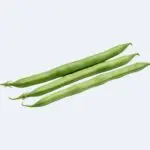
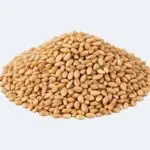
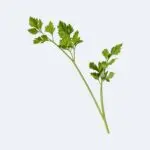
Every plant food has some cellulose, because it is in the cell wall. The ranking below uses values from Frida, the Danish food composition database, for 19 foods. Per 100 g, the list is led by wheat (2.1 g), peas (1.97 g), parsley (1.63 g), rye (1.5 g) and green beans (1.45 g). Per serving, a cup of peas (160 g) gives 3.15 g and a cup of green beans (125 g) 1.81 g, as the list shows.
For scale, the controlled diet in the seven-women study held 5.4 g of cellulose a day from fruit, vegetables and refined grains. The 16 g supplement raised it to 19.3 g. So a few servings of peas or green beans add up to amounts of the size that studies have tested. But those studies used purified powder, not foods.
Per serving. No daily amount is set, so bars compare each food with the top food.
Per 100 g. No daily amount is set, so bars compare each food with the top food.
Per 100 kcal: the same calories of each food, for a fair comparison. Bars compare each food with the top food.
Food labels have no Daily Value or Reference Intake for cellulose, so the % compares each food with the top food.
- 1.

- 2.
- 3.

- 4.
- 5.

- 6.

- 7.
- 8.

- 9.

- 10.



- 1.
- 2.
- 3.
- 4.
- 5.
- 6.
- 7.
- 8.
- 9.

- 10.


- 1.
- 2.
- 3.
- 4.
- 5.
- 6.

- 7.

- 8.
- 9.

- 10.



How cellulose works
Cellulose is a chain of glucose units that your own digestive enzymes leave almost alone. What happens next depends on the bacteria in the colon. This part of the story comes from a few older feeding studies and some lab work, not from large trials.
Your small intestine barely digests it
In 1978, researchers fed a fixed diet to people with normal bowels and to people with an ileostomy. An ileostomy is an opening that drains the small bowel through the belly.
In the ileostomy group, 84.5% of the cellulose eaten came out at the end of the small bowel. In people with normal bowels, 22.4% appeared in the stool. Lignin passed through both groups undigested.
Gut bacteria break down some of it, depending on the person and the form
What the colon does with cellulose varies. In the seven-women study, cellulose digestibility averaged 69.7% on the low-cellulose diet. It was only 15.7% when 16 g of purified cellulose was added, and 8% for the same powder in a liquid diet. Individual values swung widely from one 5-day period to the next.
In stool samples from 34 people, bacteria that break down microcrystalline cellulose were found only in people who make methane. A later study found that the main cellulose breakers were Bacteroidetes in people without methane and Firmicutes in methane makers. EFSA, the EU’s food safety agency, notes that microcrystalline, powdered and modified celluloses could be fermented by gut bacteria in animals and humans.
Share of the cellulose eaten that was not found in stool, drawn to scale (4 pixels per percent). Our arithmetic: 100% minus the share excreted. Green bars are diets of ordinary foods; the short bars are purified cellulose and the small bowel alone.
It adds bulk and shortens transit
Cellulose that survives to the colon holds water and adds mass. In the two controlled studies above, purified cellulose raised stool weight and moved things along faster in some people. Hillman also saw a small fall in stool pH. The doses were 15 to 16 g a day in healthy volunteers.
What has been seen in people
The chart puts the rise in wet stool weight from the two trials on one scale, with lignin from the same trial for comparison. The slow-transit finding rests on two women, and neither trial tested people with constipation.
Rise in wet stool weight on added fiber against a low-fiber period, drawn to scale (4 pixels per percent). Green bars are significant, the grey bar is not. The 75% is our arithmetic from 74.6 and 130.5 g.
Sources
- Klemm D. Cellulose: fascinating biopolymer and sustainable raw material. Angew Chem Int Ed Engl. 2005.
- Cosgrove DJ. Growth of the plant cell wall. Nat Rev Mol Cell Biol. 2005.
- Holloway WD, Tasman-Jones C, Lee SP. Digestion of certain fractions of dietary fiber in humans. Am J Clin Nutr. 1978.
- Slavin JL, Brauer PM, Marlett JA. Neutral detergent fiber, hemicellulose and cellulose digestibility in human subjects. J Nutr. 1981.
- Robert C, Bernalier-Donadille A. The cellulolytic microflora of the human colon: evidence of microcrystalline cellulose-degrading bacteria in methane-excreting subjects. FEMS Microbiol Ecol. 2003.
- Chassard C, Delmas E, Robert C, Bernalier-Donadille A. The cellulose-degrading microbial community of the human gut varies according to the presence or absence of methanogens. FEMS Microbiol Ecol. 2010.
- EFSA Panel on Food Additives and Nutrient Sources added to Food (ANS). Re-evaluation of celluloses E 460(i), E 460(ii), E 461, E 462, E 463, E 464, E 465, E 466, E 468 and E 469 as food additives. EFSA J. 2018.
- Hillman L, Peters S, Fisher A, Pomare EW. Differing effects of pectin, cellulose and lignin on stool pH, transit time and weight. Br J Nutr. 1983.
- Slavin JL, Marlett JA. Influence of refined cellulose on human bowel function and calcium and magnesium balance. Am J Clin Nutr. 1980.
How much cellulose do you need?
No daily need or upper limit is set for cellulose on its own. It counts toward total dietary fiber, for which adults need about 25 to 38 g a day (see our fiber page). The only amounts tied to cellulose are trial doses of 15 to 16 g a day of purified powder. The EU also names 4 g and 5 g for a cellulose derivative, hydroxypropyl methylcellulose.
| Source | Group | Value | Notes |
|---|---|---|---|
| US FDA, 21 CFR 101.9(c)(6)(i) | Nutrition labels | Cellulose is named among the isolated or synthetic nondigestible carbohydrates that are counted as dietary fiber | The others are beta-glucan soluble fiber, psyllium husk, guar gum, pectin, locust bean gum and hydroxypropylmethylcellulose. Source 1. |
| National Academies 2005 and EFSA 2010, total fiber | Adults | Adequate intake of 38 g (men) and 25 g (women) a day in the US up to age 50; 25 g a day in the EU | Not specific to cellulose. Values as listed on our fiber page. Source 4. |
| Regulation (EU) No 432/2012, HPMC | General population | 4 g of HPMC per portion eaten with a meal, or 5 g a day | For the blood glucose and blood cholesterol claims. Source 2. |
| EFSA 2018, celluloses as food additives | Food additive use | No numerical acceptable daily intake needed | JECFA and the Scientific Committee on Food had set an ADI of “not specified”. Source 3. |
Cellulose is not an essential nutrient, and we found no source that describes a deficiency of it. Low total fiber intake is a different question, covered on our fiber page.
Sources
- Nutrition labeling of food, 21 CFR 101.9. US Food and Drug Administration, Electronic Code of Federal Regulations.
- Commission Regulation (EU) No 432/2012 establishing a list of permitted health claims made on foods. Annex, entries for hydroxypropyl methylcellulose. Official Journal of the European Union. 2012.
- EFSA Panel on Food Additives and Nutrient Sources added to Food (ANS). Re-evaluation of celluloses E 460(i), E 460(ii), E 461, E 462, E 463, E 464, E 465, E 466, E 468 and E 469 as food additives. EFSA J. 2018.
- Fiber. NutriScrolls. Adequate intakes from the US National Academies (2005) and EFSA (2010), as shown on that page.
Forms of cellulose: absorption and effects
Cellulose is not absorbed. EFSA says celluloses leave the body intact in the stool, so the useful question is what each form does in the gut. The forms differ: the fiber inside plant cell walls, and powdered cellulose (E 460(ii)) and microcrystalline cellulose (E 460(i)) used as additives.
The chemically changed versions are methylcellulose (E 461), hydroxypropyl methylcellulose (E 464), carboxymethylcellulose (E 466), cross-linked carboxymethylcellulose (E 468) and enzymatically hydrolysed carboxymethylcellulose (E 469).
The honest bottom line: no trial compares these forms, and a result for one does not carry over to another. Claims that cellulose additives are plainly harmless or plainly harmful both go further than the human evidence.
The main regulatory review found no safety concern. But a small feeding trial and a cohort found signals for carboxymethylcellulose and for celluloses as a group. We found no trial that tested plain cellulose powder as a supplement for any health outcome.
| Form | What it is | What studies show | Source |
|---|---|---|---|
| Cellulose in plant foods | The cell wall of vegetables, legumes and grains | On a low-cellulose diet of fruit, vegetables and refined grains, 69.7% of the cellulose was digested on average in 7 women | 1 |
| Powdered cellulose (E 460(ii)) | Purified wood-pulp cellulose, such as Solka Floc | 16 g a day raised stool weight and calcium and magnesium losses, and only 15.7% was digested; 15 g a day shortened transit by 27% in another study | 1, 2 |
| Microcrystalline cellulose (E 460(i)) | Partly broken-down cellulose used as an additive | Degraders were found only in methane excreters in 34 stool samples; EFSA found no safety concern at current uses | 3, 4 |
| Methylcellulose (E 461) | Cellulose with methyl groups, a gelling agent | 15 g with inulin gave less colonic gas late on in 22 healthy adults; it did not match psyllium in a 30-adult trial | 5, 6 |
| Hydroxypropyl methylcellulose (E 464) | Cellulose with hydroxypropyl and methyl groups | EU claims for the blood glucose rise after a meal and for normal cholesterol | 7 |
| Carboxymethylcellulose (E 466) | Cellulose with carboxymethyl groups, used as an emulsifier | 15 g a day for 11 days lowered microbiota diversity in 7 adults; mouse and cohort signals above | 8 |
| Cross-linked carboxymethylcellulose (E 468) | A cross-linked version of carboxymethylcellulose | Not tested alone that we found. A different cellulose hydrogel gave 6.4% weight loss against 4.4% on placebo in 24 weeks | 9 |
EU claims for HPMC: smaller glucose rise after meals, normal blood cholesterol
Regulation (EU) No 432/2012 lists two claims for hydroxypropyl methylcellulose (HPMC), a cellulose derivative. The first is for foods with 4 g of HPMC per quantified portion eaten as part of the meal. It reads “Consumption of Hydroxypropyl methylcellulose with a meal contributes to a reduction in the blood glucose rise after that meal”. The second, for food that provides 5 g of HPMC a day, reads “Hydroxypropyl methylcellulose contributes to the maintenance of normal blood cholesterol levels”. Both need a choking warning for people with swallowing difficulties and advice to take it with plenty of water. The claims rest on an EFSA opinion from 2010, and we found no health claim for cellulose itself in the register.
A cellulose hydrogel gave 6.4% weight loss, against 4.4% on placebo
This 24-week double-blind randomized trial (GLOW) tested a hydrogel made of modified cellulose cross-linked with citric acid. Adults with overweight or obesity (body mass index 27 to 40) took it in capsules with water before meals, or a placebo. 59% lost at least 5% of body weight, against 42%, and 27% lost at least 10%, against 15%. The trial missed its stricter 3% margin, and some authors work for the maker, Gelesis. It tested a hydrogel product taken before meals, not cellulose fiber.
Methylcellulose with inulin left less colon gas once the gel arrived
In this three-way randomized crossover, 22 healthy adults took 15 g of inulin with 15 g of methylcellulose, or with psyllium or maltodextrin for comparison. MRI scans every hour for 6 hours and breath hydrogen for 24 hours tracked the gas. Total gas over the first 6 hours did not differ, but gas between hours 3 and 6 was lower. Methylcellulose also left more water in the small and large bowel than psyllium. Breath hydrogen over 24 hours did not differ, the volunteers did not have irritable bowel syndrome, and it was one dose.
A methylcellulose preparation did not match psyllium at slowing inulin fermentation
This three-way randomized, placebo-controlled study in 30 healthy adults measured breath hydrogen for 24 hours after inulin taken with psyllium, methylcellulose or maltodextrin. Psyllium cut early hydrogen production against placebo. The authors could not show that methylcellulose was at least as good (non-inferior). They suggest psyllium’s gel re-forms after being squeezed by gut movement. This is a different trial from the one above, on a similar question.
Sources
- Slavin JL, Brauer PM, Marlett JA. Neutral detergent fiber, hemicellulose and cellulose digestibility in human subjects. J Nutr. 1981.
- Hillman L, Peters S, Fisher A, Pomare EW. Differing effects of pectin, cellulose and lignin on stool pH, transit time and weight. Br J Nutr. 1983.
- Robert C, Bernalier-Donadille A. The cellulolytic microflora of the human colon: evidence of microcrystalline cellulose-degrading bacteria in methane-excreting subjects. FEMS Microbiol Ecol. 2003.
- EFSA Panel on Food Additives and Nutrient Sources added to Food (ANS). Re-evaluation of celluloses E 460(i), E 460(ii), E 461, E 462, E 463, E 464, E 465, E 466, E 468 and E 469 as food additives. EFSA J. 2018.
- Dellschaft N, Alhasani A, Reid JESJ, et al. Clinical Trial: Randomised Placebo-Controlled Trial of Methylcellulose and Psyllium Gels on Inulin-Induced Colonic Gas. Aliment Pharmacol Ther. 2026.
- Reid JESJ, Alhasani AT, MacCalman T, et al. A randomised, placebo-controlled trial in healthy humans of modified cellulose or psyllium evaluating the role of gelation in altering colonic gas production during inulin co-administration. Food Funct. 2026.
- Commission Regulation (EU) No 432/2012 establishing a list of permitted health claims made on foods. Annex, entries for hydroxypropyl methylcellulose. Official Journal of the European Union. 2012. Opinion: EFSA Panel on Dietetic Products, Nutrition and Allergies (NDA), Scientific opinion on the substantiation of health claims related to hydroxypropyl methylcellulose. EFSA J. 2010.
- Chassaing B, Compher C, Bonhomme B, et al. Randomized controlled-feeding study of dietary emulsifier carboxymethylcellulose reveals detrimental impacts on the gut microbiota and metabolome. Gastroenterology. 2022.
- Greenway FL, Aronne LJ, Raben A, et al. A randomized, double-blind, placebo-controlled study of Gelesis100: a novel nonsystemic oral hydrogel for weight loss. Obesity (Silver Spring). 2019.
Is cellulose safe? Additives, dose and interactions
EFSA re-evaluated the celluloses used as additives, E 460(i) to E 469, in 2018. It found no need for a numerical acceptable daily intake (ADI, a safe daily limit) and no safety concern at the reported uses and levels. In long-term animal studies, the no-effect levels reached up to 9,000 mg per kg of body weight a day, and no cancer-causing effects were found.
The estimated exposure of the general population at the 95th percentile (among the highest eaters) was up to 506 mg per kg a day. Earlier, JECFA and the Scientific Committee on Food had set an ADI of “not specified”. EFSA’s opinion came before the human feeding study of carboxymethylcellulose described above.
- Gut effects of carboxymethylcellulose. A 2026 review says lab, animal and limited human studies show CMC can alter gut bacteria and the mucus barrier. It calls for longer human studies. The one feeding trial found modest belly discomfort in 7 adults. In the weight-loss hydrogel trial, digestive side effects overall differed between groups, but no single event clearly did and most were mild.
- Minerals. At 16 g a day of purified cellulose, seven women lost more calcium and magnesium in their stool, and their calcium balance fell. The study was small, so people with low calcium intake may want to ask a doctor or dietitian before taking cellulose supplements.
- Swallowing and fluids. The EU wording for hydroxypropyl methylcellulose products requires a choking warning for people with swallowing difficulties and advice to take them with plenty of water.
- Medicines. We found no study of cellulose changing how medicines are absorbed.
Sources
- EFSA Panel on Food Additives and Nutrient Sources added to Food (ANS). Re-evaluation of celluloses E 460(i), E 460(ii), E 461, E 462, E 463, E 464, E 465, E 466, E 468 and E 469 as food additives. EFSA J. 2018.
- Chassaing B, Compher C, Bonhomme B, et al. Randomized controlled-feeding study of dietary emulsifier carboxymethylcellulose reveals detrimental impacts on the gut microbiota and metabolome. Gastroenterology. 2022.
- Fernandes A, et al. Gut microbiota modulation by carboxymethyl cellulose and carrageenan: current evidence and health implications. Foods. 2026.
- Slavin JL, Marlett JA. Influence of refined cellulose on human bowel function and calcium and magnesium balance. Am J Clin Nutr. 1980.
- Greenway FL, Aronne LJ, Raben A, et al. A randomized, double-blind, placebo-controlled study of Gelesis100: a novel nonsystemic oral hydrogel for weight loss. Obesity (Silver Spring). 2019.
- Commission Regulation (EU) No 432/2012 establishing a list of permitted health claims made on foods. Annex, entries for hydroxypropyl methylcellulose. Official Journal of the European Union. 2012.
How to get more cellulose
- Eat whole plant foods. On the Frida list, a cup of peas gives 3.15 g and a cup of green beans 1.81 g. Wheat leads per 100 g, with peas and parsley next.
- Choose foods over powders. In the one study that compared them, cellulose inside a food diet was broken down much more than purified powder. We found no trial that shows a cellulose supplement improves health.
- Add fiber with water. Pair any fiber product with plenty of fluid, as the EU requires on hydroxypropyl methylcellulose products. For total fiber goals, see fiber.
Sources
- Slavin JL, Brauer PM, Marlett JA. Neutral detergent fiber, hemicellulose and cellulose digestibility in human subjects. J Nutr. 1981.
- Frida Food Data. National Food Institute, Technical University of Denmark. Cellulose values as shown in the food list on this page.
- Commission Regulation (EU) No 432/2012 establishing a list of permitted health claims made on foods. Annex, entries for hydroxypropyl methylcellulose. Official Journal of the European Union. 2012.
Frequently asked questions about cellulose
Is cellulose a fiber?
Yes. Cellulose is an insoluble fiber. The US FDA names it among the isolated or synthetic carbohydrates you cannot digest that count as dietary fiber on labels. Its partner in plant tissue is lignin, which is not a carbohydrate.
Can humans digest cellulose?
Hardly. In people with an ileostomy, 84.5% of the cellulose eaten left the small bowel intact. Gut bacteria can break some down, but the amount varies. On a diet of fruit, vegetables and refined grains, 69.7% disappeared in 7 women, against 15.7% when purified cellulose was added.
Does cellulose help with constipation?
It adds bulk. Two small studies of healthy volunteers used 15 to 16 g a day of purified cellulose. Wet stool weight rose by 57% and by 75% (the second is our arithmetic). One study saw transit shorten by 27%, and we found no trial in people who have constipation.
Which foods have the most cellulose?
On the Frida list used on this page, wheat has the most per 100 g (2.1 g). Peas (1.97 g) and parsley (1.63 g) follow. Per serving, a cup of peas gives 3.15 g.
Are cellulose additives in food safe?
EFSA’s 2018 review found no safety concern for E 460 to E 469 at current uses and set no numerical limit. A small feeding trial of carboxymethylcellulose and a French cohort did raise questions, so long-term gut effects remain open.
Is carboxymethylcellulose bad for your gut?
The evidence is mixed. In mice it caused low-grade inflammation, and in 16 adults 15 g a day for 11 days lowered microbiota diversity and modestly increased discomfort. The trial was small and short, and not everyone responded.
Do cellulose supplements work for weight loss?
We found no trial of plain cellulose for weight loss. A cellulose hydrogel product gave 6.4% weight loss against 4.4% on placebo over 24 weeks, and some authors worked for its maker.
What is the difference between cellulose and lignin?
Cellulose is a chain of glucose units. Lignin is a phenolic polymer (a chain built from ring-shaped molecules) that is not a carbohydrate; in one study it passed through the gut undigested. In one crossover study, cellulose raised stool weight by 57% and lignin by a smaller 27% that could be chance.