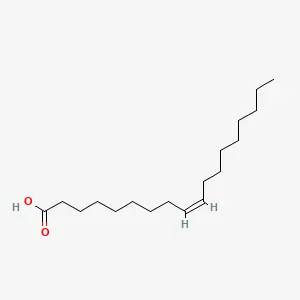
Oleic acid (cis-9-octadecenoic acid, 18:1 n-9) is an 18-carbon fat with one double bond. FAO and WHO, the United Nations food and health agencies, call it the most common monounsaturated fat in food. They say it occurs in considerable amounts in both animal and plant sources.
In a US survey from 1994 to 1996, monounsaturated fat gave 13% of the energy of people aged 12 to 30. Of that fat, 93% was oleic acid. It is a so-called omega-9 fat, and the name comes from the Latin word oleum, which means oil.
It is not an essential fat, so you do not need it from food. The body builds it from stearic acid with an enzyme called delta-9 desaturase. The only fats you must eat are linoleic acid and alpha-linolenic acid.
The oil on your plate matters. Olive oil holds 55% to 83% of its fatty acids as oleic acid, and conventional sunflower oil only 14% to 39%.
The evidence is narrower than the reputation. The EU allows a claim for swapping saturated fats for unsaturated fats. The FDA allows a qualified claim, which admits the evidence is limited, for oils with at least 70% oleic acid. But the FDA said the cholesterol gain in the trials it reviewed may come from the saturated fat removed, not from oleic acid.
The big trials of olive oil, PREDIMED and CORDIOPREV, tested whole Mediterranean diets. A pooled analysis of 11 cohorts (large groups of people followed for years) found no link between monounsaturated fat and heart disease.
Health benefits of oleic acid
The top findings from 34 studies, strongest evidence first
What the stars mean
- Strong. Several randomized trials, pooled in a meta-analysis, point the same way, or regulators (FDA or EFSA) have approved the claim.
- Moderate. Good randomized trials support it, but there are fewer of them, or their results vary.
- Limited. Small, short or single trials, or mixed results. Promising, but it needs confirmation.
Population and lab studies get no stars: they show a link or a mechanism, not proof.
How we rate evidence →- ★★★Swapping saturated for unsaturated fat helped cholesterolIn 60 trials, unsaturated fats as a group in place of saturated fat lowered the ratio of total to HDL (“good”) cholesterol. The EU cholesterol claim covers this swap, not adding oleic acid.
- ★★★Less saturated fat meant fewer cardiovascular eventsIn 15 long trials with 56,675 people, cutting saturated fat gave 0.83 times the risk of heart and blood vessel events (12 main trials). All deaths changed little.
- ★★Fewer heart events on Mediterranean dietsA Mediterranean diet with extra-virgin olive oil gave 0.69 times the risk of major cardiovascular events in 7,447 people at high risk. In 1,002 heart patients, major events struck 87 on a Mediterranean diet and 111 on a low-fat diet (whole diets, not oleic acid alone).
- ★★Small gains in blood pressure and LDLIn 30 trials, Mediterranean-style diets lowered the top blood pressure number by about 3 points (2.99 mmHg) and the bottom by 2 (2.0 mmHg). Those drops were against no or minimal intervention, while against another diet LDL fell by 0.15 mmol/L.
- ★★Mixed results for insulin sensitivityIn healthy adults eating equal calories, a saturated fat diet lowered insulin sensitivity by 10% while a monounsaturated diet did not lower it. In two trials in people at risk of or with metabolic syndrome, a monounsaturated diet did not improve it.
All 27 studies, strongest evidence first
EU claim: swapping saturated for unsaturated fat helps maintain normal cholesterol
The EU wording reads: “Replacing saturated fats in the diet with unsaturated fats contributes to the maintenance of normal blood cholesterol levels. Oleic acid is an unsaturated fat.” The claim is about swapping fats, not adding oleic acid. Under Regulation (EC) No 1924/2006, only food with at least 70% unsaturated fatty acids, giving over 20% of energy, may carry it. It is listed in Regulation (EU) No 432/2012 and rests on a 2011 opinion of EFSA, the EU food safety agency.
Swapping saturated for unsaturated fat lowered the cholesterol ratio; carbohydrates did not
This meta-analysis pooled 60 selected trials that changed the amount and type of fat and carbohydrate. Across the 60 trials, cis unsaturated fats in place of saturated fat lowered the ratio of total to HDL cholesterol. The abstract reports these fats as a group, so this is not a result for oleic acid alone. The authors add that blood fat changes are not a change in disease risk and should be confirmed by cohort studies or clinical trials. By that standard, they say, risk falls most when trans and saturated fats are replaced with cis unsaturated fats.
Less saturated fat: fewer cardiovascular events (0.83 times the risk)
Cochrane, a group known for careful reviews, pooled 15 randomized trials (people assigned to diets by chance) of at least 2 years in 56,675 people. In the 12 long-term trials of the main analysis, combined events fell to 0.83 times the risk (moderate quality), but all deaths changed little (0.96). Polyunsaturated fat or carbohydrate in place of saturated fat looked useful, but data on monounsaturated fat were very limited and its effects unclear. A World Health Organization grant funded this 2020 update, the newest version.
A Mediterranean diet with extra-virgin olive oil cut major cardiovascular events
In Spain, 7,447 people at high cardiovascular risk ate a Mediterranean diet with olive oil or nuts, or a reduced-fat diet. Over a median 4.8 years, major events struck 96 people on olive oil (3.8%), 83 on nuts (3.4%) and 109 on the control diet (4.4%). That is 0.69 times the control risk for olive oil and 0.72 for nuts, in a trial stopped early at an interim analysis. This 2018 version replaced the 2013 report, withdrawn because some sites had not randomized properly; the new analysis does not rely only on random assignment. It tested a whole diet, not oleic acid alone, and funders were Instituto de Salud Carlos III, the Spanish Ministry of Health and others.
A Mediterranean diet beat a low-fat diet for heart patients
CORDIOPREV, a randomized trial at a single center in Spain, followed 1,002 people with coronary heart disease over 7 years. Major events (heart attack, artery-opening procedures, stroke, peripheral artery disease or cardiovascular death) struck 87 on the Mediterranean diet and 111 on the low-fat diet. That is 0.719 to 0.753 times the risk, and the effect was clearer in men (16.2% against 22.8%, 0.669 times the risk). No difference was found in the 175 women, and participants knew which diet they ate. The trial tested a whole diet, not oleic acid alone, and its funders included two olive oil foundations.
Mediterranean-style diets gave small gains in blood pressure and LDL cholesterol
This Cochrane review pooled 30 randomized trials in 12,461 people of a diet pattern, not oleic acid alone. The diets favored monounsaturated over saturated fat, using olive oil as the main cooking fat or tree nuts, plus plenty of plant foods. Against no or minimal intervention, the top blood pressure number fell 2.99 mmHg and the bottom number 2.0 mmHg (moderate-quality evidence). Against another diet, LDL cholesterol fell 0.15 mmol/L (millimoles per liter, a unit for blood levels) and triglycerides 0.09 mmol/L. The authors call the effects on clinical events uncertain, and two trials were left out of the main analyses over data concerns.
American Heart Association: replacing saturated with unsaturated fat lowers heart disease
Randomized trials that cut saturated fat and replaced it with polyunsaturated vegetable oil reduced cardiovascular disease by about 30%, similar to statin treatment. Observational studies link lower saturated fat with higher polyunsaturated and monounsaturated fat to fewer deaths. Replacing saturated fat with mostly refined carbohydrates and sugars did not help. This presidential advisory, a review rather than a new analysis, finds the trial evidence strongest for polyunsaturated oils and does not single out oleic acid.
A monounsaturated swap cut LDL by 11.3%; blood vessel function unchanged
In this single-blind trial (DIVAS), 195 adults were split at random between three diets of equal calories for 16 weeks. The diets were rich in saturated fat (17% of energy), monounsaturated fat (19%) or n-6 polyunsaturated fat (10%). Blood vessel function (flow-mediated dilatation, the main outcome) did not differ, and the abstract does not name the oils used. The monounsaturated diet also cut total cholesterol by 8.4%, E-selectin (a vessel lining marker) by 7.8% and night systolic pressure by 4.9 mmHg.
Saturated fat lowered insulin sensitivity by 10%; monounsaturated fat did not
In the KANWU trial, 162 healthy adults at several centers ate a saturated or a monounsaturated diet of equal calories for 3 months. Each was also assigned by chance to fish oil (3.6 g of n-3 fatty acids a day) or a placebo (dummy capsule). Insulin sensitivity held steady on the monounsaturated diet (+2%, could be chance), a benefit seen only below the median total fat, 37% of energy. LDL cholesterol rose 4.1% on the saturated diet and fell 5.2% on the monounsaturated diet. But Lp(a), a blood fat particle, rose by 12% on the monounsaturated diet, and fish oil did not change insulin sensitivity.
Monounsaturated in place of saturated fat did not improve insulin sensitivity
The RISCK trial, at five centers, analyzed 548 of 720 adults at risk of metabolic syndrome over 24 weeks. The reference diet was high in saturated fat with a high glycemic index (how fast a food raises blood sugar). The others were high in monounsaturated fat or low in fat, each with a high or low glycemic index. In these 548 adults, insulin sensitivity changed by −8.6% to +9.9% on average, with no clear difference between diets. LDL fell when saturated fat was cut, more so with low glycemic index, but the authors found no insulin benefit from monounsaturated fat or carbohydrates.
A high-monounsaturated diet did not change insulin sensitivity or LDL cholesterol
LIPGENE was a randomized single-blind trial in 417 people with metabolic syndrome in eight European countries. Four diets of equal calories ran for 12 weeks: high saturated fat, high monounsaturated fat, and two low-fat, high-carbohydrate diets. Those low-fat diets came with or without 1.2 g a day of long-chain omega-3 fatty acids. Across the whole group of weight-stable people, cutting saturated fat had no effect on insulin sensitivity, total or LDL cholesterol, inflammation or blood pressure. Only the low-fat diet with omega-3 lowered triglycerides.
In 24 diabetes studies, monounsaturated-rich diets lowered fasting glucose and triglycerides
This meta-analysis of randomized trials pooled 24 studies in 1,460 people with type 2 diabetes, comparing high-monounsaturated with high-carbohydrate diets. Fasting glucose fell by 0.57 mmol/L, triglycerides by 0.31 mmol/L and body weight by 1.56 kg. Systolic blood pressure fell by 2.31 mmHg, and HDL cholesterol rose by 0.06 mmol/L. Against polyunsaturated-rich diets only 4 small studies (44 people) existed, and only fasting glucose differed (−0.87 mmol/L). The diets raised cis-monounsaturated fat in general, not oleic acid specifically.
Diets over 12% monounsaturated fat cut fat mass and blood pressure
This meta-analysis pooled 12 long-term randomized diet trials, comparing these diets with diets at 12% of energy or less. Fat mass was lower by 1.94 kg, and the top and bottom blood pressure numbers by 2.26 and 1.15 mmHg, all clear differences. The authors call monounsaturated fat a possibly useful tool in diets for obesity and cardiovascular disease. The trials changed total monounsaturated fat, not oleic acid alone.
A high-oleic diet lowered the LDL to HDL ratio in 3 weeks
In this small crossover trial, 18 healthy adults ate both diets for 3 weeks each, in random order. The diets were high in palmitic acid (a saturated fat), or low in palmitic acid and high in oleic acid. This paper analyzed the blood and muscle samples, and the oleic diet lowered the LDL to HDL ratio in both men and women. The authors conclude that oleic acid in place of palmitic acid lowers blood LDL and whole-body fat oxidation. It is one of the trials the FDA used for its oleic acid claim.
Palm olein and lard raised total and LDL cholesterol against olive oil
In this double-blind crossover trial (neither the men nor the researchers knew which fat was used), 32 healthy men tried each fat for 3 weeks. Palm olein, olive oil or lard replaced part of their usual fat, giving about 17% of energy. Palm olein gave lower triglycerides than olive oil, and HDL cholesterol, inflammation markers, glucose and insulin did not differ. Olive oil is rich in oleic acid, but the trial compared whole fats.
Review of 28 trials: oleic-rich diets can influence weight and fat balance
This systematic review assessed 821 full-text articles and included 28 clinical trials, but gave no pooled estimate. The authors say oleic acid-rich diets can influence fat balance, body weight and possibly energy expenditure. They add that abdominal fat and central obesity can be reduced after high-oleic meals. The mechanisms they list, such as AMP-activated protein kinase signaling and oleoylethanolamide, come from lab work. Their advice is that oleic acid-rich meals need not be restricted to keep a healthy body weight.
12 weeks of high-oleic peanuts added little weight, about 0.5 kg
In this randomized crossover trial, 61 adults (mean age 65, mean BMI 31) ate high-oleic peanuts or a nut-free diet for 12 weeks each. Peanuts gave 15% to 20% of energy, and energy intake was 10% higher (853 kJ), with 30% more fat and 22 g more monounsaturated fat. Body weight rose less than predicted (0.5 kg), and body composition, blood fats, C-reactive protein, glucose and insulin did not change. Funded by an Australian Research Council grant in partnership with the Peanut Company of Australia.
An olive oil breakfast raised energy use more than flaxseed oil
In this randomized crossover trial, 15 healthy normal-weight men ate one breakfast with each oil and were measured over 6 hours. Fat gave 60% of each meal’s energy, from olive oil (rich in oleic acid), sunflower oil (linoleic acid) or flaxseed oil (alpha-linolenic acid). Olive oil raised overall energy expenditure clearly more than flaxseed oil and showed a trend against sunflower oil. Fat and carbohydrate oxidation did not differ, and with one meal per oil the trial says nothing about long-term weight.
Olive oil weakened the skin barrier; sunflower seed oil did not
Two randomized studies tested oils on the forearms of 19 adults, twice a day for 4 to 5 weeks. They used six drops of olive oil, or olive oil on one arm and sunflower seed oil on the other. Over 4 weeks, olive oil weakened the outer skin layer and caused mild redness, with or without a history of atopic dermatitis (eczema). Sunflower seed oil kept the layer intact and improved hydration. The authors advise against olive oil for dry skin and infant massage, and the study compared whole oils, not oleic acid.
Both oils hydrated newborn skin but slowed lipid structure improvement
This pilot randomized trial, with blinded assessors, gave 115 healthy full-term newborns olive oil, sunflower oil or no oil twice a day for 4 weeks. After 4 weeks, both oil groups gained hydration but improved less in lipid lamellae (fat layers between skin cells) than the no-oil group. Water loss through the skin, pH and redness did not differ. The study was too small to test clinical outcomes, and the authors advise caution about oils for newborn skin until more research is done.
Over 7 g of olive oil daily: 19% lower cardiovascular mortality
Two cohorts, the Nurses’ Health Study (60,582 women) and the Health Professionals Follow-up Study (31,801 men), had 36,856 deaths over 28 years. Against never or rarely using olive oil, the highest users had 0.81 times the risk of cardiovascular death and 0.81 for death from any cause. Cancer deaths were 0.83 times as likely. Replacing 10 g a day of margarine, butter, mayonnaise or dairy fat with olive oil went with 8% to 34% lower mortality. Olive oil showed no clear link against other vegetable oils combined; the data are observational, and olive oil is more than oleic acid.
Monounsaturated sources went with lower mortality, but only olive oil held up
This meta-analysis pooled 32 cohort studies with 841,211 people, comparing the top and bottom third of intake. Taken together, monounsaturated fat, olive oil, oleic acid and the monounsaturated to saturated ratio went with 0.89 times the risk of death from any cause. Cardiovascular deaths (0.88), cardiovascular events (0.91) and stroke (0.83) were lower too. In subgroups only olive oil showed clear links, not mixed animal and plant monounsaturated fat; the authors call for work on plant versus animal sources.
Monounsaturated for saturated fat (5% of energy): 15% lower heart disease risk
The Nurses’ Health Study and Health Professionals Follow-up Study followed 84,628 women and 42,908 men for 24 to 30 years, with 7,667 coronary cases. The swap went with 0.85 times the risk for monounsaturated fat, against 0.75 for polyunsaturated fat and 0.91 for whole-grain carbohydrate. Replacing saturated fat with refined starches and added sugars showed no clear link. The analysis counts total monounsaturated fat, not oleic acid alone.
Monounsaturated for saturated fat (5% of energy): 13% lower total mortality
Two cohorts of 83,349 women and 42,884 men had 33,304 deaths, and this swap went with 0.87 times the risk of death. The highest against the lowest fifth of monounsaturated fat intake gave 0.89 times the risk, against 0.81 for polyunsaturated fat and 1.08 for saturated fat. The same swap to polyunsaturated fat went with 27% lower mortality (0.73), a larger gain than for monounsaturated fat.
Monounsaturated fat was not linked to coronary heart disease in 11 cohorts
This pooled analysis followed 344,696 people for 4 to 10 years, with 5,249 coronary events. Replacing 5% of energy from saturated fat with polyunsaturated fat went with 0.87 times the risk of coronary events. Carbohydrates in its place went with 1.07 times the risk, and monounsaturated fat showed no link. The authors conclude that replacing saturated fat with polyunsaturated fat, rather than monounsaturated fat or carbohydrates, prevents coronary heart disease.
Top olive oil intake: 31% lower cancer odds, mostly case-control studies
This meta-analysis pooled 45 studies: 37 case-control studies (17,369 cases), which compare people with and without cancer, and 8 cohort studies (929,771 people). Any cancer was 0.69 times as likely, breast cancer 0.67 times and gastrointestinal cancer 0.77 times. Case-control studies cannot show cause, and the authors call for more cohorts and large randomized trials. The finding is about olive oil, not oleic acid.
In rats, olive oil lowered blood pressure through its oleic acid
The authors credit olive oil’s blood pressure effect to its high oleic acid content (about 70% to 80%), not to minor ingredients such as polyphenols. The related fats elaidic acid and stearic acid did not lower it, and neither did soybean oil, which is low in oleic acid. They propose that oleic acid changes cell membranes and so the G protein signaling that controls blood pressure. The work used spontaneously hypertensive rats, not people, and the old page cited this study.
Foods high in oleic acid
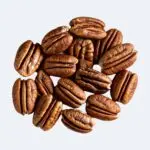
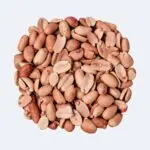
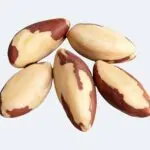
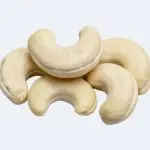
Nuts lead our ranking. A 1 oz (28 g) serving of hazelnuts holds 12.9 g of oleic acid, and macadamia nuts and pecans follow.
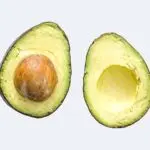
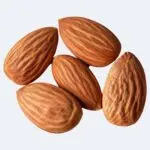
Animal foods rank high too: ground lamb and ground beef sit next to half an avocado and almonds. Per 100 g the top nuts are the same, and per 100 kcal olives come second, after hazelnuts. The ranking below shows every amount.
Cooking oils are not in the ranking, but they are the richest sources. The Codex Alimentarius, the international food standard, lists oleic acid at 55.0% to 83.0% of the fatty acids in olive oils. That range is the same for virgin, refined and pomace grades, and high-oleic sunflower oil has 75% or more.
In the 1994 to 1996 US survey, the main sources of monounsaturated fat for adults were French fries, whole milk, potato chips and ground beef. So oleic acid comes from foods that differ a lot in quality. Where it comes from may matter. In the cohort studies on the cards, olive oil was linked to lower mortality, but monounsaturated fat from mixed animal and plant sources was not.
Per serving. No daily amount is set, so bars compare each food with the top food.
Per 100 g. No daily amount is set, so bars compare each food with the top food.
Per 100 kcal: the same calories of each food, for a fair comparison. Bars compare each food with the top food.
Food labels have no Daily Value or Reference Intake for oleic acid, so the % compares each food with the top food.
- 1.

- 2.

- 3.
- 4.

- 5.
- 6.
- 7.

- 8.
- 9.
- 10.


- 1.
- 2.
- 3.
- 4.
- 5.
- 6.
- 7.
- 8.
- 9.
- 10.


- 1.
- 2.

- 3.
- 4.
- 5.
- 6.
- 7.
- 8.
- 9.
- 10.



Sources
- FoodData Central. US Department of Agriculture, Agricultural Research Service. Values as shown in the ranking above.
- Codex Alimentarius. Standard for olive oils and olive pomace oils (CODEX STAN 33-1981). Revision 2015.
- Codex Alimentarius. Standard for named vegetable oils (CODEX STAN 210-1999). Amendment 2015.
- Nicklas TA, Hampl JS, Taylor CA, et al. Monounsaturated fatty acid intake by children and adults: temporal trends and demographic differences. Nutr Rev. 2004.
- Schwingshackl L, Hoffmann G. Monounsaturated fatty acids, olive oil and health status: a systematic review and meta-analysis of cohort studies. Lipids Health Dis. 2014.
How oleic acid works
The basic biochemistry is well established, and the FAO and WHO report describes it. What oleic acid does as a signal comes mostly from cell and animal studies. What a diet rich in it does for health is tested in the study cards above.
Four ideas cover most of it. The body can make oleic acid, and it is absorbed and stored like other fats. It is built into membranes and may act as a signal. And diets rich in it have been tried in people.
The body makes it from stearic acid
How the body makes oleic acid, as described in the FAO and WHO report. In free-living healthy people, building fat from scratch supplies on average about 20% of newly formed fat-tissue triglyceride. A diagram, not to scale.
When you eat more carbohydrate than you burn, the body turns the excess into fat. FAO and WHO describe how acetate units are joined into palmitic acid (16:0), which is lengthened to stearic acid (18:0). The enzyme delta-9 desaturase then adds a double bond at carbon 9, and oleic acid is the main product.
A review names the enzyme stearoyl-CoA desaturase 1 (SCD1) and states that oleic acid is not essential because humans make it. In healthy people living normally, making fat from scratch supplies about 20% of new fat-tissue triglyceride on average, the report says.
Without linoleic acid and other polyunsaturated fats in the diet, the body desaturates and lengthens oleic acid into the n-9 family of polyunsaturated fats. See also our pages on palmitic acid and stearic acid.
It is absorbed and stored like other fats
Oleic acid is a long-chain fatty acid. In the gut, enzymes called lipases split fats (triglycerides) into free fatty acids and 2-monoacylglycerols. These join bile salts in tiny droplets called micelles and enter the intestinal wall.
There they are rebuilt into triglycerides, packed into chylomicrons (fat-carrying particles) and sent into the bloodstream through the lymph. Lipoprotein lipase frees the fatty acids so cells can burn them or fat tissue can store them. Fat gives about 9 kcal per gram.
The report says unsaturated fatty acids are generally burned faster than saturated ones. For 24-hour oxidation (burning) it gives the order alpha-linolenic acid, then oleic acid, then linoleic acid and arachidonic acid. In one small meal trial, a breakfast with olive oil raised energy expenditure more than flaxseed oil did, without a difference in fat oxidation.
Human milk also holds oleic acid. A pooled analysis of 55 studies named palmitic, linoleic and oleic acid as its most abundant fatty acids. All of its authors were employees of Danone Nutricia Research.
It is built into membranes and may act as a signal
In a study in rats, olive oil lowered blood pressure. The authors proposed that olive oil raises oleic acid in cell membranes, which changes their structure and the G protein signaling that controls blood pressure. That is a lab result, and it has not been shown to work this way in people. Another idea is that oleic acid feeds the production of oleoylethanolamide (OEA), a lipid that signals fullness.
The oleoylethanolamide pathway. The receptor and satiety steps come from mouse experiments, and the link from dietary oleic acid is a proposal in a review. A diagram, not to scale.
In mice, OEA binds the receptor PPAR-alpha and produces fullness and less weight gain, but not in mice that lack the receptor. A review of 28 trials lists a rise in OEA production as one proposed way oleic acid-rich diets could affect body weight. Trials of OEA capsules exist and are covered under forms below. The step from dietary oleic acid to OEA to fullness has not been shown in people.
What has been seen in people
Feeding trials that replaced saturated fat with monounsaturated fat lowered LDL cholesterol by 5.6% to 11.3%, on the comparison diets used. The chart puts three of them on one scale.
Fall in LDL cholesterol on a monounsaturated-rich diet compared with a diet higher in saturated fat, as each trial reported it, drawn to scale. The trials ran 16 weeks, 28 days and 6 weeks. The comparison diets differ, so the bars are not directly comparable.
FAO and WHO rate as convincing the evidence that replacing saturated fat with monounsaturated fat lowers LDL cholesterol and the total to HDL ratio. They rate as insufficient the evidence on coronary heart disease events, diabetes and body weight. The trials did not isolate oleic acid, and the FDA found no sign of an effect apart from the saturated fat displaced.
Insulin sensitivity did not improve in the RISCK and LIPGENE trials. The large diet trials, PREDIMED and CORDIOPREV, tested whole Mediterranean diets with olive oil or nuts. The Cochrane review rates the evidence on heart events as uncertain. The effects are real but modest, and they depend on what the oleic acid replaces.
Sources
- FAO and WHO. Fats and fatty acids in human nutrition: report of an expert consultation. FAO Food and Nutrition Paper 91. Food and Agriculture Organization. 2010.
- Piccinin E, Cariello M, De Santis S, et al. Role of oleic acid in the gut-liver axis: from diet to the regulation of its synthesis via stearoyl-CoA desaturase 1 (SCD1). Nutrients. 2019.
- Jones PJ, Jew S, AbuMweis S. The effect of dietary oleic, linoleic, and linolenic acids on fat oxidation and energy expenditure in healthy men. Metabolism. 2008.
- Floris LM, Stahl B, Abrahamse-Berkeveld M, Teller IC. Human milk fatty acid profile across lactational stages after term and preterm delivery: a pooled data analysis. Prostaglandins Leukot Essent Fatty Acids. 2020.
- Terés S, Barceló-Coblijn G, Benet M, et al. Oleic acid content is responsible for the reduction in blood pressure induced by olive oil. Proc Natl Acad Sci U S A. 2008.
- Fu J, Gaetani S, Oveisi F, et al. Oleylethanolamide regulates feeding and body weight through activation of the nuclear receptor PPAR-alpha. Nature. 2003.
- Tutunchi H, Ostadrahimi A, Saghafi-Asl M. The effects of diets enriched in monounsaturated oleic acid on the management and prevention of obesity: a systematic review of human intervention studies. Adv Nutr. 2020.
- Vafeiadou K, Weech M, Altowaijri H, et al. Replacement of saturated with unsaturated fats had no impact on vascular function but beneficial effects on lipid biomarkers, E-selectin, and blood pressure: results from the randomized, controlled Dietary Intervention and VAScular function (DIVAS) study. Am J Clin Nutr. 2015.
- Gillingham LG, Gustafson JA, Han SY, Jassal DS, Jones PJ. High-oleic rapeseed (canola) and flaxseed oils modulate serum lipids and inflammatory biomarkers in hypercholesterolaemic subjects. Br J Nutr. 2011.
- Bowen KJ, Kris-Etherton PM, West SG, et al. Diets enriched with conventional or high-oleic acid canola oils lower atherogenic lipids and lipoproteins compared to a diet with a Western fatty acid profile in adults with central adiposity. J Nutr. 2019.
- US Food and Drug Administration. Letter of enforcement discretion: oleic acid in edible oils and a reduction in the risk of coronary heart disease (Docket FDA-2017-Q-0807). 2018.
How much oleic acid do you need?
No daily amount of oleic acid is set. The body makes it, and neither EFSA nor FAO and WHO sets a numeric target for monounsaturated fat.
For comparison, the 1994 to 1996 US survey found that monounsaturated fat gave 13% of energy, and 93% of it was oleic acid. That is about 27 g a day on 2,000 kcal. Our arithmetic: 13% of 2,000 kcal is 260 kcal, or about 29 g of fat, times 0.93.
| Source | Group | Value | Notes |
|---|---|---|---|
| EFSA 2010 | Adults | No reference value for cis-monounsaturated fat; total fat 20% to 35% of energy | EFSA proposed no value for cis-monounsaturated fat. On 2,000 kcal, 20% to 35% fat is 400 to 700 kcal, or 44 to 78 g of fat (our arithmetic). |
| FAO and WHO 2010 | Adults | Monounsaturated fat = total fat minus saturated, polyunsaturated and trans fat | Total fat 20% to 35% of energy, saturated fat up to 10%, polyunsaturated fat 6% to 11%, trans fat under 1%. The report notes monounsaturated fat can reach 15% to 20% of energy, depending on total fat. On 2,000 kcal that is 300 to 400 kcal, or 33 to 44 g (our arithmetic). |
| FAO and WHO 2010 | Children 2 to 18 years | Same method: total fat minus saturated, polyunsaturated and trans fat | Total fat 25% to 35% of energy, at a probable level of evidence. |
| FDA 2018 | Labeling of edible oils | About 20 g (1½ tablespoons) a day of oil with at least 70% oleic acid, which gives about 15 g of oleic acid | A qualified health claim, “supportive but not conclusive”. The oil should replace fats higher in saturated fat and add no calories. Not a recommended intake. None of the seven intervention publications FDA relied on showed an effect apart from the saturated fat displaced. |
There is no deficiency to write about, because oleic acid is made in the body. The fats that must come from food are linoleic acid and alpha-linolenic acid, and FAO and WHO set requirements for those. FAO and WHO say human milk provides mainly palmitic and oleic acids.
The FDA took its 15 g figure from five cholesterol-lowering trials: the difference in oleic acid between their high-oleic and high-saturated-fat diets. It used the Gillingham trial, which it judged a better fit for the US population than the trial with the smallest difference.
Sources
- EFSA Panel on Dietetic Products, Nutrition and Allergies (NDA). Scientific opinion on Dietary Reference Values for fats, including saturated fatty acids, polyunsaturated fatty acids, monounsaturated fatty acids, trans fatty acids, and cholesterol. EFSA J. 2010.
- FAO and WHO. Fats and fatty acids in human nutrition: report of an expert consultation. FAO Food and Nutrition Paper 91. Food and Agriculture Organization. 2010.
- US Food and Drug Administration. Letter of enforcement discretion: oleic acid in edible oils and a reduction in the risk of coronary heart disease (Docket FDA-2017-Q-0807). November 19, 2018.
- US Food and Drug Administration. Update letter on the qualifying level for the oleic acid qualified health claim (Docket FDA-2017-Q-0807).
- Nicklas TA, Hampl JS, Taylor CA, et al. Monounsaturated fatty acid intake by children and adults: temporal trends and demographic differences. Nutr Rev. 2004.
Forms of oleic acid: absorption and effects
Oleic acid comes in whole foods (nuts, avocado, meat, dairy) and in oils from olives or from plants bred to be high in it. It also comes as a purified fat in a few special products. The honest bottom line is that the trials compare diets and oils, not forms of oleic acid.
We found no randomized trial of oleic acid or “omega-9” capsules for a health outcome. Nor did we find a trial of oleic acid in one form against another. The one form tested head to head is olive oil with high, medium and low phenol content (phenols are plant compounds). There the phenols made the difference, because the fatty acid make-up was otherwise similar.
The FDA allows a qualified health claim for edible oils with at least 70% oleic acid: “Supportive but not conclusive scientific evidence suggests that daily consumption of about 1½ tablespoons (20 grams) of oils containing high levels of oleic acid, when replaced for fats and oils higher in saturated fat, may reduce the risk of coronary heart disease. To achieve this possible benefit, oleic acid-containing oils should not increase the total number of calories you eat in a day.”
FDA reviewed seven publications describing eight analyses of intervention trials, with 15 to 59 people each, all of moderate quality. Six showed lower total and LDL cholesterol with the high-oleic oil, and one showed no effect. FDA wrote that none suggested an effect of high-oleic oils independent of the saturated fat displaced, so the evidence gives only qualified support. The petition was filed on behalf of Corbion Biotech, Inc.
High-oleic oils also hold up better to heat. Two lab studies found high-oleic sunflower oil more resistant to heat damage than conventional sunflower oil. One used a 7-day frying test and one heated the oils to 180 to 230 °C. These are chemistry tests; we found no trial that compared health outcomes of food fried in the two oils.
The diet trials above tested extra-virgin olive oil or nuts (PREDIMED) and a Mediterranean diet (CORDIOPREV, whose abstract does not name the oil). Others tested high-oleic canola and sunflower oils (the feeding trials) and peanuts.
| Form | What it is | What studies show | Source |
|---|---|---|---|
| Extra virgin olive oil | Virgin olive oil with free acidity of no more than 0.8 g per 100 g (expressed as oleic acid). Oleic acid is 55.0% to 83.0% of fatty acids, the same range as for other olive oils | In 200 men, olive oils with the same fat make-up but more phenols raised HDL cholesterol more and lowered oxidized LDL. A network meta-analysis found high-phenolic extra virgin oil lowered LDL cholesterol slightly (0.14 mmol/L) against low-phenolic oil. The EU allows an olive oil polyphenol claim only for oil with at least 5 mg of hydroxytyrosol and derivatives per 20 g. | 1, 3, 4, 11 |
| Refined olive oil, olive oil blends and pomace oil | Refined from virgin oils, blends of refined and virgin oil, or pomace oil. Oleic acid is also 55.0% to 83.0% | Total cholesterol, HDL, triglycerides and diastolic blood pressure did not differ between refined, mixed and virgin types. Virgin oils lowered systolic blood pressure by 2.87 to 2.99 mmHg against refined oil. Virgin oils are richer in phenols than refined oil. The standard gives the same oleic share for all grades. | 1, 3, 4 |
| High-oleic sunflower oil | Oil from sunflower varieties bred for high oleic acid; at least 75% oleic acid (range 75 to 90.7%), with 2.1% to 17% linoleic acid | In 15 adults a diet rich in it lowered LDL cholesterol and triglycerides against a saturated-fat diet. In two lab studies it resisted heat damage better than conventional sunflower oil. | 2, 5, 8, 9 |
| Mid-oleic and conventional sunflower oil | Mid-oleic: 43.1% to 71.8% oleic acid. Conventional: 14.0% to 39.4% oleic acid and 48.3% to 74.0% linoleic acid | No trial of mid-oleic oil found. In a forearm trial, conventional sunflower seed oil kept the skin barrier intact while olive oil weakened it. | 2, 10 |
| High-oleic canola oil | Canola (low-erucic rapeseed) oil is 51.0% to 70.0% oleic acid in the standard; high-oleic varieties are bred for more | Diets with high-oleic canola oil lowered LDL cholesterol by 7.4% against a Western diet in 36 people and by 5.6% against a control oil blend in 44 men and 75 women, similar to conventional canola oil in the larger trial. The larger trial was funded in part by canola industry groups. | 2, 6, 7 |
| High-oleic safflower oil | At least 70% oleic acid (range 70.0% to 83.7%) | We found no trial in people. | 2 |
| Other oils | Oleic acid share of fatty acids: peanut oil 35.0% to 69%, palm oil 36.0% to 44.0%, soybean oil 17% to 30%, coconut oil 5.0% to 10.0% | In 32 men, palm olein and lard raised LDL cholesterol more than olive oil did (see the card in the benefits section). | 2, 16 |
| Whole foods (nuts, avocado, meat, dairy) | Oleic acid inside food, with its other fats and nutrients | High-oleic peanuts at 15% to 20% of energy for 12 weeks did not change cholesterol or glucose and added about 0.5 kg (see the card above). | see cards |
| Oleic acid or “omega-9” capsules | Purified or concentrated oleic acid | We found no randomized trial for a health outcome. The body makes oleic acid, so there is no deficiency to correct. | see cards |
| Lorenzo’s oil | A 4 to 1 mix of glyceryl trioleate and glyceryl trierucate, used in adrenoleukodystrophy | A single-arm study of 89 boys linked it to fewer brain scan changes; it cannot separate the oleic part from the erucic part. | 12 |
| Oleoylethanolamide (OEA) capsules | A related lipid, not oleic acid itself | A meta-analysis of 10 trials found lower weight, waist size and blood sugar markers, and no change in LDL cholesterol. | 15 |
Here are the form-specific and head-to-head studies, strongest evidence first, 7 in all.
All 7 studies, strongest evidence first
Olive oil phenols, not only its fat, improved HDL and oxidized LDL
This randomized crossover trial ran at six centers in five European countries. Each of 200 healthy men took 25 mL a day of three olive oils, for 3 weeks each. The oils were otherwise similar but held low (2.7 mg/kg), medium (164 mg/kg) or high (366 mg/kg) phenolic content. HDL cholesterol rose by 0.025, 0.032 and 0.045 mmol/L, and oxidized LDL changed by 1.21, −1.48 and −3.21 U/L. The authors conclude that olive oil is more than a monounsaturated fat, but the periods were short and diet was self-reported.
High-phenolic extra virgin olive oil slightly lowered LDL against low-phenolic oil
This network meta-analysis compared refined, mixed, low-phenolic and high-phenolic olive oils in 13 randomized trials of at least 3 weeks, with 611 people. The olive oil types did not differ on total cholesterol, HDL cholesterol, triglycerides or diastolic blood pressure. High-phenolic extra virgin oil lowered LDL cholesterol by 0.14 mmol/L against low-phenolic oil. Virgin oils lowered systolic blood pressure by 2.87 to 2.99 mmHg against refined oil, and certainty was low or moderate.
High-oleic canola oil cut LDL cholesterol by 5.6% against a Western-style blend
In this multicenter double-blind crossover feeding trial, 44 men and 75 women with excess belly fat (central adiposity) ate three diets, 6 weeks each. The oils were canola, high-oleic canola (19.1% monounsaturated and 6.4% saturated fat in the diet) or a control blend (10.5% monounsaturated and 12.3% saturated). High-oleic canola lowered total cholesterol by 3.4% and apoB by 3.4%, like conventional canola oil (LDL −6.6%), and triglycerides and HDL did not change. The work was part of a Canola Agri-Science Cluster funded by Agriculture and Agri-Food Canada, canola industry groups and Dow AgroSciences.
High-oleic canola oil cut LDL cholesterol by 7.4% in 28 days
In this randomized crossover trial, 36 people with high cholesterol ate three diets for 28 days each, with about 36% of energy from fat. Of that fat, 70% came from high-oleic canola oil (HOCO), HOCO blended with flaxseed oil, or a Western-diet fat mix. Against the Western diet, LDL cholesterol fell 7.4% on HOCO and 15.1% on the flaxseed blend, which also supplied omega-3 (7.5% of energy). Inflammatory markers did not change with HOCO, and the FDA used this trial for its oleic acid claim.
In 15 adults, high-oleic sunflower oil lowered LDL and triglycerides
Of 18 people recruited, 15 finished this small crossover trial. Each ate a saturated-fat diet (fat 20.8% of energy) for 5 weeks. They also had 10 weeks on a monounsaturated diet built on high-oleic sunflower oil and margarine (20.3%), in either order. LDL cholesterol, triglycerides and factor VII coagulant activity (a clotting factor) were lower than on the saturated diet. Rising plasma oleic acid showed the diets were followed.
In 89 boys, Lorenzo’s oil went with fewer brain scan changes
In this single-arm study with no control group, 89 boys with X-linked adrenoleukodystrophy and a normal brain scan took Lorenzo’s oil with moderate fat restriction. The oil is a 4 to 1 mix of glyceryl trioleate, the oleic acid part, and glyceryl trierucate, and the study cannot separate the parts. Over 6.9 years on average, 24% developed MRI abnormalities and 11% both MRI and neurological signs, all aged 7 years or younger at the start. A smaller rise in plasma hexacosanoic acid went with fewer abnormalities. This is a medical treatment for a rare disease, not a use of oleic acid for general health.
In 10 trials, OEA capsules cut weight, waist and blood sugar markers
This meta-analysis pooled 10 randomized trials (11 treatment arms) of oleoylethanolamide (OEA), a natural lipid related to oleic acid but not oleic acid itself. Supplements improved C-reactive protein, TNF-α, body weight, BMI, waist circumference, fat mass, triglycerides, fasting glucose, insulin and insulin resistance. Total, LDL and HDL cholesterol, IL-6 and HbA1c (long-term blood sugar) did not change. So the card says nothing about eating oleic acid, and the authors say long-term effects need more research.
Sources
- Codex Alimentarius. Standard for olive oils and olive pomace oils (CODEX STAN 33-1981). Revision 2015.
- Codex Alimentarius. Standard for named vegetable oils (CODEX STAN 210-1999). Amendment 2015.
- Covas MI, Nyyssönen K, Poulsen HE, et al. The effect of polyphenols in olive oil on heart disease risk factors: a randomized trial. Ann Intern Med. 2006.
- Schwingshackl L, Krause M, Schmucker C, et al. Impact of different types of olive oil on cardiovascular risk factors: a systematic review and network meta-analysis. Nutr Metab Cardiovasc Dis. 2019.
- Allman-Farinelli MA, Gomes K, Favaloro EJ, Petocz P. A diet rich in high-oleic-acid sunflower oil favorably alters low-density lipoprotein cholesterol, triglycerides, and factor VII coagulant activity. J Am Diet Assoc. 2005.
- Gillingham LG, Gustafson JA, Han SY, Jassal DS, Jones PJ. High-oleic rapeseed (canola) and flaxseed oils modulate serum lipids and inflammatory biomarkers in hypercholesterolaemic subjects. Br J Nutr. 2011.
- Bowen KJ, Kris-Etherton PM, West SG, et al. Diets enriched with conventional or high-oleic acid canola oils lower atherogenic lipids and lipoproteins compared to a diet with a Western fatty acid profile in adults with central adiposity. J Nutr. 2019.
- Sayyad R. Effects of deep-fat frying process on the oil quality during French fries preparation. J Food Sci Technol. 2017.
- Nagy K, Iacob BC, Bodoki E, Oprean R. Investigating the thermal stability of omega fatty acid-enriched vegetable oils. Foods. 2024.
- Danby SG, AlEnezi T, Sultan A, et al. Effect of olive and sunflower seed oil on the adult skin barrier: implications for neonatal skin care. Pediatr Dermatol. 2013.
- European Commission. Commission Regulation (EU) No 432/2012 establishing a list of permitted health claims made on foods. Official Journal of the European Union. 2012.
- Moser HW, Raymond GV, Lu SE, et al. Follow-up of 89 asymptomatic patients with adrenoleukodystrophy treated with Lorenzo’s oil. Arch Neurol. 2005.
- US Food and Drug Administration. Letter of enforcement discretion: oleic acid in edible oils and a reduction in the risk of coronary heart disease (Docket FDA-2017-Q-0807). November 19, 2018.
- US Food and Drug Administration. Update letter on the qualifying level for the oleic acid qualified health claim (Docket FDA-2017-Q-0807).
- Bahari H, Jazinaki MS, Aghakhani L, et al. Oleoylethanolamide supplementation on cardiometabolic health: a systematic review and meta-analysis of randomized controlled trials. Front Nutr. 2025.
- Tholstrup T, Hjerpsted J, Raff M. Palm olein increases plasma cholesterol moderately compared with olive oil in healthy individuals. Am J Clin Nutr. 2011.
Is oleic acid safe? Limits and who should watch it
Oleic acid in food is safe for almost everyone: it is the most common fat in the diet. EFSA proposed no reference value for cis-monounsaturated fat and FAO and WHO set none, so there is no upper limit to quote for oleic acid.
The practical limit is energy, because fat gives about 9 kcal per gram. The 20 g of oil in the FDA’s claim holds about 180 kcal (our arithmetic), and the claim says the oil should not add calories.
- Calories add up. In the peanut trial, energy intake was 10% higher on high-oleic peanuts, and weight rose by about 0.5 kg in 12 weeks. A review of 28 trials still found no reason to avoid oleic acid-rich meals for body weight. So the point is to swap fats, not to add them.
- Not every high-oleic food is the same. Lamb and beef rank high in oleic acid. In the cohort meta-analysis, only olive oil went with lower mortality, not monounsaturated fat of mixed sources. A pooled analysis of 11 cohorts found no link between monounsaturated fat and coronary heart disease.
- One trial found a rise in Lp(a). In the KANWU study, Lp(a), a blood fat particle, rose by 12% on the monounsaturated diet. The abstract does not say what this means for risk, and we found no follow-up.
- Olive oil on the skin. In 19 adults, olive oil weakened the skin barrier over 4 weeks, and the authors advise against it for dry skin and infant massage. A pilot in 115 newborns found both olive and sunflower oil slowed improvement in skin lipid structure. Ask a doctor before putting oil on eczema or on a baby’s skin.
- Nuts and allergy. Peanuts and tree nuts are among the nine major food allergens in the US, according to the FDA. Allergic reactions are to proteins in the food, not to oleic acid.
- Supplements and special oils. We found no tested safe dose for oleic acid capsules, because no randomized trial of them exists. Oleoylethanolamide capsules have been tested in small trials. Lorenzo’s oil is a treatment for a rare disease and belongs under a specialist’s care. We found no drug interaction specific to oleic acid.
How to get more oleic acid
- Swap fats instead of adding fat. In US cohorts, replacing 10 g a day of margarine, butter, mayonnaise or dairy fat with olive oil went with 8% to 34% lower mortality. The FDA’s claim names about 1½ tablespoons (20 g) a day of oil with at least 70% oleic acid, replacing oils higher in saturated fat.
- Eat nuts and avocado. In our ranking, 1 oz of hazelnuts gives 12.9 g, macadamia nuts 12.4 g and pecans 11.5 g. Half an avocado gives 9.11 g.
- Choose extra virgin olive oil for the phenols. Every olive oil grade holds 55.0% to 83.0% oleic acid. But in a trial of 200 men, the phenols in virgin oil raised HDL cholesterol more and lowered oxidized LDL.
Sources
- FAO and WHO. Fats and fatty acids in human nutrition: report of an expert consultation. FAO Food and Nutrition Paper 91. Food and Agriculture Organization. 2010.
- EFSA Panel on Dietetic Products, Nutrition and Allergies (NDA). Scientific opinion on Dietary Reference Values for fats, including saturated fatty acids, polyunsaturated fatty acids, monounsaturated fatty acids, trans fatty acids, and cholesterol. EFSA J. 2010.
- US Food and Drug Administration. Letter of enforcement discretion: oleic acid in edible oils and a reduction in the risk of coronary heart disease (Docket FDA-2017-Q-0807). November 19, 2018.
- Barbour JA, Howe PRC, Buckley JD, et al. Effect of 12 weeks high oleic peanut consumption on cardio-metabolic risk factors and body composition. Nutrients. 2015.
- Tutunchi H, Ostadrahimi A, Saghafi-Asl M. The effects of diets enriched in monounsaturated oleic acid on the management and prevention of obesity: a systematic review of human intervention studies. Adv Nutr. 2020.
- Schwingshackl L, Hoffmann G. Monounsaturated fatty acids, olive oil and health status: a systematic review and meta-analysis of cohort studies. Lipids Health Dis. 2014.
- Jakobsen MU, O’Reilly EJ, Heitmann BL, et al. Major types of dietary fat and risk of coronary heart disease: a pooled analysis of 11 cohort studies. Am J Clin Nutr. 2009.
- Vessby B, Uusitupa M, Hermansen K, et al. Substituting dietary saturated for monounsaturated fat impairs insulin sensitivity in healthy men and women: the KANWU study. Diabetologia. 2001.
- Danby SG, AlEnezi T, Sultan A, et al. Effect of olive and sunflower seed oil on the adult skin barrier: implications for neonatal skin care. Pediatr Dermatol. 2013.
- Cooke A, Cork MJ, Victor S, et al. Olive oil, sunflower oil or no oil for baby dry skin or massage: a pilot, assessor-blinded, randomized controlled trial (the Oil in Baby SkincaRE [OBSeRvE] Study). Acta Derm Venereol. 2016.
- US Food and Drug Administration. Food allergies.
- Bahari H, Jazinaki MS, Aghakhani L, et al. Oleoylethanolamide supplementation on cardiometabolic health: a systematic review and meta-analysis of randomized controlled trials. Front Nutr. 2025.
- Moser HW, Raymond GV, Lu SE, et al. Follow-up of 89 asymptomatic patients with adrenoleukodystrophy treated with Lorenzo’s oil. Arch Neurol. 2005.
- Guasch-Ferré M, Li Y, Willett WC, et al. Consumption of olive oil and risk of total and cause-specific mortality among U.S. adults. J Am Coll Cardiol. 2022.
- Covas MI, Nyyssönen K, Poulsen HE, et al. The effect of polyphenols in olive oil on heart disease risk factors: a randomized trial. Ann Intern Med. 2006.
- Codex Alimentarius. Standard for olive oils and olive pomace oils (CODEX STAN 33-1981). Revision 2015.
History of oleic acid
The name comes from the Latin word oleum, which means oil. The modern link between oleic acid and heart health starts with the Seven Countries Study. In 1986 Ancel Keys reported 15-year death rates for 15 cohorts of 11,579 men aged 40 to 59, of whom 2,288 died.
Death rates rose with the share of energy from saturated fat and fell with the share from monounsaturated fat. Oleic acid accounted for almost all the differences in monounsaturated fat among cohorts. All-cause and coronary death rates were low in cohorts with olive oil as the main fat.
Keys did not claim cause and urged looking at populations as well as individuals. A 2017 commentary traces how that paper shaped nutrition science.
Oleic acid also has a place in a rare-disease treatment. Lorenzo’s oil, a 4 to 1 mix of glyceryl trioleate and glyceryl trierucate, was tested in boys with adrenoleukodystrophy. Moser’s 2005 follow-up of 89 boys linked it to fewer brain scan changes.
The rules came later. The EU authorized its oleic acid claim in Regulation (EU) No 432/2012. On November 19, 2018, the FDA wrote to the petitioner. It said it would consider not objecting to a qualified claim on oils with at least 70% oleic acid.
The agency had judged the evidence too weak for an authorized claim. It later issued an update letter that corrected how the qualifying level was calculated: the first letter had divided it by four eating occasions. In June 2018 the PREDIMED authors withdrew their 2013 paper and republished it, after finding that some participants had not been randomized properly. The new analysis still found fewer cardiovascular events with the olive oil diet.
Sources
- Keys A, Menotti A, Karvonen MJ, et al. The diet and 15-year death rate in the seven countries study. Am J Epidemiol. 1986.
- Blackburn H. Invited commentary: 30-year perspective on the Seven Countries Study. Am J Epidemiol. 2017.
- Moser HW, Raymond GV, Lu SE, et al. Follow-up of 89 asymptomatic patients with adrenoleukodystrophy treated with Lorenzo’s oil. Arch Neurol. 2005.
- European Commission. Commission Regulation (EU) No 432/2012 establishing a list of permitted health claims made on foods. Official Journal of the European Union. 2012.
- US Food and Drug Administration. Letter of enforcement discretion: oleic acid in edible oils and a reduction in the risk of coronary heart disease (Docket FDA-2017-Q-0807). November 19, 2018.
- US Food and Drug Administration. Update letter on the qualifying level for the oleic acid qualified health claim (Docket FDA-2017-Q-0807).
- Estruch R, Ros E, Salas-Salvadó J, et al. Retraction and republication: primary prevention of cardiovascular disease with a Mediterranean diet. N Engl J Med 2013;368:1279-90. N Engl J Med. 2018.
- Estruch R, Ros E, Salas-Salvadó J, et al. Primary prevention of cardiovascular disease with a Mediterranean diet supplemented with extra-virgin olive oil or nuts. N Engl J Med. 2018.
- Oleic acid. Wikipedia. For the origin of the name.
Frequently asked questions about oleic acid
Is oleic acid good for you?
It depends on what it replaces: swapping saturated fat for unsaturated fat lowers LDL cholesterol, and the EU allows a claim on that swap. But the FDA found no sign of an effect apart from the saturated fat removed. A pooled analysis of 11 cohorts found no link between monounsaturated fat and coronary heart disease. Olive oil has the most consistent record: in two large US cohorts, the highest users had 0.81 times the risk of death from any cause.
Does oleic acid lower cholesterol?
Compared with saturated fat, yes. In feeding trials, diets rich in monounsaturated fat lowered LDL cholesterol by 11.3% (DIVAS), 7.4% and 5.6% (the high-oleic canola trials). FAO and WHO say the evidence is convincing that this swap lowers LDL cholesterol. Compared with carbohydrates, oleic acid has a neutral effect on LDL cholesterol, according to the same report.
Is oleic acid the same as omega-9, and do I need a supplement?
Oleic acid is the best-known omega-9 fat (18:1 n-9). The body makes it from stearic acid, so it is not essential, unlike linoleic acid (omega-6) and alpha-linolenic acid (omega-3). We found no randomized trial of omega-9 or oleic acid capsules for a health outcome. So there is no tested reason to take one.
How much oleic acid is in olive oil and sunflower oil?
The Codex standard lists oleic acid at 55.0% to 83.0% of the fatty acids in olive oils. Conventional sunflower oil has 14.0% to 39.4%, mid-oleic sunflower oil 43.1% to 71.8% and high-oleic sunflower oil at least 75%. Canola oil has 51.0% to 70.0%. Check the label for “high oleic”, because the same plant gives very different oils.
How much oleic acid should I eat a day?
No amount is set, because the body makes it. The 1994 to 1996 US survey found about 27 g a day on 2,000 kcal (our arithmetic). The FDA’s qualified claim describes about 20 g of high-oleic oil a day, which gives about 15 g of oleic acid. That oil should replace oils higher in saturated fat, without adding calories.
Is oleic acid good for skin?
We found no trial of eating oleic acid for skin. On the skin, olive oil weakened the barrier in 19 adults over 4 weeks, while sunflower seed oil did not. The authors advise against olive oil for dry skin and infant massage. In 115 newborns, olive oil and sunflower oil both slowed improvement in skin lipid structure.
Does oleic acid help you lose weight?
Not shown. A review of 28 trials says oleic acid-rich diets can influence body weight and fat balance, but gives no pooled result. In one trial, adding high-oleic peanuts for 12 weeks added 10% more energy and about 0.5 kg of weight. In people with type 2 diabetes, monounsaturated-rich diets lowered body weight by 1.56 kg compared with high-carbohydrate diets.
Which foods are highest in oleic acid?
Nuts lead in our ranking: a 1 oz serving of hazelnuts gives 12.9 g, macadamia nuts 12.4 g and pecans 11.5 g. Per 100 g the order is hazelnuts 45.4 g, macadamia nuts 43.8 g and pecans 40.6 g. Ground lamb, avocado, almonds and ground beef follow per serving. Cooking oils are richer still, with 55.0% to 83.0% of olive oil’s fatty acids as oleic acid.