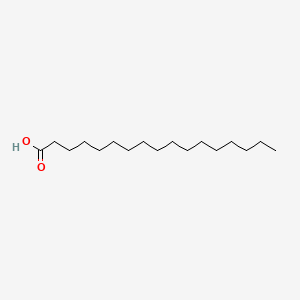
Margaric acid, also called heptadecanoic acid (17:0, C17H34O2), is a saturated fat with 17 carbons. That is an odd number, while most saturated fats in the body have an even number of carbons. Pure, it is a solid that melts at 61.3 °C.
In 1957 chemists reported it in butterfat and in mutton fat. It is still found mainly in dairy fat and in the fat of ruminant animals such as cattle and sheep. Its 15-carbon neighbor, pentadecanoic acid (C15:0), has its own page: see pentadecanoic acid.
What sets margaric acid apart is its use as a marker. Researchers use its level in blood as a sign of how much dairy fat people eat. In large cohort studies (studies that follow big groups of people for years), people with higher levels had a lower risk of type 2 diabetes. The catch is that the body makes some of its own.
In a 7-day human trial, fiber and propionate raised it. In mice, an enzyme called HACL1 supplies part of it. So a high level does not prove that someone ate more dairy, and nothing shows that eating more of it helps.
The name is also older than the molecule. In the 1800s, “margaric acid” was a pearly fat that turned out to be a mixture of two other fatty acids. The real 17-carbon acid kept the name. The story is in the history section below.
Health benefits of margaric acid
The top findings from 23 studies, strongest evidence first
What the stars mean
- Strong. Several randomized trials, pooled in a meta-analysis, point the same way, or regulators (FDA or EFSA) have approved the claim.
- Moderate. Good randomized trials support it, but there are fewer of them, or their results vary.
- Limited. Small, short or single trials, or mixed results. Promising, but it needs confirmation.
Population and lab studies get no stars: they show a link or a mechanism, not proof.
How we rate evidence →- ★★Dairy servings nudged blood margaric acid upIn 124 healthy adults, 3 dairy servings a day for 4 weeks raised blood 17:0 (margaric acid) slightly, to 0.42% of fatty acids against 0.39%. The test food was dairy as a whole, not margaric acid alone.
- ★Blood 17:0 may not mark dairy intakeIn a trial of 30 young adults, a high-dairy diet raised 15:0 but not 17:0. In 62 adults, 17:0 stopped tracking dairy fat once liver fat was counted.
- ★Inulin fiber raised blood 17:0 in 7 daysIn 16 healthy adults, 30 g a day of inulin, a fiber, raised blood 17:0 by 11% in 7 days. Propionate (6 g a day) raised it by 13%, and cellulose had no effect.
- Population studyLinked to less type 2 diabetesPooling 16 studies of 63,682 people, high blood 17:0 (90th percentile) went with 0.65 times the diabetes risk of low (10th percentile). In a European study, each typical step up in 17:0 (1 SD) went with 0.67 times the risk.
- Population studyLinked to less cardiovascular diseaseAcross 18 studies, the top third of blood 17:0 had 0.86 times the cardiovascular risk of the bottom third. These markers cannot tell dairy foods apart, and most were measured only once.
All 23 studies, strongest evidence first
3 daily dairy servings nudged margaric acid up in 124 adults
The healthy adults had 4 weeks of dairy and 4 weeks of a same-calorie control (fruit and vegetable juice, cashews, a cookie), in random order. Dairy meant 3 servings a day of 1% fat milk, 1.5% fat yogurt and 34% fat cheese, and a 4-week break separated the diets. After dairy, blood 17:0 was 0.42% of fatty acids against 0.39%, and 15:0 was 0.26% against 0.22%. LDL (“bad”) cholesterol was 0.08 mmol/L (a blood unit) higher, and the test food was dairy as a whole, not margaric acid alone.
Inulin raised 17:0 by 11%, propionate by 13%, in 7 days
16 healthy adults took cellulose (30 g a day), inulin (30 g a day) and propionate (6 g a day), each for 7 days. In this blinded, randomized trial, cellulose had no effect, inulin raised it by 11% and propionate by 13%. 15:0 rose by about 17% and 13%, and in human liver cells grown in a dish, more propionate meant more odd-chain fatty acids. The authors think gut-made propionate feeds the liver’s production of these fats, so their link with diabetes may reflect fiber, not only dairy.
Blood 17:0 did not differ on dairy, meat or grain diets
The trial had 30 young adults: 13 men and 17 women, age 22 ± 4, BMI 21.6 ± 2.2. In random order, they ate three diets with the same calories, high in dairy, meat or grain. A later look at blood fats (cholesteryl esters) found the dairy diet raised 15:0 (against meat β = 0.27, against grain β = 0.15) but not 17:0. It was a small trial in young, lean volunteers.
Blood 17:0 stopped tracking dairy fat once liver fat was counted
62 adults ate diets with 0.3, 8.7 or 28.5 g of dairy fat a day for 12 weeks. Once liver fat was counted, 15:0 and 17:0 were not linked to dairy fat intake. Models predicted higher levels with more dairy fat only in people with high liver fat. Trans-palmitoleic acid plus iso-17:0 explained 35.4% of differences in dairy fat intake, and the authors question 15:0 and 17:0 as markers.
More dairy raised 17:0, and 17:0 tracked lower diastolic pressure
27 adults spent 6 weeks on over 4 dairy servings a day and 6 weeks on 2 to 3, with a 6-week break. Blood 15:0 and 17:0 rose after the high-dairy diet. Across the trial, higher 17:0 went with lower diastolic pressure (the bottom number), and higher palmitic acid (16:0) with higher pressure. That is a link inside a small trial, not a test of giving 17:0.
17:0 tracked children’s dairy fat at first, not at 12 weeks
114 healthy children aged 4 to 13 swapped regular-fat dairy foods for reduced-fat or low-fat ones in a randomized trial. At the start, dairy fat went with C14:0 (r = 0.24), C15:0 (r = 0.42) and C17:0 (r = 0.25). By week 12, only the change in C15:0 followed the change in dairy fat (r = 0.27, n = 59). So the authors call C15:0, not C17:0, the useful marker.
Higher margaric acid went with less type 2 diabetes across 16 cohorts
This analysis pooled 16 long-term cohorts from 12 countries: 63,682 people, of whom 15,180 got type 2 diabetes over an average of 9 years. At the 90th percentile of 17:0, risk was 0.65 times that at the 10th; for 15:0 it was 0.80. That was after allowing for BMI, waist size and markers of fat made in the body, and the link was stronger in women. Blood levels cannot show which dairy food raised them, and factors the study did not measure may still play a part.
17:0 went with less type 2 diabetes, palmitic acid with more
EPIC-InterAct is a European case-cohort study: 12,403 people with new type 2 diabetes, compared with a sample of 16,154. For each 1 SD (a typical spread) higher level, the risk was 0.67 times as high for 17:0 and 0.79 times for 15:0. For palmitic acid it was 1.26 times as high. The authors say the food and body-made sources of each fatty acid need to be told apart.
In Chinese adults, 17:0 went with less diabetes and heart disease
The China Kadoorie Biobank followed 8,185 people for about 5 years; 127 got diabetes and 387 ischemic heart disease. The top third for red cell 17:0 had 0.41 times the diabetes risk of the lowest, and 0.69 times the heart disease risk. In a meta-analysis pooling 33 more long-term studies (112,193 people), 17:0 went with 0.65 times the diabetes risk and 0.87 times the heart risk. In this low-dairy population, 17:0 also tracked wheat, coarse grains and fish.
Higher blood 17:0 went with less cardiovascular disease in 18 studies
A new Swedish cohort (4,150 adults, followed for a median 16.6 years) was pooled with 17 other observational studies. The top third of 17:0 had 0.86 times the cardiovascular risk of the lowest, and 15:0 gave 0.88, but trans-palmitoleic acid gave 1.01. None was linked to death from any cause, though each of those results rested on 3 or fewer studies. The authors note that the markers cannot tell dairy foods apart, and most were measured only once.
Odd-chain fats went with lower heart and metabolic risk in 49 studies
Its authors say this meta-analysis of 49 long-term studies (45 articles) on blood saturated fats supports current advice to cut saturated fat. Odd-chain fatty acids went with lower risk of type 2 diabetes, cardiovascular disease, coronary heart disease and stroke (0.62 to 0.91 times the risk). For 17:0, risk fell in a straight line as levels rose. Even-chain ones (14:0, 16:0, 18:0) went with higher risk (1.15 to 1.43 times).
17:0 went with fewer cardiovascular but more other deaths
The Cardiovascular Health Study followed 2,907 US adults aged 65 or older without cardiovascular disease for 22 years. Measured at the start, 6 and 13 years, 17:0 was not linked to total deaths (top against bottom fifth: 1.07 times the risk). But it went with fewer cardiovascular deaths (0.77 times), fewer stroke deaths (0.58) and more non-cardiovascular deaths (1.27). 17:0 was not linked to total cardiovascular disease, coronary heart disease or stroke events.
Low 17:0 went with more adult-onset diabetes, more so with autoantibodies
This EPIC-InterAct analysis compared 11,124 people with new adult-onset diabetes with a sample of 14,866. For each 1 SD lower 17:0, the risk was 1.55 times as high without GAD65 antibodies and 1.69 times with them. Low 17:0 plus high levels of these antibodies (a sign of autoimmune diabetes) gave 7.51 times the risk of high 17:0 without them. Low dairy intake alone was not linked to diabetes (0.98).
17:0 went with less metabolic syndrome, but 15:0 did not
This snapshot study of 746 adults cannot show cause. People with higher red cell 17:0 had 0.36 times the odds of metabolic syndrome, and insulin resistance (HOMA-IR) explained 33.8% of the link. High 17:0 with low insulin resistance gave 0.14 times the odds. Dietary fiber went with higher 17:0, and 15:0 showed no link.
Higher blood 17:0 went with lower odds of high blood pressure
This snapshot of 4,718 US adults used 2011 to 2014 NHANES data (the US national health survey), so it shows a link only. High blood pressure affected 46.82% of the group. After full adjustment, the odds were 0.77 times as high with higher 17:0 and 0.78 times with higher 15:0.
In 869 heart attack survivors, blood 17:0 tracked dairy and fiber
This Dutch snapshot came from the Alpha Omega Cohort. Blood 17:0 correlated with intake of total dairy (0.14), dairy fat (0.11) and fiber (0.19), while 15:0 followed dairy (0.19) but not fiber. The authors suggest that benefits once credited to 17:0 as a dairy marker may partly reflect fiber. Two authors work at Unilever R&D.
Mice lacking HACL1 had about 26% less blood 17:0
Mice lacking the Hacl1 enzyme were compared with normal littermates at 14 weeks. Liver 17:0 was about 22% lower, C15:0 did not change in any tissue, and fat tissue showed no difference. The authors take this as evidence that some 17:0 is made by alpha-oxidation, a step that removes the end carbon of a fatty acid. This is mouse work, not people.
In human cells, ELOVL6 lengthened 15:0 into 17:0
Human cells (MCF7) given ELOVL enzyme genes got 13:0, 15:0 or 17:0 at 80 µM (micromolar, a lab concentration). ELOVL6 lengthened 13:0 to 15:0 and 15:0 to 17:0, and ELOVL7 did so modestly for 15:0. No step from 17:0 to 19:0 was found. The authors add that the 15:0 to 17:0 ratio is 2:1 in ruminant foods and 1:2 in seafood and human tissues. Intake studies should allow for the body’s own metabolism, they say.
In rats, more fat lowered blood 15:0 but not 17:0
Two feeding studies in rats used diets with different total fat but the same fatty acid make-up. Body-made C15:0 fell in step with dietary fat, while blood C17:0 did not clearly change. The authors conclude that total fat and fat type shape blood levels of these fatty acids, apart from how much of them is eaten.
In mice, neither milk fat nor added 17:0 prevented fatty liver
Mice on high-fat diets got added milk fat or C17:0 for 20 weeks, and neither prevented fatty liver or insulin resistance. Both raised odd-chain fatty acids, and milk fat made liver inflammation worse. In mouse liver cells, both 15:0 and 17:0 dampened JAK2/STAT3 signaling, but only 15:0 strengthened insulin-driven AKT signaling. The authors conclude that C17:0 is not what drives health benefits in this model, while C15:0 may be worth more study.
Adding C17:0-rich fish raised dolphins’ blood 17:0
In two groups of dolphins (30 and 19 animals), the group with higher insulin had lower blood 17:0 (0.3% against 1.3%). In 6 dolphins, adding 25% pinfish and/or mullet for 24 weeks raised daily C17:0 intake from 400 to 1,700 mg. Blood 17:0 rose, ferritin fell and blood markers of metabolic syndrome moved toward normal, but this test in 6 animals had no control. The findings are part of a US Navy patent application, and a company owned by the lead author holds the license.
Margaric acid beat other common fatty acids at killing pancreatic cancer cells
It was more toxic than pentadecanoic, palmitic, stearic, oleic or linoleic acid in Panc-1 and MIA PaCa-2 cells in dishes. It cut colony formation, caused cell death that rose with the dose, and worked together with the cancer drug gemcitabine. Cells resistant to gemcitabine were just as sensitive (IC50 71.45 µM against 77.47 µM in the original cells). This is cell work only, with no animal or human data in the paper.
C17:0 slowed lung cancer cells and killed more of them
Lung cancer cells (PC-9, a non-small-cell type) and a line resistant to the drug gefitinib were tested in dishes. C17:0 slowed their growth and movement, turned down PI3K/Akt signaling and made gefitinib more toxic to the cells. It also led to a build-up of 10-cis-heptadecenoic acid. Cell work only.
Foods high in margaric acid
Margaric acid comes mostly from the fat of ruminant animals. In a test of foods, butter held 423 mg of C17:0 per 100 g; nonfat dairy products had none that could be detected. Some fish carry it too: pinfish and mullet had 41 and 67 mg per 100 g, and capelin had none.
Dairy fat and beef carry about twice as much 15:0 as 17:0. Seafood and human tissue are the other way round, with about twice as much 17:0 as 15:0.
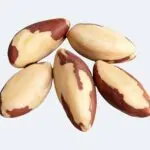
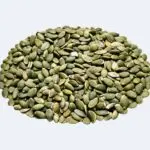
In our USDA ranking the amounts are small. Per serving, ground beef leads with 0.25 g in 4 oz (113 g). Then come farmed Atlantic salmon, macadamia nuts, olives and semi-skimmed cow’s milk at 0.03 to 0.04 g. Per 100 g, ground beef has 0.22 g, olives 0.15 g and macadamia nuts 0.12 g.
Nuts and olives rank high in USDA data. But the human studies we found tie blood 17:0 to dairy, fiber, wheat, coarse grains and fish, not to those foods. In one trial, 3 servings a day of dairy lifted plasma 17:0 only from 0.39% to 0.42% of fatty acids.
Per serving. No daily amount is set, so bars compare each food with the top food.
Per 100 g. No daily amount is set, so bars compare each food with the top food.
Per 100 kcal: the same calories of each food, for a fair comparison. Bars compare each food with the top food.
Food labels have no Daily Value or Reference Intake for margaric acid, so the % compares each food with the top food.
- 1.
- 2.

- 3.

- 4.

- 5.

- 6.

- 7.
- 8.

- 9.
- 10.


- 1.
- 2.
- 3.
- 4.
- 5.
- 6.
- 7.
- 8.
- 9.
- 10.



- 1.
- 2.
- 3.
- 4.
- 5.
- 6.
- 7.
- 8.
- 9.

- 10.

Sources
- U.S. Department of Agriculture, Agricultural Research Service. FoodData Central. Values as shown in the ranking above.
- National Center for Biotechnology Information. PubChem compound summary for heptadecanoic acid (CID 10465). US National Library of Medicine. Melting point from the Human Metabolome Database entry HMDB0002259.
- Cooke NJ, Hansen RP, Shorland FB. Occurrence in butterfat of n-heptadecanoic acid (margaric acid). Nature. 1957.
- Hansen RP, Shorland FB, Cooke NJ. The occurrence of n-heptadecanoic acid (margaric acid) in unhydrogenated mutton fat. Biochem J. 1957.
- Venn-Watson SK, et al. Increased Dietary Intake of Saturated Fatty Acid Heptadecanoic Acid (C17:0) Associated with Decreasing Ferritin and Alleviated Metabolic Syndrome in Dolphins. PLoS One. 2015.
- Wang Z, Wang DH, Goykhman Y, et al. The elongation of very long-chain fatty acid 6 gene product catalyses elongation of n-13:0 and n-15:0 odd-chain SFA in human cells. Br J Nutr. 2019.
- Sun L, Xu X, Du H, et al. Erythrocyte odd-chain fatty acids and the risk of cardiometabolic diseases: a prospective study and updated meta-analysis. Eur J Prev Cardiol. 2025.
- Abdullah MM, Cyr A, Lépine MC, et al. Recommended dairy product intake modulates circulating fatty acid profile in healthy adults: a multi-centre cross-over study. Br J Nutr. 2015.
How margaric acid works
Most of what is known about how the body handles margaric acid comes from one small human trial, mice and cells. Four ideas matter. Some of it comes from food, and some is made from fiber by gut bacteria and the liver. Its blood level is a shaky stand-in for dairy intake, and no one knows if it does anything itself.
We found no study that tracked how well the body absorbs margaric acid on its own.
Food and the body both supply it
The ratio of 15:0 to 17:0, drawn to scale (each bar shows only the ratio, not an amount). Dairy fat and beef carry about twice as much 15:0 as 17:0. In seafood and in human tissue it is the other way around, which is one clue that the body makes or reshapes some of its own.
The ratio of 15:0 to 17:0 is about 2 to 1 in dairy fat and beef. In human plasma it is about 1 to 2, which is hard to explain by diet alone. A review of odd-chain fatty acids lists alpha-oxidation as one possible way the body makes them.
A mouse study supports it: mice without the HACL1 enzyme had about 26% less 17:0 in plasma. In human cells, the ELOVL6 enzyme lengthened 15:0 to 17:0.
Fiber can raise it
Rise in plasma phospholipid odd-chain fatty acids after 7 days in 16 healthy adults, drawn to scale. The 15:0 rise with propionate was borderline (p = 0.05); the other bars were significant. Inulin is a fiber and propionate was given as a supplement.
In 16 healthy adults, 7 days of inulin (a type of fiber) or propionate raised plasma 17:0, and cellulose did not. In heart attack survivors, 17:0 tracked fiber intake as well as dairy. In a study of 746 adults, it went with fiber too. The authors of the trial suggest that part of the diabetes link seen for odd-chain fatty acids may relate to fiber.
The body’s routes in one picture
Four routes into the body’s 17:0, as found in a human trial, mice and cells. The drawing shows routes, not amounts: we found no study that measured how much each route contributes in people.
Why it is a shaky dairy marker
A marker is only as good as its link to the food. In a controlled diet trial of 62 adults, 15:0 and 17:0 stopped tracking dairy fat once liver fat was counted. In a young-adult trial, a dairy diet raised 15:0 but not 17:0. In children, dairy fat correlated with 17:0 at the start (r = 0.25) but not after 12 weeks.
In the Food4Me study, repeat blood measures agreed less for 17:0 than for 15:0 (repeatability score 0.32 against 0.62). In rats, more dietary fat lowered 15:0 but not 17:0. So 15:0 is usually the better marker. 17:0 is better treated as a mixed signal of dairy, fiber and the body’s own metabolism.
What has been seen in people
In people, higher blood 17:0 went with lower diabetes risk in pooled cohorts (0.65 times the risk across 16 cohorts). It also went with lower heart disease risk in a meta-analysis (0.86 times the risk). These are observational links.
The trials that raised 17:0 changed dairy, fiber or propionate at the same time. The one mouse study that added 17:0 itself saw no benefit for fatty liver or insulin resistance. So the data fit a marker of a healthy pattern better than a fat that protects on its own.
Sources
- Wang Z, Wang DH, Goykhman Y, et al. The elongation of very long-chain fatty acid 6 gene product catalyses elongation of n-13:0 and n-15:0 odd-chain SFA in human cells. Br J Nutr. 2019.
- Jenkins B, West JA, Koulman A. A review of odd-chain fatty acid metabolism and the role of pentadecanoic acid (C15:0) and heptadecanoic acid (C17:0) in health and disease. Molecules. 2015.
- Weitkunat K, Schumann S, Nickel D, et al. Odd-chain fatty acids as a biomarker for dietary fiber intake: a novel pathway for endogenous production from propionate. Am J Clin Nutr. 2017.
- Jenkins B, et al. Peroxisomal 2-hydroxyacyl-CoA lyase is involved in endogenous biosynthesis of heptadecanoic acid. Molecules. 2017.
- Jenkins B, Aoun M, Feillet-Coudray C, et al. The dietary total-fat content affects the in vivo circulating C15:0 and C17:0 fatty acid levels independently. Nutrients. 2018.
- Bethancourt HJ, Schmidt KA, Cromer G, et al. Assessing the validity of plasma phospholipid fatty acids as biomarkers of dairy fat intake using data from a randomized controlled intervention trial. Am J Clin Nutr. 2022.
- Vissers LET, Soedamah-Muthu SS, van der Schouw YT, et al. Consumption of a diet high in dairy leads to higher 15:0 in cholesteryl esters of healthy people when compared to diets high in meat and grain. Nutr Metab Cardiovasc Dis. 2020.
- Albani V, Celis-Morales C, O’Donovan CB, et al. Within-person reproducibility and sensitivity to dietary change of C15:0 and C17:0 levels in dried blood spots: data from the European Food4Me Study. Mol Nutr Food Res. 2017.
- Pertiwi K, Küpers LK, Wanders AJ, et al. Associations of dairy and fiber intake with circulating odd-chain fatty acids in post-myocardial infarction patients. Nutr Metab (Lond). 2019.
- Bishop CA, et al. Heptadecanoic acid is not a key mediator in the prevention of diet-induced hepatic steatosis and insulin resistance in mice. Nutrients. 2023.
How much margaric acid do you need?
No official body sets a daily amount of margaric acid. The FDA has set no Daily Value for it and the EU no EU Reference Intake. We found no intake value for it in the 2010 report on fats from the UN food and health agencies (FAO and WHO).
It is not an essential fatty acid, and the body makes some of its own, so there is no daily need to meet. We found no deficiency state tied to a lack of it, and no national survey of how much people eat.
Sources
- US Food and Drug Administration. Daily Value on the Nutrition and Supplement Facts Labels. FDA. Accessed October 2026.
- FAO and WHO. Fats and fatty acids in human nutrition: report of an expert consultation. FAO Food and Nutrition Paper 91. Food and Agriculture Organization. 2010.
- Wang Z, Wang DH, Goykhman Y, et al. The elongation of very long-chain fatty acid 6 gene product catalyses elongation of n-13:0 and n-15:0 odd-chain SFA in human cells. Br J Nutr. 2019.
- Jenkins B, West JA, Koulman A. A review of odd-chain fatty acid metabolism and the role of pentadecanoic acid (C15:0) and heptadecanoic acid (C17:0) in health and disease. Molecules. 2015.
Forms of margaric acid: absorption and effects
We found no trial of margaric acid as a supplement. It reaches people in dairy and ruminant fat, in fish fat, indirectly through fiber, and as a lab chemical used in fatty acid testing. The honest bottom line is that no study compared forms, and no study in people gave it as a capsule.
| Form | What it is | What studies show | Source |
|---|---|---|---|
| Dairy fat, beef and mutton fat | 17:0 inside triglycerides with other fatty acids | Butter held 423 mg per 100 g and nonfat dairy none detectable. Three servings a day of dairy raised plasma 17:0 from 0.39% to 0.42% of fatty acids. It was reported in butterfat and mutton fat in 1957. | 1, 2, 8, 9 |
| Fish | 17:0 in fish fat | Pinfish and mullet had 41 and 67 mg per 100 g and capelin none. Fed to dolphins, they raised daily C17:0 intake from 400 to 1,700 mg and serum 17:0 rose. There was no human trial. | 1 |
| Fiber and propionate | Not margaric acid: gut-made propionate the liver can turn into odd-chain fats | In 16 adults, 7 days of inulin (30 g a day) or propionate (6 g a day) raised plasma 17:0 by 11% and 13%. Cellulose did not. | 3 |
| Pure C17:0 and methyl heptadecanoate | Lab chemicals used as a standard in fatty acid analysis | Historically used as internal standards, because they were thought to be too scarce in humans to matter. Tallow contains methyl heptadecanoate, so the standard did not work well for tallow-based biodiesel tests. | 5, 6, 7 |
| Added C17:0 (supplement-type use) | Pure C17:0 mixed into feed | We found no trial in people. In mice on a high-fat diet, 20 weeks of added C17:0 did not prevent fatty liver or insulin resistance. | 4 |
One thing most readers do not expect: before it became a marker, chemists used C17:0 as an internal standard. That is a known amount added to a sample so other fatty acids can be measured against it. A review notes that this rested on the belief that humans had little of it.
A 2017 milk method also used C17:0 as the internal marker. Since milk fat and tallow carry some, a lab has to check that its sample does not.
Sources
- Venn-Watson SK, et al. Increased Dietary Intake of Saturated Fatty Acid Heptadecanoic Acid (C17:0) Associated with Decreasing Ferritin and Alleviated Metabolic Syndrome in Dolphins. PLoS One. 2015.
- Abdullah MM, Cyr A, Lépine MC, et al. Recommended dairy product intake modulates circulating fatty acid profile in healthy adults: a multi-centre cross-over study. Br J Nutr. 2015.
- Weitkunat K, Schumann S, Nickel D, et al. Odd-chain fatty acids as a biomarker for dietary fiber intake: a novel pathway for endogenous production from propionate. Am J Clin Nutr. 2017.
- Bishop CA, et al. Heptadecanoic acid is not a key mediator in the prevention of diet-induced hepatic steatosis and insulin resistance in mice. Nutrients. 2023.
- Jenkins B, West JA, Koulman A. A review of odd-chain fatty acid metabolism and the role of pentadecanoic acid (C15:0) and heptadecanoic acid (C17:0) in health and disease. Molecules. 2015.
- Lashkari S, et al. Quantitative determination of conjugated linoleic acid and polyunsaturated fatty acids in milk with C17:0 as internal marker: evaluation of different methylation procedures. Data Brief. 2017.
- Pereira E, Napp A, Braun JV, et al. Development and validation of analytical methodology by GC-FID using hexadecyl propanoate as an internal standard to determine the bovine tallow methyl esters content. J Chromatogr B. 2018.
- Cooke NJ, Hansen RP, Shorland FB. Occurrence in butterfat of n-heptadecanoic acid (margaric acid). Nature. 1957.
- Hansen RP, Shorland FB, Cooke NJ. The occurrence of n-heptadecanoic acid (margaric acid) in unhydrogenated mutton fat. Biochem J. 1957.
Is margaric acid safe? Supplements, dose and interactions
At food amounts, margaric acid is not a concern in any source we found. We found no upper limit from any authority and no human trial of a margaric acid supplement. So there are no dose or safety data for one. The points below come from the studies on this page.
- No supplement data. The only added-C17:0 experiments are in mice and cell dishes. Dolphin results come from a small study with no control group. Its findings are part of a patent application, so they are not a guide for people.
- Mixed signals in older adults. In the Cardiovascular Health Study, high 17:0 went with fewer cardiovascular deaths (0.77 times the risk) but more non-cardiovascular deaths (1.27 times). It had no link with total deaths, and the cause of that extra risk was not clear.
- Cell studies are not advice. Margaric acid killed pancreatic and lung cancer cells in dishes. No animal or human cancer data came with those papers, so it is not a cancer treatment.
- It is still saturated fat. The 49-study meta-analysis that found lower risk with 17:0 also found higher risk with even-chain saturated fats. Its authors back current advice to cut saturated fat. If you have diabetes, heart disease or high LDL cholesterol, talk to a doctor or dietitian before changing your diet.
How to get more margaric acid
- Food sources. The fat of dairy, beef and mutton leads, with ground beef at 0.25 g in 4 oz in our ranking. Remember that nonfat dairy had none that could be detected.
- Fiber. In a 7-day trial, 30 g a day of inulin raised plasma 17:0 by 11%. That is a large amount of one fiber, and the trial did not test health outcomes.
- Do not chase it. No trial shows that raising 17:0 improves health. The sensible route is a varied diet with enough fiber, with saturated fat kept moderate.
Sources
- US Food and Drug Administration. Daily Value on the Nutrition and Supplement Facts Labels. FDA. Accessed October 2026.
- FAO and WHO. Fats and fatty acids in human nutrition: report of an expert consultation. FAO Food and Nutrition Paper 91. Food and Agriculture Organization. 2010.
- de Oliveira Otto MC, et al. Serial measures of circulating biomarkers of dairy fat and total and cause-specific mortality in older adults: the Cardiovascular Health Study. Am J Clin Nutr. 2018.
- Li Z, Lei H, Jiang H, et al. Saturated fatty acid biomarkers and risk of cardiometabolic diseases: a meta-analysis of prospective studies. Front Nutr. 2022.
- Venn-Watson SK, et al. Increased Dietary Intake of Saturated Fatty Acid Heptadecanoic Acid (C17:0) Associated with Decreasing Ferritin and Alleviated Metabolic Syndrome in Dolphins. PLoS One. 2015.
- Bishop CA, et al. Heptadecanoic acid is not a key mediator in the prevention of diet-induced hepatic steatosis and insulin resistance in mice. Nutrients. 2023.
- Kim HY, Moon JY, Cho SK. Heptadecanoic acid, an odd-chain fatty acid, induces apoptosis and enhances gemcitabine chemosensitivity in pancreatic cancer cells. J Med Food. 2023.
- Xu C, Wu P, Gao J, et al. Heptadecanoic acid inhibits cell proliferation in PC-9 non-small-cell lung cancer cells with acquired gefitinib resistance. Oncol Rep. 2019.
- Weitkunat K, Schumann S, Nickel D, et al. Odd-chain fatty acids as a biomarker for dietary fiber intake: a novel pathway for endogenous production from propionate. Am J Clin Nutr. 2017.
History of margaric acid
The French chemist Michel Eugène Chevreul showed by 1824 that fats are made of glycerol and fatty acids, and he identified several of them. Among the acids he described from animal fat was one he named margaric acid. The name comes from the Greek word for pearl, for the pearly shine of its crystals. For decades chemists counted it, with oleic and stearic acid, as one of the three fatty acids that make up most animal fat.
It turned out not to be a single substance. In the early 1850s the German chemist Wilhelm Heintz took the supposed margaric acid apart. He found a mixture of stearic acid (18 carbons) and palmitic acid (16 carbons), the second previously unknown. According to a biography from the American Oil Chemists’ Society, the work began with an attempt to find margaric acid in human fat.
Heintz later made a true margaric acid in 1857, with properties very different from the old one. True C17:0 was found afterward in trace amounts in fats and oils. In 1957 three chemists reported n-heptadecanoic acid in butterfat and in mutton fat.
The pearl word lives on in margarine. The spread took its name from the same Greek root. In 1964 a Dutch journal ran a history of the margarine concept “from Chevreul to Mège-Mouriès”.
Today the name margaric acid sits on the real 17-carbon acid. 19th-century textbooks that mention “margaric acid” are usually describing a mixture.
Sources
- Carpenter KJ. Early ideas on the nutritional significance of lipids. J Nutr. 1998.
- McNamara JR, Warnick GR, Cooper GR. A brief history of lipid and lipoprotein measurements and their contribution to clinical chemistry. Clin Chim Acta. 2006.
- American Oil Chemists’ Society. Wilhelm Heintz (1817 to 1880). AOCS Lipid Library biography.
- Cooke NJ, Hansen RP, Shorland FB. Occurrence in butterfat of n-heptadecanoic acid (margaric acid). Nature. 1957.
- Hansen RP, Shorland FB, Cooke NJ. The occurrence of n-heptadecanoic acid (margaric acid) in unhydrogenated mutton fat. Biochem J. 1957.
- Margarine and Wilhelm Heinrich Heintz. Wikipedia. The Heintz entry cites Lehmann CG, Lehrbuch der physiologischen Chemie, Leipzig, 1853, p. 71.
- Van Alphen. Van Chevreul tot Mège-Mouriès: geschiedenis van het begrip “margarine” (From Chevreul to Mège-Mouriès: history of the concept margarine). Voeding. 1964. In Dutch; PubMed lists no abstract.
- Jenkins B, West JA, Koulman A. A review of odd-chain fatty acid metabolism and the role of pentadecanoic acid (C15:0) and heptadecanoic acid (C17:0) in health and disease. Molecules. 2015.
Frequently asked questions about margaric acid
What is margaric acid?
Margaric acid, also called heptadecanoic acid (17:0, C17H34O2), is a saturated fatty acid with 17 carbons. It is found mostly in dairy fat and the fat of ruminant animals such as cattle and sheep. The body also makes some of its own.
Is margaric acid the same as heptadecanoic acid or C17:0?
Yes. Margaric acid, heptadecanoic acid and C17:0 or 17:0 all name the same 17-carbon saturated fatty acid. Do not confuse it with pentadecanoic acid (C15:0), which has 15 carbons and its own page.
Does margaric acid lower diabetes risk?
Not shown. In 16 pooled cohorts (63,682 people), higher blood 17:0 went with less type 2 diabetes (0.65 times the risk), but these are only links. We found no trial of giving margaric acid. The one mouse study that added it saw no benefit for fatty liver or insulin resistance.
Which foods have the most margaric acid?
In our USDA ranking, ground beef leads with 0.25 g in 4 oz. Farmed Atlantic salmon, macadamia nuts, olives and semi-skimmed cow’s milk follow at 0.03 to 0.04 g a serving. In a separate test, butter held 423 mg per 100 g, while nonfat dairy had none that could be detected.
Does the body make margaric acid?
Some of it, yes. In 16 adults, 7 days of inulin or propionate raised plasma 17:0 by 11% and 13%. In mice, deleting the HACL1 enzyme cut plasma 17:0 by about 26%. In human cells, ELOVL6 lengthened 15:0 to 17:0.
Is margaric acid a good marker of dairy intake?
Only a rough one. Dairy trials raised plasma 17:0 slightly: 3 servings a day took it from 0.39% to 0.42% of fatty acids. But other trials found no change, and fiber also raises it. 15:0 is usually the better dairy marker.
Is there a margaric acid supplement?
We found no human trial of one. The only added-C17:0 experiments are in mice and cells, and a dolphin study with a patent behind it. Talk to a doctor before taking any fatty acid supplement for a health condition.
Why is it called margaric acid?
The name comes from the Greek word for pearl. In the 1800s Chevreul gave it to a pearly fat. In the early 1850s Heintz showed that fat to be a mixture of stearic and palmitic acid. The real C17:0 later took the name.