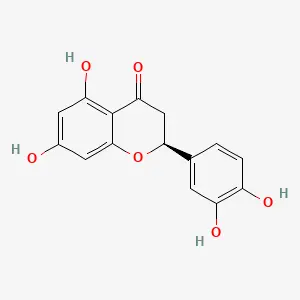
Eriodictyol is a flavanone, a compound in the flavonoid family, like hesperetin and naringenin. In the USDA data, one lemon (58 g) holds 12.4 mg of it. Of the foods ranked, peppermint has the most per 100 g, 30.9 mg.
Lemons and peppermint carry it as eriocitrin, its sugar-bound form. It also occurs in yerba santa, a plant native to the southwestern United States and northern Mexico. Its leaves were once used to mask the bitter taste of medicines.
Here is the part most readers do not know. In taste tests by flavor chemists, eriodictyol and three related flavanones from yerba santa lowered the bitterness of caffeine. They did so without a strong taste of their own.
And eriodictyol hardly shows up on its own in the blood. In people who ate lemon flavanones, it was found only as glucuronide and sulfate conjugates, forms with a chemical group attached.
The evidence is thin, and we say so throughout. We found no human trial of pure eriodictyol. The human studies on this page tested a lemon extract called Eriomin, or tracked what people absorb. Eriomin is described as 70% eriocitrin with some hesperidin and naringin.
The four Eriomin trials come from one Brazilian research group. Most of the rest is lab and animal work.
Health benefits of eriodictyol
The top findings from 15 studies, strongest evidence first
What the stars mean
- Strong. Several randomized trials, pooled in a meta-analysis, point the same way, or regulators (FDA or EFSA) have approved the claim.
- Moderate. Good randomized trials support it, but there are fewer of them, or their results vary.
- Limited. Small, short or single trials, or mixed results. Promising, but it needs confirmation.
Population and lab studies get no stars: they show a link or a mechanism, not proof.
How we rate evidence →- ★Lemon extract lowered blood glucose in prediabetesEriomin, a lemon extract rich in eriocitrin, lowered blood glucose about 5% over 12 weeks in 103 adults with prediabetes. It is a commercial extract, so the result is not eriodictyol alone.
- ★Lower 2-hour glucose when added to metforminIn people with prediabetes on metformin, a supplement (250 mg a day) cut 2-hour glucose by 5% and TNF-alpha, an inflammation marker, by 12%. The trial ran 12 weeks.
- ★Blood eriodictyol appeared only in changed formsAfter people took lemon peel flavanones, eriodictyol showed up in blood only attached to glucuronide or sulfate, found after lab enzymes removed them. The sugar-free form of the flavanones peaked at 1 hour.
- Population studyLinked to less overweight in US youthIn 5,970 US children and teens, high eriodictyol intake went with 0.69 times the odds of overweight or obesity. Citrus flavanones are eaten together, so eriodictyol cannot be separated from them.
- Population studyFlavonoid mix with eriodictyol linked to less asthmaIn 11,743 US adults, a mix of 29 flavonoids, with eriodictyol weighing most, went with lower odds of asthma (0.97 times).
All 15 studies, strongest evidence first
Lemon extract Eriomin lowered blood glucose about 5% in prediabetes
In this double-blind trial, 103 adults with prediabetes (average age 49) got placebo or 200, 400 or 800 mg of extract a day, by chance. Eriomin is a lemon extract rich in eriocitrin, and the trial ran 12 weeks; all three doses worked about alike. Insulin resistance fell 7%, HbA1c 2%, CRP 12%, IL-6 13% and TNF-alpha 11%, while GLP-1 rose 15%. The authors report that 24% of patients no longer had prediabetes, and the abstract gives no placebo rate. This is a commercial extract, so the result is not eriodictyol or eriocitrin alone.
200 mg Eriomin lowered glucose 5% and raised GLP-1 17%
This double-blind crossover trial had 30 people with blood glucose above 110 mg/dL. They spent 12 weeks on each treatment, with a 2-week gap. Insulin resistance fell 11%, glucagon 13%, IL-6 14% and TNF-alpha 20%, while triglycerides rose 13% during the placebo period. Other markers did not change. It is the same research group as the trial above, and the title names eriocitrin as the extract’s active ingredient.
Eriomin changed gut bacteria in people with prediabetes
This double-blind trial compared 200 mg a day of Eriomin (70% eriocitrin, 5% hesperidin and 4% naringin) with placebo for 12 weeks. Blood glucose fell 6% and GLP-1 rose 22%. Stool sequencing showed less of the Lachnospiraceae family and more Ruminococcaceae. The authors link these shifts to lower glucose and higher GLP-1, but the link is a correlation. The abstract does not give the number of participants, and the paper says the maker, Ingredients by Nature, funded the trial and supplied the product.
With metformin, a citrus supplement kept GLP-1 from falling
People with prediabetes took metformin plus 250 mg a day of the supplement, or metformin plus placebo, for 12 weeks, double-blind. Active GLP-1 was preserved while it fell on placebo, and 2-hour glucose fell 5%. TNF-alpha fell 12% and systolic blood pressure 4%, and body weight, fat mass and BMI fell slightly. The abstract does not list the supplement’s contents. The paper names it as Eriomin, and says the maker, Ingredients by Nature, funded the trial and supplied the product.
After lemon extract, flavanone metabolites peaked earlier and higher than after orange
In this randomized crossover study, 16 people took an eriocitrin-rich lemon extract or an orange extract, each with a high-fat, high-sugar meal. Total metabolites peaked at 6.0 h after the lemon extract and 8.0 h after the orange extract. 17 conjugated metabolites were found, and no oxidative, inflammatory or metabolic marker changed clearly. The authors report that hesperetin and eriodictyol can convert into one another in people. The abstract gives no dose.
Blood eriodictyol appeared only in conjugated forms
People took lemon peel flavanone glycosides (rich in eriocitrin) or the same flavanones without sugar (rich in eriodictyol), with water. Plasma was followed for 4 hours. Eriodictyol, homoeriodictyol and hesperetin were detected only after enzymes removed attached glucuronide and sulfate groups. The sugar-free form peaked at 1 hour and gave a larger total exposure than the sugar-bound form. Flavonoid-free lemon juice lowered exposure to the sugar-bound form. 40% alcohol brought the sugar-free peak to 0.5 hours, and the abstract does not give the number of volunteers.
In taste tests, eriodictyol lowered the bitterness of caffeine
These sensory studies tested four flavanones from yerba santa: homoeriodictyol, its sodium salt, sterubin and eriodictyol. They lowered the bitterness of caffeine without a strong flavor of their own. The paper then focuses on the homoeriodictyol sodium salt, which masked 10% to 40% of the bitterness of several bitter compounds. The abstract gives no separate figure for eriodictyol and no panel size. The authors work for Symrise, a flavor and fragrance maker.
In US youth, high eriodictyol intake linked to less overweight
This cross-sectional analysis (a snapshot at a single time) covered 5,970 children and teens in the NHANES survey, with intake from 24-hour food recalls. High eriodictyol intake had 0.69 times the odds of overweight or obesity, and 0.67 for central obesity. Hesperetin and naringenin gave similar numbers. Citrus flavanones are eaten together, so this cannot separate eriodictyol from them, and a survey cannot show cause.
In adults with diabetes, eriodictyol weighed most in a mood-linked flavonoid mix
This cross-sectional NHANES analysis covered 1,993 US adults with diabetes. Moderate total flavonoid intake (56.07 to 207.12 mg a day) went with fewer depressive symptoms, in a U-shaped pattern. The third quartile had 0.635 times the odds. In a weighted-mix model, eriodictyol contributed 30.83% and naringenin 22.17%; a weight shows what drives a combined score, not a benefit of eriodictyol alone.
Eriodictyol weighed most in a flavonoid mix linked to less asthma
This cross-sectional NHANES analysis of 11,743 US adults used food recalls and a mixture model for 29 flavonoids. Eriodictyol had the largest weight (32.13%), and the mix went with lower odds of asthma (0.97 times). In men, higher total flavonoid intake went with lower odds of chronic bronchitis (0.55) and asthma (0.72). The authors say eriodictyol may have effects on the lungs, which a survey of this kind cannot show.
In 10,162 US adults, eriodictyol had a nonlinear link with sleep length
Cross-sectional NHANES analysis of 29 flavonoids from two 24-hour food recalls. The main findings were for isorhamnetin and luteolin, which went with lower odds of sleep disorders. For eriodictyol the abstract says only that the link with sleep duration was notable and nonlinear, and gives no figures. A survey like this cannot show cause.
In human skin cells, eriodictyol prevented cell death from hydrogen peroxide
In this lab study of human dermal fibroblasts (skin cells), treating the cells with eriodictyol first prevented necrotic death. It kept glutathione up and lowered signs of oxidative stress. Catalase and glutathione peroxidase 1 rose through the Nrf2 control switch. These are cells in a dish, not people.
Eriodictyol blocked the pain receptor TRPV1 and eased pain in animals
In this lab and animal study, eriodictyol displaced a radioactive TRPV1 ligand at 47 nM and blocked capsaicin-driven calcium inflow at 44 nM. By mouth it reduced pain behavior in the capsaicin test and in an inflammation model. It did not change body temperature or movement. Drugs that block TRPV1 have been held back by overheating, which the authors say was not seen here.
In diabetic rats, eriodictyol lowered retinal inflammation markers
This lab study used rats with streptozotocin-induced diabetes, given 0.1 to 10 mg/kg for 10 days. Retinal TNF-alpha, ICAM-1, VEGF and eNOS fell with the dose, and plasma lipid peroxidation fell. The blood-retinal barrier held up better. The treatment was short, and the rats were not people.
In diabetic rats, eriodictyol protected the kidneys
This lab study used rats with streptozotocin-induced diabetes, 8 per group, given 20 mg/kg by mouth. Eriodictyol limited damage to kidney filters and tubes and lowered kidney inflammation markers. It switched on Nrf2 and raised the protective molecules SOD, glutathione, HO-1 and catalase in the kidneys. Fasting glucose and insulin did not change, while cholesterol, triglycerides and LDL fell.
Foods high in eriodictyol
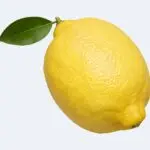
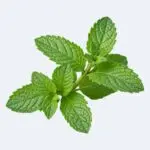
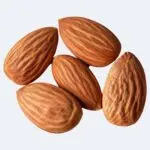
Lemons and peppermint lead the USDA data. One lemon (58 g) gives 12.4 mg of eriodictyol, or 21.4 mg per 100 g. Peppermint has more per 100 g, 30.9 mg, but a 2 tbsp serving (3.2 g) gives only 0.99 mg. Almonds hold 0.25 mg per 100 g.
USDA reports eriodictyol itself, the sugar-free part. Lemons and peppermint carry it as eriocitrin. Eriocitrin is a major flavonoid in lemons and the main polyphenol in a peppermint leaf extract.
A 2017 analysis of five lemon cultivars found more phenolic compounds in peels and whole fruit than in other fruit parts. That study counted phenolics in general and found hesperidin to be the main flavanone.
Trial doses are far above a normal serving. An Eriomin dose of 200 mg that is 70% eriocitrin holds about 140 mg of eriocitrin. Eriocitrin weighs about 2.07 times as much as eriodictyol (molar masses 596.5 and 288.3). So that is about 68 mg of eriodictyol, roughly 5 or 6 lemons by the USDA figure.
This is a rough guide, since fruit and extracts vary. The ranking below is from USDA data.
Per serving. No daily amount is set, so bars compare each food with the top food.
Per 100 g. No daily amount is set, so bars compare each food with the top food.
Per 100 kcal: the same calories of each food, for a fair comparison. Bars compare each food with the top food.
Food labels have no Daily Value or Reference Intake for eriodictyol, so the % compares each food with the top food.
- 1.
- 2.
- 3.


- 1.
- 2.
- 3.
- 1.
- 2.
- 3.
Sources
- Bhagwat S, Haytowitz DB. USDA Database for the Flavonoid Content of Selected Foods, Release 3.3. U.S. Department of Agriculture, Agricultural Research Service. 2018.
- Xi W, Lu J, Qun J, Jiao B. Characterization of phenolic profile and antioxidant capacity of different fruit part from lemon (Citrus limon Burm.) cultivars. J Food Sci Technol. 2017.
- Fecka I, Bednarska K, Kowalczyk A. In vitro antiglycation and methylglyoxal trapping effect of peppermint leaf (Mentha × piperita L.) and its polyphenols. Molecules. 2023.
- Ramos FMM, Ribeiro CB, Cesar TB, et al. Lemon flavonoids nutraceutical (Eriomin) attenuates prediabetes intestinal dysbiosis: a double-blind randomized controlled trial. Food Sci Nutr. 2023.
- Eriocitrin. Wikipedia. Formula C27H32O15, molar mass about 596.54 g/mol; lemons and other citrus.
- Eriodictyol. Wikipedia. Molar mass about 288.25 g/mol.
How eriodictyol works
Most of what we know about how eriodictyol works comes from test tubes, cells and animals, and from a few absorption studies in people. Three ideas keep coming up.
It switches on the cell’s own defenses, and it blocks a pain-sensing channel. The body also changes it before it acts. Here is each one, and what has been seen in people.
It switches on the cell’s own defenses
Nrf2 is a control protein that tells cells to make their own protective enzymes. In human skin cells exposed to hydrogen peroxide, eriodictyol kept glutathione up. By switching on Nrf2, it raised the enzymes catalase and glutathione peroxidase 1, and the authors also describe a direct clean-up of reactive oxygen.
A screen of dietary flavonoids on human retinal cells found eriodictyol among those that protected the cells from oxidative death. Many of the effective flavonoids switched on Nrf2. In diabetic rats, eriodictyol raised Nrf2 in the kidneys.
Two routes described in cultured human skin cells exposed to hydrogen peroxide. Nothing like this has been shown in people.
Not every test points to eriodictyol. In extracts of 14 yerba santa types, the protection of nerve cells tracked another flavanone, sterubin, and not eriodictyol. And these dish and rat studies do not show that the amounts in food do the same in people.
It blocks a pain-sensing channel
TRPV1 is a channel on pain-sensing nerves that capsaicin, the hot compound in chili peppers, switches on. In lab tests, eriodictyol behaved as a TRPV1 blocker. It displaced a radioactive TRPV1 ligand at 47 nM and cut capsaicin-driven calcium inflow at 44 nM.
In animals it eased pain behavior without changing body temperature, a problem with some TRPV1-blocking drugs. We found no human study of eriodictyol and pain.
Drawn to scale. “Binding” is the displacement of a radioactive TRPV1 ligand; “Calcium inflow” is the block of capsaicin-driven calcium entry into cells. The paper gives ranges of 21 to 119 nM and 16 to 125 nM.
Gut bacteria and the body change it first
In lemons, eriodictyol comes as eriocitrin, eriodictyol with a sugar attached, and gut bacteria handle it first. In mice fed eriocitrin, colon contents held eriocitrin and six metabolites, including eriodictyol, homoeriodictyol and hesperetin.
In people who took lemon flavanones, free eriodictyol was not found in blood up to 4 hours after the dose. It appeared only after enzymes removed attached glucuronide and sulfate groups.
Simplified path of eriocitrin in the body. It shows what happens to the molecule, not a health effect. The gut step and the relatives come from a mouse study, the blood forms from a study in people.
This slow route has a cost. In 16 people, total flavanone metabolites peaked at 6.0 h after an eriocitrin-rich lemon extract and 8.0 h after an orange extract. The same study reports that hesperetin and eriodictyol can convert into each other in people.
Because eriodictyol turns into other forms on the way, results from a related flavanone such as hesperetin or naringenin cannot be read across.
What has been seen in people
The human trials measure blood sugar and inflammation markers, not these mechanisms. In the four Eriomin trials, blood glucose fell about 5% to 6%. GLP-1 rose 15% to 22% in three of them, and TNF-alpha fell 11% to 20% in three of them.
That fits the gut and inflammation story, but none of the trials tested Nrf2 or pain receptors in people. The effects are small, the product is a mixture, and the trials come from one research group. All of these trials are among the study cards above.
Sources
- Buranasudja V, Muangnoi C, Sanookpan K, et al. Eriodictyol attenuates H(2)O(2)-induced oxidative damage in human dermal fibroblasts through enhanced capacity of antioxidant machinery. Nutrients. 2022.
- Hanneken A, Lin FF, Johnson J, Maher P. Flavonoids protect human retinal pigment epithelial cells from oxidative-stress-induced death. Invest Ophthalmol Vis Sci. 2006.
- AlTamimi JZ, AlFaris NA, Alshammari GM, et al. Protective effect of eriodictyol against hyperglycemia-induced diabetic nephropathy in rats entails antioxidant and anti-inflammatory effects mediated by activating Nrf2. Saudi Pharm J. 2023.
- Maher P, Fischer W, Liang Z, et al. The value of herbarium collections to the discovery of novel treatments for Alzheimer’s disease, a case made with the genus Eriodictyon. Front Pharmacol. 2020.
- Rossato MF, Trevisan G, Walker CI, et al. Eriodictyol: a flavonoid antagonist of the TRPV1 receptor with antioxidant activity. Biochem Pharmacol. 2011.
- Meng X, Wu H, Xiong J, et al. Metabolism of eriocitrin in the gut and its regulation on gut microbiota in mice. Front Microbiol. 2022.
- Miyake Y, Sakurai C, Usuda M, et al. Difference in plasma metabolite concentration after ingestion of lemon flavonoids and their aglycones in humans. J Nutr Sci Vitaminol (Tokyo). 2006.
- Ávila-Gálvez MÁ, Giménez-Bastida JA, González-Sarrías A, Espín JC. New insights into the metabolism of the flavanones eriocitrin and hesperidin: a comparative human pharmacokinetic study. Antioxidants (Basel). 2021.
Is eriodictyol safe? Supplements, dose and interactions
Eating lemons and other foods that contain eriodictyol is not known to cause problems. None of the sources below sets a daily need or an upper level for it.
JECFA, the expert committee on food additives of the FAO and WHO, evaluated eriodictyol as a flavoring agent in 2012. It found no safety concern at current levels of intake. In the US, yerba santa (Eriodictyon californicum) is on the FDA’s list of natural flavoring substances (21 CFR 172.510). FEMA lists its fluid extract as GRAS (generally recognized as safe) reference 3118, and these cover flavoring amounts, not supplement doses.
- Trial doses. The Eriomin trials gave 200 to 800 mg a day for 12 weeks, and one gave 250 mg a day of the same supplement. None was designed mainly to test safety, and we found no report of use beyond 12 weeks.
- Diabetes medicines. The trials lowered blood glucose by about 5%, and one was in people taking metformin. We found no interaction study or case report. The concern is theoretical, but people on glucose-lowering drugs should ask their clinic before adding an extract.
- Pregnancy, breastfeeding and children. We found no safety studies of eriodictyol or eriocitrin supplements in these groups, so ask your doctor.
How to get more eriodictyol
- Best food. Lemons, at 21.4 mg per 100 g, or 12.4 mg in one fruit. Using the peel as well as the juice may add more phenolics, according to one analysis of lemon parts. But it did not measure eriodictyol.
- Peppermint is strong per 100 g but weak per serving. It tops the USDA list at 30.9 mg per 100 g, but 2 tbsp (3.2 g) gives 0.99 mg.
- Expect a slow route. After a lemon extract, flavanone metabolites peaked at 6.0 h on average. When people took lemon flavanones without the sugar, the peak came at 1 hour, and total exposure was higher than with the sugar-bound form.
Sources
- (±)-Eriodictyol, JECFA number 2172, evaluated 2012. WHO/FAO Joint Expert Committee on Food Additives (JECFA) database.
- FEMA GRAS reference 3118: yerba santa fluid extract. Flavor and Extract Manufacturers Association.
- 21 CFR 172.510: natural flavoring substances and natural adjuvants. Code of Federal Regulations, US Food and Drug Administration.
- Ribeiro CB, Ramos FM, Manthey JA, Cesar TB. Effectiveness of Eriomin in managing hyperglycemia and reversal of prediabetes condition: a double-blind, randomized, controlled study. Phytother Res. 2019.
- Cesar TB, Ramos FMM, Ribeiro CB. Nutraceutical eriocitrin (Eriomin) reduces hyperglycemia by increasing glucagon-like peptide 1 and downregulates systemic inflammation: a crossover-randomized clinical trial. J Med Food. 2022.
- Cesar T, Oliveira MR, Sandrim V, et al. Citrus flavonoid supplement enhances glycemic and metabolic control in prediabetic patients on metformin: a randomized controlled trial. Front Nutr. 2025. Funded and supplied by Ingredients by Nature, according to the paper.
- Ramos FMM, Ribeiro CB, Cesar TB, et al. Lemon flavonoids nutraceutical (Eriomin) attenuates prediabetes intestinal dysbiosis: a double-blind randomized controlled trial. Food Sci Nutr. 2023. Funded by Ingredients by Nature, according to the paper.
- Ávila-Gálvez MÁ, Giménez-Bastida JA, González-Sarrías A, Espín JC. New insights into the metabolism of the flavanones eriocitrin and hesperidin: a comparative human pharmacokinetic study. Antioxidants (Basel). 2021.
- Miyake Y, Sakurai C, Usuda M, et al. Difference in plasma metabolite concentration after ingestion of lemon flavonoids and their aglycones in humans. J Nutr Sci Vitaminol (Tokyo). 2006.
- Xi W, Lu J, Qun J, Jiao B. Characterization of phenolic profile and antioxidant capacity of different fruit part from lemon (Citrus limon Burm.) cultivars. J Food Sci Technol. 2017.
History of eriodictyol
Eriodictyol’s story starts with yerba santa, Spanish for “sacred herb.” The plants of the genus Eriodictyon grow in the southwestern United States and northern Mexico. Indigenous peoples have used them for centuries, in particular for respiratory complaints. The genus name comes from Greek roots and refers to the woolly underside of the leaves.
The leaves were also used to mask the bitter taste of medicines. In 2005, chemists at the flavor maker Symrise reported on flavanones from the plant in sensory tests. Eriodictyol, homoeriodictyol, its sodium salt and sterubin lowered the bitterness of caffeine.
The sodium salt of homoeriodictyol became the lead compound, with 10% to 40% masking across bitter molecules. In 2012 JECFA evaluated eriodictyol as a flavoring agent.
The lemon side of the story is newer. Eriocitrin was tested in people as the main part of Eriomin, a lemon flavonoid extract, in a 2019 trial in prediabetes. In 2021 a Spanish team reported that a lemon extract gave more flavanone metabolites in blood than an orange extract.
Sources
- Wang M, Zhao J, Avula B, et al. Chemical characterization and quantitative determination of flavonoids and phenolic acids in yerba santa (Eriodictyon spp.) using UHPLC/DAD/Q-ToF. J Pharm Biomed Anal. 2023.
- Maher P, Fischer W, Liang Z, et al. The value of herbarium collections to the discovery of novel treatments for Alzheimer’s disease, a case made with the genus Eriodictyon. Front Pharmacol. 2020.
- Fletcher JN, Kinghorn AD, Slack JP, et al. In vitro evaluation of flavonoids from Eriodictyon californicum for antagonist activity against the bitterness receptor hTAS2R31. J Agric Food Chem. 2011.
- Ley JP, Krammer G, Reinders G, Gatfield IL, Bertram HJ. Evaluation of bitter masking flavanones from Herba Santa (Eriodictyon californicum). J Agric Food Chem. 2005.
- (±)-Eriodictyol, JECFA number 2172. WHO/FAO Joint Expert Committee on Food Additives.
- Eriodictyon. Wikipedia.
- Eriodictyol. Wikipedia.
Frequently asked questions about eriodictyol
What does eriodictyol do for the body?
The best-supported finding is small and comes from a lemon extract, not pure eriodictyol. In four trials of Eriomin, a lemon extract that is about 70% eriocitrin, blood glucose fell about 5% to 6% over 12 weeks. The trials were in people with prediabetes or raised blood sugar. The effects on pain, skin and kidneys come from cells and animals, and no finding on this page reaches moderate or strong evidence.
Which foods are high in eriodictyol?
Lemons and peppermint lead the USDA data. A lemon (58 g) gives 12.4 mg. Peppermint has 30.9 mg per 100 g, but a 2 tbsp serving (3.2 g) gives only 0.99 mg. Almonds have 0.25 mg per 100 g. In one analysis, lemon peels and whole fruit were richer in phenolic compounds than other parts, but it did not measure eriodictyol.
Is eriodictyol the same as eriocitrin?
No. Eriocitrin is eriodictyol with a sugar attached, and it is the form found in lemons and peppermint. Gut bacteria break it down first. In mice, eriodictyol was one of six metabolites found in the colon after eriocitrin. The human trials on this page used Eriomin, a lemon extract described as 70% eriocitrin, not pure eriodictyol.
How much eriodictyol should you take a day?
No dose is established. The Eriomin trials used 200 to 800 mg a day of the extract for 12 weeks. A 200 mg dose holds about 140 mg of eriocitrin, roughly 68 mg of eriodictyol, or 5 or 6 lemons by the USDA figures. We found no upper level set for eriodictyol, so talk to a clinician before using an extract, especially if you take diabetes medicine.
Does eriodictyol have side effects?
We found no report of harm from food amounts, and JECFA found no safety concern for eriodictyol as a flavoring agent in 2012. The supplement trials ran 12 weeks and were not designed mainly to test safety. Because they lowered blood glucose by about 5%, people on glucose-lowering drugs should ask their clinic first. We found no safety studies in pregnancy or breastfeeding.
Does eriodictyol or lemon extract lower blood sugar?
Slightly, in one research group’s trials. Blood glucose fell 5% to 6% on Eriomin, and insulin resistance fell 7% in one trial and 11% in another. In the trial with metformin, 2-hour glucose fell 5%. The extract is a mixture, the maker funded the two later trials, and we found no trial by another group.
What is the difference between eriodictyol, hesperetin and naringenin?
All three are citrus flavanones with separate entries in the USDA data. Each has its own page with its own studies: see hesperetin and naringenin. One human study reports that the body can convert hesperetin and eriodictyol into each other. But we do not carry results across from one to another.
Can eriodictyol block bitter taste?
In sensory tests it lowered the bitterness of caffeine without a strong flavor of its own. The best-studied of the yerba santa flavanones, the sodium salt of homoeriodictyol, masked 10% to 40% of the bitterness of several compounds. The abstract gives no figure for eriodictyol, and the authors work for Symrise, a flavor maker.