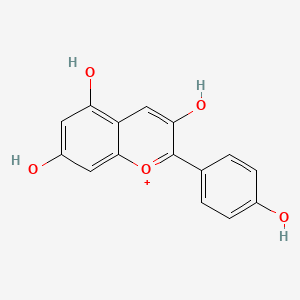
Pelargonidin is an anthocyanidin, an orange-red pigment in the flavonoid family. In strawberries it sits mostly in sugar-bound form, and pelargonidin-3-glucoside is a major strawberry anthocyanin. Red radish holds acylated anthocyanins, pigments with extra acid groups attached. Six of the 12 isolated in one study were pelargonidin-based.
Pelargonidin is also the main anthocyanidin in the red-fleshed potato cultivars that were tested. In USDA data, radishes hold 63.1 mg of pelargonidin per 100 g and strawberries 24.9 mg. The next food, raspberries, holds 0.98 mg.
Most readers do not know how hard orange is for a plant to make. Pelargonidin is what a plant makes when it does not add an extra hydroxyl group to the side ring, the group that cyanidin carries.
In radish roots, a deep-red line had a weakly active version of the enzyme that adds that group, and it piled up pelargonidin. Lines with a strong version made cyanidin and looked purple.
Petunias normally make red and blue pigments, not orange. Scientists once added a maize gene to petunias so they could make orange pelargonidin pigments. In spring 2017, orange petunia varieties turned out to be undeclared genetically engineered plants carrying that gene, and a recall caused losses worldwide.
Almost every human study of pelargonidin is really a study of strawberries, which also hold vitamin C, ellagitannins and other polyphenols. We found no trial of purified pelargonidin in people. So each card below names the strawberry product and the dose, and none credits pelargonidin alone. For the broad evidence on anthocyanins as a group, see our anthocyanins page.
Health benefits of pelargonidin
The top findings from 28 studies, strongest evidence first
What the stars mean
- Strong. Several randomized trials, pooled in a meta-analysis, point the same way, or regulators (FDA or EFSA) have approved the claim.
- Moderate. Good randomized trials support it, but there are fewer of them, or their results vary.
- Limited. Small, short or single trials, or mixed results. Promising, but it needs confirmation.
Population and lab studies get no stars: they show a link or a mechanism, not proof.
How we rate evidence →- ★★Lower CRP, an inflammation marker, with strawberriesA pooled analysis of 11 strawberry trials found CRP, a blood marker of inflammation, fell by 0.63 mg/L. Another, of 14 trials of strawberry supplements, found it fell by 0.47 mg/L.
- ★★Mixed results for cholesterol with strawberriesPooled trials differed: total cholesterol fell 6.49 mg/dL in one analysis, while another found no overall change in blood fats. Four weeks of strawberry powder did not lower LDL in 34 adults, but 50 g a day for 8 weeks did in metabolic syndrome.
- ★Lower fasting insulin and glucose in prediabetesIn 25 adults with prediabetes, 32 g of freeze-dried strawberries a day for 12 weeks lowered fasting insulin (6.9 µIU/mL) and fasting glucose (8.9 mg/dL). HbA1c, average blood sugar, fell 0.2%; the comparison period had no placebo.
- ★Better navigation and word recognition in older adultsIn 37 adults aged 60 to 75, 24 g of strawberry powder a day for 90 days shortened a navigation task and improved word recognition. Gait and balance did not improve.
- ★Mixed effect on insulin after a rich mealIn 21 adults with insulin resistance, 40 g of strawberry powder with a high-carbohydrate, high-fat meal lowered insulin over 6 hours. In 30 adults with overweight or obesity, 40 g with a high-fat meal changed no outcome, insulin included.
All 28 studies, strongest evidence first
Strawberries lowered CRP by 0.63 mg/L but not blood fats overall
This meta-analysis pooled 11 randomized trials of strawberries: six for blood pressure, seven for lipids, seven for fasting glucose and six for CRP. Overall, blood pressure, blood fats and fasting glucose did not change. But in people whose total cholesterol started above 5 mmol/L, it fell 0.52 mmol/L. LDL fell 0.31 mmol/L when it started above 3 mmol/L, and trials agreed well, with no sign of publication bias.
Strawberries cut oxidized LDL, CRP and cholesterol but raised glucose slightly
This meta-analysis pooled 14 clinical trials (20 groups) of strawberry supplements. Oxidized LDL fell 5.8 ng/mL, CRP 0.47 mg/L and total cholesterol 6.49 mg/dL. Diastolic pressure fell 2.22 mmHg, but fasting glucose rose slightly, by 2.08 mg/dL. Other risk factors did not change, and the authors call for larger, longer trials.
Pelargonidin glucuronide peaked at 274 nmol/L after 200 g of strawberries
Healthy volunteers (the abstract gives no number) ate 200 g of strawberries holding 222 µmol of pelargonidin-3-glucoside, with or without cream. The peak came at 1.1 hours, or 2.4 hours with cream, and the peak level did not clearly differ. About 1% of the dose reached urine, mostly as the glucuronide, and cream did not change the 24-hour total.
Four weeks of strawberry powder did not lower LDL cholesterol
In this randomized double-blind crossover trial, 34 adults with moderately high cholesterol (average LDL 133 mg/dL) took part. They drank 2 × 25 g of freeze-dried strawberry powder a day, or a matched control powder, for 4 weeks each. After 4 weeks, LDL, total cholesterol, triglycerides, glucose, insulin, CRP, flow-mediated dilation and blood pressure did not differ. After one 50 g dose, blood vessel widening was 1.5% higher at 1 hour and systolic pressure 3.1 mmHg lower at 2 hours.
Strawberries lowered fasting insulin, glucose and HbA1c in prediabetes
In this single-blinded crossover trial, 25 adults with prediabetes ate 32 g of freeze-dried strawberries a day for 12 weeks. The comparison was a 12-week period with no strawberries and no placebo powder. Adjusted for other factors, insulin fell 6.9 µIU/mL, fasting glucose 8.9 mg/dL, HbA1c 0.2% and total cholesterol 7.0 mg/dL. Weight, CRP and IL-6 also fell, and the dose is about 2.5 servings of fresh strawberries.
Strawberry powder sped processing in healthy older adults; memory improved on control
In this randomized, double-blind, placebo-controlled crossover trial, 35 healthy adults aged 72 on average took 26 g of strawberry powder a day for 8 weeks. The dose equals about 2 cups of fresh strawberries, and episodic memory improved on the control powder instead. Systolic pressure fell (p = 0.044), triglycerides rose in the control phase but not on strawberries, and antioxidant capacity rose. The authors declare no conflicts of interest.
Strawberry powder improved navigation and word recognition in older adults
In this randomized, double-blind, placebo-controlled trial, 37 adults aged 60 to 75 (22 men, 15 women) took part. They took 24 g of strawberry powder a day for 90 days, equal to two cups of fresh strawberries. Against placebo, the time taken in a virtual navigation task was shorter and word recognition on the California Verbal Learning test rose. Gait and balance did not improve, and the authors say a larger sample and longer follow-up are needed.
13 g a day cut LDL 4.9% versus 40 g, not placebo
In this randomized, double-blind crossover trial, 40 adults with overweight or obesity (average LDL 140 mg/dL) took part. They took 0, 13 or 40 g of freeze-dried powder a day, 4 weeks each. Total cholesterol was 2.8% lower on 13 g than on placebo, while vascular function, inflammation and HDL efflux did not change. 13 g is about one serving of fresh strawberries and 40 g about three.
Strawberries lowered total and LDL cholesterol in metabolic syndrome
In this randomized trial, 27 people with metabolic syndrome (25 women) took 50 g of freeze-dried strawberries a day for 8 weeks. A control group drank water, and the dose is about 3 cups of fresh strawberries. Total cholesterol fell from 5.8 to 5.2 mmol/L and LDL from 3.5 to 3.1 mmol/L. VCAM-1, an artery adhesion marker, fell too, while glucose, triglycerides, HDL, blood pressure and waist size did not change.
Strawberry powder with a fatty meal lowered the insulin response
In this randomized, single-blind crossover trial, 21 adults with insulin resistance got 0, 10, 20 or 40 g of freeze-dried strawberry powder (fiber matched). They had it with a high-carbohydrate, high-fat meal. Insulin over 6 hours fell after 40 g, glucose did not differ, and oxidized LDL fell after 20 g. Higher pelargonidin glucuronide went with lower insulin after 20 and 40 g, which shows a link, not a cause.
A strawberry drink blunted the after-meal rise in CRP and IL-6
In this crossover trial, 24 overweight adults ate a high-carbohydrate, moderate-fat meal with a strawberry or placebo drink. Pelargonidin sulfate and pelargonidin-3-glucoside rose in blood on the strawberry drink. The insulin response after the meal was lower, and the abstract does not give the dose.
454 g of strawberries a day lowered oxidative damage to LDL
28 people with high blood fats had followed a cholesterol-lowering diet for about 2.5 years: soy, viscous fiber, plant sterols and nuts. In this randomized crossover trial, they added strawberries or oat bran bread for 1 month each, with a 2-week washout. The LDL damage marker TBARS fell more with strawberries (p = 0.014). LDL cholesterol stayed about 13% below the starting value on both treatments.
Strawberry powder did not change vascular function, triglycerides, glucose or insulin
In this randomized crossover trial, 30 healthy adults with overweight or obesity (17 men, 13 women) took part. They ate a high-fat meal with or without 40 g of strawberry powder, about a pound of fresh strawberries. Blood was drawn for up to 4 hours, and no outcome differed between the meals.
After 200 g of strawberries, 1.8% of the pelargonidin glucoside reached urine
Six healthy volunteers (three women, three men) ate a meal with strawberries providing 179 µmol of pelargonidin-3-glucoside. Urine held five metabolites: three glucuronides, one sulfate and pelargonidin itself. More than 80% of the excretion was one monoglucuronide, and more than two-thirds was out within 4 hours.
After 300 g of strawberries, about 0.9% of the pigment reached urine
Thirteen healthy volunteers ate 300 g of fresh or stored strawberries on separate days. Plasma held no intact anthocyanins, but it held 4-hydroxybenzoic acid, equal to 56 and 54% of the pelargonidin glucoside eaten. The authors suggest this acid is a major human breakdown product. Urine held pelargonidin glucuronide, glucoside and aglycone (the sugar-free form), peaking within 2 hours.
Urinary strawberry anthocyanins rose in step with the dose, with no ceiling
In this crossover study, 12 healthy adults ate 100, 200 and 400 g of strawberry puree (15, 30 and 60 µmol of anthocyanin). Pelargonidin-3-glucoside was the main anthocyanin, and it and three monoglucuronides appeared in urine. One monoglucuronide was 10 times higher than the other two.
A strawberry drink 2 hours before a meal raised blood levels most
In this randomized trial, 14 overweight adults each had a strawberry drink 2 hours before breakfast, with it, or 2 hours after. Control drinks filled the other times, and blood was drawn hourly for 10 hours. Peak level, total exposure and bioavailability of pelargonidin glucuronide were greater when the drink came before the meal (p < 0.05). It measured blood levels, not health outcomes.
Strawberries blended into milk lowered peak blood levels of pelargonidin compounds
Nine healthy volunteers drank a strawberry beverage made with milk or water with a standard meal, and four repeated this without a meal. Milk lowered the peak levels of pelargonidin-3-glucoside, pelargonidin glucuronide and pelargonidin-3-rutinoside. With a meal, relative bioavailability (the share absorbed) did not change, but without a meal it fell by about half. The numbers are very small.
After 90 days of strawberry powder, pelargonidin glucuronide stayed in fasting blood
In this randomized trial, 19 healthy older adults took 24 g of freeze-dried strawberry (about 2 cups of fresh) or a control powder every day. Of 21 polyphenol metabolites measured, pelargonidin glucuronide was highest among the anthocyanins, at 85.7 nmol/L two hours after a strawberry drink. The authors link the fasting levels to recycling or to gut bacteria. The dose and length match the Miller trial above and several authors are shared, so it may be the same trial.
Older adults eating most pelargonidin had lower Alzheimer’s dementia risk
The Rush Memory and Aging Project followed 925 dementia-free adults aged 58 to 98 for 6.7 years on average, and 245 developed Alzheimer’s dementia. The top quarter of pelargonidin intake, from a food questionnaire, had 0.63 times the risk of the bottom quarter. Higher strawberry intake (0.76) and top-quarter intakes of vitamin C (0.64), total anthocyanidins (0.69) and total flavonoids (0.67) showed similar links. Observational work cannot show cause, strawberries bring other compounds, and the authors report no competing interests.
In 575 brains, more pelargonidin went with less amyloid and fewer tangles
This used the same Rush cohort, in participants who had died (average age 91) and whose brains were studied. Top versus bottom quarter of pelargonidin intake went with less amyloid-beta load (p = 0.038) and, borderline, fewer tau tangles (p = 0.051). The links were mainly in people without the APOE ε4 gene, a known Alzheimer’s risk gene, and berry intake overall was not linked. A food questionnaire again measured intake.
Pelargonidin-3-glucoside calmed inflammation in an animal model
Strawberry extract and pelargonidin-3-glucoside reduced white-cell migration, fluid leakage and inflammatory mediators in an animal model. In the animal model and in cell tests, the compound blocked IκB-α activation and JNK phosphorylation. In cell tests it also lowered NF-κB and AP-1 activity. The abstract does not give the species or doses.
Pelargonidin-3-glucoside and its breakdown products had only modest anti-inflammatory effects
Test-tube experiments used human whole blood with up to 5 µmol/L of the compound and three of its breakdown products. Pelargonidin-3-glucoside and phloroglucinaldehyde raised the anti-inflammatory signal IL-10 at 0.08 µmol/L, the lowest dose. TNF-α, IL-1β, IL-6, IL-8, the engulfing of bacteria and the oxidative burst did not change. It is a contrast to the animal result above.
Strawberry pelargonidin helped insulin cross the gut wall in mice
This was in mice, not people. The team tested more than 100 fruits, vegetables and herbs, and strawberry and its pigment raised intestinal permeability (let more pass through the gut wall). A capsule of pelargonidin with a 1 U/kg dose of insulin cut glucose for over 4 hours, and the effect reversed within 2 hours. A month of daily dosing caused no detectable side effects, and two authors are inventors on related patent applications.
Pelargonidin reduced stroke damage in rats and raised defense proteins
Rats with a blocked brain artery, a stroke model, had a smaller area of damage on pelargonidin. They also had better neurological scores and water-maze results, and the defense proteins Nrf2 and HO-1 rose. TNF-α, IL-6 and MDA fell while IL-10 and SOD rose. The abstract does not give the dose.
Pelargonidin improved memory in rats given amyloid-beta
Rats got amyloid β25-35 in the hippocampus, an Alzheimer’s model, and 10 mg/kg of pelargonidin by mouth. Water-maze escape time and distance improved, and MDA, a marker of oxidative stress, fell. Catalase and acetylcholinesterase activity improved, and the glial marker GFAP was lower. Human relevance is unknown.
Pelargonidin protected cartilage in mice with osteoarthritis by suppressing NF-κB
Mice with surgically induced osteoarthritis and cultured mouse cartilage cells. At 10, 20 and 40 µM it lowered IL-6, TNF-α, COX-2 and iNOS in the cells. It also blocked p65 from entering the nucleus. After 8 weeks of treatment the mice had lower cartilage damage scores and less MMP13.
Red radish extract both scavenged radicals and damaged DNA in test tubes
The extract’s main compounds were acylated pelargonidin derivatives. It scavenged ABTS radicals (IC50 1.74 mM), but with copper it promoted cleavage of plasmid DNA. It also slowed the growth of a cancer cell line (Bel-7402) at lower concentrations. The authors say the effect depends on the reaction conditions.
Foods high in pelargonidin
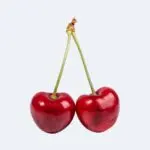
Radishes lead the USDA ranking with 63.1 mg of pelargonidin per 100 g, and a cup of radishes (116 g) holds 73.2 mg. Strawberries come second at 24.9 mg per 100 g, or 37.8 mg in a cup (152 g). Every other food in the ranking is far behind: raspberries have 0.98 mg and cherries 0.27 mg per 100 g. In one study, 12 acylated anthocyanins were isolated from red radish, and six were identified as pelargonidin-based.
Red-fleshed potatoes are a source that the USDA ranking does not show. In four colored potato cultivars grown in the field, pelargonidin was the main anthocyanidin in the red-fleshed ones. Fully mature tubers held 10 to 39 mg of anthocyanidins per 100 g of fresh weight. That figure is the total of the anthocyanidins measured, not pelargonidin alone.
The authors of two trials above equate 24 to 26 g of strawberry powder with 2 cups of fresh fruit. By the USDA figure, that holds about 76 mg of pelargonidin.
Per serving. No daily amount is set, so bars compare each food with the top food.
Per 100 g. No daily amount is set, so bars compare each food with the top food.
Per 100 kcal: the same calories of each food, for a fair comparison. Bars compare each food with the top food.
Food labels have no Daily Value or Reference Intake for pelargonidin, so the % compares each food with the top food.
- 1.
- 2.
- 3.
- 4.
- 5.
- 6.
- 7.
- 8.


- 1.
- 2.
- 3.
- 4.
- 5.
- 6.
- 7.
- 8.
- 1.
- 2.
- 3.
- 4.
- 5.
- 6.
- 7.
- 8.
Sources
- Bhagwat S, Haytowitz DB. USDA Database for the Flavonoid Content of Selected Foods, Release 3.3 (2018). US Department of Agriculture, Agricultural Research Service, Nutrient Data Laboratory.
- Otsuki T, Matsufuji H, Takeda M, Toyoda M, Goda Y. Acylated anthocyanins from red radish (Raphanus sativus L.). Phytochemistry. 2002.
- Lim SH, Kim DH, Lee JY. Molecular mechanism controlling anthocyanin composition and content in radish plants with different root colors. Plant Physiol Biochem. 2023.
- Šulc M, Kotíková Z, Paznocht L, et al. Changes in anthocyanidin levels during the maturation of color-fleshed potato (Solanum tuberosum L.) tubers. Food Chem. 2017.
- Haselmair-Gosch C, Miosic S, Nitarska D, et al. Great cause-small effect: undeclared genetically engineered orange petunias harbor an inefficient dihydroflavonol 4-reductase. Front Plant Sci. 2018.
- Duarte LJ, Chaves VC, Nascimento MVPDS, et al. Molecular mechanism of action of Pelargonidin-3-O-glucoside, the main anthocyanin responsible for the anti-inflammatory effect of strawberry fruits. Food Chem. 2018.
- Xiao D, Sandhu A, Huang Y, et al. The effect of dietary factors on strawberry anthocyanins oral bioavailability. Food Funct. 2017.
How pelargonidin works
Absorption is the one part measured directly in people. The rest of what we know about how pelargonidin works comes from test tubes, cells and animals. Researchers keep coming back to three ideas. The body changes it into other compounds, it turns down inflammation switches, and it may turn up the cell’s own defenses.
A fourth finding, from mice, is that it can loosen the gut lining. Here is each one, and what has been seen in people.
The body turns most of it into other compounds
Only a small part of the pelargonidin glucoside in strawberries shows up in urine in a form that still looks like pelargonidin. In one study 1.8% of the dose did, mostly as a glucuronide. In another, 0.9% did, and no intact anthocyanins turned up in blood. What did turn up was 4-hydroxybenzoic acid, equal to 56 and 54% of the dose.
A review of the field argues that some anthocyanins are absorbed well but then go through extensive first-pass metabolism. That means changes made as blood passes the gut wall and liver, so the blood sees mostly breakdown products.
Drawn to scale, with the full width as 100% of the pelargonidin glucoside eaten. The urine bar shows the upper figure, 1.8%. The numbers come from different studies that measured different things, so they do not add up to one budget.
Some researchers think these breakdown products, not pelargonidin itself, may be behind the effects of strawberries. That idea is unproven. In older adults on strawberry powder for 90 days, pelargonidin glucuronide was still in the blood after fasting, so the compounds can linger.
It turns down inflammation switches
Inflammation is run by switches inside white cells. In an animal model and in cell tests, the anti-inflammatory effect of pelargonidin-3-glucoside involved blocking IκB-α activation and lowering JNK phosphorylation. These are two steps that lead to NF-κB and AP-1 activity.
In mouse cartilage cells, pelargonidin kept the NF-κB subunit p65 out of the nucleus and lowered IL-6 and TNF-α. Not every test agrees. In human blood samples the compound and three of its breakdown products had only modest effects, limited to IL-10 at the lowest dose.
Two control switches inside the cell, as described in animal and cell studies of pelargonidin.
It may turn up the cell’s own defenses
In rats with an experimental stroke, pelargonidin moved the control protein Nrf2 into the cell nucleus and raised HO-1, a protective enzyme. SOD, another protective enzyme, rose too, while MDA, a marker of fat damage, fell. This is a single rat study that did not state the dose in its abstract. Treat it as an idea to test, not a result for people.
It loosened the gut lining in mice
Researchers who screened more than 100 plant foods found that strawberry and its pigment pelargonidin made the intestine more permeable. In mice, a capsule of pelargonidin let insulin pass into the blood, and the effect reversed within 2 hours. It is a drug-delivery idea, not a food effect, and two authors hold related patent applications. It does raise the question of how the pigment behaves in the gut, which has not been tested in people.
What has been seen in people
Absorption is solid: pelargonidin compounds reach the blood within about an hour of eating strawberries. Urinary excretion rises with the dose from 100 to 400 g.
The health effects are small and uneven. Two meta-analyses found CRP lower by 0.63 and 0.47 mg/L, which fits the inflammation findings, but strawberries hold many other compounds. In one trial, pelargonidin glucuronide in blood only tracked lower insulin, without proof of cause. Both are among the study cards above.
Sources
- Fang J. Some anthocyanins could be efficiently absorbed across the gastrointestinal mucosa: extensive presystemic metabolism reduces apparent bioavailability. J Agric Food Chem. 2014.
- Fang J. Bioavailability of anthocyanins. Drug Metab Rev. 2014.
- Felgines C, Talavéra S, Gonthier MP, et al. Strawberry anthocyanins are recovered in urine as glucuro- and sulfoconjugates in humans. J Nutr. 2003.
- Azzini E, Vitaglione P, Intorre F, et al. Bioavailability of strawberry antioxidants in human subjects. Br J Nutr. 2010.
- Duarte LJ, Chaves VC, Nascimento MVPDS, et al. Molecular mechanism of action of Pelargonidin-3-O-glucoside, the main anthocyanin responsible for the anti-inflammatory effect of strawberry fruits. Food Chem. 2018.
- Zeng Z, Li H, Luo C, et al. Pelargonidin ameliorates inflammatory response and cartilage degeneration in osteoarthritis via suppressing the NF-κB pathway. Arch Biochem Biophys. 2023.
- Amini AM, Muzs K, Spencer JP, Yaqoob P. Pelargonidin-3-O-glucoside and its metabolites have modest anti-inflammatory effects in human whole blood cultures. Nutr Res. 2017.
- Fu K, Chen M, Zheng H, et al. Pelargonidin ameliorates MCAO-induced cerebral ischemia/reperfusion injury in rats by the action on the Nrf2/HO-1 pathway. Transl Neurosci. 2021.
- Lamson NG, Fein KC, Gleeson JP, et al. The strawberry-derived permeation enhancer pelargonidin enables oral protein delivery. Proc Natl Acad Sci U S A. 2022. Two authors are inventors on related patent applications.
- Sandhu AK, Miller MG, Thangthaeng N, et al. Metabolic fate of strawberry polyphenols after chronic intake in healthy older adults. Food Funct. 2018.
Is pelargonidin safe? Supplements, dose and interactions
We found no reports of harm from the pelargonidin in strawberries and radishes, and no acceptable daily intake or upper level set for pelargonidin itself. The nearest official view covers anthocyanins as a group, used as the food color E 163.
EFSA, the EU’s food safety agency, re-evaluated anthocyanins in 2013. Its panel found the toxicology data too limited to set a numerical acceptable daily intake. It judged that current use of aqueous (water-based) grape skin and blackcurrant extracts is unlikely to be of safety concern. But it could not extend that to anthocyanins from other sources or made with other solvents.
- Doses in trials. Strawberry trials gave 13 to 50 g of freeze-dried powder a day for 4 weeks to 3 months. One gave 454 g of whole strawberries a day for a month. None of the trial abstracts above reports a safety problem, but the trials were not built to test safety. We found no human trial of purified pelargonidin. Mice given pelargonidin daily for a month had no detectable side effects, in a study whose authors hold patent applications.
- Allergy. Strawberry is one of the Rosaceae fruits that can cause allergy, often linked to pollen-food allergy syndrome. People who react to strawberries should avoid them.
- Concentrated extracts. A 2022 review of animal and other in vivo studies found limited evidence of overt toxicity from anthocyanin-rich extracts. But it could not say what counts as a high dose. In one test-tube study a radish extract rich in acylated pelargonidin also damaged DNA in the presence of copper. What that means for people is unknown.
- Pregnancy and medicines. We found no studies of pelargonidin in pregnancy or breastfeeding and no reports of drug interactions. If you are pregnant or take medicine regularly, ask your doctor before using concentrated extracts.
How to get more pelargonidin
- Best foods. Radishes (63.1 mg per 100 g) and strawberries (24.9 mg per 100 g), by USDA data. A cup of strawberries gives 37.8 mg.
- Keep strawberries fresh or frozen. Making jam lowered the anthocyanins of all five fruits tested, strawberry included. In strawberry pulp stored for up to 6 months, the freezing method did not change anthocyanin levels. A review notes that freezing, compared with dry heat, kept the most strawberry compounds in several studies.
- Mind the milk and the timing. Cream delayed the blood peak of pelargonidin glucuronide from 1.1 to 2.4 hours. Milk lowered peak levels. Levels were higher when the strawberries came 2 hours before a meal than with it. Whether this changes any health effect is untested.
Sources
- Cladis DP, Weaver CM, Ferruzzi MG. (Poly)phenol toxicity in vivo following oral administration: a targeted narrative review of (poly)phenols from green tea, grape, and anthocyanin-rich extracts. Phytother Res. 2022.
- Costa J, Mafra I. Rosaceae food allergy: a review. Crit Rev Food Sci Nutr. 2023.
- Wang LS, Sun XD, Cao Y, et al. Antioxidant and pro-oxidant properties of acylated pelargonidin derivatives extracted from red radish (Raphanus sativus var. niger, Brassicaceae). Food Chem Toxicol. 2010.
- Lamson NG, Fein KC, Gleeson JP, et al. The strawberry-derived permeation enhancer pelargonidin enables oral protein delivery. Proc Natl Acad Sci U S A. 2022. Two authors are inventors on related patent applications.
- Sharing experience: the re-evaluation of colours by the Panel on Food Additives and Nutrient Sources added to Food (slides summarizing EFSA’s 2013 opinion on anthocyanins, E 163; EFSA J. 2013;11(4):3145). Gott D, EFSA stakeholder workshop, Brussels, 28 April 2014.
- Rababah TM, Al-Mahasneh MA, Kilani I, et al. Effect of jam processing and storage on total phenolics, antioxidant activity, and anthocyanins of different fruits. J Sci Food Agric. 2011.
- Gonçalves GAS, Resende NS, Carvalho EEN, et al. Effect of pasteurisation and freezing method on bioactive compounds and antioxidant activity of strawberry pulp. Int J Food Sci Nutr. 2017.
- Basu A, Nguyen A, Betts NM, Lyons TJ. Strawberry as a functional food: an evidence-based review. Crit Rev Food Sci Nutr. 2014.
- Mullen W, Edwards CA, Serafini M, Crozier A. Bioavailability of pelargonidin-3-O-glucoside and its metabolites in humans following the ingestion of strawberries with and without cream. J Agric Food Chem. 2008.
- Xiao D, Sandhu A, Huang Y, et al. The effect of dietary factors on strawberry anthocyanins oral bioavailability. Food Funct. 2017.
- Sandhu AK, Huang Y, Xiao D, et al. Pharmacokinetic characterization and bioavailability of strawberry anthocyanins relative to meal intake. J Agric Food Chem. 2016.
Frequently asked questions about pelargonidin
What does pelargonidin do for the body?
Little is proven. In people it comes almost entirely from strawberries, and strawberry trials show small effects. Two meta-analyses found CRP lower by 0.63 and 0.47 mg/L, and cholesterol fell in people whose levels started high.
One cohort of 925 older adults linked the top quarter of pelargonidin intake to lower Alzheimer’s dementia risk (0.63 times the risk). No finding reaches strong evidence, and none comes from pelargonidin alone.
Which foods are high in pelargonidin?
Radishes and strawberries, by a wide margin. USDA data give radishes 63.1 mg per 100 g, or 73.2 mg in a cup. Strawberries have 24.9 mg per 100 g, or 37.8 mg in a cup. Raspberries hold 0.98 mg and cherries 0.27 mg per 100 g.
Red-fleshed potatoes also make it, but the USDA ranking does not list them.
How well is pelargonidin absorbed?
Only a small share arrives as pelargonidin forms. After 200 g of strawberries, 1.8% of the pelargonidin glucoside dose reached urine in one study and about 1% in another. Blood levels of pelargonidin glucuronide peaked at 274 nmol/L about an hour after eating.
Much of the rest seems to be changed into other compounds. In one study, 4-hydroxybenzoic acid in plasma equaled 56% of the dose.
How much pelargonidin should you get a day?
No dose is proven best, and none is set officially. Strawberry trials used 13 to 50 g of freeze-dried powder a day, from about one serving to about 3 cups of fresh fruit. One gave 454 g of whole strawberries.
A cup of strawberries holds 37.8 mg of pelargonidin by USDA data. We found no trial of purified pelargonidin, so there is no supplement dose to quote.
Does pelargonidin have side effects?
We found no reports of harm at food amounts, but the trials above were not built to test safety. Strawberry allergy exists, so people who react to strawberries should avoid them. The safety of concentrated pelargonidin extracts has not been tested in people. Ask a doctor if you are pregnant or take regular medicine.
Is pelargonidin good for the brain?
Possibly, but the evidence is thin. In 37 older adults, 24 g of strawberry powder a day for 90 days improved spatial navigation and word recognition. In 35 older adults, 26 g for 8 weeks improved processing speed, but episodic memory improved on the control powder.
Cohort data link higher pelargonidin intake to less Alzheimer’s dementia, and rat studies show better memory. But those cannot prove an effect in people.
What is the difference between pelargonidin and cyanidin?
Cyanidin has one more hydroxyl group on its side ring, and that changes the color. In radish roots, a line that made pelargonidin was deep red, while lines that made cyanidin looked purple. Their foods differ too: raspberries and cherries are cyanidin foods, while strawberries and radishes lead for pelargonidin. See the pages on cyanidin and anthocyanins.
Does milk change how you absorb strawberry pigment?
A little. Cream delayed the blood peak of pelargonidin glucuronide from 1.1 to 2.4 hours without changing the peak level or the 24-hour urine total. Strawberries blended in milk lowered peak levels, and without a meal they cut relative absorption by about half in four people.
Eating strawberries 2 hours before a meal gave higher blood levels than eating them with it. Whether any of this matters for health has not been tested.