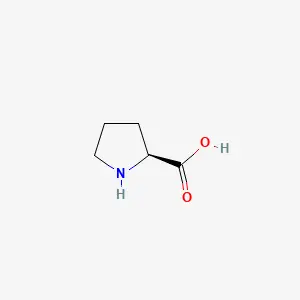
Proline is an amino acid, one of the building blocks of protein, and it is built differently from the other 19. Its side chain loops back onto its own nitrogen and closes into a ring. That makes proline the only protein amino acid that is a secondary amine.
Where it fits among the groups depends on who you ask. The WHO (World Health Organization) lists proline among the amino acids that can become indispensable under special conditions (conditionally indispensable).
The US National Academies (NASEM) put it in the same group in their classification table. That group is defined as needing a dietary source when the body cannot make enough. Yet the same report calls it dispensable in its safety chapter.
The European Food Safety Authority (EFSA) lists it as dispensable. It also names it among those that can become limiting in some conditions, such as in premature newborns. In plain terms, the body makes its own proline, and most people never need to think about getting it.
Beyond building protein, the body makes proline from glutamate and from ornithine. It uses proline most of all for collagen. A 2024 review calls collagen the most abundant core protein of the extracellular matrix, the scaffold between cells. Per gram, proline plus hydroxyproline are most abundant in collagen and milk proteins, according to a 2011 review.
After proline is built into collagen, an enzyme adds an oxygen-containing hydroxyl group to many of the prolines. That turns them into hydroxyproline, and this step needs vitamin C.
Here is what most readers do not know. The same hydroxylation step is how cells sense oxygen. Enzymes that hydroxylate proline in a protein called HIF decide how long it lasts. The work that uncovered this won the 2019 Nobel Prize in Physiology or Medicine.
Also, the trials behind “proline for skin and joints” test collagen peptides, which are mixtures. We found no randomized trial of proline pills in healthy people, so the trials below credit their results to collagen, never to proline alone.
Health benefits of proline
The top findings from 20 studies, strongest evidence first
What the stars mean
- Strong. Several randomized trials, pooled in a meta-analysis, point the same way, or regulators (FDA or EFSA) have approved the claim.
- Moderate. Good randomized trials support it, but there are fewer of them, or their results vary.
- Limited. Small, short or single trials, or mixed results. Promising, but it needs confirmation.
Population and lab studies get no stars: they show a link or a mechanism, not proof.
How we rate evidence →- ★★Better skin hydration with collagen supplementsHydrolyzed collagen, a mix of amino acids and peptides, raised skin hydration in a review of 26 trials. In 19 trials, 90 days of it also improved elasticity and wrinkles, though the trials had several biases.
- ★★Mixed results for knee pain with collagenIn 4 trials of 507 people with knee osteoarthritis, collagen peptides eased pain more than placebo, though all were at high risk of bias. In 167 active adults with knee pain, 10 g a day did no better than placebo.
- ★★Higher bone density with collagen peptidesA review of trials found higher bone density at the hip and spine, though results differed widely between trials. In women after menopause, 5 g a day for 12 months raised spine and femoral neck bone density.
- ★More lean mass gained with training and collagenIn 53 older men with muscle loss doing resistance training, 15 g of collagen peptides a day raised fat-free mass by 4.2 kg. Placebo raised it by 2.9 kg.
- ★Proline may slow a rare inherited eye diseaseOral proline was tried in four patients with gyrate atrophy, a rare inherited eye disease. Damage was minimized in the youngest and halted in two others, but there was no control group.
All 15 studies, strongest evidence first
In 19 trials, hydrolyzed collagen improved skin hydration, elasticity and wrinkles
This systematic review and meta-analysis pooled randomized, double-blind, placebo-controlled trials of oral hydrolyzed collagen in 1,125 people aged 20 to 70 (95% women). The authors conclude that 90 days of intake reduced wrinkles and improved elasticity and hydration compared with placebo (a dummy product). Hydrolyzed collagen is a mixture of amino acids and peptides (short protein pieces), so the result is not credited to proline. A later meta-analysis found several biases in the trials it included.
In 26 trials, hydrolyzed collagen raised skin hydration compared with placebo
This systematic review and meta-analysis of randomized controlled trials included 1,721 people. Hydration rose clearly, and the effect varied with the collagen source and the length of use. For skin elasticity there was no clear difference between collagen sources. The authors found several biases in the included trials and call for larger trials to confirm the findings.
In knee osteoarthritis, collagen peptides eased pain more than placebo
This meta-analysis pooled four randomized trials with 507 people with knee osteoarthritis. Pain eased more than on placebo (standardized mean difference -0.58). All four trials were judged at high risk of bias, and the results differed a lot between them (I² = 68%). Side effects did not clearly differ from placebo (1.66 times the odds), and that evidence was of very low quality. The authors say better-designed trials are needed.
A meta-analysis found higher bone density at the femoral neck and spine
This meta-analysis pooled randomized trials of collagen peptides, alone or with calcium and vitamin D. The femoral neck is the top of the thigh bone, at the hip. Results differed widely between trials (I² = 80.1%). Bone turnover markers (standardized mean differences 0.40 to 0.58) and muscle performance (0.60) also improved. The effects were larger with calcium and vitamin D. The abstract does not say how many trials were pooled.
In one study, collagen probably shrank pressure ulcers more than placebo
This Cochrane review of pressure ulcers (bedsores), updated in 2024, covers 33 trials with 7,920 people. Cochrane is a group known for careful reviews of trials. The collagen result, ulcers 1.81 cm² smaller than on placebo, rests on a single study of 74 people, and Cochrane rates it as moderate-certainty evidence. For other supplements, including arginine, the evidence is very uncertain. The authors conclude that the benefits of nutritional interventions for pressure ulcers are uncertain.
Collagen peptides raised spine and femoral neck bone density after menopause
This randomized, double-blind trial included 131 postmenopausal women with low bone density. For 12 months they took 5 g of collagen peptides a day or a placebo. Of them, 102 finished and all 131 were analyzed. The spine T-score (a bone density score) changed by +0.1 on collagen against -0.03 on placebo, and the femoral neck by +0.09 against -0.01. A bone formation marker (P1NP) rose on collagen. One author works at the Collagen Research Institute, a company in Kiel, Germany.
With training, collagen added more fat-free mass than placebo in older men
In this randomized, double-blind trial, 53 older men with sarcopenia (age-related muscle loss) did 12 weeks of resistance training. They took 15 g of collagen peptides a day or silica as the placebo. Fat-free mass rose 4.2 kg against 2.9 kg. Quadriceps strength rose 16.5 Nm against 7.3 Nm, and fat mass fell 5.4 kg against 3.5 kg. Both groups improved with training. A 2025 correction (corrigendum) states that the collagen maker Gelita AG supplied the samples and paid for participant compensation and analysis. It adds that one author is a co-inventor on a patent application for the active substance.
Collagen eased activity-related knee pain more than placebo in athletes
This randomized, double-blind trial included 139 athletes with knee pain during sport. They took 5 g of collagen peptides a day or a placebo for 12 weeks. The athletes rated activity-related pain on a visual analogue scale, a line from no pain to worst pain. It fell by 19.5 points on collagen against 13.9 on placebo, and their doctors’ ratings fell by 16.7 against 12.2. Pain at rest did not clearly differ, and the use of other treatments fell more on collagen. One author works at the Collagen Research Institute in Kiel, Germany.
In people with knee pain, collagen peptides did no better than placebo
This randomized, placebo-controlled trial included 167 physically active adults with knee pain, with a median age of 63. They took 10 g of collagen peptides a day for 12 weeks. Pain scores fell in both groups (-1.6 on collagen, -1.9 on placebo). Knee function scores (KOOS and Lysholm) rose similarly. Inflammation, cartilage and bone markers did not change either.
In menopausal women, collagen did not change body composition or bone markers
This six-month randomized trial had four groups. They took placebo, calcium plus vitamin D3, fish collagen peptides (5 g a day), or all three. The bone markers P1NP, BAP and osteocalcin did not change in any group. Skin elasticity rose 12.23% from baseline on collagen alone, and skin hydration rose 23% in the combined group. But the abstract reports these against baseline, not against placebo.
Oral proline slowed or halted retinal damage in three of four patients
This report covered five patients with gyrate atrophy of the choroid and retina, an inherited eye disease, who tried vitamin B6 or proline. Proline was tried in four. Damage was minimized in the youngest patient and halted in two others. In one patient blood proline did not rise and the damage progressed. No control group is described, and the authors say proline may possibly lessen progression. A 2021 review found no randomized trials in this disease and rated the studies as low to moderate quality.
In premature babies, tracer glucose barely turned into proline
Seven premature infants (mean 29.7 weeks of gestation, studied at 6.3 days old) were fed through a vein. They got 2.86 g of amino acids per kg a day and a 4-hour infusion of labeled glucose. The tracer showed up in proline only barely above zero for one form, and the title reports decreased cysteine and proline synthesis. This is a short physiology study, not a trial of proline.
Top proline intake went with 45% higher odds of high blood pressure
This was the Tehran Lipid and Glucose Study, which followed 4,287 adults aged 20 to 70 for 3.1 years. People in the highest third of proline intake had 1.45 times the odds of new high blood pressure, compared with the bottom third. Swapping proline from cheese and legumes for proline from yogurt, poultry, milk and red meat went with lower blood pressure. It shows an association only, since proline intake travels with the rest of the diet.
In three cohorts, proline was the dietary factor most linked to depression
This multi-omics study, combining gene, microbe and metabolite data, linked gut microbial proline metabolism to depression in people with mild depression. High proline intake was the dietary factor most strongly linked to depression in the human cohorts. The authors then tested the idea in mice and fruit flies, and proline supplements worsened depression-like behavior in mice. Whole-brain imaging tied circulating proline to changes in brain networks. The human data are observational, and the mouse result cannot be read as a human effect. The authors suggest the gut microbiome and dietary proline as targets.
In inherited high proline, developmental, intellectual and psychiatric problems were common
This systematic review covered 35 studies: 20 case reports and 15 case-control or cohort studies of hyperprolinemia types I and II. Causes were in the PRODH and ALDH4A1 genes or a deletion on chromosome 22q11.2. Developmental delay, intellectual disability, autism and psychosis were common. The authors found no link between higher proline levels and a specific psychiatric picture, so genes and environment probably both contribute. It concerns rare inherited disorders, not dietary proline.
Foods high in proline
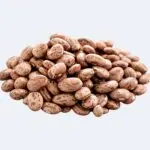
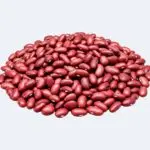
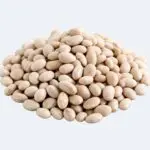
Soybeans lead our USDA ranking per serving with 1.68 g of proline per cup. A chicken drumstick (1.03 g), ground beef (0.99 g in 4 oz) and shrimp (0.89 g in 3 oz) follow.
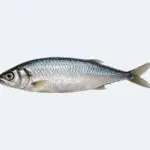
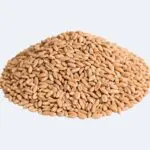
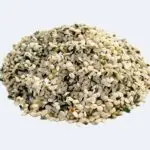
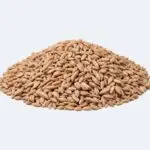
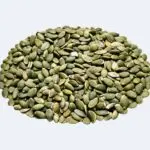
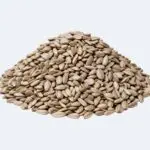
Per 100 g, spelt comes first with 1.63 g, then hemp seeds (1.6 g), barley (1.48 g) and pumpkin seeds (1.32 g). Per 100 kcal, shrimp leads (0.88 g), then cod (0.77 g), tuna (0.76 g) and chives (0.72 g), and kale gives 0.5 g. The ranking below shows the full lists.
Proline is in every protein, so enough protein means enough proline. Cereal proteins are called prolamins for their high proline and glutamine content. That fits spelt and barley near the top of the per-100 g list.
Collagen and milk proteins are the richest. Per gram, proline plus hydroxyproline is highest in them, according to a 2011 review. A 2019 trial of collagen hydrolysate describes collagen as high in glycine, proline and hydroxyproline. Protein quality scores are built from the indispensable amino acids, so they say nothing about proline.
How much does a serving give? The National Academies report a mean intake of 5.2 g of proline a day from food and supplements. That is from US survey data for 1988 to 1994, across life stages and genders. The highest median was 7.2 g, in men aged 19 to 30.
By our arithmetic, 1 cup of soybeans (1.68 g) gives about a third of the 5.2 g mean. A chicken drumstick (1.03 g) gives about a fifth.
Per serving. No daily amount is set, so bars compare each food with the top food.
Per 100 g. No daily amount is set, so bars compare each food with the top food.
Per 100 kcal: the same calories of each food, for a fair comparison. Bars compare each food with the top food.
Food labels have no Daily Value or Reference Intake for proline, so the % compares each food with the top food.
- 1.
- 2.

- 3.
- 4.
- 5.
- 6.
- 7.
- 8.

- 9.

- 10.


- 1.
- 2.
- 3.
- 4.
- 5.
- 6.
- 7.
- 8.
- 9.
- 10.


- 1.
- 2.
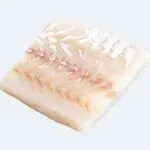
- 3.
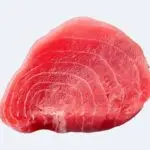
- 4.
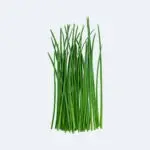
- 5.
- 6.
- 7.
- 8.

- 9.
- 10.


Sources
- FoodData Central. US Department of Agriculture, Agricultural Research Service. Values as shown in the ranking above.
- Institute of Medicine, Food and Nutrition Board. Dietary Reference Intakes for energy, carbohydrate, fiber, fat, fatty acids, cholesterol, protein, and amino acids. National Academies Press. 2005.
- Wu G, Bazer FW, Burghardt RC, et al. Proline and hydroxyproline metabolism: implications for animal and human nutrition. Amino Acids. 2011.
- Skov K, Oxfeldt M, Thøgersen R, Hansen M, Bertram HC. Enzymatic hydrolysis of a collagen hydrolysate enhances postprandial absorption rate: a randomized controlled trial. Nutrients. 2019.
- Prolamin. Wikipedia.
How proline works
Most of what follows comes from reviews, chemistry, cell work and animal studies, and human trials of proline itself are few.
The main ideas: the body makes proline from glutamate and ornithine, and it crosses the gut on shared carriers. Its ring shapes collagen, vitamin C and oxygen add a hydroxyl group to it inside collagen, and it is broken down back to glutamic acid. Collagen peptides add one more idea, because what you swallow is not what reaches the blood. Here is each one, and what has been seen in people.
The body makes it from glutamate and ornithine
The National Academies’ table lists glutamate as the precursor of proline. According to a 2008 review, the gut makes proline as an end product of glutamine breakdown, through an enzyme called P5C synthase. Proline can also be made from ornithine, though the share of the two routes is not certain.
A 2011 review adds that most mammals, including humans, can make proline from arginine and glutamine or glutamate. But the rate is not enough for newborns, birds and fish. In young pigs fed a proline-free diet, growth improved step by step as proline was added. In seven premature babies fed through a vein, the tracer study on the cards above found almost no proline made from glucose.
The 2008 review also says that raising blood proline makes the body burn more of it and make less. A low-proline diet, or high rates of proline breakdown in burn patients, does not make it produce more.
Three routes into proline. Not to scale. The share of each route is not known.
It crosses the gut on shared carriers
Proline and glycine share carriers. A 2006 review names two transporters, PAT1 (SLC36A1) and the IMINO transporter (SLC6A20). It says they appear to play key roles in taking up glycine and proline, and uses them to explain an inherited disorder called iminoglycinuria.
In rat intestine, proline uptake went mainly through a sodium-dependent system B and a proton-driven PAT1-like carrier. Collagen eaten as hydrolysate takes another route, as short peptides. Hydroxyproline-containing peptides, mostly Pro-Hyp, show up in human blood after the dose.
Its ring shapes protein, most of all collagen
Proline is the only protein amino acid that is a secondary amine: its side chain connects back to the nitrogen and forms a five-membered ring. The ring lets its peptide bonds sit in both the cis and the trans form. Runs of proline and hydroxyproline form the polyproline helix that is the main structure of collagen.
Per gram, proline plus hydroxyproline are most abundant in collagen and milk proteins. A 2024 review calls collagens the most abundant core proteins of the extracellular matrix, made mainly by fibroblasts (connective tissue cells). A 2011 review adds that the need for proline in whole-body protein synthesis is the greatest of all amino acids.
Vitamin C and oxygen finish the job
After proline is built into collagen, the enzyme prolyl 4-hydroxylase adds a hydroxyl group to many of the prolines and makes hydroxyproline. A 2010 review calls this the most common modification of proteins in humans, best known for stabilizing the collagen triple helix.
Vitamin C is a cofactor: a 1985 review calls ascorbic acid essential for prolyl hydroxylase. In a guinea pig model of scurvy, adding ascorbate reversed defective proline hydroxylation. It did not reverse the drop in collagen production, which the authors tied to weight loss.
Oxygen matters too. Prolyl hydroxylases act as oxygen sensors for the protein HIF, and a 2026 review says low oxygen raises production of the collagen hydroxylases through HIF. William Kaelin, Peter Ratcliffe and Gregg Semenza shared the 2019 Nobel Prize in Physiology or Medicine for discovering how cells sense and adapt to oxygen.
Three fates of proline in the body. Not to scale.
It returns to glutamic acid
The National Academies describe proline as formed from and converted to glutamic acid. Its level in body fluids depends mainly on two enzymes: proline dehydrogenase (also called proline oxidase) and P5C reductase. P5C is the pivot between them. Inherited defects show what happens when they fail.
Type I hyperprolinemia is a proline dehydrogenase deficiency, caused by the PRODH gene on chromosome 22q11.2. That region is deleted in velo-cardio-facial syndrome and linked to schizophrenia susceptibility. Type II is a P5C dehydrogenase deficiency.
A P5C synthetase deficiency gives low proline with high ammonia, and prolidase deficiency causes severe skin ulcers. High hydroxyproline (hyperhydroxyprolinemia) is believed to be a benign disorder with no symptoms.
Collagen peptides: what reaches the blood
Eating collagen or gelatin does not just deliver proline. Healthy volunteers ate 9.4 to 23 g of gelatin hydrolysate. The peptide form of hydroxyproline in their blood peaked at 20 to 60 nmol/mL after 1 to 2 hours. Pro-Hyp was the main peptide.
In four volunteers, peak levels of hydroxyproline-containing peptides rose with the dose, from 6.43 to 20.17 to 32.84 nmol/mL across three doses. The absorption limit was not reached at the highest one.
Cell studies cited in a 2016 trial report found that Pro-Hyp and Hyp-Gly attract skin fibroblasts, and that Pro-Hyp raises hyaluronic acid production. Whether that explains skin results in people is not shown.
In one trial, 15 g of vitamin C-enriched hydrolyzed collagen before leg exercise restored a blood marker of collagen synthesis in middle-aged men. A 30 g dose raised it further. A 2017 review warns that biochemical and physiologic barriers limit what swallowed amino acids can do for wound healing.
Blood PINP, a marker of collagen made, after leg exercise with 0, 15 or 30 g of vitamin C-enriched hydrolyzed collagen. Drawn to scale. Eight men, a small crossover trial.
What has been seen in people
The human evidence is about collagen, not proline. Meta-analyses favor collagen peptides for skin hydration and for knee osteoarthritis pain, though the trials are small and at high risk of bias. Single trials in people with knee pain and in menopausal women found no change in pain or bone markers.
Vitamin C-enriched gelatin and collagen raised a blood marker of collagen synthesis in two small crossover trials. For proline itself there is one 1985 report in an eye disease. All of these are among the study cards above and in the forms section below.
Sources
- Watford M. Glutamine metabolism and function in relation to proline synthesis and the safety of glutamine and proline supplementation. J Nutr. 2008.
- Wu G, Bazer FW, Burghardt RC, et al. Proline and hydroxyproline metabolism: implications for animal and human nutrition. Amino Acids. 2011.
- Institute of Medicine, Food and Nutrition Board. Dietary Reference Intakes for energy, carbohydrate, fiber, fat, fatty acids, cholesterol, protein, and amino acids. National Academies Press. 2005.
- Miller RG, Jahoor F, Jaksic T. Decreased cysteine and proline synthesis in parenterally fed, premature infants. J Pediatr Surg. 1995.
- Bröer A, Cavanaugh JA, Rasko JE, Bröer S. The molecular basis of neutral aminoacidurias. Pflugers Arch. 2006.
- Iñigo C, Barber A, Lostao MP. Na+ and pH dependence of proline and beta-alanine absorption in rat small intestine. Acta Physiol (Oxf). 2006.
- Iwai K, Hasegawa T, Taguchi Y, et al. Identification of food-derived collagen peptides in human blood after oral ingestion of gelatin hydrolysates. J Agric Food Chem. 2005.
- Shigemura Y, Kubomura D, Sato Y, Sato K. Dose-dependent changes in the levels of free and peptide forms of hydroxyproline in human plasma after collagen hydrolysate ingestion. Food Chem. 2014.
- Proline. Wikipedia.
- Guillard J, Schwörer S. Metabolic control of collagen synthesis. Matrix Biol. 2024.
- Gorres KL, Raines RT. Prolyl 4-hydroxylase. Crit Rev Biochem Mol Biol. 2010.
- Pinnell SR. Regulation of collagen biosynthesis by ascorbic acid: a review. Yale J Biol Med. 1985.
- Chojkier M, Spanheimer R, Peterkofsky B. Specifically decreased collagen biosynthesis in scurvy dissociated from an effect on proline hydroxylation and correlated with body weight loss. In vitro studies in guinea pig calvarial bones. J Clin Invest. 1983.
- Ricol M, Lipinski O, Moali C, Sée V. Hypoxia and ascorbic acid: two interconnected microenvironmental factors driving collagen biosynthesis. Matrix Biol. 2026.
- Kaelin WG Jr, Ratcliffe PJ. Oxygen sensing by metazoans: the central role of the HIF hydroxylase pathway. Mol Cell. 2008.
- List of Nobel laureates in Physiology or Medicine. Wikipedia.
- Mitsubuchi H, Nakamura K, Matsumoto S, Endo F. Inborn errors of proline metabolism. J Nutr. 2008.
- Inoue N, Sugihara F, Wang X. Ingestion of bioactive collagen hydrolysates enhance facial skin moisture and elasticity and reduce facial ageing signs in a randomised double-blind placebo-controlled clinical study. J Sci Food Agric. 2016.
- Nulty CD, Tang JCY, Dutton J, et al. Hydrolyzed collagen supplementation prior to resistance exercise augments collagen synthesis in a dose-response manner in resistance-trained, middle-aged men. Am J Physiol Endocrinol Metab. 2024.
- Albaugh VL, Mukherjee K, Barbul A. Proline precursors and collagen synthesis: biochemical challenges of nutrient supplementation and wound healing. J Nutr. 2017.
How much proline do you need?
No daily amount of proline is set, because the body makes it. The WHO table of adult amino acid requirements covers the nine indispensable amino acids only. So do the National Academies’ estimated average requirements and recommended allowances. The site has no Daily Value for proline, because neither the FDA nor the EU has set one.
What people actually eat is on record. In US survey data from 1988 to 1994, mean proline intake from food and supplements was 5.2 g a day across life stages and genders. The highest median was 7.2 g in men aged 19 to 30. The highest 99th percentile was 12.0 g in boys aged 14 to 18, according to the National Academies.
We found no values for children, pregnancy or breastfeeding, because no requirement exists for proline.
Why is proline in the “conditional” group at all? EFSA says the conditionally indispensable amino acids, a list that includes proline, can become limiting in premature neonates. That happens when the body cannot meet the need unless the diet supplies them. A 2011 review adds that the rate of proline synthesis is not enough for newborns.
Proline deficiency: signs and who is at risk
We found no report of proline deficiency from diet alone in healthy people, and no sign or test that doctors use for it. Sources flag premature infants, where a tracer study found almost no proline made from glucose in seven babies on intravenous feeding. They also flag burn patients. In them, a low-proline diet or high rates of proline breakdown do not make the body produce more, according to a 2008 review.
Rare inherited disorders change proline in the body. Type I and type II hyperprolinemia raise it, and a P5C synthetase deficiency lowers it and comes with high ammonia. Prolidase deficiency is a disorder of breaking down peptides that end in proline or hydroxyproline. It causes intellectual disability and severe skin ulcers.
Gyrate atrophy of the retina is an inherited eye disease in which proline was tried as a treatment.
Sources
- Protein and amino acid requirements in human nutrition: report of a joint WHO/FAO/UNU expert consultation. WHO Technical Report Series 935. World Health Organization. 2007.
- Institute of Medicine, Food and Nutrition Board. Dietary Reference Intakes for energy, carbohydrate, fiber, fat, fatty acids, cholesterol, protein, and amino acids. National Academies Press. 2005.
- EFSA Panel on Dietetic Products, Nutrition and Allergies (NDA). Scientific opinion on dietary reference values for protein. EFSA J. 2012.
- Watford M, Wu G. Protein. Adv Nutr. 2018.
- Wu G, Bazer FW, Burghardt RC, et al. Proline and hydroxyproline metabolism: implications for animal and human nutrition. Amino Acids. 2011.
- Watford M. Glutamine metabolism and function in relation to proline synthesis and the safety of glutamine and proline supplementation. J Nutr. 2008.
- Miller RG, Jahoor F, Jaksic T. Decreased cysteine and proline synthesis in parenterally fed, premature infants. J Pediatr Surg. 1995.
- Mitsubuchi H, Nakamura K, Matsumoto S, Endo F. Inborn errors of proline metabolism. J Nutr. 2008.
- Hayasaka S, Saito T, Nakajima H, et al. Clinical trials of vitamin B6 and proline supplementation for gyrate atrophy of the choroid and retina. Br J Ophthalmol. 1985.
- Balfoort BM, Buijs MJN, Ten Asbroek ALMA, et al. A review of treatment modalities in gyrate atrophy of the choroid and retina (GACR). Mol Genet Metab. 2021.
- Namavar Y, Duineveld DJ, Both GIA, et al. Psychiatric phenotypes associated with hyperprolinemia: a systematic review. Am J Med Genet B Neuropsychiatr Genet. 2021.
Forms of proline: absorption and effects
Proline reaches people in four main ways. It comes bound in food protein, as free L-proline in capsules or powder, as collagen peptides or gelatin, and as related compounds. Unlike minerals, there is no list of forms with known absorption rates.
We found no human study comparing free L-proline with proline from food protein, and none comparing free proline with collagen peptides. The only oral free-proline study we found used 2 to 10 g a day in four patients with an eye disease.
The honest bottom line: for proline itself, the form is not the question, because no trial shows that extra proline helps healthy people. Nearly all the useful human work is on collagen peptides, which deliver proline together with glycine and hydroxyproline. The single trials in the benefits section above used collagen at 5 to 15 g a day.
The studies below compare products or show what reaches the blood. We found no trial that compared collagen with the same amount of free proline. Nor did we find a trial that tested free proline for skin, joints or wound healing.
| Form | What it is | What studies show | Source |
|---|---|---|---|
| Free L-proline (capsules, powder) | The single amino acid, not bound in protein | The only oral proline study we found gave 2 to 10 g a day (usually 3 g) to four patients with gyrate atrophy for up to 5 years, according to the National Academies; a review reports 488 mg per kg a day with no deleterious side effects. We found no trial in healthy people, none for skin, joints or wound healing, and none comparing it with food or collagen. A 2017 review describes biochemical barriers that limit amino acid supplements for wound healing. | 1, 2, 3, 11 |
| Collagen peptides (hydrolyzed collagen) | Collagen broken into short peptides; a mix rich in glycine, proline and hydroxyproline | The single trials above used 5 to 15 g a day. After a dose, Pro-Hyp is the main peptide in blood. Peak levels rose with dose in four volunteers. Enzymatic hydrolysis raised the absorption rate and bioavailability of glycine, proline and hydroxyproline in ten men, and a hydrolysate with more Pro-Hyp and Hyp-Gly improved facial skin more than one with less. | 5, 6, 7, 8 |
| Gelatin or collagen with added vitamin C | Collagen-derived protein taken with vitamin C before exercise | 15 g of vitamin C-enriched gelatin an hour before exercise doubled a blood marker of collagen synthesis in eight men. In another eight, 15 g of vitamin C-enriched hydrolyzed collagen restored the marker and 30 g raised it further. Neither study had a collagen arm without vitamin C, so the two effects cannot be separated. | 9, 10 |
| Proline in food protein | Bound in protein; richest per gram in collagen and milk proteins | Provides a mean of 5.2 g a day in US survey data. We found no study comparing absorption of food-bound and free proline. | 1, 4 |
| Hydroxyproline | Proline with a hydroxyl group, made after proline is built into collagen | Not an amino acid used to build protein; it forms inside collagen when an enzyme modifies proline. Inherited high hydroxyproline (hyperhydroxyprolinemia) is believed to be benign. We found no trial of hydroxyproline supplements for health. | 1, 12, 13 |
| Proline betaine | A proline derivative found in citrus fruit | Used as a urinary marker of citrus intake: in the validation data it identified citrus consumers with 86.3% sensitivity and 90.6% specificity. It is not sold as a supplement for health, and we found no trial. | 14 |
Here are the studies that compare products or show what reaches the blood, five in all.
All 5 studies, strongest evidence first
Enzyme-treated collagen raised blood glycine, proline and hydroxyproline faster
In this randomized, blinded crossover trial, ten men were tested on three separate days. They took 35 g of enzymatically hydrolyzed collagen protein, 35 g of non-enzymatically hydrolyzed collagen protein, or 250 mL of water. Blood was tested for 240 minutes. Nearly all amino acids rose after both products. Glycine, proline and hydroxyproline were absorbed faster, and more of them reached the blood (higher bioavailability), with the enzymatic product than with the standard product. It measured blood levels, not health outcomes.
High-peptide collagen improved facial skin more than low-peptide collagen or placebo
This randomized, double-blind, placebo-controlled trial tested two hydrolysates that differ in their content of the peptides Pro-Hyp and Hyp-Gly. Skin was checked at baseline and after 4 and 8 weeks. The high-peptide product beat both the low-peptide product and placebo for facial skin moisture, elasticity, wrinkles and roughness. Blood tests showed no adverse events. The abstract gives no group sizes or doses, and two authors work at the gelatin maker Nitta Gelatin.
After gelatin hydrolysate, Pro-Hyp was the main collagen peptide in blood
Healthy volunteers fasted for 12 hours and then ate 9.4 to 23 g of gelatin hydrolysates made from pig skin, chicken feet or cartilage. The peptide form of hydroxyproline was negligible beforehand. It peaked at 20 to 60 nmol/mL after 1 to 2 hours and fell to half its peak by 4 hours. Smaller amounts of Ala-Hyp, Ala-Hyp-Gly, Pro-Hyp-Gly, Leu-Hyp, Ile-Hyp and Phe-Hyp were also found. It shows what reaches the blood, not that it works.
15 g of vitamin C-enriched gelatin doubled a collagen synthesis marker
In this randomized, double-blind crossover trial, eight men took 5 or 15 g of vitamin C-enriched gelatin, or a placebo, an hour before rope skipping. They did this three times a day for 3 days. Blood glycine, proline, hydroxyproline and hydroxylysine rose and peaked an hour after the dose. Engineered ligaments treated with serum taken after gelatin showed more collagen and better mechanics. There was no gelatin arm without vitamin C, so the two cannot be told apart.
Collagen with vitamin C restored the collagen-synthesis response, more at 30 g
This double-blind crossover trial included eight resistance-trained men aged about 49. They did leg exercises after 0, 15 or 30 g of vitamin C-enriched hydrolyzed collagen. The blood marker PINP was measured as the area under the curve, the total over time (µg/mL × h). It was 96 with none, 134 with 15 g and 169 with 30 g. Blood glycine, proline, hydroxyproline and other collagen amino acids rose with the dose. No arm used collagen without vitamin C, and PINP is a marker of collagen made, not proof of healthier tendons.
Sources
- Institute of Medicine, Food and Nutrition Board. Dietary Reference Intakes for energy, carbohydrate, fiber, fat, fatty acids, cholesterol, protein, and amino acids. National Academies Press. 2005.
- Watford M. Glutamine metabolism and function in relation to proline synthesis and the safety of glutamine and proline supplementation. J Nutr. 2008.
- Hayasaka S, Saito T, Nakajima H, et al. Clinical trials of vitamin B6 and proline supplementation for gyrate atrophy of the choroid and retina. Br J Ophthalmol. 1985.
- Wu G, Bazer FW, Burghardt RC, et al. Proline and hydroxyproline metabolism: implications for animal and human nutrition. Amino Acids. 2011.
- Skov K, Oxfeldt M, Thøgersen R, Hansen M, Bertram HC. Enzymatic hydrolysis of a collagen hydrolysate enhances postprandial absorption rate: a randomized controlled trial. Nutrients. 2019.
- Inoue N, Sugihara F, Wang X. Ingestion of bioactive collagen hydrolysates enhance facial skin moisture and elasticity and reduce facial ageing signs in a randomised double-blind placebo-controlled clinical study. J Sci Food Agric. 2016.
- Iwai K, Hasegawa T, Taguchi Y, et al. Identification of food-derived collagen peptides in human blood after oral ingestion of gelatin hydrolysates. J Agric Food Chem. 2005.
- Shigemura Y, Kubomura D, Sato Y, Sato K. Dose-dependent changes in the levels of free and peptide forms of hydroxyproline in human plasma after collagen hydrolysate ingestion. Food Chem. 2014.
- Shaw G, Lee-Barthel A, Ross ML, Wang B, Baar K. Vitamin C-enriched gelatin supplementation before intermittent activity augments collagen synthesis. Am J Clin Nutr. 2017.
- Nulty CD, Tang JCY, Dutton J, et al. Hydrolyzed collagen supplementation prior to resistance exercise augments collagen synthesis in a dose-response manner in resistance-trained, middle-aged men. Am J Physiol Endocrinol Metab. 2024.
- Albaugh VL, Mukherjee K, Barbul A. Proline precursors and collagen synthesis: biochemical challenges of nutrient supplementation and wound healing. J Nutr. 2017.
- Mitsubuchi H, Nakamura K, Matsumoto S, Endo F. Inborn errors of proline metabolism. J Nutr. 2008.
- Gorres KL, Raines RT. Prolyl 4-hydroxylase. Crit Rev Biochem Mol Biol. 2010.
- Heinzmann SS, Brown IJ, Chan Q, et al. Metabolic profiling strategy for discovery of nutritional biomarkers: proline betaine as a marker of citrus consumption. Am J Clin Nutr. 2010.
Is proline safe? Supplements, dose and interactions
Proline from food is not a concern for most people. The National Academies set no tolerable upper intake level (the most you can take each day without likely harm) for proline. They found minimal data on adverse effects in animals or humans, and the data were not available for a dose-response assessment.
The only long-term human study they found gave 2 to 10 g a day (most often 3 g) to four patients with gyrate atrophy. It lasted up to 5 years. No overt adverse effects were reported, though it was unclear which effects were studied.
A 2008 review reports 488 mg per kg a day in that disease with no deleterious side effects. It says that, without controlled trials, a safe upper limit cannot be estimated.
The 2012 EFSA protein opinion did not set an upper level for protein either, and we found no EFSA upper level for proline.
- Collagen products. Trials gave 5 to 15 g a day for 12 weeks to 12 months. In a meta-analysis of knee osteoarthritis trials, side effects did not clearly differ from placebo (1.66 times the odds). But the evidence was very low quality. The Cochrane pressure ulcer review calls the evidence on side effects of collagen supplements very uncertain.
- Inherited metabolic disorders. People with hyperprolinemia type I or II, a P5C synthetase deficiency or prolidase deficiency handle proline differently. They should check with their metabolic team before taking any proline or collagen supplement. We found no trial of supplements in these disorders. Studies in hyperprolinemia found psychiatric problems but no link between the proline level and the specific picture.
- Observational signals. In a Tehran cohort, the top third of proline intake had higher odds of new high blood pressure (1.45 times the odds). In a study of three cohorts, high proline intake was the dietary factor most linked to depression, and mice given proline showed worse depression-like behavior. These are associations. They do not show that proline in food or pills causes either condition.
- Drug interactions. We found no reported interaction between proline or collagen supplements and medicines.
- Who should ask a doctor. Anyone who is pregnant or breastfeeding, has kidney or liver disease, or has an inherited metabolic disorder. We found no trial of proline supplements in pregnancy or in kidney or liver disease.
How to get more proline
- Best food. One cup of soybeans gives 1.68 g of proline, a chicken drumstick 1.03 g and 4 oz of ground beef 0.99 g. Per 100 g, spelt leads with 1.63 g, then hemp seeds (1.6 g) and barley (1.48 g).
- Eat enough protein from varied foods. Average intake is 5.2 g a day in US data. Collagen and milk proteins are the richest sources per gram.
- Skip single proline pills. No trial shows a benefit of proline pills for healthy people. If you try collagen, the trials used 5 to 15 g a day, with mixed results, and the benefit is not credited to proline.
Sources
- Institute of Medicine, Food and Nutrition Board. Dietary Reference Intakes for energy, carbohydrate, fiber, fat, fatty acids, cholesterol, protein, and amino acids. National Academies Press. 2005.
- Watford M. Glutamine metabolism and function in relation to proline synthesis and the safety of glutamine and proline supplementation. J Nutr. 2008.
- Hayasaka S, Saito T, Nakajima H, et al. Clinical trials of vitamin B6 and proline supplementation for gyrate atrophy of the choroid and retina. Br J Ophthalmol. 1985.
- Balfoort BM, Buijs MJN, Ten Asbroek ALMA, et al. A review of treatment modalities in gyrate atrophy of the choroid and retina (GACR). Mol Genet Metab. 2021.
- Lin CR, Tsai SHL, Huang KY, et al. Analgesic efficacy of collagen peptide in knee osteoarthritis: a meta-analysis of randomized controlled trials. J Orthop Surg Res. 2023.
- Langer G, Wan CS, Fink A, Schwingshackl L, Schoberer D. Nutritional interventions for preventing and treating pressure ulcers. Cochrane Database Syst Rev. 2024.
- Teymoori F, Asghari G, Farhadnejad H, et al. Various proline food sources and blood pressure: substitution analysis. Int J Food Sci Nutr. 2020.
- Mayneris-Perxachs J, Castells-Nobau A, Arnoriaga-Rodríguez M, et al. Microbiota alterations in proline metabolism impact depression. Cell Metab. 2022.
- Mitsubuchi H, Nakamura K, Matsumoto S, Endo F. Inborn errors of proline metabolism. J Nutr. 2008.
- Namavar Y, Duineveld DJ, Both GIA, et al. Psychiatric phenotypes associated with hyperprolinemia: a systematic review. Am J Med Genet B Neuropsychiatr Genet. 2021.
- EFSA Panel on Dietetic Products, Nutrition and Allergies (NDA). Scientific opinion on dietary reference values for protein. EFSA J. 2012.
- FoodData Central. US Department of Agriculture, Agricultural Research Service. Values as shown in the ranking above.
History of proline
Proline was found at the turn of the 20th century. Reference works credit Richard Willstätter with making it in 1900 while working on N-methylproline. They credit Emil Fischer with isolating it from casein, the milk protein, in 1901.
A history of proteins says Fischer’s laboratory first isolated proline, along with valine, in 1901. The name comes from pyrrolidine, the ring in its structure.
Hydroxyproline was also first found by Fischer, in the breakdown products of casein and of gelatin, according to a 1914 textbook of physiological chemistry. The textbook adds that Leuchs and Brewster later worked out its structure.
A century later the same chemistry turned up in cell biology. Prolyl hydroxylases were found to be how cells sense oxygen, by marking the HIF protein. In 2019 William Kaelin, Peter Ratcliffe and Gregg Semenza shared the Nobel Prize in Physiology or Medicine. It was for discovering how cells sense and adapt to oxygen.
As a nutrient, proline has had a quieter life. The one report of proline pills as a treatment that we found is from 1985, in gyrate atrophy. The collagen trials of recent years test a mixture, not proline.
Sources
- Tanford C, Reynolds J. The peptide bond. In: Nature’s Robots: A History of Proteins. Oxford University Press. 2001.
- Proline. Wikipedia.
- Hammarsten O. A Text-book of Physiological Chemistry. Translated by Mandel JA, Hedin G. 1914.
- Kaelin WG Jr, Ratcliffe PJ. Oxygen sensing by metazoans: the central role of the HIF hydroxylase pathway. Mol Cell. 2008.
- List of Nobel laureates in Physiology or Medicine. Wikipedia.
- Hayasaka S, Saito T, Nakajima H, et al. Clinical trials of vitamin B6 and proline supplementation for gyrate atrophy of the choroid and retina. Br J Ophthalmol. 1985.
Frequently asked questions about proline
Is proline an essential amino acid?
No. Proline is not one of the nine essential amino acids, because the body makes it from glutamate and ornithine. The WHO and the US National Academies put it in the conditionally indispensable group. That means the body may not make enough in some situations, such as premature birth or severe illness. EFSA lists it as dispensable and also names it among those that can become limiting. Healthy adults who eat enough protein get enough, and average intake in US survey data is 5.2 g a day.
What does proline do in the body?
Proline builds proteins, and it is most important in collagen, the main protein of connective tissue. Its ring shape helps form the collagen helix. An enzyme that needs vitamin C then adds a hydroxyl group to many of the prolines to make hydroxyproline. The same type of enzyme lets cells sense oxygen. Proline is broken down back to glutamic acid.
How much proline do you need per day?
There is no official amount. The WHO and the National Academies set requirements for the nine indispensable amino acids only. Neither the FDA nor the EU has a daily value for proline. In US survey data the mean intake was 5.2 g a day, with a highest median of 7.2 g in men aged 19 to 30. The one long-term study of proline pills used 2 to 10 g a day in four patients with an eye disease.
Which foods are highest in proline?
Soybeans lead our USDA ranking per serving, with 1.68 g per cup. A chicken drumstick (1.03 g), ground beef (0.99 g in 4 oz) and shrimp (0.89 g in 3 oz) follow. Per 100 g, spelt leads with 1.63 g, then hemp seeds (1.6 g) and barley (1.48 g). Per 100 kcal, shrimp (0.88 g), cod (0.77 g) and tuna (0.76 g) lead. Collagen and milk proteins are the richest per gram, according to a 2011 review.
Do proline or collagen supplements help skin and joints?
Not proline by itself: we found no trial of proline pills for skin or joints. Collagen peptides do better. Meta-analyses of 19 and 26 trials found better skin hydration than placebo. A meta-analysis of four trials found less knee osteoarthritis pain, but the trials are small and at high risk of bias. A 167-person trial of 10 g a day found no effect on knee pain. Collagen is a mixture of amino acids, so the result is not credited to proline.
Does vitamin C help your body use proline?
Vitamin C acts after proline is already built into collagen. According to reviews, it is a cofactor for the enzyme that turns proline inside collagen into hydroxyproline. In guinea pigs with scurvy, adding vitamin C reversed defective proline hydroxylation. Two small trials gave vitamin C-enriched gelatin or collagen and raised a marker of collagen synthesis, but neither had a collagen arm without vitamin C.
Is proline safe to take as a supplement?
Proline from food is safe for most people, and the National Academies set no upper limit because data are lacking. Four patients took 2 to 10 g a day for up to 5 years with no overt adverse effects reported. But nobody has tested it in healthy people. People with inherited proline disorders should ask a doctor first. High proline intake has been linked to high blood pressure and depression in observational studies, which does not show cause.
What is the difference between proline and hydroxyproline?
Hydroxyproline is proline with a hydroxyl group added. It is not used to build proteins directly. An enzyme makes it inside collagen after proline is already in the chain, and this step needs vitamin C and oxygen. It stabilizes the collagen helix. Hydroxyproline-containing peptides such as Pro-Hyp appear in blood after you eat collagen or gelatin.