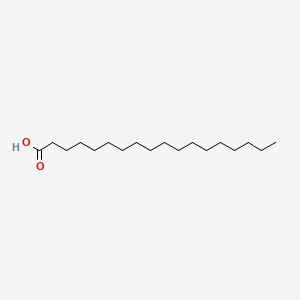
Stearic acid (octadecanoic acid, 18:0, C18H36O2) is a saturated fatty acid with 18 carbon atoms and no double bonds. FAO and WHO experts (from the UN food and health agencies) call fatty acids with 14 to 18 carbons long-chain. It is not essential: the body makes stearic acid by lengthening palmitic acid, and also takes it in from food.
It is one of the most abundant fatty acids in the Western diet. The name goes back to the French chemist Michel Eugène Chevreul. He took it from the Greek word for tallow, because it is the typical product of turning beef tallow into soap.
Among the saturated fats, stearic acid is the odd one out. In controlled feeding trials it raised LDL (“bad”) cholesterol less than palmitic acid.
In a regression analysis of trials for the WHO’s 2023 guideline, swapping carbohydrate for stearic acid had no significant effect on any blood fat. Lauric, myristic and palmitic acids, by contrast, raised LDL and HDL (“good”) cholesterol.
Part of the reason is that the body turns some stearic acid into oleic acid. In a review of tracer studies, about 9% of dietary stearic acid was turned into oleic acid.
Most readers do not know how little that settles. The WHO found no randomized trial that tested a single saturated fatty acid against disease outcomes. In two large US cohorts, people who ate the most stearic acid had 18% more coronary heart disease than those who ate the least. The same was true for palmitic acid.
The saturated fats are eaten together in meat, dairy fat and processed food, so the cohorts cannot separate them. The WHO limits saturated fat as a whole, and says more research is needed before advising on single saturated fatty acids. This page sets out each side at its real evidence level: lipid trials, cocoa butter and chocolate trials, interesterified fats, cohorts and cell work.
Health benefits of stearic acid
The top findings from 25 studies, strongest evidence first
What the stars mean
- Strong. Several randomized trials, pooled in a meta-analysis, point the same way, or regulators (FDA or EFSA) have approved the claim.
- Moderate. Good randomized trials support it, but there are fewer of them, or their results vary.
- Limited. Small, short or single trials, or mixed results. Promising, but it needs confirmation.
Population and lab studies get no stars: they show a link or a mechanism, not proof.
How we rate evidence →- ★★Slightly lower total to HDL cholesterol ratioIn a pooled analysis of 60 trials, stearic acid slightly lowered this ratio, a risk marker rather than a heart outcome. Myristic and palmitic acids had little effect on it.
- ★★Lower LDL than palmitic acid, another saturated fatSwapping palmitic acid for stearic acid lowered LDL a little (0.14 mmol/L) and HDL by 0.09 mmol/L in 34 adults. In 20 postmenopausal women, stearic and oleic acid diets lowered LDL about alike.
- ★★Mixed results against unsaturated fatsIn 45 healthy adults, LDL was 3.79 mmol/L on stearic acid, 3.71 on oleic and 3.65 on linoleic acid, gaps within chance. A review found stearic acid tended to raise LDL against unsaturated fats.
- ★★Seemed to raise fibrinogen, a clotting proteinIn 3 studies, fibrinogen was higher when stearic acid topped 9% of energy. In 50 men, a stearic acid diet also raised fibrinogen compared with a carbohydrate diet.
- ★Daily milk chocolate bar did not worsen LDLIn 42 men, a 46 g milk chocolate bar a day for 27 days did not worsen LDL, despite more total and saturated fat. A bar also holds sugar, milk fat and cocoa solids.
All 20 studies, strongest evidence first
In 60 trials, stearic acid slightly lowered the total to HDL ratio
Myristic and palmitic acids had little effect on this ratio, which is a risk marker, not a heart outcome. Lauric acid raised total cholesterol a lot, but much of the rise was HDL, so lauric-rich oils lowered the ratio. Swapping saturated fats for carbohydrates left the ratio unchanged, and swapping them for cis unsaturated fats lowered it. The authors say marker effects should be confirmed in long-term studies or trials, and that the ratio may move quite differently from LDL.
Stearic acid lowered LDL versus other saturated fats, but not versus unsaturated
The review covered population and clinical studies of blood fats, clotting and inflammation markers. Against other saturated fats, stearic acid was neutral for HDL and tended to lower the total to HDL ratio. Against unsaturated fats it tended to raise LDL, lower HDL and raise the ratio. In 2 of 4 studies, high-stearic diets raised lipoprotein(a) compared with saturated-fat diets. 3 studies found more fibrinogen when stearic acid topped 9% of energy, and the authors put the current 90th percentile of intake at 3.5%. The review is framed around high-stearic soybean oil as a replacement for trans fats.
Swapping palmitic acid for unsaturated fats lowered LDL; swapping stearic did not
This systematic review covered 44 randomized trials of at least 14 days, in people with a mean age of 39.9 years. Replacing palmitic acid with unsaturated fats lowered LDL by 0.36 mmol/L (18 trials), and with oleic acid by 0.16 mmol/L (9 trials). Results varied a lot, and replacing stearic acid with unsaturated fats showed no benefit on heart and metabolic risk markers (4 trials). The authors say more trials are needed, and one author is affiliated with ILSI Europe.
Stearic and oleic acid diets lowered LDL about alike, both beating palmitic
20 postmenopausal women (mean age 64) with LDL of at least 2.8 mmol/L ate three diets in random order. Each had 30% of energy from fat, about half of it palmitic, stearic or oleic acid, for 5 weeks with 2-week breaks. HDL was lower after the stearic acid diet than after the palmitic or oleic acid diets. The stearic diet also gave lower secondary bile acids than the oleic diet, which the authors suggest may explain its cholesterol effect. All other measures, including inflammation markers, were similar.
Stearic, oleic and linoleic acid diets gave similar LDL
45 healthy adults (27 women, 18 men) ate each diet for 5 weeks, in random order. Fat gave 38% of energy, with 7% from stearic, oleic or linoleic acid. Mean LDL was 3.79 mmol/L on stearic acid, 3.71 on oleic and 3.65 on linoleic acid, and HDL was 1.45, 1.46 and 1.46. Neither the LDL nor the HDL gaps were beyond chance. Particle sizes did not differ either, and the authors conclude that differences between the three are small at realistic intakes.
Stearic instead of palmitic acid lowered LDL 0.14 mmol/L, HDL 0.09
34 healthy men and postmenopausal women (mean age 61.5) ate two 4-week diets that differed by 6% of daily energy. The order was random, and neither they nor the researchers knew which diet was which. Cholesterol efflux capacity, a test of how well HDL clears cholesterol from cells, did not differ. On stearic acid, insulin was higher in women, C-peptide was lower in men, and interleukin 6 and tumor necrosis factor alpha were higher. So the authors say insulin sensitivity in women and low-grade inflammation might be harmed, and two authors work at Unilever Research and Development.
Cutting saturated fat cut combined cardiovascular events 17%
This Cochrane review (newest version, August 2020) pooled 15 randomized trials of at least 24 months with 56,675 people. Combined cardiovascular events fell to 0.83 times the risk (12 trials, moderate-quality evidence), with little or no effect on deaths from any cause (0.96). Larger cuts in saturated fat meant larger drops in cholesterol and in events. The trials ranged from providing all food to giving advice. They changed total saturated fat, so no single fatty acid, stearic acid included, gets the credit.
High-stearic formula lowered LDL 21% against high-palmitic
11 people drank liquid formulas high in palmitic, stearic or oleic acid for three 3-week periods, in random order. Against the palmitic diet, total cholesterol fell 14% on stearic acid and 10% on oleic acid, and LDL fell 21% and 15%. Triglycerides and HDL did not differ, and all three fatty acids were almost fully absorbed. Oleic acid in blood fats rose on the stearic diet, which the authors take to mean stearic acid is rapidly turned into oleic acid. Liquid formulas are far from ordinary meals.
Cocoa butter and beef tallow raised LDL less than butter fat
10 men drank liquid-formula diets with 40% of calories from the test fat, each for 3 weeks in random order. Mean LDL was 4.23 mmol/L on butter fat, 4.03 on beef tallow, 3.82 on cocoa butter and 3.62 on olive oil. Oleic acid was 99% absorbed, palmitic acid 96 to 97%, and stearic acid 90 to 94% from the three fats that held it. These whole fats also hold palmitic and oleic acids, so this is not stearic acid alone.
Shea butter gave 26% lower LDL than palm oil
15 men ate each diet for 3 weeks under strict control. Against palm oil (43% palmitic acid), shea butter (42% stearic acid) gave 22% lower total cholesterol, 26% lower LDL and 18% lower apolipoprotein B. But HDL was 12% lower, apolipoprotein A-I 13% lower and clotting factor VII activity 13% lower. Similar gaps appeared against a diet high in myristic and lauric acids, and the test fats were whole fats, not pure fatty acids.
A daily milk chocolate bar did not worsen LDL in young men
In this randomized crossover trial in 42 men, a 46 g milk chocolate bar a day replaced a high-carbohydrate snack for 27 days. The diet was the NCEP/AHA Step 1 heart diet, after a 21-day run-in. On the chocolate bar HDL was 0.08 mmol/L higher and triglycerides 0.06 lower, and LDL did not worsen despite more total and saturated fat. The authors think stearic acid may explain this, but a bar also holds sugar, milk fat and cocoa solids, so the trial cannot isolate it.
Cocoa butter matched olive oil on the total to HDL ratio
38 healthy adults aged 20 to 40 ate each diet for 4 weeks, in random order. Palm olein, cocoa butter and olive oil each gave 20% of energy. The ratio changed by 0.08 on palm olein, 0.06 on cocoa butter and −0.01 on olive oil, gaps that could be chance. LDL subfractions did not differ, and blood stearic acid rose on cocoa butter, confirming the diet was eaten. The Malaysian Palm Oil Board supplied the palm olein, and results apply to healthy young adults.
A stearic acid diet raised fibrinogen against carbohydrate, in 50 men
Each 5-week controlled diet replaced 8% of energy, in random order, against a carbohydrate diet. The swaps were oleic acid, trans fat, stearic acid, a trans plus stearic mix (4% of energy each) or the saturated fats lauric to palmitic. C-reactive protein was higher on trans fat than on carbohydrate. Interleukin 6 was lower on oleic acid than on the stearic, trans and saturated diets. The authors note that stearic acid barely affects LDL but seems to raise fibrinogen, a clotting protein.
Stearic acid gave lower total cholesterol than palmitic in type 2 diabetes
15 people with diabetes ate three 3-week diets in random order, with 2-week breaks. The diets were rich in stearic acid (13% of energy), palmitic acid (16%) or carbohydrate. Total cholesterol was 5.3 mmol/L on palmitic acid, 5.0 on stearic acid and 4.9 on carbohydrate. Triglycerides, LDL, HDL, fructosamine, HbA1c, fasting glucose and day-long blood pressure did not differ, and the trial was small and short.
A high-stearic diet did not worsen insulin sensitivity in 15 women
Healthy young women ate each diet for 4 weeks after a 2-week baseline, in random order. 5% of energy came from stearic or oleic acid in place of saturated fat. The insulin sensitivity index was 5.4 on stearic acid and 5.2 on oleic acid, a gap that could be chance. Glucose effectiveness, first-phase insulin response, blood fats and clotting factors did not differ, and only young healthy women were tested.
The highest stearic acid intake went with 18% more coronary heart disease
Two US cohorts followed 73,147 women (Nurses’ Health Study, 1984 to 2012) and 42,635 men (Health Professionals Follow-up Study, 1986 to 2010). There were 7,035 cases. Top against bottom intake gave 1.18 times the risk for stearic acid, 1.18 for palmitic and 1.13 for myristic. Intakes of the individual saturated fats were highly correlated (r 0.38 to 0.93), so the cohorts cannot separate them. Replacing 1% of energy from these fats with polyunsaturated fat gave 0.92 times the risk. Three authors work for Unilever R&D, which also funded a fellowship for a fourth.
Higher blood stearic acid went with slightly more type 2 diabetes
EPIC-InterAct compared 12,403 people who developed type 2 diabetes with a sample of 16,154, drawn from 340,234 people in Europe. Per standard deviation, risk was 1.26 times as high for palmitic acid, 1.15 for myristic acid and 1.06 for stearic acid. Odd-chain and longer-chain saturated fats went with lower risk (0.67 to 0.81). Blood levels reflect both diet and the body’s own fat production, so they do not measure intake.
Higher blood stearic acid went with 15% lower risk of death
The Cardiovascular Health Study followed 3,941 adults aged 65 or older from 1992 through 2011 (45,450 person-years, 3,134 deaths). The top against the bottom fifth gave 0.85 times the risk for stearic acid, the same as behenic acid, and 0.80 for lignoceric acid. Palmitic acid went with higher risk (1.25). Blood levels reflect diet and metabolism, so this does not show that eating more stearic acid lowers the risk of death.
In mouse cells, trapped stearic acid caused inflammation and cell death
Mouse macrophages (immune cells) got stearic acid plus triacsin C. That drug blocks the use of long-chain fatty acids and so traps free stearic acid inside cells. This caused inflammation independent of Toll-like receptors 4 and 2, then endoplasmic reticulum stress and cell death (apoptosis). Macrophages pushed toward the inflammatory M1 type were more prone to inflammation and stress. The authors suggest the same pathways could act in artery plaques and in fatty tissue in obesity, but this was not tested in people.
In human artery cells, oleic acid blocked stearic acid’s harmful effects
Stearic acid, which went mainly into phospholipids, slowed cell growth below 50 µM and was toxic above that. Adding 25 µM oleic acid removed both effects. As little as 5 µM cut the rise in ICAM-1, an adhesion molecule, and the activation of NF-kappa B. The authors suggest oleic acid limits the inflammatory effects of long-chain saturated fats. That fits the idea that making oleic acid from stearic acid protects, but it was shown in dishes, not in people.
Foods high in stearic acid
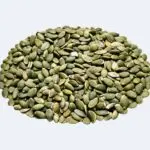
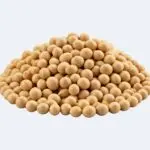
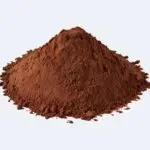
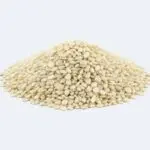
Stearic acid is in the fat of red meat, in nuts and seeds, and in cocoa. In our USDA ranking per serving, ground lamb leads with 3.64 g in 4 oz (113 g). Ground beef follows with 2.67 g in 4 oz, then Brazil nuts with 1.77 g in 1 oz (28 g).
Cashews, pumpkin seeds, macadamia nuts, a chicken drumstick with skin and semi-skimmed cow’s milk come next. The ranking shows their amounts.
Per 100 g the top is Brazil nuts (6.24 g), cocoa powder (4.25 g), and cashews and ground lamb (both 3.22 g). Pumpkin seeds, ground beef and macadamia nuts follow. Per 100 kcal, cocoa powder leads with 1.86 g, then ground lamb (1.14 g), Brazil nuts (0.95 g) and ground beef (0.93 g). No chocolate product reaches the top ten of any of the three rankings.
Our arithmetic for realistic servings: a 2010 review put US intake at 3.0% of energy, about 6.7 g a day on 2,000 kcal. A 4 oz serving of ground lamb (3.64 g) is then a little over half of a day’s intake at that level. Ground beef (2.67 g) is about 40%, and an ounce of Brazil nuts (1.77 g) about a quarter.
The foods that rank highest in stearic acid are also rich in other saturated fats, which is why the cohort studies cannot tell them apart. In the Nurses’ Health Study, a higher ratio of red meat to poultry and fish went with more coronary heart disease. The 2016 cohorts found intakes of the individual saturated fatty acids correlated between 0.38 and 0.93.
Cocoa butter is the fat of chocolate. Stearic acid is its main fatty acid, alongside palmitic acid (26%) and oleic acid (33%). The trials used milk chocolate and cocoa butter by name. In a review of chocolate feeding studies, 280 g or 46 g a day of milk chocolate did not raise total or LDL cholesterol.
A bar also holds sugar, milk fat and cocoa solids, and we found no trial of dark chocolate built to isolate its stearic acid. Dark chocolate has a second variable, cocoa polyphenols (plant compounds). In a 3-week trial of 45 healthy adults, 75 g a day of dark chocolate raised HDL by 11.4%; white chocolate lowered it 2.9%. The authors suggest cocoa polyphenols may be responsible for the HDL rise.
Cashews show how foods can differ from the fat they contain. The authors of one trial note that about a third of the saturated fat in cashews is stearic acid. In 51 adults with raised LDL cholesterol, 28 to 64 g a day of cashews for 28 days gave a median LDL change of −4.8%. Potato chips gave +1.2%.
In 42 adults eating 42 g a day for 4 weeks, LDL cholesterol did not change. Both are trials of a whole nut, which carries other fats and nutrients, so neither isolates stearic acid. For hard fats made for food manufacturing, see the section on forms below.
Per serving. No daily amount is set, so bars compare each food with the top food.
Per 100 g. No daily amount is set, so bars compare each food with the top food.
Per 100 kcal: the same calories of each food, for a fair comparison. Bars compare each food with the top food.
Food labels have no Daily Value or Reference Intake for stearic acid, so the % compares each food with the top food.
- 1.

- 2.

- 3.

- 4.

- 5.
- 6.

- 7.

- 8.

- 9.
- 10.



- 1.
- 2.
- 3.
- 4.
- 5.
- 6.
- 7.
- 8.
- 9.
- 10.



- 1.
- 2.
- 3.
- 4.
- 5.
- 6.

- 7.
- 8.
- 9.
- 10.

Sources
- U.S. Department of Agriculture, Agricultural Research Service. FoodData Central. Values as shown in the ranking above.
- Hunter JE, Zhang J, Kris-Etherton PM. Cardiovascular disease risk of dietary stearic acid compared with trans, other saturated, and unsaturated fatty acids: a systematic review. Am J Clin Nutr. 2010.
- Hu FB, Stampfer MJ, Manson JE, et al. Dietary saturated fats and their food sources in relation to the risk of coronary heart disease in women. Am J Clin Nutr. 1999.
- Zong G, Li Y, Wanders AJ, et al. Intake of individual saturated fatty acids and risk of coronary heart disease in US men and women: two prospective longitudinal cohort studies. BMJ. 2016.
- Stonehouse W, Benassi-Evans B, James-Martin G, Abeywardena M. Fatty acid regio-specificity of triacylglycerol molecules may affect plasma lipid responses to dietary fats: a randomised controlled cross-over trial. Eur J Clin Nutr. 2020.
- Kris-Etherton PM, Mustad VA. Chocolate feeding studies: a novel approach for evaluating the plasma lipid effects of stearic acid. Am J Clin Nutr. 1994.
- Mursu J, Voutilainen S, Nurmi T, et al. Dark chocolate consumption increases HDL cholesterol concentration and chocolate fatty acids may inhibit lipid peroxidation in healthy humans. Free Radic Biol Med. 2004.
- Mah E, Schulz JA, Kaden VN, et al. Cashew consumption reduces total and LDL cholesterol: a randomized, crossover, controlled-feeding trial. Am J Clin Nutr. 2017.
- Baer DJ, Novotny JA. Consumption of cashew nuts does not influence blood lipids or other markers of cardiovascular disease in humans: a randomized controlled trial. Am J Clin Nutr. 2019.
How stearic acid works
Most of what is known about stearic acid comes from tracer studies in people, feeding trials and cell work. Four ideas cover most of it. The body takes up stearic acid well but slightly less than other fats, and turns part of it into oleic acid. It stores and burns it more slowly, and may also use it as a signal.
Here is each one, and what has been seen in people.
Most of it is absorbed, a little less than other fats
In 11 men fed mixed diets, 94.1% of stearic acid was absorbed. That compared with 97.3% of palmitic acid and more than 99% of lauric, myristic, oleic, linoleic and trans 18:1 acids. The authors judge the gap too small to explain why stearic acid affects lipoproteins (the particles that carry cholesterol) differently.
Other work shows a wider range. In the liquid-formula trial with cocoa butter and beef tallow, 90 to 94% of stearic acid was absorbed. FAO’s experts note it can be as low as 65% from high-stearic sources, against up to 94% in mixed diets.
Share of each fatty acid absorbed from mixed diets in 11 men, drawn to scale from zero. The bar for the group of five other fatty acids stops at 99%, and the study reports each as above 99%.
Calcium can lower absorption further. In 10 men, 0.9 g of calcium with about 100 g of chocolate a day doubled fecal fat, from 4.4 to 8.4 g a day. It cut the absorption of cocoa butter by 13% and lowered LDL cholesterol by 15%. The corresponding author has a Nestlé address.
The body turns part of it into oleic acid
The enzyme stearoyl-CoA desaturase (SCD1) adds a double bond to stearic acid and makes oleic acid. Oleic acid is the fat that triglycerides and other complex fats prefer. In a review of tracer studies in people, 9.2% of dietary stearic acid was turned into oleic acid.
That is 2.4 times the share of palmitic acid turned into palmitoleic acid (3.9%). Early evidence came from the 1988 liquid-formula trial, where oleic acid in blood triglycerides and cholesteryl esters rose on a high-stearic diet.
How the body links palmitic, stearic and oleic acids, simplified. Not to scale.
Conversion is not the whole story. In 6 postmenopausal women, labeled stearic acid turned into labeled oleic acid both directly and in several steps. It also became labeled palmitic and palmitoleic acid. The authors conclude that the neutral effect of stearic acid on LDL cholesterol has no single cause.
In cell work, oleic acid blocked the growth-slowing and inflammatory effects of stearic acid (see the lab card above).
It is stored and burned more slowly
Compared with oleic acid, labeled stearic acid stayed in the blood longer. The chart below puts three differences on one scale; the study followed 6 women after a meal. The review of tracer studies adds that, compared with palmitic acid, stearic acid went 30 to 40% less into plasma triglycerides and cholesteryl esters. It went about 40% more into phosphatidylcholine, and saturated fatty acids were burned more slowly than unsaturated ones.
Stearic acid is also a very poor building block for triglycerides, even compared with myristate and palmitate. After a meal, stearic-rich fats have variable effects on blood fat levels depending on the physical properties of the fat, as FAO’s experts note.
Labeled stearic acid compared with labeled oleic acid after a meal in 6 postmenopausal women, percent difference, drawn to scale. Zero means no difference.
The labeled-fat paper says it ran in conjunction with a randomized crossover trial of 5-week diets. It comes from the same research group as the 20-woman trial on the cards above.
It may also act as a signal
In animal cells, stearic acid attaches to the transferrin receptor TFR1 (stearoylation). That switches off a JNK signal and, through a chain of steps, promotes the fusion of mitochondria (the cell’s power plants) and their function. More stearic acid in the diet increased mitochondrial fusion in animals. In fruit flies it countered the damage from loss of the Parkinson’s disease genes Pink and Parkin.
This is lab and animal work, and we found no human trial of it.
What has been seen in people
Meta-analysis of controlled trials puts the saturated fatty acids on one scale. Lauric, myristic and palmitic acids raised LDL cholesterol when they replaced carbohydrate. Stearic acid did not, and neither did oleic acid or polyunsaturated fat, which lowered it.
Predicted change in LDL cholesterol per 1% of energy, drawn to scale. Red bars are saturated fats that raised LDL, the teal bar is stearic acid and orange bars are unsaturated fats. Zero is the line at left.
Putting the cards together: in feeding trials stearic acid raised LDL cholesterol less than palmitic acid. The gap was 0.14 mmol/L in the 34-adult trial and 21% in the 11-person formula trial. In the 45-adult and 20-woman crossover trials, it raised LDL about as little as oleic acid.
But it also lowered HDL cholesterol compared with palmitic acid in three trials, and raised fibrinogen in one. It showed no benefit when swapped for unsaturated fats in the meta-analysis of 4 trials. A small 3-week crossover trial in 9 men found no difference between the stearic and palmitic acid diets in blood fats.
None of this was tested on heart attacks or deaths. The cohorts, which cannot separate stearic acid from the other saturated fats, link higher intake with more coronary heart disease.
Sources
- Sampath H, Ntambi JM. The fate and intermediary metabolism of stearic acid. Lipids. 2005.
- Emken EA. Metabolism of dietary stearic acid relative to other fatty acids in human subjects. Am J Clin Nutr. 1994.
- Baer DJ, Judd JT, Kris-Etherton PM, Zhao G, Emken EA. Stearic acid absorption and its metabolizable energy value are minimally lower than those of other fatty acids in healthy men fed mixed diets. J Nutr. 2003.
- Denke MA, Grundy SM. Effects of fats high in stearic acid on lipid and lipoprotein concentrations in men. Am J Clin Nutr. 1991.
- Shahkhalili Y, Murset C, Meirim I, et al. Calcium supplementation of chocolate: effect on cocoa butter digestibility and blood lipids in humans. Am J Clin Nutr. 2001.
- Bonanome A, Grundy SM. Effect of dietary stearic acid on plasma cholesterol and lipoprotein levels. N Engl J Med. 1988.
- Rodríguez-Morató J, Galluccio J, Dolnikowski GG, Lichtenstein AH, Matthan NR. Comparison of the postprandial metabolic fate of U-13C stearic acid and U-13C oleic acid in postmenopausal women. Arterioscler Thromb Vasc Biol. 2020.
- Senyilmaz D, Virtue S, Xu X, et al. Regulation of mitochondrial morphology and function by stearoylation of TFR1. Nature. 2015.
- Kelly FD, Sinclair AJ, Mann NJ, et al. Short-term diets enriched in stearic or palmitic acids do not alter plasma lipids, platelet aggregation or platelet activation status. Eur J Clin Nutr. 2002.
- FAO/WHO Expert Consultation. Fats and fatty acids in human nutrition: report of an expert consultation. FAO Food and Nutrition Paper 91. Food and Agriculture Organization of the United Nations. 2010.
- Mensink RP, Zock PL, Kester AD, Katan MB. Effects of dietary fatty acids and carbohydrates on the ratio of serum total to HDL cholesterol and on serum lipids and apolipoproteins: a meta-analysis of 60 controlled trials. Am J Clin Nutr. 2003.
How much stearic acid do you need?
No daily need is set for stearic acid. It is not an essential fatty acid: the body makes it by lengthening palmitic acid, so it is not needed from food. We found no description of a stearic acid deficiency. Official advice targets saturated fat as a whole, and that covers stearic acid along with the rest.
For scale, a 2010 review put average US intake of stearic acid at 3.0% of energy and the 90th percentile at 3.5%. That is about 6.7 g and 7.8 g a day on 2,000 kcal (our arithmetic).
| Source | Group | Value | Notes |
|---|---|---|---|
| WHO guideline 2023, recommendation 1 | Adults and children (WHO’s release says everyone aged 2 and older) | “reduce saturated fatty acid intake to 10% of total energy intake” (strong recommendation) | Moderate certainty evidence. Recommendation 2, a conditional suggestion with very low certainty, is to go further, to less than 10%. About 22 g of saturated fat a day on 2,000 kcal at 10%. The recommendations cover saturated fat as a class: the guideline says further research is needed before recommendations on individual saturated fatty acids can be made. |
| WHO guideline 2023, recommendation 3 | Replacement nutrients | Replace saturated fatty acids with polyunsaturated fatty acids (strong), monounsaturated fatty acids from plant sources (conditional) or carbohydrates from foods with naturally occurring fiber, such as whole grains, vegetables, fruits and pulses (conditional) | In its regression analysis of blood lipids, replacing carbohydrate with stearic acid had no significant effect on any outcome assessed. |
| EFSA 2010, dietary reference values | All ages from 7 months, pregnancy and lactation | As low as possible (ALAP) | Shown for saturated fatty acids as a group in EFSA’s summary table. EFSA gives no number. |
| FAO/WHO 2010 | General population | Replace saturated fatty acids with polyunsaturated fats; total intake of saturated fatty acids not above 10% of energy | FAO’s report also says lauric, myristic and palmitic acids raise LDL cholesterol whereas stearic acid has no effect. |
| Dietary Guidelines for Americans 2025 to 2030 | US general guidance | “In general, saturated fat consumption should not exceed 10% of total daily calories” | The guidelines add that more high-quality research is needed to determine which types of dietary fats best support long-term health. |
| Regulation (EU) No 432/2012, oleic acid claim | Food high in unsaturated fatty acids | “Replacing saturated fats in the diet with unsaturated fats contributes to the maintenance of normal blood cholesterol levels. Oleic acid is an unsaturated fat.” | We found no authorized claim that names stearic acid. A second claim covers food low or reduced in saturated fat: reducing consumption of saturated fat contributes to the maintenance of normal blood cholesterol levels. |
Sources
- World Health Organization. Saturated fatty acid and trans-fatty acid intake for adults and children: WHO guideline. Geneva. 2023. See also the WHO news release of 17 July 2023.
- European Food Safety Authority. Summary of dietary reference values, version 4. September 2017. Based on EFSA NDA Panel, Scientific opinion on dietary reference values for fats. EFSA J. 2010.
- FAO/WHO Expert Consultation. Fats and fatty acids in human nutrition: report of an expert consultation. FAO Food and Nutrition Paper 91. 2010.
- U.S. Department of Health and Human Services and U.S. Department of Agriculture. Dietary Guidelines for Americans, 2025 to 2030. 2026.
- Commission Regulation (EU) No 432/2012 establishing a list of permitted health claims made on foods. Official Journal of the European Union. 2012.
- Sampath H, Ntambi JM. The fate and intermediary metabolism of stearic acid. Lipids. 2005.
- Hunter JE, Zhang J, Kris-Etherton PM. Cardiovascular disease risk of dietary stearic acid compared with trans, other saturated, and unsaturated fatty acids: a systematic review. Am J Clin Nutr. 2010.
Forms of stearic acid: absorption and effects
Stearic acid reaches people in whole fats such as cocoa butter, shea butter and beef tallow. It also comes in hard fats made for food manufacturing, as an additive and on the skin. In food it comes as part of a triglyceride. We found no study that compared how well these forms are absorbed in the same people.
The honest bottom line is that the trials tested whole fats and fat blends. So a result belongs to the fat and to what it replaced, not to stearic acid on its own. We found no randomized trial of stearic acid capsules for weight loss or any other health goal.
Interesterified fats are the form most tested. Interesterification rearranges the fatty acids on the glycerol backbone of fats to give them new properties. Among ways to make trans-free products, FAO lists lipase interesterification of stearic fats for margarine and fractionation of high-stearic soy oil for confectionery fat.
The trials below fed such fats for hours to weeks, mostly to healthy adults. Three involve the Malaysian Palm Oil Board, as each card says.
| Form | What it is | What studies show | Source |
|---|---|---|---|
| Cocoa butter and milk chocolate | The fat of cocoa, with stearic acid as its main fatty acid, or chocolate made with it | A 46 g milk chocolate bar a day did not worsen LDL cholesterol in 42 men. Cocoa butter gave less LDL than butter fat but more than olive oil in a formula trial of 10 men, and no difference from olive oil in total:HDL cholesterol in 38 healthy adults. Calcium cut the absorption of cocoa butter by 13% in a trial of 10 men. | 1, 2, 3, 4 |
| Shea butter | A plant fat with 42% stearic acid in one trial | In 15 men it gave 26% lower LDL cholesterol than palm oil and also lowered HDL cholesterol and factor VII coagulant activity. | 5 |
| Beef tallow and other animal fat | Animal fat with stearic, palmitic and oleic acids | In 10 men, tallow raised LDL cholesterol less than butter fat but more than olive oil. In the Nurses’ Health Study, a higher ratio of red meat to poultry and fish went with more coronary heart disease. | 3, 6 |
| Interesterified fats rich in stearic acid | Fats whose fatty acids have been rearranged on the glycerol backbone to make a hard, trans-free fat | A systematic review found no effect on fasting lipids. Stearic and palmitic acid-rich versions did not differ significantly in total:HDL ratio in 47 adults. Against palm olein, one version raised the LDL/HDL ratio and glucose in 30 adults, another did not change insulin resistance in 85, and a spread raised triglycerides after a meal in obese men. A structured stearic acid fat gave a smaller after-meal triglyceride rise than cocoa butter or high-oleic sunflower oil (0.65 against 1.39 and 1.36 mmol/L) and no rise in factor VII coagulant activity in 35 adults. | 7, 8, 9, 10, 11, 12 |
| High-stearic soybean oil | A soybean oil bred or processed to be rich in stearic acid, used to replace trans fats in solid fats | The review of stearic acid found that swapping stearic acid for trans fatty acids one for one lowered or did not change LDL cholesterol and lowered the total:HDL ratio. Its authors frame the review around this oil. | 13 |
| Fatty acids as food additives (E 570) and their salts (E 470a, E 470b) | Stearic acid and other fatty acids, and their sodium, potassium, calcium and magnesium salts, used as food additives | EFSA found no safety concern at reported uses. The group acceptable daily intake set in 1991 was “not specified”, and E 570 added on average 1% of overall saturated fat exposure and the salts at most 5%. | 14, 15 |
| Stearic acid supplements | Stearic acid sold alone | We found no randomized trial of stearic acid supplements for weight loss, skin or any other health goal. | none |
| On the skin | Stearic acid in cleansers, a key component of the outer skin lipids | In a cleansing study, deuterium-labeled stearic acid from a body wash reached all 10 layers of the outer skin, 0.33 µg/cm² after 5 washes. No skin benefit was tested. | 16 |
Here are the form-specific studies, strongest evidence first, 5 in all.
All 5 studies, strongest evidence first
Interesterified palmitic and stearic fats did not differ on the ratio
At 2 centers, 51 healthy people aged 35 to 65 started and 47 finished 6 weeks on each diet, with a 4-week break. Commercial interesterified fats in muffins and spreads gave 10% of energy. The total to HDL ratio differed by 0.05, not significant, though the range of likely values was wider than the authors’ pre-set margin of 0.09. Interleukin 10 was higher after the stearic-rich fats (−0.14 ng/L after palmitic), no other outcome differed, and long-term effects could not be determined. Funding from the Malaysian Palm Oil Board is declared, and one author works for ADM UK Ltd.
Interesterification did not seem to change fasting blood fats
Two searches covered where palmitic or stearic acid sits in the fat molecule, and side-by-side comparisons of the two fatty acids. Interesterification did not seem to affect fasting blood fats and apolipoproteins. Swapping palmitic acid for stearic acid lowered LDL cholesterol. After a meal, the blood fat rise was smaller when a blend held more solid fat at body temperature. Other heart and metabolic markers need more research, and the review gives no pooled numbers. The first author also ran the 2021 trial above.
A stearic-rich interesterified fat raised the LDL to HDL ratio and glucose
30 adults ate whole foods for 4 weeks per diet, with over 70% of fat from the test fats (about 31% of energy as fat). Palm olein gave 12.0% of energy as palmitic acid, the interesterified fat 12.5% as stearic acid, and partially hydrogenated soybean oil 3.2% as trans fat. Against palm olein, both the trans and interesterified fats raised the LDL/HDL ratio and fasting glucose, by almost 20% for the interesterified fat. Fasting insulin was 22% lower with it. In an 8-hour test in 19 people, the glucose rise after the interesterified meal was 40% greater. The first author works at the Malaysian Palm Oil Board, and the comparison fat was palm olein.
An interesterified stearic-rich fat did not change insulin resistance markers
In this parallel, double-blind trial, 85 overweight adults ate a standard diet plus daily snacks made with a test fat. The fats were chemically interesterified palm olein, a chemically interesterified stearic-rich blend, or natural palm olein, with measurements at 0, 6 and 8 weeks. Insulin resistance markers did not differ, and the change in serum triglycerides was significantly lower with the stearic-rich blend. Leptin and body fat percentage rose less on natural palm olein than on the interesterified palm olein. Several authors work at the Malaysian Palm Oil Board.
In obese men, a chemically interesterified stearic spread raised after-meal triglycerides 85%
11 obese and 10 non-obese men ate, in random order, 1 g of fat per kg of body mass as a stearic-rich spread. The spread was non-interesterified, chemically interesterified or enzymatically interesterified, eaten with 50 g of carbohydrate from white bread. Over 6 hours, interesterification did not change glucose, insulin, free fatty acids or cholesterol. Triglycerides did not differ in non-obese men, but obese men had an 85% rise with the chemically interesterified spread against the non-interesterified one. It is a small, single-meal study.
Sources
- Kris-Etherton PM, Derr JA, Mustad VA, Seligson FH, Pearson TA. Effects of a milk chocolate bar per day substituted for a high-carbohydrate snack in young men on an NCEP/AHA Step 1 diet. Am J Clin Nutr. 1994.
- Stonehouse W, Benassi-Evans B, James-Martin G, Abeywardena M. Fatty acid regio-specificity of triacylglycerol molecules may affect plasma lipid responses to dietary fats: a randomised controlled cross-over trial. Eur J Clin Nutr. 2020.
- Denke MA, Grundy SM. Effects of fats high in stearic acid on lipid and lipoprotein concentrations in men. Am J Clin Nutr. 1991.
- Shahkhalili Y, Murset C, Meirim I, et al. Calcium supplementation of chocolate: effect on cocoa butter digestibility and blood lipids in humans. Am J Clin Nutr. 2001.
- Tholstrup T, Marckmann P, Jespersen J, Sandström B. Fat high in stearic acid favorably affects blood lipids and factor VII coagulant activity in comparison with fats high in palmitic acid or high in myristic and lauric acids. Am J Clin Nutr. 1994.
- Hu FB, Stampfer MJ, Manson JE, et al. Dietary saturated fats and their food sources in relation to the risk of coronary heart disease in women. Am J Clin Nutr. 1999.
- van Rooijen MA, Mensink RP. Palmitic acid versus stearic acid: effects of interesterification and intakes on cardiometabolic risk markers, a systematic review. Nutrients. 2020.
- Hall WL, Wood E, Joris PJ, et al. The effects of consumption of interesterified fats rich in palmitic acid compared with stearic acid on intermediary markers of cardiometabolic disease risk: a randomized controlled trial in healthy adults. Am J Clin Nutr. 2025.
- Sundram K, Karupaiah T, Hayes KC. Stearic acid-rich interesterified fat and trans-rich fat raise the LDL/HDL ratio and plasma glucose relative to palm olein in humans. Nutr Metab (Lond). 2007.
- Ng YT, Voon PT, Ng TKW, et al. Interesterified palm olein (IEPalm) and interesterified stearic acid-rich fat blend (IEStear) have no adverse effects on insulin resistance: a randomized control trial. Nutrients. 2018.
- Robinson DM, Martin NC, Robinson LE, Ahmadi L, Marangoni AG, Wright AJ. Influence of interesterification of a stearic acid-rich spreadable fat on acute metabolic risk factors. Lipids. 2009.
- Sanders TA, Oakley FR, Cooper JA, Miller GJ. Influence of a stearic acid-rich structured triacylglycerol on postprandial lipemia, factor VII concentrations, and fibrinolytic activity in healthy subjects. Am J Clin Nutr. 2001.
- Hunter JE, Zhang J, Kris-Etherton PM. Cardiovascular disease risk of dietary stearic acid compared with trans, other saturated, and unsaturated fatty acids: a systematic review. Am J Clin Nutr. 2010.
- EFSA Panel on Food Additives and Nutrient Sources added to Food (ANS). Re-evaluation of fatty acids (E 570) as a food additive. EFSA J. 2017.
- EFSA Panel on Food Additives and Nutrient Sources added to Food (ANS). Re-evaluation of sodium, potassium and calcium salts of fatty acids (E 470a) and magnesium salts of fatty acids (E 470b) as food additives. EFSA J. 2018.
- Mukherjee S, Edmunds M, Lei X, Ottaviani MF, Ananthapadmanabhan KP, Turro NJ. Stearic acid delivery to corneum from a mild and moisturizing cleanser. J Cosmet Dermatol. 2010.
- FAO/WHO Expert Consultation. Fats and fatty acids in human nutrition: report of an expert consultation. FAO Food and Nutrition Paper 91. 2010.
Is stearic acid safe? Limits and who should watch it
At food amounts stearic acid is not a safety concern in itself, and no upper limit is set for it. EFSA (the EU’s food safety agency) re-evaluated fatty acids (E 570), which include stearic acid, as a food additive. It found no safety concern at reported uses and use levels. It reached the same conclusion for the magnesium salts of fatty acids (E 470b).
The concern with stearic acid is the saturated fat that comes with it, which official advice limits as a whole. The limit is 10% of energy for the WHO and for the 2025 to 2030 US guidelines, and as low as possible for EFSA.
- Cholesterol and heart disease. Stearic acid raised LDL cholesterol less than palmitic acid, but it lowered HDL cholesterol in three trials. In the Cochrane review, the heart benefit came from cutting saturated fat as a whole (0.83 times the risk of combined events). The highest intake group in two large cohorts had 18% more coronary heart disease. If you have high LDL cholesterol or heart disease, follow your doctor’s or dietitian’s advice on saturated fat. The stearic acid trials lasted 3 to 6 weeks and mostly enrolled healthy adults.
- Clotting and inflammation. A review found more fibrinogen in 3 studies when stearic acid exceeded 9% of energy. One 50-man trial found higher fibrinogen than on a carbohydrate diet, while factor VII clotting activity was lower on stearic-rich diets. A review of three Danish trials by Tholstrup found no sign that stearic acid promotes clots more. It called the small fibrinogen rise possibly insignificant but worth investigating. Interleukin 6 and tumor necrosis factor alpha were higher on stearic acid than on palmitic acid in 34 adults.
- Blood sugar. In the 34-adult trial, insulin was higher in women on a stearic acid diet. In 30 adults, fasting glucose was almost 20% higher on a stearic-rich interesterified fat than on palm olein. Against that, a high-stearic diet did not worsen insulin sensitivity in 15 healthy women. In 15 people with type 2 diabetes, it did not change HbA1c or fasting glucose. If you have diabetes, discuss changes in fat intake with your care team.
- Cells and mice. Stearic acid trapped inside macrophages caused inflammation and cell death in mice. In mice and rat cells, stearic acid was more toxic to insulin-making beta cells than other fatty acids. High blood stearic acid is found in hyperlipidemia (high blood fats) and type 2 diabetes. These are lab results, and in people higher blood stearic acid went with lower risk of death in older adults.
- Additives such as magnesium stearate. EFSA found no concern at reported use levels, and no numerical acceptable daily intake was needed. We found no trial on magnesium stearate in supplements.
How to eat stearic acid wisely
- Count it with the rest of your saturated fat. The WHO’s 10% limit is about 22 g of saturated fat a day on 2,000 kcal (our arithmetic). The foods richest in stearic acid, such as ground lamb with 3.64 g in 4 oz, carry other saturated fats too.
- Swap palmitic acid-rich fats first. The LDL drop in the trials came from replacing palmitic acid with unsaturated fats (−0.36 mmol/L), not from replacing stearic acid. The WHO’s strong replacement advice is polyunsaturated fat.
- Take cocoa and nuts as foods, not as a stearic acid fix. A 46 g milk chocolate bar did not worsen LDL cholesterol in 42 men, but it also holds sugar. An ounce of Brazil nuts gives 1.77 g of stearic acid along with the nut’s other fats.
Sources
- World Health Organization. Saturated fatty acid and trans-fatty acid intake for adults and children: WHO guideline. Geneva. 2023.
- EFSA Panel on Food Additives and Nutrient Sources added to Food (ANS). Re-evaluation of fatty acids (E 570) as a food additive. EFSA J. 2017.
- EFSA Panel on Food Additives and Nutrient Sources added to Food (ANS). Re-evaluation of sodium, potassium and calcium salts of fatty acids (E 470a) and magnesium salts of fatty acids (E 470b) as food additives. EFSA J. 2018.
- Tholstrup T. Influence of stearic acid on hemostatic risk factors in humans. Lipids. 2005.
- Lu H, Hao L, Li S, et al. Elevated circulating stearic acid leads to a major lipotoxic effect on mouse pancreatic beta cells in hyperlipidaemia via a miR-34a-5p-mediated PERK/p53-dependent pathway. Diabetologia. 2016.
- Sellem L, Flourakis M, Jackson KG, et al. Impact of replacement of individual dietary SFAs on circulating lipids and other biomarkers of cardiometabolic health: a systematic review and meta-analysis of randomized controlled trials in humans. Adv Nutr. 2022.
- U.S. Department of Agriculture, Agricultural Research Service. FoodData Central. Values as shown in the ranking above.
History of stearic acid
Stearic acid was named in the first great study of fats. Michel Eugène Chevreul began his research in 1811. He published it as papers in the Annales de chimie from 1813 to 1823. A book followed in 1823, Recherches chimiques sur les corps gras d’origine animale.
In it he says he described stearic acid in 1816 and called it margarous acid in 1820. He chose the final name from the Greek word for tallow, because the acid is the typical product of making beef tallow into soap. He found that it crystallizes from the melt at 70 °C into shiny white flakes, with no taste or smell and no solubility in water. His work on stearin also led to improvements in candle making.
For nutrition the turning point came in 1988. Bonanome and Grundy studied 11 people on liquid-formula diets. Stearic acid lowered LDL cholesterol as well as oleic acid when either replaced palmitic acid. Oleic acid in the blood rose, suggesting a rapid conversion.
A 1994 supplement of the American Journal of Clinical Nutrition gathered work on stearic acid, including the chocolate feeding studies. Kris-Etherton and Mustad argued that grouping stearic acid with the other saturated fats misrepresents the blood cholesterol response.
Food makers took an interest as trans fats lost favor. FAO’s report notes that a 1993 paper by Walter Willett drew critical attention to the harm of trans fatty acids. A 2010 review by Hunter and colleagues was framed around high-stearic soybean oil as a trans-free solid fat. Interesterified stearic acid fats followed, with mixed trial results.
Meanwhile the large cohorts of 2016 found that more stearic acid went with more coronary heart disease, as more of the other saturated fats did. In 2023 the WHO limited saturated fat as a class, and said more research was needed before advising on single saturated fatty acids.
Sources
- Chevreul ME. A chemical study of oils and fats of animal origin. Translated and annotated by Dijkstra AJ, edited by List GR and Wisniak J. AOCS Lipid Library. 2009. Original: Recherches chimiques sur les corps gras d’origine animale. Paris: Levrault. 1823. Book II, chapter 1, “Stearic acid and some stearates”.
- Michel Eugène Chevreul. Wikipedia.
- Bonanome A, Grundy SM. Effect of dietary stearic acid on plasma cholesterol and lipoprotein levels. N Engl J Med. 1988.
- Kris-Etherton PM, Mustad VA. Chocolate feeding studies: a novel approach for evaluating the plasma lipid effects of stearic acid. Am J Clin Nutr. 1994.
- Hunter JE, Zhang J, Kris-Etherton PM. Cardiovascular disease risk of dietary stearic acid compared with trans, other saturated, and unsaturated fatty acids: a systematic review. Am J Clin Nutr. 2010.
- FAO/WHO Expert Consultation. Fats and fatty acids in human nutrition: report of an expert consultation. FAO Food and Nutrition Paper 91. 2010.
- Zong G, Li Y, Wanders AJ, et al. Intake of individual saturated fatty acids and risk of coronary heart disease in US men and women: two prospective longitudinal cohort studies. BMJ. 2016.
- World Health Organization. Saturated fatty acid and trans-fatty acid intake for adults and children: WHO guideline. Geneva. 2023.
Frequently asked questions about stearic acid
Is stearic acid bad for you?
The evidence is mixed rather than clearly bad. In feeding trials stearic acid raised LDL cholesterol less than palmitic acid, and about as little as oleic acid in two crossover trials. But it also lowered HDL cholesterol, and in one trial raised fibrinogen.
In two large US cohorts, the highest intake went with 18% more coronary heart disease (1.18 times the risk). No trial has tested it against heart attacks, and the WHO still limits saturated fat as a whole to 10% of energy.
Is stearic acid better than palmitic acid?
On LDL cholesterol, yes in most trials. Swapping 6% of energy from palmitic to stearic acid lowered LDL by 0.14 mmol/L in 34 adults. LDL fell 21% in an 11-person liquid-formula trial. The stearic acid diet also lowered HDL cholesterol (−0.09 mmol/L) and raised insulin in women.
In a meta-analysis, swapping stearic acid for unsaturated fats showed no benefit in 4 trials. Swapping palmitic acid for unsaturated fats lowered LDL by 0.36 mmol/L. See our page on palmitic acid.
Does chocolate raise cholesterol because of stearic acid?
Milk chocolate did not raise LDL cholesterol in the trials we found. In 42 men, a 46 g milk chocolate bar a day left LDL no worse than a high-carbohydrate snack. The authors think stearic acid may explain it.
A bar also holds sugar and milk fat, and we found no trial of dark chocolate built to isolate stearic acid. In 45 adults, 75 g a day of dark chocolate raised HDL cholesterol by 11.4%, which the authors credit to cocoa polyphenols.
How much stearic acid do people eat?
A 2010 review put average US intake at 3.0% of energy and the 90th percentile at 3.5%. That is about 6.7 g and 7.8 g a day on 2,000 kcal (our arithmetic). By our USDA ranking, a 4 oz serving of ground lamb has 3.64 g and an ounce of Brazil nuts 1.77 g. No daily need is set, because the body makes stearic acid.
Does the body turn stearic acid into oleic acid?
Partly. In a review of tracer studies, 9.2% of dietary stearic acid was turned into oleic acid, against 3.9% for palmitic acid to palmitoleic acid.
In 6 women, labeled stearic acid became labeled oleic acid both directly and in several steps. Its clearance rate was 46% lower and its oxidation (burning) rate 34% lower than labeled oleic acid’s. See our page on oleic acid.
Do stearic acid supplements help with weight loss?
We found no randomized trial of stearic acid supplements for weight loss or any other health goal. The stearic acid trials we found fed it in whole fats for hours to 8 weeks. In 85 overweight adults, an interesterified stearic acid-rich fat blend did not change markers of insulin resistance over 8 weeks.
Is magnesium stearate the same as stearic acid?
No. Magnesium stearate is the magnesium salt of stearic acid. EFSA evaluated the magnesium salts of fatty acids (E 470b) as food additives and found no safety concern at reported use levels. These salts contribute at most 5% of overall saturated fat intake from all sources.
In the gut they are expected to split into the fatty acid and magnesium. We found no trial of magnesium stearate in supplements.
What does the WHO say about stearic acid?
The WHO’s 2023 guideline treats saturated fat as a group. It recommends reducing it to 10% of total energy (strong) and suggests going lower (conditional). It advises replacing it with polyunsaturated fat, plant monounsaturated fat or fiber-rich carbohydrates.
It notes that stearic acid showed little effect on blood fats. But no randomized trial tested single saturated fatty acids on disease. So more research is needed before advice on individual saturated fatty acids can be made.