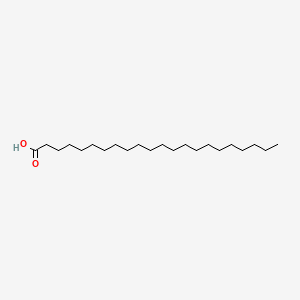
Behenic acid (docosanoic acid, C22:0, C22H44O2) is a saturated fat with 22 carbons in a straight chain. FAO and WHO (the UN food and health agencies) class 14 to 20 carbons as long-chain. At 22 carbons it is longer than that, so papers call it a very long chain saturated fatty acid (VLSFA). Its neighbors are arachidic acid (20 carbons) and lignoceric acid (24 carbons).
The name comes from ben oil, pressed from the seeds of the drumstick tree, Moringa oleifera. It is also a minor fat in peanuts and peanut butter. Your cells can lengthen shorter saturated chains with enzymes called elongases. So the behenic acid in your blood does not all come from food.
It has an odd reputation. Your gut absorbs it poorly, so it went into caprenin. That fat was assumed to give about 5 kcal a gram, against 9 for corn oil. Its effect on blood cholesterol was assumed to be neutral.
A 2001 study in 7 men, who ate all their meals on a research ward, tested that. A fat enriched in behenic acid raised LDL cholesterol (the “bad” kind) as much as palm oil did.
Behenic acid is also a research tool. Sucrose polybehenate is a form of it that the gut cannot digest. It is fed to people and animals to measure how much of other fats they absorb.
The health story is why people search for it. Large cohorts (groups followed for years) have studied older adults. Those with more behenic acid in their blood had less type 2 diabetes, heart failure and atrial fibrillation (an irregular heartbeat).
But blood levels reflect diet, the body’s own production and genes. In the main diabetes analyses, the link faded once palmitic acid and triglycerides (blood fats) were taken into account.
We found no randomized trial of behenic acid on any disease. In such a trial, chance decides who gets the treatment, so the groups can be compared fairly. There is no EU health claim for behenic acid and no daily intake set by any health body. Evidence is scarce, and this page says where.
Health benefits of behenic acid
The top findings from 15 studies, strongest evidence first
What the stars mean
- Strong. Several randomized trials, pooled in a meta-analysis, point the same way, or regulators (FDA or EFSA) have approved the claim.
- Moderate. Good randomized trials support it, but there are fewer of them, or their results vary.
- Limited. Small, short or single trials, or mixed results. Promising, but it needs confirmation.
Population and lab studies get no stars: they show a link or a mechanism, not proof.
How we rate evidence →- ★Raised LDL cholesterol, like palm oilIn 7 men, a behenic acid-rich fat raised LDL (“bad”) cholesterol to 4.40 mmol/L, like palm oil (4.42), against 3.70 on sunflower oil. The men had mildly high cholesterol, and the test fat was an enriched oil with no dose given.
- ★Caprenin lowered “good” HDL cholesterolIn 17 men with high cholesterol, 6 weeks of caprenin, a fat that is 45% behenic acid, lowered HDL cholesterol clearly. Caprenin also holds other fatty acids, so behenic acid alone cannot get the credit.
- Population studyLinked to lower type 2 diabetes riskIn a pooled analysis of 12 cohorts, people with high blood behenic acid had 0.84 times the diabetes risk of those with low levels. The link vanished when blood palmitic acid and triglycerides were also adjusted for.
- Population studyLinked to less heart failure and irregular heartbeatPeople in the top fifth of blood behenic acid had 0.72 times the heart failure risk. In another group, the top quarter had 0.62 times the risk of atrial fibrillation, an irregular heartbeat.
- Population studyLinked to a lower risk of unhealthy agingIn 2,680 older adults, the top fifth of blood behenic acid had 0.85 times the risk of chronic disease, lost function or cognitive decline.
All 11 studies, strongest evidence first
Behenic acid-rich fat raised LDL like palm oil, in 7 men
Men with mildly high cholesterol ate three diets on a research ward, 3 weeks each, adding behenate, palm or high-oleic sunflower oil. LDL was 4.40 mmol/L (a unit for blood levels) on behenate oil, 4.42 on palm oil and 3.70 on sunflower oil. Total cholesterol was 5.87, 5.84 and 5.12, while triglycerides and HDL (the “good” cholesterol) did not differ. The authors say it should not replace palmitic acid in manufactured fats, but no dose is given and the test fat was an enriched oil.
Higher blood behenic acid, less type 2 diabetes, in 12 cohorts
This pooled analysis of 51,431 people counted 14,276 new cases of diabetes. People at the 90th percentile of blood behenic acid had 0.84 times the risk of those at the 10th. Arachidic acid gave 0.78 and lignoceric acid 0.75, all after adjusting for background, lifestyle, body fat and other health factors. Catch: the link vanished in exploratory models that also adjusted for blood palmitic acid and triglycerides, so it may run through those two.
Top quarter of plasma behenic acid: 0.43 times the diabetes risk
Two US cohorts, the Nurses’ Health Study and Health Professionals Follow-Up Study, measured fatty acids in plasma and red cells. They tested 2,854 and 2,831 people and counted 243 cases of type 2 diabetes over 39,941 person-years, comparing the top with the bottom quarter. Peanuts, peanut butter, vegetable fat, dairy fat and palmitic and stearic acids in the diet tracked blood levels only weakly (correlations up to 0.19). In red cells, only arachidic and behenic acid were linked to diabetes.
High behenic acid: 33% lower diabetes risk, fading after adjustment
The Cardiovascular Health Study followed 3,179 older US adults, mean age 75 at the start, through 2011, with 284 new cases of diabetes. The comparison was for the top quarter of behenic acid in plasma phospholipids, a fraction of blood fat. After adjusting for triglycerides and palmitic acid, only arachidic acid stayed clearly linked (32% lower risk). The authors suggest that lower triglycerides and palmitic acid may explain the links.
Top fifth of blood behenic acid: 0.72 times the heart failure risk
The Cardiovascular Health Study measured plasma fatty acids in 4,249 older adults several times, over 45,030 person-years with 1,304 cases of heart failure. Results were adjusted for major risk factors and other blood fatty acids. Lignoceric acid gave 0.67 and arachidic acid 0.72. The links were similar in subgroups and for heart failure with preserved or with reduced ejection fraction (pumping strength).
Top quarter of blood behenic acid: 0.62 times the atrial fibrillation risk
The Cardiovascular Health Study followed 2,899 adults aged 65 or older, free of heart disease and atrial fibrillation in 1992, for a median 11.2 years. In that time there were 707 cases. Lignoceric acid gave 0.68, arachidic acid 0.78 and stearic acid 0.76. Palmitic acid went the other way, at 1.48 times the risk.
Top fifth of blood behenic acid: 15% lower risk of unhealthy aging
The Cardiovascular Health Study followed 2,680 older adults from 1992 to 2014, a median of 6.4 years, and 2,484 people had an event. Events were chronic disease (heart and blood vessel disease, cancer, lung disease or severe kidney disease), loss of physical function or cognitive decline. The result, 0.85 times the risk, was adjusted for background, lifestyle and health conditions. Lignoceric acid gave 0.84.
Higher blood behenic acid, less decline in verbal fluency over 20 years
The Atherosclerosis Risk in Communities cohort measured blood fatty acids in 3,229 middle-aged adults in 1987 to 1989, with tests until 2011 to 2013. The result is for the very long chain acids added together: arachidic, behenic, tricosanoic and lignoceric. 1 SD (standard deviation, a measure of spread) higher at the start went with 0.057 SD less decline on the Word Fluency Test. Each acid alone also went with less decline, but the abstract gives no figure for behenic acid alone.
In kidney transplant patients, more behenic acid went with fewer deaths
This cohort followed 680 kidney transplant recipients and 193 healthy controls for a median 5.6 years, with 146 deaths. Each standard deviation higher plasma behenic acid went with 0.79 times the risk of death from any cause. Recipients had less behenic acid than controls, and for deaths from infection the figure was 0.48, adjusted for factors including HDL cholesterol. The authors call for studies of foods with very long chain fats in people with weak immune systems.
A gene variant went with lower blood behenic acid in 10,129 people
In gene studies of seven European-ancestry cohorts, variant rs2100944 in the ceramide synthase gene CERS4 went with higher arachidic acid. After allowing for that, it went with lower behenic and lignoceric acid in plasma or red cells. A SPTLC3 variant also went with higher arachidic acid, and the authors see a link between these blood fats and how cells make sphingolipids. This shows that genes shape blood levels, not that behenic acid changes health.
Added behenic acid raised longer ceramides in cells from a rare disease
Two patients had a mutation that stopped the elongase enzyme ELOVL1, cutting ceramides and sphingomyelins with 24 or more carbons. They had ichthyosis, hypomyelination, spastic paraplegia, deafness and optic atrophy. In their cultured fibroblasts (connective tissue cells), adding C22:0 raised C24:0 ceramides and sphingomyelins. Saturated and monounsaturated chains competed for the same synthesis, but this is a rare inherited disease in cells, not a test of dietary behenic acid.
Foods high in behenic acid
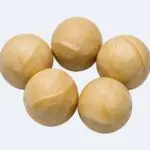
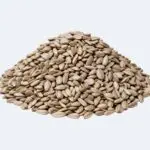
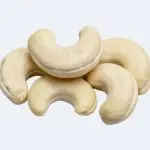
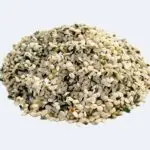
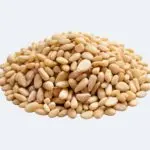
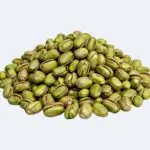
In our USDA ranking per serving, macadamia nuts lead with 0.17 g in 1 oz (28 g). Sunflower seeds come next at 0.09 g per ounce, then cashews at 0.05 g. Hemp seeds and pine nuts follow, and the ranking below shows the rest.
Macadamia nuts also lead per 100 g and per 100 kcal. All of these are small amounts, a fraction of a gram.
Peanuts are the food most often named, but they are not in the top ten of our ranking in any of the three views. In peanut oil, oleic and linoleic acid make up about 80%, says a peanut genetics paper. Six minor fatty acids, including behenic acid, make up the rest.
The share of behenic acid varies by species: among 17 wild peanut species it reached 6.2% in Arachis matiensis. We found no PubMed abstract with a measured share for cultivated peanuts, so we do not give a figure.
Peanut butter shows up in a different way. In two US cohorts, eating peanuts and peanut butter was only weakly linked to blood levels of these fats (correlations of 0.19 or less). So eating more peanuts moves blood levels only a little.
Ben oil, or moringa oil, gave behenic acid its name. In refined moringa seed oil, oleic acid was the most common fatty acid, followed by palmitic and behenic acid. Refining did not clearly change the fat makeup. Cold-pressed moringa oil also had oleic acid as the main fat, with palmitic and behenic acid in similar amounts.
In raw, sprouted and fermented moringa seed flour, behenic acid was the least common fatty acid, at 0.13 to 0.20 g per 100 g. Neither the oil nor the flour is a common food in most kitchens.
Per serving. No daily amount is set, so bars compare each food with the top food.
Per 100 g. No daily amount is set, so bars compare each food with the top food.
Per 100 kcal: the same calories of each food, for a fair comparison. Bars compare each food with the top food.
Food labels have no Daily Value or Reference Intake for behenic acid, so the % compares each food with the top food.
- 1.
- 2.
- 3.
- 4.
- 5.
- 6.
- 7.
- 8.

- 9.
- 10.


- 1.
- 2.
- 3.
- 4.
- 5.
- 6.
- 7.
- 8.
- 9.
- 10.


- 1.
- 2.
- 3.
- 4.
- 5.

- 6.
- 7.
- 8.
- 9.
- 10.


Sources
- FoodData Central. US Department of Agriculture, Agricultural Research Service. Values as shown in the ranking above.
- Wang ML, Khera P, Pandey MK, et al. Genetic mapping of QTLs controlling fatty acids provided insights into the genetic control of fatty acid synthesis pathway in peanut (Arachis hypogaea L.). PLoS One. 2015.
- Grosso NR, Nepote V, Guzmán CA. Chemical composition of some wild peanut species (Arachis L.) seeds. J Agric Food Chem. 2000.
- Sánchez-Machado DI, López-Cervantes J, Núñez-Gastélum JA, et al. Effect of the refining process on Moringa oleifera seed oil quality. Food Chem. 2015.
- Abu-Sree YH, Abdel-Fattah SM, Abdel-Razek AG, Badr AN. Neoteric approach for peanuts biofilm using the merits of Moringa extracts to control aflatoxin contamination. Toxicol Rep. 2021.
- Ijarotimi OS, Adeoti OA, Ariyo O. Comparative study on nutrient composition, phytochemical, and functional characteristics of raw, germinated, and fermented Moringa oleifera seed flour. Food Sci Nutr. 2013.
- Ardisson Korat AV, Malik VS, Furtado JD, et al. Circulating Very-Long-Chain SFA Concentrations Are Inversely Associated with Incident Type 2 Diabetes in US Men and Women. J Nutr. 2020.
How behenic acid works
Most of what is known about behenic acid comes from tests in cells, rats and a few small human studies. The human findings are about absorption, cholesterol and what blood levels go with. This section covers where it comes from, how poorly it is absorbed and how it affects LDL. It also covers what cells do with it and what has been seen in people.
It comes from food and from cells
Where behenic acid comes from and where it goes. The first panel rests on the food and absorption studies cited, the others on tests in cells. Not to scale.
Cells build very long fatty acids by adding two carbons at a time. In lab tests, the enzyme ELOVL1 was very active on saturated and monounsaturated chains of 20 and 22 carbons. It was essential for making C24 sphingolipids, and its activity is coordinated with the ceramide synthase CERS2.
In the ELOVL1 mutation study, adding C22:0 to cultured fibroblasts raised C24:0 ceramides and sphingomyelins. Gene studies in people point the same way: variants near ceramide synthase 4 (CERS4) changed blood behenic acid in 10,129 people. These are cell and gene results. They show the machinery exists, not how much of the behenic acid in a person comes from food.
It is absorbed poorly, and longer chains are absorbed less
Share of each fatty acid absorbed by 44 healthy adults, drawn to scale. Behenic acid was fed as sucrose polybehenate, the nonabsorbable marker, so it has no bar.
In 44 healthy adults, the share absorbed fell as chains got longer. It was 0.95 for myristic acid (14 carbons), 0.80 for stearic acid (18) and 0.26 for arachidic acid (20). The authors name chain length and hydrophobicity (how much a molecule repels water) as the main factors.
Behenic acid is two carbons longer than arachidic acid, and the 2001 cholesterol study calls it poorly absorbed. But the abstracts we have give no absorption figure for natural behenic acid. In rats, a fat made of behenic and oleic acids lowered and delayed the absorption of triacylglycerol (the main form of fat in food).
Sucrose polybehenate is used as a marker because it is not absorbed. It was used this way in 44 adults, in rats and mice, and in a 15-patient cystic fibrosis study. In that study, its correlation with the standard fat balance test was weak (r = 0.219).
Poorly absorbed, yet it raises LDL
LDL cholesterol in 7 men after 3 weeks on each fat, drawn to scale from zero. Behenate oil is a fat enriched in behenic acid, not pure behenic acid.
The cholesterol study was a surprise because of the poor absorption. LDL on behenate oil was 4.40 mmol/L, the same as palm oil (4.42) and above high-oleic sunflower oil (3.70). HDL and triglycerides did not differ. The abstract does not explain why a poorly absorbed fat raises LDL.
The caprenin study points in a similar direction. In 17 men, a diet rich in caprenin, which is 45% behenic acid, lowered HDL cholesterol against a palm oil baseline. Both studies were small and short, and the second used a mixture of fatty acids.
Blood levels reflect more than food
In the Nurses’ Health Study and Health Professionals Follow-Up Study, diet tracked plasma and red cell levels of these fats only weakly (0.19 or less). That covered peanuts, peanut butter, vegetable fat, dairy fat and palmitic and stearic acid. Genes matter too, as the CERS4 and SPTLC3 findings show.
Sphingolipids (fats in cell membranes) that carry 22 carbons also track outcomes. In 4,612 older adults, ceramides and sphingomyelins carrying a 22 carbon fatty acid went with lower death rates. For each doubling, ceramide-22 gave 0.79 times the risk and sphingomyelin-22 gave 0.57. Those are lipids that contain behenic acid, not behenic acid itself.
What has been seen in people
One small trial, in 7 men, showed that a behenic acid-enriched fat raised LDL as much as palm oil. The rest are cohort studies. In most of them, higher blood behenic acid went with lower risk, as the chart shows. But the comparisons differ in design, and the diabetes link faded after adjusting for palmitic acid and triglycerides.
A blood level is also not an intake. The honest summary: behenic acid is a marker with a consistent pattern in cohorts, and its effect is untested.
Risk ratio for the top against the bottom of blood behenic acid, drawn to scale from zero. The comparisons differ: 90th against 10th percentile (pooled cohorts), top quarter (two US cohorts, atrial fibrillation), top fifth (heart failure, unhealthy aging). The diabetes bar for older adults is our arithmetic from 33% lower.
Sources
- Ohno Y, Suto S, Yamanaka M, et al. ELOVL1 production of C24 acyl-CoAs is linked to C24 sphingolipid synthesis. Proc Natl Acad Sci U S A. 2010.
- Mueller N, Sassa T, Morales-Gonzalez S, et al. De novo mutation in ELOVL1 causes ichthyosis, acanthosis nigricans, hypomyelination, spastic paraplegia, high frequency deafness and optic atrophy. J Med Genet. 2019.
- Lemaitre RN, King IB, Kabagambe EK, et al. Genetic loci associated with circulating levels of very long-chain saturated fatty acids. J Lipid Res. 2015.
- McKimmie RL, Easter L, Weinberg RB. Acyl chain length, saturation, and hydrophobicity modulate the efficiency of dietary fatty acid absorption in adult humans. Am J Physiol Gastrointest Liver Physiol. 2013.
- Kojima M, Tachibana N, Yamahira T, et al. Structured triacylglycerol containing behenic and oleic acids suppresses triacylglycerol absorption and prevents obesity in rats. Lipids Health Dis. 2010.
- Jandacek RJ, Heubi JE, Tso P. A novel, noninvasive method for the measurement of intestinal fat absorption. Gastroenterology. 2004.
- Dorsey J, Buckley D, Summer S, et al. Fat malabsorption in cystic fibrosis: comparison of quantitative fat assay and a novel assay using fecal lauric/behenic acid. J Pediatr Gastroenterol Nutr. 2010.
- Cater NB, Denke MA. Behenic acid is a cholesterol-raising saturated fatty acid in humans. Am J Clin Nutr. 2001.
- Wardlaw GM, Snook JT, Park S, et al. Relative effects on serum lipids and apolipoproteins of a caprenin-rich diet compared with diets rich in palm oil/palm-kernel oil or butter. Am J Clin Nutr. 1995.
- Ardisson Korat AV, Malik VS, Furtado JD, et al. Circulating Very-Long-Chain SFA Concentrations Are Inversely Associated with Incident Type 2 Diabetes in US Men and Women. J Nutr. 2020.
- Fretts AM, Jensen PN, Hoofnagle AN, et al. Circulating Ceramides and Sphingomyelins and Risk of Mortality: The Cardiovascular Health Study. Clin Chem. 2021.
- Fretts AM, Imamura F, Marklund M, et al. Associations of circulating very-long-chain saturated fatty acids and incident type 2 diabetes: a pooled analysis of prospective cohort studies. Am J Clin Nutr. 2019.
- Lemaitre RN, Fretts AM, Sitlani CM, et al. Plasma phospholipid very-long-chain saturated fatty acids and incident diabetes in older adults: the Cardiovascular Health Study. Am J Clin Nutr. 2015.
- Lemaitre RN, McKnight B, Sotoodehnia N, et al. Circulating Very Long-Chain Saturated Fatty Acids and Heart Failure: The Cardiovascular Health Study. J Am Heart Assoc. 2018.
- Fretts AM, Mozaffarian D, Siscovick DS, et al. Plasma phospholipid saturated fatty acids and incident atrial fibrillation: the Cardiovascular Health Study. J Am Heart Assoc. 2014.
- Bockus LB, Biggs ML, Lai HTM, et al. Assessment of Plasma Phospholipid Very-Long-Chain Saturated Fatty Acid Levels and Healthy Aging. JAMA Netw Open. 2021.
How much behenic acid do you need?
No health body sets a daily amount of behenic acid. The FDA has set no Daily Value for it, and the EU no Reference Intake. We found no claim for it in Regulation (EU) No 432/2012 either.
The only related limit is for saturated fat as a whole. FAO and WHO say total saturated fat should not exceed 10% of energy (calories). That is about 200 kcal on a 2,000 kcal diet, or roughly 22 g of saturated fat at 9 kcal per gram (our arithmetic).
Behenic acid is a tiny part of that. In our ranking an ounce of macadamia nuts, the richest food, has 0.17 g.
| Source | Group | Value | Notes |
|---|---|---|---|
| FAO and WHO 2010 (1) | Adults | Total saturated fat: not more than 10% of energy | A limit for all saturated fats together. Nothing is set for behenic acid alone. |
We found no disease named for a lack of dietary behenic acid. Your cells have elongase enzymes that build chains of 20 to 24 carbons. In the ELOVL1 mutation study, the problem was the enzyme, not the diet. No study has withheld behenic acid and produced a deficiency, so this page has no deficiency section.
Sources
- FAO and WHO. Fats and fatty acids in human nutrition: report of an expert consultation. FAO Food and Nutrition Paper 91. Food and Agriculture Organization. 2010.
- European Commission. Commission Regulation (EU) No 432/2012 establishing a list of permitted health claims made on foods. Official Journal of the European Union. 2012. Text searched for behenic acid and docosanoic acid.
- Ohno Y, Suto S, Yamanaka M, et al. ELOVL1 production of C24 acyl-CoAs is linked to C24 sphingolipid synthesis. Proc Natl Acad Sci U S A. 2010.
- Mueller N, Sassa T, Morales-Gonzalez S, et al. De novo mutation in ELOVL1 causes ichthyosis, acanthosis nigricans, hypomyelination, spastic paraplegia, high frequency deafness and optic atrophy. J Med Genet. 2019.
Forms of behenic acid: absorption and effects
Behenic acid reaches people in a few forms. It is bound in the triglycerides (fat molecules) of nuts, seeds and oils. It is in fats rich in it that are made for research or food technology. In cosmetics, it appears as the free acid or its derivatives.
The honest bottom line is that no trial has compared one form with another. We also found no trial of a behenic acid supplement. What we know about forms comes from single studies of a food fat, an enriched oil and a structured fat.
The key trials above used a behenate-enriched oil (LDL in 7 men) and caprenin (HDL in 17 men). The cohorts used no form at all; they measured what the blood held. Claims that a behenic acid supplement lowers diabetes risk or protects the heart have no trial behind them.
Behenic acid is also an ingredient in hair conditioners and moisturizers. That is outside food and not covered by the studies here.
| Form | What it is | What studies show | Source |
|---|---|---|---|
| Natural fats in foods | Behenic acid bound in triglycerides in nuts, seeds and peanut and moringa oils, with many other fats | A minor fatty acid in peanut oil and third in refined moringa oil. Peanut and peanut butter intake barely moved blood VLSFAs. No trial of these foods on behenic acid. | 10, 11, 12 |
| Behenate-enriched oil | A specially formulated fat enriched with behenic acid, tested in a diet | Raised LDL cholesterol to 4.40 mmol/L, as high as palm oil (4.42) and above sunflower oil (3.70) in 7 men. | 1 |
| Caprenin | A triglyceride with 45% behenic acid and 50% caprylic and capric acid | Lowered HDL cholesterol in 17 men against a palm oil baseline. No adverse effects in rats up to 15% of the diet. | 2, 3 |
| BOO | A triglyceride with one behenic and two oleic acids | In rats, lowered lymphatic recovery of both fatty acids and cut plasma and liver triacylglycerol. We found no trial. | 4 |
| Behenic hard fat in blends | Fully hydrogenated crambe oil, interesterified with soybean and peanut oil | Food technology tests of structure for palm-free and trans-free fats, with about 18% C22:0 in a cookie filling. No human data. | 8, 9 |
| Sucrose polybehenate | An indigestible sucrose ester of behenic acid, used as a marker | Not absorbed, so it lets researchers calculate how well other fats are absorbed, in 44 adults and in rodents. Weak correlation with the fat balance test in cystic fibrosis. | 5, 6, 7 |
| Cosmetics | Behenic acid and derivatives in hair conditioners and moisturizers | Skin products, not food. We did not review studies of them. | 13 |
Here are the form-specific studies, strongest evidence first, 4 in all.
All 4 studies, strongest evidence first
Caprenin, 45% behenic acid, lowered HDL in men with high cholesterol
Caprenin has 45% 22:0 (behenic acid) and 50% 8:0 to 10:0, so behenic acid alone cannot get the credit. Across two randomized, blind trials, 17 men ate caprenin for 6 weeks after 3 weeks on palm oil and palm kernel oil. Their HDL, HDL2-C and HDL3-C fell clearly from baseline; 7 men who started on butter showed no clear change. The authors conclude that one or more of the 8:0, 10:0 and 22:0 fatty acids can contribute to high cholesterol in men.
Longer saturated fats were absorbed less in 44 healthy adults
They ate a standard diet with 35% fat and 5% sucrose polybehenate, an indigestible form of behenic acid used as a marker. Absorption fell with longer, more water-repellent chains: 0.95 for myristic acid (14 carbons), 0.80 for stearic acid and 0.26 for arachidic acid (20 carbons). Linoleic acid, an unsaturated fat, reached 0.96. Behenic acid was the marker, so the study gives no absorption figure for it; the trend is the point.
Up to 15% caprenin for 91 days: no adverse effects in rats
Weanling Sprague-Dawley rats (25 per sex per group) ate 5.23%, 10.23% or 15.00% caprenin, a fat made mostly of caprylic, capric and behenic acids. Controls ate corn oil or a corn oil and MCT oil blend, while the caprenin rats stored little C22:0 in body fat. Feed conversion efficiency (growth per unit of feed) fell at the high dose, yet the no-adverse-effect level was above 15% of the diet. That is more than 13.2 g/kg a day in males and 14.6 g/kg in females, in rats, not people.
In rats, a behenic-oleic fat cut blood and liver fat
BOO (1(3)-behenoyl-2,3(1)-dioleoyl-rac-glycerol) replaced 20% of the soybean oil for 6 weeks, and weight gain did not differ. Less of both fatty acids reached the lymph, and blood and liver triacylglycerol, visceral (organ) fat and apparent fat absorption were lower. Earlier work cited in the abstract says BOO inhibits pancreatic lipase in the lab and eased the rise in blood fat after meals in humans. We found no such trial, and the first author works at Fuji Oil Co.
Sources
- Cater NB, Denke MA. Behenic acid is a cholesterol-raising saturated fatty acid in humans. Am J Clin Nutr. 2001.
- Wardlaw GM, Snook JT, Park S, et al. Relative effects on serum lipids and apolipoproteins of a caprenin-rich diet compared with diets rich in palm oil/palm-kernel oil or butter. Am J Clin Nutr. 1995.
- Webb DR, Wood FE, Bertram TA, Fortier NE. A 91-day feeding study in rats with caprenin. Food Chem Toxicol. 1993.
- Kojima M, Tachibana N, Yamahira T, et al. Structured triacylglycerol containing behenic and oleic acids suppresses triacylglycerol absorption and prevents obesity in rats. Lipids Health Dis. 2010.
- McKimmie RL, Easter L, Weinberg RB. Acyl chain length, saturation, and hydrophobicity modulate the efficiency of dietary fatty acid absorption in adult humans. Am J Physiol Gastrointest Liver Physiol. 2013.
- Jandacek RJ, Heubi JE, Tso P. A novel, noninvasive method for the measurement of intestinal fat absorption. Gastroenterology. 2004.
- Dorsey J, Buckley D, Summer S, et al. Fat malabsorption in cystic fibrosis: comparison of quantitative fat assay and a novel assay using fecal lauric/behenic acid. J Pediatr Gastroenterol Nutr. 2010.
- Alves V, de Figueiredo Furtado G, Luccas V, et al. Structuration of lipid bases zero-trans and palm oil-free for food applications. Food Res Int. 2024.
- Alves V, Furtado GF, Roman MAS, et al. Palm Oil-Free Structured Lipids: A Novel Structuring Fat for Sandwich Cookie Fillings. Foods. 2026.
- Wang ML, Khera P, Pandey MK, et al. Genetic mapping of QTLs controlling fatty acids provided insights into the genetic control of fatty acid synthesis pathway in peanut (Arachis hypogaea L.). PLoS One. 2015.
- Sánchez-Machado DI, López-Cervantes J, Núñez-Gastélum JA, et al. Effect of the refining process on Moringa oleifera seed oil quality. Food Chem. 2015.
- Ardisson Korat AV, Malik VS, Furtado JD, et al. Circulating Very-Long-Chain SFA Concentrations Are Inversely Associated with Incident Type 2 Diabetes in US Men and Women. J Nutr. 2020.
- Behenic acid. Wikipedia. Accessed October 2026.
Is behenic acid safe? Limits and who should watch it
At the amounts in food, no source we found describes behenic acid as a safety concern. No authority sets an upper limit or a recommended intake. The amounts in nuts and seeds are fractions of a gram per serving. The questions are about concentrated forms and about saturated fat as a whole.
- Cholesterol. A fat enriched in behenic acid raised LDL cholesterol as much as palm oil in 7 men over 3 weeks. A caprenin diet lowered HDL in 17 men. A fat rich in behenic acid is not neutral for cholesterol, so if you watch your LDL, do not assume it is.
- No supplement trials. We found no trial of a behenic acid supplement in any group. There were none in children, pregnancy, breastfeeding or kidney or liver disease. The cohort links to lower diabetes or heart failure risk are not a reason to take one.
- Animal safety. In a 91-day rat study, caprenin at up to 15% of the diet caused no adverse effects. It is a mixture of fatty acids and was not tested in people.
- It is a saturated fat. FAO and WHO advise that total saturated fat not exceed 10% of energy. Peanuts and macadamia nuts come with other fats, so judge them as whole foods.
- Fumes, not food. One case report describes a librarian with recurrent purpura (purple skin spots) traced to behenic acid fumes from heat-activated photocopy paper. It is a single case of inhaled exposure, not a food risk.
How to get more behenic acid wisely
- Eat the nuts and seeds you like. Macadamia nuts have 0.17 g an ounce and sunflower seeds 0.09 g in our ranking, and peanuts are a minor source.
- Do not chase it. No daily need is set and no trial shows a benefit. The lower-risk findings are about blood levels that depend on genes, palmitic acid and triglycerides.
- Watch the fat that comes with it. Keep total saturated fat under 10% of energy, as FAO and WHO advise. Remember that a behenic acid-rich fat raised LDL in the one trial we found.
Sources
- FAO and WHO. Fats and fatty acids in human nutrition: report of an expert consultation. FAO Food and Nutrition Paper 91. Food and Agriculture Organization. 2010.
- Cater NB, Denke MA. Behenic acid is a cholesterol-raising saturated fatty acid in humans. Am J Clin Nutr. 2001.
- Wardlaw GM, Snook JT, Park S, et al. Relative effects on serum lipids and apolipoproteins of a caprenin-rich diet compared with diets rich in palm oil/palm-kernel oil or butter. Am J Clin Nutr. 1995.
- Webb DR, Wood FE, Bertram TA, Fortier NE. A 91-day feeding study in rats with caprenin. Food Chem Toxicol. 1993.
- Tencati JR, Novey HS. Hypersensitivity angiitis caused by fumes from heat-activated photocopy paper. Ann Intern Med. 1983.
- Ardisson Korat AV, Malik VS, Furtado JD, et al. Circulating Very-Long-Chain SFA Concentrations Are Inversely Associated with Incident Type 2 Diabetes in US Men and Women. J Nutr. 2020.
- Fretts AM, Imamura F, Marklund M, et al. Associations of circulating very-long-chain saturated fatty acids and incident type 2 diabetes: a pooled analysis of prospective cohort studies. Am J Clin Nutr. 2019.
- FoodData Central. US Department of Agriculture, Agricultural Research Service. Values as shown in the ranking above.
History of behenic acid
Behenic acid is named after ben oil, also spelled behen oil, pressed from the seeds of Moringa oleifera. A modern analysis of refined moringa oil still finds behenic acid among its three most abundant fatty acids.
Its medical history is short. In 1983 a case report in the Annals of Internal Medicine traced a librarian’s recurrent purpura to behenic acid fumes from heat-activated photocopy paper.
Behenic acid also became part of a food ingredient, caprenin. A 1993 rat study found no adverse effects up to 15% of the diet, and a 1995 human study found caprenin lowered HDL cholesterol. In 2001, Cater and Denke showed that a behenic acid-enriched fat raised LDL as much as palm oil, despite poor absorption.
After 2014 the focus moved to blood levels. Cohorts linked higher behenic acid to less atrial fibrillation (2014), diabetes (2015, and 12 pooled cohorts in 2019) and heart failure (2018). In 2024, a national survey linked it to lower death rates.
Sources
- Behenic acid. Wikipedia. Accessed October 2026.
- Sánchez-Machado DI, López-Cervantes J, Núñez-Gastélum JA, et al. Effect of the refining process on Moringa oleifera seed oil quality. Food Chem. 2015.
- Tencati JR, Novey HS. Hypersensitivity angiitis caused by fumes from heat-activated photocopy paper. Ann Intern Med. 1983.
- Webb DR, Wood FE, Bertram TA, Fortier NE. A 91-day feeding study in rats with caprenin. Food Chem Toxicol. 1993.
- Wardlaw GM, Snook JT, Park S, et al. Relative effects on serum lipids and apolipoproteins of a caprenin-rich diet compared with diets rich in palm oil/palm-kernel oil or butter. Am J Clin Nutr. 1995.
- Cater NB, Denke MA. Behenic acid is a cholesterol-raising saturated fatty acid in humans. Am J Clin Nutr. 2001.
- Fretts AM, Mozaffarian D, Siscovick DS, et al. Plasma phospholipid saturated fatty acids and incident atrial fibrillation: the Cardiovascular Health Study. J Am Heart Assoc. 2014.
- Lemaitre RN, Fretts AM, Sitlani CM, et al. Plasma phospholipid very-long-chain saturated fatty acids and incident diabetes in older adults: the Cardiovascular Health Study. Am J Clin Nutr. 2015.
- Lemaitre RN, McKnight B, Sotoodehnia N, et al. Circulating Very Long-Chain Saturated Fatty Acids and Heart Failure: The Cardiovascular Health Study. J Am Heart Assoc. 2018.
- Fretts AM, Imamura F, Marklund M, et al. Associations of circulating very-long-chain saturated fatty acids and incident type 2 diabetes: a pooled analysis of prospective cohort studies. Am J Clin Nutr. 2019.
Frequently asked questions about behenic acid
What is behenic acid?
Behenic acid, also called docosanoic acid or C22:0, is a saturated fat with 22 carbons (C22H44O2). It is a very long chain fatty acid. Small amounts are found in macadamia nuts, sunflower seeds, peanuts and moringa (ben) oil, which gave it its name. Its neighbors are arachidic acid and lignoceric acid.
Is behenic acid bad for cholesterol?
In the one controlled trial we found, yes. In 7 men with mildly high cholesterol, LDL was 4.40 mmol/L on a behenic acid-enriched fat and 4.42 on palm oil. It was 3.70 on high-oleic sunflower oil, and the test fat was an enriched oil at an unstated dose, not behenic acid from nuts. A caprenin diet, which is 45% behenic acid, lowered HDL in 17 men.
Does behenic acid lower the risk of diabetes?
Higher blood behenic acid goes with lower diabetes risk in cohorts, but that does not show that it lowers the risk. A pooled analysis of 12 cohorts (51,431 people) found 0.84 times the risk, and two US cohorts found 0.43 times. In the pooled analysis the link vanished after adjusting for palmitic acid and triglycerides. We found no randomized trial.
Which foods have the most behenic acid?
In our USDA ranking per serving, macadamia nuts lead with 0.17 g in an ounce. Sunflower seeds follow at 0.09 g and cashews at 0.05 g, then hemp seeds and pine nuts. Peanuts are not in the top ten, though peanut oil contains it as a minor fatty acid.
Is there behenic acid in peanuts and peanut butter?
Yes, in small amounts: behenic acid is one of six minor fatty acids that make up about 20% of peanut oil. Oleic and linoleic acid make up about 80%. We found no measured share for cultivated peanuts in a PubMed abstract. In two US cohorts, peanut and peanut butter intake correlated only weakly with blood VLSFA levels.
What is ben oil?
Ben oil, or moringa oil, is pressed from the seeds of the drumstick tree, Moringa oleifera, and gave behenic acid its name. In refined moringa seed oil, oleic acid was the most abundant fatty acid, followed by palmitic and behenic acid.
Is behenic acid absorbed, and what is caprenin?
It is absorbed poorly. In 44 adults the share absorbed fell from 0.95 for myristic acid to 0.26 for arachidic acid, two carbons shorter than behenic acid. Caprenin is a reduced-calorie triglyceride made mostly of caprylic, capric and behenic acids. It caused no adverse effects in rats up to 15% of the diet and lowered HDL in a 17-man study.
How is behenic acid different from arachidic and lignoceric acid?
They are the same kind of fat with different chain lengths: 20, 22 and 24 carbons. In cohorts they often move together. In the pooled diabetes analysis, the relative risks were 0.78 for arachidic acid, 0.84 for behenic acid and 0.75 for lignoceric acid. In an older-adult cohort, only arachidic acid stayed clearly linked after adjusting for triglycerides and palmitic acid.