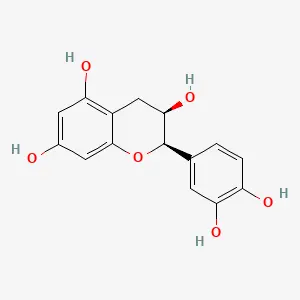
Epicatechin is a flavanol, a plant compound in the flavonoid family, and a major flavanol in cocoa. In cocoa it occurs alone and in chains of up to ten linked units. EU rules count them all as “cocoa flavanols.”
Plants make related compounds called tannins to defend themselves, according to a 2022 review. They guard against pathogens, plant-eating insects and stress from light and wounds.
In the USDA data on this page, cocoa powder holds the most epicatechin, 196 mg per 100 g. Even so, older Dutch men got most of theirs from tea (51%) and apples (28%), and only 7% from cocoa.
One thing most readers do not know is that epicatechin has close relatives that behave differently. When healthy men drank four related flavanols at the same dose, only (-)-epicatechin, the form in cocoa, clearly widened their arteries.
A second surprise is the evidence itself. Nearly all human trials used cocoa, which is a mixture, so they say little about epicatechin alone. The few trials of pure epicatechin are small.
Processing matters too. The Kuna people of Panama’s San Blas islands drank flavanol-rich cocoa as their main drink, supplying more than 900 mg of flavanols a day. In one Spanish study, alkali (“Dutch”) processing cut the epicatechin in commercial cocoa powder by 67% on average. So ordinary chocolate and the flavanol-standardized extracts used in the biggest trial are not the same thing.
Health benefits of epicatechin
The top findings from 32 studies, strongest evidence first
What the stars mean
- Strong. Several randomized trials, pooled in a meta-analysis, point the same way, or regulators (FDA or EFSA) have approved the claim.
- Moderate. Good randomized trials support it, but there are fewer of them, or their results vary.
- Limited. Small, short or single trials, or mixed results. Promising, but it needs confirmation.
Population and lab studies get no stars: they show a link or a mechanism, not proof.
How we rate evidence →- ★★★Healthy blood vessel widening from cocoa flavanolsThe EU authorizes a health claim that 200 mg a day of cocoa flavanols (not epicatechin alone) keeps blood vessels widening normally. In 42 short trials, cocoa raised artery widening by 1.34% after repeated intake.
- ★★Slightly lower blood pressureIn 35 trials, flavanol-rich cocoa lowered the top and bottom blood pressure numbers by 1.76 mm Hg each. A pool of 145 trials of flavan-3-ol products such as cocoa, tea and apples found drops of 2.8 and 2.0 mm Hg (top and bottom).
- ★★Lower insulin resistance with cocoa flavanolsIn 19 trials, cocoa flavanols cut fasting insulin by 2.33 μIU/mL and insulin resistance (HOMA-IR) by 0.93. A review of 42 cocoa trials found a smaller drop in insulin resistance (HOMA-IR fell 0.67).
- ★★No clear drop in heart eventsIn 21,442 older adults, a cocoa extract (500 mg of flavanols a day) gave 0.90 times the risk of heart events, which could be chance. Cardiovascular death was 27% lower, a secondary result.
- ★★Mixed results for thinking skillsIn 2,262 older adults, a cocoa extract had no effect on global thinking scores over 3 years. A pool of 16 trials found some thinking tests improved, but not the Mini-Mental State Exam.
All 32 studies, strongest evidence first
EFSA: 200 mg of cocoa flavanols a day keeps vessels widening normally
EFSA, the EU’s food safety agency, adopted this opinion in June 2012 for the chocolate maker Barry Callebaut. The EU authorized the health claim in 2013. EFSA based it on a 12-week trial in healthy people that raised flow-mediated dilation. A second trial showed a dose effect after one week, and two studies supported it. The amount is for cocoa flavanols as a group, not epicatechin alone. It equals about 2.5 g of high-flavanol cocoa powder or 10 g of high-flavanol dark chocolate. EFSA said how it works is unknown, and the claim is about keeping normal vessel function, not treating disease.
145 trials: flavan-3-ols lowered blood pressure 2.8/2.0 mm Hg
This meta-analysis covered 109 publications with 145 randomized trials and 5,205 people. Products included epicatechin, EGCG, cocoa, tea, grape extract and apples, a mean of 586 mg of flavan-3-ols a day. Office blood pressure fell more at high starting pressure (5.9/2.7 mm Hg), and flow-mediated dilation rose by 1.7%. A bigger epicatechin dose went with a bigger drop only in cocoa studies. The authors rate the evidence moderate because results varied widely, and two authors work for Unilever or Lipton Teas.
In 35 trials, flavanol-rich cocoa lowered blood pressure by 1.76 mm Hg
This Cochrane review (a careful review by an independent network) covered 35 randomized trials with 1,804 mostly healthy adults. The 40 comparisons lasted 2 to 18 weeks and gave 30 to 1,218 mg of flavanols a day (mean 670 mg) from cocoa. Systolic and diastolic pressure (top and bottom numbers) each fell 1.76 mm Hg. In the nine comparisons in people with high blood pressure, systolic fell 4 mm Hg. Dropping trials whose authors work for the sponsor shrank the effect a little, which the reviewers read as some reporting bias.
In 42 short trials, cocoa improved artery widening by 1.34 points
This meta-analysis covered 42 trials with 1,297 people, lasting up to 18 weeks. Flow-mediated dilation (FMD), a test of how well an artery widens, rose 1.34% after repeated intake and 3.19% after a single dose. Insulin resistance (HOMA-IR) fell 0.67 and diastolic pressure 1.60 mm Hg, with larger blood pressure effects above 50 mg of epicatechin a day. The authors rate the evidence low to moderate and ask for independently funded trials.
Cocoa flavanols raised artery widening by 1.17%, best near 95 mg epicatechin
This dose-response meta-analysis pooled 15 papers (18 intervention arms) in which people got 80 to 1,248 mg (mean 704 mg) more flavanols than controls. The curve was an inverted U. It peaked at 710 mg of total flavanols, 95 mg of (-)-epicatechin or 25 mg of (+)-catechin a day. Results varied a lot, most studies had risk-of-bias concerns, and the authors are from Nestlé Research.
Flavonoid-rich cocoa lowered insulin resistance by 0.94 points in 1,106 people
This meta-analysis of short-term randomized trials covered 24 papers. Flow-mediated dilation rose by 1.53%, with the largest effect at about 500 mg a day of flavonoids. Systolic pressure fell 1.63 mm Hg, LDL fell 0.077 mmol/L and HDL rose 0.046 mmol/L. Total cholesterol, triglycerides and CRP did not change.
In 25 trials, cocoa flavanols lowered systolic pressure 2.7 mm Hg
This updated meta-analysis had 1,167 people taking 10.6 to 1,680 mg of cocoa flavanols a day. Flow-mediated dilation rose 1.3% and diastolic pressure fell 1.85 mm Hg. Pulse wave velocity, a measure of artery stiffness, fell 0.20 m/s. The authors rate certainty moderate for systolic pressure and limited for the rest. Five authors work for Meiji, a company that develops cocoa foods, and two for another company; the paper says neither made the products studied.
In 19 trials, cocoa flavanols cut fasting insulin by 2.33 μIU/mL
This meta-analysis had 1,131 people taking 166 to 2,110 mg of cocoa flavanols a day for 2 to 52 weeks. HOMA-IR (insulin resistance) fell 0.93, triglycerides fell 0.10 mmol/L, HDL rose 0.06 mmol/L and CRP fell 0.83 mg/dL. Other biomarkers did not clearly change. Three authors received support from Mars for a cocoa flavanol trial.
COSMOS: 10% fewer heart events, but this could be chance
This randomized, placebo-controlled trial gave 21,442 older adults a cocoa extract or placebo. The extract held 500 mg of flavanols a day, including 80 mg of (-)-epicatechin. Women were 65 and older and men 60 and older, followed for a median of 3.6 years. There were 410 cardiovascular events on the extract and 456 on placebo (hazard ratio 0.90), a gap that could be chance. Among secondary results, cardiovascular death was 27% lower (0.73), while heart attack, stroke, revascularization and all-cause death did not clearly differ. Counting only people who took the pills gave 0.85, and there were no safety concerns. Mars Edge gave a grant and donated the pills, according to disclosures in related COSMOS papers.
In COSMOS-Mind, cocoa extract had no effect on global cognition
This part of the COSMOS program tested thinking skills by phone in 2,262 older adults (mean age 73) over 3 years. The cocoa extract gave 500 mg of flavanols a day and changed the global score by 0.03, a null result. The multivitamin arm showed a small gain. The paper says Mars and the NIH (US National Institutes of Health) did not contribute to the trial’s design, analysis or reporting.
In COSMOS, cocoa extract did not clearly reduce macular degeneration
This prespecified side study of COSMOS covered 21,442 older adults taking 500 mg of flavanols a day, including 80 mg of (-)-epicatechin. Of 344 confirmed cases of age-related macular degeneration (an eye disease), 159 were on the extract and 185 on placebo (hazard ratio 0.87). A split-by-time model suggested 23% lower risk in the first 2 years (0.77) and none after. So the authors say a modest early effect cannot be ruled out.
In 16 trials, cocoa improved some thinking tests, not the MMSE
This meta-analysis covered 16 trials of regular dark chocolate or cocoa with 2,847 people, and 8 found an effect on at least one thinking skill. Trail Making Test scores improved (-4.51 for part A, -13.1 for part B), and so did verbal fluency (3.15). The Mini-Mental State Exam (MMSE) did not change. Effects were larger with 500 mg or more of cocoa flavanols a day, and with 8 weeks or more. Memory results were inconsistent, and the large COSMOS-Mind trial above found no effect.
New COSMOS analysis found lower heart risk; standard method did not
This secondary analysis of the same COSMOS trial (21,442 older adults) ranked events by severity. The authors report a reciprocal win ratio of 0.84, a clear result. The usual Cox model on the same events gave a hazard ratio of 0.90, which could be chance. One result from a new method on one trial needs confirming.
COSMOS-Web: cocoa extract missed its main memory goal at 1 year
3,562 older adults took cocoa extract (500 mg of flavanols a day) or placebo, and the prespecified main memory test was not clearly different. In people in the lower thirds of diet quality or habitual flavanol intake, the extract restored memory. That is a subgroup finding. Two authors are employed by Mars, and COSMOS is supported by a grant from Mars Edge that included the pills and packaging.
Cocoa added 42.6 m to a 6-minute walk in artery disease
This phase 2 randomized trial had 44 people with peripheral artery disease (narrowed leg arteries). They drank 15 g of cocoa a day, with 75 mg of epicatechin, or a placebo drink for 6 months. The gain was measured 2.5 hours after the last drink; after 24 hours it was 18.0 m, which could be chance. 40 of 44 finished, and the authors used a lenient threshold (one-sided p below 0.10). Calf muscle biopsies showed higher mitochondrial enzyme activity and capillary density, and the authors call the results preliminary.
Cocoa three times a day raised baseline artery widening 30% in diabetes
41 people with type 2 diabetes on medicines took flavanol-rich cocoa for 30 days in this double-masked trial. Each dose held 321 mg of flavanols, against 25 mg in the control. A single dose also raised FMD in a 10-person feasibility study, from 3.7% to 5.5% at 2 hours with 963 mg. Blood pressure and blood sugar control did not change, and the cocoa was well tolerated.
Up to 2,000 mg flavanols daily was well tolerated for 12 weeks
In this two-part study, 34 healthy adults first stepped up from 1,000 to 2,000 mg a day over 6 weeks. Then 46 took up to 2,000 mg and 28 took a flavanol-free control for 12 weeks. Side effects were mild and did not differ between groups, and blood pressure and platelet function did not change. These adults had normal blood pressure and very low heart risk, so little change was expected.
Pure epicatechin lowered fasting insulin, but not clearly artery widening
37 men and women aged 40 to 80 took 100 mg of pure epicatechin a day for 4 weeks, in a randomized crossover trial. Their systolic pressure was 125 to 160. FMD rose 1.1%, which could be chance, while insulin fell 1.46 mU/L and insulin resistance (HOMA-IR) 0.38. Blood pressure, artery stiffness, nitric oxide, endothelin-1 and cholesterol did not change, and 160 mg of quercetin-3-glucoside did nothing.
A single pure epicatechin dose widened arteries within 1 to 2 hours
In this double-blind, placebo-controlled crossover trial, 20 healthy men took 0.1, 0.5 or 1.0 mg/kg of body weight, or water. FMD rose at 1 and 2 hours with 1.0 mg/kg and at 2 hours with 0.5 mg/kg, not with 0.1 mg/kg. Blood pressure did not change. The rise followed the blood level of epicatechin metabolites.
Pure epicatechin and dark chocolate gave similar, small vessel effects
In this randomized crossover trial, 20 healthy men aged 40 to 80 took 100 mg of pure epicatechin. On another day they ate 70 g of dark chocolate (150 mg of epicatechin). Two hours later, FMD had risen 0.75% with the capsules, which could be chance, and 0.96% with the chocolate, a clear result. The two did not clearly differ, and epicatechin absorption was the same from both.
200 mg of epicatechin raised nitric oxide markers; EGCG did not
In this randomized, placebo-controlled crossover trial, 12 healthy men took a single 200 mg dose of quercetin, (-)-epicatechin or EGCG, or water. Epicatechin and quercetin raised plasma S-nitrosothiols, plasma nitrite and urinary nitrate, and lowered plasma endothelin-1. EGCG changed none of the nitric oxide measures. F2-isoprostanes, a stress marker, did not change with any of them.
In cocoa, epicatechin best predicted wider arteries
In this short-term study, flavanol-rich cocoa raised nitric oxide markers and flow-mediated dilation in healthy men. Statistics picked (-)-epicatechin and its metabolite epicatechin-7-O-glucuronide as independent predictors, and pure (-)-epicatechin by mouth closely matched the effect of cocoa. Blocking nitric oxide synthase abolished the artery effect and the relaxing effect in rabbit aortic rings. The abstract gives no group size or dose.
Of four flavanol forms, only (-)-epicatechin clearly widened arteries
Healthy men drank equal amounts (1.5 mg per kg) of (-)-epicatechin, (-)-catechin, (+)-catechin and (+)-epicatechin in a cocoa-based drink. Blood and urine levels depended strongly on the shape of the molecule. The vessel effect did not depend on the usual antioxidant properties. The abstract gives no group size.
Epicatechin with a statin improved cholesterol markers in a pilot trial
This randomized, double-blind pilot ran for 3 months. The final analysis used only the metabolic syndrome group: 5 on a statin alone, 8 on a statin plus epicatechin. The epicatechin group had clearly greater changes in total cholesterol, non-HDL cholesterol and LDL particle number, and no VO2 max difference. The abstract gives no dose, and two authors co-founded and hold stock in Epirium Bio.
Epicatechin raised muscle repair markers in 7 adults with muscular dystrophy
This open-label study had no placebo group. Adults with Becker muscular dystrophy took 50 mg of (-)-epicatechin twice a day for 8 weeks, with muscle biopsies before and after. Follistatin rose and myostatin fell, and mitochondria-building signals (PGC-1alpha) and mitochondrial folds increased. Exercise tests showed lower heart rate and lactate at set workloads. These are tissue markers, not proof of stronger muscles.
A 7-day course raised hand grip strength in a small trial
This was a small proof-of-concept trial of (-)-epicatechin in people. The abstract gives neither the number of people nor the dose, so the size of the effect cannot be judged. The plasma ratio of follistatin to myostatin also rose. In the same paper, muscle lost growth signals with age in mice and people, and (-)-epicatechin lowered myostatin in mice. The authors call for a full evaluation for sarcopenia (age-related muscle loss).
In five people, cocoa raised markers of muscle mitochondria growth
These people had type 2 diabetes and heart failure. They ate epicatechin-rich dark chocolate and a drink (about 100 mg of epicatechin a day) for 3 months. The study had no control group, and muscle biopsies were taken before and after. Mitochondrial folds (cristae) and growth signals increased, while mitochondrial volume density did not change. The authors say controlled studies are needed.
In Dutch men, top epicatechin intake linked to 38% fewer heart deaths
This prospective cohort study (a group followed over time) tracked 774 older Dutch men for 25 years. Epicatechin was estimated from diet histories four times in 15 years. Mean intake was 15.2 mg a day, from tea (51%), apples (28%) and cocoa (7%). The top third had 0.62 times the risk of dying from coronary heart disease. For cardiovascular death, the link was seen only in men who already had heart disease (0.54), and the authors say more studies are needed.
Island Kuna had far lower heart and cancer death rates than mainland
This study compared 558 deaths on Panama’s San Blas islands with 77,375 mainland deaths in 2000 to 2004, from death certificates. Age-adjusted cardiovascular deaths were 9.2 against 83.4 per 100,000, and cancer deaths 4.4 against 68.4. The authors say the Kuna drink more than 900 mg of flavanols a day. They add that an observational study cannot rule out many other risk factors.
Epicatechin mice ran about 50% better on a treadmill
25 male mice aged 1 year got 1 mg/kg twice a day by stomach tube for 15 days, with or without exercise. Their muscles showed about 30% more fatigue resistance, more mitochondrial proteins, more mitochondrial folds and more capillaries. This is an animal study. The authors call it an exercise mimetic that needs further work.
In artery cells, epicatechin switched on nitric oxide production without calcium
In human coronary artery cells, epicatechin raised eNOS activation at three sites (serine 615, 633 and 1177) when calcium was removed. Bradykinin, the comparison trigger, could not. In isolated dog mesenteric arteries it activated a relaxation pathway that an eNOS blocker (nitro-L-arginine methyl ester) inhibited. This is cell and animal work, and the abstract gives no concentrations.
Cocoa raised antioxidant proteins in leg artery disease muscle
These muscle samples came from the same trial as McDermott et al. above (cocoa drink against placebo). Higher levels of the Nrf2-driven proteins HO-1 and NQO1 went with fewer central nuclei, a sign of muscle damage. A mitochondrial protein was clearly higher with cocoa. In muscle cells from people without the disease, epicatechin raised Nrf2 activation and protected against oxidative stress and mitochondrial problems caused by patient serum.
Foods high in epicatechin
In the USDA data on this page, cocoa powder is the richest source at 196 mg of epicatechin per 100 g. Green tea comes next at 8.33 mg, then apples, cherries and apricots.
Nobody eats 100 g of cocoa powder, so servings tell a different story. A cup of green tea gives 20.4 mg, a medium apple 13.7 mg and a tablespoon of cocoa powder 10.6 mg. A cup of cherries gives 7.7 mg and a medium pear 6.69 mg.
Real diets run on tea and fruit. Older Dutch men averaged 15.2 mg a day, 51% from tea, 28% from apples and 7% from cocoa. In a large European study, apples and pears were the top source of flavan-3-ols outside the UK, where tea led.
Cocoa powders vary a lot: Spanish brands held 11.6 to 73 mg of epicatechin per 100 g. Alkali processing cut it by 67% on average, probably in part by turning it into (-)-catechin, which is less well absorbed. The USDA figure may not describe every product.
Per serving. No daily amount is set, so bars compare each food with the top food.
Per 100 g. No daily amount is set, so bars compare each food with the top food.
Per 100 kcal: the same calories of each food, for a fair comparison. Bars compare each food with the top food.
Food labels have no Daily Value or Reference Intake for epicatechin, so the % compares each food with the top food.
- 1.

- 2.

- 3.
- 4.

- 5.

- 6.

- 7.

- 8.
- 9.
- 10.



- 1.
- 2.
- 3.
- 4.
- 5.
- 6.
- 7.
- 8.
- 9.
- 10.
- 1.
- 2.
- 3.
- 4.
- 5.
- 6.
- 7.
- 8.
- 9.
- 10.

Sources
- USDA Database for the Flavonoid Content of Selected Foods, Release 3.3. Bhagwat S, Haytowitz DB. US Department of Agriculture, Agricultural Research Service. 2018. The ranking above is built from it.
- Dower JI, Geleijnse JM, Hollman PC, Soedamah-Muthu SS, Kromhout D. Dietary epicatechin intake and 25-y risk of cardiovascular mortality: the Zutphen Elderly Study. Am J Clin Nutr. 2016.
- Knaze V, Zamora-Ros R, Luján-Barroso L, et al. Intake estimation of total and individual flavan-3-ols, proanthocyanidins and theaflavins, their food sources and determinants in the European Prospective Investigation into Cancer and Nutrition (EPIC) study. Br J Nutr. 2012.
- Andres-Lacueva C, Monagas M, Khan N, et al. Flavanol and flavonol contents of cocoa powder products: influence of the manufacturing process. J Agric Food Chem. 2008.
How epicatechin works
Most of what we know about how epicatechin works comes from cells, isolated arteries and animals, plus a few small human tests. Researchers point to four ideas.
It helps blood vessels make nitric oxide, and only one mirror-image form of it seems to work. It may switch on muscle and mitochondria signals, and the body rewrites it before it acts. Here is each one, and what has been seen in people.
It helps blood vessels make nitric oxide
Nitric oxide is made in the lining of blood vessels and helps them widen. That is how a Cochrane review explains cocoa’s effect on blood pressure. In human coronary artery cells, (-)-epicatechin switched on eNOS, the enzyme that makes it, even when calcium, the usual trigger, was removed. In isolated dog arteries, a blocker of the enzyme stopped the signal that leads to relaxation.
In people the picture is partly the same. After flavanol-rich cocoa, healthy men had more circulating nitric oxide species and wider arteries, and blocking the enzyme removed the artery effect. A single 200 mg dose of (-)-epicatechin raised nitric oxide markers in 12 men.
Not every test agrees. After 4 weeks of 100 mg a day, nitric oxide did not change. A dose study saw only changes in nitrite and nitrate that could be chance.
A simplified picture. The cell work shows the first steps, and in people a nitric oxide synthase blocker removed the artery effect after flavanol-rich cocoa.
Only one mirror-image form seems to work
Flavanols come in four closely related shapes: (-)-epicatechin, (+)-epicatechin, (-)-catechin and (+)-catechin. Healthy men took each at 1.5 mg per kg of body weight. Blood and urine levels differed a lot between the forms, and only (-)-epicatechin clearly widened arteries.
The widening did not depend on flavanols’ classic antioxidant properties. Catechin has its own catechin page.
A yes-or-no summary of one trial in healthy men. No effect sizes are drawn, because the abstract gives none.
The tea catechin EGCG did not behave like epicatechin either. In a crossover trial of 12 men, 200 mg of EGCG changed none of the nitric oxide measures that (-)-epicatechin raised. EGCG has its own EGCG page.
It may switch on muscle and mitochondria signals
Mitochondria are the cell’s power plants. In mice, 15 days of (-)-epicatechin raised treadmill performance by about 50%. Muscle fatigue resistance rose by about 30%, with more mitochondrial proteins and more capillaries.
In 7 adults with Becker muscular dystrophy, 8 weeks of 50 mg twice a day raised muscle follistatin and a mitochondria-building signal. It lowered myostatin, a brake on muscle growth. There was no placebo group.
Drawn to scale. The paper reports both gains as approximate. It is an animal study, not a human result.
A second route is Nrf2, a switch for the cell’s own antioxidant enzymes. In muscle samples from the cocoa trial in peripheral artery disease, rises in Nrf2-driven enzymes went with fewer signs of muscle damage. Epicatechin also protected human muscle cells from patient serum. These findings come from a single trial and from cells.
The body rewrites it before it acts
Epicatechin is changed on its way through the body, in part by gut bacteria. A 2023 review of 49 human studies counted up to 180 metabolites in blood and urine, mostly conjugates of smaller compounds made by gut bacteria.
Mean bioavailability (the share absorbed) of flavan-3-ols was 31 ± 23%. It was about 82% after (-)-epicatechin in one study, and about 25% after tea, cocoa or apples.
In the 2006 cocoa study, (-)-epicatechin and its metabolite epicatechin-7-O-glucuronide best predicted the artery effect. Which circulating compounds do the work is still being sorted out.
What has been seen in people
The human data fit the mechanisms only loosely. Meta-analyses of cocoa flavanols found flow-mediated dilation up by about 1.2 to 1.5 percentage points. Systolic pressure fell by about 1.6 to 2.7 mm Hg, which are small effects.
Pure epicatechin at 100 mg a day did not clearly change flow-mediated dilation, and the COSMOS extract missed its main heart goal. The muscle findings come from open-label studies of 5 to 7 people. All of these are among the study cards above.
Sources
- Ried K, Fakler P, Stocks NP. Effect of cocoa on blood pressure. Cochrane Database Syst Rev. 2017.
- Ramirez-Sanchez I, Maya L, Ceballos G, Villarreal F. (-)-Epicatechin induces calcium and translocation independent eNOS activation in arterial endothelial cells. Am J Physiol Cell Physiol. 2011.
- Schroeter H, Heiss C, Balzer J, et al. (-)-Epicatechin mediates beneficial effects of flavanol-rich cocoa on vascular function in humans. Proc Natl Acad Sci U S A. 2006.
- Loke WM, Hodgson JM, Proudfoot JM, et al. Pure dietary flavonoids quercetin and (-)-epicatechin augment nitric oxide products and reduce endothelin-1 acutely in healthy men. Am J Clin Nutr. 2008.
- Dower JI, Geleijnse JM, Gijsbers L, et al. Effects of the pure flavonoids epicatechin and quercetin on vascular function and cardiometabolic health. Am J Clin Nutr. 2015.
- Alañón ME, Castle SM, Serra G, et al. Acute study of dose-dependent effects of (-)-epicatechin on vascular function in healthy male volunteers. Clin Nutr. 2020.
- Ottaviani JI, Momma TY, Heiss C, Kwik-Uribe C, Schroeter H, Keen CL. The stereochemical configuration of flavanols influences the level and metabolism of flavanols in humans and their biological activity in vivo. Free Radic Biol Med. 2011.
- Nogueira L, Ramirez-Sanchez I, Perkins GA, et al. (-)-Epicatechin enhances fatigue resistance and oxidative capacity in mouse muscle. J Physiol. 2011.
- McDonald CM, Ramirez-Sanchez I, Oskarsson B, et al. (-)-Epicatechin induces mitochondrial biogenesis and markers of muscle regeneration in adults with Becker muscular dystrophy. Muscle Nerve. 2021.
- Ismaeel A, McDermott MM, Joshi JK, et al. Cocoa flavanols, Nrf2 activation, and oxidative stress in peripheral artery disease: mechanistic findings in muscle based on outcomes from a randomized trial. Am J Physiol Cell Physiol. 2024.
- Di Pede G, Mena P, Bresciani L, et al. Revisiting the bioavailability of flavan-3-ols in humans: a systematic review and comprehensive data analysis. Mol Aspects Med. 2023.
Is epicatechin safe? Supplements, dose and interactions
Eating epicatechin in tea, apples and cocoa is routine: older Dutch men took in about 15 mg a day. The EU health claim for cocoa flavanols (200 mg a day) is a statement about benefit, not a safety limit.
We found no acceptable daily intake or upper level for epicatechin or cocoa flavanols. The US FDA list of GRAS (“generally recognized as safe”) notices has no entry for epicatechin, flavanols or cocoa extract.
- Trial doses and side effects. COSMOS gave 500 mg of cocoa flavanols (80 mg of epicatechin) for a median of 3.6 years with no safety concerns. Up to 2,000 mg a day for 12 weeks was well tolerated. A Cochrane review found nausea or stomach upset in 1% of people on cocoa and 0.4% on control. Pure epicatechin has been tested at 100 mg a day for 4 weeks and 50 mg twice a day for 8 weeks, in small trials.
- Iron. Cocoa and tea drinks cut absorption of non-heme iron (the type in plant foods) from a bread meal. A cocoa drink cut it by 71%, and drinks with 100 to 400 mg of polyphenols cut it by 60 to 90%. That was measured for whole drinks, not epicatechin alone. The authors say it should be considered in iron advice. So people with low iron may want to ask a doctor about cocoa and tea with meals.
- Heavy metals in cocoa products. Of 72 US dark chocolate and cocoa products, 43% were above California’s Prop 65 limit for lead in a single serving. 35% were above its limit for cadmium. Even so, 70 of 72 were under the FDA’s reference level for lead. Organic products were more likely to have higher levels of both. An earlier US analysis found cadmium and lead rising with the percentage of cocoa solids.
- Pregnancy, medicines and conditions. We found no safety trials of epicatechin supplements in pregnancy or breastfeeding, and no drug interaction studies, so ask your doctor. Cocoa flavanols lowered blood pressure by a few mm Hg in trials. So people on blood pressure medicine should mention a new supplement.
How to get more epicatechin
- Best foods. Per serving, a cup of green tea leads the USDA ranking (20.4 mg). A medium apple (13.7 mg) and a tablespoon of cocoa powder (10.6 mg) follow.
- Skip the alkali. Dutch-processed cocoa lost 67% of its epicatechin on average, so look for natural, non-alkalized cocoa. In the 2008 Spanish survey, brands ranged from 11.6 to 73 mg per 100 g.
- Food versus extract. The 80 mg of epicatechin in the COSMOS extract equals about 41 g of USDA cocoa powder. It also equals 4 cups of green tea or 6 medium apples. One review found absorption of 82% after pure epicatechin in a single study, against about 25% from tea, cocoa or apples. But in a crossover trial, the bioavailability of epicatechin did not differ between capsules and dark chocolate.
Sources
- Ottaviani JI, Balz M, Kimball J, et al. Safety and efficacy of cocoa flavanol intake in healthy adults: a randomized, controlled, double-masked trial. Am J Clin Nutr. 2015.
- Sesso HD, Manson JE, Aragaki AK, et al. Effect of cocoa flavanol supplementation for the prevention of cardiovascular disease events: the COcoa Supplement and Multivitamin Outcomes Study (COSMOS) randomized clinical trial. Am J Clin Nutr. 2022.
- Ried K, Fakler P, Stocks NP. Effect of cocoa on blood pressure. Cochrane Database Syst Rev. 2017.
- Hurrell RF, Reddy M, Cook JD. Inhibition of non-haem iron absorption in man by polyphenolic-containing beverages. Br J Nutr. 1999.
- Hands JM, Anderson ML, Cooperman T, Balsky JE, Frame LA. A multi-year heavy metal analysis of 72 dark chocolate and cocoa products in the USA. Front Nutr. 2024. Three authors work for ConsumerLab.com.
- Abt E, Fong Sam J, Gray P, Robin LP. Cadmium and lead in cocoa powder and chocolate products in the US Market. Food Addit Contam Part B Surveill. 2018.
- GRAS Notice Inventory. US Food and Drug Administration.
- Dower JI, Geleijnse JM, Kroon PA, et al. Does epicatechin contribute to the acute vascular function effects of dark chocolate? A randomized, crossover study. Mol Nutr Food Res. 2016.
- Di Pede G, Mena P, Bresciani L, et al. Revisiting the bioavailability of flavan-3-ols in humans: a systematic review and comprehensive data analysis. Mol Aspects Med. 2023.
- Andres-Lacueva C, Monagas M, Khan N, et al. Flavanol and flavonol contents of cocoa powder products: influence of the manufacturing process. J Agric Food Chem. 2008.
History of epicatechin
The modern story starts with an island people. The Kuna of Panama’s San Blas islands had little age-related rise in blood pressure, and the rise appeared when they moved to Panama City.
Island Kuna drank more than 5 cups of flavanol-rich cocoa a day, while mainland Kuna drank little. Island dwellers had a three-fold higher urinary nitrate-to-nitrite ratio, a sign of more nitric oxide. Death certificate data showed far fewer deaths from heart disease and cancer on the islands, though the researchers noted this could not prove cause.
In 2006 a research team gave healthy men flavanol-rich cocoa. They identified (-)-epicatechin as the compound best linked to the artery response. In 2011 a follow-up compared four related flavanols and found that only (-)-epicatechin clearly widened arteries. The catechin family takes its name from catechu, the tannin-rich juice of an acacia tree.
Regulators and big trials came next. In July 2012 EFSA concluded that a cause-and-effect link had been shown between cocoa flavanols and maintaining normal artery widening. The EU authorized the claim in 2013, protecting one proprietary study for five years.
COSMOS, a trial of 21,442 older adults, ran its intervention from June 2015 to December 2020. In 2022 it reported that the cocoa extract did not clearly reduce total cardiovascular events.
Sources
- Hollenberg NK. Vascular action of cocoa flavanols in humans: the roots of the story. J Cardiovasc Pharmacol. 2006.
- Hollenberg NK, Fisher ND, McCullough ML. Flavanols, the Kuna, cocoa consumption, and nitric oxide. J Am Soc Hypertens. 2009.
- Bayard V, Chamorro F, Motta J, Hollenberg NK. Does flavanol intake influence mortality from nitric oxide-dependent processes? Ischemic heart disease, stroke, diabetes mellitus, and cancer in Panama. Int J Med Sci. 2007.
- Schroeter H, Heiss C, Balzer J, et al. (-)-Epicatechin mediates beneficial effects of flavanol-rich cocoa on vascular function in humans. Proc Natl Acad Sci U S A. 2006.
- Ottaviani JI, Momma TY, Heiss C, Kwik-Uribe C, Schroeter H, Keen CL. The stereochemical configuration of flavanols influences the level and metabolism of flavanols in humans and their biological activity in vivo. Free Radic Biol Med. 2011.
- Scientific opinion on the substantiation of a health claim related to cocoa flavanols and maintenance of normal endothelium-dependent vasodilation. EFSA Panel on Dietetic Products, Nutrition and Allergies. EFSA J. 2012.
- Commission Regulation (EU) No 851/2013 of 3 September 2013 authorising certain health claims made on foods. Official Journal of the European Union.
- Sesso HD, Manson JE, Aragaki AK, et al. Effect of cocoa flavanol supplementation for the prevention of cardiovascular disease events: the COcoa Supplement and Multivitamin Outcomes Study (COSMOS) randomized clinical trial. Am J Clin Nutr. 2022.
- Catechin. Wikipedia.
Frequently asked questions about epicatechin
What does epicatechin do for the body?
Its best-supported effect is on blood vessels. In meta-analyses of cocoa flavanols, flow-mediated dilation rose about 1.2 to 1.5 percentage points. Systolic blood pressure fell 1.6 to 2.7 mm Hg, and the EU approved a claim for 200 mg of cocoa flavanols a day. But these trials used cocoa, not pure epicatechin. The biggest trial, COSMOS, did not clearly cut heart events, and muscle findings come from tiny studies.
Which foods are high in epicatechin?
Cocoa powder leads the USDA ranking at 196 mg per 100 g. Then come green tea at 8.33 mg, apples at 7.53 mg and cherries at 5 mg. Per serving, a cup of green tea gives 20.4 mg, a medium apple 13.7 mg and a tablespoon of cocoa powder 10.6 mg. Alkali-processed cocoa holds far less, 67% less on average in one study.
How much epicatechin should you take a day?
No dose is proven best. The EU claim is for 200 mg a day of cocoa flavanols, and COSMOS used 500 mg of flavanols with 80 mg of epicatechin. Pure epicatechin trials used 100 mg a day or 50 mg twice a day. A dose analysis put the best vessel effect at about 95 mg of epicatechin. We found no official upper level, so talk to a clinician before going higher.
Does epicatechin have side effects?
Trials report few. Up to 2,000 mg of cocoa flavanols a day for 12 weeks caused only mild side effects that did not differ from control. COSMOS found no safety concerns over 3.6 years. Cocoa drinks can block iron absorption, and some cocoa products carry lead and cadmium; we found no safety trials in pregnancy.
Does epicatechin lower blood pressure?
Slightly, as part of cocoa. A Cochrane review of 35 trials found both blood pressure numbers down by about 1.8 mm Hg. A 2026 analysis found 2.7 and 1.8 mm Hg. In 37 people, 100 mg of pure epicatechin a day for 4 weeks did not change blood pressure. The drop was bigger when starting pressure was high.
What is the difference between epicatechin and catechin?
They are closely related flavanols that differ in the three-dimensional arrangement of their atoms, and the body handles them differently. In healthy men, only (-)-epicatechin clearly widened arteries, and blood levels of the four forms differed. Alkali processing of cocoa can turn (-)-epicatechin into (-)-catechin, a less well absorbed form. See the catechin page.
Epicatechin vs EGCG: which is better?
Neither has been shown better overall. In a crossover trial of 12 men, 200 mg of epicatechin raised nitric oxide markers while 200 mg of EGCG changed none. Large flavan-3-ol analyses mix both, along with cocoa and tea. See the EGCG page.
Does epicatechin build muscle?
Not proven. In mice, 15 days of (-)-epicatechin raised treadmill performance by about 50%. In 7 adults with Becker muscular dystrophy, 50 mg twice a day for 8 weeks changed muscle markers, with no placebo group. A 7-day trial reported higher hand grip strength, but its abstract gives no size or dose.