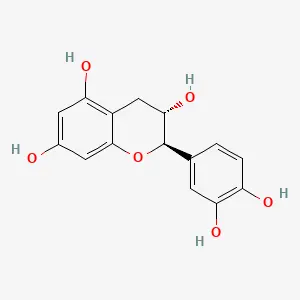
Catechin is a flavan-3-ol, a flavonoid that plants make for their own defense. Its name comes from catechu, the tannic juice, or boiled extract, of the catechu tree, Acacia catechu.
In a plant, catechin and its close relative epicatechin are the building blocks of proanthocyanidins. These are chains found in fruits, bark, leaves and seeds that protect against being eaten. They also give wine, fruit juice and tea their dry, astringent feel.
Catechin comes in mirror-image forms, and the one plants make is (+)-catechin. Raw cacao beans hold (+)-catechin and (−)-epicatechin. Roasting adds a third compound, the mirror-image (−)-catechin, because heat flips epicatechin into it.
In one test, roasting beans to 120 °C raised their catechin by 640 to 696%. Even in lightly alkalized cocoa powder, there is more of this (−)-catechin than of epicatechin.
Two things are easy to miss. First, in tea research “catechins” means a mixture dominated by EGCG. EGCG carries an added gallate group and an extra hydroxyl group on one ring.
Catechin itself is a smaller molecule (molecular weight 290.27 against 458.4). In USDA data, brewed green tea holds 70.2 mg of EGCG but only 4.47 mg of catechin per 100 g.
Second, in the 1970s and 1980s, (+)-catechin was tested as a liver drug at 1.5 to 3 g a day. Reports of immune hemolytic anemia, where the immune system destroys red blood cells, ended its use.
Health benefits of catechin
The top findings from 24 studies, strongest evidence first
What the stars mean
- Strong. Several randomized trials, pooled in a meta-analysis, point the same way, or regulators (FDA or EFSA) have approved the claim.
- Moderate. Good randomized trials support it, but there are fewer of them, or their results vary.
- Limited. Small, short or single trials, or mixed results. Promising, but it needs confirmation.
Population and lab studies get no stars: they show a link or a mechanism, not proof.
How we rate evidence →- ★★Slightly lower total and LDL cholesterolIn 20 trials, green tea catechin preparations (not catechin alone) lowered total cholesterol by 5.46 mg/dL and “bad” LDL by 5.30 mg/dL. HDL (“good” cholesterol) and triglycerides did not change.
- ★★A little weight loss when taken with caffeineIn 15 trials, green tea catechin mixes taken with caffeine cut weight by 1.38 kg and waist size by 1.93 cm, compared with caffeine alone. Without caffeine, catechins showed no benefit.
- ★Mixed results for drug-dose catechin in liver diseaseThe drug cianidanol (catechin) cut a hepatitis B marker by half or more in 44 of 144 patients, against 21 of 140 on placebo. Trials in alcohol-related liver disease found no clear benefit.
- ★Blood cell damage with drug-dose catechinIn five people taking cianidanol for 4 to 36 months, three developed hemolytic anemia (red blood cell destruction) with low platelets. Blood values returned to normal after the drug was stopped.
- Population studyLinked to a lower risk of cardiovascular diseaseIn 39 studies of 1,501,645 people, higher catechin intake went with lower risk of every cardiovascular outcome studied. In 806 older Dutch men, the top third had 0.49 times the risk of dying from ischemic heart disease.
All 24 studies, strongest evidence first
Green tea catechins cut total and LDL cholesterol about 5 mg/dL
This meta-analysis pooled 20 randomized trials with 1,415 people taking 145 to 3,000 mg a day for 3 to 24 weeks. These were green tea catechin preparations, where EGCG is the main catechin, so the result is not catechin alone. Total cholesterol fell 5.46 mg/dL and LDL (“bad” cholesterol) fell 5.30 mg/dL. HDL (“good” cholesterol) and triglycerides did not change.
With caffeine, green tea catechins cut weight 1.38 kg
This meta-analysis pooled 15 randomized trials with 1,243 people, all using green tea catechin mixtures, not catechin alone. Taken with caffeine and compared with caffeine alone, they lowered BMI by 0.55 and waist size by 1.93 cm. Waist-to-hip ratio did not change, and catechins without caffeine showed no benefit. The authors call the size of the effect modest at best.
Drug-dose catechin cut a hepatitis B marker in more patients than placebo
Cianidanol is a drug name for (+)-catechin. This double-blind, placebo-controlled trial (neither patients nor doctors knew who got what) had 338 patients with HBeAg-positive chronic hepatitis B. The 174 on cianidanol took 1.5 g a day for 2 weeks, then 2.25 g for 14 weeks. The e-antigen (HBeAg, a marker of active virus) fell by at least half in 44 of 144 treated patients and 21 of 140 on placebo. It disappeared in 16 treated patients and 4 on placebo, and the main side effect was a brief fever in 13 patients.
3 g a day sped bilirubin recovery, not antigen clearing
This double-blind trial had 160 patients (81 on the drug, 79 on placebo) taking the drug for 8 weeks. Bilirubin, a yellow pigment that builds up when the liver struggles, took 30.8 days to fall on the drug against 52.2 on placebo. The liver enzyme SGOT fell to 100 IU/L in 17.98 days against 26.53. Other results, symptoms, the clearing of hepatitis B antigen and how often the disease turned chronic did not differ.
2 g a day sped antigen clearing and eased symptoms
This double-blind trial in acute viral hepatitis had 100 patients (51 on the drug, 49 on placebo). The drug sped the clearing of hepatitis B antigen, lowered bilirubin and eased symptoms. Chronic active hepatitis developed in 1 patient on placebo, the drug was well tolerated, and the larger trial above did not repeat the antigen result. For scale, 2 g is the catechin in about 180 cups of green tea at the USDA figure of 11 mg a cup.
Catechin did not change alcohol-related liver disease in 3 months
This double-blind trial had 40 patients with early alcohol-related liver disease, 20 on 2 g a day of the drug and 20 on placebo. Those who stopped drinking improved on liver enzymes, whichever group they were in. Those who kept drinking improved on some tests too. The authors conclude the drug had no effect over 3 months.
Catechin for 6 months gave no clear benefit in alcoholic liver disease
This randomized double-blind trial compared 2 g a day with placebo in people with alcoholic liver disease confirmed by biopsy (a tissue sample). It found no clear clinical, blood or biopsy benefit, and the abstract does not give the number of patients. Liver enzymes (AST, gamma-GT) were lower on the drug after week 4, but that group drank more and started with higher enzyme levels. The authors suggest trying higher doses.
In alcoholic liver disease, catechin eased tiredness, maybe via drinking less
This year-long placebo trial in early alcoholic liver disease was randomized. It had 38 patients on 1.5 to 2 g a day and 36 on placebo. Tiredness and poor appetite eased and the liver enzyme AST fell, though some of the gain may come from drinking less. A second part added the drug to prednisolone in chronic active hepatitis (13 on the drug, 12 on placebo). The response was better, but not clearly so.
Added to prednisolone, catechin slightly improved liver tests in chronic hepatitis
This randomized trial gave 1.5 g a day for 6 months to 36 patients with chronic active hepatitis confirmed by biopsy, 18 per group. Controls kept taking the steroid prednisolone alone, with no placebo. Overall improvement came in 10 treated and 6 control patients, and worsening in 4 and 8. The liver enzyme GPT fell to under twice normal in 12 of 16 treated and 7 of 13 control patients.
In hepatitis B, catechin did not improve liver tests or biopsies
This small double-blind controlled trial gave catechin for 12 months to 26 people with chronic hepatitis B, and the abstract gives no dose. Hepatitis B antigen tended to fall, but the drop was a trend, not a clear result.
After a radioactive dose, only 0.1 to 1.4% reached urine unchanged
Volunteers took a single oral dose of radioactive (+)-catechin, and the abstract gives neither the dose nor the number of people. A mean of 55% of the radioactivity appeared in urine, 90% of it within 24 hours. About three quarters was three conjugates: glucuronides of catechin and of 3′-O-methyl-catechin, and the sulfate of the methyl form. Breakdown to small acids was minor, and metabolites stayed in blood for at least 120 hours.
After red wine, under 2% of blood catechin was free
Nine volunteers drank 120 mL of red wine on one day and de-alcoholized wine on another, each holding 35 mg of catechin. Before, blood levels were under 2 nmol/L; after 1 hour, catechin plus metabolites reached 91 nmol/L (wine) and 81 nmol/L (without alcohol). It traveled almost entirely bound to sulfate and glucuronide (conjugates), and 21% of the metabolites were methylated. That wine held several times the USDA figure for red wine (10.5 mg per 5 fl oz).
After cocoa drinks, (+)-catechin was mostly not detectable in blood, unlike epicatechin
In this randomized crossover trial (everyone tried each drink, in random order), 12 healthy nonsmokers drank a milk-based cocoa beverage. It was made with non-alkalized or alkalized cocoa. Blood was sampled for 6 hours and measured as free plus glucuronidated forms, and levels differed a lot between people. The authors conclude epicatechin is the main single flavan-3-ol in blood after cocoa.
In five people on drug-dose catechin, blood cells were destroyed
This case series covered people taking cianidanol (catechin) for 4 to 36 months, at the liver-trial doses above, far above food amounts. Three developed hemolytic anemia with low platelets, and two had low platelets alone. Blood values returned to normal after the drug was stopped. Drug-dependent antibodies against platelets were found in 4 of 5 patients, and against red cells in 3.
The drug stuck to red blood cells and set off antibodies
This report covered six patients who developed hemolysis while taking cianidanol. Cianidanol and its metabolites bound tightly to red blood cells, and each episode ended when the drug was stopped. Antibodies were found in all six, even when the episode was over a year earlier. The authors say the stable binding to red cells creates new targets for the immune system.
In 39 cohorts, more catechin went with less cardiovascular disease
This dose-response meta-analysis covered 39 prospective studies with 1,501,645 people. Higher catechin intake went with lower risk of every cardiovascular outcome studied, and flavan-3-ols overall were inversely linked with cardiovascular disease. The abstract gives no figures for catechins, which are counted as a group. Diet questionnaires and the other habits of high-intake people can blur such links.
Highest catechin intake went with 14% lower type 2 diabetes risk
The result comes from a meta-analysis of 18 prospective cohort studies of polyphenols (51 compounds in all). Comparing highest with lowest intake gave 0.86 times the risk (hazard ratio) for catechins as a group. For flavan-3-ols overall it was 0.89.
In 120,852 Dutch adults, catechin intake was not linked to colorectal cancer
The Netherlands Cohort Study followed people for 13.3 years, with 1,444 male and 1,041 female cases, and also analyzed (+)-catechin and (−)-epicatechin alone. Lower risk with higher intake appeared only in subgroups. These were rectal cancer in men with a BMI of 25 or more, and colon cancer in women with a BMI under 25. The authors say the findings generally do not support a link.
Top catechin intake linked to lower heart death risk in women
This prospective study followed 34,492 postmenopausal Iowa women from 1986 to 1998, with 767 coronary deaths. After adjustment, risk ratios for (+)-catechin and epicatechin from the lowest to highest fifth were 1.00, 0.95, 0.97, 0.77 and 0.76. The tea-type gallated catechins showed no link, and apples and wine were the sources tied to lower risk. The authors say the link may reflect other foods or a healthy lifestyle.
Higher catechin intake linked to lower rectal cancer risk in Iowa women
This prospective study followed 34,651 cancer-free women aged 55 to 69 from 1986 to 1998. The top fourth of intake had 0.55 times the rectal cancer risk, and no other cancer reached a clear result. Trends for upper digestive tract, pancreas and blood cancers pointed lower but could be chance. (+)-catechin and (−)-epicatechin from fruit tended to go with less upper digestive tract cancer, and tea catechins with less rectal cancer.
In older men, more catechin linked to half the heart death risk
The Zutphen Elderly Study followed 806 older Dutch men. Mean intake was 72 mg a day of catechins as a group, mostly from black tea, apples and chocolate. There were 90 deaths from ischemic heart disease (narrowed heart arteries), and the top third had 0.49 times the risk. Heart attacks (0.70) and stroke were not clearly linked. For catechin not from tea, a 7.5 mg rise went with a 20% lower risk, but that could be chance.
In 728 older Dutch men, catechin was not linked to epithelial cancer
This is the same Zutphen cohort as the heart disease paper above, followed for 10 years. Average intake was 72 mg a day, and 96 cancers appeared, 42 in the lung; the top third had 0.94 times the risk. Catechins not from tea were borderline linked to less lung cancer (0.66 per 7.5 mg). The authors say catechins are unlikely to explain this, since tea was not linked to cancer.
Urine catechin tracked recent flavan-3-ol intake better than usual intake
This cross-sectional study (a snapshot at a single time) had 419 people from the EPIC cohort, who gave 24-hour urine and a diet recall. Correlations with total flavan-3-ols were 0.40 to 0.48 for same-day intake and 0.23 to 0.33 for habitual intake. All comparable correlations were stronger for epicatechin than for (+)-catechin. The authors propose urine as a short-term marker.
(+)-Catechin reduced artery plaque in mice lacking the LDL receptor
This was a cell and mouse study. In human macrophages, endothelial cells and smooth muscle cells, catechin lowered reactive oxygen species (harmful oxygen molecules). In mice fed a high-fat diet for 12 weeks, plaque burden and inflammation fell and markers of plaque stability rose. The abstract gives no dose, and two authors work for Cultech Limited.
Foods high in catechin
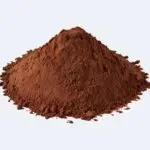
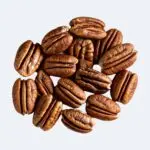
Catechin is spread widely across plant foods, and the list is not what most people expect. The USDA data list catechin apart from epicatechin and EGCG. Per 100 g, cocoa powder is far ahead at 64.8 mg. Pecans (7.24 mg) and red wine (7.14 mg) follow, then bananas, blueberries and green tea.
Per serving the drinks move up. A cup of green tea holds 11 mg of catechin and 5 fl oz of red wine 10.5 mg. A tablespoon of cocoa powder gives 3.5 mg.
Tea is not a rich source of catechin itself. Brewed green tea has 4.47 mg of catechin per 100 g against 70.2 mg of EGCG. Pecans hold more catechin (7.24 mg) than EGCG (2.3 mg).
A Dutch survey found catechins in most fruits, in chocolate and in some legumes. Amounts ran from 4.5 mg/kg in kiwi fruit to 610 mg/kg in black chocolate. (+)-Catechin and epicatechin were the main ones, and none of those foods held EGCG.
In Dutch adults, apples and pears came second to tea as a source of catechins as a group. Average intake was 50 mg a day. Processing matters: Dutch-processed cocoa lost up to 80% of its catechin.
Per serving. No daily amount is set, so bars compare each food with the top food.
Per 100 g. No daily amount is set, so bars compare each food with the top food.
Per 100 kcal: the same calories of each food, for a fair comparison. Bars compare each food with the top food.
Food labels have no Daily Value or Reference Intake for catechin, so the % compares each food with the top food.
- 1.
- 2.
- 3.
- 4.

- 5.
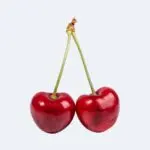
- 6.
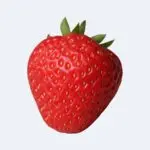
- 7.
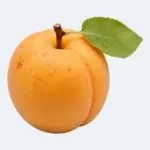
- 8.
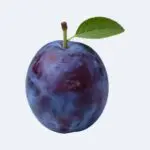
- 9.
- 10.


- 1.
- 2.
- 3.
- 4.
- 5.
- 6.
- 7.
- 8.
- 9.
- 10.


- 1.
- 2.
- 3.
- 4.
- 5.
- 6.
- 7.
- 8.
- 9.
- 10.

Sources
- USDA Database for the Flavonoid Content of Selected Foods, Release 3.3. Bhagwat S, Haytowitz DB. US Department of Agriculture, Agricultural Research Service. 2018.
- Arts IC, van de Putte B, Hollman PC. Catechin contents of foods commonly consumed in the Netherlands. 1. Fruits, vegetables, staple foods, and processed foods. J Agric Food Chem. 2000.
- Arts IC, Hollman PC, Feskens EJ, Bueno de Mesquita HB, Kromhout D. Catechin intake and associated dietary and lifestyle factors in a representative sample of Dutch men and women. Eur J Clin Nutr. 2001.
- Payne MJ, Hurst WJ, Miller KB, Rank C, Stuart DA. Impact of fermentation, drying, roasting, and Dutch processing on epicatechin and catechin content of cacao beans and cocoa ingredients. J Agric Food Chem. 2010.
How catechin works
Most of what we know about how catechin works comes from food chemistry, test tubes, bacteria cultures and animals. Very little comes from catechin alone in people.
Four ideas stand out. It is a tannin building block, and heat can turn epicatechin into a mirror-image catechin. The body changes it fast, and gut bacteria break it down. Here is each one, and what has been seen in people.
It is a building block of plant tannins
Proanthocyanidins are chains built from flavan-3-ol units, and (+)-catechin and (−)-epicatechin are their two building blocks. In plants they protect against predation and give wine, juices and teas their astringency. A 2005 review noted that how plants join the units into chains was still largely unknown.
Heat turns epicatechin into a mirror-image catechin
Raw cacao beans hold mostly (−)-epicatechin and some (+)-catechin. Fermenting the beans cuts both by more than 80%. Roasting above 70 °C then makes (−)-catechin, probably by epimerization: a change at one carbon that turns one form into its sibling.
Alkali (Dutch) processing cut epicatechin by up to 98% and catechin by up to 80% compared with natural cocoa powder. The authors of two of these studies work for The Hershey Company.
Drawn to scale. Catechin in cacao beans after roasting to 120 °C, compared with the same beans before roasting. The study links the rise to (−)-catechin formed from epicatechin.
The body changes it quickly
After red wine, nearly all the catechin in blood was already in conjugated form, with a sulfate or glucuronide added by the body. A fifth had been methylated. After a single radioactive dose, more than half the radioactivity reached the urine, but almost none as unchanged catechin.
In a cocoa study, (+)-catechin was mostly undetectable in blood, while epicatechin was easy to see. The Donovan team wrote that if flavonoids protect, the active forms are probably these metabolites.
Drawn to scale. Two separate studies: blood after red wine in 9 volunteers, and urine after one radioactive dose in volunteers.
Gut bacteria break its ring
Catechin that is not absorbed meets the bacteria of the large intestine. In lab cultures, Eggerthella lenta from a human stool sample opened the middle ring of catechin. Flavonifractor plautii then converted the product to a valerolactone and a valeric acid. The first step ran five times faster for catechin than for epicatechin, and other gut species, including Adlercreutzia equolifaciens, can open the ring too.
Simplified drawing of the steps seen in lab cultures of human gut bacteria. The rings are schematic, not exact molecules.
It calms oxygen radicals and inflammation in cells and mice
In human macrophages, blood vessel cells and vascular smooth muscle cells, (+)-catechin lowered the making of reactive oxygen species. In mice lacking the LDL receptor, it reduced plaque and inflammation.
A review says catechin can act on the Nrf2 and NF-κB pathways, which control the cell’s own defenses and inflammation. The exact mechanism is not clear, though. In people, free catechin was under 2% of what appeared in blood after red wine. So results from cells exposed to free catechin may not carry over.
What has been seen in people
The link between these ideas and health is thin. The only trials of catechin alone are old liver-drug studies, and they gave mixed results at doses far above food.
The immune hemolysis they uncovered, with antibodies against drug-coated red blood cells, is a mechanism seen in people, but only at drug doses. Cohort studies suggest lower heart disease death with higher catechin intake, as the study cards above show. But they cannot separate catechin from the other things in fruit, tea, cocoa and wine.
Sources
- Dixon RA, Xie DY, Sharma SB. Proanthocyanidins: a final frontier in flavonoid research? New Phytol. 2005.
- Payne MJ, Hurst WJ, Miller KB, Rank C, Stuart DA. Impact of fermentation, drying, roasting, and Dutch processing on epicatechin and catechin content of cacao beans and cocoa ingredients. J Agric Food Chem. 2010. Authors work for The Hershey Company.
- Hurst WJ, Krake SH, Bergmeier SC, Payne MJ, Miller KB, Stuart DA. Impact of fermentation, drying, roasting and Dutch processing on flavan-3-ol stereochemistry in cacao beans and cocoa ingredients. Chem Cent J. 2011. Authors work for The Hershey Company.
- Kofink M, Papagiannopoulos M, Galensa R. (−)-Catechin in cocoa and chocolate: occurrence and analysis of an atypical flavan-3-ol enantiomer. Molecules. 2007.
- Donovan JL, Bell JR, Kasim-Karakas S, et al. Catechin is present as metabolites in human plasma after consumption of red wine. J Nutr. 1999.
- Hackett AM, Griffiths LA, Broillet A, Wermeille M. The metabolism and excretion of (+)-[14C]cyanidanol-3 in man following oral administration. Xenobiotica. 1983.
- Ellinger S, Reusch A, Henckes L, et al. Low plasma appearance of (+)-catechin and (−)-catechin compared with epicatechin after consumption of beverages prepared from nonalkalized or alkalized cocoa. Nutrients. 2020.
- Kutschera M, Engst W, Blaut M, Braune A. Isolation of catechin-converting human intestinal bacteria. J Appl Microbiol. 2011.
- Takagaki A, Nanjo F. Bioconversion of (−)-epicatechin, (+)-epicatechin, (−)-catechin, and (+)-catechin by (−)-epigallocatechin-metabolizing bacteria. Biol Pharm Bull. 2015. Authors work for Mitsui Norin Co., Ltd.
- Chan YH, Moss JWE, Williams JO, et al. (+)-Catechin attenuates multiple atherosclerosis-associated processes in vitro, modulates disease-associated risk factors in C57BL/6J mice and reduces atherogenesis in LDL receptor deficient mice. Mol Nutr Food Res. 2023.
- Baranwal A, Aggarwal P, Rai A, Kumar N. Pharmacological actions and underlying mechanisms of catechin: a review. Mini Rev Med Chem. 2022.
- Salama A, Mueller-Eckhardt C. Cianidanol and its metabolites bind tightly to red cells and are responsible for the production of auto- and/or drug-dependent antibodies against these cells. Br J Haematol. 1987.
Is catechin safe? Supplements, dose and interactions
We found no safety concern reported for catechin from food. Dutch adults take in about 50 mg of catechins a day as a group, mostly from tea, then apples and pears. We found no acceptable daily intake or upper level set for (+)-catechin itself.
The official safety opinions are about green tea catechins. EFSA, the EU’s food safety agency, judged brewed green tea safe at usual intakes. But it found that 800 mg or more of EGCG a day from supplements raised liver enzymes. See the page on EGCG for that evidence.
- Doses used in trials. The old liver trials gave 1.5 to 3 g a day. That is the catechin in roughly 140 to 270 cups of green tea, at the USDA figure of 11 mg a cup. The main side effect was brief fever, in 13 patients in the largest trial.
- Immune hemolytic anemia. Cianidanol, the drug form of (+)-catechin, was linked to hemolytic anemia in several patients after months of use, with antibodies against red blood cells. The blood counts returned to normal after stopping. The reports we found all involve the drug, not food.
- Green tea extracts are a different product. They are mixtures led by EGCG, and the liver limit applies to EGCG. Do not read the 800 mg figure as a limit for catechin.
- Who should ask first. People with liver disease or a blood disorder should ask a doctor before taking any concentrated catechin or green tea extract.
How to get more catechin
- Best foods. Natural cocoa powder, at 64.8 mg per 100 g, is far ahead. Per serving, a cup of green tea gives 11 mg and a cup of blueberries 7.83 mg.
- Skip the alkali. Dutch-processed cocoa lost up to 80% of its catechin, so choose natural cocoa when catechin is the aim.
- Expect little to arrive intact. Less than 2% of catechin in blood was free after red wine, and (+)-catechin was mostly undetectable after cocoa. So food intake does not map neatly onto blood levels.
- Food over supplements. We found no modern trials of catechin supplements. Green tea extracts are EGCG mixtures with a liver warning at 800 mg.
Sources
- EFSA Panel on Food Additives and Nutrient Sources added to Food (ANS). Scientific opinion on the safety of green tea catechins. EFSA J. 2018.
- Arts IC, Hollman PC, Feskens EJ, Bueno de Mesquita HB, Kromhout D. Catechin intake and associated dietary and lifestyle factors in a representative sample of Dutch men and women. Eur J Clin Nutr. 2001.
- Suzuki H, Yamamoto S, Hirayama C, et al. Cianidanol therapy for HBe-antigen-positive chronic hepatitis: a multicentre, double-blind study. Liver. 1986.
- Gandolfo GM, Girelli G, Conti L, et al. Hemolytic anemia and thrombocytopenia induced by cyanidanol. Acta Haematol. 1992.
- Salama A, Mueller-Eckhardt C. Cianidanol and its metabolites bind tightly to red cells and are responsible for the production of auto- and/or drug-dependent antibodies against these cells. Br J Haematol. 1987.
- Donovan JL, Bell JR, Kasim-Karakas S, et al. Catechin is present as metabolites in human plasma after consumption of red wine. J Nutr. 1999.
- Ellinger S, Reusch A, Henckes L, et al. Low plasma appearance of (+)-catechin and (−)-catechin compared with epicatechin after consumption of beverages prepared from nonalkalized or alkalized cocoa. Nutrients. 2020.
- Payne MJ, Hurst WJ, Miller KB, Rank C, Stuart DA. Impact of fermentation, drying, roasting, and Dutch processing on epicatechin and catechin content of cacao beans and cocoa ingredients. J Agric Food Chem. 2010.
History of catechin
The name goes back to catechu, the tannic juice or boiled extract of the catechu tree, Acacia catechu. In the 1970s it also became a drug. Under the names (+)-cyanidanol-3, cianidanol and Catergen, it was tested in hepatitis, and a 1977 trial in 100 patients reported faster recovery.
Then the problems came. In 1980, Neftel and colleagues described a 68-year-old patient with repeated episodes of acute immune hemolysis on Catergen. Later case reports described acute kidney failure from the hemolysis.
Catergen was withdrawn from the market in 1985. In 1987, Salama and Mueller-Eckhardt showed that the drug and its metabolites stick to red blood cells and prompt antibodies.
Food chemistry later turned up a different surprise. In 2007 a Bonn group reported (−)-catechin, an “atypical” mirror-image form, in roasted cocoa and chocolate, formed when heat and alkali convert epicatechin.
Sources
- Catechin. Wikipedia.
- Catechin, PubChem compound 9064. National Library of Medicine. Lists cianidanol and Catergen as synonyms.
- Blum AL, Berthet P, Doelle W, et al. Treatment of acute viral hepatitis with (+)-cyanidanol-3. Lancet. 1977.
- Neftel K, Diem P, Gerber H, de Weck AL, Stucki P. Hemolytic autoimmune anemia caused by (+)-cyanidanol-3 (Catergen). Schweiz Med Wochenschr. 1980.
- Imbasciati E, De Cristofaro V, Scherini A, et al. Acute renal failure due to (+)-cyanidanol-3-induced hemolytic anemia. Nephron. 1987.
- Salama A, Mueller-Eckhardt C. Cianidanol and its metabolites bind tightly to red cells and are responsible for the production of auto- and/or drug-dependent antibodies against these cells. Br J Haematol. 1987.
- Kofink M, Papagiannopoulos M, Galensa R. (−)-Catechin in cocoa and chocolate: occurrence and analysis of an atypical flavan-3-ol enantiomer. Molecules. 2007.
Frequently asked questions about catechin
What does catechin do for the body?
No benefit of catechin itself is proven. The trials of catechin alone are old liver-disease studies at 1.5 to 3 g a day, with mixed results. Some patients developed immune hemolytic anemia. Cohort studies link higher catechin intake with lower heart disease death (risk ratios 0.76 and 0.49), but they cannot rule out other causes.
Which foods are high in catechin?
Per 100 g, cocoa powder leads at 64.8 mg in USDA data, then pecans (7.24 mg) and red wine (7.14 mg). The ranking above shows the rest. By serving, green tea gives 11 mg a cup, red wine 10.5 mg per 5 fl oz and blueberries 7.83 mg a cup.
What is the difference between catechin and EGCG?
EGCG is a bigger molecule: it has a gallate group and an extra hydroxyl group on one ring (molecular weight 458.4 against 290.27). Green tea holds 70.2 mg of EGCG but 4.47 mg of catechin per 100 g in USDA data. The research also differs: EGCG has its own trials and an 800 mg liver limit, while catechin has mostly old drug trials. See the page on EGCG.
What is the difference between catechin and epicatechin?
They have the same formula (C15H14O6) but a different arrangement at one carbon: catechin is trans and epicatechin is cis. Epicatechin is the one that shows up in blood after cocoa, while (+)-catechin mostly did not. Heat can turn epicatechin into a mirror-image catechin. See the page on epicatechin.
How much catechin should you take a day?
No dose is set. Dutch adults eat about 50 mg of catechins a day as a group. The old liver trials used 1.5 to 3 g of the drug. We found no acceptable daily intake or upper level for catechin itself. EFSA’s 800 mg figure is for EGCG from green tea extracts.
Does catechin have side effects?
At drug doses, yes. Brief fever occurred in 13 patients in a large hepatitis trial. Several people on cianidanol for months developed hemolytic anemia, with antibodies against their red blood cells. The reports we found involve the drug, not food, but ask a doctor first if you have liver disease or a blood disorder.
Does catechin help the liver?
The evidence is mixed. In acute viral hepatitis, one trial of 100 patients found faster recovery on 2 g a day. Another, of 160 patients, found bilirubin falling in 30.8 days against 52.2, but no change in chronic disease. Trials in alcohol-related liver disease found no benefit, and hemolytic anemia ended its use as a drug.