
Calcium is the most abundant mineral in your body, says the NIH (the US National Institutes of Health). About 99% of it sits in bones and teeth as calcium hydroxyapatite, a hard crystal of calcium and phosphate. An adult woman carries about 1,200 g and a man about 1,400 g.
The remaining 1% is dissolved in blood and cells. There it helps muscles and blood vessels work, nerves signal, blood clot and hormones release.
Your skeleton is also a calcium bank. The body keeps blood calcium in a narrow range, usually 8.8 to 10.4 mg/dL (milligrams per deciliter of blood). It does this by drawing on bone when intake falls, so a blood test does not show a shortfall. The cost builds up over years as lower bone mass.
In US survey data from 2007 to 2010, 39% of people aged 4 and older ate less than the estimated average requirement.
The surprises are about plants and pills. A boiled half cup of spinach lists 123 mg of calcium. Yet in one study only 5.1% of spinach calcium was absorbed, against 27.6% from milk. And calcium pills add only 0.7% to 1.8% to bone density, with no clear drop in fractures in healthy older adults living at home.
Health benefits of calcium
The top findings from 39 studies, strongest evidence first
What the stars mean
- Strong. Several randomized trials, pooled in a meta-analysis, point the same way, or regulators (FDA or EFSA) have approved the claim.
- Moderate. Good randomized trials support it, but there are fewer of them, or their results vary.
- Limited. Small, short or single trials, or mixed results. Promising, but it needs confirmation.
Population and lab studies get no stars: they show a link or a mechanism, not proof.
How we rate evidence →- ★★★Slightly higher bone density after age 50Extra calcium, from food or pills, raised bone density by only 0.7% to 1.8% in 59 trials of adults. The gain did not grow over time, so the authors say it is unlikely to cut fractures in a meaningful way.
- ★★★Slightly lower blood pressure from calcium pillsIn people with normal blood pressure, calcium pills lowered the top number a little (1.37 mm Hg systolic across 18 trials). Below 1,000 mg a day there was no clear drop.
- ★★No clear fracture drop in healthy older adultsIn adults over 50 living at home, calcium, vitamin D or both did not clearly cut hip fractures. In women averaging 84, calcium plus vitamin D cut hip fractures 43%.
- ★★Calcium plus vitamin D pills raised urinary stonesIn a large trial of women, 500 mg of calcium carbonate with 200 IU of vitamin D3 twice a day raised urinary stones by 17%. This was the combination, not calcium alone.
- ★★Mixed results on calcium pills and heart attacksA pooled analysis of calcium pills without vitamin D found 31% more heart attacks. A US expert panel found no link between calcium, with or without vitamin D, and heart disease in healthy adults.
All 28 studies, strongest evidence first
The EU allows eight claims, among them normal bones and teeth
Regulation (EU) No 432/2012 also lists normal blood clotting, energy-yielding metabolism, muscle function, neurotransmission, digestive enzymes, and a role in cell division and specialisation. A food may carry the claims only if it is at least a source of calcium (Regulation (EC) No 1924/2006). As a rule, that is 15% of the 800 mg EU Reference Intake per 100 g, or 7.5% per 100 ml for drinks. Regulation (EU) No 1169/2011 sets that rule. EFSA, the EU food safety agency, reviewed the bone and tooth claims in opinions from 2009 to 2011.
EU and US allow bone-loss and osteoporosis claims for calcium
Regulation (EU) No 1228/2014 lets foods say calcium helps reduce bone loss after menopause. The claim adds that low bone density is a risk factor for osteoporotic fractures. The food needs at least 400 mg of calcium per portion and a label naming women 50 and older. The effect needs at least 1,200 mg a day from all sources. EFSA found a causal link with less bone loss, not a proven drop in fractures. In the US, 21 CFR 101.72 lets high-calcium foods tie adequate lifelong calcium, alone or with vitamin D, to lower osteoporosis risk. Such labels may not state any degree of risk reduction.
Over 50, extra calcium raised bone density only 0.7% to 1.8%
This meta-analysis pooled 59 randomized trials (chance decided who got calcium) in adults: 15 of dietary calcium (1,533 people), 51 of supplements (12,257 people). Supplements came with or without vitamin D, and food and pills gave similar gains, except at the forearm. The gain did not grow over time, so the authors say it is unlikely to cut fracture risk in a clinically meaningful way. One author reports grants and fees from drug makers (Merck, Amgen, Lilly and Novartis).
Across 18 trials, calcium pills lowered normal blood pressure slightly
This Cochrane review covered 20 trials (3,512 people) with normal blood pressure, and the evidence was rated high-certainty. Systolic pressure, the top number, fell 1.37 mmHg in 18 trials (3,140 people), and diastolic, the bottom number, fell 1.45 mmHg in 17. The drop was larger under age 35 (1.86 mmHg systolic), and below 1,000 mg a day there was no clear drop. At 1,000 to 1,500 mg a day it was about 1 mmHg, and no trial reported hypertension or adverse events.
Calcium pills cut fractures 11%, but not in the best trials
In 20 of its 26 trials (58,573 people over 50), supplements cut total fractures to 0.89 times the risk. The four trials at lowest risk of bias found no effect, and hip fracture was not clearly lower (0.95). For dietary calcium there were only two small trials, and most of 44 cohort studies (which follow people over time) found no link with fractures. Funnel plots suggested published data favor supplements, and the authors, the Auckland group behind the heart analyses below, call the evidence weak and inconsistent.
Calcium, vitamin D or both did not clearly cut hip fractures
This meta-analysis pooled 33 trials in 51,145 adults over 50 living at home, against placebo (a dummy pill) or no treatment. Hip fracture risk was 1.53 times as high on calcium alone and 1.09 times on calcium with vitamin D, gaps that could be chance. Nonvertebral, spine and total fractures were not lower either, whatever the dose, sex, dietary calcium or starting vitamin D level. The authors report no conflicts and do not support routine use in this group.
US experts advise against low-dose calcium with vitamin D for fractures
The US Preventive Services Task Force (USPSTF) gave this a grade D for healthy postmenopausal women. Low dose here means 1,000 mg or less of calcium with 400 IU or less of vitamin D, where evidence of no benefit was adequate. For higher doses, men and premenopausal women the evidence was insufficient, and there was adequate evidence that calcium with vitamin D increases kidney stones. The advice does not apply to people with osteoporosis, a past fracture, a higher risk of falls or vitamin D deficiency.
In very old women, calcium plus vitamin D cut hip fractures 43%
In this trial, 3,270 women with an average age of 84 took calcium or a double placebo for 18 months. The 1.2 g of calcium came as tricalcium phosphate, with 800 IU of vitamin D3, so the result is not calcium alone. Nonvertebral fractures were 32% lower, parathyroid hormone fell 44%, and hip density rose 2.7% against a 4.6% fall on placebo (in 56 women). The meta-analyses above found that this benefit does not carry over to healthy older adults living at home.
Calcium with D raised hip density but did not clearly cut fractures
The Women’s Health Initiative (WHI) gave 36,282 postmenopausal women calcium carbonate with vitamin D3, or a placebo, for 7 years. The dose was 1,000 mg of calcium with 400 IU of vitamin D, and hip bone density rose 1.06%. Hip fractures were 0.88 times the risk, which could be chance, and total fractures 0.96, but kidney stones were more common (1.17 times). Leaving out women who stopped their tablets, hip fractures fell to 0.71 times the risk.
Cochrane 2025: calcium may make little to no difference to pre-eclampsia
After setting aside 20 earlier trials, the review now has 10 trials with 37,504 women. In six placebo trials (15,364 women), pre-eclampsia was 0.83 times the risk, low-certainty evidence of little to no difference. Leaving out trials with fewer than 500 women gave 0.92, high-certainty, and baseline calcium intake and pre-eclampsia risk did not change the finding. The 2018 version, with older trials, had found a large reduction, and the World Health Organization part-funded this update.
In pregnancy, 500 mg was not worse than 1,500 mg for pre-eclampsia
Two trials funded by the Gates Foundation and others compared the two doses, without placebo, in 11,000 first-time mothers each in India and Tanzania. Pre-eclampsia occurred in 3.0% on 500 mg and 3.6% on 1,500 mg in India, and in 3.0% and 2.7% in Tanzania. Preterm births passed the “not worse” test in India (11.4% against 12.8%) but not in Tanzania (10.4% against 9.7%). The trials were framed around WHO advice of 1,500 to 2,000 mg a day, in three doses, for women with low intake.
1,200 mg of calcium cut repeat bowel polyps by 19%
In this double-blind trial, 930 people with a past colorectal adenoma (a precancerous growth) took 3 g of calcium carbonate or placebo daily. That dose holds 1,200 mg of elemental calcium, and colonoscopies came at 1 and 4 years. Of 832 people who had both, 31% on calcium and 38% on placebo had an adenoma, or 0.81 times the risk after adjustment. The effect did not depend on starting fat or calcium intake, and the authors call the reduction moderate.
A larger trial: calcium did not clearly reduce repeat polyps
This later trial from the same research network, funded by the National Cancer Institute, followed 2,259 people for 3 to 5 years after adenoma removal. They took 1,200 mg of calcium as carbonate, vitamin D3 at 1,000 IU, both or neither. Repeat adenomas were 0.95 times the risk on calcium, 0.99 on vitamin D and 0.93 on both, and 43% of people had an adenoma. Advanced adenomas gave similar results.
On calcium pills without vitamin D, heart attacks rose 31%
This meta-analysis covered 15 trials of 500 mg or more a day. Five trials gave patient-level data (8,151 people, median 3.6 years): 143 heart attacks on calcium and 111 on placebo, 1.31 times the risk. Strokes (1.20) and deaths (1.09) rose but could be chance, and trial-level data from 11 more trials gave 1.27. No company funded the analysis, and one author reports past research support from and consulting for a dairy company.
Reanalysis: calcium, with or without D, raised heart attack risk 24%
In the WHI, the 16,718 women (46%) not already taking calcium had 1.13 to 1.22 times the heart risk on calcium with vitamin D. Women already taking calcium showed no change. Pooling 28,072 people from eight trials plus those women (1,384 heart attacks or strokes) gave 1.24 for heart attack and 1.15 with stroke added. This is a reanalysis of limited-access trial data, not a new trial.
US expert panel: calcium has no link to heart disease
From moderate-quality evidence, the panel judged calcium, with or without vitamin D, unrelated, good or bad, to cardiovascular disease in healthy adults. It also found no link to death from any cause. It counts intake from food and supplements below the upper level (2,000 to 2,500 mg a day) as safe for the heart. The National Osteoporosis Foundation and the American Society for Preventive Cardiology convened it, using a Tufts University evidence report. This is a guideline, not a new trial, and it disagrees with the two reanalyses above.
In men with kidney stones, a normal-calcium diet halved relapses
This five-year trial included 120 men with recurrent calcium oxalate stones and high urinary calcium. A diet with normal calcium (30 mmol a day) and less animal protein and salt was compared with a low-calcium diet. Relapses were 12 of 60 on the normal-calcium diet and 23 of 60 on the low-calcium diet, 0.49 times the risk. Urinary oxalate rose on low calcium and fell on the other diet, which also cut protein and salt, so calcium alone was not tested.
In the WHI, calcium with vitamin D raised urinary stones by 17%
Women took 500 mg of calcium carbonate with 200 IU of vitamin D3 twice daily for an average of 7.0 years. Urinary tract stones affected 449 women on it against 381 on placebo. No demographic, body size or diet factor changed the extra risk. Total calcium intake and supplement use at the start were not linked to stones, and this is a combination of calcium and vitamin D.
Calcium pills did not raise hip or spine bone density in children
This meta-analysis pooled 19 placebo-controlled trials in 2,859 healthy children, each lasting at least 3 months. There was no effect at the femoral neck (hip) or lumbar spine (lower back). Total body bone mineral content and upper-limb density rose slightly (both 0.14 standard deviations), and only the upper-limb gain lasted after stopping. Starting calcium intake did not change the result, and the authors judge the effect too small to matter for fractures.
In overweight people, calcium pills made little to no difference to weight
Across 17 trials, weight was 0.15 kg lower, low-certainty evidence because of bias and differences between trials. This Cochrane review had 18 trials with 1,873 people, mostly in the USA and Iran, lasting under six months and including only women. Body mass index fell slightly (0.18 kg/m2) and waist size by 0.51 cm, rated moderate-certainty. Review authors were also authors of included studies and did not judge their own.
Men eating the most calcium had 34% fewer kidney stones
This four-year cohort study of 45,619 men counted 505 symptomatic stones, and the top intake group had 0.66 times the risk, adjusted for other risks. Potassium and fluid were also linked to fewer stones, and animal protein to more. The authors note that a high calcium intake can lower urinary oxalate (a stone-forming compound), which may explain the result. This is a food-based finding in men and does not cover supplements.
Calcium from food went with fewer stones, from pills with more
In this twelve-year Nurses’ Health Study cohort of 91,731 women, with 864 stone cases, the highest fifth of dietary calcium had 35% fewer stones. Women taking calcium supplements had 20% more: 1.20 times the risk, against 0.65 for dietary calcium. In 67% of supplement users, the calcium was not taken with a meal, or was taken with low-oxalate meals. The authors suggest timing relative to oxalate may explain the split.
Each 300 mg more calcium went with 8% less colorectal cancer
This dose-response meta-analysis pooled 15 cohort studies with 12,305 cases, intakes of 250 to 1,900 mg a day and follow-up of 3.3 to 16 years. That is 0.92 times the risk, and supplemental calcium alone gave 9% less per 300 mg across six studies. Cohorts show a link, not proof, and trials of colorectal cancer itself have been short.
Over 1,400 mg of food calcium went with 40% higher death rates
In 61,433 Swedish women followed for a median of 19 years, the top group was compared with 600 to 1,000 mg a day. The risk was 1.40 times for death from any cause, 1.49 for cardiovascular disease and 2.14 for ischemic heart disease, but not higher for stroke. Tablet use overall was not linked to death, but tablet users with dietary calcium above 1,400 mg had 2.57 times the risk. A cohort study cannot show cause.
Men taking over 1,000 mg in pills had 20% more cardiovascular deaths
The NIH-AARP cohort followed 388,229 older Americans for a mean of 12 years. In men, the risk was 1.20 for cardiovascular death and 1.19 for heart disease death. In women it was 1.06 (0.96 to 1.18), which could be chance. Calcium from food was not linked to cardiovascular death in either sex.
Women taking over 1,000 mg in pills showed no extra cardiovascular risk
The Nurses’ Health Study followed 74,245 women for 24 years and counted 4,565 cardiovascular events. Adjusted for other risks, cardiovascular disease was 0.82 times the risk, coronary heart disease 0.71 and stroke 1.03. Supplement users were more active and smoked less, so the lower figures may not be due to calcium. The authors say the findings do not support harm in women.
The top fifth of calcium intake had fewer new artery deposits
The MESA cohort followed 5,448 adults for 10 years, measuring coronary artery calcium by CT scan, the test behind a “calcium score”. Among 1,567 people with no deposits at the start, the top fifth (about 2,157 mg a day) had 27% lower risk, or 0.73 times. Supplement use went with 22% higher risk (1.22) after accounting for total intake. The authors suggest intake from food is better than from pills.
Researchers cloned the calcium-sensing receptor of parathyroid cells
This receptor lets parathyroid cells detect the calcium level in blood, and it came from cattle parathyroid tissue. It is a large protein on the cell surface, with a big outer part whose acidic regions may bind calcium. It is linked to the control of parathyroid hormone, which restores normal blood calcium by acting on kidney and bone. This is a basic science result, not a trial in people.
Foods high in calcium
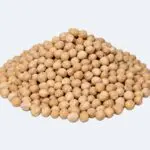
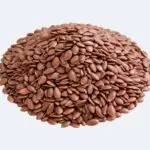
Per serving, canned sardines lead our USDA ranking with 351 mg in a 92 g can, 27% of the Daily Value (the FDA label amount). Next come semi-skimmed milk (295 mg per cup) and chia seeds (179 mg per ounce), then soybeans and navy beans.
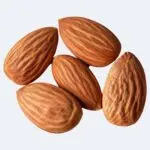
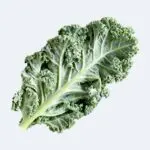
Per 100 g, sesame seeds lead with 975 mg, but a tablespoon weighs only 9 g and holds 87.8 mg. Chia seeds, thyme, sardines, rosemary and almonds follow. Per 100 kcal, greens lead: bok choy (808 mg), basil, kale and arugula. The ranking below has the full list.
Dairy is the main source in the US: about 72% of calcium comes from dairy products and foods made with them, the NIH says. It also lists foods that are not in our ranking. Plain low-fat yogurt gives 415 mg per 8 oz, part-skim mozzarella 333 mg in 1.5 oz and calcium-fortified orange juice 349 mg per cup. Fortified soymilk gives 299 mg, and firm tofu made with calcium sulfate 253 mg per half cup.
Dairy and fortified foods are absorbed at about 30%. So check absorption, not just the number. Boiled spinach lists 123 mg per half cup, but only 5.1% of it was absorbed in one study.
Oxalate and phytate, plant compounds that bind calcium, explain this. The NIH names spinach, collard greens, sweet potatoes, rhubarb and beans as high-oxalate foods. The rhubarb in our ranking (105 mg per cup) is one of them, which its number does not show. Low-oxalate greens such as kale, broccoli and bok choy are absorbed about as well as milk, but a serving holds much less calcium.
Hard water can also make a significant contribution, EFSA says.
Per serving. Bars show the share of the Daily Value (1,300 mg a day).
Per 100 g. Bars show the share of the Daily Value (1,300 mg a day).
Per serving. Bars show the share of the EU Reference Intake (800 mg a day).
Per 100 g. Bars show the share of the EU Reference Intake (800 mg a day). The line marks 100%.
Per 100 kcal: the same calories of each food, for a fair comparison. Bars compare each food with the top food.
- 1.

- 2.

- 3.
- 4.
- 5.
- 6.

- 7.

- 8.

- 9.
- 10.


- 1.
- 2.
- 3.

- 4.
- 5.

- 6.
- 7.
- 8.
- 9.

- 10.



- 1.

- 2.

- 3.
- 4.

- 5.
- 6.

- 7.
- 8.
- 9.

- 10.


Sources
- FoodData Central. US Department of Agriculture, Agricultural Research Service. Values as shown in the ranking above.
- Calcium: fact sheet for health professionals. National Institutes of Health, Office of Dietary Supplements. Updated July 11, 2025.
- EFSA Panel on Dietetic Products, Nutrition and Allergies (NDA). Scientific opinion on dietary reference values for calcium. EFSA J. 2015.
- Heaney RP, Weaver CM, Recker RR. Calcium absorbability from spinach. Am J Clin Nutr. 1988.
- Heaney RP, Weaver CM. Calcium absorption from kale. Am J Clin Nutr. 1990.
How calcium works
Most of this is established physiology rather than trials of extra calcium. The details come from reviews, cell work and small absorption studies. Four ideas cover it.
Calcium is the structure of bone and teeth, and a small dissolved pool does the signaling. The body holds blood calcium steady with hormones and bone. And absorption depends on dose, age, vitamin D and what else is in the food. Here is each one, and what has been seen in people.
It builds bones and teeth, and bone is the bank
About 99% of body calcium is calcium hydroxyapatite in bones and teeth, according to EFSA. Teeth keep their calcium, but bone is rebuilt all the time, with calcium constantly leaving and entering, as the NIH describes. That remodeling lets the skeleton grow, repair damage and act as a reservoir for blood calcium.
After menopause, women lose about 1% of their bone mineral density a year on average, the NIH says. That is why the US target rises to 1,200 mg for women over 50.
Where body calcium sits, drawn to scale (the 1% is a thin sliver). The 1% is the working pool.
A small dissolved pool does the signaling
The ionized calcium in blood and cells is a messenger. The NIH lists blood vessel contraction and dilation, muscle function, blood clotting, nerve transmission and hormone release. EFSA calls it an essential messenger inside cells. Cells sense it with a receptor on their surface.
Parathyroid cells carry one, which was first cloned from cattle tissue in 1993. This is the pool the body protects first, even at the cost of bone.
The body holds blood calcium steady
When blood calcium dips, the parathyroid glands sense it and release parathyroid hormone (PTH). PTH draws calcium out of bone and makes the kidneys keep calcium and turn vitamin D into its active form. That active vitamin D makes the gut absorb more calcium, according to the Linus Pauling Institute. When blood calcium is high, the thyroid gland releases calcitonin, which pushes the other way.
Low magnesium can also blunt PTH release, and magnesium is covered on its own page. The result is that blood calcium barely reflects what you eat. EFSA says serum calcium is held in a narrow range whatever the intake, so it is not a useful marker of status.
Simplified control loop for blood calcium. Not to scale. It is described in physiology reviews and cell work.
Absorption depends on dose, age, vitamin D and food compounds
Calcium crosses the gut by active transport, which dominates at low intakes, and by passive diffusion, which takes over as intake rises, the NIH says. So the share absorbed falls as the amount rises: from about 45% at 200 mg a day to 15% above 2,000 mg. It is about 60% in infants and young children and about 25% in adults, and it keeps declining with age. A caffeine habit and phosphorus lower net absorption a little, and phosphorus is covered on its own page.
Drawn to scale. The two groups come from different studies and measure different things, so compare within a group.
Vitamin D is needed for active absorption, but how much it adds is argued. In two experiments a year apart, absorption was 65% higher at a blood 25-hydroxyvitamin D of 86.5 nmol/L than at 50 nmol/L.
A randomized trial of 163 older women with low vitamin D tested a 100 mg dose. Its absorption rose only from 52% to 58% across a 25-hydroxyvitamin D range of 20 to 66 ng/ml. The authors say vitamin D matters most when levels are very low (under 10 ng/ml).
Plant compounds matter too. Oxalate and phytate bind calcium into salts the gut cannot take up. Spinach is the classic case, and kale, with little oxalate, is absorbed as well as milk. See oxalic acid.
Drawn to scale, as the share of the calcium in each food that was absorbed. Two separate studies, so compare within a study, not across.
What has been seen in people
The strongest human findings are modest. Raising calcium intake lifts bone density by 0.7% to 1.8% in adults over 50. That has not translated into clear fracture protection in healthy people at home. Calcium with vitamin D did cut hip fractures in one trial of women aged about 84.
Blood pressure falls by about 1.4 mmHg in people with normal pressure. For pre-eclampsia, the newest Cochrane update finds little to no difference. For colorectal adenomas, one trial found a drop and a later one did not. Calcium from food goes with fewer kidney stones in cohorts, while supplements have gone with more.
All of these are among the study cards above.
Sources
- EFSA Panel on Dietetic Products, Nutrition and Allergies (NDA). Scientific opinion on dietary reference values for calcium. EFSA J. 2015.
- Calcium: fact sheet for health professionals. National Institutes of Health, Office of Dietary Supplements. Updated July 11, 2025.
- Linus Pauling Institute, Oregon State University. Calcium. Micronutrient Information Center. Last updated 2017; that update was supported by a grant from Pfizer Inc.
- Brown EM, Gamba G, Riccardi D, et al. Cloning and characterization of an extracellular Ca2+-sensing receptor from bovine parathyroid. Nature. 1993.
- Heaney RP, Dowell MS, Barger-Lux MJ. Absorption of calcium as the carbonate and citrate salts, with some observations on method. Osteoporos Int. 1999.
- Heaney RP, Dowell MS, Hale CA, Bendich A. Calcium absorption varies within the reference range for serum 25-hydroxyvitamin D. J Am Coll Nutr. 2003.
- Gallagher JC, Yalamanchili V, Smith LM. The effect of vitamin D on calcium absorption in older women. J Clin Endocrinol Metab. 2012.
- Heaney RP, Weaver CM, Recker RR. Calcium absorbability from spinach. Am J Clin Nutr. 1988.
- Heaney RP, Weaver CM. Calcium absorption from kale. Am J Clin Nutr. 1990.
How much calcium do you need?
Adults need 1,000 mg of calcium a day in the US. The target rises to 1,200 mg for women over 50 and for everyone over 70. Children and teenagers aged 9 to 18 need 1,300 mg. EFSA’s population reference intake, which covers nearly everyone, is 950 mg from age 25 and 1,000 mg for ages 18 to 24.
Pregnancy and breastfeeding do not raise the target. The US keeps the age-based values: 1,300 mg for ages 14 to 18 and 1,000 mg for ages 19 to 50. EFSA says the value for non-pregnant women applies to pregnant and breastfeeding women of the same age, because calcium metabolism adapts.
Many people fall short. The NIH reports average intakes from food and drink of 1,083 mg for men and 842 mg for women aged 20 and older. In 2007 to 2010, 39% of people aged 4 and older ate below the estimated average requirement.
Labels use one value for everyone, as shown in the key facts above. That is a Daily Value of 1,300 mg in the US and an EU Reference Intake of 800 mg.
Calcium: recommended intake per day
US: Adequate Intake / Recommended Dietary Allowance (NASEM). EU: Adequate Intake / Population Reference Intake (EFSA).
| Age and sex | US (RDA) | EU (PRI) |
|---|---|---|
| Men, 31–50 years | 1,000 mg | 950 mg |
| Women, 31–50 years | 1,000 mg | 950 mg |
All ages, pregnancy and breastfeeding
| Age and sex | US (AI/RDA) | EU (AI/PRI) |
|---|---|---|
| Infants 0–6 months | 200 mg | None set |
| Infants 7–11 months | None set | 280 mg |
| Infants 7–12 months | 260 mg | None set |
| Children 1–3 years | 700 mg | 450 mg |
| Children 4–8 years | 1,000 mg | None set |
| Children 4–10 years | None set | 800 mg |
| Females 9–13 years | 1,300 mg | None set |
| Males 9–13 years | 1,300 mg | None set |
| Children 11–17 years | None set | 1,150 mg |
| Females 14–18 years | 1,300 mg | None set |
| Males 14–18 years | 1,300 mg | None set |
| Adults 18–24 years | None set | 1,000 mg |
| Females 19–30 years | 1,000 mg | None set |
| Males 19–30 years | 1,000 mg | None set |
| Adults 25+ years | None set | 950 mg |
| Females 31–50 years | 1,000 mg | None set |
| Males 31–50 years | 1,000 mg | None set |
| Females 51–70 years | 1,200 mg | None set |
| Males 51–70 years | 1,000 mg | None set |
| Females >70 years | 1,200 mg | None set |
| Males >70 years | 1,200 mg | None set |
| Pregnancy 14–18 years | 1,300 mg | None set |
| Pregnancy 18–24 years | None set | 1,000 mg |
| Pregnancy 19–30 years | 1,000 mg | None set |
| Pregnancy 25+ years | None set | 950 mg |
| Pregnancy 31–50 years | 1,000 mg | None set |
| Lactation 14–18 years | 1,300 mg | None set |
| Lactation 18–24 years | None set | 1,000 mg |
| Lactation 19–30 years | 1,000 mg | None set |
| Lactation 25+ years | None set | 950 mg |
| Lactation 31–50 years | 1,000 mg | None set |
EU and US age bands differ; "None set" means that body sets no value for the group. Label reference: FDA Daily Value 1,300 mg, EU Reference Intake 800 mg.EU and US age bands differ; "None set" means that body sets no value for the group. Label reference: EU Reference Intake 800 mg, FDA Daily Value 1,300 mg.
Calcium deficiency: signs and who is at risk
Low calcium intake rarely causes symptoms at first, because the body draws on bone to keep blood calcium steady. Over years, it leads to lower bone mass, osteopenia, osteoporosis and a higher fracture risk, according to EFSA. Rickets in children and osteomalacia (soft bones) in adults can also occur, though the NIH says vitamin D deficiency is the more common cause.
Low blood calcium (hypocalcemia, below 8.5 mg/dL) usually has another cause. Examples are vitamin D or magnesium deficiency, an underactive parathyroid, critical illness, or medicines such as bisphosphonates, cisplatin and proton pump inhibitors. It brings numbness around the mouth, tingling in the hands and feet and muscle spasms. In severe cases it brings seizures, so it needs a doctor.
- Who is at risk. Postmenopausal women, who lose about 1% of bone mineral density a year, are at risk. So are people who avoid dairy, including vegans and people with lactose intolerance or milk allergy. They typically need fortified foods or supplements to reach the target, the NIH says. In US data from 2009 to 2012, 47% to 48% of non-Hispanic Black and Asian people ate below the estimated average requirement. Among non-Hispanic White people it was 24%.
- Testing. A blood test does not reflect calcium intake or status, because blood levels are so tightly controlled. A DXA scan (dual x-ray) of bone density shows lifetime calcium status, the NIH says. Talk to a doctor about bone density testing rather than guessing from diet.
Sources
- Calcium: fact sheet for health professionals. National Institutes of Health, Office of Dietary Supplements. Updated July 11, 2025.
- Institute of Medicine. Dietary reference intakes for calcium and vitamin D. National Academies Press. 2011. Values as tabulated by the NIH Office of Dietary Supplements.
- EFSA Panel on Dietetic Products, Nutrition and Allergies (NDA). Scientific opinion on dietary reference values for calcium. EFSA J. 2015.
- Regulation (EU) No 1169/2011 on the provision of food information to consumers. Official Journal of the European Union. 2011. Annex XIII.
Forms of calcium: absorption and effects
Calcium supplements and fortified foods use different calcium salts. They differ in how much actual (elemental) calcium each tablet holds, whether they need stomach acid to dissolve, and side effects. The NIH lists calcium carbonate as 40% calcium by weight and calcium citrate as 21%. So a tablet with 1,000 mg of carbonate holds about 400 mg of calcium.
The Supplement Facts panel lists the elemental amount, which is the number to use.
The honest bottom line is that nearly all the head-to-head work compares how much calcium reaches the blood, not bone density or fractures. With a meal, carbonate and citrate were absorbed about equally in the best-controlled trial. Citrate does better on an empty stomach, with little stomach acid and after weight-loss surgery.
Absorption also falls as the dose rises, which is why supplements are split into doses of 500 mg or less. We found no trial that tested whether one form protects bone better, so such claims have nothing behind them.
| Form | Share of calcium by weight | What studies show | Source |
|---|---|---|---|
| Calcium carbonate | 40% (NIH) | Needs stomach acid to dissolve, so it is best with food. Equal to citrate with a light breakfast in 37 adults, and 4.2% absorbed against 45.2% for citrate in 11 fasting people with no stomach acid. It is the form used in the Women’s Health Initiative and both adenoma trials. | 1, 4, 5, 15, 16, 17 |
| Calcium citrate | 21% (NIH) | Depends less on stomach acid and can be taken without food. A meta-analysis found 21.6% better absorption than carbonate with meals, but a head-to-head trial with a meal found no difference. Better absorbed after weight-loss surgery (150 people). | 1, 3, 4, 6, 7 |
| Calcium citrate malate | Not stated | Used in some fortified juices (NIH). In orange juice it gave 148 mg of absorbed calcium from 500 mg, against 100 mg for tricalcium phosphate with calcium lactate, in 25 women. | 1, 8 |
| Tricalcium phosphate | Not stated | Used with vitamin D3 in the French hip fracture trial (1.2 g of elemental calcium). In soymilk it was absorbed less (0.181) than carbonate (0.211) in 20 women. | 14, 9 |
| Calcium lactate and calcium gluconate | Not stated | Listed by the NIH as supplement forms. A review calls them less concentrated and not practical as oral supplements. We found no human trial comparing their absorption with carbonate. | 1, 2 |
| Calcium sulfate and hydroxyapatite | Not stated | Listed by the NIH. Calcium sulfate is a salt used to set some tofu: half a cup of firm tofu made with it holds 253 mg. A review says research on hydroxyapatite is limited and does not recommend it. | 1, 2 |
| Milk and dairy | Not applicable | About 30% absorbed (NIH). In 13 adults 27.6% of 200 mg of calcium was absorbed from milk, and in 11 women 32.1% of 300 mg. | 1, 10, 11 |
| Kale and other low-oxalate greens | Not applicable | 40.9% of the calcium in kale was absorbed in 11 women. The NIH says broccoli, kale and cabbage are absorbed about as well as milk. | 1, 11 |
| Spinach and other high-oxalate foods | Not applicable | 5.1% of the calcium in spinach was absorbed in 13 adults. | 10 |
| Calcium in mineral water | Not applicable | Absorbed as well as milk in two crossover trials (9 and 21 people), including a water with 467 mg of calcium per liter. | 12, 13 |
All 11 studies, strongest evidence first
Pooled studies: citrate absorbed 21.6% better than carbonate with meals
This meta-analysis pooled fifteen studies with 184 people, including 5 studies (71 people) on an empty stomach and 6 (65 people) with meals. On an empty stomach, citrate was absorbed 27.2% better, and the authors conclude citrate is about 22% to 27% better either way. This measures absorption, not bone or fractures, and the head-to-head trial below found no difference with a meal.
With breakfast, carbonate was absorbed as well as citrate
Each of 37 adults ate a light breakfast and took both salts at the same dose. Averaging both salts, 36.0% of a 300 mg dose and 28.4% of a 1,000 mg dose was absorbed, so the share falls with dose. Carbonate did 3.3 points better at 1,000 mg, and 3.6 points better at 300 mg, though that gap could be chance. Across both experiments the difference was zero, so the authors conclude carbonate is fully as absorbable as citrate with food.
After weight-loss surgery, citrate did slightly better than carbonate
In this double-blind crossover trial, 150 people took both salts in turn, about 10 months after weight-loss surgery. There were 50 after each of three operations: Roux-en-Y gastric bypass, sleeve gastrectomy and one-anastomosis bypass. Citrate gave a higher blood calcium peak (9.8 against 9.5 mg/dL) and a bigger fall in parathyroid hormone. Blood calcium over 8 hours was 76.1 against 74.7 mg/dL·h, small differences in a group with altered digestion.
Without stomach acid, citrate was absorbed far better than carbonate
This sole-author study tested 250 mg of calcium in 11 people with achlorhydria (no stomach acid) and 9 with normal acid. Fasting, the 11 without acid absorbed 45.2% from citrate but only 4.2% from carbonate. With normal acid, absorption was 24.3% from citrate and 22.5% from carbonate. Carbonate taken with a normal breakfast gave completely normal absorption even without stomach acid.
In 24 women, carbonate and citrate tablets raised blood calcium equally
Postmenopausal women, made vitamin D-replete first, took single doses of store-bought tablets in random order, with an encapsulated carbonate as a third arm. Blood calcium rose the same over 24 hours. Urine calcium rose slightly more with citrate, which could be chance, and parathyroid hormone fell the same with each. The authors conclude the cheaper carbonate gives better value.
Calcium citrate malate juice delivered 48% more calcium than another fortified juice
After an overnight fast, 25 women drank each juice at breakfast, in random order, with 500 mg of calcium in each. The other juice used tricalcium phosphate and calcium lactate. Absorbed calcium worked out at 148 mg against 100 mg. The authors conclude equal calcium on the label does not guarantee equal value, and ask makers to share data on how much is absorbed (bioavailability).
Soymilk with calcium carbonate was absorbed as well as cow’s milk
In this crossover trial, 20 young women had each drink with 250 mg of calcium after an overnight fast, traced with stable isotopes. The share absorbed was 0.211 for carbonate soymilk, 0.217 for cow’s milk and 0.181 for tricalcium phosphate soymilk. The first two did not differ.
Only 5.1% of spinach calcium was absorbed, against 27.6% from milk
In random order, 13 adults ate meals with 200 mg of labeled calcium from spinach or milk. The spinach held a very slight excess of oxalate over calcium, so nearly all its calcium was probably bound. Milk did better in every person, by 22.5 percentage points on average. See oxalic acid.
40.9% of kale calcium was absorbed, more than 32.1% from milk
In 11 women, kale grown with a calcium label was compared with milk, each giving an average of 300 mg of calcium. Kale is low in oxalate, unlike spinach, and the authors call kale calcium excellent in absorbability. A cup of cooked kale holds less calcium than a cup of milk, so the share absorbed is only part of the picture.
Calcium from mineral water was absorbed as well as from milk
Nine fasting young women took 1,000 mg of calcium from milk or from a water with 467 mg per liter, traced with stable isotopes. Absorption was 23.8% from the water and 25.0% from milk, and urine calcium did not differ. The water’s high sulfate had no calcium-losing effect, and the abstract does not say who paid for the study.
Three mineral waters, milk and a pill raised blood calcium equally
In random order, 21 adults took 300 mg of calcium from each of the five products on five days, a week apart. Serum calcium over 10 hours and 24-hour urine calcium did not differ. High sulfate or bicarbonate in the water did not change absorption, and the authors call mineral water a calorie-free calcium source.
The outcome trials above used these forms. Calcium carbonate was used in the Women’s Health Initiative and in both adenoma trials, and tricalcium phosphate in the French hip fracture trial. So most of what we know about fractures, stones and heart events comes from carbonate, often with vitamin D. We found no trial that compared forms for those outcomes.
The NIH says calcium carbonate appears to cause more gas, bloating and constipation than citrate, especially in older adults with low stomach acid. It suggests switching form, taking smaller doses more often, or taking it with meals. We found no trial that compared constipation between forms, so this point rests on the NIH summary. Milk and mineral water give calcium without tablets.
Sources
- Calcium: fact sheet for health professionals. National Institutes of Health, Office of Dietary Supplements. Updated July 11, 2025.
- Straub DA. Calcium supplementation in clinical practice: a review of forms, doses, and indications. Nutr Clin Pract. 2007.
- Sakhaee K, Bhuket T, Adams-Huet B, Rao DS. Meta-analysis of calcium bioavailability: a comparison of calcium citrate with calcium carbonate. Am J Ther. 1999.
- Heaney RP, Dowell MS, Barger-Lux MJ. Absorption of calcium as the carbonate and citrate salts, with some observations on method. Osteoporos Int. 1999.
- Recker RR. Calcium absorption and achlorhydria. N Engl J Med. 1985.
- Heaney RP, Dowell MS, Bierman J, Hale CA, Bendich A. Absorbability and cost effectiveness in calcium supplementation. J Am Coll Nutr. 2001.
- Hany M, Wuyts S, Abouelnasr AA, et al. Comparison of calcium citrate and calcium carbonate absorption in patients with a Roux-en-Y gastric bypass, sleeve gastrectomy, and one-anastomosis gastric bypass: a double-blind, randomized cross-over trial. Surg Obes Relat Dis. 2025.
- Heaney RP, Rafferty K, Dowell MS, Bierman J. Calcium fortification systems differ in bioavailability. J Am Diet Assoc. 2005.
- Zhao Y, Martin BR, Weaver CM. Calcium bioavailability of calcium carbonate fortified soymilk is equivalent to cow’s milk in young women. J Nutr. 2005.
- Heaney RP, Weaver CM, Recker RR. Calcium absorbability from spinach. Am J Clin Nutr. 1988.
- Heaney RP, Weaver CM. Calcium absorption from kale. Am J Clin Nutr. 1990.
- Couzy F, Kastenmayer P, Vigo M, et al. Calcium bioavailability from a calcium- and sulfate-rich mineral water, compared with milk, in young adult women. Am J Clin Nutr. 1995.
- Greupner T, Schneider I, Hahn A. Calcium bioavailability from mineral waters with different mineralization in comparison to milk and a supplement. J Am Coll Nutr. 2017.
- Chapuy MC, Arlot ME, Duboeuf F, et al. Vitamin D3 and calcium to prevent hip fractures in elderly women. N Engl J Med. 1992.
- Jackson RD, LaCroix AZ, Gass M, et al. Calcium plus vitamin D supplementation and the risk of fractures. N Engl J Med. 2006.
- Baron JA, Beach M, Mandel JS, et al. Calcium supplements for the prevention of colorectal adenomas. N Engl J Med. 1999.
- Baron JA, Barry EL, Mott LA, et al. A trial of calcium and vitamin D for the prevention of colorectal adenomas. N Engl J Med. 2015.
Is calcium safe? Supplements, dose and interactions
Calcium from food is not a concern for most people. The US tolerable upper intake level (UL), the most a day unlikely to cause harm, counts food and supplements together. It is 2,500 mg a day for ages 19 to 50, 2,000 mg from age 51, and 3,000 mg for ages 9 to 18.
The NIH says these limits rest on Women’s Health Initiative evidence. It showed more kidney stones at 1,000 mg a day of supplemental calcium for 7 years, though two later reviews did not find that link.
EFSA keeps an upper level of 2,500 mg a day from all sources for adults, including pregnant and breastfeeding women. It says there were not enough data to set a level for infants, children or adolescents. EFSA also notes that high blood calcium (hypercalcemia) is unlikely from food alone, but can follow high-dose supplements, especially with vitamin D.
- Doses and side effects. Supplements typically hold 500 or 600 mg, and multivitamins 200 to 300 mg. Gas, bloating and constipation can occur, and the NIH says carbonate appears to cause more than citrate. High blood calcium is rare in healthy people and usually comes from cancer or an overactive parathyroid. It can cause constipation, nausea, tiredness and abnormal heart rhythm.
- Kidney stones. Calcium from food went with fewer stones in large cohorts and a diet trial, while supplements went with more. Calcium with vitamin D gave 17% more urinary stones in the Women’s Health Initiative, and supplements went with 20% more in the Nurses’ Health Study. The USPSTF also found adequate evidence that calcium with vitamin D increases stones. Ask a doctor first if you have had kidney stones.
- Heart attacks. It is unsettled. Two analyses from Auckland linked calcium pills to 24% to 31% more heart attacks. A US expert panel found no relationship, and cohorts split by sex. The NIH calls the findings mixed and says more research is needed. Calcium from food has not been linked to harm. Some cohorts link high calcium from dairy to prostate cancer, but not supplements, the NIH says.
- Milk-alkali syndrome. Very large amounts of calcium with absorbable alkali, such as antacids, can cause high blood calcium, kidney failure and metabolic alkalosis. A review says it has returned with the wide use of calcium carbonate for osteoporosis. A case report describes it in a woman taking calcium carbonate, vitamin D and a thiazide diuretic (a water pill). So people on thiazides should ask a doctor.
- Thyroid, antibiotic and HIV medicines. In 20 people on levothyroxine, 1,200 mg a day of calcium carbonate taken with it lowered free T4. It also raised thyroid-stimulating hormone from 1.6 to 2.7 mIU/L. The FDA label says to avoid levothyroxine within 4 hours of calcium carbonate, the NIH reports. Taking the quinolone antibiotic gemifloxacin with calcium carbonate cut its exposure by 21% in 16 volunteers. The NIH advises taking quinolones 2 hours before or after calcium. Calcium carbonate cut exposure to the HIV drug dolutegravir by 39% when fasting, but not with a meal. The NIH also warns that lithium plus calcium can raise blood calcium.
- Bisphosphonates, tetracyclines and iron. Alendronate is barely absorbed even when taken correctly (0.76% on an empty stomach). Taking it with breakfast cut absorption by more than 85%, so it is taken alone with water. We found no trial of calcium with alendronate or with tetracycline antibiotics, so ask a pharmacist about spacing. In single-meal tests with 126 people, 300 to 600 mg of calcium cut iron absorption by 50% to 60%, heme iron included.
How to get more calcium
- Food first. A cup of milk gives 276 to 299 mg and 3 oz of canned sardines with bones 325 mg, the NIH says. Half a cup of firm tofu made with calcium sulfate gives 253 mg. Dairy and fortified foods are absorbed at about 30%. Kale and bok choy are absorbed as well as milk, while spinach is a poor source.
- Split the dose and match the form. Absorption is highest with doses of 500 mg or less, and 28.4% of a 1,000 mg dose was absorbed against 36.0% of 300 mg. Take carbonate with a meal. Citrate works any time and is the usual choice with acid-lowering medicines or low stomach acid, a review says.
- Add up the gap before buying a pill. US adults average 1,083 mg (men) and 842 mg (women) from food and drink. So count your own intake and fill only the shortfall. Vitamin D helps most when levels are very low. In 163 older women, raising it from 20 to 66 ng/ml added only 6 mg to the calcium absorbed from a 100 mg dose.
Sources
- Institute of Medicine. Dietary reference intakes for calcium and vitamin D. National Academies Press. 2011. Values as tabulated by the NIH Office of Dietary Supplements.
- EFSA Panel on Dietetic Products, Nutrition and Allergies (NDA). Scientific opinion on dietary reference values for calcium. EFSA J. 2015.
- EFSA Panel on Dietetic Products, Nutrition and Allergies (NDA). Scientific opinion on the tolerable upper intake level of calcium. EFSA J. 2012. The upper level is quoted as described in the 2015 opinion.
- Calcium: fact sheet for health professionals. National Institutes of Health, Office of Dietary Supplements. Updated July 11, 2025.
- Jackson RD, LaCroix AZ, Gass M, et al. Calcium plus vitamin D supplementation and the risk of fractures. N Engl J Med. 2006.
- Wallace RB, Wactawski-Wende J, O’Sullivan MJ, et al. Urinary tract stone occurrence in the Women’s Health Initiative (WHI) randomized clinical trial of calcium and vitamin D supplements. Am J Clin Nutr. 2011.
- Curhan GC, Willett WC, Speizer FE, et al. Comparison of dietary calcium with supplemental calcium and other nutrients as factors affecting the risk for kidney stones in women. Ann Intern Med. 1997.
- US Preventive Services Task Force. Vitamin D, calcium, or combined supplementation for the primary prevention of fractures in community-dwelling adults: US Preventive Services Task Force recommendation statement. JAMA. 2018.
- Bolland MJ, Avenell A, Baron JA, et al. Effect of calcium supplements on risk of myocardial infarction and cardiovascular events: meta-analysis. BMJ. 2010.
- Bolland MJ, Grey A, Avenell A, et al. Calcium supplements with or without vitamin D and risk of cardiovascular events: reanalysis of the Women’s Health Initiative limited access dataset and meta-analysis. BMJ. 2011.
- Kopecky SL, Bauer DC, Gulati M, et al. Lack of evidence linking calcium with or without vitamin D supplementation to cardiovascular disease in generally healthy adults: a clinical guideline from the National Osteoporosis Foundation and the American Society for Preventive Cardiology. Ann Intern Med. 2016.
- Xiao Q, Murphy RA, Houston DK, et al. Dietary and supplemental calcium intake and cardiovascular disease mortality: the National Institutes of Health-AARP diet and health study. JAMA Intern Med. 2013.
- Paik JM, Curhan GC, Sun Q, et al. Calcium supplement intake and risk of cardiovascular disease in women. Osteoporos Int. 2014.
- Medarov BI. Milk-alkali syndrome. Mayo Clin Proc. 2009.
- Rehan MA, Rashid A, Krell K, et al. Calcium alkali thiazide syndrome: what we need to know. Cureus. 2020.
- Singh N, Singh PN, Hershman JM. Effect of calcium carbonate on the absorption of levothyroxine. JAMA. 2000.
- Pletz MW, Petzold P, Allen A, et al. Effect of calcium carbonate on bioavailability of orally administered gemifloxacin. Antimicrob Agents Chemother. 2003.
- Song I, Borland J, Arya N, et al. Pharmacokinetics of dolutegravir when administered with mineral supplements in healthy adult subjects. J Clin Pharmacol. 2015.
- Gertz BJ, Holland SD, Kline WF, et al. Studies of the oral bioavailability of alendronate. Clin Pharmacol Ther. 1995.
- Hallberg L, Brune M, Erlandsson M, et al. Calcium: effect of different amounts on nonheme- and heme-iron absorption in humans. Am J Clin Nutr. 1991.
- Straub DA. Calcium supplementation in clinical practice: a review of forms, doses, and indications. Nutr Clin Pract. 2007.
- Gallagher JC, Yalamanchili V, Smith LM. The effect of vitamin D on calcium absorption in older women. J Clin Endocrinol Metab. 2012.
History of calcium
The word calcium comes from the Latin calx, meaning lime, the material made by heating limestone. Humphry Davy first isolated the metal in 1808. He ran an electric current through a moist mixture of lime and mercury oxide, which produced an amalgam, and distilled off the mercury.
Calcium had a medical story before it was a supplement. In the early 20th century, doctors treated peptic ulcers with milk and alkali, and some patients developed high blood calcium, kidney failure and alkalosis. This became known as milk-alkali syndrome. It became rare after acid-lowering drugs arrived and has returned with the wide use of calcium carbonate for osteoporosis.
Advice has swung back and forth since. A 1992 French trial in women aged about 84 found 43% fewer hip fractures with calcium and vitamin D. The Institute of Medicine set the current US intakes and upper levels in 2011.
The 2006 Women’s Health Initiative trial found no clear drop in hip fractures in healthy postmenopausal women. Meta-analyses in 2010 and 2011 raised heart concerns, and in 2018 the USPSTF advised against low-dose supplements for healthy postmenopausal women. In 2025 the Cochrane review of pregnancy trials set aside trials it could not trust and found little to no difference in pre-eclampsia.
Sources
- Calcium. Wikipedia, section on history.
- Medarov BI. Milk-alkali syndrome. Mayo Clin Proc. 2009.
- Chapuy MC, Arlot ME, Duboeuf F, et al. Vitamin D3 and calcium to prevent hip fractures in elderly women. N Engl J Med. 1992.
- Institute of Medicine. Dietary reference intakes for calcium and vitamin D. National Academies Press. 2011. Values as tabulated by the NIH Office of Dietary Supplements.
- Jackson RD, LaCroix AZ, Gass M, et al. Calcium plus vitamin D supplementation and the risk of fractures. N Engl J Med. 2006.
- Bolland MJ, Avenell A, Baron JA, et al. Effect of calcium supplements on risk of myocardial infarction and cardiovascular events: meta-analysis. BMJ. 2010.
- Bolland MJ, Grey A, Avenell A, et al. Calcium supplements with or without vitamin D and risk of cardiovascular events: reanalysis of the Women’s Health Initiative limited access dataset and meta-analysis. BMJ. 2011.
- US Preventive Services Task Force. Vitamin D, calcium, or combined supplementation for the primary prevention of fractures in community-dwelling adults: US Preventive Services Task Force recommendation statement. JAMA. 2018.
- Cluver CA, Rohwer C, Rohwer AC. Calcium supplementation during pregnancy for preventing hypertensive disorders and related problems. Cochrane Database Syst Rev. 2025.
Frequently asked questions about calcium
Do calcium supplements prevent fractures?
Not clearly, in healthy adults living at home. A 2017 meta-analysis of 33 trials with 51,145 older adults found no clear drop in hip fractures with calcium, vitamin D or both. A 2015 review found total fractures 11% lower with calcium supplements, but not in the four trials at lowest risk of bias. The USPSTF recommends against 1,000 mg or less of calcium with 400 IU or less of vitamin D for healthy postmenopausal women. One trial in women aged about 84 did find 43% fewer hip fractures with calcium and vitamin D.
Do calcium supplements cause heart attacks?
It is unsettled: a 2010 meta-analysis found 31% more heart attacks with calcium supplements in patient-level data, and a 2011 reanalysis 24% more. In 2016 a US expert panel judged, from moderate-quality evidence, that calcium has no relationship to heart disease in healthy adults. The Nurses’ Health Study found no excess in women. In a large cohort, men taking over 1,000 mg of supplemental calcium had 20% more cardiovascular deaths. Calcium from food has not been linked to harm. If you need a supplement, ask your doctor and use the lowest dose that closes your gap.
How much calcium should women over 50 take?
The US target is 1,200 mg a day from food and supplements together, with an upper level of 2,000 mg for ages 51 and over. Men aged 51 to 70 stay at 1,000 mg, and everyone over 70 needs 1,200 mg. EFSA sets 950 mg for all adults aged 25 and older. Women lose about 1% of bone mineral density a year after menopause, the NIH says, which is why the target is higher.
Can you get enough calcium without dairy?
Yes, with planning. Firm tofu made with calcium sulfate gives 253 mg per half cup. Fortified soymilk (299 mg per cup) and fortified orange juice (349 mg per cup) help too. So do canned sardines or salmon with bones, kale and bok choy. But the NIH says people who avoid dairy typically need fortified foods or supplements to reach the target. Spinach is a poor source (5.1% absorbed), and in 20 women, soymilk fortified with calcium carbonate was absorbed as well as cow’s milk.
Which foods are highest in calcium?
In our USDA ranking, canned sardines lead per serving (351 mg in a 92 g can). Semi-skimmed milk (295 mg per cup) and chia seeds (179 mg per ounce) follow, then soybeans. Per 100 g, sesame seeds lead with 975 mg. Not in our ranking, the NIH adds plain low-fat yogurt (415 mg per 8 oz), part-skim mozzarella (333 mg in 1.5 oz) and calcium-set tofu.
Is calcium carbonate or calcium citrate better?
With a meal, about the same. In 37 adults eating a light breakfast, absorption did not differ, though a meta-analysis found citrate 21.6% better with meals and 27.2% better fasting. Citrate is the better choice with little stomach acid: in 11 fasting people without it, 45.2% was absorbed from citrate and 4.2% from carbonate. Carbonate is 40% calcium by weight and citrate 21%, so carbonate needs fewer pills. But the NIH says it seems to cause more gas and constipation.
What is the best time to take calcium?
Take carbonate with a meal, citrate at any time, and keep each dose to 500 mg or less. Space calcium away from levothyroxine: the label says 4 hours from calcium carbonate, the NIH reports. Space it from quinolone antibiotics too, taking the antibiotic 2 hours before or after. Calcium also cut iron absorption by 50% to 60% in single meals, so take iron at a different time of day.
What is a calcium score test?
A coronary artery calcium score is a CT scan of calcium deposits in the heart artery walls, not of how much calcium you eat. In a study of 5,448 adults, a higher total intake went with a lower risk of new deposits over 10 years. Calcium supplement use went with a higher risk. Ask a doctor whether a scan is right for you.