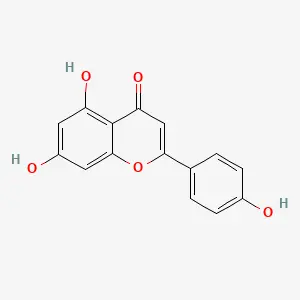
Apigenin is a flavone, a yellow plant pigment in the flavonoid family. As a pure powder it is yellow and almost insoluble in water, and it has been used to dye wool. Its name comes from Apium, the celery genus.
In plants, flavones act as a sunscreen that absorbs UVB light. They also work as a natural pesticide against insects and fungi, and as a signal that helps roots team up with nitrogen-fixing bacteria. Parsley cells make more of them under UV light. Celery leaves hold more than 20 times as much apigenin and luteolin as the stalks.
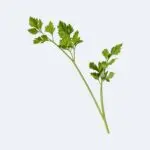
Plants store most of it attached to sugars. In the USDA data on this page, fresh parsley holds 215 mg per 100 g, far ahead of every other food in our ranking. Dried chamomile flowers hold even more: up to 5,320 mg of apigenin sugar forms per 100 g, in one review’s table.
Here is something most readers do not know. The sleep story behind apigenin rests on chamomile, which holds many compounds besides apigenin. We found no trial of apigenin alone for sleep.
The body also absorbs the pure form poorly. In one trial in healthy men, only 0.5% of the pure apigenin showed up in urine as breakdown products. For the apigenin in chamomile tea, it was 34%.
Health benefits of apigenin
The top findings from 27 studies, strongest evidence first
What the stars mean
- Strong. Several randomized trials, pooled in a meta-analysis, point the same way, or regulators (FDA or EFSA) have approved the claim.
- Moderate. Good randomized trials support it, but there are fewer of them, or their results vary.
- Limited. Small, short or single trials, or mixed results. Promising, but it needs confirmation.
Population and lab studies get no stars: they show a link or a mechanism, not proof.
How we rate evidence →- ★★Better sleep quality scores with chamomileThese studies tested chamomile tea or extract, not apigenin alone. In 10 trials with 772 people, a sleep quality score fell 1.88 points (lower is better), though the trials disagreed a lot.
- ★Chamomile: small, uncertain help with anxietyIn 57 people with mild to moderate anxiety, chamomile extract (not apigenin) lowered anxiety more than placebo over 8 weeks, but only just beyond chance. A review of 29 herbal trials could not tell chamomile from placebo.
- ★Little apigenin from parsley reaches the bloodAfter 11 healthy people ate parsley, blood apigenin peaked after about 7 hours and fell below detection within 28 hours. Only 0.22% of the dose appeared in urine.
- ★Parsley apigenin did not change blood clottingIn 18 healthy people, 7 days of 5 g of dried parsley a day (84 mg of apigenin) did not change clotting or platelet measures. Blood apigenin was too low to measure.
- Population studyLinked to lower risk of high blood pressureIn three US cohorts followed for 14 years, the top fifth of apigenin intake had a 5% lower risk of high blood pressure. Total flavone intake was not linked.
All 27 studies, strongest evidence first
Chamomile improved sleep quality and generalized anxiety, not insomnia, in 12 trials
This meta-analysis pooled 12 trials of chamomile, randomized (groups assigned by chance) or nearly so. Sleep quality scores improved (-0.73 on a standard scale). In generalized anxiety disorder, the HAM-A anxiety score (a clinician-rated scale) fell 1.43 points at 2 weeks and 1.79 at 4 weeks. State anxiety (3 trials, -0.15) and insomnia severity (1 trial) did not clearly change. This is a whole extract or tea, not apigenin alone, and the authors ask for larger trials.
In 10 chamomile studies, sleep quality scores improved by 1.88 points
This meta-analysis of chamomile, not isolated apigenin, covered 10 clinical trials with 772 people. The Pittsburgh Sleep Quality Index (PSQI, lower is better) fell 1.88 points, but the 5 trials pooled disagreed a lot (I2 88.4%). Waking less often improved in two of three studies, while sleep length and sleep efficiency did not. No side effects were reported, although most studies did not actively look for them.
Evening mix with 50 mg apigenin: no reported gain in 2 weeks
This placebo-controlled trial split 103 healthy, physically active adults into four groups by chance. The evening mix held 50 mg of apigenin, 200 mg of L-theanine and 2 g of magnesium L-threonate (145 mg of magnesium). So any effect could not have been tied to apigenin alone. The abstract reports gains in stress and sleep for the morning mix (600 mg ashwagandha, 300 mg Rhodiola) and none for the evening mix. The authors report no conflicts of interest.
Pure apigenin was poorly absorbed: 0.5% reached the urine
In this trial in healthy men, a parsley drink gave 11.2% and chamomile tea 34%, measured as breakdown products in urine. The main blood metabolite peaked 4 hours after the parsley drink, 6 hours after parsley powder stirred into yogurt and 2 hours after chamomile tea. That points to absorption in the lower gut for parsley and the upper gut for chamomile. The abstract does not give the doses or the number of men.
Chamomile eased mild to moderate generalized anxiety more than placebo
57 outpatients took chamomile extract (28 people) or a placebo (29) for 8 weeks, and neither they nor the researchers knew who got what (double-blind). Their HAM-A anxiety score fell more on chamomile, but only just clearly. Secondary measures moved the same way, but the trial was not big enough to test them. One person in each group stopped because of side effects, and the abstract gives neither the dose nor the apigenin content of the extract.
Chamomile kept anxiety lower but did not clearly prevent relapse
In this two-phase study, 179 people with generalized anxiety disorder first took 1,500 mg a day of chamomile extract for 12 weeks. Then the 93 who responded were randomized to 26 more weeks of chamomile or placebo. Relapse hit 15.2% on chamomile (7 of 46) and 25.5% on placebo (12 of 47). That is 0.52 times the risk of relapse (hazard ratio), but the gap could be chance. Symptoms stayed clearly lower on chamomile, and the authors say the sample was small.
In 29 herbal anxiety trials, chamomile could not be told from placebo
This Bayesian network meta-analysis compared 12 medicinal herbs across 29 randomized trials in adults with anxiety. Against placebo, chamomile differed by 0.54 points on the HAM-A scale, with a very wide range. So the data neither confirm nor rule out an effect. Kava, ginkgo and Withania (ashwagandha) showed effects, but the authors call every result preliminary because the samples were small.
Chamomile capsules for 28 days improved sleep quality in 60 older adults
This randomized trial took place in a day-care nursing home and was single-blind, so blinding was only partial. The treatment group took 200 mg capsules of chamomile extract twice a day, and the control group took wheat flour capsules. After treatment, PSQI sleep quality was better in the chamomile group, but the abstract gives no score sizes. Single blinding and a small sample limit how far the result goes.
270 mg chamomile twice daily did not clearly change insomnia sleep diaries
This double-blind, placebo-controlled pilot trial had 34 adults aged 18 to 65. All had primary insomnia for 6 months or more and took chamomile extract or placebo for 4 weeks. Total sleep time, sleep efficiency, time to fall asleep, time awake at night, sleep quality and awakenings did not clearly differ. Effect sizes were small to moderate: some favored chamomile, and total sleep time favored placebo. Side effects were similar in both groups.
Chamomile tea briefly eased depression and poor sleep in new mothers
This randomized trial had 80 Taiwanese women with poor sleep after childbirth. 40 drank chamomile tea for 2 weeks and 40 had usual care only, with no placebo tea. Scores for physical symptoms of poor sleep and for depression were lower than in the usual care group. At the 4-week check, the groups were similar.
Chamomile cut core depression symptoms more when anxiety came with depression
This exploratory analysis covered 179 people with generalized anxiety disorder: 100 without and 79 with depression. All took 1,500 mg a day of chamomile extract for 8 weeks, with no placebo group. Anxiety fell about equally in both groups, but the core depression score fell more in those with depression. The total depression score only trended that way, and the authors say controlled trials are needed.
Apigenin mix went with fewer new colon tumors, in a non-randomized study
This prospective cohort comparison (people followed forward in time) had 87 patients after colon cancer surgery or polyp removal. 31 took a daily mix of 20 mg apigenin and 20 mg EGCG (a green tea compound), and were followed 3 to 4 years. Of the 29 cancer patients with a follow-up colonoscopy, new growths returned in 1 of 14 treated and 7 of 15 matched controls. The numbers are tiny, and the effect cannot be tied to apigenin alone.
Apigenin cream improved skin density, elasticity and fine wrinkles versus plain cream
This tested a cream on the skin, not a pill or food. It was reported together with cell experiments in which apigenin protected skin cells from UVA damage. The cream also improved skin evenness, moisture and water loss through the skin. The abstract does not give the number of volunteers, the apigenin amount or any sizes.
84 mg apigenin from parsley did not change blood clotting
18 healthy people tried each diet for 7 days, in random order. The diets added 5 g of dried parsley a day (84 mg of apigenin), 220 g of onions a day, or a placebo. Clotting and platelet measures did not change, and plasma apigenin was too low to measure. In test tubes, apigenin stopped platelets clumping only at very high levels (2,500 micromol/L), which the authors say the body cannot reach.
A week of parsley raised two antioxidant enzymes in red blood cells
7 men and 7 women ate a strictly controlled low-flavone diet, with parsley added in one of the two weeks, in random order. Glutathione reductase and superoxide dismutase rose on parsley. Catalase, glutathione peroxidase and a marker of protein oxidation did not change, and only 0.58% of the apigenin came out in urine. The authors note an overall downward trend in enzyme activity over the 2 weeks.
After a big parsley meal, blood apigenin peaked after about 7 hours
11 healthy people ate a single dose of blanched parsley: 2 g per kilogram of body weight, or 65.8 micromol of apigenin per kilogram. Blood apigenin peaked at 127 nmol/L (nanomoles per liter), but levels varied widely and fell below the detection limit within 28 hours. Only 0.22% of the dose appeared in urine. The authors say a small share of apigenin from food reaches the circulation.
In 1,936 adults, apigenin intake was linked to better sleep quality
This food questionnaire study in southern Italy compared polyphenol intake with the PSQI sleep score. The abstract says apigenin and naringenin were linked to sleep quality, but gives no size for either. In overweight and obese people, no polyphenol class was linked to sleep. It was observational (it watched, without changing what people ate), so it cannot show that apigenin caused better sleep.
Top apigenin intake linked to 5% lower risk of high blood pressure
Three large US cohorts were followed for 14 years, with 29,018 cases of high blood pressure in women and 5,629 in men. People in the highest fifth of apigenin intake had a 5% lower risk than those in the lowest. Total flavone intake was not linked to high blood pressure. Food questionnaires cannot prove cause.
Apigenin and four other flavonoids not linked to cancer in 38,408 women
The Women’s Health Study followed these women for 11.5 years and counted 3,234 cancers. Comparing the highest and lowest fifths of total intake, the risk ratios were 1.03 for breast, 1.01 for colorectal and 1.03 for lung cancer. They were 1.15 for endometrial and 1.09 for ovarian cancer, and none of the ratios above was clear. Single flavonoids, apigenin among them, gave similar results, and the authors do not support a major role in cancer prevention.
Apigenin intake was not linked to type 2 diabetes in 38,018 women
These women were followed for 8.8 years, with 1,614 diabetes cases. None of total flavonols and flavones, quercetin, kaempferol, myricetin, apigenin or luteolin was clearly linked to risk. Eating one apple or more a day was linked to a 28% lower risk. In 344 women, intake was unrelated to insulin, HbA1c (long-term blood sugar), and the inflammation markers CRP and IL-6.
In mice, apigenin from chamomile reduced anxiety-like behavior without sedation
In this lab study, the authors split a chamomile tea extract and isolated apigenin. It competed for the brain’s benzodiazepine binding site (binding strength Ki 4 micromol/L) but did not change muscimol binding to GABA-A receptors. A 10-fold higher dose gave mild sedation (26% less movement), but no anti-seizure or muscle-relaxing effect. The abstract does not state the doses.
Apigenin lengthened sleep caused by pentobarbital in mice
In this lab study, mice got a dose of pentobarbital, a sedative, too low to cause sleep on its own. Apigenin raised the share of mice that fell asleep and how long they slept. It also raised an enzyme that makes GABA in the hippocampus, and increased chloride flow in brain cells in a dish. The authors suggest it acts through chloride channels, and the abstract gives no doses or sizes.
Apigenin blocked CD38 and raised NAD+ in cells and obese mice
In this lab study, quercetin was the other CD38 blocker tested. In cell cultures, apigenin lowered protein acetylation (a chemical tag on proteins). In obese mice it raised NAD+, lowered overall protein acetylation and improved several aspects of glucose and fat control. There are no human data in this paper.
In diabetic rats, apigenin lowered CD38 and eased kidney damage
Zucker diabetic fatty rats given apigenin had less kidney scarring (fibrosis), less tubule damage and less inflammatory gene activity. They also had a higher NAD+/NADH ratio and more Sirt3 activity. Kidney cells in high glucose responded the same way. The authors’ research division was set up with money from several drug makers, which they say is no conflict.
In test tubes, apigenin blocked the liver enzyme that clears losartan
This lab study used human liver microsomes (bits of liver cells) and the recombinant human enzyme, CYP2C9. Apigenin slowed the breakdown of losartan, a blood pressure drug. The IC50 values, a standard measure of blocking strength, were 4.10 micromol/L in liver microsomes and 7.61 micromol/L on the enzyme. The authors advise care when apigenin is combined with losartan, but we found no human interaction study.
In a dish, apigenin protected DNA less than luteolin, myricetin or quercetin
This lab study used human white blood cells. At 279 micromol/L, apigenin left 59% of the DNA damage caused by hydrogen peroxide. Luteolin left 9%, myricetin 10%, quercetin 22% and vitamin C 78%. These levels are far above what blood reaches after a meal of food.
In impaired rodents, apigenin improved learning, memory and anxiety-like behavior
This systematic review covered 34 preclinical studies in rats and mice with impaired memory or behavior. The listed mechanisms include ERK/CREB/BDNF signaling, changes in brain messenger chemicals, less inflammation and less oxidative damage. The authors say established doses are needed and that a clinical experiment should follow.
Foods high in apigenin
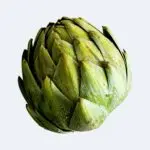
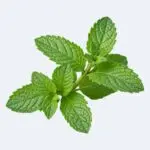
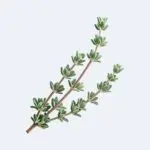
In the USDA data on this page, fresh parsley is far ahead with 215 mg of apigenin per 100 g. Artichoke (7.48 mg) and peppermint (5.39 mg) come next, and the ranking below shows the rest.
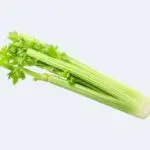
Per serving the order changes. One artichoke (128 g) gives 9.57 mg and one tablespoon of chopped parsley (3.8 g) gives 8.19 mg. A celery stalk (40 g) gives 1.14 mg and a cup of green tea 0.42 mg.
Other studies measured more or less. A 2017 review lists 1.3 to 10.8 mg per 100 g in celery stalks and up to 1,484 mg per 100 g in fresh parsley. So the USDA figure for parsley sits well inside the published range.
Chamomile is not in the USDA data. In the same review’s table, dried chamomile flowers held 5,010 to 5,320 mg of apigenin sugar forms per 100 g. That is about 100 mg in the 2 g of flowers in one tea serving. Dried parsley held 1,200 to 1,350 mg per 100 g.
How much of that reaches the cup is not given. A 2025 analysis of 22 commercial chamomile teas found loose whole flowers more consistent than tea bags.
By the USDA numbers, 50 mg (the amount in the trial above) equals about 23 g of fresh parsley, or 6 tablespoons. It also equals 5 artichokes or about 44 celery stalks, before absorption is counted. Reported intakes of all flavones together, apigenin and luteolin among them, are 0.7 to 9.0 mg a day in European adults. In US women they are 1.1 to 1.6 mg.
Per serving. No daily amount is set, so bars compare each food with the top food.
Per 100 g. No daily amount is set, so bars compare each food with the top food.
Per 100 kcal: the same calories of each food, for a fair comparison. Bars compare each food with the top food.
Food labels have no Daily Value or Reference Intake for apigenin, so the % compares each food with the top food.
- 1.
- 2.
- 3.
- 4.

- 5.

- 6.
- 7.
- 8.
- 9.

- 10.


- 1.
- 2.
- 3.
- 4.
- 5.
- 6.
- 7.
- 8.
- 9.
- 10.


- 1.
- 2.
- 3.
- 4.
- 5.
- 6.
- 7.
- 8.
- 9.
- 10.
Sources
- Bhagwat S, Haytowitz DB. USDA Database for the Flavonoid Content of Selected Foods, Release 3.3. US Department of Agriculture, Agricultural Research Service. 2018. The ranking above is built from it.
- Hostetler GL, Ralston RA, Schwartz SJ. Flavones: food sources, bioavailability, metabolism, and bioactivity. Adv Nutr. 2017. Tables 1 and 3 quote measurements from other papers.
- Blažeković B, Čičin-Mašansker IJ, Kindl M, et al. Chemometrically-supported quality assessment of chamomile tea. Acta Pharm. 2025.
How apigenin works
Most of what we know about how apigenin works comes from test tubes, cells and rodents. Three ideas come up again and again.
First, apigenin must be absorbed, which turns out to be hard. Next, it sticks to a calming site on brain receptors. And it blocks an enzyme called CD38. Here is each one, then what has been seen in people.
Eaten alone, very little is absorbed
Plants usually store apigenin in a water-soluble form attached to sugars, while the pure powder barely dissolves in water. In healthy men, breakdown products equal to just 0.5% of pure apigenin reached the urine in 24 hours. A parsley drink gave 11.2% and chamomile tea 34%.
Two other trials of parsley found 0.22% and 0.58% of the apigenin in urine. In one of them, the blood level peaked about 7 hours after eating, then fell too low to measure within 28 hours.
Drawn to scale. Share of the amount eaten that appeared in urine as apigenin metabolites in healthy men. The foods held apigenin bound to sugars, the pure form did not.
It sticks to a calming site on brain receptors
GABA-A receptors are the brain’s main calming (inhibitory) receptors. Each is a chloride channel opened by GABA and tuned by many drugs, benzodiazepines among them.
In a lab test, apigenin from chamomile competed with flunitrazepam, a benzodiazepine, for its binding site. But it did not change the binding of muscimol, a molecule that binds the GABA site itself. Another group saw apigenin lengthen barbiturate-induced sleep in mice and raise chloride flow into brain cells in a dish. A 2011 review adds that flavonoids can act on these receptors through more than one site.
For scale, the reported binding strength (Ki 4 micromol/L) is about 30 times the 127 nmol/L blood peak after a large parsley meal. We found no study that measured apigenin in the human brain. That is why the mouse results do not tell us how much apigenin it takes to calm a person.
A simplified sketch, not to scale. The binding result and the mouse results come from lab work; the position of the sites on the drawing is only for illustration.
It blocks an enzyme that uses up NAD+
NAD+ is a coenzyme (a helper molecule) central to metabolism, and its level falls with age. The enzyme CD38 breaks it down, and mice without CD38 have more NAD+ and are protected against obesity.
In cell cultures apigenin inhibited CD38, and in obese mice it raised NAD+ and improved glucose and fat handling. In diabetic rats it lowered CD38 and eased kidney damage.
A 2024 review links this to sleep and aging. It was written by employees of Tally Health, which funded it, and it rests mostly on animal work. We found no trial testing whether apigenin raises NAD+ in people.
The order of events as described by the authors. Seen in cell cultures, obese mice and diabetic rats, not tested in people.
It touches many other signals, but not always strongly
A review of cancer research lists many pathways that apigenin changes in cancer cells and mice. They include PI3K/AKT, MAPK/ERK, JAK/STAT, NF-κB and Wnt, along with cell death and stopped cell division. Those are lab results, and in the Women’s Health Study apigenin intake was not linked to cancer risk. Lab results can also disagree with the hype: in white blood cells in a dish, apigenin protected DNA less well than luteolin, myricetin or quercetin.
What has been seen in people
The human results are small and mostly from chamomile. In 5 trials pooled, sleep quality scores improved by 1.88 points. In generalized anxiety the HAM-A score fell by 1.43 to 1.79 points, but a network meta-analysis could not separate chamomile from placebo for anxiety.
The one apigenin mix we found, 50 mg taken in the evening with magnesium and theanine, reported no gain. Nobody has shown in people that the brain-receptor or CD38 ideas explain these effects. All of these are among the study cards above.
Sources
- Borges G, Fong RY, Ensunsa JL, et al. Absorption, distribution, metabolism and excretion of apigenin and its glycosides in healthy male adults. Free Radic Biol Med. 2022.
- Meyer H, Bolarinwa A, Wolfram G, Linseisen J. Bioavailability of apigenin from apiin-rich parsley in humans. Ann Nutr Metab. 2006.
- Nielsen SE, Young JF, Daneshvar B, et al. Effect of parsley (Petroselinum crispum) intake on urinary apigenin excretion, blood antioxidant enzymes and biomarkers for oxidative stress in human subjects. Br J Nutr. 1999.
- Xu Y, Li X, Wang H. Protective roles of apigenin against cardiometabolic diseases: a systematic review. Front Nutr. 2022.
- Viola H, Wasowski C, Levi de Stein M, et al. Apigenin, a component of Matricaria recutita flowers, is a central benzodiazepine receptors-ligand with anxiolytic effects. Planta Med. 1995.
- Ghit A, Assal D, Al-Shami AS, Hussein DEE. GABA(A) receptors: structure, function, pharmacology, and related disorders. J Genet Eng Biotechnol. 2021.
- Hanrahan JR, Chebib M, Johnston GA. Flavonoid modulation of GABA(A) receptors. Br J Pharmacol. 2011.
- Kim JW, Kim CS, Hu Z, et al. Enhancement of pentobarbital-induced sleep by apigenin through chloride ion channel activation. Arch Pharm Res. 2012.
- Escande C, Nin V, Price NL, et al. Flavonoid apigenin is an inhibitor of the NAD+ ase CD38: implications for cellular NAD+ metabolism, protein acetylation, and treatment of metabolic syndrome. Diabetes. 2013.
- Ogura Y, Kitada M, Xu J, Monno I, Koya D. CD38 inhibition by apigenin ameliorates mitochondrial oxidative stress through restoration of the intracellular NAD+/NADH ratio and Sirt3 activity in renal tubular cells in diabetic rats. Aging (Albany NY). 2020.
- Kramer DJ, Johnson AA. Apigenin: a natural molecule at the intersection of sleep and aging. Front Nutr. 2024. Both authors work for Tally Health, which also paid the publication fee.
- Yan X, Qi M, Li P, Zhan Y, Shao H. Apigenin in cancer therapy: anti-cancer effects and mechanisms of action. Cell Biosci. 2017.
- Noroozi M, Angerson WJ, Lean ME. Effects of flavonoids and vitamin C on oxidative DNA damage to human lymphocytes. Am J Clin Nutr. 1998.
- Olasehinde TA, Olaokun OO. The beneficial role of apigenin against cognitive and neurobehavioural dysfunction: a systematic review of preclinical investigations. Biomedicines. 2024.
Is apigenin safe? Supplements, dose and interactions
Apigenin in food is part of ordinary diets. We found no acceptable daily intake, upper level or safety opinion for apigenin as a supplement. The FDA’s inventory of GRAS notices (for substances “generally recognized as safe”) lists none for apigenin. We did not find an EFSA (EU food safety agency) or NIH (US National Institutes of Health) value either.
Apigenin capsules are sold for sleep, but we found no safety study of isolated apigenin. For chamomile, the US National Center for Complementary and Integrative Health (NCCIH) says it is likely safe in the amounts found in teas and foods. It says chamomile is possibly safe for short-term medicinal use.
- Trial doses and side effects. In the trials we found, people got apigenin only as 50 mg in an evening mix for 2 weeks. The only other dose was 20 mg with 20 mg of EGCG, for 3 to 4 years. Neither abstract reports a safety result. Chamomile extract was given at 400 to 1,500 mg a day. In the meta-analysis of 12 chamomile trials, only three reported side effects, all mild. In the insomnia pilot, side effects matched placebo.
- Drug interactions. In test tubes apigenin blocked CYP2C9, the enzyme that clears losartan, at 4.10 micromol/L. That is well above the 127 nmol/L blood peak seen after a large parsley meal, and we found no human interaction study. NCCIH notes that chamomile has been reported to interact with warfarin (a blood thinner) and with some drugs cleared by the liver. There are also theoretical reasons to suspect interactions with sedatives. One case report describes a 70-year-old woman on warfarin who was admitted with multiple internal bleeds after using chamomile tea and lotion. One case cannot prove cause, but people on blood thinners should ask their clinic first.
- Allergy. Chamomile can cause allergic reactions, including anaphylaxis (a severe whole-body reaction). This happens mostly in people allergic to ragweed, daisies and related plants. In 14 people sensitized to chamomile, 10 had immediate reactions to it, and extracts from celery root blocked antibody binding to a variable degree. The European Medicines Agency’s summary says chamomile flower medicines must not be used by people allergic to the daisy family.
- Pregnancy and hormones. NCCIH says little is known about chamomile in pregnancy or breastfeeding. It might have estrogen-like effects, so it could worsen estrogen-sensitive conditions. We found no safety trials of isolated apigenin in pregnancy, so ask your doctor.
How to get more apigenin
- Best food. Per 100 g, fresh parsley holds far more than any other food in our ranking: 215 mg in the USDA data. A tablespoon gives 8.19 mg, and a whole artichoke gives slightly more per serving.
- Food or capsule. Sugar-bound apigenin in food was absorbed far better than the pure form. Urine metabolites were 0.5% of the pure dose, 11.2% of a parsley drink and 34% of chamomile tea.
- Choose loose chamomile. In 22 commercial teas, loose whole flowers were more consistent than tea bags. Apigenin-7-glucoside, a sugar form of apigenin, often fell below the official pharmacopoeia standard in bag samples.
Sources
- Hostetler GL, Ralston RA, Schwartz SJ. Flavones: food sources, bioavailability, metabolism, and bioactivity. Adv Nutr. 2017. Intake ranges are for all flavones together.
- GRAS Notice Inventory, search for apigenin. US Food and Drug Administration. Zero records found on October 23, 2026 (page updated October 21, 2026).
- Chamomile: usefulness and safety. National Center for Complementary and Integrative Health, NIH.
- Matricariae flos (matricaria flower). European Medicines Agency, herbal medicine summary.
- Segal R, Pilote L. Warfarin interaction with Matricaria chamomilla. CMAJ. 2006.
- Reider N, Sepp N, Fritsch P, Weinlich G, Jensen-Jarolim E. Anaphylaxis to camomile: clinical features and allergen cross-reactivity. Clin Exp Allergy. 2000.
- Wang Z, Gong Y, Zeng DL, et al. Inhibitory effect of apigenin on losartan metabolism and CYP2C9 activity in vitro. Pharmacology. 2016.
- Mastrofini GF, Romersi RF, Lombardi MG, et al. Modulating stress and sleep through a multi-compound dietary supplement: a randomized, double-blind, placebo-controlled trial. J Int Soc Sports Nutr. 2026.
- Hoensch H, Groh B, Edler L, Kirch W. Prospective cohort comparison of flavonoid treatment in patients with resected colorectal cancer to prevent recurrence. World J Gastroenterol. 2008.
- Hieu TH, Dibas M, Surya Dila KA, et al. Therapeutic efficacy and safety of chamomile for state anxiety, generalized anxiety disorder, insomnia, and sleep quality: a systematic review and meta-analysis of randomized trials and quasi-randomized trials. Phytother Res. 2019.
- Borges G, Fong RY, Ensunsa JL, et al. Absorption, distribution, metabolism and excretion of apigenin and its glycosides in healthy male adults. Free Radic Biol Med. 2022.
- Meyer H, Bolarinwa A, Wolfram G, Linseisen J. Bioavailability of apigenin from apiin-rich parsley in humans. Ann Nutr Metab. 2006.
- Blažeković B, Čičin-Mašansker IJ, Kindl M, et al. Chemometrically-supported quality assessment of chamomile tea. Acta Pharm. 2025.
History of apigenin
Apigenin takes its name from Apium, the celery genus. As a pure powder it is a yellow crystalline solid, and it has been used to dye wool. In plants it mostly occurs as sugar-bound forms, such as apiin in parsley and celery.
Chamomile was described in ancient medical writings. It was an important medicinal herb in ancient China, Egypt, Greece and Rome.
The link between chamomile and apigenin was made in 1995. A research team split a water-based chamomile extract and isolated apigenin from one fraction. They showed that it binds the brain’s benzodiazepine site and calmed mice. In 2009, its authors described a trial of chamomile extract for generalized anxiety disorder as the first controlled clinical trial of its kind.
In 2013 a second idea arrived. Researchers showed that apigenin inhibits CD38 and raises NAD+ in cells and obese mice. By 2026 a randomized trial was testing an evening mix with 50 mg of apigenin, and its abstract reports gains only for the morning herbs.
Sources
- Xu Y, Li X, Wang H. Protective roles of apigenin against cardiometabolic diseases: a systematic review. Front Nutr. 2022.
- Apigenin. Wikipedia.
- Apiin. Wikipedia.
- Chamomile: usefulness and safety. National Center for Complementary and Integrative Health, NIH.
- Viola H, Wasowski C, Levi de Stein M, et al. Apigenin, a component of Matricaria recutita flowers, is a central benzodiazepine receptors-ligand with anxiolytic effects. Planta Med. 1995.
- Amsterdam JD, Li Y, Soeller I, Rockwell K, Mao JJ, Shults J. A randomized, double-blind, placebo-controlled trial of oral Matricaria recutita (chamomile) extract therapy for generalized anxiety disorder. J Clin Psychopharmacol. 2009.
- Escande C, Nin V, Price NL, et al. Flavonoid apigenin is an inhibitor of the NAD+ ase CD38: implications for cellular NAD+ metabolism, protein acetylation, and treatment of metabolic syndrome. Diabetes. 2013.
- Mastrofini GF, Romersi RF, Lombardi MG, et al. Modulating stress and sleep through a multi-compound dietary supplement: a randomized, double-blind, placebo-controlled trial. J Int Soc Sports Nutr. 2026.
Frequently asked questions about apigenin
What does apigenin do for the body?
The human evidence is thin. Chamomile, which contains apigenin among many compounds, modestly improved sleep quality scores (1.88 points on the PSQI) and generalized anxiety scores in meta-analyses. But a network meta-analysis could not separate it from placebo for anxiety. Most apigenin findings are from cells and rodents, and no finding here reaches strong evidence.
Does apigenin help you sleep?
Not proven: we found no trial of apigenin alone for sleep. The one trial with 50 mg of apigenin used an evening mix with magnesium and theanine, and it reported gains only for the morning herbs. Chamomile trials show small gains in sleep quality scores, but not in sleep length. A pilot trial of 34 people with insomnia found no clear change.
Which foods are high in apigenin?
Per 100 g, fresh parsley is far ahead in the USDA data, with 215 mg, and a tablespoon gives 8.19 mg. Per serving, artichoke gives 9.57 mg per artichoke, celery 1.14 mg per stalk and green tea 0.42 mg per cup. Chamomile flowers are rich too, but the USDA data do not include them.
How much apigenin should you take a day?
No dose is proven, and we found no official upper level. The trials gave 50 mg in an evening mix for 2 weeks and 20 mg with EGCG for 3 to 4 years. Pure apigenin is absorbed poorly (0.5% of the dose reached urine in one trial), so a capsule differs from food. Ask a clinician before taking capsules, especially with prescription drugs.
Does apigenin have side effects?
Few were reported, but safety data for isolated apigenin are very limited. Chamomile can cause allergic reactions, including anaphylaxis, in people allergic to ragweed and daisy-family plants. One case report links chamomile to bleeding in a woman on warfarin. In test tubes, apigenin blocks the CYP2C9 enzyme that clears losartan. Pregnancy and breastfeeding have not been studied in the trials we found.
Is chamomile tea the same as an apigenin supplement?
No. Chamomile holds many compounds, and its apigenin is mostly attached to sugars. In one trial, urine metabolites were 34% of the apigenin in chamomile tea against 0.5% of pure apigenin. The sleep and anxiety trials used chamomile extract or tea, so their results should not be credited to apigenin alone.
Apigenin vs luteolin: what is the difference?
Luteolin has one more hydroxyl group on the same flavone frame (3′,4′,5,7-tetrahydroxy against 4′,5,7-trihydroxy for apigenin). Parsley holds far more apigenin than luteolin: 1,200 to 1,350 mg against 19.8 mg per 100 g dried. In white blood cells in a dish, luteolin left 9% of the DNA damage and apigenin 59%. Results for one should not be assumed for the other.
When is the best time to take apigenin?
No trial tested time of day for isolated apigenin. The 50 mg mix was taken in the evening. In the absorption trial the main blood metabolite peaked 2 hours after chamomile tea and 4 hours after a parsley drink. With a food source, there is no evidence that timing matters.