Insoluble fiber is the part of plant food that does not dissolve in water and that your digestive enzymes cannot break down. Its best-known examples are cellulose and lignin, the building material of plant cell walls. It is concentrated in wheat bran, whole grains, seeds, nuts and bean skins.
It is one of the two kinds that make up dietary fiber, next to soluble fiber. Labs measure it with an enzyme-and-weighing method that splits fiber into an insoluble and a soluble part. US labels may list it as a line under dietary fiber.
What it does is mostly mechanical. Coarse particles such as wheat bran pass through the gut largely intact, hold water and add bulk to stool. A 2017 review says they also irritate the lining of the large bowel, so it releases water and mucus. That is the basis of two European Union health claims for wheat bran fiber.
The same review says insoluble fibers such as wheat bran lack the gel-forming viscosity (thickness) of soluble fibers such as psyllium. That gel is what lowers cholesterol and blood sugar.
Here is what most people do not know: bran is a modest stool bulker. In a 1978 feeding study of 19 healthy volunteers, about 20 g a day of concentrated bran fiber raised stool weight by 12%. Carrot fiber raised it by 59% and cabbage fiber by 69%.
The other surprise is bran’s reputation in irritable bowel syndrome, which the trials do not back. In the largest trial, 10 g a day of bran did not ease symptoms more than a placebo (dummy treatment). The people who dropped out early were mostly those whose symptoms had worsened.
Health benefits of insoluble fiber
The best-supported finding is the oldest: wheat bran fiber increases stool weight and speeds transit. The EU recognizes this in two authorized claims. A pooled analysis of 65 studies found 3.7 g more stool a day for each extra gram of wheat fiber. It works less well in people who are already constipated.
Beyond the bowel, the evidence is thinner or points the other way. Bran did not beat placebo for irritable bowel syndrome, and a fiber-supplement trial in diverticular disease helped only constipation. And 25 g a day of wheat bran did not prevent new colon polyps.
For heart disease, type 2 diabetes and colorectal cancer, the support is observational: it comes from cohort studies that follow groups of people over time. And cereal fiber comes packaged with the other parts of whole grains.
Most trials tested wheat bran, so results are for bran, not for insoluble fiber as a class; each card says what was tested. Here is what 22 studies and reports found, strongest evidence first, including the ones that found nothing. Seven more studies are under Forms of insoluble fiber below.
EU claims: wheat bran fiber adds stool bulk and speeds transit
Regulation (EU) No 432/2012 authorizes both claims, based on a 2010 opinion of EFSA, the EU’s food safety agency. Each is only for food high in that fiber: at least 6 g per 100 g or at least 3 g per 100 kcal. For the transit claim, buyers must be told the effect comes with at least 10 g of wheat bran fiber a day. Related claims cover oat and barley grain fibre (faecal bulk) and rye fibre (normal bowel function); these are label rules, not trial results.
Each gram of wheat fiber added 3.7 g of stool a day
This review pooled 65 studies in generally healthy people; too few tested other cereal fibers to pool them. Per gram of fiber, dry stool weight rose by 0.75 g a day and stool frequency by 0.004 times a day. In people whose transit time was over 48 hours, transit fell by 0.78 hours per gram. The Kellogg Company funded the review and paid the authors for the review and the writing.
In constipation, insoluble fiber evidence conflicted, while soluble fiber helped
The review covered 6 randomized trials (groups assigned by chance) in long-term constipation: four of soluble fiber and two of insoluble fiber. They were compared with placebo or no treatment. Soluble fiber improved overall symptoms (86.5% against 47.4%) and raised stools from 2.9 to 3.8 a week. The authors did not pool the trials because of concerns about their quality, and data on side effects were limited.
In IBS, 10 g of daily bran did no better than placebo
This 12-week trial in general practice enrolled 275 people with irritable bowel syndrome (IBS). They took 10 g a day of psyllium (soluble, 85 people), bran (insoluble, 97) or a rice flour placebo (93). After 3 months, symptom severity had fallen by 90 points on psyllium, 58 on bran and 49 on placebo; only psyllium clearly beat placebo. Bran beat placebo only in the third month (57% against 32% responders), and not in the worst-case analysis. Early dropout was most common on bran, mainly because symptoms worsened.
Show 18 more studies
In diverticular disease, bran crispbread only relieved constipation
This randomized, double-blind crossover trial gave 58 people bran crispbread, an ispaghula (psyllium) drink and a placebo, each for four months. Pain, lower bowel and total symptom scores were no better on fiber than on placebo. But constipation eased, and both fibers changed stool weight, consistency and frequency as expected. The authors conclude that fiber supplements at the usual doses do no more than relieve constipation.
No high-quality evidence that a high-fiber diet treats diverticular disease
The review included three randomized trials and one case-control study (comparing people with and without the disease). One trial found no difference, while a second trial and the case-control study favored a high-fiber diet for disease with symptoms. The third trial favored methylcellulose, a fiber supplement, and also showed a placebo effect. No study of fiber for preventing repeat diverticulitis met the inclusion criteria, yet guidelines still recommend a high-fiber diet.
25 g of daily bran did not prevent new polyps after removal
This Australian randomized trial, partly double-blind, enrolled 411 people. It tested lower fat (25% of calories), wheat bran (25 g a day) and beta carotene (20 mg a day). Results came from 390 people at 24 months and 306 at 48 months. No intervention prevented new adenomas overall; bran’s small fall in large ones could be chance (0.8 times the odds at both times). No large adenomas appeared in the low-fat plus bran group, but numbers were small and the authors urge caution. Larger fiber trials in people with polyps are on the fiber page.
Bran beat placebo for bowel frequency and transit in 24 constipated people
This double-blind crossover trial had a 2-week baseline, then two 4-week periods. People took 20 g a day of wheat bran or placebo, with water and fiber intake kept the same. Transit and frequency improved on both compared with baseline, more on bran. Transit became normal only in people with slow colonic transit, not slow rectal transit, and other symptoms did not differ from placebo.
In low-fiber eaters, a bran cereal improved self-rated bowel function and bloating
This open study of 153 people had no control group; each was compared with their own 14-day baseline. Participants ate under 15 g of fiber a day, then a daily bowl of cereal for 14 days. The cereal had at least 5.4 g of fiber, 3.5 g of it from wheat bran. Ease of defecation, bloating and constipation ratings improved, and gains grew with the amount eaten. The Kellogg Company funded the study and two authors work for it.
3 days of purified oat fiber improved insulin sensitivity in 17 women
In this randomized, single-blind crossover trial, overweight or obese women ate bread for 72 hours, with calories matched. The white bread had 31.2 g a day of added insoluble fiber, or none. In the clamp test (a lab measure of insulin sensitivity), glucose uptake was 6.56 against 6.07 mg per minute per kg. In the 13 women whose breath hydrogen rose, a sign they ate the fiber, it was 6.85 against 6.06. Body weight and blood fats did not change, but the fiber was purified oat fiber, not bran, and 3 days is short.
In 18 people, a high-fiber diet eased diverticular symptoms more than control
This double-blind controlled trial ran for 3 months. The high-fiber group had clearly more symptom relief, despite a strong placebo effect early on, and the benefit grew over the three months. It is a very small trial. The larger crossover trial of 58 people above found no benefit beyond relieving constipation.
Phytate was the main reason bran blocked iron absorption
This human study used two radioactive iron tracers to follow non-heme iron (the kind in plants) from a meal. Washing bran with hydrochloric acid removed the blocking effect, but washing with water did not, and adding phytate back restored most of it. Breaking down the bran’s phytate with its own enzyme clearly raised absorption. Adding potassium and magnesium phytates in bran amounts gave the same blocking, and other factors in bran played a smaller part.
Top insoluble fiber eaters had 0.63 times the diverticular disease risk
This cohort followed 43,881 male health professionals aged 40 to 75, free of diverticular disease, polyps, colitis or cancer at the start. It compared the highest fifth of intake with the lowest. Cellulose went with 0.52 times the risk, and total fiber with about 0.60, whichever lab method defined it (AOAC, Southgate or Englyst). Cohorts cannot rule out other differences between men who eat more and less fiber.
Insoluble and cereal fiber were linked to lower coronary heart disease risk
This meta-analysis (a study that pools earlier studies) covered 22 cohort publications, each following people for at least 3 years. Total fiber went with 0.91 times the risk per 7 g a day, for both cardiovascular disease (heart and blood vessels) and coronary heart disease. Insoluble fiber and fiber from cereals and vegetables were linked to lower risk of both, and fruit fiber to lower cardiovascular risk. Support for one author came from the Kellogg Marketing and Sales Company (UK).
In 9 cohorts, cereal fiber went with 0.67 times the diabetes risk
In the German Potsdam cohort, with 844 new cases of diabetes, the highest fifth of cereal fiber had 0.72 times the risk of the lowest. In the meta-analysis, comparing extreme groups, cereal fiber gave 0.67 for type 2 diabetes, fruit fiber 0.96 and vegetable fiber 1.04. Observational data cannot show that cereal fiber itself is the cause.
Each extra 10 g of cereal fiber: 0.90 times colorectal cancer risk
This meta-analysis pooled 25 cohort studies. Total fiber also gave 0.90 per 10 g a day, while fruit fiber (0.93) and vegetable fiber (0.98) were not clearly linked. Three daily servings of whole grains gave 0.83. Cereal fiber and whole grains come with many other grain parts, and observational data cannot separate them.
Only cereal fiber was linked to lower rectal cancer risk
This European cohort followed people for 11.0 years on average and recorded 4,517 colorectal cancer cases. It adjusted for body mass index, smoking, alcohol, red and processed meat and calcium, among others. Total fiber went with 0.87 times the risk per 10 g a day. Fiber from cereals and from fruit and vegetables were similarly linked to colon cancer, but for rectal cancer only cereal fiber was.
More bran went with less weight gain over 8 years
This cohort followed 27,082 US men aged 40 to 75, who reported their own weight. Each extra 20 g a day of bran went with 0.36 kg less weight gain. Each extra 40 g a day of whole grain went with 0.49 kg less. Changes in cereal fiber and fruit fiber were also linked to less weight gain, but refined grains and added germ were not. The whole grain link remained after accounting for bran and fiber, so other grain parts matter too.
3 daily servings (90 g) of whole grains: 0.83 times death risk
This meta-analysis pooled 45 studies of whole grains. Whole grains mix bran, starch and other parts, so the result cannot be credited to insoluble fiber alone. For the same 90 g, coronary heart disease risk was 0.81, cardiovascular disease 0.78 and cancer deaths 0.85. Whole grain bread, whole grain breakfast cereals and added bran were also linked to lower risk of cardiovascular disease or death. There was little evidence for refined grains or white rice.
Cereal, whole grain and legume fiber did not change Crohn’s risk
The Nurses’ Health Study followed 170,776 women for 26 years for Crohn’s disease, an inflammatory bowel disease. The highest fifth of total fiber intake (median 24.3 g a day) had 0.59 times the Crohn’s disease risk of the lowest. The fall was greatest for fruit fiber. Neither total fiber (0.82) nor fiber from any source was clearly linked to ulcerative colitis.
In IBS, 55% said bran made them worse, 10% that it helped
This questionnaire covered 100 new referrals in a row to one hospital clinic, all with irritable bowel syndrome who had tried bran. Every symptom was made worse, bowel habit most often, then a swollen belly and pain. Other kinds of fiber, except fruit, were less harmful, and branded fiber supplements were found helpful. People seen at a specialist clinic may not represent everyone with the condition, and there was no comparison group.
In carcinogen-treated rats, wheat bran curbed tumors on a potato starch diet
Rats ate a basic low-fiber diet or a diet with raw potato starch (a resistant starch) as 20% of its carbohydrate. Some rats got 10% wheat bran fiber on top of the potato starch diet. The potato starch diet gave more and larger tumors. Wheat bran suppressed this by acting on early precancer spots, though it did not stop the rise in cell growth. It is a rat model of colon cancer, not a human result.
Foods high in insoluble fiber
Insoluble fiber sits in the structural parts of plants. Think of bran and seed coats, bean skins, nuts and seeds, and the skins and flesh of vegetables and fruit. The ranking below covers 22 foods with insoluble fiber values. They come from matched USDA FoodData Central Foundation records or, where there is none, from Frida, the Danish food database.
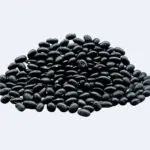
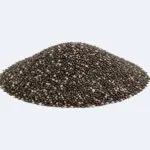
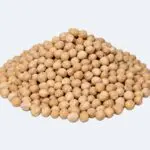
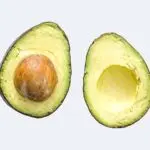
Per serving, black beans lead with 10.7 g in 1 cup (172 g). Chia seeds (10.1 g in 1 oz) and chickpeas (8.86 g in 1 cup) follow, then pears, avocados and blueberries. Per 100 g, chia seeds lead by far (35.6 g), ahead of sesame seeds, almonds, sunflower seeds and hazelnuts.
Per 100 kcal, the leaders are mostly watery vegetables and fruit: broccoli (7.74 g), chia seeds (7.31 g) and zucchini (6.4 g). Pears (4.91 g), black beans (4.72 g) and carrots (4.63 g) follow. The ranking below has the full lists.
Wheat bran is not in the ranking, because only 22 foods have values. In FoodData Central, crude wheat bran has 42.8 g of total dietary fiber per 100 g. That counts all its fiber, not only the insoluble part.
In a meta-analysis of cohorts, whole grain bread, whole grain breakfast cereals and added bran went with lower risks of cardiovascular disease or death. Refined grains and white rice showed little evidence. The Dietary Guidelines for Americans 2025-2030 tell people to prioritize fiber-rich whole grains.
Different databases measure fiber with different methods. The 1988 study across labs that tested the AOAC method for insoluble and soluble fiber said the separate measurement needed further study. So treat a gap of a gram or so between two foods with care (our reading).
No daily need is set for insoluble fiber. So the percentages in the ranking compare each food with the top food, not with a target.
Per serving. No daily amount is set, so bars compare each food with the top food.
Per 100 g. No daily amount is set, so bars compare each food with the top food.
Per 100 kcal: the same calories of each food, for a fair comparison. Bars compare each food with the top food.
Food labels have no Daily Value or Reference Intake for insoluble fiber, so the % compares each food with the top food.
- 1.
- 2.
- 3.
- 4.

- 5.
- 6.

- 7.
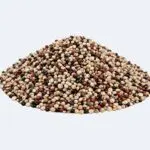
- 8.
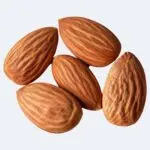
- 9.

- 10.
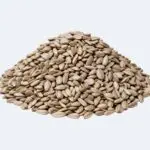


- 1.
- 2.
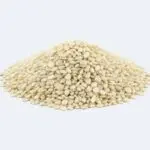
- 3.
- 4.
- 5.

- 6.
- 7.
- 8.

- 9.
- 10.


- 1.
- 2.
- 3.

- 4.
- 5.
- 6.

- 7.
- 8.
- 9.

- 10.


Sources
- U.S. Department of Agriculture, Agricultural Research Service. FoodData Central. Foundation Foods records matched to each food, and the entry for wheat bran, crude (FDC 169722, SR Legacy). Values for the ranking as shown above.
- Langwagen M, Jacobsen J, Christensen T, Poulsen A. The Danish Food Composition Database, Frida, version 5.5. National Food Institute, Technical University of Denmark. 2025.
- Prosky L, Asp NG, Schweizer TF, et al. Determination of insoluble, soluble, and total dietary fiber in foods and food products: interlaboratory study. J Assoc Off Anal Chem. 1988.
- Aune D, Keum N, Giovannucci E, et al. Whole grain consumption and risk of cardiovascular disease, cancer, and all cause and cause specific mortality: systematic review and dose-response meta-analysis of prospective studies. BMJ. 2016.
- U.S. Department of Agriculture and U.S. Department of Health and Human Services. Dietary Guidelines for Americans, 2025-2030.
How insoluble fiber works
Insoluble fiber is not absorbed. What it does comes from its physical form and from how little of it gut bacteria use. Most of the evidence here is gut physiology from small studies and reviews; the trials of health outcomes are in the cards above.
Three ideas cover most of it. First, it resists enzymes and, mostly, fermentation. Second, it holds water and adds bulk, and the source of the fiber matters. Last, particle size changes the result. Here is each one, and what has been seen in people.
It resists enzymes and, mostly, fermentation
That is the definition. The FDA counts as dietary fiber the carbohydrates you cannot digest, plus lignin, when they are a natural, intact part of plants. The 1976 paper that introduced the term described dietary fiber as the part of plant food that human digestive enzymes cannot break down.
In the large bowel, a 2015 review of 65 studies credits wheat bran’s stool bulking mainly to its strong resistance to fermentation by colon bacteria. Its water binding adds to this: 1 g of fiber binds about 3 g of water. The review contrasts wheat bran with more easily fermented fibers, such as those from oats and barley.
Four steps by which coarse wheat bran adds to stool, as described in a 2015 review and a 2017 review. A diagram, not to scale.
It adds bulk, and the source of the fiber matters
Wheat bran is the classic stool bulker, yet it is not the strongest one per gram. In a 1978 controlled feeding study, 19 healthy volunteers added about 20 g a day of concentrated fiber to the same basic diet. The fiber came from carrot, cabbage, apple, bran or guar gum.
Stool weight rose by 12% on bran, against 69% on cabbage, 59% on carrot, 40% on apple and 20% on guar gum. The rises tracked how much of a certain sugar chain (pentose-containing polysaccharide) each fiber supplied. People differed a lot in how much their stool weight changed.
A 2015 pooled analysis of wheat fiber trials found 3.7 g of extra stool a day for each extra gram. So the bran effect is real, and its size depends on what it is compared with.
Rise in stool weight in 19 healthy volunteers, drawn to scale from zero. The teal bar is wheat bran; the gray bars are the other fibers.
Particle size changes the result
Coarse bran bulks stool more than fine bran, but fine bran still bulks it. In 21 healthy people, 20 g a day of coarse bran gave a mean stool weight of 219.4 g a day. The same bran milled fine gave 199 g, and the coarse bran held nearly twice as much water.
Two later crossover trials found that bran ground as fine as 50 micrometers still raised stool bulk. The difference between particle sizes was not clear. The 2017 review says that large, coarse particles mechanically irritate the gut lining, and that fine, smooth bran particles can be constipating. We found no trial in which fine bran constipated people.
Shape and size matter in a more basic way too. In 18 volunteers, swallowed plastic flakes shaped like bran cut whole-gut transit time by 24%. Small plastic granules did not clearly change transit.
Coarse and fine bran at 20 g a day in 21 healthy people. Each pair of bars is drawn to scale from zero, and the two pairs use different units.
A little is fermented, more when the bran is ground fine
The finest bran in the crossover trials gave more butyrate in stool and more methane in breath than coarser bran. This suggests that bacteria ferment more of it. A month of finely milled wheat bran at 20 g a day raised fasting blood short-chain fatty acids in 14 obese adults. But it changed no health marker measured, including stool output, transit, cholesterol, triglycerides and C-reactive protein, so more fermentation brought no measurable benefit there.
What has been seen in people
The clearest effects are in the bowel: more stool, faster transit, and a smaller effect in people who are already constipated. In irritable bowel syndrome, the 2009 primary-care trial found different results for soluble and insoluble fiber, as the chart shows.
For cholesterol and blood sugar, the 2017 review finds that insoluble fibers such as wheat bran lack the thickness that soluble gel-forming fibers rely on. The one short insulin trial here used purified oat fiber at 31.2 g a day for 3 days. The lower risks of diverticular disease, heart disease, diabetes and colorectal cancer come from cohorts. There, cereal fiber is hard to separate from whole grains as a whole.
Fall in symptom severity score in a 12-week trial of 275 people with irritable bowel syndrome, drawn to scale from zero. The teal bar differed significantly from placebo; the gray bars did not (bran, P = 0.61).
Sources
- de Vries J, Miller PE, Verbeke K. Effects of cereal fiber on bowel function: A systematic review of intervention trials. World J Gastroenterol. 2015.
- McRorie JW Jr, McKeown NM. Understanding the Physics of Functional Fibers in the Gastrointestinal Tract: An Evidence-Based Approach to Resolving Enduring Misconceptions about Insoluble and Soluble Fiber. J Acad Nutr Diet. 2017.
- Trowell H. Definition of dietary fiber and hypotheses that it is a protective factor in certain diseases. Am J Clin Nutr. 1976.
- U.S. Food and Drug Administration. Questions and answers on dietary fiber.
- Cummings JH, Branch W, Jenkins DJ, et al. Colonic response to dietary fibre from carrot, cabbage, apple, bran. Lancet. 1978.
- Brodribb AJ, Groves C. Effect of bran particle size on stool weight. Gut. 1978.
- Jenkins DJ, Kendall CW, Vuksan V, et al. The effect of wheat bran particle size on laxation and colonic fermentation. J Am Coll Nutr. 1999.
- Lewis SJ, Heaton KW. Roughage revisited: the effect on intestinal function of inert plastic particles of different sizes and shape. Dig Dis Sci. 1999.
- Deroover L, Vázquez-Castellanos JF, Vandermeulen G, et al. Wheat bran with reduced particle size increases serum SCFAs in obese subjects without improving health parameters compared with a maltodextrin placebo. Am J Clin Nutr. 2021.
- Bijkerk CJ, de Wit NJ, Muris JW, et al. Soluble or insoluble fibre in irritable bowel syndrome in primary care? Randomised placebo controlled trial. BMJ. 2009.
- Weickert MO, Möhlig M, Schöfl C, et al. Cereal fiber improves whole-body insulin sensitivity in overweight and obese women. Diabetes Care. 2006.
How much insoluble fiber do you need?
No daily need is set for insoluble fiber on its own. What covers it is the target for total fiber. Adults need about 25 to 38 g of fiber a day in the US, which is 14 g per 1,000 kcal. The EU and WHO say at least 25 g a day.
We found no source that splits the target between insoluble and soluble fiber. On a 2,000 kcal diet, 14 g per 1,000 kcal is 28 g, which is also the FDA Daily Value for fiber (our arithmetic). US labels may list insoluble fiber by choice, and must list it when a label makes a claim about it. But the FDA’s Daily Value, the amount used on US food labels, is set for dietary fiber as a whole.
The US value comes from the National Academies. It is an adequate intake, a target used when no exact requirement can be set. It rests on studies of protection against cardiovascular disease, not on clinical studies of fiber, as the American Dietetic Association position paper notes. The paper adds that the usual US intake is only 15 g a day.
The 2025-2030 Dietary Guidelines for Americans set no gram goal for fiber in their guidance pages. But they say to prioritize fiber-rich whole grains, with 2 to 4 servings of whole grains a day, adjusted to calorie needs.
| Source | Group | Value | Notes |
|---|---|---|---|
| National Academies 2005, adequate intake (as reported in the position paper) | Adults | 14 g per 1,000 kcal; 25 g (women), 38 g (men) a day | Total fiber. Based on studies of protection against cardiovascular disease. Source 1. |
| Dietary Guidelines for Americans 2020-2025, Appendix 1, Table A1-2 | Ages 2 and older, by calorie level | 14 g per 1,000 kcal | The table lists 28 g for women aged 19 to 30 and 34 g for men aged 19 to 30 at its calorie levels. Dietary fiber is called a dietary component of public health concern. Source 2. |
| Dietary Guidelines for Americans 2025-2030 | Adults | No gram goal for fiber | Says to prioritize fiber-rich whole grains; goal of 2 to 4 servings of whole grains a day, adjusted to calorie needs. Source 3. |
| EFSA 2010, adequate intake | Adults from 18 years | 25 g a day | Children: 10 g (1 to 3 years), 14 g (4 to 6), 16 g (7 to 10), 19 g (11 to 14), 21 g (15 to 17). Source 4. |
| WHO 2023 | Adults | At least 25 g a day of naturally occurring dietary fiber | Children: at least 15 g (2 to 5 years), 21 g (6 to 9), 25 g (10 and older). Source 5. |
| FDA Daily Value | Adults and children aged 4 and older | 28 g of dietary fiber a day | Label value for fiber as a whole. Declaring insoluble fiber is voluntary unless a claim is made about it. Sources 6, 7. |
Low insoluble fiber intake: signs and who is at risk
Low intake does not cause a classic deficiency disease. There is no blood test for fiber status, because fiber is not absorbed. Most people sit below the targets: usual US fiber intake is only about 15 g a day.
The Dietary Guidelines list fiber among the dietary components of public health concern, because low intakes are linked to health problems. Constipation is the symptom people link to low fiber, but the trials of insoluble fiber conflict. Bran helped bowel frequency and transit in 24 constipated people, but not their other symptoms. A hard stool is not proof of a bran shortfall.
Sources
- Slavin JL. Position of the American Dietetic Association: health implications of dietary fiber. J Am Diet Assoc. 2008.
- U.S. Department of Agriculture and U.S. Department of Health and Human Services. Dietary Guidelines for Americans, 2020-2025. 9th edition. 2020.
- U.S. Department of Agriculture and U.S. Department of Health and Human Services. Dietary Guidelines for Americans, 2025-2030.
- European Food Safety Authority. Summary of Dietary Reference Values for the EU population (version 4). 2017. The values for dietary fibre come from the opinion of the EFSA NDA Panel, 2010.
- World Health Organization. WHO updates guidelines on fats and carbohydrates. 17 July 2023. Full guideline: Carbohydrate intake for adults and children.
- U.S. Food and Drug Administration. Daily Value on the Nutrition and Supplement Facts Labels.
- U.S. Food and Drug Administration. Nutrition labeling of food, 21 CFR 101.9, paragraph (c)(6)(i). Electronic Code of Federal Regulations.
- Suares NC, Ford AC. Systematic review: the effects of fibre in the management of chronic idiopathic constipation. Aliment Pharmacol Ther. 2011.
- Badiali D, Corazziari E, Habib FI, et al. Effect of wheat bran in treatment of chronic nonorganic constipation. A double-blind controlled trial. Dig Dis Sci. 1995.
Forms of insoluble fiber: absorption and effects
Insoluble fiber is not absorbed, so “absorption” here means what reaches the colon and how it behaves on the way. Forms differ in particle size, in how much of the fiber bacteria can ferment and in how well they have been tested.
The honest bottom line: wheat bran has the trials, mostly for stool and bowel habit, with mixed results in constipation and irritable bowel syndrome. Purified cellulose and lignin have little evidence of their own on health outcomes in people; their pages say what exists. The American Dietetic Association position paper notes that few fiber supplements have been tested for their effects. It advises getting fiber from foods.
| Form | What it is | What studies show | Source |
|---|---|---|---|
| Wheat bran (coarse) | Insoluble cereal fiber from the outer layers of the wheat kernel; resists fermentation | The EU allows claims for faecal bulk and for faster transit (at least 10 g of wheat bran fiber a day for the transit claim). Each extra gram of wheat fiber raised stool weight by 3.7 g a day in 65 studies, in a review funded by Kellogg. Crude wheat bran has 42.8 g of total fiber per 100 g in FoodData Central. It did not beat placebo for irritable bowel syndrome symptom severity, and 25 g a day did not prevent new colon adenomas. | 2, 3, 4, 5, 6 |
| Fine wheat bran | Wheat bran milled to small particles | Coarse bran raised stool weight more than fine bran (219.4 against 199 g a day in 21 people), but bran at 50 micrometers still bulked stool in two crossover trials and made more butyrate. A 2017 review says fine, smooth bran particles can be constipating; we found no trial showing it. In obese adults, finely milled bran raised blood short-chain fatty acids but no health marker. | 7, 8, 9, 10 |
| Oat, barley and rye grain fiber | Fiber from the whole grain, with its beta-glucan and other fibers | The EU allows claims that oat grain fibre and barley grain fibre contribute to an increase in faecal bulk and that rye fibre contributes to normal bowel function, each only for food high in that fibre. Oat and barley beta-glucan, a soluble fiber, has its own page: beta-glucan. | 2 |
| Cellulose and powdered cellulose | The main structural fiber of plant cell walls, also sold as an isolated fiber | FDA names cellulose among the seven isolated fibers it accepts as meeting its fiber definition. In a cohort of men, cellulose from food went with a relative risk of diverticular disease of 0.52. We found no trial of purified cellulose in this section; see cellulose. | 1, 11 |
| Lignin | A woody polymer in cell walls that is not a carbohydrate but is counted as fiber | FDA’s definition counts lignin that is intrinsic and intact in plants, and the 1976 paper that introduced the term listed lignin with cellulose and hemicellulose as dietary fiber. We found no trial of purified lignin as a fiber; see lignin. | 1, 12 |
| Purified oat insoluble fiber | An isolated insoluble fiber added to bread | 31.2 g a day for 3 days improved insulin sensitivity in 17 overweight or obese women in a crossover trial. The trial was short and tested no other dose. | 13 |
| Resistant starch (type 2) | Starch that resists digestion; counted as a fiber and a related carbohydrate | The EU allows a claim for a smaller glucose rise after a meal when resistant starch is at least 14% of total starch. In 15 insulin-resistant people, 40 g a day of high-amylose maize resistant starch raised muscle glucose uptake by 65%. In rats, raw potato starch gave more tumors and wheat bran suppressed them. See starch. | 2, 14, 15 |
| Sugar beet fiber | Fiber from sugar beet | Bulked stool about as much as wheat bran at 20 g in 17 healthy men, with more water and less dry matter in the stool. | 16 |
Here are the form-specific studies, strongest evidence first, 7 in all.
EU claim: resistant starch swaps contribute to a smaller glucose rise
Regulation (EU) No 432/2012 authorizes it, based on a 2011 EFSA opinion. The wording is: “Replacing digestible starches with resistant starch in a meal contributes to a reduction in the blood glucose rise after that meal”. It applies only when resistant starch replaces digestible starch so that it makes up at least 14% of total starch. It is a claim about one meal, not long-term diabetes risk; resistant starch is a related fiber (see starch).
Coarse bran raised stool weight more than fine bran in 21 people
Twenty-eight tests in 21 healthy people gave 20 g a day (dry weight) of bran, coarse or milled fine. Stool weight was 219.4 g a day on coarse bran and 199 g on fine, a clear difference of 20.4 g a day. Coarse bran also held more water (7.3 g of water per gram against 3.9 g). For the same weight, coarse bran took up 2.5 times the volume of fine bran. So people who take bran by the spoonful get more of it from the fine kind.
Bran ground as fine as 50 micrometers still increased stool bulk
In two crossover trials, healthy volunteers took an extra 19 g a day of fiber from bran, against a low-fiber control. There were 23 in a metabolic study and 24 in a breakfast cereal study. In bread, the bran’s mean particle size was 50 or 758 micrometers; in cereal, 692 or 1,158 micrometers. All brans raised stool bulk, with no clear difference between particle sizes and none in stool water. The finest bran gave more butyrate in stool, more butyrate output and more methane in breath, which suggests more bacterial fermentation.
Bran-shaped plastic flakes cut whole-gut transit time by 24%; granules did not
In this randomized crossover study, 18 volunteers swallowed 24 g a day of inert plastic for 10 to 12 days. It came as bran-like flakes or small granules, with a two-week break between them. The flakes also cut the time from mouth to the start of the colon by 19%, with matching changes in stool form and weight. Granules did not clearly change either transit time, although stool output rose. Plastic is not fiber, so this shows that particle size and shape alone can drive part of the laxative effect; it is not a treatment.
Sugar beet fiber bulked stool like wheat bran in 17 men
In this randomized crossover trial, healthy men added 20 g of sugar beet fiber or wheat bran to their usual diets. Both fibers were milled to similar particle sizes. Transit times and wet stool weight were similar on the two fibers. With wheat bran, dry weight was greater, moisture lower and stool pH lower (more acidic).
Fine wheat bran raised blood fatty acids but changed no health marker
For a month, 14 obese and 36 normal-weight adults took 20 g a day of wheat bran with reduced particle size, or a maltodextrin placebo. Fasting acetate and total short-chain fatty acids in blood rose in the obese group. Stool output, transit, stool consistency, gut permeability, cholesterol, triglycerides, C-reactive protein and the make-up of gut bacteria did not change.
Resistant starch raised muscle glucose uptake by 65% in 15 people
In this randomized crossover trial, people with insulin resistance took 40 g a day of HAM-RS2 or a matched placebo for 8 weeks. HAM-RS2 is a resistant starch from high-amylose maize that the authors call an insoluble dietary fiber. It also made fat tissue better at holding back fatty acids. It had no effect on the liver’s insulin sensitivity or on blood fats; it is a small trial of one resistant starch product.
Sources
- U.S. Food and Drug Administration. Questions and answers on dietary fiber.
- Commission Regulation (EU) No 432/2012 establishing a list of permitted health claims made on foods. Official Journal of the European Union. 2012. Opinions: wheat bran, EFSA J 2010;8(10):1817; oat and barley grain fibre, 2011;9(6):2249; rye fibre, 2011;9(6):2258; resistant starch, 2011;9(4):2024.
- de Vries J, Miller PE, Verbeke K. Effects of cereal fiber on bowel function: A systematic review of intervention trials. World J Gastroenterol. 2015.
- U.S. Department of Agriculture, Agricultural Research Service. FoodData Central. Wheat bran, crude (FDC 169722, SR Legacy).
- Bijkerk CJ, de Wit NJ, Muris JW, et al. Soluble or insoluble fibre in irritable bowel syndrome in primary care? Randomised placebo controlled trial. BMJ. 2009.
- MacLennan R, Macrae F, Bain C, et al. Randomized trial of intake of fat, fiber, and beta carotene to prevent colorectal adenomas. J Natl Cancer Inst. 1995.
- Brodribb AJ, Groves C. Effect of bran particle size on stool weight. Gut. 1978.
- Jenkins DJ, Kendall CW, Vuksan V, et al. The effect of wheat bran particle size on laxation and colonic fermentation. J Am Coll Nutr. 1999.
- McRorie JW Jr, McKeown NM. Understanding the Physics of Functional Fibers in the Gastrointestinal Tract: An Evidence-Based Approach to Resolving Enduring Misconceptions about Insoluble and Soluble Fiber. J Acad Nutr Diet. 2017.
- Deroover L, Vázquez-Castellanos JF, Vandermeulen G, et al. Wheat bran with reduced particle size increases serum SCFAs in obese subjects without improving health parameters compared with a maltodextrin placebo. Am J Clin Nutr. 2021.
- Aldoori WH, Giovannucci EL, Rockett HR, et al. A prospective study of dietary fiber types and symptomatic diverticular disease in men. J Nutr. 1998.
- Trowell H. Definition of dietary fiber and hypotheses that it is a protective factor in certain diseases. Am J Clin Nutr. 1976.
- Weickert MO, Möhlig M, Schöfl C, et al. Cereal fiber improves whole-body insulin sensitivity in overweight and obese women. Diabetes Care. 2006.
- Robertson MD, Wright JW, Loizon E, et al. Insulin-sensitizing effects on muscle and adipose tissue after dietary fiber intake in men and women with metabolic syndrome. J Clin Endocrinol Metab. 2012.
- Young GP, McIntyre A, Albert V, et al. Wheat bran suppresses potato starch–potentiated colorectal tumorigenesis at the aberrant crypt stage in a rat model. Gastroenterology. 1996.
- Lampe JW, Wetsch RF, Thompson WO, et al. Gastrointestinal effects of sugarbeet fiber and wheat bran in healthy men. Eur J Clin Nutr. 1993.
- Slavin JL. Position of the American Dietetic Association: health implications of dietary fiber. J Am Diet Assoc. 2008.
Is insoluble fiber safe? Bran, side effects and who should watch it
Insoluble fiber from food is safe for healthy people at the amounts eaten in the studies above. General fiber limits and side effects are on the fiber page: gas, bloating, and swallowing problems with supplements that swell. These points are specific to bran and other insoluble fibers.
- Irritable bowel syndrome. In the largest trial, early dropout was most common on 10 g a day of bran, mainly because symptoms worsened. In a clinic survey, 55% of 100 people with the condition said bran made them worse. If you have irritable bowel syndrome, soluble fiber such as psyllium did better than bran in that trial.
- Iron and other minerals. In a human tracer study, phytate in bran was the main reason bran blocked iron absorption. A review concluded that more fiber would not be expected to harm mineral absorption if protein and the acids in fruit and vegetables rise too. But it advised against too much phytate for people whose mineral needs are high.
- Thyroid medicine. In hypothyroid patients (an underactive thyroid) who needed unusually high doses of levothyroxine, eating less fiber went with a lower need. Wheat bran bound levothyroxine in lab tests. Ask your doctor or pharmacist about the timing of fiber and thyroid tablets.
- Constipation that does not improve. Bran made transit normal only in people with slow colonic transit, not in those with slow rectal transit. If more bran does not help, see a doctor, because the cause may not be a lack of fiber.
How to get more insoluble fiber
- Start with beans and seeds. In our ranking, 1 cup of black beans gives 10.7 g of insoluble fiber and 1 oz of chia seeds 10.1 g. One cup of chickpeas gives 8.86 g.
- Choose whole grains over refined grains. In a meta-analysis, whole grain bread, whole grain breakfast cereals and added bran went with lower risks of cardiovascular disease or death. The Dietary Guidelines for Americans 2025-2030 say to prioritize fiber-rich whole grains and cut refined carbohydrates such as white bread.
- Add bran slowly and in a coarse form. In people who ate little fiber, a daily cereal with 5.4 g of fiber (3.5 g from wheat bran) improved self-rated bowel function. The study lasted 14 days and was funded by the cereal maker Kellogg. Coarse bran bulked stool more than fine bran in one trial.
Sources
- Francis CY, Whorwell PJ. Bran and irritable bowel syndrome: time for reappraisal. Lancet. 1994.
- Hallberg L, Rossander L, Skånberg AB. Phytates and the inhibitory effect of bran on iron absorption in man. Am J Clin Nutr. 1987.
- Torre M, Rodriguez AR, Saura-Calixto F. Effects of dietary fiber and phytic acid on mineral availability. Crit Rev Food Sci Nutr. 1991.
- Liel Y, Harman-Boehm I, Shany S. Evidence for a clinically important adverse effect of fiber-enriched diet on the bioavailability of levothyroxine in adult hypothyroid patients. J Clin Endocrinol Metab. 1996.
- Badiali D, Corazziari E, Habib FI, et al. Effect of wheat bran in treatment of chronic nonorganic constipation. A double-blind controlled trial. Dig Dis Sci. 1995.
- Bijkerk CJ, de Wit NJ, Muris JW, et al. Soluble or insoluble fibre in irritable bowel syndrome in primary care? Randomised placebo controlled trial. BMJ. 2009.
- U.S. Department of Agriculture, Agricultural Research Service. FoodData Central. Values as shown in the ranking above.
- Aune D, Keum N, Giovannucci E, et al. Whole grain consumption and risk of cardiovascular disease, cancer, and all cause and cause specific mortality: systematic review and dose-response meta-analysis of prospective studies. BMJ. 2016.
- U.S. Department of Agriculture and U.S. Department of Health and Human Services. Dietary Guidelines for Americans, 2025-2030.
- Lawton CL, Walton J, Hoyland A, et al. Short term (14 days) consumption of insoluble wheat bran fibre-containing breakfast cereals improves subjective digestive feelings, general wellbeing and bowel function in a dose dependent manner. Nutrients. 2013.
- Brodribb AJ, Groves C. Effect of bran particle size on stool weight. Gut. 1978.
History of insoluble fiber
Fiber was long measured as “crude fiber”: what is left after plant food is treated with dilute acid and then dilute alkali. In 1976 Hugh Trowell pointed out that this understates what people eat. Whole wheatmeal had about 11% dietary fiber but only about 2% crude fiber. He described dietary fiber as the part of plant food that human digestive enzymes cannot break down, made of cellulose, hemicellulose and lignin.
The idea that this residue protects health took shape between 1966 and 1972 around the surgeon Denis Burkitt, according to a 2018 history. In 1972 Burkitt, Walker and Painter published their Lancet paper on the effect of dietary fiber on stools and transit times.
The split into insoluble and soluble fiber came from lab methods. In 1985 a joint study led to an enzyme-and-weighing method for total dietary fiber being adopted as an official AOAC method. A 1988 study across labs extended it to measure insoluble and soluble fiber separately. It noted that the separate measurement needed further study.
Doubts about the split followed. A 2008 position paper noted that solubility was once thought to decide what a fiber does, but that fermentability or viscosity may matter more. A 2017 review argued that viscosity and fermentation, not solubility, explain the effects of fiber on cholesterol, blood sugar and stool. That is why this page is about what each insoluble fiber does, mostly wheat bran, rather than about the label.
Sources
- Trowell H. Definition of dietary fiber and hypotheses that it is a protective factor in certain diseases. Am J Clin Nutr. 1976.
- Cummings JH, Engineer A. Denis Burkitt and the origins of the dietary fibre hypothesis. Nutr Res Rev. 2018.
- Burkitt DP, Walker AR, Painter NS. Effect of dietary fibre on stools and the transit-times, and its role in the causation of disease. Lancet. 1972.
- Prosky L, Asp NG, Furda I, et al. Determination of total dietary fiber in foods and food products: collaborative study. J Assoc Off Anal Chem. 1985.
- Prosky L, Asp NG, Schweizer TF, et al. Determination of insoluble, soluble, and total dietary fiber in foods and food products: interlaboratory study. J Assoc Off Anal Chem. 1988.
- Slavin JL. Position of the American Dietetic Association: health implications of dietary fiber. J Am Diet Assoc. 2008.
- McRorie JW Jr, McKeown NM. Understanding the Physics of Functional Fibers in the Gastrointestinal Tract: An Evidence-Based Approach to Resolving Enduring Misconceptions about Insoluble and Soluble Fiber. J Acad Nutr Diet. 2017.
Frequently asked questions about insoluble fiber
What is insoluble fiber?
It is dietary fiber that does not dissolve in water and that human enzymes cannot digest, mainly the cellulose and lignin of plant cell walls. It is found in wheat bran, whole grains, seeds, nuts and bean skins. The FDA’s definition of dietary fiber counts lignin that is a natural, intact part of plants, and US labels may list insoluble fiber by choice.
What foods are highest in insoluble fiber?
In our ranking, black beans lead per serving with 10.7 g in 1 cup. Chia seeds (10.1 g in 1 oz) and chickpeas (8.86 g in 1 cup) follow. Pears (4.98 g in 1 medium pear) and avocados (4.15 g in half an avocado) come next. Wheat bran is not in the ranking, but crude wheat bran has 42.8 g of total fiber per 100 g in FoodData Central.
Does insoluble fiber help constipation?
Sometimes: a pooled analysis of 65 studies found 3.7 g more stool a day for each extra gram of wheat fiber. In 24 constipated people, 20 g a day of bran improved bowel frequency and transit time. But a review of 6 trials in long-term constipation found the evidence for insoluble fiber conflicting. Bran also worked less well in constipated people than in healthy ones.
What is the difference between soluble and insoluble fiber?
Soluble fiber dissolves in water and some forms a gel, such as psyllium and oat beta-glucan. Insoluble fiber does not dissolve and adds bulk. A 2017 review found that gel-forming soluble fibers lowered cholesterol and improved blood sugar control, while wheat bran did not. Solubility is only a rough guide; see soluble fiber and fiber for the comparison.
Is insoluble fiber bad for irritable bowel syndrome?
It often does not help, and it can make symptoms worse. In 275 people, 10 g a day of bran did not ease symptoms more than placebo, while psyllium did better. The early dropouts were mostly people whose symptoms worsened. In a clinic survey, 55% of 100 people with the condition said bran made them worse.
Does wheat bran prevent colon cancer?
Cohort studies suggest cereal fiber might: in 25 studies, each extra 10 g a day went with 0.90 times the risk. The one trial of bran we found did not show it. In 411 people with a removed polyp, 25 g a day of wheat bran did not prevent new adenomas. So the cohort link may reflect whole grains or other habits.
Does insoluble fiber lower cholesterol or blood sugar?
Not reliably. A 2017 review says insoluble fibers such as wheat bran lack the viscosity that gives soluble fibers their effect on cholesterol and glucose. The one trial we found, in 17 overweight women, gave purified insoluble oat fiber for only 3 days and improved insulin sensitivity. That is too short to tell us about daily bran.