
Appetite goes quiet on GLP-1 medicines. That is the point of semaglutide (sold as Ozempic and Wegovy) and tirzepatide (Mounjaro and Zepbound), and it is also the catch. When a plate shrinks by a quarter or more, each bite has to carry more: protein to hold on to muscle, vitamins and minerals for everything else.
The short answer from the trials: some of the weight you lose is lean mass, a share similar to dieting, and a pooled analysis found it fell to 17.5% when strength training was added. So the plan is old and unglamorous. Eat enough protein, lift something heavy, and fill the small plate with foods that earn their calories.
This page explains research. It gives no medicine doses and is not advice about your treatment, so follow your prescriber and a registered dietitian. Our protein page [1] and the protein maxxing post cover the basics we build on.
How much of the weight lost is muscle?
Bathroom scales cannot tell fat from muscle. DXA body scans can, and the trials below used them to split the weight lost into fat mass and lean mass. Lean mass is a bigger bucket than muscle: it also holds organs, water and other nonfat tissue, and muscle is about half of it (Mozaffarian et al., 2025).
In STEP 1, which gave 1,961 adults without diabetes semaglutide or placebo for 68 weeks (Wilding et al., 2021), the DXA substudy found 10.4 kg of fat and 6.9 kg of lean mass lost, so about 40% of the loss was lean mass (Look et al., 2025). The advisory gives 38%, roughly a fifth of the weight lost as muscle. That sounds alarming until you set it beside other ways to lose weight.
Lean mass was 25% to 35% of the weight lost on semaglutide, tirzepatide and liraglutide, against 26% with lifestyle programs alone
Meta-analysis of 20 randomized trials with 15,782 adults, using DXA or MRI. Semaglutide gave 35.2%, tirzepatide 25.4% and liraglutide 26.8%, and lifestyle programs 26.2%; the gap between drugs and programs was not significant (p = 0.42). Lean mass was 17.5% of the loss in programs that added resistance training. Heterogeneity was moderate.
In the SURMOUNT-1 body composition substudy, about 25% of the weight lost was lean mass on tirzepatide, the same share as on placebo
DXA scans at baseline and week 72 in 160 adults (124 on tirzepatide, 36 on placebo). Weight fell 21.3% against 5.3%, fat mass 33.9% against 8.2% and lean mass 10.9% against 2.6%. The split of about 75% fat and 25% lean held across most subgroups. The subgroup analyses were post hoc, and the trial was funded by Eli Lilly.
Drawn to scale. The STEP 1 figure is 6.9 of 17.3 kg lost (Look et al.); the advisory gives 38%. SURMOUNT-1 is tirzepatide, pooled doses; its placebo group lost 25% as lean mass. Data: Look et al., 2025; Eisa et al., 2026.
Muscle-based measures made up a median 28% of the weight lost with GLP-1 and related drugs, and no trial reported physical function
Systematic review of 35 randomized trials, without a meta-analysis because methods differed too much. The middle half of results ran from 16% to 40%. About two thirds of the drug groups lost more lean mass than the authors’ benchmark, and so did 38% of the comparison groups that lost weight. The benchmark was about 25% of the weight lost on DXA or BIA scans, or 15% on CT or MRI. No funding.
Compared with placebo, GLP-1 drugs lowered lean mass by 1.74 kg, yet lean mass rose as a share of total weight
Meta-analysis of 7 randomized trials with 821 adults with obesity. Lean mass as a proportion of total weight rose by 1.81%. Semaglutide showed the largest absolute drop in lean mass, 5.44 kg. Results varied widely between trials (I² 98%). The authors report no competing interests and say nutrition and exercise should go with the drug.
Put together, the medicines take a share of lean mass in the same range as dieting does, 25% to 35% against 26%. They work so well, though, that the absolute amount lost is larger. And nobody knows yet what it means for walking, stairs or falls, because none of the trials in the review measured function. That doubt is a reason to protect muscle early, not to panic.
How much protein is enough on a smaller appetite?
The US RDA of 0.8 g/kg a day is a floor. For people losing weight, the advisory says higher targets of 1.2 to 1.6 g/kg have been proposed, notes that using actual body weight can overestimate the need in people with obesity, and suggests that a fixed 80 to 120 g a day may be easier to follow (Mozaffarian et al., 2025). It sets a floor of 0.4 to 0.5 g/kg and advises against long stretches at 2 g/kg or more. There is no consensus on the best method, and kidney disease, age and other conditions change the answer, so ask your prescriber or dietitian for your own number.
Higher-protein diets during calorie restriction kept 0.43 kg more fat-free mass and lost 0.87 kg more fat mass
Meta-analysis of 24 randomized trials with 1,063 adults who ate the same calories and fat, but more protein in place of carbohydrate, for 12 weeks on average. Satiety was higher with the high-protein diets in 3 of 5 studies. These were weight-loss diets, not GLP-1 trials.
In older adults the picture matches: a review of 20 randomized trials found that people over 50 kept more lean mass and lost more fat mass on higher-protein weight-loss diets.
Eating the protein is the hard part when food interest fades. The advisory suggests eating the protein food first and choosing compact ones such as fish, eggs, Greek yogurt, cottage cheese, nuts and seeds. Here is how much protein 100 g of some of our foods holds, with the calories that come with it.
Drawn to scale. Foods in the form each page uses: raw chicken, tuna, wild salmon and cod; canned sardines; cooked shrimp, soybeans and lentils. Data: USDA FoodData Central via NutriScrolls [2].
A can of sardines (92 g) holds 22.7 g of protein, and two eggs hold 12.6 g. Lentils have less protein per bite, 9.0 g in 100 g, but bring 7.9 g of fiber along. Greek yogurt and cottage cheese are not in our database yet, so they are not charted.
Can protein replace strength training?
No. The advisory says higher protein alone is likely not enough to preserve muscle without structured strength training. It recommends strength training at least 3 times a week plus at least 150 minutes of moderate aerobic activity, matched to what your body can do. Check with your clinician before you start.
Dieting older adults who lifted weights lost 2% of lean mass, against 5% with aerobic exercise alone
Randomized trial in 160 older adults with obesity, who followed a weight-management program for 6 months with aerobic, resistance or combined exercise. Weight fell 9% in all three exercise groups. Hip bone density fell 0.5% with resistance and 1% with the combination, against 3% with aerobic exercise. The trial used diet, not a GLP-1 drug.
The pooled analysis agrees: lean mass was 17.5% of the weight lost with resistance training, against 26.2% without it. The advisory also points to a one-year randomized trial in which exercise on top of a GLP-1 medicine preserved bone mineral density, while the medicine alone did not.
What does a day of small plates look like?
First, how small. In a crossover trial, people on semaglutide chose less food at lunch, dinner and snacks when they could eat as much as they liked, and their tastes shifted away from fatty food.
Semaglutide led to a 24% lower energy intake across the day, with fewer cravings and less liking for high-fat foods
Randomized, double-blind crossover trial in 30 adults with obesity, 12 weeks on semaglutide and on placebo, with free access to food at meals. Intake was 3,036 kJ lower (about 730 kcal). Body weight fell 5.0 kg, mostly fat. A small, short trial.
Across studies, the advisory reports calorie reductions of 16% to 39%, and says shortfalls of vitamins and minerals are especially likely below about 1,200 kcal a day for women and 1,800 kcal for men.
Which foods give the most for their calories? Our nutrient density score adds up the share of the daily reference value of 27 nutrients in 100 kcal, minus saturated fat, added sugars and sodium [3]. Leafy greens lead, but there is a catch: 100 kcal of raw spinach is about 435 g, a mountain for a small stomach. The foods below the greens pack nutrients into less volume.
Drawn to scale. Scores for the US, per 100 kcal, in the form each food page uses; the site rates a food high from 200. Data: USDA FoodData Central via NutriScrolls [2][3].
Oysters, tuna, wild salmon and sardines all clear 400. Chicken breast, eggs and lentils score 216 to 253, still in the top tier. Almonds land lower at 138 because they are rich in calories, yet they remain a compact source of protein and magnesium.
Here is one way to use them. It is arithmetic from our own entries to show the shape of a small day, not a meal plan.
Drawn to scale. Portions are our choice: 2 eggs, 100 g raspberries, 40 g oats, 1 cup 2% milk, 20 g almonds, 1 can (92 g) sardines, 100 g broccoli, 200 g cooked lentils in two meals, 118 g banana, 100 g raw chicken breast, 100 g raw spinach. Data: USDA FoodData Central via NutriScrolls [2], our arithmetic.
The day comes to 1,292 kcal and 102.8 g of protein, inside the advisory’s 80 to 120 g range. That is 32% of the calories, well above the 16% to 24% the advisory gives for a 2,000 kcal diet. Protein takes a bigger share of a small budget, which is why it comes first on the plate.
Which vitamins and minerals run short when you eat less?
The advisory names iron, calcium, magnesium, zinc and vitamins A, D, E, K, B1, B12 and C as nutrients of concern. Gut side effects can make absorption worse, and people with obesity are more likely to start with a poor-quality diet. Signs of a real deficiency include unusual tiredness, heavy hair loss, flaky skin, muscle weakness, slow wound healing and easy bruising.
How does our sample day do against the FDA Daily Values on our nutrient pages [4]? It was built for nutrients and still falls short in places.
Bars stop at 100%; vitamin B12 actually reached 443% and vitamin K 500%. Same sample day as above, using FDA Daily Values for adults. Data: USDA FoodData Central via NutriScrolls [2][4], our arithmetic.
Vitamin D is the clear gap at 32%. Then come calcium (77%), potassium (78%), vitamin E (80%) and vitamin A (83%), with zinc a point short. Iron, magnesium, fiber and vitamin C pass, and B12 and K pass by a wide margin. One day proves little, but vitamin D looks hard to cover from this kind of plate.
The advisory says clinicians can proactively consider vitamin D, calcium, B12 or a multivitamin-mineral tablet, at doses tailored to the person. That is a conversation for your prescriber or dietitian, ideally with a blood test, not a guess from a shelf.
What helps with nausea, constipation and thirst?
Side effects shape what you can eat, so it helps to know how common they are.
In STEP 1 to 3, 43.9% of people on semaglutide had nausea against 16.1% on placebo, and 4.3% stopped treatment because of gut side effects
Pooled analysis of randomized trials with 2,117 people on semaglutide and 1,262 on placebo for 68 weeks. Vomiting, diarrhea and constipation were also more common. Nearly all events (98.1%) were mild to moderate, they were most frequent around dose increases, and weight loss was largely independent of them. Several authors report ties to Novo Nordisk, including one employee.
Drawn to scale. Adverse events over 68 weeks, pooled from STEP 1 to 3. Data: Wharton et al., 2022.
For nausea, the advisory suggests a small breakfast and then small meals every 3 to 4 hours with fluids, and avoiding fatty or high-fiber foods in the first days of treatment. Ginger or peppermint tea may help. Vomiting is more likely after big meals. Tell your prescriber early if nausea stops you eating, because skipping meals can make it worse.
Dehydration matters most. The advisory warns that severe nausea, vomiting or diarrhea can cause dehydration and acute kidney injury, so keep fluids up and call your prescriber if you cannot. Alcohol can worsen nausea and reflux, and is best kept low.
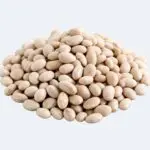
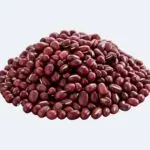
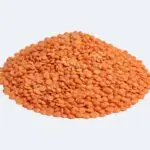
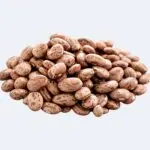
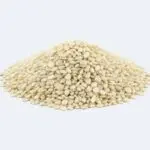
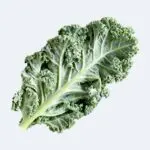
Constipation is the other regular guest. The advisory suggests fluids and fiber from food, raised gradually, with prunes and other dried fruits as a gentle start. The ranking below, from our fiber page, shows the foods with the most fiber; switch it to per serving to see what a normal portion gives.
Per serving. Bars show the share of the Daily Value (28 g a day).
Per 100 g. Bars show the share of the Daily Value (28 g a day). The line marks 100%.
Per serving. No daily amount is set, so bars compare each food with the top food.
Per 100 g. No daily amount is set, so bars compare each food with the top food.
Per 100 kcal: the same calories of each food, for a fair comparison. Bars compare each food with the top food.
- 1.
- 2.
- 3.
- 4.
- 5.
- 6.
- 7.
- 8.

- 9.
- 10.


- 1.
- 2.
- 3.
- 4.
- 5.
- 6.

- 7.

- 8.
- 9.
- 10.


- 1.

- 2.
- 3.
- 4.

- 5.

- 6.

- 7.

- 8.
- 9.

- 10.



Fiber supplements helped 66% of adults with chronic constipation, against 41% on control treatment
Meta-analysis of 16 randomized trials with 1,251 adults. Benefits showed up with doses above 10 g a day for at least 4 weeks, and psyllium and pectin worked best. Flatulence was higher with fiber. Heterogeneity was considerable, and these were people with chronic constipation, not GLP-1 users.
The advisory adds that protein and fat slow stomach emptying, which can worsen constipation, so a dietitian may balance the two.
A short checklist for the small plate
- Protein first: start the meal with the protein food.
- Lift: food alone does not hold the muscle, so ask about strength training.
- Dense, not dull: pick foods from the top of the density chart that you enjoy.
- Ask about vitamins: bring up vitamin D, calcium and B12.
- Call early: if food or fluids will not stay down, tell your prescriber.
A smaller appetite does not shrink what the body needs. It only shrinks the room to meet it, which is why the plate deserves more care, not less.
Frequently asked questions
Do GLP-1 medicines make you lose muscle?
Some of the weight lost is lean mass, which includes muscle. A pooled analysis of 20 randomized trials found lean mass was 35.2% of the weight lost on semaglutide, 25.4% on tirzepatide and 26.8% on liraglutide, close to 26.2% with lifestyle programs alone. Adding strength training lowered it to 17.5%. A review of 35 trials found none measured physical function. Ask your prescriber or dietitian how to protect muscle.
How much protein should I eat on a GLP-1 medicine?
There is no single agreed number. A 2025 joint advisory notes that 1.2 to 1.6 g/kg a day has been proposed during weight loss, and that a fixed 80 to 120 g a day may be easier to follow. It advises against going below 0.4 to 0.5 g/kg. Needs differ with kidney disease, age and activity, so check your target with a dietitian.
Which vitamins and minerals can run low on a GLP-1 medicine?
The advisory names iron, calcium, magnesium, zinc and vitamins A, D, E, K, B1, B12 and C as nutrients of concern, especially below 1,200 kcal a day for women and 1,800 kcal for men. In our sample day of 1,292 kcal, vitamin D reached 32% of the Daily Value and calcium 77%. It suggests clinicians consider vitamin D, calcium, B12 or a multivitamin, so ask yours.
What should I eat when a GLP-1 medicine makes me nauseous?
The advisory suggests a small breakfast, then small meals every 3 to 4 hours with fluids, and avoiding fatty or high-fiber foods in the first days. Ginger or peppermint tea may help. In STEP 1 to 3, 43.9% of people on semaglutide reported nausea against 16.1% on placebo, mostly mild to moderate and often around dose increases. Tell your prescriber if you cannot keep food or fluids down.
Are protein shakes a good idea on a GLP-1 medicine?
The advisory says some people meet protein targets with shakes, bars and fortified products. It also describes smoothies made with fruit, vegetables, milk or yogurt, and soups or cottage cheese, as often more appealing than heavy foods when appetite is low. It does not rank products. A registered dietitian can help you pick one that fits your goals.
Sources
- NutriScrolls. Proteins: recommended intake per day and foods high in protein. nutriscrolls.com/proteins/. Accessed 24 Oct 2026.
- U.S. Department of Agriculture, Agricultural Research Service. FoodData Central, entries used on NutriScrolls: eggs (FDC 171287); sardines, canned with bones (FDC 175139); tuna, skipjack, raw (FDC 175156); wild Atlantic salmon, raw (FDC 173686); cod, raw (FDC 171955); shrimp, cooked (FDC 175180); oysters, Pacific, raw (FDC 174219); chicken breast, raw (FDC 171077); lentils, cooked (FDC 172421); soybeans, cooked (FDC 174271); almonds (FDC 170567); milk, 2% (FDC 172205); oats (FDC 169705); raspberries, raw (FDC 167755); bananas, raw (FDC 173944); broccoli (FDC 747447); spinach, raw (FDC 168462). fdc.nal.usda.gov. Accessed 24 Oct 2026.
- NutriScrolls. Nutrient density: method and food scores. nutriscrolls.com/sources/ and the Nutrient density box on each food page. Accessed 24 Oct 2026.
- NutriScrolls. Nutrient pages with FDA Daily Values for adults (vitamins D, E, A, C, K, B12; calcium, potassium, zinc, iron, magnesium; fiber). nutriscrolls.com/vitamins/, /minerals/, /carbohydrates/fiber/. Accessed 24 Oct 2026.
- Mozaffarian D, Agarwal M, Aggarwal M, et al. Nutritional priorities to support GLP-1 therapy for obesity: a joint Advisory from the American College of Lifestyle Medicine, the American Society for Nutrition, the Obesity Medicine Association, and The Obesity Society. Am J Clin Nutr. 2025;122(1):344-367. doi:10.1016/j.ajcnut.2025.04.023 (a corrigendum was published in Am J Clin Nutr. 2026;123(6):101303)
- Eisa N, Barood O. Lean mass changes with incretin therapy versus lifestyle intervention: a systematic review and meta-analysis of randomised controlled trials. Diabetes Obes Metab. 2026;28(6):4818-4827. doi:10.1111/dom.70666
- Look M, Dunn JP, Kushner RF, et al. Body composition changes during weight reduction with tirzepatide in the SURMOUNT-1 study of adults with obesity or overweight. Diabetes Obes Metab. 2025;27(5):2720-2729. doi:10.1111/dom.16275
- Batsis JA, Gavras A, Gross DC, et al. Effect of incretin-based and nonpharmacologic weight loss on body composition: a systematic review. Ann Intern Med. 2026;179(7):996-1013. doi:10.7326/ANNALS-25-00478
- Laverde LP, Muñoz-Velandia OM, Alfonso D, Gómez Medina AM. Effect of GLP-1 receptor agonists at doses for obesity management on muscle health: systematic review and meta-analysis of randomized clinical trials. Int J Obes (Lond). 2026;50(8):1638-1646. doi:10.1038/s41366-026-02118-y
- Wilding JPH, Batterham RL, Calanna S, et al. Once-weekly semaglutide in adults with overweight or obesity. N Engl J Med. 2021;384(11):989-1002. doi:10.1056/NEJMoa2032183
- Wycherley TP, Moran LJ, Clifton PM, Noakes M, Brinkworth GD. Effects of energy-restricted high-protein, low-fat compared with standard-protein, low-fat diets: a meta-analysis of randomized controlled trials. Am J Clin Nutr. 2012;96(6):1281-1298. doi:10.3945/ajcn.112.044321
- Kim JE, O’Connor LE, Sands LP, Slebodnik MB, Campbell WW. Effects of dietary protein intake on body composition changes after weight loss in older adults: a systematic review and meta-analysis. Nutr Rev. 2016;74(3):210-224. doi:10.1093/nutrit/nuv065
- Villareal DT, Aguirre L, Gurney AB, et al. Aerobic or resistance exercise, or both, in dieting obese older adults. N Engl J Med. 2017;376(20):1943-1955. doi:10.1056/NEJMoa1616338
- Blundell J, Finlayson G, Axelsen M, et al. Effects of once-weekly semaglutide on appetite, energy intake, control of eating, food preference and body weight in subjects with obesity. Diabetes Obes Metab. 2017;19(9):1242-1251. doi:10.1111/dom.12932
- Wharton S, Calanna S, Davies M, et al. Gastrointestinal tolerability of once-weekly semaglutide 2.4 mg in adults with overweight or obesity, and the relationship between gastrointestinal adverse events and weight reduction. Diabetes Obes Metab. 2022;24(1):94-105. doi:10.1111/dom.14551
- van der Schoot A, Drysdale C, Whelan K, Dimidi E. The effect of fiber supplementation on chronic constipation in adults: an updated systematic review and meta-analysis of randomized controlled trials. Am J Clin Nutr. 2022;116(4):953-969. doi:10.1093/ajcn/nqac184
Not medical advice
This article is general information, not a diagnosis or treatment. Talk to a doctor or registered dietitian before changing your diet, especially if you are pregnant, take medication or have a health condition. Read our medical disclaimer.


